
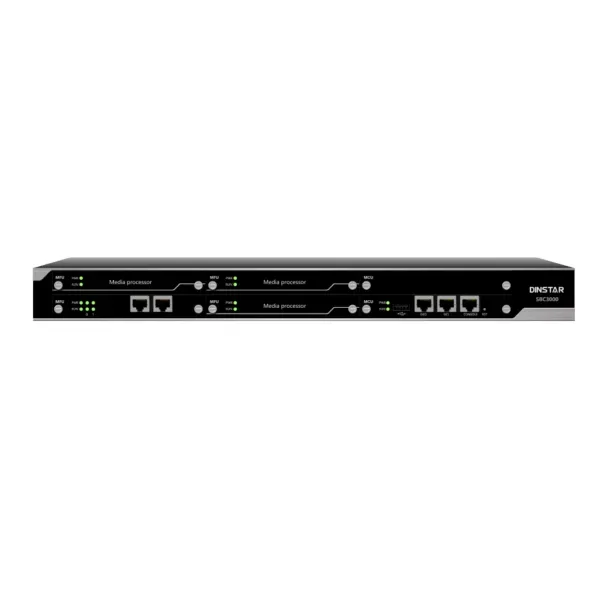
Dinstar SBC3000 Session Border Controller
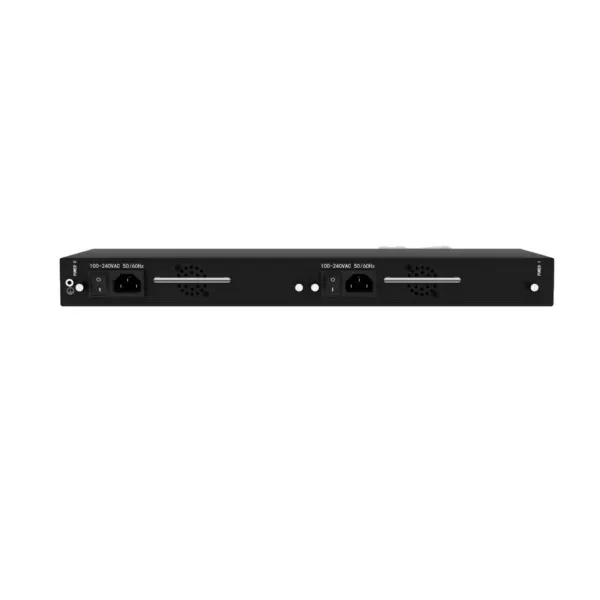
The Dinstar SBC3000 is designed for large enterprise, service-provider and telecom-operator VoIP environments that require controlled SIP interconnection, protection at the voice-network edge, protocol mediation and media transcoding. Dinstar’s current product information positions the appliance for 500 to 2,000 SIP sessions and 300 to 1,200 transcoding sessions, with 1+1 active-standby high availability, dual redundant power, topology hiding, TLS/SRTP, SIP attack protection, flexible routing and centralized management.
For Tanzania buyers, the important question is not simply whether an SBC can pass SIP calls. The stronger procurement decision is whether the platform can match expected concurrent sessions, codec requirements, call-rate peaks, trunk relationships, security controls, failover design, network topology and operational support model. FourTeck Tanzania can help frame those requirements before a quotation is prepared.
simultaneous SIP calls
transcoding sessions
maximum call rate
active/standby redundancy
What the Dinstar SBC3000 is designed to solve
An enterprise firewall protects general IP traffic, but business voice introduces additional signaling, media, interoperability and fraud concerns. The SBC3000 sits at a SIP boundary and is intended to control how sessions enter, leave and traverse a VoIP environment. That boundary can exist between an enterprise IP PBX and a SIP trunk provider, between two service-provider networks, between multiple softswitch platforms, or between internal and external SIP domains. The SBC can terminate and re-originate sessions as a back-to-back user agent, conceal internal topology, enforce access policies, manipulate SIP headers, route calls according to defined rules and help protect the voice service from malformed or excessive SIP traffic.
Dinstar also lists NAT traversal, dynamic load balancing, caller and called-number manipulation, unlimited SIP trunks, SIP request and registration rate limiting, white and black lists, access rule lists, DoS/DDoS protection, SIP registration scan detection and SIP call scan detection. These functions are valuable when a voice platform must connect networks that do not share the same addressing, trust level, signaling conventions or codec requirements. The SBC therefore becomes both a security boundary and an interoperability layer rather than a simple router.
Transcoding is another central buying consideration. Dinstar specifies 300 to 1,200 transcoding sessions for the SBC3000. The practical requirement depends on how many simultaneous calls are likely to need codec conversion rather than simple pass-through. A deployment in which most endpoints and carriers already use the same codec can require far fewer transcoding resources than an environment connecting diverse networks. Sizing should therefore separate total concurrent SIP sessions from the subset that genuinely requires media transformation.
SIP security
Topology hiding, TLS/SRTP, embedded VoIP firewall functions, access controls, white and black lists, anti-attack policies and rate limiting help create a controlled voice edge.
Interoperability
SIP mediation, header manipulation, B2BUA operation, NAT traversal, caller/called-number manipulation and flexible routing help connect different SIP platforms and carrier services.
Availability
The platform supports 1+1 active-standby high availability and dual redundant 100–240V AC power, providing building blocks for resilient voice-service design.
Operations
Web management, SNMP, configuration backup and restore, firmware upgrade, logs, reports, CDR export, ping, traceroute and packet capture support administration and troubleshooting.
Verified technical capabilities
| SIP session scale | 500 to 2,000 simultaneous SIP calls |
| Transcoding scale | 300 to 1,200 concurrent transcoding sessions |
| Call rate | Up to 200 calls per second |
| SIP registrations | Current Dinstar product page states up to 5,000 SIP registrations |
| Signaling | SIP 2.0 over UDP, TCP and TLS; peer-to-peer and access SIP trunks; B2BUA |
| Voice codecs | G.711 A/U, G.723.1, G.729 A/B, iLBC, AMR and OPUS listed on the current product page |
| Security | TLS/SRTP, topology hiding, embedded VoIP firewall, DoS/DDoS protection, malformed-packet protection, ACL, white/black lists and attack detection |
| Availability | 1+1 active-standby high availability and dual redundant AC power supplies |
| Form factor | 19-inch 1U appliance |
How to size an SBC3000 deployment
SBC sizing should begin with traffic rather than a model name. Document the busiest expected hour, concurrent calls, peak new calls per second, registration behavior, number of SIP trunks, number of connected platforms, codec distribution and encryption policy. Then separate ordinary SIP sessions from calls that require transcoding. If a deployment expects 1,000 simultaneous calls but only 150 need codec conversion, the transcoding requirement is very different from a deployment where nearly every call crosses incompatible codec domains. The same principle applies to TLS/SRTP, topology hiding, recording integrations, header manipulation and policy complexity: the architecture must be tested as a system.
High availability should also be treated as an end-to-end design. The SBC3000 supports 1+1 active-standby redundancy, but service continuity still depends on redundant network paths, switch design, addressing, routing, DNS where used, upstream carrier behavior, PBX or softswitch resilience and power protection. A redundant SBC pair connected through one failing upstream device is not a complete HA solution. Procurement teams should therefore request a logical topology together with the appliance quotation.
For organizations moving from a smaller gateway-based environment to an SBC architecture, FourTeck Tanzania’s business technology shop provides context on voice, networking and infrastructure categories that can sit around the SBC. Smaller analog migration projects can also reference the Dinstar DAG1000-1S analog telephone adapter and Dinstar DAG1000-2S two-port ATA. These are different products for different purposes, but they illustrate the broader Dinstar voice portfolio that may coexist with SIP infrastructure.
Deployment checklist before ordering
Dinstar SBC3000 Session Border Controller Tanzania
Tanzanian enterprises and service providers evaluating the Dinstar SBC3000 are typically trying to solve one of four problems: secure a SIP trunk connection, interconnect dissimilar voice platforms, create a resilient boundary between internal and external VoIP networks, or provide enough scale for a growing communication service. The SBC3000 is relevant when those requirements have moved beyond a small office appliance and into hundreds or thousands of concurrent SIP sessions. Dinstar’s 500-to-2,000-session positioning makes it appropriate for substantial call-center, enterprise, carrier-interconnect and hosted-voice scenarios, subject to detailed sizing and interoperability testing.
A Tanzania project should start by mapping every SIP relationship. Identify the enterprise PBX or softswitch, telecom operator or SIP trunk provider, branch or hosted platform, public addressing, firewall/NAT layer and codec expectations. Then define which party owns each part of troubleshooting. This matters because a failed call can originate from signaling, media routing, DNS, NAT, ACL policy, number normalization, codec negotiation, certificate handling or an upstream carrier response. The SBC gives administrators tools such as packet capture, logs, reports, ping and traceroute, but those tools are most valuable when the deployment is documented.
Power and rack planning also deserve attention in Tanzania. A 1U SBC with dual redundant power can support a resilient design, but both feeds should not simply terminate in the same unprotected power path if continuity is important. Rack ventilation, UPS capacity, switch redundancy and clear cable labeling should be treated as part of the voice platform. In environments where business internet quality varies, WAN monitoring and carrier escalation procedures should be documented separately from the SBC configuration.
When requesting a Tanzania quotation, include expected session count today and in two to three years, transcoding estimate, CPS estimate, current PBX or softswitch, SIP provider, HA requirement, preferred management approach and whether professional configuration is required. This produces a much more useful proposal than asking for “an SBC3000 price” without deployment context.
Dinstar SBC3000 Session Border Controller Dar es Salaam
Dar es Salaam is the most likely Tanzanian market for larger enterprise voice systems, contact centers, multi-branch headquarters, telecom interconnections and organizations migrating from legacy trunks to SIP. In these environments, the Dinstar SBC3000 can provide a controlled edge between an internal UC or IP PBX platform and one or more external SIP services. Its value is strongest when the business needs to normalize signaling, hide internal topology, enforce access rules, secure signaling and media, or translate codecs while preserving a clear administrative boundary.
For a Dar es Salaam contact-center deployment, call rate can matter as much as concurrency. Dinstar states up to 200 calls per second for the SBC3000. A predictive dialer, campaign platform or high-volume inbound queue can create short bursts of new sessions even when total concurrent calls remain below the overall capacity. Engineers should therefore review both average and peak call attempts, including retries during carrier or platform faults. Rate limits should be configured deliberately so that protection mechanisms do not accidentally block legitimate busy-hour behavior.
For enterprise headquarters, the design may instead focus on dual SIP carriers, branch connectivity and business continuity. The SBC’s dynamic routing and load-balancing features can form part of this design, but routing policy should be explicit: which trunk is primary, what conditions trigger alternative routes, how caller ID is presented, which number ranges use which provider, and what happens when a carrier returns an error rather than becoming unreachable. These details should be tested with a documented call matrix.
Procurement teams in Dar es Salaam should also confirm rack location, public IP strategy, upstream firewall behavior, certificate requirements, management-access restrictions and maintenance responsibility. A good SBC deployment is not simply “installed and online”; it is monitored, backed up, documented and tested under failure conditions before business reliance becomes high.
Dinstar SBC3000 Session Border Controller Mwanza
Organizations in Mwanza may consider the SBC3000 when a regional operation must connect securely to centralized voice services or when a local communications platform handles substantial traffic for branches, customers or operational teams. A logistics organization, financial institution, customer service center, healthcare network, education provider or distributed enterprise can use an SBC to make the SIP boundary predictable even when the WAN path is not controlled end to end.
The key Mwanza design question is often where the SBC should sit. If the PBX is centralized elsewhere, a local SBC may protect and mediate the site boundary, while a centralized SBC can aggregate multiple branches. The right topology depends on whether each site has local SIP trunks, whether calls must continue during WAN interruption, how numbering is structured and where media should flow. Hairpinning all media through a distant data center may simplify policy but can add latency and consume WAN capacity. Local media breakout can reduce path length but introduces different security and management considerations.
Dinstar supports QoS markings, NAT traversal and flexible call routing, but an SBC cannot compensate for an unstable underlay indefinitely. Mwanza deployments should therefore be tested during busy periods for latency, jitter and packet loss, particularly if voice shares connectivity with backups, CCTV, cloud applications or large file transfers. QoS must be coordinated across routers, switches and WAN services rather than applied only on the SBC.
Operational support is another important issue for a regional site. Configuration backups, logs, CDR export, SNMP and centralized management can reduce the need for physical intervention when remote access is designed securely. Procurement should include not only the appliance but also the management, escalation and recovery process: who can change routes, who owns certificates, where backups are kept, and how the business returns to service after a hardware or configuration event.
Dinstar SBC3000 Session Border Controller Arusha
Arusha businesses with hospitality, tourism, international operations, customer service functions or multi-property communications can benefit from a disciplined SIP edge when voice traffic crosses service providers, branches or cloud platforms. The Dinstar SBC3000 is especially relevant when the environment is too large for a small branch SBC and requires hundreds of simultaneous sessions, extensive trunk relationships or substantial transcoding capacity.
Hospitality and multi-site environments frequently combine a central PBX with property systems, reception endpoints, mobile extensions, carrier trunks and remote support. SIP interoperability becomes important because each platform may represent numbers, headers, codecs or DTMF differently. The SBC3000’s SIP mediation, header manipulation and number manipulation functions can help normalize those differences, but every change should be documented. Hidden transformations are difficult to troubleshoot later if engineers do not know which side is altering a header or number.
Security controls should also be designed around expected traffic. Topology hiding and B2BUA behavior reduce exposure of internal addressing, while TLS/SRTP can protect signaling and media where the connected systems support compatible security profiles. White and black lists, ACLs, rate limits and scan detection should reflect legitimate carrier addresses and registration behavior. A secure policy is one that blocks unexpected traffic without interfering with normal failover, roaming or provider changes.
For Arusha procurement, prepare a diagram showing every SIP peer, IP range, WAN link and failover path. Add a numbering plan and codec matrix, then document peak session estimates by use case. If the business expects future expansion to additional sites, size the SBC around realistic growth rather than only today’s call count. This creates a better basis for model selection and reduces the risk of disruptive replacement after the voice architecture has become business-critical.
Dinstar SBC3000 Session Border Controller Dodoma
Dodoma institutions, public-sector organizations, national associations, education networks and enterprises can use an SBC architecture when multiple offices or departments need a secure and governed route into SIP services. The Dinstar SBC3000 can function as the policy point where external carrier trunks, internal call platforms and branch systems meet. This is especially useful when change control and traceability are important because routing, number manipulation, access restrictions and call reporting can be managed at a defined boundary.
A Dodoma deployment should put governance around configuration. Define who can access the web interface, how administrator credentials are protected, where configuration backups are stored, who approves routing changes and how firmware upgrades are tested. The SBC includes backup and restore, web administration, logs and monitoring features, but these functions only improve control when an operating process exists around them. For sensitive organizations, remote administration should be limited to trusted management networks rather than exposed broadly.
High availability deserves a formal acceptance test. The SBC3000 supports 1+1 active-standby redundancy, yet the project should verify failover behavior during active calls, new-call setup, management access and upstream carrier reachability. Test power-supply failures, network-interface failures and planned role transitions where practical. Record what users experience and how long recovery takes. This provides evidence that the resilience design works in the actual environment rather than only on paper.
When preparing a Dodoma quotation, include security policy requirements, HA expectations, number of connected SIP domains, anticipated traffic, any transcoding needs, rack and UPS requirements and the intended monitoring platform. If procurement is separated from technical implementation, attach the architecture to the purchase request so the selected license or capacity tier matches the approved design.
Dinstar SBC3000 Session Border Controller UAE
UAE enterprises and service providers frequently operate multi-site SIP environments that connect offices, contact centers, cloud communications, carrier trunks and international branches. The Dinstar SBC3000 fits projects that require a hardware SBC with substantial session and transcoding scale, while providing signaling security, SIP normalization, topology hiding and high availability. For organizations with branches in both Tanzania and the UAE, the SBC can also support a standardized edge architecture, provided local carrier and regulatory requirements are reviewed separately for each country.
In a UAE headquarters deployment, designers should map the relationship between the SBC, corporate firewall, SD-WAN, SIP carrier and UC platform. Double NAT or overlapping policy enforcement can cause avoidable complexity. Decide which device owns SIP-aware functions, where public addresses terminate, whether media is anchored on the SBC and how inbound traffic is restricted to known carrier networks. If TLS is used, certificate lifecycle and hostname expectations must be documented so renewal does not become an unexpected outage.
International calling and branch interconnection also make dial-plan discipline important. Number normalization should be centralized and predictable: local formats, E.164 presentation, emergency or service numbers, branch prefixes and carrier-specific requirements should be tested before rollout. The SBC3000’s caller/called-number manipulation and SIP header manipulation can solve interworking problems, but poorly governed rules can create difficult-to-trace routing behavior.
FourTeck’s broader UAE technology environment at FourTeck UAE can provide regional context for IP PBX, network and infrastructure projects. For cross-border procurement, keep the hardware specification constant where possible but create location-specific implementation documents for carriers, IP addressing, security, numbering and support contacts.
Dinstar SBC3000 Session Border Controller Uganda
Ugandan enterprises, telecom operators and organizations with distributed branches can use the SBC3000 to establish a consistent SIP security and interoperability layer between internal voice systems and external services. The platform is most appropriate where session volume, trunk count or transcoding demand has grown beyond smaller SBC classes. Dinstar’s range of 500 to 2,000 SIP sessions provides a useful scale envelope for substantial deployments, but the exact requirement should be validated from busy-hour data rather than user count alone.
For a Uganda rollout, WAN architecture is often central to the design. A Kampala data center may host the primary PBX or softswitch while branches connect through VPN, MPLS, SD-WAN or public internet. The SBC can control SIP at the central boundary, but engineers should determine whether media remains local to each site or traverses the central location. The answer affects bandwidth, latency, security and failover behavior. If multiple carriers are used, dynamic routing rules should distinguish unavailable trunks from carrier responses that should not trigger rerouting.
Security should be tuned to legitimate provider behavior. Rate limiting, access rules, scan detection and DoS/DDoS protections are valuable, but configuration needs baselines. An environment that normally receives sudden registration bursts after a WAN recovery should not be treated the same as a static trunk-only deployment. Logging and CDR export can help operators recognize normal patterns and investigate exceptions.
For regional technology context, FourTeck Uganda covers IP PBX, networking and infrastructure requirements. Organizations operating in both Tanzania and Uganda can standardize documentation templates, routing logic and support procedures while still validating each carrier connection independently.
Dinstar SBC3000 Session Border Controller Kampala
Kampala is a natural location for centralized voice infrastructure serving headquarters, contact centers and national branch networks. A Dinstar SBC3000 at the communications edge can terminate SIP relationships with one or more carriers while presenting a controlled internal interface to PBXs, softswitches or unified-communications platforms. The architecture can reduce direct exposure of internal systems and create one place to apply routing, normalization and security policy.
Contact centers in Kampala should pay particular attention to call setup rate. A platform may remain below 2,000 concurrent calls yet generate aggressive CPS during campaign starts, queue surges or automatic redial. Dinstar specifies a maximum of 200 calls per second, so traffic engineering should examine actual peaks and retry behavior. Upstream applications should not be allowed to create uncontrolled retry storms when a carrier or route is impaired, because that behavior can overload signaling resources even when media capacity is available.
Interoperability testing should include more than a successful inbound and outbound call. Test caller ID, privacy headers, redirects, transfer, hold, re-INVITE behavior, DTMF, fax if used, early media, busy responses, unavailable responses, failover routing, codec changes and TLS certificate handling. Where the SBC manipulates SIP headers, maintain a change record and rollback plan. A call that works today can fail after an upstream change if the original interworking assumptions were never documented.
Kampala buyers should request a quotation with traffic assumptions, trunk count, peer count, HA design and the expected management scope. If the SBC will become a central national voice gateway, monitoring and backup procedures should be part of the project from the start, not added after deployment.
Dinstar SBC3000 Session Border Controller Arua
Arua deployments are more likely to use the SBC3000 as part of a larger distributed organization than as a standalone small-office device. A national enterprise, NGO, healthcare network, financial institution or service organization may centralize the SBC elsewhere while Arua branches register through secure WAN connectivity. In other cases, a regional hub may justify its own SBC boundary if local trunks, branch aggregation or continuity requirements are significant.
The decision should be based on failure domains. If all calls depend on a central Kampala or cloud platform, a WAN outage can interrupt branch calling regardless of the endpoint condition. A local SBC can only improve continuity when there is also a local or alternate call path available. Therefore, resilience planning should distinguish SBC redundancy from WAN redundancy and from PBX redundancy. These are separate layers that must work together.
For remote support, the SBC3000’s management and diagnostic capabilities can be valuable. Packet capture, logs, statistics, ping and traceroute help teams isolate whether a fault exists at signaling, routing or IP-connectivity level. SNMP and centralized management can provide ongoing visibility. Management access should be carried over secured administrative paths and restricted with ACLs so the device does not become broadly reachable from user networks or the public internet.
An Arua project should also define a practical escalation checklist: verify WAN reachability, check SIP peer status, confirm route selection, inspect recent configuration changes, capture signaling if needed and coordinate with the carrier or central PBX team. The value of an SBC is enhanced when the operating team has a repeatable method to use its data. Procurement should therefore include documentation and knowledge transfer alongside the hardware where the site depends on remote technical support.
Dinstar SBC3000 Session Border Controller Mbarara
Mbarara organizations with regional branches, customer service operations or centralized SIP infrastructure may need a controlled voice edge as their communications platform grows. The Dinstar SBC3000 can fit when the environment requires hundreds of concurrent sessions, multiple SIP trunks, codec interworking or a stronger security boundary than a basic firewall-only design. It is not intended to replace call-control functions of a PBX; instead, it protects and mediates the border between SIP domains.
For regional business continuity, define what should happen during partial failures. If one carrier fails, calls may move to another trunk. If the WAN to a central PBX fails, local survival may require a separate call-control strategy. If one SBC node fails, 1+1 HA can protect the SBC function itself. These scenarios should not be mixed together. Each needs its own detection method, route behavior and test plan.
Transcoding requirements should also be measured carefully. A branch network using modern IP phones may primarily use G.711, while an upstream service could prefer another codec. If the SBC must translate a high percentage of calls, the 300-to-1,200 transcoding capacity range becomes a major sizing factor. If most calls pass through with a common codec, session capacity may be the more important limit. Engineers should build a codec matrix by trunk and endpoint type before choosing a capacity tier.
Mbarara procurement requests should therefore include a traffic profile rather than only user count. State the expected busy-hour calls, simultaneous sessions, codec mix, carrier relationships, branch topology, HA expectation and remote management model. This helps prevent a quotation that is technically valid as hardware but poorly matched to the operational design.
Dinstar SBC3000 Session Border Controller Gulu
Gulu businesses and institutions can encounter SBC requirements when voice services are centrally managed across multiple sites or when a regional hub interfaces with SIP providers. The SBC3000 is a large-capacity platform, so it should be selected for genuine session, interconnection or security needs rather than simply because an organization uses VoIP. Smaller deployments may be better served by another model, while a national architecture can justify the SBC3000 by aggregating traffic from many locations.
A Gulu branch connected to a central SBC should be designed around predictable WAN behavior. Voice quality can suffer from packet loss and jitter even when there is sufficient nominal bandwidth. QoS markings are useful only if the path respects them, so the organization should test traffic under realistic load. If backup connectivity is used, confirm that SIP registration, NAT and firewall policies remain valid after failover. A secondary WAN with a different public IP can change how carriers see the branch or central gateway.
Where the SBC is physically deployed at a regional hub, environmental readiness becomes part of the project. The 1U appliance needs stable rack power, ventilation and network connectivity. Dual power supplies are most useful when connected to appropriately independent protected feeds. Keep spare switch ports, labeled cabling and a console-access procedure available so remote support has a clear recovery path.
The operating team should also define configuration backup frequency and change control. Routing and SIP manipulation rules can become complex over time as providers or number ranges change. Regular backups and concise change notes make rollback possible when a new rule produces unexpected behavior. For Gulu and other regional locations, operational discipline can be more valuable than adding unnecessary features.
Dinstar SBC3000 Session Border Controller Kenya
Kenyan enterprises, BPO operations, service providers and regional headquarters frequently use SIP at a scale where session-border control becomes a distinct architectural layer. The Dinstar SBC3000 can serve this role for 500 to 2,000 simultaneous SIP sessions, with substantial transcoding and security features. It is especially relevant when multiple carriers, customer platforms, branch PBXs or cloud services must interconnect without exposing internal voice systems directly.
For Nairobi-centered deployments, traffic engineering should incorporate contact-center and cloud-UC patterns. High concurrency, bursty CPS, multiple dial plans and carrier diversity can make routing policy more complex than a simple primary/backup trunk. Define route priorities, cost or policy preferences where applicable, number normalization and failure conditions. A carrier returning congestion should not necessarily be treated the same as a trunk becoming unreachable; the desired rerouting behavior depends on commercial and technical agreements.
Security teams should coordinate with voice engineers. An enterprise firewall may permit only the SBC’s public service addresses while the SBC enforces SIP-aware policy at the application edge. TLS/SRTP can be enabled where all parties support a compatible profile, and topology hiding can reduce exposure of internal addressing. Monitoring should correlate SBC logs with firewall and carrier records so incident investigation has a complete timeline.
Organizations operating across East Africa can use FourTeck Kenya as a regional reference for VoIP, networking and security projects. A multinational standard can define common SBC principles while leaving carrier-specific trunks, numbering and regulatory requirements to country-level implementation documents.
Dinstar SBC3000 Session Border Controller Kuwait
Kuwait organizations with enterprise SIP trunks, large call centers or service-provider interconnections can consider the Dinstar SBC3000 when a dedicated hardware SBC is preferred. The product’s 1U form factor, dual power, HA design and security features suit rack-based communications environments where availability and controlled interconnection are important. As in other markets, the model should be selected from traffic requirements rather than brand preference alone.
The deployment should start with carrier documentation. Record signaling IP addresses, RTP ranges, authentication model, required headers, number format, codec preferences, DTMF method and failover behavior. Then map these expectations to the internal PBX or softswitch. Where differences exist, use the SBC’s mediation and manipulation functions intentionally. Avoid broad transformations that solve one carrier issue while changing traffic for unrelated trunks.
If the organization has a disaster-recovery site, decide whether the SBC pair remains local to one data center or spans sites. HA mechanisms, latency and network dependencies should be reviewed against Dinstar’s deployment guidance. A second site can improve resilience only when carrier routing and internal call control can also reach it. DNS, public IP addressing and firewall policies may need coordinated changes during failover.
For procurement, specify session tier, transcoding needs, redundancy, power requirements, rack location, carrier count and implementation scope. Ask for acceptance testing that covers normal calling and failure scenarios. The result should be a supportable SIP edge with documented routes and security policies, not merely a powered appliance connected between two networks.
Dinstar SBC3000 Session Border Controller Ghana
Ghanaian enterprises and communication providers can use an SBC such as the Dinstar SBC3000 to separate internal SIP infrastructure from carrier or partner networks while managing scale, security and interoperability. For a large Accra-based organization with branches, the SBC can centralize trunk policy, numbering transformations and external connectivity. Service providers can use similar controls at network interconnection points, subject to their own architecture and operational requirements.
Capacity planning should account for growth in both users and traffic patterns. Adding more extensions does not always increase simultaneous calls proportionally, while a new contact-center campaign can increase CPS dramatically without a comparable rise in registered users. Dinstar’s published limits therefore need to be mapped to measured or forecast call behavior. Keep a margin for growth and unusual events, but avoid buying capacity based on arbitrary multiples with no traffic evidence.
Security planning should define trusted peers and expected message rates. White lists and ACLs are effective when carrier addresses are known and maintained. Dynamic blacklisting and scan detection can assist with hostile activity, while TLS/SRTP can add confidentiality where interoperable. The organization should also decide whether management traffic uses separate administrative networks and whether SNMP is restricted to monitoring systems.
For Ghana procurement, include carrier information and support contacts in the project record. When a call fails, knowing who owns each network segment speeds resolution. Configuration backups, packet captures and CDR can provide evidence for carrier escalation. A well-documented SBC deployment therefore contributes not only to security but also to faster operational troubleshooting across multiple parties.
Dinstar SBC3000 Session Border Controller Nigeria
Nigeria presents strong use cases for large-scale SIP border control, including enterprise contact centers, financial services, telecom operators, multi-site companies and hosted communication providers. The Dinstar SBC3000 offers a capacity range suited to projects where hundreds or thousands of concurrent calls may cross network boundaries. The platform’s combination of SIP security, routing, header manipulation, transcoding and redundancy can help standardize interconnection between diverse voice systems.
Large Nigerian deployments should model failure behavior under real traffic. If a carrier fails during a busy period, queued or retried calls can create a sudden increase in signaling load. Dynamic load balancing and flexible routing are useful, but the rules should avoid loops and uncontrolled retries. Use explicit route priorities, maximum attempts and response-code handling. Test how the PBX, SBC and carriers react when a destination is busy, unreachable or returning temporary errors.
Fraud prevention is also an important operational concern for any high-volume SIP environment. Access controls, topology hiding, rate limits and call scan detection can form part of the defensive design, but route permissions and dial-plan restrictions should also reflect business need. International destinations, premium-rate patterns or unusual calling behavior should be governed by policy in the appropriate systems. An SBC is a powerful control point but not a substitute for broader account, credential and billing security.
For procurement in Nigeria, ask for a complete architecture review if the SBC will carry critical contact-center or carrier traffic. Include redundant switching, protected power, monitoring, backup and change-management requirements in the scope. A lower hardware price has limited value if the implementation leaves single points of failure or undocumented routing behavior.
Dinstar SBC3000 Session Border Controller Seychelles
Seychelles organizations with hospitality groups, financial services, government functions, service providers or multi-island operations may require secure SIP interconnection even when the overall user population is smaller than in major mainland markets. The SBC3000 becomes relevant when session scale, trunk aggregation, redundancy or codec interworking justifies a carrier-class hardware platform. For smaller deployments, careful sizing should confirm that the SBC3000 is not unnecessarily large for the actual traffic requirement.
Connectivity diversity is particularly important in island environments. If voice services rely on external cloud or carrier platforms, the SBC may remain operational while an upstream circuit is impaired. Business continuity therefore requires a separate WAN strategy. Multiple links, alternate carriers or local call-survival options should be evaluated according to the organization’s risk tolerance. The SBC can route between available SIP paths, but those paths must exist and be reachable.
For hospitality, consistent caller ID, front-desk call flows and integration with the property’s PBX are often more important than raw feature count. SIP header and number manipulation can resolve interworking issues, while TLS/SRTP and topology hiding strengthen the boundary. Every customization should be documented so a future carrier or PBX upgrade does not leave support teams guessing about hidden transformations.
A Seychelles procurement brief should include site geography, carrier paths, central and branch PBX locations, concurrency, codec mix and desired failover behavior. If equipment is installed where replacement access takes time, consider spare strategy, configuration backups and remote diagnostic procedures. Operational readiness can matter as much as hardware redundancy when the voice platform supports guest services, emergency coordination or customer-facing communications.
Common Dinstar SBC3000 buying questions
Is the SBC3000 an IP PBX?
No. It is a Session Border Controller. Its role is to secure, mediate, route and interconnect SIP sessions between voice domains. An IP PBX or softswitch normally provides user extensions, call features and core call control.
How many simultaneous calls can the SBC3000 support?
Dinstar’s current product page specifies a scalable range of 500 to 2,000 simultaneous SIP calls. The exact licensed or configured capacity should be confirmed in the quotation.
How much transcoding does it support?
Dinstar states 300 to 1,200 concurrent transcoding sessions. Buyers should calculate how many calls actually need codec conversion rather than assuming every session requires transcoding.
Does it support high availability?
Yes. Dinstar lists 1+1 active-standby redundancy. End-to-end availability still depends on switches, power, carrier paths, PBX resilience and the wider network design.
Can the SBC3000 protect against SIP attacks?
Dinstar lists SIP anti-attack functions, malformed-packet protection, rate limiting, registration and call scan detection, DoS/DDoS protection, ACLs, white/black lists, topology hiding and an embedded VoIP firewall. Security policy still requires correct configuration and monitoring.
What information should be sent for a quotation?
Provide location, required concurrent calls, estimated transcoding sessions, peak CPS, number of trunks and SIP peers, PBX or softswitch type, codec requirements, TLS/SRTP requirements, HA expectations, rack/power environment and whether configuration or integration support is needed.
Decision recap
Choose the SBC3000 when the project genuinely requires a large hardware SBC with hundreds to thousands of SIP sessions, substantial transcoding, SIP security, interoperability and HA. Do not select it only from user count. Verify concurrent calls, CPS, codec conversion, trunk architecture, security, failover and management requirements first.
Quotation checklist
Send the exact product name, destination, current and future session estimates, transcoding estimate, peak CPS, connected SIP platforms, carrier details, codec policy, HA requirement and implementation scope. Include a network diagram if the SBC will sit in a critical production voice path.
Consultation panel: design the SIP border before ordering the appliance
A strong SBC project starts with call-flow and trust-boundary design. FourTeck Tanzania can review session scale, trunks, codecs, number normalization, NAT, security, HA, rack dependencies and remote management requirements so the quotation reflects the intended architecture. This is especially important for organizations connecting more than one carrier or voice platform, because interworking rules and failure behavior should be agreed before production cutover.
If your project spans several East African countries, use the same engineering template for session sizing, routing, security and acceptance testing while keeping each country’s carrier and numbering details separate. Standardization makes support easier without pretending every telecom environment is identical.




Reviews
There are no reviews yet.