
Dinstar UC350 IP PBX Tanzania
Large-capacity unified communications for growing organisations
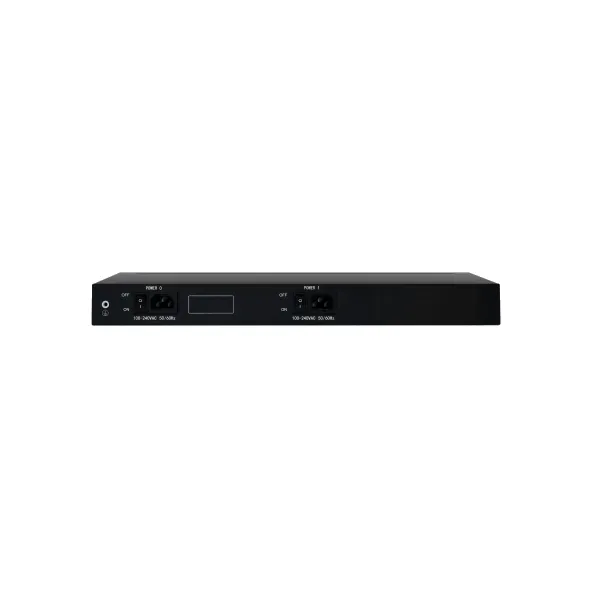
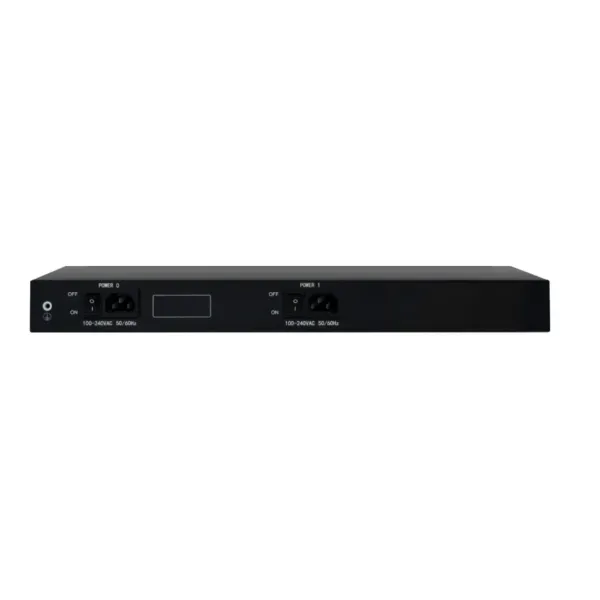
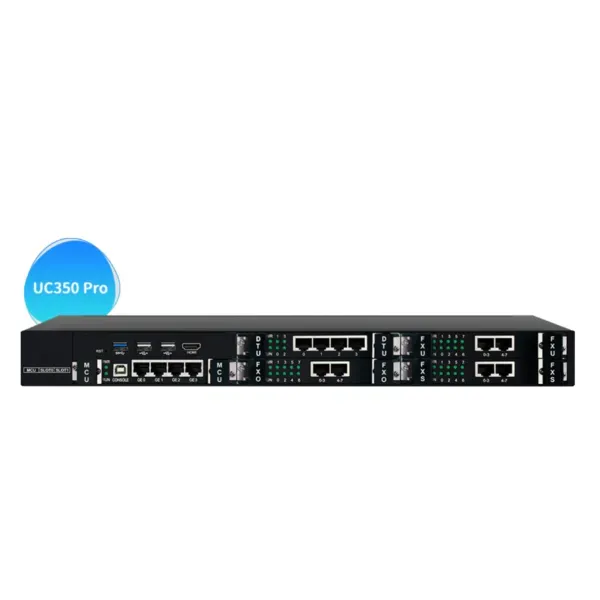
The Dinstar UC350 IP PBX is designed for organisations that need a dependable on-premises voice platform with enough capacity for a substantial user base, multiple departments and branch connectivity. According to Dinstar’s current UC350 Series documentation, the UC350 supports up to 1,000 SIP users and 120 concurrent calls. It uses a 19-inch 1U rack design and provides four user-board slots for flexible combinations of FXS, FXO, FXU and E1/T1 interfaces. The platform brings together voice, video calling, paging, fax support, conferencing, voicemail, call recording, call queues, routing, IVR and other business telephony functions in one system.
For a Tanzania deployment, the useful buying question is not simply whether the PBX can register enough extensions. A complete design must consider busy-hour call volume, SIP trunking, legacy analog devices, reception workflows, branch routing, network quality, PoE switching, firewall policy, power continuity, recording requirements and future growth. FourTeck can help organisations turn those requirements into a practical bill of materials and implementation plan rather than treating the PBX as an isolated appliance.
Verified UC350 highlights
- Up to 1,000 SIP users
- Up to 120 concurrent calls
- Up to 60 concurrent recordings
- Four modular user-board slots
- FXS, FXO, FXU and E1/T1 board options
- Two Gigabit Ethernet ports
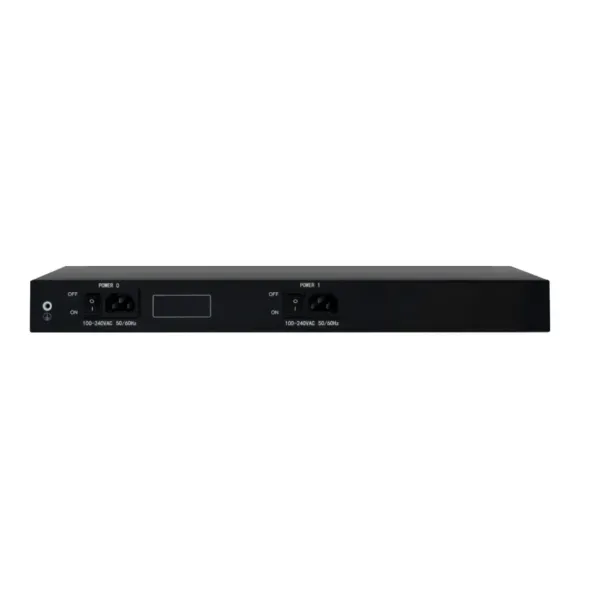
- 1+1 redundant power supply support
- Multi-level IVR, voicemail and call queues
- TLS, SRTP, ZRTP and built-in IP firewall functions
- Web-based administration and auto provisioning
What the Dinstar UC350 solves
A conventional phone system often becomes difficult to manage when an organisation expands beyond a small number of extensions, adds several departments, introduces remote users or needs to connect more than one office. The UC350 addresses this by centralising extension management and providing structured call-routing features that can be aligned with real business workflows. Incoming calls can be directed through multi-level IVR menus, ring groups, queues or time-based rules. Users can receive voicemail, transfer calls, park calls, use conferencing, access call recording and work with SIP endpoints across the IP network. These capabilities are useful for reception desks, sales teams, service departments, operations centres, campuses, hotels, hospitals, educational institutions and government or enterprise environments where telephone traffic is too important to be handled by an improvised setup.
The four expansion slots are particularly valuable when a migration cannot happen entirely on SIP from day one. Existing analog lines, fax devices, analog extensions or digital E1/T1 connectivity may need to remain in service while the organisation moves to IP phones. Instead of forcing a complete replacement, the UC350 can be configured with appropriate Dinstar user boards so the voice architecture reflects the actual site. This modularity also helps procurement teams avoid paying for interfaces they do not need. The correct board mix should be selected only after counting present and future analog extensions, public network lines, trunks and failover requirements.
Core features and customer benefits
Scalable SIP capacity
Up to 1,000 SIP users and 120 concurrent calls make the UC350 suitable for medium and large voice environments. Capacity planning should still use expected busy-hour traffic rather than extension count alone.
Modular telephony interfaces
Four user-board slots can accept supported FXS, FXO, FXU and E1/T1 boards, allowing the system to bridge legacy telephony and modern SIP services in a controlled migration.
Business call handling
Multi-level IVR, queues, ring groups, voicemail, recording, call pickup, transfer, conferencing, paging and flexible routing support more organised customer and internal communication.
Security controls
Dinstar documents Fail2ban, ACLs, whitelist and blacklist functions together with TLS, SRTP, ZRTP, multi-level permissions and an embedded IP firewall. These controls should be combined with sound network-security practice.
Technical specification summary
| Item | Dinstar UC350 |
|---|---|
| SIP users | Up to 1,000 |
| Concurrent calls | Up to 120 |
| Concurrent recording | Up to 60 |
| Gigabit Ethernet | 2 ports |
| User-board slots | 4 |
| Supported board families | FXS, FXO, FXU, DTU E1/T1 |
| Power | 1+1 redundant power supply, 100–240 VAC, 50/60 Hz |
| Dimensions | 437 × 345 × 49 mm |
| Operating temperature | 0°C to 45°C |
Compatibility, integration and deployment planning
A UC350 deployment should begin with a call-flow document. List external numbers, departments, reception rules, business hours, after-hours destinations, hunt groups, queues, recording policies and escalation paths. Then map each requirement to extensions and trunks. If analog endpoints or public switched telephone network lines remain in use, identify the required FXS or FXO quantity. If E1/T1 connectivity is part of the current environment, confirm interface type, signalling and provider parameters before selecting a DTU board. For SIP services, confirm the provider’s authentication method, codecs, number presentation and failover behaviour. These checks reduce the chance of discovering a compatibility issue after equipment arrives.
The LAN also needs deliberate preparation. IP phones may share access switches with computers, but voice traffic benefits from predictable VLANs, DHCP options, QoS and sufficient PoE capacity at the access layer. The PBX should be placed in a controlled rack with suitable UPS protection, ventilation and documented network connections. Firewall rules should expose only required services. Administrative access should be restricted, default credentials changed, backups scheduled and firmware managed through a controlled change process. For remote extensions or branch connectivity, security should be part of the initial design rather than an afterthought.
Related FourTeck resources
For broader purchasing guidance, review the FourTeck Tanzania technology shop, which explains how IP PBX hardware should be selected alongside network, power and endpoint requirements. Organisations planning implementation can also review FourTeck Tanzania services for integrated design, installation and support context. The FourTeck Tanzania solutions overview connects IP telephony with switching, Wi-Fi, firewall, cabling and infrastructure planning. For regional projects, the FourTeck Uganda technology site and FourTeck Kenya technology site can support buyers comparing requirements across East African operations.
Dinstar UC350 IP PBX Tanzania
For organisations in Tanzania, the Dinstar UC350 is most relevant when voice services have outgrown a basic PBX or when several communication requirements need to be consolidated into one manageable system. A business with many departments may need hundreds of extensions but only a fraction of them active at the same moment; another organisation may have fewer users but a high volume of simultaneous inbound and outbound calls. This is why capacity should be designed around both registered users and concurrent traffic. The UC350’s ceiling of up to 1,000 SIP users and 120 concurrent calls gives room for sizeable deployments, but a proper design still measures expected call peaks, recording demand, queue behaviour and trunk capacity before procurement.
Tanzania deployments may combine modern SIP services with existing analog lines, fax machines, lift phones, security intercoms or legacy extensions. The UC350’s modular user-board architecture can be useful in these transition scenarios because supported FXS, FXO, FXU and E1/T1 boards can be selected according to the installed environment. Procurement teams should document the exact number of analog stations, analog public-network lines and digital trunks before deciding on boards. They should also identify whether power-fail behaviour is needed for specific analog circuits and whether redundant power, UPS protection and spare interfaces are required for operational resilience.
A Tanzania implementation should also treat the data network as part of the voice system. Managed switching, voice VLANs, PoE budgets, QoS, firewall policy, internet stability and branch connectivity can have a direct effect on call quality. For multi-site organisations, the call plan should define short-dialling, caller identification, failover routes and how branches communicate if a primary WAN path is unavailable. Recording and voicemail policies should be agreed with management and aligned with organisational requirements. When requesting a quotation, provide user count, peak call estimate, trunk type, analog interface quantities, desired recording, number of branches, preferred phone models and any integration requirements. That information allows the UC350 configuration to be matched to the real project rather than quoted as a generic chassis.
Dinstar UC350 IP PBX Dar es Salaam
In Dar es Salaam, the UC350 can suit head offices, multi-floor commercial buildings, contact-heavy service companies, hospitality groups, logistics businesses, financial operations and organisations with multiple branches. The city’s larger business environments often require a PBX to serve reception, management, sales, customer service, warehouse or operations teams at the same time. Instead of creating separate telephone islands, the UC350 can provide one extension plan with IVR, queues, ring groups, voicemail, recording and routing. The objective is not merely to replace desk phones; it is to define how calls enter the organisation, which team answers them and what happens when the first destination is busy or unavailable.
A practical Dar es Salaam project starts with the building network. Large offices may use several access switches, floor distributors and fibre uplinks. Voice VLANs should extend cleanly across those switches, and PoE capacity should account for every IP phone and any other powered endpoint sharing the infrastructure. If the organisation uses dual internet providers, branch VPNs or cloud applications, voice routing and QoS policies should be coordinated with the firewall. The PBX itself should sit in a secure, ventilated rack with labelled connections and UPS-backed power. Dinstar’s redundant power support can add resilience, but it does not replace a correctly sized UPS or sensible electrical design.
Businesses migrating from traditional telephony may still have analog PSTN lines, fax equipment or specialty analog devices. The UC350’s four board slots provide flexibility to retain those services while moving most users to SIP phones. A quotation request should therefore include a line-by-line inventory of existing circuits and endpoints rather than a simple extension total. It is also useful to identify expected growth over three to five years, especially when a head office may later host extensions for branches. This creates a clearer comparison between the UC350 and higher-capacity alternatives and helps avoid buying interface boards that will not be used.
Dinstar UC350 IP PBX Mwanza
For Mwanza organisations, the Dinstar UC350 can provide a structured voice platform for businesses that need dependable internal communication across offices, warehouses, hospitality properties, healthcare sites, educational facilities or regional operations. A key advantage of an IP PBX in these environments is central control. Extensions, queues, IVR menus, voicemail, call permissions and routing rules can be managed from one platform instead of relying on disconnected analog systems. This is especially useful for organisations where reception staff need to transfer calls efficiently to several departments or where managers want consistent extension numbering and call handling across a larger site.
The network design should reflect the physical site. A campus-style environment may have buildings connected by fibre, while a warehouse may have long cable runs and distributed switching. If phones are spread across these areas, the voice VLAN, PoE plan and uplinks must be designed so that latency, packet loss and power constraints do not undermine the PBX. The UC350 has two Gigabit Ethernet interfaces, but the surrounding LAN still determines how reliably endpoints reach it. For critical voice services, organisations should consider UPS capacity for the PBX and access switches, because an IP phone cannot operate during a local switch outage even if the PBX remains powered.
Mwanza buyers should also decide how external calling will be provided. If a SIP trunk is used, the service parameters, codecs, number ranges and failover path should be confirmed with the telecom provider. If analog lines are retained, FXO capacity must be calculated. If older analog phones or devices remain, FXS ports may be needed. Where call recording is required, storage, retention and access control should be defined before deployment. A useful quotation package includes the number of users, simultaneous call estimate, line type, interface quantities, branch requirements, desired phone classes and whether installation, configuration, training or ongoing support should be included.
Dinstar UC350 IP PBX Arusha
Arusha businesses often combine office administration with hospitality, tourism, conferencing, education, non-governmental operations and multi-site coordination. In these settings, the UC350 can be used to create a centralised calling environment with extensions for front desks, reservations, administration, finance, operations and management. Multi-level IVR can separate external callers by function, while ring groups and queues can reduce dependence on a single receptionist. Voicemail and recording can support service continuity and review where organisational policy permits. The platform’s 1,000-user capacity makes it suitable for organisations planning beyond a small-office deployment.
Hospitality and service environments require careful interface planning. Some rooms or legacy areas may still use analog endpoints, while offices use SIP phones. The UC350’s modular slots can support a mixed architecture, but each FXS, FXO or E1/T1 requirement must be counted before hardware is ordered. If a hotel system or CRM integration is planned, the integration method should be validated against the current application and Dinstar API capabilities rather than assumed. The same applies to SIP trunking: service-provider details should be confirmed early so that dial plans, number presentation and emergency or special routing can be configured correctly.
Arusha projects should also examine WAN dependence, particularly where branches, remote users or cloud services are involved. Voice quality needs stable routing, QoS and firewall configuration. A secondary connectivity path can improve resilience, but failover must be tested rather than simply enabled. Power protection is equally important for the PBX, switches and routers. During procurement, describe the site layout, building count, user groups, reception workflow, analog device count, trunk type and growth expectations. This gives the solution designer enough information to decide whether the UC350 is the correct fit and how many interface boards, phones, switches and supporting components are necessary.
Dinstar UC350 IP PBX Dodoma
In Dodoma, the Dinstar UC350 can be considered for government-related environments, institutions, corporate offices, education sites, service organisations and other deployments that require structured extension management and reliable call handling. The system’s combination of SIP capacity, modular interfaces and standard PBX features allows one platform to handle reception, departments, queues, voicemail, conferencing and branch calling. For organisations moving from older PBX platforms, this can provide a cleaner migration path because analog and digital telephony interfaces can remain part of the design while the majority of new endpoints move to IP.
A deployment for a large administrative environment should begin with an extension and numbering plan. Departments may require ranges that are easy to recognise, and call permissions may differ between users. Reception staff may need attendant-style workflows, while certain teams need queues, recording or after-hours routing. The UC350 supports flexible routing rules and business telephony functions, but these features deliver value only when the organisation agrees the workflow before configuration. Recording retention, user permissions and access to call data should also be governed by internal policy.
Network readiness is another priority. Government and institutional buildings may already have segmented networks, security controls and established change processes. Voice should be integrated without weakening those controls. The PBX can be placed in a dedicated server or communications rack, protected by UPS and connected through managed switching. Voice VLANs and QoS can help keep calling stable when the network also carries data, video and other applications. For a quotation, include the number of buildings, users, trunks, analog devices, simultaneous-call requirement, branch links and expected project scope. This makes it possible to price the UC350 as part of a deployable solution rather than as a standalone box.
Dinstar UC350 IP PBX UAE
For UAE organisations, the UC350 can support offices, warehouses, hospitality properties, trading companies, clinics and multi-branch businesses that want an on-premises IP PBX with modular telephony interfaces. The system is useful when a company needs a large number of registered extensions without moving immediately to a fully cloud-based calling architecture. IVR, queues, voicemail, conferencing, recording and flexible dial rules can be configured around departments and working hours. The 1U rack format also fits standard communications rooms where switching, firewall and server infrastructure are already centralised.
UAE projects should give special attention to telecom-provider requirements and approved connectivity methods. SIP services, numbering, external calling and any integration with existing provider circuits should be validated against current local service conditions before deployment. If analog or E1/T1 interfaces are needed, the board configuration must match the actual circuit. It is unwise to assume that a configuration used in another country can be copied unchanged. Network-security policies, remote access and branch links should likewise follow the organisation’s approved architecture.
Multi-site companies operating between the UAE and East Africa may use a common numbering strategy and standard phone profiles to simplify user support. The UC350 can serve as a core at one site or form part of a wider SIP architecture, but inter-site routing, codec use, WAN capacity and failover must be tested. Procurement teams should request a quotation that separates the PBX chassis, interface boards, endpoints, SIP or carrier dependencies, installation, configuration and support. That structure makes commercial comparison easier and helps ensure important components such as PoE switching, UPS capacity, rack accessories and cabling are not omitted from the implementation budget.
Dinstar UC350 IP PBX Uganda
The Dinstar UC350 can fit Ugandan organisations that need a scalable business telephone platform for a central office and connected branches. A common requirement is to simplify communication between offices while retaining local calling options. By using SIP extensions and a planned dial plan, users can have consistent internal numbers and routing rules. The UC350 supports up to 1,000 users, which gives many enterprises space to consolidate departments that might otherwise rely on separate systems. Queues, IVR, voicemail and recording can then be applied centrally according to business requirements.
Uganda deployments should start with a connectivity assessment. Branch links may vary in bandwidth and reliability, so voice traffic should be prioritised and monitored. If a branch depends on a central PBX, the design should define what happens during a WAN failure. Local trunks or survivability options may be appropriate for some sites. The UC350’s modular analog and E1/T1 interfaces can support hybrid arrangements, but exact compatibility should be confirmed with telecom services and existing equipment. The supporting firewall must also allow SIP securely without opening unnecessary access to the PBX.
Procurement should include infrastructure, not just licenses or extension counts. IP phones require PoE or local power. The PBX and switches require UPS-backed power where call continuity is important. Cabling and VLANs should be tested before cutover. Organisations should also decide which users need advanced phones, which need basic SIP endpoints and whether mobile or softphone workflows are part of the plan. When requesting pricing, include user count, simultaneous-call expectation, site count, existing lines, interface needs and deployment scope. This improves quotation accuracy and provides a clearer basis for comparing the UC350 with smaller or higher-capacity PBX options.
Dinstar UC350 IP PBX Kampala
Kampala is a natural fit for UC350 deployments where a head office needs to serve multiple teams, customer-facing departments and regional branches. A single PBX can provide internal extensions for reception, finance, sales, support, management and operations while giving administrators one place to manage routing and user settings. The UC350’s call queues and IVR functions can help distribute inbound traffic more consistently, and voicemail-to-email or recording workflows may improve response and review processes when configured according to organisational policy.
The underlying office LAN should be evaluated before phones are rolled out. Managed switches, PoE budgets, voice VLANs and QoS are important in busy sites where voice shares infrastructure with Wi-Fi, CCTV, file transfers and cloud applications. A high-capacity PBX cannot compensate for packet loss or poor access switching. Where several floors or buildings are connected, fibre uplinks and switch redundancy may also be relevant. The PBX should sit in a protected rack with redundant power inputs connected to an appropriate power strategy where possible.
Kampala buyers often need a clear migration plan from existing numbers and legacy equipment. Count analog lines, analog devices and any digital trunks, then decide what remains and what can move to SIP. The four UC350 user-board slots provide flexibility, but board capacity is finite and should be documented. The cutover plan should include test numbers, inbound and outbound call verification, emergency escalation contacts and a rollback option. A strong quotation request describes existing telephony, desired future state, number of extensions, branch links, call recording, reception needs and whether installation and user training are included.
Dinstar UC350 IP PBX Arua
For organisations in Arua, the UC350 can be valuable when communication must remain organised across a main office and remote operational points. The system can centralise extension numbering, IVR, voicemail, call forwarding and internal calling while still allowing a mixed set of SIP and legacy telephone interfaces. This can be useful for institutions, NGOs, logistics operations, healthcare organisations and businesses where a reliable internal phone system reduces dependence on personal mobile numbers for every business conversation.
Connectivity planning is especially important when branch or remote users depend on the PBX through WAN links. Each path should be checked for latency, packet loss and stability. Voice does not usually need enormous bandwidth, but it is sensitive to inconsistency. QoS, sensible codec selection and reliable routing can therefore matter more than headline internet speed. If the WAN fails, the organisation should know whether calls stop, reroute through another link or use a local trunk. That operational decision belongs in the design before hardware is commissioned.
Power resilience should also be reviewed. The UC350 supports redundant power supplies, but the rest of the voice chain includes switches, routers and potentially carrier equipment. A UPS plan should cover the devices required to keep phones operational for the intended duration. Where analog interfaces are retained, confirm every device and line so the correct FXS, FXO or hybrid boards are selected. For procurement, provide user count, current line inventory, branch topology and desired call features. This information helps determine whether the UC350 is correctly sized and prevents an attractive chassis price from hiding missing interface or infrastructure requirements.
Dinstar UC350 IP PBX Mbarara
Mbarara businesses and institutions considering an IP telephony upgrade can use the UC350 as a central communication system for larger offices, campuses and multi-department operations. Its capacity allows a substantial number of extensions to be registered while supporting up to 120 concurrent calls. The difference between these numbers is important: many employees can have extensions, but the maximum simultaneous voice sessions must still satisfy peak usage. Contact-heavy organisations should therefore estimate concurrent calls from real business activity rather than assume that extension capacity alone defines performance.
A well-designed system can improve how calls are answered. Reception can use ring groups or attendant workflows, service teams can use queues, departments can have dedicated IVR options, and voicemail can cover unanswered calls. Routing based on time periods can create different working-hour and after-hours behaviour. These functions should be documented in a simple call-flow diagram before configuration. Doing so makes testing easier and gives managers a clear picture of what customers will experience when they call.
Mbarara deployments may also need analog compatibility for existing lines, fax machines or specialty devices. The UC350’s modular boards allow those requirements to be incorporated, but quantities must be verified. The network should provide managed switching, suitable PoE and VLANs, while the firewall should control SIP and remote administration securely. If branches connect back to the PBX, WAN resilience should be reviewed. A quotation should include phones, interface boards, trunk assumptions, installation, configuration, testing, documentation and training where required. This creates a more realistic total project cost and reduces surprises during implementation.
Dinstar UC350 IP PBX Gulu
In Gulu, the Dinstar UC350 can support organisations that are consolidating communication for offices, institutions, healthcare facilities, educational operations, logistics or distributed teams. Central extension management is useful when users should have stable business numbers and clear departmental routing. A structured PBX can also reduce the operational dependence on individual mobile phones by giving customers a consistent main number, IVR and queue experience. Internal calling between departments or connected sites can then follow one numbering plan.
The correct deployment depends on the existing infrastructure. If the site already has analog cabling and phones, some of that investment may be retained through FXS interfaces while newer areas move to SIP phones. If analog public lines are still required, FXO capacity must be selected. E1/T1 connectivity requires the corresponding supported board and provider validation. The four-slot architecture gives flexibility, but it is important to allocate slots with future growth in mind because filling them without a plan can make later expansion more difficult.
Network and power design should be documented together. SIP endpoints depend on switch availability, so UPS protection should include the access switches serving critical phones. Voice VLANs and QoS can help maintain call quality when the same network carries data and video. For remote users, secure connectivity and firewall rules should be reviewed carefully. Gulu procurement teams can improve quotation quality by listing user groups, concurrent-call needs, trunk types, analog endpoints, branch connections, desired features and support expectations. This allows a solution provider to assess not only whether the UC350 fits, but also what network or power upgrades may be needed for a dependable rollout.
Dinstar UC350 IP PBX Kenya
For Kenyan organisations, the Dinstar UC350 offers an on-premises IP PBX option for businesses that want significant extension capacity and flexible legacy connectivity. It can support corporate offices, hospitality groups, service companies, institutions and regional headquarters where call handling needs to be more sophisticated than simple direct extensions. IVR, queues, ring groups, voicemail, recording and routing can be combined to reflect business processes. The system’s modular architecture is useful when an organisation is migrating gradually from analog or digital trunks toward SIP services.
Kenya deployments should verify current telecom services and interoperability before ordering interface hardware. SIP trunk parameters, number ranges, authentication and codecs should be confirmed with the provider. Existing analog lines should be counted separately, and any E1/T1 circuit should be documented. If an organisation has branches in Nairobi, Mombasa, Kisumu or other locations, it may be useful to create one numbering convention and standard phone configuration across the estate. Central management can simplify support, but WAN and failover design must ensure branches are not left without a calling path during connectivity problems.
Procurement should also consider the LAN and security environment. Voice VLANs, PoE, QoS, DNS, NTP and firewall policies should be tested before user migration. Administrator access should be limited, backups taken regularly and recording data protected according to policy. When comparing quotations, buyers should look beyond the PBX chassis and compare interface boards, phones, licenses or subscriptions where applicable, implementation, support, training and infrastructure components. A complete requirement statement allows the UC350 to be compared fairly with cloud PBX and other on-premises platforms based on operational fit rather than only headline price.
Dinstar UC350 IP PBX Kuwait
Kuwait businesses seeking a rack-mounted IP PBX for medium or large user populations can consider the Dinstar UC350 where on-premises control, modular interfaces and enterprise call features are priorities. The system can register up to 1,000 SIP users and supports up to 120 concurrent calls, making it suitable for offices with many extensions but a lower percentage of simultaneous conversations. Departments can use IVR, queues, voicemail and call routing to create a more professional inbound-call experience, while recording and conferencing can support operational requirements.
Carrier and regulatory requirements should be validated in the project design. External calling may use SIP, analog or digital interfaces depending on the environment, and the selected board configuration must match the service delivered by the telecom provider. Organisations should also confirm number presentation, emergency calling, failover and any restrictions that affect remote extensions. These details are site and provider specific, so a generic configuration copied from another market is not a reliable basis for implementation.
A Kuwait deployment should also be engineered around the building network. The PBX belongs in a properly cooled and protected rack, with redundant power inputs connected according to the organisation’s power design. IP phones require PoE switching or local adapters, and voice traffic should be separated logically where appropriate. Multi-branch businesses can use consistent numbering and dial rules, but they should test WAN performance and redundancy. A quotation request should specify user count, simultaneous calls, trunks, board requirements, endpoint classes, branch sites and implementation scope so that commercial proposals can be compared on equal assumptions.
Dinstar UC350 IP PBX Ghana
In Ghana, the Dinstar UC350 can serve organisations that require a central PBX for a large office, campus or multi-branch environment. Its extension capacity allows departments and users to be organised under one numbering plan, while business features such as IVR, call queues, ring groups, voicemail and recording can improve how external and internal calls are handled. The modular design also makes the platform relevant to migration projects where some analog devices or legacy trunks remain necessary alongside SIP phones.
A Ghana deployment should inventory all existing voice services. Public telephone lines, E1/T1 circuits, analog phones, fax machines and special-purpose endpoints must be counted and matched to the correct interface boards. If SIP trunking is planned, provider details should be validated before commissioning. Call routing should then be designed around business hours, departments, fallback numbers and branch links. For high-call-volume teams, concurrent-call requirements should be estimated carefully because 1,000 registered users do not imply 1,000 simultaneous calls.
The IP network needs equal attention. Voice VLANs, PoE, QoS and firewall configuration influence service quality and security. A PBX should not be placed directly on an exposed network simply because remote users need access. Secure connectivity, administrator permissions and regular backups should be part of operations. Power protection should cover the PBX and critical switches. Procurement teams can obtain more useful proposals by including the expected quantity of phones, switch readiness, trunk type, interface boards, recording requirements and support scope. This turns the quotation into a deployable solution rather than a price for a chassis alone.
Dinstar UC350 IP PBX Nigeria
Nigeria’s large corporate, education, healthcare, hospitality and service environments can benefit from a structured IP PBX where many users and departments need consistent call handling. The Dinstar UC350 provides up to 1,000 SIP user registrations and 120 concurrent calls, making it suitable for organisations that need a substantial endpoint population without moving to the higher UC350 Pro capacity tier. It can combine voice, video calling, paging, fax, conferencing, voicemail and recording functions while providing flexible IVR and routing for customer-facing teams.
Resilience deserves special attention in Nigerian deployments. Businesses may use multiple internet circuits, local carrier lines or branch-specific connectivity, and the PBX design should define how calls continue when one path fails. The UC350 supports routing and PSTN failover concepts, but the actual failover design depends on installed trunks and boards. Redundant power inputs can protect against a power-supply failure, while UPS and generator strategies address wider site power continuity. Access switches serving IP phones should also be included in the backup-power plan.
For multi-branch groups, centralised extension numbering can make internal communication easier, but WAN voice must be engineered. QoS, codec selection, firewall policy and branch bandwidth should be tested. Where call recording is enabled, storage and retention must be governed by company policy. Buyers should request a detailed bill of materials that separates chassis, boards, phones, switches, rack accessories, installation and configuration. They should also confirm whether the project includes migration from an existing PBX, user training and post-cutover support. These steps help compare the UC350 against alternative systems based on full lifecycle cost and operational suitability.
Dinstar UC350 IP PBX Seychelles
For organisations in Seychelles, the Dinstar UC350 can be used in hospitality, government, business, healthcare and institutional environments where a central phone system must serve many extensions and support both modern SIP endpoints and selected legacy interfaces. Resorts or multi-building properties may need reception, reservations, administration, operations and guest-service communication under one system. The UC350’s IVR, queues, voicemail, conferencing and routing can help organise these workflows while its modular board slots provide flexibility for analog or digital telephony needs.
Island and multi-property environments should plan connectivity carefully. If extensions or branches rely on WAN links, the design should assess latency, packet loss and backup connectivity. Local calling continuity may require a separate trunk or failover path at critical sites. Power protection is also important because the PBX, network switches and routers form one service chain. The UC350’s redundant power capability adds hardware resilience, but UPS design remains necessary for broader continuity. Equipment should be installed in suitable racks with ventilation and controlled environmental conditions.
Hospitality-style projects may also require integration with property-management or other business systems. Integration should be validated against the exact current software and supported API workflow rather than promised generically. Analog guest phones, fax machines or emergency devices should be counted before board selection. When requesting a quotation, provide the number of rooms or users, staff extensions, trunk types, analog endpoints, simultaneous-call estimate, property layout and expected integrations. This gives the solution team enough information to decide whether the UC350 is correctly sized and what supporting network, switching and power components are required.
Selection and quotation checklist
Before asking for a Dinstar UC350 quotation, prepare a short requirement sheet. Include the total number of users, expected peak concurrent calls, number of departments, branch sites, public telephone numbers, SIP trunks, analog lines, analog extensions, E1/T1 circuits, recording needs, reception workflow, IVR menu, queue requirements, remote users and desired phone models. Also indicate whether existing switches provide adequate PoE, whether a voice VLAN already exists, whether the PBX will be installed in a rack and how long critical voice equipment should remain powered during an outage.
This information allows the quotation to identify the correct interface boards and supporting infrastructure. It also helps distinguish between the UC350 and alternatives such as the UC350 Pro. If the expected simultaneous-call requirement or future user population is close to the UC350 limit, capacity should be reviewed before purchase rather than after deployment.
Frequently asked questions
How many users does the Dinstar UC350 support?
Dinstar’s current UC350 Series documentation specifies up to 1,000 SIP users for the UC350. The UC350 Pro is a different model with higher capacity.
How many simultaneous calls can the UC350 handle?
The current Dinstar UC350 Series user manual and datasheet specify up to 120 concurrent calls for the UC350. Real project design should also account for recording, trunks and expected busy-hour traffic.
Can the UC350 connect to analog phones and lines?
Yes, when configured with the appropriate supported user boards. Dinstar documents FXS, FXO and combined FXU board options, as well as E1/T1 DTU boards. Exact quantities should be selected from the site inventory.
Does the UC350 support call recording and voicemail?
Yes. Recording, voicemail and voicemail-to-email are among the documented UC350 functions. Dinstar specifies up to 60 concurrent recordings for the UC350.
What network preparation is recommended?
A managed network with appropriate VLANs, PoE capacity, QoS, secure firewall rules, stable DNS and NTP, documented addressing and UPS-backed critical switching is recommended for business voice deployments.
Decision recap
Choose the Dinstar UC350 when your organisation needs a rack-mounted IP PBX with up to 1,000 SIP users, up to 120 concurrent calls and the flexibility to combine SIP with analog or E1/T1 interfaces. It is particularly suitable when the deployment requires IVR, queues, voicemail, recording, branch routing and central management. The most important buying decision is not the chassis alone but the complete configuration: interface boards, phones, trunks, network readiness, power protection and implementation scope.
Plan the UC350 configuration before you order
Share your extension count, simultaneous-call estimate, existing lines, branch sites and required call features. FourTeck Tanzania can use that information to prepare a more accurate product and deployment recommendation, including the interface boards and supporting network components required for your environment.

Reviews
There are no reviews yet.