
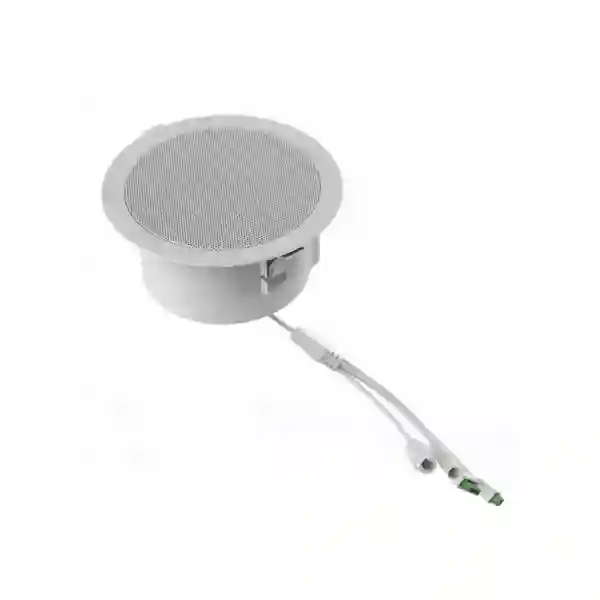
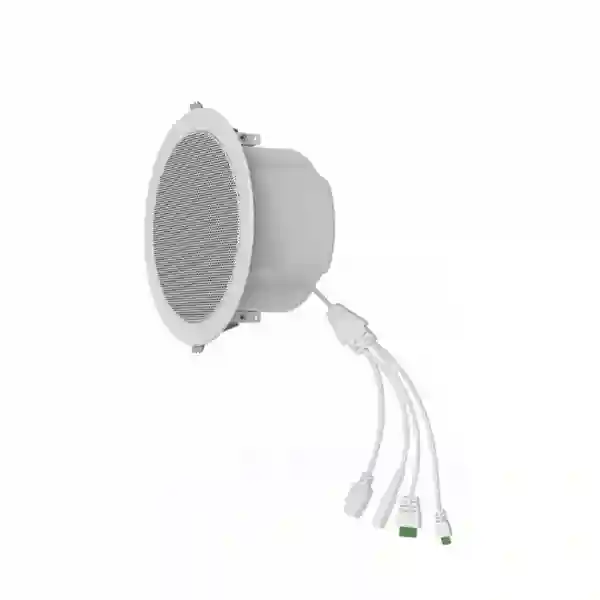
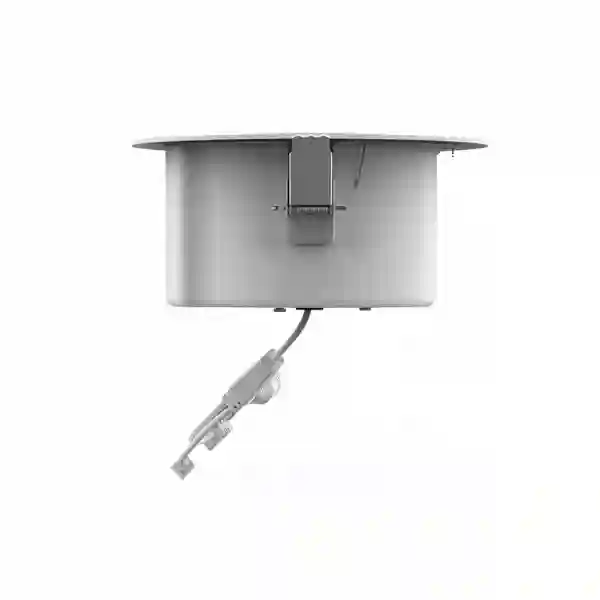
Fanvil A201 Ceiling Speaker
The Fanvil A201 Ceiling Speaker is a commercial-grade IP audio terminal designed for organisations that want paging, scheduled announcements, emergency messages, two-way intercom and broadcast audio to operate over the data network. It can work as a networked audio endpoint or form part of a broader SIP, security, access-control, video-surveillance or Fanvil broadcast-and-intercom environment. For Tanzania buyers, the most important distinction is that the A201 is not merely a passive loudspeaker: it is an addressable IP device with SIP support, network management, power options and integration features that should be planned together with switching, cabling and the communication platform.
FourTeck can help procurement teams evaluate the A201 for offices, schools, clinics, retail sites, reception zones, corridors, public areas and other indoor environments where clear, centrally managed audio is required. A practical quotation should consider speaker quantity, acoustic coverage, SIP or broadcast platform, multicast design, PoE budget, cable routes, ceiling conditions, alert workflows and any linkage with cameras, access control or other systems.
Choose the Fanvil A201 when you need an indoor SIP ceiling speaker with 2 SIP lines, HD voice, multicast paging, built-in microphone, scheduled audio capability and PoE/PoE+ or DC power. Confirm network, PoE, acoustic and platform compatibility before purchase.
What the Fanvil A201 is designed to do
Fanvil positions the A201 as a commercial-grade IP audio terminal for indoor environments. It combines network audio, SIP communications and broadcast functions in a ceiling-mounted form factor. The device supports two SIP lines, allowing it to participate in SIP-based communication systems, and it supports HD voice with G.722 and Opus. For broadcast use, Fanvil specifies MP3 and WAV audio support, 24 MB of built-in audio-file storage, scheduled task broadcasting and up to 20 multicast partitions with priority management. Those capabilities allow a project designer to use the A201 for routine announcements as well as more structured paging and notification workflows.
The integrated omnidirectional microphone expands the use case beyond one-way audio. Fanvil documents monitoring, self-test and intercom functions, which means the device can support two-way communication scenarios when the wider system is configured appropriately. The A201 also provides one short-circuit input and one short-circuit output for linkage with external devices, while Fanvil documentation describes support for external IP-camera video linkage. These interfaces are useful when an audio event needs to participate in a wider security or operational workflow rather than remain a standalone speaker.
Power and networking are central to deployment. The A201 uses an adaptive 10/100 Mbps network port and can be powered through PoE, PoE+ or a 12–24 V DC / 2 A supply. Fanvil specifies speaker output of 6 W with standard PoE and up to 10 W with PoE+ or supported DC power. This difference matters when planning a project: a PoE switch must not only have enough ports, but also sufficient total power budget for every connected A201 and other powered endpoint on the switch.
SIP & paging
Two SIP lines, auto answer, multicast capability and priority controls support IP paging and communication workflows.
HD audio
G.722 and Opus are supported for HD voice, while MP3/WAV support enables networked announcement and audio playback scenarios.
Integrated microphone
The built-in omnidirectional microphone supports intercom, monitoring and self-test functions in supported deployments.
Flexible power
PoE, PoE+ and DC input options give installers flexibility, while power choice affects available speaker output.
Verified Fanvil A201 specifications
| Device type | Commercial-grade SIP/IP ceiling audio terminal |
| SIP | 2 SIP lines; standard SIP protocol support |
| Speaker | 8 Ω, up to 10 W; 6 W with PoE and 10 W with PoE+ or supported DC power |
| Frequency response | 250 Hz–20 kHz |
| Sensitivity / maximum SPL | 90 ±3 dB at 1 m/1 W; maximum SPL 100 dB |
| HD audio | G.722 and Opus, with additional documented voice codecs |
| Broadcast audio | MP3 and WAV; 24 MB internal audio-file storage; scheduled tasks |
| Multicast | 20 multicast partitions with priority management |
| Microphone | Built-in omnidirectional microphone |
| I/O | 1 short-circuit input and 1 short-circuit output |
| Network | Adaptive 10/100 Mbps Ethernet |
| Power | PoE, PoE+ or DC 12–24 V / 2 A |
Specifications above are based on Fanvil documentation for the A201. Final deployment should confirm current firmware, platform interoperability and project-specific requirements.
Integration and network planning
A successful A201 deployment begins with the communication architecture. If the speaker will register to a SIP PBX, confirm account provisioning, codec policy, dialing or paging logic and how users will initiate announcements. If multicast will be used, confirm that the LAN design intentionally supports multicast traffic and that the selected switch configuration prevents unnecessary flooding. For a multi-zone environment, document which speakers belong to each zone, what priority level applies to routine versus urgent messages, and who is authorised to originate a page.
Power planning is equally important. Standard PoE can run the A201, but Fanvil documents different available speaker power depending on whether standard PoE or PoE+/DC is used. A project that expects higher output should therefore verify both per-port capability and the aggregate PoE budget of the switch. The FourTeck Tanzania technology shop provides a broader context for selecting PoE switches, IP communication devices and supporting infrastructure, while the FourTeck Tanzania services overview explains how telephony, switching, cabling and security can be planned as connected systems.
Where the A201 is linked with security workflows, define the exact event path before purchasing hardware. Fanvil documents short-circuit input/output and IP-camera linkage capabilities, but the practical result depends on compatible systems, configuration and the desired response. A door event, alarm input or video linkage should have a clearly documented purpose, ownership and test procedure. Integration should simplify operation, not create hidden dependencies that are difficult to troubleshoot later.
Buying and deployment checklist
List routine paging, scheduled announcements, background audio, emergency notifications and intercom needs. The workflow determines whether SIP registration, multicast, stored audio or external triggering is required.
Use room size, ceiling height, ambient noise and required intelligibility to decide quantity and placement. Do not assume a fixed number of speakers per square metre without an acoustic review.
Confirm ports, PoE standard and total power budget for all speakers plus phones, cameras and access points sharing the switch.
Confirm PBX registration, codec policy, VLAN, addressing, multicast behaviour, firewall boundaries and management access before installation.
Review ceiling construction, mounting access, cable pathways, service access and any building rules that affect installation.
Document device names, IP addresses, zones, SIP accounts, firmware policy, stored audio files, priorities and who can change settings.
Fanvil A201 Ceiling Speaker Tanzania
For organisations in Tanzania, the Fanvil A201 is most relevant where paging needs to become part of an IP-based communications environment rather than remain a separate analogue public-address installation. A business may want announcements to reach reception areas, corridors, training rooms, service counters or operational spaces from a SIP platform. A school may require scheduled bells or messages across selected zones. A clinic may need controlled announcements in public areas while keeping different departments logically separated. A retail or hospitality site may require routine information broadcasts with the option to prioritise urgent messages. In each case, the A201 can provide an addressable ceiling endpoint, but the final system depends on network design, PoE capacity, acoustic coverage and the chosen control platform.
Tanzania projects should be scoped from the site outward. Ceiling type and height affect installation access and speaker placement. Existing structured cabling determines whether new network drops are required. The switching environment must be checked for available PoE ports and sufficient power budget, especially if the same switches also power IP phones, cameras or Wi‑Fi access points. Where the customer expects the full 10 W speaker capability described by Fanvil, PoE+ or the supported DC power option should be considered rather than assuming standard PoE provides identical output. Network segmentation can also be useful when voice, surveillance and operational devices share the same LAN, provided the required SIP and multicast traffic is deliberately permitted.
A Tanzania quotation should therefore include more than the speaker quantity. It should record the intended paging zones, expected sound level, SIP or broadcast controller, PoE source, cable requirement, mounting work, any short-circuit input/output integration and the testing procedure after commissioning. Buyers comparing offers should check whether the proposal includes those dependencies or only the A201 hardware. FourTeck can assist with a coordinated bill of materials that connects the speaker to switching, cabling and communication requirements without making unsupported assumptions about the customer’s existing infrastructure.
Fanvil A201 Ceiling Speaker Dar es Salaam
Dar es Salaam buyers evaluating the Fanvil A201 often need a solution that fits busy commercial environments where several technology systems already share the same network. Offices, educational facilities, clinics, hotels, retail sites and multi-tenant buildings can all have different announcement patterns, so the first task is to define who sends a page, where it should be heard and how urgent messages override routine audio. The A201 supports two SIP lines and multicast functions, giving designers multiple ways to connect paging to a wider voice or broadcast environment. The design should still keep the user workflow simple: authorised staff should be able to reach the correct zone without memorising complicated procedures.
In a multi-floor Dar es Salaam office, for example, the network may already carry desktop voice, Wi‑Fi, CCTV and normal business traffic. Adding ceiling speakers should trigger a check of switch capacity, PoE budget and VLAN design. If several A201 units are installed, naming and zoning conventions become important. A clear scheme such as floor, department and area can make later support easier than a list of generic device names. The multicast path should also be tested across the intended network segments, because a configuration that works on one switch may not automatically reach devices in another VLAN without deliberate network design.
Procurement teams in Dar es Salaam should request a quotation based on floor plans or at least a room list, ceiling information and intended use. This allows speaker quantity and cable requirements to be reviewed before equipment is ordered. If the project includes access control or cameras, the A201’s documented I/O and video-linkage capabilities can be considered as part of the workflow, but compatibility should be confirmed at design stage. The result should be a maintainable IP paging solution with documented device addresses, zones, power sources and administrative access rather than a collection of independent speakers.
Fanvil A201 Ceiling Speaker Mwanza
For a Mwanza deployment, the Fanvil A201 can be considered where an organisation wants to extend voice announcements across indoor areas using standard Ethernet infrastructure. The device’s networked architecture makes it relevant to branch offices, education facilities, customer-service environments and operational buildings where administrators prefer centrally configurable endpoints. The planning emphasis should be on dependable infrastructure: each speaker needs a reliable network connection and an appropriate power method, while the switch must be sized for both data and PoE demand. A paging system is only as dependable as the path between the person sending the message and the endpoint receiving it.
A useful Mwanza site survey should identify cable routes, ceiling access, equipment-room location and the areas that need intelligible announcements. Long corridors may need a different placement strategy from open waiting spaces or partitioned offices. Background noise also matters: a room that is quiet during a survey may become much louder during normal operations. Rather than increasing speaker count without analysis, the project should define the required coverage and then place devices where announcements can be understood at normal operating conditions. The A201’s maximum SPL and frequency response are technical references, but they do not replace room-specific acoustic judgement.
If Mwanza is one branch in a larger organisation, consistency can improve support. Using common VLANs, naming rules, SIP profiles and documentation across sites makes remote troubleshooting easier and reduces configuration drift. The A201’s support for remote volume adjustment, web management and Fanvil management options can assist administration, but access should be protected and limited to authorised personnel. A procurement request should specify whether the branch will operate independently, register to a central SIP system or receive multicast from another part of the network. That single decision influences routing, security and resilience requirements.
Fanvil A201 Ceiling Speaker Arusha
Arusha organisations considering the Fanvil A201 may be planning communication for offices, hospitality environments, training facilities, schools or customer-facing spaces where ceiling-mounted audio keeps equipment visually unobtrusive. In these environments, the value of an IP speaker is not only sound reproduction but controllability. Announcements can be organised by zone, routine audio can be scheduled and SIP-based communication can be linked with existing voice workflows. The A201’s built-in microphone also introduces two-way possibilities where monitoring or intercom functions are appropriate and permitted by the organisation’s policies.
An Arusha project should pay close attention to how the speaker will be operated day to day. A hotel may want front-desk or operational announcements to reach only selected areas. A training site may need scheduled signals and occasional live paging. An office may want emergency messages to take priority over background audio. Those are different workflows even though the hardware is the same. Fanvil’s 20 multicast partitions and priority-management features provide technical building blocks, but the project team should document zone membership, priority hierarchy and the people authorised to originate each type of message.
The quotation should also account for ceiling construction and service access. A ceiling speaker is a permanent installed endpoint, so cable termination, bracket positioning and future maintenance access matter. If PoE is used, ensure the access switch has enough budget for all connected A201 units and other devices. Where power protection is important, consider the switch and upstream network equipment as part of the paging system because loss of switch power removes both data and speaker power. Procurement is therefore strongest when the A201 is evaluated as one component of a complete communication path rather than as an isolated item.
Fanvil A201 Ceiling Speaker Dodoma
In Dodoma, the Fanvil A201 can support organisations that need structured indoor announcements across administrative, educational, service or operational facilities. The device is suited to IP environments because it combines SIP, multicast and network management in a ceiling-mounted speaker. This is useful where a customer wants to avoid maintaining a completely separate audio infrastructure and instead use a managed Ethernet network for both connectivity and power. The design still needs to respect the difference between normal data traffic and time-sensitive communication traffic, especially where voice, video and broadcast services share switches and uplinks.
A Dodoma procurement team should define whether the A201 will be part of a local-only system or connected to a central communication platform. Local operation may simplify dependency on wide-area connectivity, while central SIP registration can give administrators consistent call and paging workflows across multiple buildings or branches. If the project crosses VLANs or routed networks, multicast and SIP paths should be tested rather than assumed. The security model should identify which systems can initiate audio, which users can administer devices and whether management traffic is restricted to trusted networks.
For a complete quote, provide the number and type of rooms, approximate ceiling height, expected noise level, network-switch information and the required message types. If emergency notifications are planned, define how messages are triggered and what should happen if another audio stream is already active. Fanvil documents priority-management and custom emergency audio capabilities, but the operational procedure should be agreed by the customer. The final handover should include a device list, zone map, SIP details, admin access process and basic test steps so future maintenance does not depend on one installer’s memory.
Fanvil A201 Ceiling Speaker UAE
For UAE projects, the Fanvil A201 is a practical option where a business requires indoor IP paging or intercom integrated with a modern structured network. Corporate offices, education environments, clinics, retail facilities, hospitality sites and multi-room commercial spaces can use SIP ceiling speakers to reduce the separation between telephony, paging and operational communication. The same design principles apply regardless of building size: define zones, determine message priority, confirm acoustic coverage and verify how the speaker registers or receives multicast traffic. A specification sheet alone cannot answer those project questions.
UAE installations often involve professional fit-out coordination, so the A201 should be included early in ceiling and network planning. Ceiling cut-out and service access, cable routes, patch-panel ports and switch PoE budgets should be documented before final finishes are closed. If a central PBX or broadcast platform is used, the endpoint profile should be created and tested before the full rollout. For customers operating in the UAE as part of a regional network, FourTeck UAE provides a relevant regional reference point for integrated IT, telecom and network projects.
The purchasing decision should also separate required features from optional integration ideas. The A201 supports short-circuit input/output and external IP-camera linkage, but these functions should only be included when they solve a defined operational need and compatibility has been confirmed. If the goal is simply paging, keep the deployment straightforward. If the goal includes security or alert automation, document triggers, expected actions, priorities and failure behaviour. This approach produces a cleaner solution and a more accurate bill of materials.
Fanvil A201 Ceiling Speaker Uganda
Uganda buyers can consider the Fanvil A201 for indoor paging projects that need SIP integration, multicast zoning and network-based management. The product is especially relevant where an organisation already operates IP phones, managed switches or central communication platforms and wants announcements to become part of that environment. The A201 supports two SIP lines, remote volume control, scheduled audio tasks and a built-in microphone, giving designers flexibility for different types of communication without requiring a separate endpoint for each function.
A Uganda deployment should start with infrastructure verification. Count available Ethernet ports, identify which switches support PoE or PoE+, and calculate the aggregate power requirement. A common mistake is to confirm that every port has a PoE label without checking the switch’s total budget. If cameras, access points and phones already consume most available power, additional A201 speakers may require a higher-capacity switch or a different power arrangement. The network path between paging sources and speakers should also be confirmed for SIP signaling, RTP and multicast behaviour where applicable.
For customers coordinating systems across Uganda, FourTeck Uganda provides a regional technology reference for telephony, networking and security requirements. When requesting an A201 quote, include the number of zones, speaker quantity estimate, ceiling type, PBX or paging platform, network-switch models and any need for security linkage. That information allows the equipment list to reflect the actual project rather than relying on generic assumptions.
Fanvil A201 Ceiling Speaker Kampala
For Kampala offices and commercial facilities, the Fanvil A201 can form part of a unified communications and paging design where live announcements, scheduled messages and emergency audio need to reach defined indoor zones. The value of SIP is that a speaker can be treated as a managed communication endpoint rather than an isolated amplifier channel. Staff may be able to originate pages from a compatible communication system, while network administrators can manage devices through standard IP processes. This can reduce the number of independent systems that operational teams need to understand, provided the configuration is kept disciplined.
Kampala projects should define user roles before configuration. Reception, security, facilities and IT teams may each need different permissions. A receptionist may need routine paging to public areas, while security may require a higher-priority emergency workflow. IT may administer network and firmware settings without needing permission to broadcast. Separating these responsibilities improves both usability and governance. The A201’s priority and multicast features can support the technical design, but organisational rules should determine how they are used.
Infrastructure should be validated floor by floor. Confirm that each intended ceiling location has a practical Ethernet route, that the switch port is correctly configured and that PoE budget is available. If the deployment uses VLAN separation, confirm SIP registration and media flow across the required boundaries. After installation, test routine pages, emergency priority, stored audio, microphone operation and any external I/O linkage included in scope. A documented acceptance test provides a better handover than simply verifying that each speaker powers on.
Fanvil A201 Ceiling Speaker Arua
An Arua project may prioritise straightforward operation and maintainability, particularly where technical support must manage several types of infrastructure with limited time. The Fanvil A201 suits this approach when the organisation already uses Ethernet and wants a centrally configurable indoor speaker. PoE can simplify endpoint power by carrying network connectivity and power on the same cable, but this convenience depends on a reliable switch and suitable upstream power protection. For critical announcements, the design should therefore consider not only the speaker but also the network equipment that keeps it reachable.
Speaker placement should follow the actual room use. A small office area may need fewer endpoints than a busy waiting area or long corridor. The goal is intelligible speech rather than maximum volume everywhere. If the project includes background audio, verify that the desired listening level does not interfere with normal conversation. If the project includes emergency broadcasts, make sure urgent audio receives the required priority and that staff know how to initiate and cancel messages. Fanvil’s stored audio and scheduled task functions can support routine automation, while SIP and multicast can support live communications.
Arua procurement documentation should capture device count, cable length estimates, switch location, PoE method, SIP platform and any environmental constraints. It is also useful to reserve sensible network addressing and device names from the beginning. A speaker named by building, floor and zone is easier to identify remotely than one left with a default hostname. These small operational details lower the support burden over the life of the system and should be treated as part of deployment quality rather than optional administration.
Fanvil A201 Ceiling Speaker Mbarara
For Mbarara organisations, the Fanvil A201 can provide IP-based indoor paging where the customer wants a ceiling-mounted device that participates in a managed communication network. Typical project questions are practical: how many zones are required, who needs to page them, will announcements be live or scheduled, is two-way intercom needed, and what happens when an urgent message arrives during routine audio? Answering those questions before purchase produces a more accurate design than selecting speaker quantity from a catalogue alone.
The network layer should be planned with equal care. If the A201 is powered by PoE, confirm whether the intended switch ports provide standard PoE or PoE+ and whether the total budget supports the planned quantity. Remember that Fanvil specifies different available speaker power for standard PoE compared with PoE+ or supported DC input. For sites with shared voice, camera and wireless infrastructure, it may be useful to document how much PoE headroom remains after the speaker deployment so later expansion does not overload the switch.
Where Mbarara is part of a multi-branch operation, central standards can make deployment repeatable. Use a consistent template for SIP accounts, device naming, zone definitions and management credentials while allowing each branch to have its own local room layout. Record firmware versions and configuration backups where the management platform supports them. A structured approach makes it easier to add another A201 later, move a zone or troubleshoot a device without rebuilding the whole design from scratch.
Fanvil A201 Ceiling Speaker Gulu
Gulu customers planning public-address or operational communication can evaluate the Fanvil A201 when an IP-based ceiling endpoint is preferable to a separate analogue speaker circuit. The device can be integrated with SIP communications or used in Fanvil broadcast-oriented deployments, and its multicast support makes zone-based messaging practical when the network is configured to carry that traffic correctly. The built-in microphone and short-circuit I/O also allow the product to participate in richer intercom or alert workflows where the project requires them.
The most important design decision is what the organisation expects the system to do during normal operation and during exceptions. A routine announcement system may prioritise simple paging and scheduled messages. A safety-oriented design may need urgent messages to override lower-priority audio and may need predefined audio files stored locally. An intercom workflow may require the microphone and SIP call path. Each additional function introduces configuration and testing requirements, so features should be enabled because they solve a documented requirement, not merely because they are available.
For a Gulu quote, share the building or room list, expected zones, network topology and power source. If a central switch powers the endpoints, consider how an outage at that switch affects every connected speaker. UPS-backed switching may be relevant depending on the customer’s continuity requirements. During handover, test representative speakers in every zone, verify volume levels at typical occupancy, confirm the correct priority behaviour and provide administrators with a simple record of device names and management addresses.
Fanvil A201 Ceiling Speaker Kenya
Kenya has an active market for SIP paging and business communications, and the Fanvil A201 fits organisations that want a networked ceiling speaker rather than a conventional passive audio endpoint. It can support corporate offices, education, healthcare, retail and other indoor environments where scheduled announcements, paging or intercom need to be integrated with IP infrastructure. Buyers should compare proposals based on verified specification, network dependencies, accessories and deployment scope rather than price alone, because a low hardware price can still lead to project delays if switching, cabling or configuration requirements are omitted.
A Kenya project should review the PBX or paging platform first. The A201 supports standard SIP and two SIP lines, but interoperability still depends on the target system and configuration. Codec policy, registration, authentication and paging logic should be tested with the actual platform. If multicast is preferred, the switching environment should be assessed for multicast control and VLAN routing. PoE planning should include the entire powered-device estate rather than only the new speakers. These checks are especially important for larger campuses or buildings where access switches feed different floors or blocks.
For region-specific IT and communication planning, FourTeck Kenya provides a relevant reference for integrated network, VoIP and security projects. Customers requesting an A201 quotation should include the intended speaker count, site layout, ceiling type, switch models, SIP platform and any requested intercom or alarm-linkage function. This allows a proposal to distinguish between the A201 itself and the network or installation work required to make the system operational.
Fanvil A201 Ceiling Speaker Kuwait
For Kuwait commercial environments, the Fanvil A201 offers a way to deliver paging and audio through the same managed IP infrastructure used by other business communications. Ceiling mounting keeps the endpoint unobtrusive, while SIP support allows it to participate in compatible telephony or paging workflows. The device’s scheduled audio capability is useful where organisations need recurring messages, and multicast zoning can help separate operational areas so announcements reach the right audience instead of every speaker at once.
Installation planning should be coordinated with fit-out and network teams. The speaker needs a suitable ceiling position, structured cable path and PoE or alternative power source. If a suspended ceiling is used, mounting access and support should be reviewed according to site practice. Network documentation should identify each speaker port and VLAN, while the PBX or broadcast administrator should maintain the corresponding SIP identity or multicast-zone assignment. This cross-discipline coordination is often what separates a clean deployment from one that works technically but is difficult to service.
Kuwait buyers should also decide how much integration is genuinely needed. The A201 includes short-circuit I/O and can participate in camera-linked workflows, but a simple paging project may not require those interfaces. Where integration is required, create an event matrix showing the trigger, the speaker action, the priority and the reset condition. This turns a general feature into a testable requirement. Procurement can then compare quotations on equal terms because every bidder is working from the same functional scope.
Fanvil A201 Ceiling Speaker Ghana
Ghana organisations looking for IP paging can use the Fanvil A201 as an indoor ceiling endpoint that combines SIP communication, multicast broadcast and local audio functions. The device is suitable when the customer wants a scalable architecture in which speakers are individually networked and can be grouped logically. This can be more flexible than a fixed analogue zone design, but it places greater importance on switch configuration, network addressing and device management. The LAN becomes part of the audio system and should be documented accordingly.
A Ghana deployment should begin by listing the spaces that genuinely require announcements. Public areas, back-office zones, training rooms and operational spaces may have different listening conditions and different privacy expectations. The A201’s built-in microphone can support intercom or monitoring functions, but those features should only be enabled where organisational policy and the project use case justify them. Likewise, stored audio should be curated and version-controlled so staff know which files are played for routine and urgent events.
From a procurement perspective, ask suppliers to separate device cost, network requirements, installation, configuration and commissioning. This makes it easier to compare complete solutions instead of comparing a hardware-only offer with an integrated project. A good commissioning process verifies SIP registration or multicast reception, checks every zone, confirms volume levels and tests priority behaviour. The final documentation should include device addresses, power source, switch ports and administrator access procedures for ongoing support.
Fanvil A201 Ceiling Speaker Nigeria
Nigeria projects can use the Fanvil A201 where organisations need networked announcements across offices, education sites, healthcare environments, retail operations or other indoor commercial facilities. The A201’s combination of SIP, multicast, stored audio and two-way communication functions supports both routine and event-driven communication. The system should be designed around a clear operating model: who can originate a page, which zones they can reach, how emergency priority works and what happens if the network or power path is unavailable.
For larger Nigerian sites, switching architecture becomes a major part of the solution. A single access switch may support many A201 units plus phones, cameras and wireless access points. Port count alone is insufficient; the total PoE budget and uplink capacity should be reviewed. Where the site spans multiple switches or buildings, VLAN and multicast strategy should be documented. If the organisation relies on a central SIP platform, WAN resilience may also matter for remote branches, while local fallback workflows can be considered depending on the application.
The FourTeck Africa site provides a broader regional context for coordinated technology requirements across African markets. For an A201 quotation, Nigeria customers should provide expected quantity, location count, ceiling information, PBX or paging platform, switch details and integration requirements. That scope helps distinguish a product purchase from an operational paging solution and supports more accurate technical review before deployment.
Fanvil A201 Ceiling Speaker Seychelles
For Seychelles projects, the Fanvil A201 can suit hotels, offices, education facilities, clinics and other indoor sites that want discreet ceiling audio integrated with IP communications. A networked speaker is particularly useful where administrators want logical zones that can be changed in configuration rather than rewiring analogue speaker circuits. The A201 supports multicast partitions, scheduled broadcasts and SIP communication, allowing a project to combine routine announcements with more interactive communication where appropriate.
Site planning should focus on room acoustics, network availability and maintainability. Hospitality or public-facing areas may need low-profile hardware and carefully controlled volume, while staff-only operational spaces may have higher ambient noise. The quantity and placement of speakers should therefore be based on the physical environment and intelligibility target. If the network switch is located in a central communications room, confirm cable distance and patching. PoE can simplify endpoint power, but the switch and any UPS supporting it become part of the service chain.
Seychelles buyers should also consider remote management because geographically distributed sites can benefit from clear documentation and central configuration. Use consistent device names, reserve management addresses and keep a record of SIP accounts or multicast zones. If local staff are expected to change volume or scheduled messages, define a simple operating procedure and permission model. A well-documented system can reduce unnecessary site visits and make future expansion easier when another area needs coverage.
Quotation checklist for Fanvil A201 projects
To receive a more useful quotation, provide the number of buildings and floors, the rooms or areas that need paging, approximate ceiling height, expected speaker quantity if known, existing PBX or SIP platform, network-switch models, available PoE standard and budget, VLAN structure, required paging zones, scheduled-audio requirements, intercom requirements, security or camera linkage requirements, preferred power method and whether installation/configuration is part of the scope.
Also identify any constraints such as restricted installation hours, finished ceilings, existing cable routes, requirement for UPS-backed operation or a need to integrate with an established network standard. Exact stock, price, warranty terms and delivery scope should be confirmed in the current quotation rather than assumed from a product page.
Frequently asked questions
Is the Fanvil A201 a normal passive ceiling speaker?
No. The A201 is a commercial-grade IP audio terminal with Ethernet connectivity, SIP support, management functions, a built-in microphone, multicast capability and PoE/PoE+ or DC power options. It should be planned as a network endpoint.
How many SIP lines does the A201 support?
Fanvil specifies two SIP lines. The exact way they are used depends on the PBX, paging workflow and configuration.
Can the A201 be powered by PoE?
Yes. Fanvil documents PoE and PoE+ support as well as DC 12–24 V / 2 A. The specified speaker output differs by power method: 6 W with standard PoE and up to 10 W with PoE+ or supported DC power.
Does it support multicast paging?
Yes. Fanvil specifies support for 20 multicast partitions with priority management. Network switches and routing must be configured appropriately for the intended multicast design.
Can the A201 play scheduled audio?
Yes. Fanvil documents 24 MB of internal audio-file storage and scheduled task broadcasting with MP3 and WAV support. The practical schedule and file-management workflow depends on system configuration.
Does the A201 have a microphone?
Yes. It includes a built-in omnidirectional microphone and supports intercom, monitoring and self-test functions. Any monitoring use should align with the organisation’s policies and applicable requirements.
Can it integrate with security systems?
Fanvil documents one short-circuit input, one short-circuit output and external IP-camera video linkage support. Actual integration depends on compatible equipment, configuration and the required workflow, so it should be validated before procurement.
What information should I send for a Fanvil A201 quote?
Send the site or city, quantity, rooms or paging zones, ceiling information, PBX or SIP platform, switch and PoE details, required audio functions, installation scope and any integration needs. This enables a more accurate bill of materials and compatibility review.
Decision recap
The Fanvil A201 is a strong fit when the requirement is an indoor, ceiling-mounted SIP speaker with network paging, HD voice, multicast zoning, scheduled audio and optional two-way intercom or external linkage. It is not the right buying decision when the project only needs a basic passive loudspeaker with no IP control. Confirm acoustic coverage, SIP compatibility, PoE budget and installation conditions before ordering.
Consultation panel
Share your building type, target areas, number of paging zones, switch model, SIP platform and expected quantity. FourTeck can help translate those inputs into a practical A201 deployment scope covering endpoint quantity, network dependencies, power, cabling and configuration.

Reviews
There are no reviews yet.