
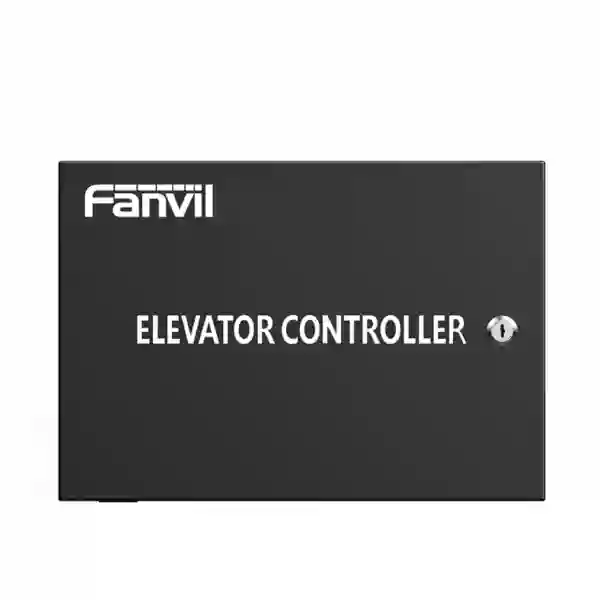
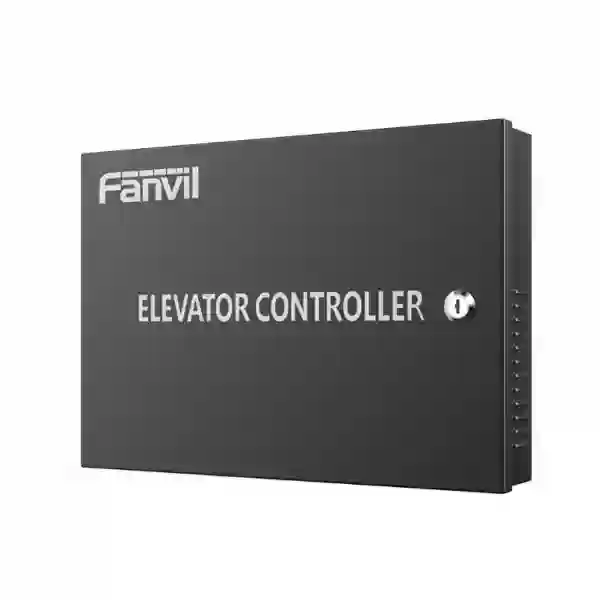
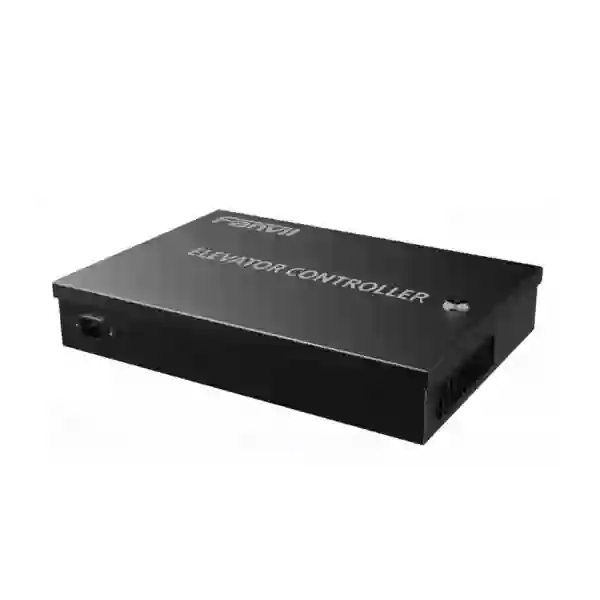
Fanvil EC20 Elevator Controller
The Fanvil EC20 Elevator Controller gives apartment, office and mixed-use building projects a structured way to manage who may access designated elevator floors. Its modular architecture is designed to connect elevator control with building intercom, access-control and fire-alarm workflows, helping property managers and security integrators reduce uncontrolled floor selection while keeping visitor and resident movement manageable. FourTeck Tanzania can help buyers assess the EC20 against floor count, elevator architecture, credential requirements, network design and the Fanvil devices already planned for the building.
Sixteen floors are supported by default, with expansion up to 128 floors using additional sub-controllers.
The controller supports IC card-reader deployments with capacity for up to 50,000 registered cards.
What the Fanvil EC20 does
The EC20 is an intelligent elevator access controller intended for projects where elevator floor permissions need to be associated with people, credentials or intercom-driven visitor workflows. Fanvil positions the device for apartments and office buildings, with modular components that can scale beyond a basic single-controller deployment. In practical terms, this means a resident, employee or approved visitor can be granted access only to the floor or floors allowed by the project’s access policy, instead of giving every credential unrestricted use of every elevator selection.
The controller is designed to work alongside Fanvil door phones, indoor stations and the FCMS platform. It can also integrate with building intercom, access control and fire-alarm systems. That makes the EC20 especially relevant when elevator control is not a stand-alone feature but one part of a larger building-entry sequence: a visitor arrives at an entrance, communicates with a resident or reception point, receives authorization and is then allowed to travel only to an appropriate destination floor. The exact user experience depends on the wider system design, elevator interface and software configuration, so compatibility should be validated before procurement.
For buyers in Tanzania, the important purchasing question is therefore not simply whether an EC20 is available. A sound project should confirm the elevator make and control method, total number of floors, number of lifts, card-reader needs, intercom endpoints, fire-alarm coordination, network availability, enclosure location, power requirements and the expected management workflow. FourTeck can help turn those project details into a clearer bill of materials and quotation request.
Verified EC20 features and specifications
Floor control
Supports assignment of specific floor-access permissions. Sixteen floors are supported by default, with expansion up to 128 floors through additional elevator sub-controllers purchased separately.
Card capacity
Compatible with IC card readers and supports registration of up to 50,000 cards, making it appropriate for projects that need sizeable resident, employee or credential databases.
Network
Uses TCP/IP and includes one RJ45 10/100 Mbps self-adaptive Ethernet port for LAN connectivity and integration into a managed building network.
Interfaces
Provides four RS-485 interfaces, one Wiegand 26/34 interface and one fire-alarm input. These interfaces support integration with the wider access and elevator-control design.
Power
Specified for 110/220 V AC ±10% at 50/60 Hz, with a built-in 12 VDC, 3 A power supply. Project electrical design should still confirm local installation and protection requirements.
Environmental range
Fanvil specifies an operating temperature of −30°C to +70°C and operating humidity of 10% to 90% RH, non-condensing. The published product dimensions are 370 × 260 × 65 mm.
How EC20 fits into a building access workflow
Elevator security is most useful when the user journey is designed as one continuous access sequence rather than as unrelated devices. A building may begin with a Fanvil door phone at the entrance, use an indoor station or guard station for communication and authorization, then pass the access decision to the elevator-control layer. The EC20 can participate in this flow by enabling designated floor permissions and supporting elevator calling through supported Fanvil endpoints and applications. For property teams, this can reduce the need to treat lobby entry and elevator travel as two separate security processes.
The physical and logical design still matters. Door entry, card reading, elevator signaling, emergency conditions and network management need to be coordinated with the lift contractor and other system stakeholders. The EC20 should not be treated as a universal plug-in module for every elevator without verification. Fanvil states compatibility with major elevator brands, but each project should confirm the precise interface, protocol or relay architecture required for the lift system being used.
Integration and project design considerations
Intercom and indoor stations
The EC20 is designed to work with Fanvil door phones, indoor stations and FCMS. This supports projects where visitor communication, resident approval and elevator access need to operate as one coordinated experience. Before ordering, confirm which Fanvil endpoints are part of the system and how calls, permissions and elevator requests are expected to move through the workflow.
Access control
With Wiegand 26/34 and RS-485 connectivity plus support for IC card readers, the EC20 can form part of a credential-based access architecture. Projects should define credential ownership, enrollment, revocation, floor groups, schedules and administration responsibilities before commissioning so security rules remain understandable after handover.
Fire-alarm coordination
The published specification includes one fire-alarm input. Emergency behavior must be designed in accordance with the elevator manufacturer, fire-alarm contractor, building regulations and life-safety requirements. Normal access-control logic must never be assumed to override mandated emergency operation.
Related FourTeck Tanzania solutions
An elevator controller normally depends on the surrounding network, power and access environment. FourTeck Tanzania’s integrated IT, telecom and security portfolio provides context for projects that combine several building technologies. For a broader view of design, installation and lifecycle work, review FourTeck Tanzania services. Buyers comparing related equipment can also browse the Tanzania technology shop. When the requirements are ready, the FourTeck Tanzania contact page is the appropriate place to submit a quotation or project enquiry.
For organizations operating across countries, FourTeck also maintains regional sites covering technology procurement and solution planning. Customers with East African requirements can consult FourTeck Uganda and FourTeck Kenya, while multi-country project teams can review FourTeck Africa, FourTeck UAE and FourTeck Ghana for related regional discussions.
Fanvil EC20 Elevator Controller Tanzania
For Tanzanian apartment developments, office towers, serviced residences, institutional buildings and mixed-use properties, elevator access can become a security issue when anyone who enters the lobby can select any floor. The Fanvil EC20 addresses this problem by bringing floor authorization into the broader access-control design. A project can assign permissions so approved credentials or visitor workflows correspond to specific destination floors. This is useful where a building owner wants more control than a conventional open elevator-panel arrangement can provide, while still keeping the experience practical for residents, staff, guests and security personnel.
Procurement in Tanzania should begin with a technical schedule rather than just a model number. Confirm how many floors are controlled, whether several elevators share the same access logic, whether card readers will be deployed, which Fanvil door phones or indoor stations are in scope and whether a management platform such as FCMS is required. The EC20 supports sixteen floors by default and can expand to 128 using additional sub-controllers, so the bill of materials changes materially between a low-rise office and a large multi-storey property. Buyers should also record how many credential holders will be enrolled, even though the controller supports up to 50,000 cards, because administration and card lifecycle processes should match the organization’s operating model.
Network readiness is another important part of a Tanzania deployment. The controller uses TCP/IP and a 10/100 Mbps Ethernet interface, so the network cabinet or control room should provide stable LAN connectivity and an intentional IP-addressing plan. Where intercom, CCTV and access-control traffic share switching infrastructure, managed VLANs and documented ports can make troubleshooting easier. Power quality, rack or enclosure placement and environmental conditions should also be considered, especially in buildings where electrical interruptions or heat may affect control equipment. A UPS strategy may be appropriate for supporting related network and security infrastructure, depending on project requirements.
FourTeck Tanzania can help convert these building details into a more precise EC20 quotation request. Useful information includes the elevator manufacturer and model, lift contractor, number of elevators, number of served floors, proposed access readers, resident or employee credential count, door-phone models, indoor stations, guard-station requirements, network topology and fire-alarm integration expectations. This preparation reduces the risk of purchasing a controller without the necessary expansion modules, interfaces or companion devices.
Fanvil EC20 Elevator Controller Dar es Salaam
Dar es Salaam has a wide range of multi-storey environments where controlled elevator access can be relevant: corporate offices, apartment blocks, commercial properties, hospitality developments and mixed-use buildings. In these projects, the Fanvil EC20 can help connect lobby security with floor-level permissions. Instead of treating the intercom system as only a door-opening tool, a well-designed workflow can extend the authorization decision into the lift journey. Residents, employees or approved visitors can receive access aligned with the floor they are expected to reach, improving the separation between public and restricted areas.
For a Dar es Salaam project, system integrators should pay particular attention to the relationship between the lift contractor and the security/ICT contractor. The EC20 provides four RS-485 interfaces, one Wiegand 26/34 interface and a fire-alarm input, but the correct connection method depends on the elevator architecture and approved integration method. The lift manufacturer or authorized lift technician should be involved early so the access-control design does not interfere with normal elevator operation, safety functions or service procedures. Floor permissions, visitor operation and emergency behavior need to be written into the commissioning plan rather than improvised at installation time.
High-rise and multi-tenant buildings also need an administrative model. Property managers should decide who creates and removes credentials, how tenant changes are handled, how lost cards are revoked, whether visitor permissions expire and how floor groups are assigned. The EC20’s support for up to 50,000 cards provides significant credential capacity, but good administration determines whether that capacity remains secure over the lifetime of the building. Where Fanvil indoor stations, door phones and guard stations are used, the project should document who can call the elevator, from which endpoint and under what conditions.
A quotation for Dar es Salaam should therefore include more than controller quantity. Share architectural floor counts, elevator count, intended access points, networking layout, control-room location, expected card population and required Fanvil endpoints. Where the project is a retrofit, also identify what access-control or intercom system is already installed. FourTeck can then help evaluate the EC20 as part of the overall building-security and communications design rather than as an isolated accessory.
Fanvil EC20 Elevator Controller Mwanza
In Mwanza, buyers considering the Fanvil EC20 may be planning an apartment building, hotel, office, clinic, institutional property or another site where elevator movement should be restricted according to user permissions. The controller’s value is strongest when floor access is tied to a defined security policy. For example, a staff credential can be allowed only to work areas, a resident credential can be associated with relevant residential floors and a visitor can be permitted to reach an approved destination through the building intercom workflow. The exact policy is project-specific, but the controller provides the platform for implementing that structure.
Mwanza projects should first establish whether sixteen controlled floors are sufficient or whether additional EC20 sub-controllers will be required. Expansion planning matters because Fanvil specifies sixteen floors by default and up to 128 with additional sub-controllers. If a building has several elevators, the architecture should also be reviewed to determine how controllers and sub-controllers will be assigned. A clear floor-and-lift matrix is useful during design: list each elevator, every served floor, each access group and which credential types should activate which selections.
The data network should be treated as part of the access-control system. The EC20 uses TCP/IP over a 10/100 Ethernet port and can integrate with Fanvil intercom endpoints over the LAN. Stable switching, documented IP addressing and sensible segmentation can reduce troubleshooting time. If the property already has IP cameras, Wi-Fi, voice and other building systems, the security network can be organized so the elevator controller is reachable by authorized management devices without unnecessarily exposing it to unrelated user traffic.
When requesting a Mwanza quotation, include project stage and installation context. A new build can coordinate cable routes, controller location, electrical feeds and elevator interfaces from the start. A retrofit may need more investigation because existing elevator panels, readers, intercoms or network cabinets have already been installed. FourTeck can help buyers gather the right information before equipment is selected, reducing the risk of missing components or assumptions about compatibility.
Fanvil EC20 Elevator Controller Arusha
Arusha properties often combine hospitality, office, residential and institutional requirements, which can make access rules more complex than a simple open elevator system. The Fanvil EC20 can support projects that need floor-level permissions connected with building intercom and access-control workflows. In a hotel or serviced property, the aim may be to separate guest, staff and service areas. In an office, the concern may be tenant floors, executive levels and after-hours access. In a residential building, the emphasis may be on resident convenience while preventing casual movement to unrelated floors.
The controller’s modular design gives integrators a path to scale the system, but the expansion plan should be agreed before procurement. Sixteen floors are available by default, while additional sub-controllers can extend the system to 128 floors. That means a mid-rise property may need only the base capacity while a larger building may require several expansion elements. The elevator count and the relationship between elevators also matter; projects should map which car serves which floors and where access restrictions are actually required.
Credential management should reflect the property’s operations. The EC20 supports up to 50,000 cards, yet the practical task is defining how cards are issued, replaced, deactivated and assigned to groups. A hospitality property may need temporary or role-based rules, while an office may use employee access profiles and a residential building may maintain household-level permissions. Integrators should confirm whether card readers use the supported Wiegand 26/34 interface or another arrangement and whether RS-485 devices are part of the overall design.
Arusha buyers should also plan for serviceability. Controller locations need suitable access for maintenance, clear labeling, stable power and reliable network connections. Documentation should record wiring, IP addresses, floor assignments and administrator responsibilities. When these details are built into the handover process, future changes—such as adding a tenant, expanding a building section or replacing credentials—are easier to manage. FourTeck can assist in preparing a project-specific quotation based on those requirements.
Fanvil EC20 Elevator Controller Dodoma
In Dodoma, new offices, institutional facilities, apartment developments and multi-storey commercial properties can benefit from planning elevator security at the same time as intercom and building access. The Fanvil EC20 is designed to give specific users access to designated floors, which can support buildings where public areas, administration spaces, residential levels or controlled departments need different permissions. This is a more structured approach than relying only on a staffed lobby or unrestricted elevator buttons.
A Dodoma design should start with the building’s operational zones. List which floors should remain public, which require credentials, which may be accessible only at certain times and how visitors will be handled. Then map those requirements to the elevator system and Fanvil endpoints. Because the EC20 can work with door phones, indoor stations, guard stations and mobile-app workflows, the project can be designed around the way people actually enter the building rather than forcing security staff to manage elevator permissions manually.
Electrical and network readiness are also key. Fanvil specifies 110/220 V AC ±10%, 50/60 Hz input with a built-in 12 VDC, 3 A power supply. The controller also requires Ethernet connectivity for network integration. The surrounding installation should include appropriate electrical protection, controlled access to the equipment location and documented cabling. If the network also carries CCTV, telephony and Wi-Fi, segmentation and port documentation can make operational support much cleaner.
For procurement teams in Dodoma, it is useful to request a design-led quotation. Provide floor plans where available, a lift schedule, number of elevator cars, access-reader quantity, expected card population, intercom models, fire-alarm interface requirement and details of the existing LAN. FourTeck can use this information to help determine whether the base EC20 capacity is sufficient and which related components should be considered before the project is ordered.
Fanvil EC20 Elevator Controller UAE
For UAE projects, the Fanvil EC20 can be considered for apartment towers, office properties, hospitality developments and mixed-use buildings where floor authorization needs to be connected to intercom and access-control systems. Dense multi-storey environments often have clear separation requirements between residential, commercial, service and restricted zones. The EC20’s ability to assign specific floor permissions can help implement those rules, while its modular architecture supports expansion beyond the sixteen floors available by default.
A UAE procurement team should coordinate the EC20 with the elevator contractor, security consultant, intercom designer and fire-alarm specialist. The device includes RS-485, Wiegand and fire-alarm interfaces, but the precise integration method must be confirmed for the selected lift system and the project’s approved life-safety design. Larger buildings should also model the number of controlled floors, elevator banks and user groups carefully so the number of controllers and sub-controllers is determined from actual design rather than assumptions.
Intercom-driven elevator calling can be especially useful in residential and hospitality workflows. A visitor may call from a Fanvil door phone, receive authorization through an indoor station, guard station or supported application and then be allowed to travel only to the intended floor. This can improve visitor handling when compared with an entry-only intercom that unlocks a lobby door but leaves every elevator floor unrestricted. The exact user flow should be tested and documented during commissioning.
Organizations with both UAE and Tanzania operations can also benefit from using consistent design documentation across sites. Floor groups, controller naming, network segmentation, administrator roles and commissioning checklists can be standardized while still respecting each building’s elevator architecture and local requirements. FourTeck’s regional presence can support a common technical discussion across locations without assuming that one building design can be copied unchanged to another.
Fanvil EC20 Elevator Controller Uganda
Ugandan organizations evaluating the Fanvil EC20 are typically looking for more than basic elevator operation. The requirement is controlled movement: employees, residents or visitors should be able to reach only the floors relevant to them, while the building’s intercom and access system provides the authorization path. The EC20’s floor-permission model and support for Fanvil intercom endpoints make it suitable for projects where elevator access is part of an integrated property-security architecture.
The first sizing question is floor count. Sixteen floors are supported by default, and the platform can expand to 128 floors with additional sub-controllers. The second question is elevator count and topology. A property with multiple lift cars or different elevator banks needs an architecture that reflects which floors each elevator serves and how permissions are distributed. The third question is credential scale. Although the EC20 supports up to 50,000 cards, project teams should define realistic active-user counts, credential groups and lifecycle procedures.
The controller’s Ethernet connection makes LAN design important. It should be placed on a stable, managed network with predictable IP addressing and access controls. Where remote administration or multi-building management is planned, security policies should define who can reach the controller and management systems. Operational technology such as elevator control should not be exposed casually to guest networks or general office traffic. A well-documented VLAN and switching design can support both security and maintenance.
For Uganda-wide procurement, FourTeck can help collect the information required for a better quotation: elevator make, floor count, lift-car count, card readers, Fanvil endpoints, fire-alarm requirements, network availability and desired visitor workflow. Cross-border customers can also coordinate related requirements through FourTeck’s Uganda and Tanzania sites, keeping product selection consistent while still validating each property individually.
Fanvil EC20 Elevator Controller Kampala
Kampala’s concentration of commercial offices, apartments, hospitality properties and multi-tenant buildings creates a strong use case for elevator access that works together with front-door security. The Fanvil EC20 can help restrict floor selection according to user permissions instead of allowing unrestricted vertical movement once someone passes the lobby. In a shared office tower, different tenant groups can be associated with different floors. In a residential project, resident access can be limited to approved levels, while visitors can be managed through the intercom workflow.
System design should distinguish between access policy and elevator mechanics. The EC20 provides the access-control layer, but the lift contractor remains essential for determining how the elevator accepts permitted-floor signals and how emergency modes are handled. The controller offers four RS-485 connections, Wiegand 26/34 and a fire-alarm input, yet those interfaces must be mapped to the actual building design. Commissioning should test normal resident use, visitor calls, denied floors, card removal and fire/emergency scenarios agreed with the relevant contractors.
Kampala property managers should also plan administration before handing over the system. The EC20 can register up to 50,000 cards, but security depends on how accounts and credentials are maintained. Procedures should cover new tenant onboarding, employee changes, lost cards, contractors, housekeeping or service staff, temporary visitors and access revocation. Floor groups can simplify administration when many users share the same permissions, but the grouping strategy should be documented.
A useful Kampala quotation package includes the lift schedule, floor plans, number of users, reader count, door-phone and indoor-station models, networking details and the intended authorization flow. FourTeck can then help evaluate whether the EC20 base controller, expansion sub-controllers and related Fanvil ecosystem components align with the building requirements.
Fanvil EC20 Elevator Controller Arua
For Arua projects, the Fanvil EC20 offers a structured option when a property needs to prevent unrestricted elevator floor selection and combine that control with intercom or credential-based access. Buildings do not need to be extremely large to benefit from this approach. A mid-rise office, hotel, residential block or institutional facility may still have floors that should be available only to approved users. The EC20 starts with support for sixteen floors, making it relevant even before large-scale expansion is required.
The most important early task is to document the real operating process. Who enters through the main door? Who authenticates with a card? Which visitors call residents or staff? Which floors should remain open to everyone, and which should stay restricted? How are service personnel handled? Once those questions are answered, the elevator permissions can be designed around actual usage rather than simply enabling every technical feature. Fanvil’s support for door phones, indoor stations and the FCMS platform creates several possible workflows, but the project should choose the simplest one that meets the security requirement.
Infrastructure conditions also deserve attention. The EC20 requires LAN connectivity and mains power, so cabling routes and equipment placement should be resolved before installation. Where local power interruptions are a concern, the broader security and network design should consider appropriate power protection for switches, intercom devices and control hardware. The controller’s published operating range is broad, but it should still be installed in a protected, serviceable location rather than exposed unnecessarily to dust, moisture or uncontrolled access.
When requesting an Arua project quote, provide floor count, elevator type, number of lift cars, expected card count, intercom endpoint list and any existing access-control equipment. If the installation is part of a new building, involving the elevator and low-voltage contractors early can simplify cable provision and interface testing. FourTeck can assist with product selection and project scoping based on these inputs.
Fanvil EC20 Elevator Controller Mbarara
Mbarara businesses and property developers can use the Fanvil EC20 as part of a layered access-control strategy for multi-storey buildings. The controller is particularly relevant when lobby access alone is not enough. A person may be allowed into a building but should still be restricted from sensitive office levels, private residential floors, administration areas or other controlled destinations. By assigning floor permissions, the EC20 helps separate building entry from elevator authorization while keeping both processes within a coordinated system.
Project planning should determine whether credential-based operation, intercom-driven visitor access or a combination of both is required. The EC20 supports IC card readers and up to 50,000 registered cards. It can also work with Fanvil intercom devices and management systems. A building with regular staff and occasional visitors may use cards for employees while handling guests through reception or resident authorization. A residential property may emphasize indoor-station and mobile workflows. The best design depends on the building’s staffing and access policy.
For growing properties, scalability is an important reason to assess the EC20. Sixteen floors are included by default, while additional sub-controllers can extend capacity to 128 floors. Even if the first phase uses fewer floors, the designer should understand future building expansion, additional elevator cars or new tenant areas so the controller architecture does not need to be reworked unnecessarily. Network switch capacity and control-room space should also allow practical future growth.
Mbarara procurement teams can improve quotation accuracy by sharing a simple matrix of floors, user groups and elevators. Add information about card readers, intercom devices, fire-alarm coordination, LAN availability and power. FourTeck can then help identify the appropriate EC20 configuration and related equipment for evaluation, while avoiding unsupported assumptions about elevator compatibility or project scope.
Fanvil EC20 Elevator Controller Gulu
In Gulu, the Fanvil EC20 can support offices, accommodation properties, healthcare or institutional buildings and residential developments that need controlled access between floors. The business case is straightforward: an access credential or approved intercom interaction should not automatically provide unrestricted movement through the building. Floor-level permissions allow the project to define which destinations are valid for different users, strengthening security without requiring a guard to manually operate the elevator for every visitor.
The device’s modular architecture gives designers flexibility, but correct sizing still matters. Sixteen floors are controlled by default, while expansion to 128 floors requires additional sub-controllers. A low-rise facility should not be burdened with unnecessary expansion hardware, while a larger project should avoid underestimating future floor counts. The same principle applies to credentials: support for up to 50,000 cards provides headroom, but the database should remain organized around sensible access groups and documented administration.
A reliable Gulu installation also depends on network and electrical preparation. The EC20 uses a 10/100 Ethernet interface and TCP/IP, which means the security network should provide stable switching and suitable addressing. If a building uses IP intercom, CCTV and access-control devices, a managed switch architecture can help separate and monitor those services. Electrical protection, suitable enclosure access and clear cable labeling are equally important because elevator-control systems can be difficult to troubleshoot when wiring and interfaces are undocumented.
For a project enquiry, gather the elevator make, floor count, elevator count, expected credential population, card-reader interface, Fanvil endpoint models and the planned visitor process. Where fire-alarm integration is required, include the fire contractor in design discussions. FourTeck can use this information to help scope the EC20 solution more accurately and identify questions that should be confirmed before purchase.
Fanvil EC20 Elevator Controller Kenya
Kenyan developers, system integrators and facilities teams can evaluate the Fanvil EC20 for multi-storey environments where elevator use should follow the same authorization logic as building access. The controller is designed for apartments and office buildings and can integrate with intercom, access-control and fire-alarm systems. This helps create a workflow in which a person’s identity or visitor approval determines not only whether they enter the property but also which floor selections are made available.
Larger Kenyan projects should pay close attention to modular scaling. Sixteen floors are supported in the base configuration, while additional sub-controllers can extend the system to 128 floors. The design should therefore identify elevator banks, served floors, restricted floors and any common areas before hardware quantities are finalized. In a mixed-use development, residential, commercial, parking and service levels may need different policies, making a well-structured permissions matrix especially useful.
Intercom integration can also improve visitor handling. Fanvil states that residents can call elevators through indoor stations, door phones, guard stations and mobile apps in supported deployments. That capability can be useful where a visitor should receive a controlled path to the host’s floor rather than general access. However, every project should confirm endpoint models, software versions and integration requirements during design. The EC20 should be validated as part of the complete system rather than assumed compatible with every legacy installation.
Organizations operating in both Kenya and Tanzania can use similar documentation standards for controller naming, credential groups, network segmentation and commissioning, while still validating elevator compatibility per site. FourTeck’s Kenya and Tanzania platforms can support those regional procurement conversations. A detailed request should include floor count, elevator schedule, reader type, user population, intercom devices, network design and fire-alarm considerations.
Fanvil EC20 Elevator Controller Kuwait
Kuwait apartment, office and hospitality projects often need strong separation between public access and private floors, making elevator authorization a logical extension of the entrance-security system. The Fanvil EC20 supports assignment of specific floor permissions and can integrate with building intercom and access-control workflows. This can help a property move from a simple “door unlocked” model to a more complete user journey in which the approved person can reach only the destination defined by policy.
The base EC20 supports sixteen floors and can expand to 128 with additional sub-controllers, making design scale an important procurement factor. A project team should classify all served floors, including parking, podium, service and mechanical destinations where relevant, then determine which levels need restrictions. Multiple elevator banks may require separate logic. This planning is especially important in mixed-use properties where residents, office tenants, staff and visitors have very different movement patterns.
Network and card-management requirements should be documented as well. The EC20 uses TCP/IP over 10/100 Ethernet and supports up to 50,000 IC cards. It includes Wiegand 26/34 and RS-485 interfaces. While these specifications provide integration options, the actual reader technology and access platform should be confirmed for the project. Credential enrollment, tenant turnover, temporary access and revocation processes should be assigned to clearly defined administrative roles.
Kuwait buyers should coordinate the elevator contractor and life-safety teams because the device also provides a fire-alarm input. Emergency operation must remain aligned with the lift and fire strategy for the property. FourTeck can help customers develop a product and integration checklist so quotation requests include the required floor capacity, related Fanvil endpoints, readers, network details and project conditions.
Fanvil EC20 Elevator Controller Ghana
Ghanaian commercial, residential and institutional projects can use the Fanvil EC20 where elevator floor access should be governed by user permissions rather than left open after someone enters the building. The controller can form part of a wider Fanvil intercom and access-control deployment, allowing the entrance communication system, credential database and elevator-control layer to support one coherent security process. This is particularly useful in multi-tenant or mixed-use environments where different groups should reach different parts of the property.
The practical design begins with floors and user groups. The EC20 supports sixteen floors by default and up to 128 floors with additional sub-controllers. A project should identify which floors are controlled, which users are allowed to each floor and whether common areas should remain unrestricted. Next, determine whether people authenticate with IC cards, receive access through intercom authorization or use a blended workflow. Fanvil specifies support for up to 50,000 cards, giving the platform room for substantial user populations.
Infrastructure planning is equally important. A 10/100 Ethernet interface connects the controller to the LAN, while RS-485 and Wiegand provide field-integration options. The controller should be installed in a controlled location with reliable network and electrical infrastructure. Configuration records, cable labeling and a simple topology diagram can make future support much easier, particularly when different contractors are responsible for the elevator, intercom, network and fire systems.
Ghana procurement teams can reduce uncertainty by gathering an elevator schedule and access matrix before requesting pricing. Include the elevator brand and model, number of cars, total floors, restricted floors, reader type, approximate user count, Fanvil door-phone and indoor-station models, network readiness and fire-alarm interface requirements. FourTeck can then help assess the EC20 and related components as part of a complete project discussion.
Fanvil EC20 Elevator Controller Nigeria
Nigeria’s large office, residential and hospitality market includes many multi-storey properties where entrance control needs to extend into elevator access. The Fanvil EC20 is designed for this type of requirement, supporting floor-specific permissions and integration with intercom, access-control and fire-alarm systems. A well-designed implementation can help property managers reduce unrestricted movement between floors while giving residents, employees and approved visitors a clearer and more automated access path.
For large Nigerian buildings, modular capacity is a major design point. The EC20 starts with sixteen floors and supports expansion to 128 floors through additional sub-controllers. Project teams should not size only from the current occupied floors; they should consider all elevator-served levels, future fit-outs and the number of lift cars. High-rise or multi-tower sites may need a broader control architecture, so the elevator schedule should be reviewed alongside security zoning before hardware is ordered.
The credential database supports up to 50,000 cards, which can accommodate sizeable communities or workforces, but operational discipline remains essential. Security teams should define how cards are issued, expired, disabled and associated with floor groups. Visitor workflows should define whether reception, residents or guard stations grant temporary access and how that permission is removed after use. Where Fanvil indoor stations and door phones are installed, these workflows can be incorporated into the overall intercom design.
Because the controller relies on IP networking and building-system interfaces, Nigerian deployments should also plan for stable power, protected equipment locations and managed switching. The EC20’s published environmental range is broad, but clean installation conditions and power protection still improve serviceability. FourTeck can help structure quotation requirements around elevators, floors, cards, readers, Fanvil endpoints, LAN topology and emergency-interface needs, rather than relying on a generic product-only request.
Fanvil EC20 Elevator Controller Seychelles
In Seychelles, hotels, resorts, apartments, offices and mixed-use properties may need elevator access that balances guest convenience with staff and private-area security. The Fanvil EC20 can support this requirement by assigning floor permissions and integrating the elevator layer with intercom and access-control systems. A hospitality property, for example, may want guests to reach approved accommodation floors while retaining tighter control over offices, service areas or staff-only levels. Residential and commercial buildings can apply similar principles to tenants and visitors.
The system should be scaled to the property. Sixteen floors are supported by default and up to 128 can be controlled with additional sub-controllers. Although many Seychelles buildings may not require the maximum capacity, modular expansion can still be useful when a site has several elevator zones, phased development or future additions. The number of lift cars and the relationship between guest, service and public elevators should be included in the design from the beginning.
Coastal and hospitality environments make installation quality important. The EC20 itself should be placed in a protected technical area, with network and electrical cabling routed appropriately for the building. The controller supports Ethernet, RS-485, Wiegand and fire-alarm connectivity, but field wiring and equipment locations should be coordinated with the elevator and security contractors. Good labeling and documentation are especially valuable where maintenance may involve several specialist providers.
Seychelles buyers can prepare a stronger quotation request by sharing floor plans, lift schedules, access zones, expected guest or staff credential counts, reader types and the Fanvil intercom devices planned for the property. The visitor or guest journey should also be described: who grants access, from which device and to which floors. FourTeck can then help evaluate the EC20 configuration and related ecosystem requirements against the property’s actual operating model.
Selection and sizing guide
Choosing the EC20 correctly starts with a simple rule: size from the building’s access logic, not just the physical number of floors. A floor that remains public may not need the same control treatment as a secure floor. Parking levels, podiums, service levels and shared facilities may create additional permission groups. Create a table with every elevator-served destination and mark whether it is public, credential-controlled, visitor-controlled or restricted to specific roles. This table immediately exposes the true control requirement.
Next, map elevator cars to those floors. Some buildings have one lift serving all levels; others have separate low-rise and high-rise banks, service elevators or parking lifts. The EC20 architecture and any required sub-controllers should reflect those relationships. If the project exceeds sixteen controlled floors, additional sub-controllers are required to expand toward the published maximum of 128 floors. Quantities should be confirmed against the final elevator design.
Then define credential and intercom workflows. Decide whether cards are issued to residents, employees, contractors or guests; which readers will be used; and whether visitors receive authorization through Fanvil indoor stations, door phones, guard stations or mobile apps. Confirm the management responsibilities for adding users, changing floor groups and revoking access. The EC20’s 50,000-card capacity is useful, but the management process determines whether the system remains secure and usable.
Finally, confirm integration interfaces and infrastructure. Record the elevator interface approved by the lift contractor, network switch and VLAN, IP-addressing method, power source, fire-alarm input requirement, equipment-room environment and any FCMS management requirements. This checklist should be completed before a purchase order so the selected hardware matches the commissioning plan.
Deployment and commissioning considerations
Installation should begin with coordinated drawings. The elevator contractor needs to identify approved connection points and operating logic. The access-control team needs to document readers, credentials and user groups. The network team needs to allocate switch ports and addressing. The fire-alarm specialist must confirm emergency interfaces and expected behavior. Treating these tasks as one coordinated work package reduces last-minute changes and helps prevent one contractor from making assumptions about another system.
During commissioning, test more than successful access. Verify that unauthorized credentials cannot select restricted floors, revoked cards stop working, each user group receives only the intended permissions and visitor workflows behave consistently. Test intercom-triggered elevator calls from every supported endpoint in scope. Confirm that loss of network connectivity and power restoration do not leave the system in an undocumented state. Emergency and fire behavior must be tested according to the approved life-safety plan with the responsible contractors.
Handover documentation should include controller names, IP addresses, floor mappings, elevator mappings, wiring references, software or platform access details, administrator roles and a credential-management procedure. Where the site uses many cards, document a naming or numbering convention. Where several sub-controllers are installed, label them in both software and the physical cabinet. Good documentation is a practical security control because it reduces unsafe improvisation during future maintenance.
Common use cases
Residential apartments
Residents can be associated with permitted floors, while visitor access can be linked with intercom authorization. This can reduce unrestricted movement between residential levels and improve the overall entry experience.
Office buildings
Different departments or tenants can receive floor-specific permissions. Reception or guard stations can support approved visitor journeys without opening access to unrelated office levels.
Hospitality
Hotels and serviced properties can separate guest, staff and operational zones. The exact workflow should be aligned with the property’s credential and intercom design.
Mixed-use buildings
Residential, office, retail and service floors can be organized into distinct permission groups, helping the elevator system reflect the building’s actual security zoning.
Quotation checklist for Fanvil EC20
A complete request helps the supplier and integrator identify the right controller architecture and any related equipment. Include as much of the following as possible:
Frequently asked questions
How many floors does the Fanvil EC20 support?
The EC20 supports sixteen floors by default. Fanvil specifies expansion up to 128 floors through additional elevator sub-controllers purchased separately. The number of required modules should be confirmed from the final controlled-floor and elevator design.
How many cards can the EC20 register?
Fanvil specifies support for up to 50,000 IC cards. Projects should still define a credential-management process for enrollment, replacement, expiration, revocation and floor-group assignment.
Can the EC20 integrate with Fanvil intercom systems?
Yes. Fanvil describes the EC20 as working with Fanvil door phones, indoor stations and the FCMS platform. It can support elevator calling through supported indoor stations, door phones, guard stations and mobile applications. Exact endpoint compatibility and software requirements should be confirmed for the project.
Does the EC20 support Wiegand readers?
The published specification includes one Wiegand 26/34 interface. The complete reader and credential architecture should be verified against the chosen hardware and access-control design.
What network connection does the EC20 use?
The EC20 uses TCP/IP and includes one 10/100 Mbps self-adaptive Ethernet port. A managed, documented LAN connection is recommended for reliable integration with the rest of the building system.
Can the EC20 work with a fire-alarm system?
The specification lists one fire-alarm input. Emergency operation must be coordinated with the elevator and fire-alarm contractors and should follow the approved life-safety design and applicable requirements for the building.
Is the EC20 suitable for an existing elevator?
It may be suitable, but retrofit compatibility should never be assumed. The elevator make, controller architecture, available interfaces and approved integration method must be checked with the lift contractor before the EC20 is purchased or connected.
What information is needed for a quotation?
Provide the elevator make and model, number of lift cars, total floors, controlled floors, estimated card count, reader requirements, Fanvil intercom devices, network availability, fire-alarm integration requirement and whether the project is a new build or retrofit.
Decision recap
The Fanvil EC20 is best suited to projects that need elevator floor permissions to become part of an integrated building-access workflow. Its most important verified capabilities are specific floor assignment, sixteen-floor default capacity, expansion to 128 floors, support for up to 50,000 IC cards, Ethernet networking, RS-485, Wiegand 26/34 and a fire-alarm input. It is designed to work with Fanvil door phones, indoor stations and FCMS, giving integrators a way to coordinate entry communication and elevator authorization.
The buying decision should therefore be made from a complete system view. Confirm the lift interface, number of floors and elevator cars, credential workflow, Fanvil endpoints, network design and emergency requirements before ordering. If those details are available, FourTeck can help structure a quotation and identify the controller and related components to evaluate for the project.
Talk to FourTeck about your EC20 project
If you are planning elevator access control for an apartment, office, hotel, institution or mixed-use property, share the building and lift details before asking for a final configuration. FourTeck can help review the number of controlled floors, card-reader requirements, Fanvil intercom endpoints, LAN readiness and integration questions so the quotation reflects the actual site. For retrofit projects, include photos or drawings of the existing control environment where appropriate and involve the elevator contractor in compatibility decisions.



Reviews
There are no reviews yet.