
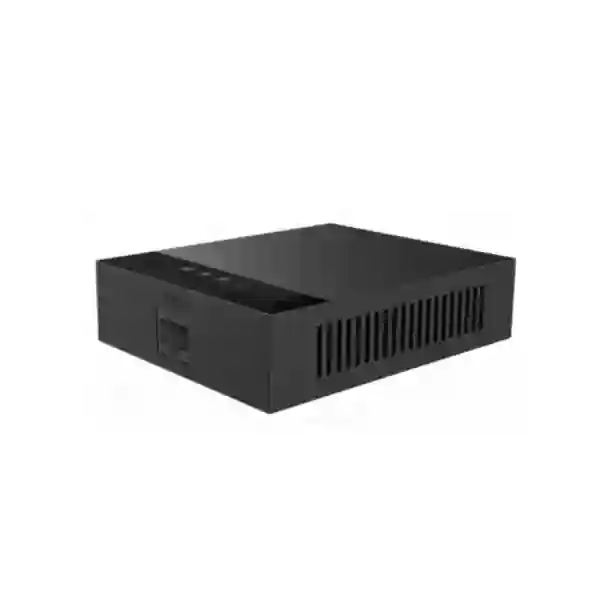
Fanvil GA10 SIP ATA Gateway
The Fanvil GA10 SIP ATA Gateway is a compact analog telephone adapter for organisations that want to connect a conventional analog telephone to a SIP-based voice platform. Fanvil positions the GA10 as an easy-to-deploy FXS gateway with two SIP lines, G.722 and Opus wideband codecs, three-way audio conferencing, one 10/100 Mbps Ethernet interface, status indicators, web-based configuration and flexible desktop or wall installation. It is especially relevant when a business wants to preserve a suitable analog handset while moving call control to an IP PBX, hosted SIP platform or other compatible SIP service.
Choose the GA10 when one analog endpoint needs a compact FXS-to-SIP bridge and the project benefits from two SIP registrations, wideband codec support and straightforward browser-based administration. Confirm PBX compatibility, SIP credentials, network settings, local power and the exact analog device behaviour before quantity deployment.
Supports two SIP registrations for flexible extension or service configuration, subject to the connected SIP platform.
Connects a traditional analog telephone endpoint to an IP voice environment through its RJ11 FXS port.
Wideband codec support helps enable higher-quality voice where the PBX, network and remote endpoint support the same codec path.
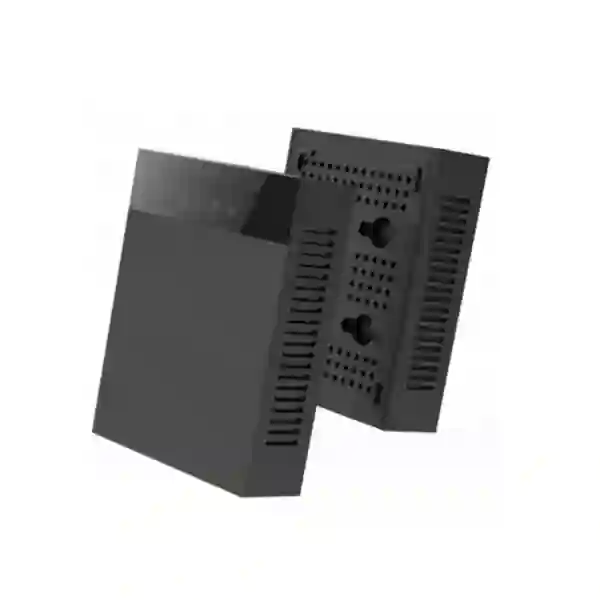
Its compact enclosure can be used on a desktop or wall mounted, helping fit small offices, reception areas and equipment spaces.
What the Fanvil GA10 is designed to solve
Many organisations still have analog telephones that remain perfectly usable even after the call-control platform moves to SIP. Replacing every analog set with an IP phone is not always necessary. A compact ATA can provide a controlled migration path by presenting an analog FXS connection to the handset while registering the device to a SIP service across the data network. This approach can be useful in a small office, hotel back office, branch, guard position, utility room, reception support point or any other location where a basic analog handset is still appropriate.
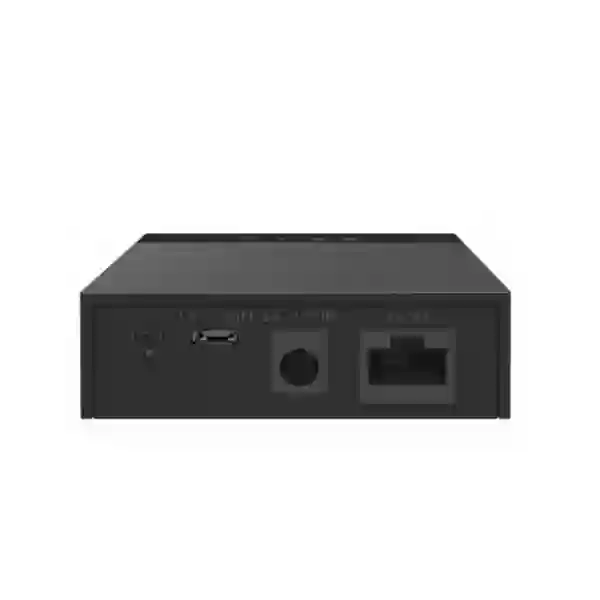
The GA10 is built around that simple role rather than trying to act as a high-port-density enterprise gateway. Fanvil lists one FXS RJ11 port, one 10/100 Mbps RJ45 network port, a Micro USB power-input interface, a DC input, four status indicators and support for desktop or wall installation. The product also supports two SIP lines and three-way conferencing. Those characteristics make it easier to position the unit close to an existing analog phone and migrate that endpoint without redesigning the entire user experience.
The key purchasing question is therefore not whether an ATA has the longest possible feature list, but whether the GA10 matches the exact analog endpoint, SIP platform, network and operational requirement. Buyers should validate dialling behaviour, codec policy, caller ID, DTMF, transfer behaviour, voicemail signalling, security settings and any provisioning requirements with the target PBX or SIP service. A successful proof-of-concept with the actual phone and production call flow is often more valuable than assuming interoperability from SIP registration alone.
Verified Fanvil GA10 technical highlights
| Voice positioning | SIP ATA gateway for connecting an analog telephone to an IP voice environment |
| Analog interface | 1 × FXS RJ11 |
| SIP capacity | 2 SIP lines |
| Wideband audio | G.722 and Opus |
| Conference | 3-way audio conference |
| Network | 1 × 10/100 Mbps Ethernet |
| Status visibility | 4 indicators covering power, network, SIP state and call |
| Power | Micro USB power input or power adapter |
| Placement | Desktop or wall-mounted installation |
Specifications should be checked against the current Fanvil datasheet and firmware release before final procurement, particularly where a deployment depends on a specific signalling, security, provisioning or regional telephony behaviour.
Compatibility and deployment checks before ordering
An ATA sits between two different worlds: an analog endpoint and an IP-based voice system. Both sides need attention. On the analog side, confirm that the telephone and required signalling behaviour match the intended use. On the SIP side, document the registrar or PBX address, authentication method, transport preference, extension credentials, codec order, DTMF method, caller ID expectations, time settings and any secure-media requirements. A project that skips these details can produce symptoms that look like a faulty adapter even when the real cause is an incorrect SIP or PBX configuration.
Network planning matters as well. The GA10 uses a 10/100 Mbps Ethernet connection, which is more than adequate for the voice traffic generated by one analog endpoint, but the quality of that network path remains important. Packet loss, jitter, congestion, unstable DNS, incorrect VLAN handling or restrictive firewall rules can affect registration and call quality. Where the device is deployed at a branch, the WAN path to a central PBX should be assessed for stability rather than assuming that a successful internet speed test guarantees good voice performance.
For organisations planning a broader phone-system refresh, the FourTeck Tanzania technology shop provides additional buying context across IP phones, IP PBX hardware, networking and supporting infrastructure. If an ATA is being considered because a desk can move to a native SIP phone instead, compare the operational benefits rather than looking at hardware price alone.
Fanvil GA10 SIP ATA Gateway Tanzania
For organisations evaluating the Fanvil GA10 SIP ATA Gateway in Tanzania, the strongest use case is a controlled migration from a simple analog extension to a SIP-based communications platform without immediately replacing the attached telephone. A branch office may have a small number of analog handsets that staff understand and use reliably. A hospitality or service environment may have a low-feature phone in a location where a full IP handset adds little operational value. An administrative office may need to connect a legacy endpoint to a newly deployed IP PBX. In these situations, the GA10 can act as the bridge between the familiar analog device and the new SIP call-control environment.
Tanzania procurement teams should treat the gateway as part of a voice solution, not as an isolated adapter. Before requesting a quotation, identify the PBX or hosted SIP platform, the number of analog endpoints, whether each endpoint needs one or two SIP registrations, how calls should be routed, and which features users actually depend on. Caller ID, transfer behaviour, voicemail indication, dial plans, DTMF and local tone expectations deserve validation. The device supports two SIP lines, but the broader call capability still depends on the PBX service, account permissions and configuration.
Infrastructure conditions also influence deployment quality. Stable Ethernet, predictable addressing, DNS availability and correct firewall policies can prevent intermittent registration problems. If the GA10 will connect over a WAN link to a central PBX, measure latency and packet stability during real business hours. Where the site experiences power interruptions, decide whether the adapter and surrounding network equipment should be protected by suitable UPS capacity. The GA10 can be powered through its supported power interfaces, but the voice path also relies on the switch, router, firewall and PBX connection remaining available.
For a Tanzania quotation, provide the quantity of GA10 units, existing analog phone types, PBX platform and version, SIP provider details where applicable, IP addressing approach, branch locations, power expectations and desired configuration scope. This information helps distinguish a straightforward device supply from a project that requires provisioning, network preparation, testing or migration support. Buyers comparing a native desk phone instead of an ATA can also review the Dinstar C60S business IP phone as an example of a purpose-built SIP endpoint available on the Tanzania site.
Fanvil GA10 SIP ATA Gateway Dar es Salaam
Dar es Salaam businesses commonly manage mixed technology estates created over many years. A company may have moved its core communications to an IP PBX while still retaining analog phones in reception support areas, security posts, small offices, warehouses or utility locations. The Fanvil GA10 can be useful where the requirement is to preserve one of those analog endpoints and register it into the new SIP environment. Its compact size and desktop or wall-mounting options allow it to be placed close to the existing telephone or within a tidy communications area rather than forcing an immediate endpoint replacement.
In a busy Dar es Salaam office, network design deserves more attention than the modest bandwidth used by the GA10 itself. The same LAN may carry cloud applications, CCTV, Wi-Fi, file traffic and voice. Even a single analog-to-SIP gateway can suffer poor call quality if the upstream path is congested or unstable. IT teams should ensure that switching, routing and firewall rules support the selected SIP architecture and that the branch internet path is suitable where the PBX is hosted remotely. Voice quality should be tested during busy periods, because short bursts of packet loss or jitter may not appear in a basic bandwidth test.
A practical migration can begin with one pilot GA10 connected to the actual analog handset. Test incoming and outgoing calls, caller ID, DTMF operation, call transfer procedures, hold, conference behaviour, voicemail signalling and recovery after network or power interruption. Confirm that staff can use the endpoint without needing complicated workarounds. If the pilot succeeds, document the configuration before adding more units. Standard naming and consistent SIP profiles simplify support across several branches or departments.
Dar es Salaam buyers should also compare whether an ATA remains the best long-term endpoint. If users need richer directories, programmable keys, multiple line appearances, headset workflows or direct on-device administration, a native SIP phone may offer a cleaner experience. For PoE-based deployments, the Dinstar C60SP PoE business IP phone illustrates an alternative approach where the endpoint itself is IP-native and can be powered from a compatible PoE switch. The best choice depends on the user role, existing handset value and infrastructure plan.
Fanvil GA10 SIP ATA Gateway Mwanza
Mwanza organisations considering the Fanvil GA10 often face a practical question: how can an existing analog telephone remain useful after the communications platform moves to SIP? The GA10 addresses that transition by providing an FXS connection for the analog handset and registering to a SIP platform over Ethernet. This can fit a branch office, small business, educational facility, hospitality back office, clinic administration point or operations area where basic calling is required but replacing every handset with an advanced IP phone would add little value.
The device supports two SIP lines, which may provide flexibility for a primary extension plus a secondary identity or service, depending on the PBX. Buyers should not assume that two registrations automatically produce a particular call-flow behaviour. The PBX configuration still determines routing, permissions, hunt groups, voicemail, schedules and other business logic. A Mwanza project should therefore document the intended extension plan before the hardware is ordered. This is especially important when several branches will use the same template and administrators need predictable results.
Remote support can be simplified when configuration is standardised. Fanvil provides web-based administration for the GA10, and current product information also references auto-provisioning and common network-management capabilities in the product family documentation. The sensible approach is to establish one validated configuration, record firmware versions, control credentials and maintain a replacement procedure. When a branch reports a problem, support staff can then separate endpoint issues from WAN, PBX or SIP-provider problems more quickly.
For Mwanza procurement, include the type of analog phone, quantity, desired SIP accounts, PBX address, whether the PBX is local or remote, router/firewall details and any requirement for configuration or testing. If the site depends on WAN connectivity to reach a central PBX, consider the availability of backup internet and the operational impact of an outage. The GA10 itself is compact and simple, but service continuity depends on the complete path from handset to adapter, LAN, router, internet or private link, and call-control platform. Planning that chain makes the deployment more supportable.
Fanvil GA10 SIP ATA Gateway Arusha
Arusha has a wide mix of hospitality, tourism administration, professional services, education and general business environments, and many of these organisations operate phone systems that evolve gradually rather than being replaced in one project. The Fanvil GA10 can support that phased approach by retaining a suitable analog handset while the underlying call platform becomes SIP based. A guest-service back office, reservation support point, reception overflow position or small departmental extension may need dependable voice service without requiring a full-featured color-screen IP phone.
For hospitality and service operations, call handling must be tested from the user’s perspective. Confirm that the analog phone rings correctly, presents the expected caller information when supported, sends digits in the required manner and behaves predictably for transfers, hold and voicemail. The GA10’s three-way conferencing can add convenience for quick coordination, but the actual workflow should be demonstrated with the intended PBX. Staff should not have to learn a fragile sequence of special codes if a different endpoint would make the process simpler.
Arusha deployments may also be spread across buildings or branches, making network consistency important. Record which switch port serves the ATA, the VLAN if one is used, its addressing method, the SIP registrar, firmware version and physical location. Clear labels and documentation are valuable because an ATA is small and can otherwise be moved or disconnected during routine office changes. If the device is wall mounted, provide safe cable routing and keep its power supply accessible for maintenance without leaving it where it can be accidentally unplugged.
When requesting a quotation, Arusha buyers should specify whether they need hardware only or a broader migration service. A complete scope can include SIP account preparation, PBX extension creation, firewall review, ATA configuration, testing, labeling and handover. If several analog points will eventually be converted, identify whether a collection of single-port ATAs remains manageable or whether a higher-density FXS gateway would be more appropriate. The GA10 is best understood as a compact endpoint migration tool; capacity planning should avoid turning many individually deployed adapters into an unnecessarily complicated support estate.
Fanvil GA10 SIP ATA Gateway Dodoma
Dodoma offices, institutions and growing organisations can use the Fanvil GA10 where an analog phone still has a clear operational purpose but the wider telephony environment is being standardised on SIP. The device provides a practical boundary between the legacy handset and the IP network. That makes it relevant for phased upgrades, branch extensions, low-feature user positions and specialised locations where the physical phone does not need the display, programmable keys or advanced user interface of a modern IP desk phone.
A well-planned Dodoma deployment begins with policy. Decide whether the ATA receives an IP address dynamically or through a controlled addressing method, where its SIP server is located, what credentials are assigned, which codecs are permitted and who is allowed to administer the device. If secure SIP signalling or media is required by the communications policy, confirm support across the GA10, PBX and any SBC or service-provider path. Security cannot be implemented on one endpoint alone; every component in the voice chain must use compatible settings.
Operational resilience should also be discussed. An analog phone attached to an ATA no longer has the same assumptions as a traditional line-powered telephone. Its service depends on the ATA power supply, Ethernet switch, router, firewall, PBX and possibly the internet. If continuity during short power interruptions is important, the relevant network and voice equipment should be covered by an appropriate UPS design. If emergency calling or critical operational voice is involved, the organisation should define the required continuity standard before deciding that an ATA-based architecture is sufficient.
For procurement, list each intended installation point rather than requesting a generic quantity. A security desk, executive support office, storeroom and remote branch may have different call flows and resilience expectations. Identify what the user needs, the phone type, PBX account, cable route, power source and support process. That site-by-site clarity helps determine where the GA10 is a sensible bridge and where a native IP phone or multi-port gateway would produce a cleaner long-term design.
Fanvil GA10 SIP ATA Gateway UAE
For UAE operations, the Fanvil GA10 can be considered when a business already has a SIP PBX or hosted voice platform but still needs to retain one analog telephone at a specific location. Offices, warehouses, hospitality administration, back-of-house areas and temporary migration projects may all have endpoints where the simplicity of an analog handset remains useful. The GA10 provides that bridge without requiring a complete redesign of the user position, while two SIP lines give some registration flexibility for the connected endpoint.
UAE enterprise networks are often highly structured, so configuration governance matters. The device should be placed in the correct voice network or VLAN where appropriate, and firewall or SBC rules should be aligned with the organisation’s SIP architecture. Administrators should avoid exposing management interfaces or SIP services unnecessarily to the public internet. Where the voice platform is hosted, confirm whether the provider expects specific NAT traversal, transport, codec or registration settings. A small ATA still requires the same disciplined security and change-management principles as a larger communications device.
Multi-country organisations can also use the GA10 as part of a standard migration pattern, provided local requirements and telecom arrangements are verified. Standardising firmware, naming conventions, administrator credentials, NTP, SIP profiles and documentation can make support easier across UAE and Tanzania branches. However, the attached analog endpoint and local call flow may differ, so the template should contain controlled variables rather than being copied blindly from one site to another.
For UAE-related project context, FourTeck UAE covers IT infrastructure, telecom and business communications. When requesting a GA10 quotation or migration plan, provide the number of adapters, current analog endpoints, PBX or hosted platform, SIP service, network and security design, and whether installation is part of the scope. Also state whether the analog device is intended as a long-term endpoint or only as a transition tool, because that distinction affects whether an ATA or a native SIP phone is the better investment.
Fanvil GA10 SIP ATA Gateway Uganda
Ugandan businesses moving from legacy extensions to IP telephony can use the Fanvil GA10 as a focused migration device for individual analog phones. Rather than replacing a working handset simply because the PBX has become SIP based, the GA10 provides an FXS port that connects the analog endpoint to the IP voice service. This can be appropriate for branch offices, administrative locations, hospitality support areas and small operational positions where basic calling remains the main requirement.
The device supports two SIP lines and three-way conferencing, but the business should map those capabilities to real call flows. A primary extension and secondary service may be useful, but the PBX determines how registrations are routed, how calls fail over and what permissions apply. Test transfer, voicemail indication, caller ID and DTMF with the selected platform before large-scale rollout. If the telephone is used for a specific business workflow, involve the user in acceptance testing rather than validating only that a call connects.
Branch connectivity is another important consideration. A GA10 located far from the PBX may rely on public internet, private WAN or VPN connectivity. Measure stability, not only bandwidth. Voice packets are small, but they are sensitive to delay variation and loss. A slow but stable link may perform better for voice than a faster link that experiences frequent short interruptions. The firewall should also be configured deliberately so SIP and media traffic follow the expected path without relying on fragile workarounds.
For organisations operating across Uganda, FourTeck Uganda provides regional context for IP PBX, VoIP and networking requirements. A useful GA10 quotation request should include branch locations, adapter quantity, phone type, PBX platform, SIP accounts, network connection, power resilience requirements and whether configuration support is required. If many analog ports are needed at one site, ask whether a multi-port FXS gateway would reduce device count and simplify administration compared with deploying many single-port ATAs.
Fanvil GA10 SIP ATA Gateway Kampala
Kampala offices often combine newer IP systems with legacy endpoints that remain operationally familiar to staff. The Fanvil GA10 can connect a single analog phone into a SIP environment and can therefore support gradual migration instead of forcing all users to change endpoint type at the same time. This is valuable when the analog handset serves a straightforward purpose, such as a back-office extension, reception overflow point, small service desk or fixed operational location where advanced on-phone features are unnecessary.
In larger Kampala environments, supportability is more important than the physical size of the device. Each adapter should have a recorded location, asset reference, extension number, SIP server, firmware version and network details. If multiple units are installed, use a standard configuration template and document every deliberate exception. Small unmanaged devices can otherwise become difficult to troubleshoot years later, especially when staff changes or when the PBX platform is upgraded.
Voice quality should be validated alongside other business traffic. Offices may carry cloud applications, backups, wireless users and CCTV streams across the same infrastructure. The GA10 uses only modest network bandwidth, but the end-to-end SIP and RTP path can still be affected by congestion, packet loss or poorly designed routing. Where voice and data share links, monitor real peak conditions and consider QoS or traffic design based on the overall network rather than on the ATA alone.
A Kampala buyer should also consider future architecture. If the analog phone will be retired within months, the GA10 may be an effective transition device. If the organisation plans to keep hundreds of analog endpoints for many years, a centralised higher-density gateway platform may be easier to manage. If users increasingly need company directories, programmable keys, headsets and richer feature access, moving to native SIP phones may be more efficient. The right procurement decision comes from the endpoint roadmap, not simply from the lowest hardware cost today.
Fanvil GA10 SIP ATA Gateway Arua
Arua organisations and branch operations can use the Fanvil GA10 where one analog phone must participate in a SIP-based company voice system. The compact single-FXS form factor is useful when only a small number of legacy endpoints remain and a larger analog gateway would be excessive. The adapter can sit close to the phone, connect to the local Ethernet network and register to the assigned SIP service, keeping the user experience familiar while the core communications architecture becomes IP based.
For remote or branch locations, the most important design question is what happens when connectivity changes. If the PBX is centralised in another city or country, voice availability depends on the WAN path. The business should understand whether the site has one internet link or a resilient design, how long typical outages last and what operational impact a loss of calling would cause. The GA10 cannot solve a WAN outage by itself. Where voice is business critical, resilience planning may involve secondary connectivity, local fallback services or an alternative communication procedure.
Configuration should be reproducible. Store the intended SIP parameters, network settings, dial plan assumptions and firmware information in a controlled support record. If a replacement device is needed, the administrator should not have to rediscover the configuration from scratch. Test the actual analog handset, particularly if it is old or if the location uses special calling behaviour. Confirm ring, answer, hang-up detection, caller ID and digit transmission with the chosen service.
When requesting a quotation for Arua, include whether the deployment is a single adapter or part of a branch standardisation project. State the PBX location, SIP provider if applicable, phone model, local network equipment, available power and whether remote configuration is required. If installation is difficult to reach after deployment, include spare-device and recovery planning. A low-cost endpoint can still become expensive to support if every configuration issue requires an on-site visit, so good documentation and remote-management planning are worth including from the beginning.
Fanvil GA10 SIP ATA Gateway Mbarara
Mbarara businesses considering the Fanvil GA10 may be expanding an IP PBX into a new branch, preserving a small number of analog phones during migration, or connecting a simple fixed telephone position without introducing a feature-rich IP handset. In each case, the GA10 provides a clean point of conversion: analog voice at the user side and SIP connectivity toward the call-control platform. Its compact design helps where desk or equipment space is limited, and wall mounting can keep the adapter organised near the endpoint or network outlet.
Procurement should be linked to a clear extension plan. Two SIP lines can support more than one registration, but the administrator should define why the second line is required and how it will be used. Unplanned registrations can complicate troubleshooting or call routing. The PBX should have a documented user or device profile, and any security features should match the overall SIP environment. Change default administrative credentials, control management access and keep firmware under normal IT maintenance procedures rather than treating the ATA as a set-and-forget consumer device.
Local power and network dependencies should be included in the design. If the phone is expected to remain available during a short outage, protecting only the analog handset is insufficient. The adapter, switch, router and PBX path all need appropriate continuity. Where a hosted PBX is used, the internet service is also part of the voice system. This should be discussed with users so expectations match the actual architecture.
A Mbarara quotation can be made more accurate by listing each deployment point, the desired extension number, phone type, PBX platform, network connection and installation requirement. If the adapter is part of a broader branch deployment, include switching, Wi-Fi, firewall and cabling requirements in the same planning discussion. A reliable voice endpoint is the result of the entire chain working together, and an ATA should be integrated into that chain with the same care given to an IP phone.
Fanvil GA10 SIP ATA Gateway Gulu
Gulu organisations can deploy the Fanvil GA10 when a simple analog phone still fits the user requirement but the business voice system has moved to SIP. This can be useful for a branch that wants to adopt the same central PBX used elsewhere without changing every endpoint immediately. The GA10 allows the existing phone to remain at the desk while registration and call control move onto the IP network, creating a practical bridge during a phased communications upgrade.
The device’s wideband codec support, including G.722 and Opus, is useful only when the rest of the call path can negotiate and carry those codecs. An analog handset will also influence perceived audio quality, so buyers should evaluate the complete chain rather than assuming codec support alone guarantees an HD experience. Test calls should include local and external destinations, speaker or handset behaviour where relevant, and busy-hour network conditions. This helps identify whether problems arise from the endpoint, PBX, SIP provider or WAN path.
Gulu branch support can benefit from a small standard deployment kit: labelled GA10, known-good power adapter, Ethernet patch lead, recorded firmware version and a saved configuration template. If the business maintains spare units, a replacement can be installed quickly and restored to service without recreating settings. Document where credentials are stored and who is authorised to change them. Good operational practice matters because small gateways are easy to overlook in asset and patch-management processes.
Before purchase, decide whether the site needs one or two adapters or whether the requirement is large enough to justify a multi-port FXS gateway. A single-port ATA is elegant for a small number of scattered endpoints; it becomes less attractive when dozens of ports are concentrated in one rack. The quotation should therefore include total analog port count, physical distribution, PBX design and expected growth. Planning for the next stage prevents a convenient short-term solution from becoming a fragmented long-term architecture.
Fanvil GA10 SIP ATA Gateway Kenya
Kenyan organisations with mixed analog and IP telephony can consider the Fanvil GA10 as a single-endpoint migration tool. It is appropriate where a working analog phone needs to connect to a SIP PBX without adding the complexity of a high-density gateway. The adapter’s two SIP lines can support flexible account registration, while three-way conferencing and wideband codec support provide useful voice features for a device focused primarily on bridging analog handsets into modern IP communications.
For multi-branch businesses operating in both Kenya and Tanzania, standardisation can reduce support complexity. A controlled GA10 profile can define firmware, administrator settings, SIP transport, codec preferences, time configuration and network parameters. Each country or branch can then supply the site-specific variables such as extension credentials and server addresses. The objective is not to force every site into identical settings, but to create a predictable baseline that makes troubleshooting and replacement easier.
Network teams should decide where the ATA sits logically in the LAN. Voice VLANs, DHCP, static addressing, DNS, firewall policies and QoS should be aligned with the organisation’s wider telephony design. If the PBX is remote, WAN monitoring is important. Short drops can interrupt registration or audio even when ordinary web browsing appears normal. Test the branch under realistic traffic conditions and document any NAT, SBC or VPN dependencies.
Kenyan buyers should also compare the operational cost of preserving analog endpoints with moving selected users to native SIP phones. A receptionist or busy service agent may gain more from a dedicated IP phone with programmable keys, directory access and headset support, while a low-use fixed position may be perfectly served by an analog handset through the GA10. A quotation request should therefore group users by role and specify where an ATA is intentionally being used. That approach supports a cleaner endpoint strategy than treating every existing analog phone as automatically worth retaining.
Fanvil GA10 SIP ATA Gateway Kuwait
Kuwait businesses that operate a modern SIP communications platform but retain occasional analog endpoints can use the Fanvil GA10 to connect those phones without dedicating a multi-port gateway to a single location. The small enclosure, one FXS interface, Ethernet connectivity and desktop or wall installation make it suitable for selective migration points. Examples include back-office extensions, maintenance areas, small warehouses or administrative desks where the handset only needs dependable calling.
Enterprise environments should include the GA10 in normal device-management and security controls. Record the asset, apply controlled administrator credentials, restrict management access and maintain firmware as part of communications-system maintenance. If the SIP environment uses encrypted signalling or media, validate the exact combination supported by the PBX, SBC and ATA rather than enabling settings independently. A complete call path is only as secure and compatible as its weakest or mismatched segment.
For organisations running regional operations, the GA10 can fit a consistent migration framework across Kuwait, UAE, Tanzania and other branches. Documentation should include why the analog endpoint was retained, who uses it and what would trigger a future replacement with a native SIP phone. This avoids accumulating legacy devices indefinitely without a lifecycle plan. Where the analog phone has no special purpose, a direct SIP endpoint may eventually be easier to administer.
A Kuwait quotation should specify the total number of analog ports, whether they are concentrated or distributed, the PBX platform, SIP service, branch connectivity and installation expectations. For a handful of scattered phones, individual GA10 units can be logical. For many ports in one facility, ask for a comparison with a multi-port FXS gateway. The right architecture balances equipment count, manageability, redundancy and future expansion rather than selecting a product solely because it can perform the conversion technically.
Fanvil GA10 SIP ATA Gateway Ghana
Ghanaian organisations modernising business telephony may still have analog endpoints that are simple, familiar and suitable for their locations. The Fanvil GA10 can allow those phones to participate in a SIP-based architecture through its FXS interface. This is useful for phased upgrades where the PBX moves first and endpoint replacement follows according to business priority. A small branch or operational area can therefore join the new extension plan without waiting for every physical handset to be replaced.
The migration should begin with an inventory. Record which analog phones remain, where they are located, how often they are used and what functions they need. Some endpoints may only require basic inbound and outbound calls, making an ATA an excellent fit. Others may serve reception or customer-service roles where programmable keys, multiple visible line states and headset workflows would be better delivered by a native IP phone. The inventory prevents the project from preserving legacy hardware where it no longer supports the user effectively.
At the technical level, test SIP registration, codec negotiation, DTMF, caller identification and hang-up behaviour with the actual PBX. Network addressing and firewall settings should be documented. If the GA10 connects to a hosted voice service, ensure the site internet connection can maintain consistent real-time traffic. Where a central PBX serves several branches, use monitoring to distinguish branch-specific WAN issues from PBX-wide problems.
Ghana procurement teams should request a solution-level quotation when the project involves more than a single adapter. Include switching, firewall, internet, extension creation, configuration and support expectations so the total scope is visible. Also define whether the adapters are intended to remain in service for the normal equipment lifecycle or act as temporary migration tools. That decision influences spare-unit planning, documentation depth and whether it is worth building central provisioning processes for a larger fleet of GA10 devices.
Fanvil GA10 SIP ATA Gateway Nigeria
Nigerian businesses with distributed branches and mixed telephony infrastructure can use the Fanvil GA10 where one analog handset needs to join a SIP environment. Instead of treating every migration as a complete handset refresh, IT teams can preserve selected analog endpoints that still match the user requirement. The GA10 provides the physical and protocol bridge, while the central PBX continues to control extension numbering, routing, voicemail, schedules and other business features.
For multi-site deployments, the main risk is configuration fragmentation. A separate adapter at every branch can become difficult to support if each one is configured differently. Establish a standard template, document the required variables and control firmware versions. Use consistent device naming and keep a support record that links each serial or asset reference to its extension and location. This makes remote troubleshooting more efficient and reduces dependence on local memory.
Connectivity should be assessed with voice in mind. A branch may have adequate download speed but still experience packet loss, unstable latency or short outages that disrupt RTP audio and SIP registration. Where voice is important to customer service or operations, monitor line quality and understand failover options. If the PBX is cloud hosted, the internet link and firewall are direct components of the telephone system. If the PBX is at headquarters, the site-to-site WAN or VPN becomes part of the voice path.
A Nigeria quotation should identify the number of GA10 devices per location, analog handset type, extension plan, PBX architecture, WAN design and local power conditions. If many analog ports exist in one branch, a multi-port gateway may reduce hardware count and simplify cabling. If the long-term strategy is fully IP telephony, the GA10 can be used selectively during transition while higher-usage staff move to native SIP phones. Matching the migration method to user roles produces a cleaner and more cost-effective communications roadmap.
Fanvil GA10 SIP ATA Gateway Seychelles
Seychelles businesses in hospitality, professional services and distributed operations can use the Fanvil GA10 when an analog telephone remains useful at a location that now depends on SIP communications. The adapter is compact enough for a small office or back-of-house position, and wall mounting can help keep the installation organised where desk space is limited. Its role is straightforward: present an FXS interface to the analog phone and register the device to the required SIP platform over Ethernet.
Hospitality and guest-service environments should be especially careful about workflow. A phone that appears simple to IT may support an important operational process for housekeeping, maintenance, reception support or administration. Test the call scenario exactly as staff use it. Confirm ringing, transfer, voicemail, DTMF and caller information as required. If the analog endpoint has a special behaviour or is part of a broader property-management workflow, verify integration rather than assuming a generic ATA will reproduce every function automatically.
Where sites depend on external connectivity to a hosted PBX, operational planning should include the internet service and power path. Voice continuity may require UPS protection for the ATA, switch, router and any local firewall, plus a clear response when the external link is unavailable. The physical smallness of the GA10 should not lead teams to overlook these dependencies. A voice endpoint is a chain of services, and every segment must remain available for calls to work.
For Seychelles procurement, provide the site, phone quantity, analog handset details, PBX or SIP service, network connection and desired support scope. If units will be deployed across several properties, specify whether configuration should be standardised and whether spares are required. If a future refresh will replace analog handsets with IP phones, record that lifecycle plan so the ATA estate does not expand unnecessarily. The GA10 is most valuable when it is used deliberately to preserve the right endpoints, not simply every legacy device by default.
When to choose an ATA and when to choose a native IP phone
Choose an ATA such as the GA10 when the analog handset is still appropriate, the user needs basic voice functions, and retaining the device simplifies migration. This approach can reduce change at low-complexity positions and lets an organisation move PBX infrastructure to SIP at a different pace from endpoint replacement. It is also useful where the physical form of the analog phone fits the location better than a full desk IP phone.
Choose a native IP phone when the user benefits from visible line status, company directories, programmable keys, richer call control, integrated headset support, PoE, Gigabit desk networking or more direct endpoint administration. Receptionists, sales teams, service agents and managers often interact with the phone enough that a modern SIP handset improves the workflow. In those cases, an ATA may preserve the old user experience when the business would gain more from changing it.
For mixed estates, the most practical answer is often both: native SIP phones for roles that benefit from modern endpoint functions, and GA10 adapters for selected analog positions that only need dependable calling. This role-based approach avoids overspending on simple locations while also avoiding the support burden of using adapters where a native IP endpoint would be cleaner.
Quotation checklist for Fanvil GA10 projects
List every analog phone, its physical location, user role and whether it will remain long term or only during migration.
Provide PBX brand, software version, SIP registrar details and any provider or SBC requirements that affect registration.
Document addressing, VLANs, firewall path, branch WAN connectivity, DNS and whether QoS is part of the voice architecture.
Identify how the adapter and network devices are powered and what calling continuity is expected during local power or WAN outages.
Define inbound/outbound calling, caller ID, DTMF, transfer, voicemail, conference, restart recovery and any special analog behaviour to validate.
State whether the requirement is hardware supply only, remote configuration, onsite installation, migration, documentation or ongoing support.
Decision recap
The Fanvil GA10 is a focused analog-to-SIP adapter rather than a full desk phone or high-density gateway. It makes the most sense when one analog telephone should remain in service while call control moves to a SIP platform. Verified headline capabilities include one FXS port, two SIP lines, G.722 and Opus codec support, three-way audio conferencing, one 10/100 Mbps Ethernet port, visible status indicators and flexible desktop or wall installation.
The final buying decision should be based on the complete use case: analog handset type, PBX compatibility, network stability, security policy, power resilience, support model and long-term endpoint strategy. For organisations with many concentrated analog ports, compare a higher-density FXS gateway. For users who need modern desk-phone functions, compare native SIP endpoints. For selected low-complexity analog positions, the GA10 can provide a clean and controlled migration path.
Fanvil GA10 FAQ
What does the Fanvil GA10 do?
It connects a compatible analog telephone to a SIP-based voice environment through an FXS interface, allowing the analog endpoint to operate as part of an IP telephony system.
How many SIP lines does the GA10 support?
Fanvil lists support for two SIP lines. The useful behaviour of those registrations depends on the PBX or SIP service configuration.
Does the GA10 support wideband codecs?
Yes. Fanvil lists G.722 and Opus among the GA10 audio capabilities. End-to-end audio quality also depends on the analog handset, PBX, remote endpoint and network.
Can the Fanvil GA10 be wall mounted?
Yes. Fanvil lists both desktop and wall-mounted installation methods, which helps when the adapter needs to be placed neatly close to an analog handset or network point.
Should I buy a GA10 or an IP phone?
Choose the GA10 when retaining an analog handset is operationally useful. Choose a native IP phone when the user needs richer on-device features such as programmable keys, direct directories, PoE or a more advanced user interface.
What information is needed for a quotation?
Provide quantity, analog handset type, PBX or SIP platform, branch locations, network environment, power expectations and whether configuration, installation or testing should be included.
Plan the complete working extension
A successful GA10 deployment is more than the adapter. It includes the analog handset, Ethernet connection, power, SIP account, PBX configuration, firewall path, call testing and support documentation. Share those details when requesting a quotation so the recommendation can account for the complete extension rather than only the hardware. For organisations reviewing wider IP telephony choices, the Tanzania product catalogue and regional FourTeck voice resources can help compare ATA-based migration with native SIP endpoints and broader PBX architecture.



Reviews
There are no reviews yet.