
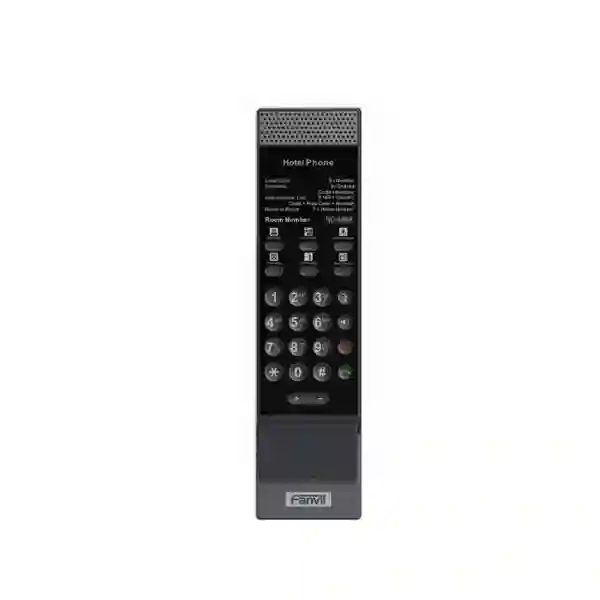
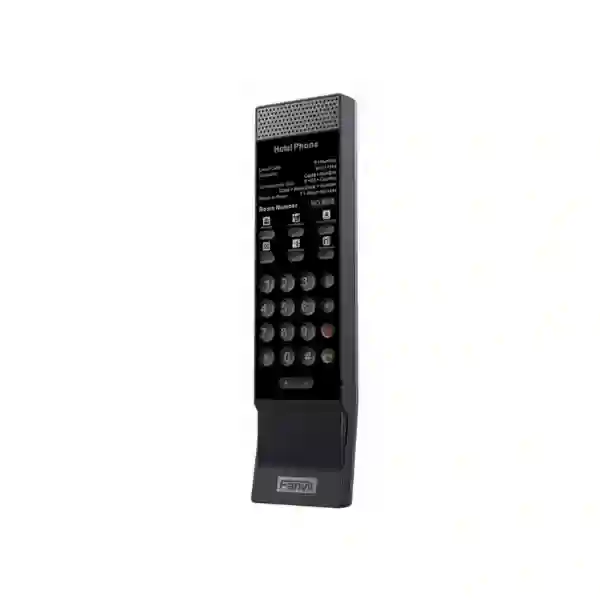

Fanvil H603W Wi-Fi IP Phone
The Fanvil H603W Wi-Fi IP Phone is a portable SIP handset created for wireless voice environments where users need the familiarity of a dedicated phone together with the freedom to move across a properly designed Wi-Fi network. Fanvil positions the H603W especially for hotel use, yet its combination of dual-band Wi-Fi 6, fast roaming, two SIP lines, HD voice, six programmable service keys and rechargeable battery can also suit selected business, serviced-apartment and institutional scenarios. For organizations in Tanzania, the main value is not simply that the telephone is wireless. The H603W gives voice teams a purpose-built endpoint that can be integrated into an IP PBX environment while reducing dependence on a fixed Ethernet outlet at every handset location.
What the H603W solves
Conventional IP desk phones work best when every desk, guest room or service point has a dependable Ethernet run and suitable power. Hospitality and flexible workspaces do not always fit that model. A room may be renovated, a lounge may need temporary voice service, or a hotel may prefer to avoid extra copper runs to certain positions. The H603W connects by Wi-Fi and uses a rechargeable battery, allowing the voice endpoint to be placed and moved within the designed wireless coverage area. This does not remove the need for good network engineering; it changes the dependency from a cable at the handset to reliable Wi-Fi coverage, PBX registration and secure WLAN design.
Best-fit buyers
The H603W is especially relevant to hotels, resorts, serviced residences and hospitality operators that want a guest-facing or service-oriented SIP phone with programmable keys. The six DSS keys can be configured for commonly used destinations such as reception, room service, housekeeping, security or maintenance according to the organization’s PBX and operating policy. It may also fit mobile office scenarios where a dedicated SIP handset is preferred to a smartphone app. Before purchase, buyers should confirm wireless coverage, SIP compatibility, provisioning method, security policy, charging arrangements and the call functions required from the PBX.
Verified Fanvil H603W features
Dual-band Wi-Fi 6
Built-in 2.4 GHz and 5 GHz wireless connectivity supports modern WLAN designs and gives administrators band-selection flexibility.
Fast roaming
IEEE 802.11k/v/r support is intended to help the handset move between compatible access points with quicker network transitions.
HD voice
Wideband codecs include G.722 and Opus, supported by full-duplex hands-free audio and voice-processing functions.
Rechargeable battery
The 1900 mAh battery is rated by Fanvil for up to 8.1 hours talk time and 159 hours standby under Fanvil laboratory conditions; actual results depend on use.
Technical specification summary
| SIP | 2 SIP lines; SIP v1/v2 over UDP, TCP or TLS |
| Wireless | Dual-band 2.4 GHz and 5 GHz Wi-Fi 6; 802.11k/v/r roaming support |
| Security | WPA/WPA2-PSK, 802.1X EAP; SRTP and TLS support in the SIP stack |
| Audio | G.722, Opus and multiple narrowband codecs; full-duplex speakerphone with echo cancellation |
| Keys | 24-key keypad including 6 DSS keys and dedicated function controls |
| Battery | 1900 mAh rechargeable lithium battery |
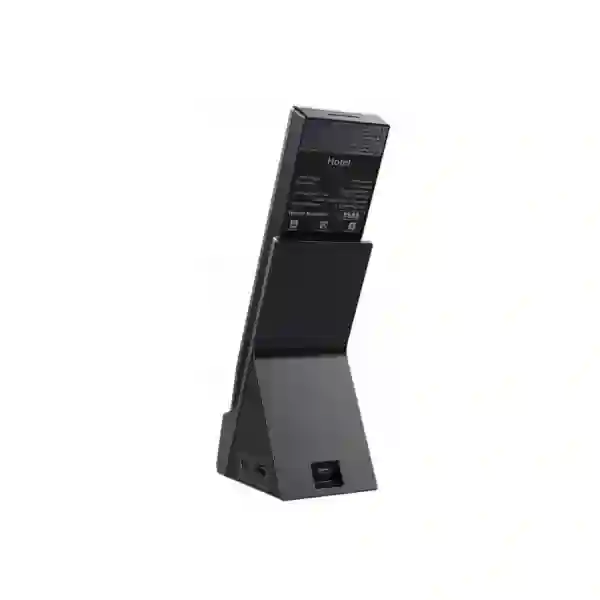
| Charging | Desktop charging dock; Type-A and Type-C fast-charging output up to 20 W |
| Management | Web management, configuration import/export, firmware upgrade, syslog and auto-provisioning via supported protocols |
Deployment, PBX and Wi-Fi planning
A wireless IP phone should be planned as a real-time network client. Voice is more sensitive to packet loss, delay variation and short interruptions than ordinary web browsing. A laptop can often recover from a brief wireless pause without the user noticing; a caller may hear that same event as a click, gap or dropped phrase. For that reason, H603W deployment should begin with a survey of access-point placement, channel use, signal quality and the number of concurrent clients expected in the coverage area. The phone supports roaming enhancements, but those features deliver the best results when the WLAN infrastructure is configured to support them consistently.
The PBX side matters just as much. Confirm SIP registration parameters, codec policy, extension numbering, voicemail behavior, call transfer, programmable-key destinations and any hotel-specific call workflow before rolling out large quantities. Where centralized provisioning is used, build and test a standard configuration profile before cloning it to production units. This improves consistency and makes replacements easier. Administrators should also decide how the phone’s management interface will be secured, how firmware updates will be controlled and whether voice traffic will use a dedicated VLAN or SSID.
Buyers who are comparing other Wi-Fi endpoints can review the Dinstar C60U-W Wi-Fi IP Phone as a desk-oriented alternative. The H603W is different in concept because it is portable and battery-powered rather than a conventional fixed desk phone. For broader procurement, the FourTeck Tanzania technology shop provides context across IP phones, PBX, networking, Wi-Fi and related business infrastructure.
Buying guidance for hospitality projects
For hotel and resort projects, the telephone should be selected as part of the guest-service workflow rather than as an isolated device. Decide which services deserve dedicated keys, how those keys map to extensions or queues, what language or labeling conventions staff will use, where charging docks will be placed and how spare handsets will be managed. Confirm whether the PBX needs to distinguish room extensions, service areas and administrative users. If the property has multiple buildings, floors or villas, roaming behavior should be tested along real walking paths rather than only beside the access point.
The H603W uses antibacterial material in its housing, a design choice that is especially relevant to shared or guest-facing environments. That feature does not replace ordinary cleaning procedures, but it complements the hospitality use case. The rechargeable battery adds flexibility, while the charging dock gives each handset a predictable home position. Procurement teams should include docks, power requirements, spare strategy, configuration scope and network assessment in the quotation request rather than comparing only the handset price.
Fanvil H603W Wi-Fi IP Phone Tanzania
For Tanzanian organizations, the Fanvil H603W is most compelling where wireless voice must be treated as a managed business service rather than an improvised convenience. Hotels, serviced apartments, resorts, lodges, healthcare facilities and selected office environments can use a portable SIP phone to give staff or guests a dedicated extension without tying every handset to a fixed network socket. The built-in dual-band Wi-Fi 6 radio supports both 2.4 GHz and 5 GHz operation, while 802.11k/v/r capabilities are designed for faster roaming across compatible wireless infrastructure. This matters in a property where a handset may move from a room to a corridor, reception area, service zone or other covered location during normal operations.
The Tanzania buying process should start with the site rather than the model number. A building with concrete walls, long corridors, multiple floors or detached blocks can produce very different wireless conditions from an open-plan office. An access point that gives acceptable internet browsing may still be too congested or poorly positioned for consistent voice. Before a larger H603W rollout, test call quality at normal operating times and at the edges of the intended coverage area. Record how the handset behaves when moving between access points, especially where the organization expects staff mobility. If the site already uses enterprise Wi-Fi, confirm whether the WLAN controller and access points are configured for the roaming standards supported by the phone.
Tanzanian procurement teams should also define their PBX environment. The H603W supports two SIP lines, which can fit common hotel or business extension scenarios, but the useful question is how those lines fit the actual call flow. Determine whether the property needs one guest extension plus a service profile, whether service keys call hunt groups or individual extensions, and how after-hours routing should work. Voice mail, transfer behavior, dialing plans, emergency calling policy and external trunk access should be documented before installation. Clear decisions at this stage make the handset configuration straightforward and prevent inconsistent room-by-room setups.
Power continuity is another practical Tanzanian consideration. The H603W is battery powered, but communication still depends on access points, switches, routers, the PBX and any internet or SIP-trunk path. A charged handset alone cannot maintain calls if the rest of the network is offline. Hotels and institutions should identify critical voice paths and decide what requires UPS support. For a quotation, provide the quantity of phones, building layout, number of floors, PBX brand or platform, Wi-Fi system, required service-key functions and whether preconfiguration or deployment assistance is needed. That information enables a more useful recommendation than a simple unit-price request.
Fanvil H603W Wi-Fi IP Phone Dar es Salaam
Dar es Salaam deployments often combine dense wireless environments, multi-tenant commercial buildings, hospitality properties and fast-changing workspace layouts. In that context, the H603W can be useful where a portable, dedicated SIP handset is needed but a fixed Ethernet outlet would limit placement. Hotels can use programmable keys to simplify access to guest services, while offices can use the device for mobile operational roles that still need PBX extensions. Its dual-band radio is valuable because network teams can choose between 2.4 GHz and 5 GHz according to coverage and congestion rather than forcing all handsets onto one band.
Urban wireless density makes testing especially important. Nearby networks, guest devices, streaming traffic and busy public areas can increase channel contention. A hotel with excellent lobby Wi-Fi for email may still have difficult voice roaming between floors or service corridors. Network administrators should check signal quality, channel utilization and access-point handoff along the paths where the handset will actually move. The 802.11k/v/r functions can assist roaming on compatible infrastructure, but successful mobility still depends on RF design, access-point settings and sensible cell overlap. Voice SSIDs should be secured and separated appropriately from open guest networks.
Dar es Salaam hospitality buyers should think carefully about the service-key layout. The H603W has six programmable DSS keys, which creates an opportunity to make frequent actions very simple. A property might map keys to reception, housekeeping, room service, maintenance, security or a central operator, but the exact choices should reflect the property’s service model. Each destination should be created deliberately in the PBX so that calls continue to work if staff rotate or departments change. Ring groups or queues are often more maintainable than pointing every key at one person.
When preparing a Dar es Salaam quotation, include whether the requirement is for a new property, a renovation or an upgrade of an existing telephony system. New projects can design WLAN, PBX and handset provisioning together. Existing properties need a compatibility review and possibly a pilot before full replacement. Buyers should also specify expected handset mobility, charging locations, language or labeling requirements and whether the phones will be configured before delivery. For organizations with wider East African operations, FourTeck Kenya can provide regional context for Kenya projects while the Tanzania site remains the focus for this deployment.
Fanvil H603W Wi-Fi IP Phone Mwanza
In Mwanza, the H603W can fit hospitality, institutional and branch environments where a portable SIP extension can simplify communication without requiring a network cable at every point of use. A hotel may need a handset that can remain in a guest room but also be moved temporarily during servicing. A clinic or administrative facility may need a phone that follows an operational role rather than a specific desk. The rechargeable design and wireless registration make these scenarios practical, provided the Wi-Fi infrastructure has been prepared for real-time voice traffic.
Branch connectivity deserves special attention when the PBX is hosted in another city, a data center or the cloud. Even strong local Wi-Fi cannot compensate for unstable upstream connectivity. Mwanza sites should verify internet quality, firewall behavior, DNS, time synchronization and SIP reachability as part of the same test plan. If voice crosses a VPN, administrators should confirm that the selected architecture supports the required traffic and that latency remains acceptable. If the PBX is local, the organization should still consider backup, power and secure remote administration so that the system remains supportable.
The H603W supports HD voice codecs including G.722 and Opus, but codec capability is only one component of perceived quality. The PBX, trunk provider and remote endpoint must support compatible negotiation, while the network must keep packet delivery steady. A sensible rollout therefore includes controlled test calls between typical endpoints, external calls where applicable and movement tests across access points. Staff should report specific symptoms such as one-way audio, clipping, delay or dropped calls so that troubleshooting can focus on the correct network layer.
Mwanza procurement teams can improve rollout efficiency by standardizing a template for every phone. Device naming, extension assignment, service keys, Wi-Fi settings, time zone, firmware level and administrative credentials should be recorded. Auto-provisioning can reduce manual variation in larger deployments. The quotation should identify the number of units, the expected user or room mapping, charging-dock positions and whether spare devices are required. This is particularly useful for hospitality operators that want replacement handsets ready for quick substitution without rebuilding settings from scratch.
Fanvil H603W Wi-Fi IP Phone Arusha
Arusha’s hospitality and tourism economy creates a natural use case for a wireless hotel-oriented SIP phone. Lodges, hotels, resorts, tour operations and serviced accommodation can have layouts that are less uniform than conventional office floors. Guest rooms may be spread across wings or separate buildings, and administrative teams may work between reception, back office and operational areas. The H603W’s portable format allows voice service to follow those usage patterns while keeping the endpoint tied to the organization’s PBX rather than to a consumer mobile account.
Property layout should drive the Wi-Fi design. Thick walls, landscaped courtyards, detached villas, kitchen areas and service zones can create dead spots or sudden signal changes. Buyers should avoid assuming that general guest Wi-Fi coverage is automatically suitable for voice. The better approach is to define the areas in which H603W mobility is required, measure those paths and decide whether access-point placement or configuration needs adjustment. Roaming standards supported by the handset can then work as part of the overall WLAN design rather than as a substitute for it.
Arusha properties should also define how the six programmable keys contribute to the guest experience. Fast access to reception or housekeeping can be valuable, but only if the PBX destination is maintained and staffed. A key that rings an unattended extension creates frustration. Service keys are therefore a workflow feature as much as a hardware feature. A well-designed deployment maps each key to a resilient destination such as a group, queue or operator workflow and includes the configuration in the property’s telephony documentation.
For tour operators or branch offices, the H603W may serve selected mobile staff inside the premises while desk-based users remain on conventional IP phones. Mixed endpoint strategies are often more economical than deploying the same model everywhere. Buyers can compare user roles, expected movement, number of simultaneous lines and need for physical service keys before choosing devices. If a fixed desk phone is more appropriate for some users, the internal FourTeck Tanzania catalogue can be used to compare alternatives. The objective is not to make every extension wireless, but to apply wireless endpoints where they solve a real placement or mobility problem.
Fanvil H603W Wi-Fi IP Phone Dodoma
Organizations in Dodoma can consider the H603W for hospitality, administrative and project environments where staff require a dedicated SIP handset but work locations are not always tied to permanent data outlets. Government-facing service providers, institutions, hotels and temporary project offices may value the ability to deploy an extension over managed Wi-Fi without modifying structured cabling immediately. The device’s two SIP lines, HD voice and programmable keys make it practical for ordinary call handling, while the battery and charging dock support a clear daily operating routine.
For institutional deployments, configuration governance is particularly important. A handful of phones can be configured individually, but larger fleets should use a controlled template and documented settings. Administrators should maintain records of extension ownership, device identity, WLAN profile, firmware level and service-key mapping. When a unit is replaced, the organization should be able to restore the expected configuration without relying on memory. Fanvil supports several auto-provisioning methods, which can help reduce repetitive manual work when the PBX and management process are designed accordingly.
Dodoma sites should review security before connecting voice devices to the WLAN. The H603W supports WPA/WPA2-PSK and 802.1X EAP wireless security as documented by Fanvil. The right choice depends on the organization’s network architecture and identity systems. Administrative web access should be restricted to trusted networks, credentials should be managed carefully and firmware should be reviewed as part of normal lifecycle maintenance. Voice endpoints often remain in service for years, so maintaining them should be an operational process rather than a one-time installation task.
A procurement request should describe more than quantity. Include the PBX platform, whether the phones will use a dedicated voice SSID, expected mobility area, number of access points, required service-key destinations and whether the charging dock needs to be placed in guest rooms or staff areas. If the project includes a wider network refresh, plan the voice requirement alongside switching, Wi-Fi, firewall and UPS decisions. This avoids buying the phone first and discovering later that the supporting network needs substantial changes.
Fanvil H603W Wi-Fi IP Phone UAE
In the UAE, the H603W can serve hotels, serviced residences, hospitality groups and selected enterprise environments that want a wireless SIP endpoint with a dedicated handset experience. Modern properties often have strong managed Wi-Fi and centralized telephony, which can create a suitable foundation for portable voice devices. The H603W’s dual-band Wi-Fi 6 connectivity, roaming support, programmable service keys and rechargeable battery align with deployments where mobility and presentation matter alongside ordinary call functions.
UAE hotels should evaluate the handset within their room-technology standard. The phone should complement the property’s PBX, wireless architecture and guest-service model. It is useful to define a standard service-key layout that can be replicated across rooms while allowing exceptions for suites, villas or specialized service areas. If multiple properties are managed by the same group, consistent extension logic and provisioning templates can simplify support. However, each site still requires RF validation because building materials, floor plans and access-point density vary significantly.
High-density wireless environments also make band planning important. The 5 GHz band can provide more channel options in many deployments, but coverage distance and wall penetration differ from 2.4 GHz. The correct design uses measurements rather than assumptions. Voice handsets should connect to a controlled WLAN with sufficient capacity and stable roaming. If the property has a large number of guest devices, separating operational voice from open guest traffic can improve security and predictability. QoS can help when implemented end to end, but it does not compensate for overloaded radios or poor internet service.
Organizations coordinating projects between Tanzania and the Gulf can use FourTeck UAE for UAE-focused technology requirements while keeping Tanzania procurement scoped through the Tanzania channel. This can be useful for regional groups that want common handset standards, PBX templates and documentation across countries. Before standardization, test the H603W with the PBX version, WLAN platform and call features used in each property so that a global model choice does not hide local integration differences.
Fanvil H603W Wi-Fi IP Phone Uganda
Ugandan hotels, resorts, institutions and business sites can evaluate the H603W where Wi-Fi is already part of the operational network and a portable SIP phone would improve flexibility. The handset can register over dual-band wireless and offers a dedicated user experience that differs from relying on personal mobile phones or softphone apps. For guest-facing environments, the physical keys and predictable charging position can make the device easier to standardize and support.
A cross-border procurement team should not assume identical site conditions between Uganda and Tanzania. The model can be the same while WLAN design, internet connectivity and PBX topology differ. Each property should validate access-point coverage, roaming paths and upstream voice connectivity. If the PBX is centralized in another country, WAN performance becomes part of call quality. If the PBX is local to each property, configuration templates can still be standardized while preserving local trunks, emergency numbers and routing rules.
Uganda deployments should also consider how the phone will be serviced over time. Maintain spare units, record configuration profiles and identify who owns firmware updates. A hotel can reduce downtime by keeping a small number of preconfigured spares or by maintaining a provisioning process that lets a replacement unit be prepared quickly. Charging docks and power adapters should be counted in inventory because operational availability depends on the full kit, not only the handset.
For Uganda-specific projects, customers can review FourTeck Uganda as the regional FourTeck reference. Tanzania-focused requirements should still be quoted against the Tanzania deployment. For multi-country hospitality groups, the strongest approach is to create one functional standard—extensions, service keys, security controls, provisioning and support documentation—then adapt the network implementation to each property’s real infrastructure.
Fanvil H603W Wi-Fi IP Phone Kampala
Kampala’s dense commercial and hospitality environments can create both strong demand for wireless communications and challenging radio conditions. Hotels and serviced apartments may have many guest devices competing for spectrum, while offices in shared buildings may see numerous neighboring SSIDs. The H603W’s support for both 2.4 GHz and 5 GHz gives administrators options, but the phone should be connected through a deliberate voice WLAN policy rather than whichever network appears strongest at the time.
A Kampala pilot should include peak-hour testing. Quiet early-morning tests may not reveal the behavior of the network when guest rooms, meeting spaces and public areas are busy. Place calls while moving through corridors, stairwells and service areas where staff may carry the phone. Observe whether roaming produces audible gaps or registration changes. If there are weaknesses, adjust access-point placement, channel plans or roaming settings before adding more phones. This type of small pilot can prevent a large rollout from repeating the same RF problem across many rooms.
Hospitality operators should also evaluate the operational meaning of the six DSS keys. The phone can make common services accessible with one press, but the PBX and staffing model must support those destinations. Use stable group numbers where possible, document the labels and train front-office teams on how calls are routed. If a service department changes internally, the key destination can be updated centrally instead of replacing printed processes throughout the property.
Kampala buyers preparing a quotation should provide property size, number of rooms or users, PBX type, current Wi-Fi vendor, number of buildings, intended roaming area and any required call-control features. If the property needs new Wi-Fi at the same time, treat wireless design as part of the voice project. The handset’s capabilities are strongest when supported by a WLAN engineered for mobility rather than by consumer-style access points placed only for general internet access.
Fanvil H603W Wi-Fi IP Phone Arua
In Arua, the H603W may be relevant to hotels, NGOs, project sites, education facilities, healthcare administration and branch operations that need a flexible extension without adding Ethernet to every location. Wireless deployment can be particularly useful in leased or changing spaces where permanent cabling work is difficult to justify. The dedicated handset and programmable keys give users a consistent business-phone workflow while the connection remains Wi-Fi based.
Connectivity planning is essential when the PBX or SIP trunk depends on internet service. Organizations should separate local wireless problems from WAN problems during testing. A strong Wi-Fi signal does not guarantee a stable remote PBX session if the internet path experiences high latency or packet loss. Administrators should therefore test internal calls, external calls and any inter-branch calls separately. Monitoring at the router or firewall can help identify whether symptoms are caused by the local WLAN, the upstream link or the remote service.
For field-oriented organizations, the phone can support a controlled office extension environment without requiring staff to expose personal mobile numbers. A shared operational role can be represented by a PBX extension and service key structure rather than by a person’s SIM card. This can make handover easier when staff rotate. The phone remains an indoor Wi-Fi endpoint, so buyers should not treat it as a wide-area mobile replacement; its mobility is within the coverage of the organization’s WLAN.
Arua procurement should include practical support items. Identify who can change extension settings, how failed devices will be replaced, where configuration backups are stored and how spare batteries or complete spare units will be handled according to vendor guidance. Because remote sites may not have immediate access to specialist support, clear documentation and standardized provisioning can reduce downtime. The quotation should therefore capture configuration and support expectations alongside the hardware quantity.
Fanvil H603W Wi-Fi IP Phone Mbarara
Mbarara businesses and hospitality sites can use the H603W where they need a wireless SIP handset that can move within a managed property. Hotels, clinics, education campuses and branch offices may have desks or service points that change over time, making a portable phone attractive. The two SIP lines and six programmable keys keep the endpoint simple enough for everyday use while still supporting role-based calling and quick access to frequently used destinations.
A campus-style site should treat roaming as a design requirement. If staff are expected to carry the phone between rooms or blocks, map the actual mobility area and determine whether the Wi-Fi network offers continuous supported coverage. Fast-roaming functions are most effective when access points use a consistent SSID, security profile and controller design. In mixed or unmanaged networks, the phone may remain connected to a weak access point longer than expected or encounter delays during transition. Testing gives the network team evidence for tuning rather than relying on theoretical coverage maps.
Voice security should be reviewed along with RF performance. Wireless authentication, SIP credentials and management access are all potential control points. The H603W supports common enterprise mechanisms documented by Fanvil, including 802.1X EAP on Wi-Fi and TLS/SRTP capabilities in the telephony stack. Whether those features are used depends on the PBX and network architecture, but procurement teams should identify security requirements before installation so the correct configuration can be validated during the pilot.
Mbarara buyers can make quotations more comparable by listing the same scope for every supplier: exact model, quantity, included dock and power accessories, configuration requirements, PBX integration, Wi-Fi assessment, firmware preparation, documentation and post-installation support expectations. Comparing only the unit cost can hide important differences in deployment scope. A complete technical request helps ensure that the chosen phones arrive ready to become part of a functioning voice service.
Fanvil H603W Wi-Fi IP Phone Gulu
Gulu organizations can consider the H603W for hotels, development organizations, education sites, healthcare administration and branch facilities that need reliable internal voice without a wired data point at every handset location. The portable form factor can be valuable for operational roles that move inside a building or compound. Because the phone still registers to a SIP system, it can remain part of the organization’s extension plan, call routing and voicemail policies instead of becoming a separate mobile communication channel.
The practical challenge is making sure the wireless network is ready. Voice traffic is lightweight in bandwidth compared with video, yet it is demanding in consistency. Interference, poor roaming, overloaded access points or an unstable uplink can have a noticeable impact on calls. Gulu sites should conduct representative tests during normal working conditions and record results at the planned handset positions. If external calls use an internet-based SIP provider, test during periods of high general internet usage as well.
The charging strategy should also be standardized. Each phone should have a defined dock location and user routine so devices are returned to charge when not in use. In guest environments, staff procedures can include checking battery status during room preparation. In shared operational environments, responsibility for charging should be assigned to the role or shift. These simple workflow decisions can be as important as the battery capacity itself because even a high-capacity battery becomes ineffective if the phone is left away from its dock repeatedly.
For organizations managing several Ugandan branches, it can be useful to create one H603W configuration baseline and then adjust only site-specific settings such as extension numbers, WLAN credentials and routing. Central documentation reduces variation and speeds troubleshooting. Before purchasing at scale, confirm that the PBX supports all required features and that the same firmware has been tested on a pilot group. This avoids introducing large numbers of endpoints before the integration has been proven.
Fanvil H603W Wi-Fi IP Phone Kenya
Kenyan hospitality and enterprise buyers may encounter the H603W when comparing Wi-Fi hotel phones, portable SIP endpoints and wireless alternatives to fixed desk phones. Its feature set is focused: dual-band Wi-Fi 6, roaming support, two SIP lines, HD voice, six programmable DSS keys, a 1900 mAh battery and a charging base. Those capabilities make it particularly suitable for guest-service and mobile in-building voice rather than for executive users who need large displays, many line appearances or application-rich smart desk phones.
Kenya projects should classify users before standardizing. Guest rooms, housekeeping coordinators, service supervisors and reception support roles may benefit from the H603W, while back-office finance or reservation staff may prefer fixed multi-line desk phones. A mixed endpoint strategy can reduce cost and improve usability because each role gets the controls it actually needs. PBX administrators can keep extension numbering consistent across device types while provisioning each model according to its function.
Wireless design remains central. In Nairobi hotels, for example, neighboring networks and high client density can influence performance, while properties outside dense urban areas may have different challenges such as larger footprints or separate accommodation blocks. The H603W can roam across compatible Wi-Fi infrastructure, but the WLAN should be surveyed for the actual movement paths. If the property uses one SSID for guests and operations, consider whether segmentation would improve security and troubleshooting. Operational voice traffic should not be exposed unnecessarily to the same conditions as unmanaged guest devices.
Regional groups operating in both Kenya and Tanzania can standardize the phone model while keeping procurement, telecom and support requirements specific to each market. The strongest common elements are configuration templates, service-key logic, firmware policy and documentation. Trunks, emergency dialing and WAN architecture may differ. A cross-country pilot can identify which elements truly transfer and which need local adaptation, producing a more reliable standard than simply ordering the same hardware everywhere.
Fanvil H603W Wi-Fi IP Phone Kuwait
In Kuwait, the H603W can be considered for hotels, serviced residences and selected business environments that already operate managed Wi-Fi and SIP telephony. Its portable design gives organizations a dedicated phone that can move within the property, while six programmable keys can simplify access to front desk or internal services. The phone is not intended to replace every desk endpoint; it is strongest where mobility, hospitality workflow and simplified service access are meaningful requirements.
Large hospitality properties should validate WLAN capacity in guest corridors, rooms and operational spaces separately. Decorative materials, reinforced walls, elevators and service zones can affect coverage differently. A site survey should therefore include both ordinary guest locations and back-of-house routes used by staff. If users are expected to carry the handset while moving, roaming behavior should be tested under live traffic. The H603W’s roaming standards provide useful capability, but the access-point network determines how effectively those capabilities operate.
Kuwait procurement teams should also review the handset’s battery and charging workflow. Fanvil publishes laboratory figures for talk and standby time, but actual duration depends on usage, signal conditions and configuration. The correct operational plan is to treat the charging dock as part of the deployment and establish a routine for returning the handset. For rooms, that may be part of housekeeping checks; for staff, it may be linked to shift handover. Spare devices can be kept ready for quick replacement in high-availability environments.
When comparing solutions, evaluate the PBX integration and management process rather than relying on a feature checklist. Confirm SIP registrations, codecs, directory behavior, service keys, transfer, voicemail, call restrictions and any hotel-specific call accounting or middleware requirements. If specialized property-management-system integration is required, verify it independently with the relevant PBX or middleware vendor because the H603W itself is a SIP endpoint and does not guarantee every external hotel application workflow.
Fanvil H603W Wi-Fi IP Phone Ghana
Ghanaian hotels, serviced residences, institutions and branch offices can evaluate the H603W where portable SIP voice inside a Wi-Fi-covered property offers operational value. A dedicated handset can be easier to control than personal mobile devices because the organization owns the extension, service keys and configuration. The user receives a familiar phone interface, while administrators retain PBX-based routing, numbering and policy.
Properties in Accra or other dense areas may need to pay close attention to 2.4 GHz congestion, whereas larger resorts may focus more on 5 GHz cell coverage and roaming between buildings. The phone’s dual-band capability supports both approaches, but Wi-Fi should be measured rather than guessed. Voice tests should include normal busy periods, not only a quiet commissioning window. It is also useful to test at doors, stairwells and corridor transitions where signal levels can change quickly.
From a management perspective, larger H603W fleets should use repeatable provisioning. Create a standard base profile containing firmware, security settings, SIP server details, dial rules and common service-key behavior. Then add room or user-specific extension data. This layered approach reduces configuration drift and makes fault replacement easier. Administrators should back up the template and document any changes after PBX upgrades or network redesigns.
Ghana buyers should request a quotation that states whether the requirement is hardware only, preconfigured supply or full deployment support. Include the number of rooms or users, PBX brand and version, current Wi-Fi system, required roaming area, security preference and any external trunk or hotel-service requirements. The more precise the scope, the easier it is to compare proposals and avoid hidden installation assumptions. Regional standardization is possible, but each site should prove wireless and PBX compatibility locally.
Fanvil H603W Wi-Fi IP Phone Nigeria
Nigeria offers a wide range of hospitality and enterprise environments, from large city hotels and serviced apartments to branch offices and institutional sites. The H603W can fit deployments that want a portable extension tied to the organization’s SIP platform. For hotel operators, the six programmable keys can simplify frequent guest requests. For operational teams, the battery-powered handset can provide mobility inside a covered building without requiring the user to handle a personal mobile application.
In high-density properties, WLAN engineering is the deciding factor. Access points should be sized for both coverage and client capacity, and the voice SSID should use a security method compatible with the organization’s standards. The H603W supports WPA/WPA2-PSK and 802.1X EAP, allowing different authentication approaches. Network teams should test roaming at floor boundaries and between public and service areas, because those transitions often reveal weak overlap or inconsistent access-point settings.
Power resilience can be significant for business communications. Although the handset has a battery, access points and the PBX path require continuous power. A resilient design therefore protects the relevant switches, WLAN infrastructure, router or firewall and PBX service according to business priority. Critical front-desk or security functions may deserve stronger UPS planning than non-essential room extensions. The battery can help the handset through local outlet interruptions, but it should be understood as one component of continuity rather than a complete solution.
Nigeria procurement teams should distinguish between product supply and system deployment. A supplier may quote the handset alone, while another proposal includes configuration, WLAN assessment and PBX integration. These scopes are not directly comparable. Ask each bidder to identify included accessories, provisioning, firmware preparation, installation, testing and support assumptions. For large hospitality groups, request a pilot set first, validate the complete workflow and then use the proven configuration for the wider rollout.
Fanvil H603W Wi-Fi IP Phone Seychelles
Seychelles hospitality environments can be especially well matched to the concept of a portable Wi-Fi SIP phone because resorts may be distributed across villas, guest blocks, reception spaces and service buildings. The H603W can provide a dedicated extension that moves within the designed WLAN while maintaining simple access to hotel services through programmable keys. Its rechargeable battery and desktop dock also fit room-based operations where wired phone cabling may be less convenient in renovated or architecturally sensitive spaces.
Resort topology, however, demands careful Wi-Fi planning. Outdoor transitions, detached buildings, dense landscaping and construction materials can produce uneven coverage. The H603W is a Wi-Fi phone, not a cellular device, so mobility ends where the property’s supported WLAN ends. A resort should define which paths and spaces require continuous voice, then test those locations. In some properties, it may be better to keep the phone within each villa or building rather than expect roaming across large outdoor distances.
Service-key design can improve the guest experience when it is aligned with the resort’s operations. A one-touch key for reception, transport coordination, housekeeping or dining can remove the need for guests to remember extension numbers. The PBX destination behind each key should be resilient, ideally routing to a group or service queue rather than a single staff member. This ensures that the convenience promised by the handset is supported by the staffing model behind it.
Seychelles buyers should include environmental and logistics planning in procurement. Confirm how devices will be stored, charged and replaced, how firmware updates will be handled and whether spare units should be held on-site. Remote resort operations benefit from predictable procedures because replacement lead times can be longer than in major cities. A standardized configuration, spare strategy and clear support path can therefore add more operational value than marginal differences in the initial unit price.
Compatibility and selection checklist
Before approving an H603W order, confirm the PBX or SIP platform, number of required lines, codec policy, WLAN security method, roaming design, service-key destinations, firmware baseline, charging locations and expected handset movement. Where the phone will be part of a hotel room standard, decide whether printed labels or custom key naming will be needed operationally. Where it will be used by staff, classify roles so that only users who benefit from mobility receive a wireless handset.
Also verify the supporting network. List the access-point platform, controller if used, number of concurrent wireless clients, voice VLAN or SSID policy and internet path to any hosted PBX. Test signal and call quality with a small pilot before purchasing a large fleet. Pilot results should be documented so that network changes, firmware updates or future property expansion can be compared against a known working baseline.
Frequently asked questions
Does the Fanvil H603W support Wi-Fi 6?
Yes. Fanvil specifies built-in dual-band 2.4 GHz and 5 GHz Wi-Fi 6 support. The detailed wireless standards include 802.11 b/g/n on 2.4 GHz and 802.11 a/n/ac/ax on 5 GHz.
Can the H603W roam between access points?
Fanvil lists support for IEEE 802.11k/v/r fast-roaming functions. Actual roaming performance depends on compatible access points, WLAN configuration, RF coverage and network conditions.
How many SIP lines does the H603W support?
The official specification lists two SIP lines. Buyers should confirm the PBX features they require and test interoperability before large deployments.
What are the six programmable keys for?
They can be configured as DSS or service keys. In hospitality deployments, organizations may map them to destinations such as reception, housekeeping, room service, maintenance or security according to the PBX configuration.
How long does the battery last?
Fanvil publishes up to 8.1 hours talk time and 159 hours standby for the 1900 mAh battery based on internal laboratory testing. Actual runtime varies with signal strength, settings and usage.
Is the H603W only for hotels?
Fanvil positions it strongly for hotel applications and mobile wireless communication. Other organizations can consider it where a portable SIP phone fits the use case, but selection should be based on PBX, Wi-Fi, mobility and workflow requirements rather than industry name alone.
Quotation checklist for Fanvil H603W
To receive a useful quotation, provide the required quantity, target city or country, PBX platform, Wi-Fi system, number of floors or buildings, intended mobility area, service-key requirements, security preference, installation or preconfiguration needs, and whether the project includes network assessment. For hospitality projects, also include the number of rooms, guest-service departments and whether spare units are required. This information helps separate simple hardware supply from a complete voice deployment.
Decision recap
Choose the Fanvil H603W when the requirement is a portable Wi-Fi SIP handset with Wi-Fi 6, fast-roaming support, two SIP lines, HD audio, six programmable service keys, a rechargeable 1900 mAh battery and a charging dock. It is particularly well suited to hospitality and other managed environments where users need a dedicated business phone without a fixed Ethernet connection at every position. Do not select it solely because it is wireless; first confirm the PBX, WLAN, roaming, security, charging and support model that will make the phone reliable in daily use.
Talk to FourTeck about your H603W deployment
Share your phone quantity, room or user count, PBX details, Wi-Fi platform and target locations. FourTeck can use that information to frame the product requirement in the context of voice, wireless coverage, provisioning and supporting infrastructure. This is especially useful when the project spans multiple rooms, floors, branches or countries and needs consistent configuration rather than one-off handset setup.


Reviews
There are no reviews yet.