
SIP Intercom • Access Communication • Tanzania
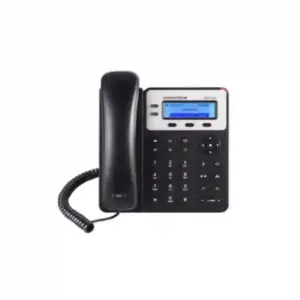
Fanvil i501 SIP Indoor Station
A practical screenless indoor SIP station for visitor calling, two-way voice communication and remote door unlocking in residential communities, offices, villas and hotels. The i501 combines two SIP lines, wired Ethernet, PoE, HD audio and simple physical controls in a compact endpoint designed to work as part of a properly planned SIP intercom and access environment.
Quick answer
Choose the Fanvil i501 when you need a wired, screenless SIP indoor station with PoE, two SIP registrations, handset and hands-free calling, programmable keys and remote unlock control without paying for an indoor video display.
What the Fanvil i501 is designed to do
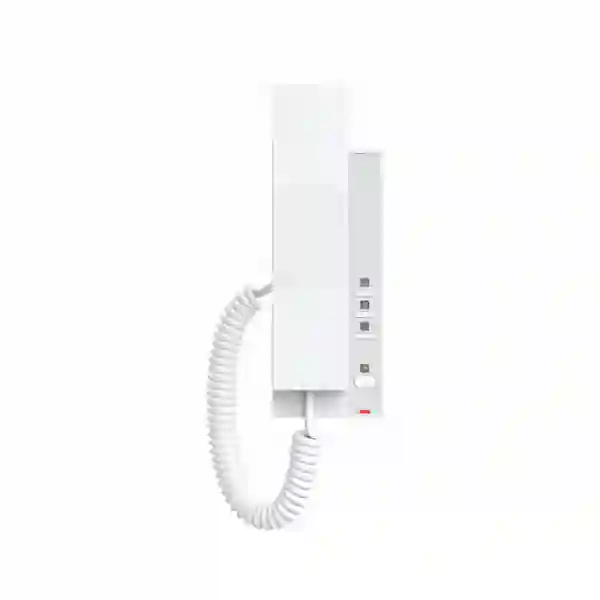
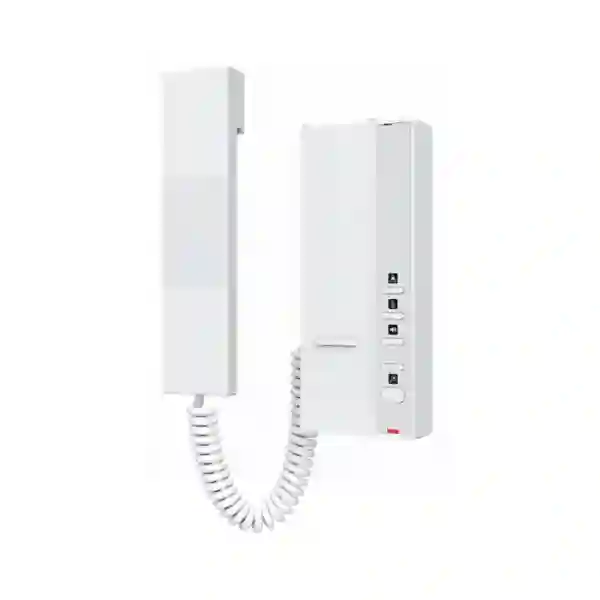
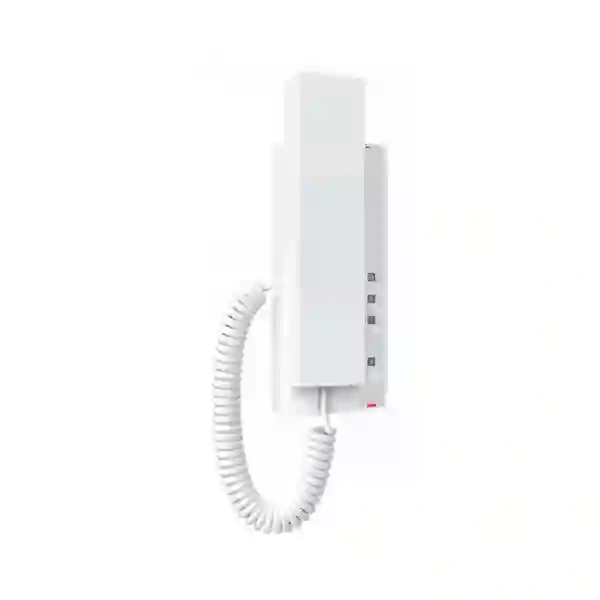
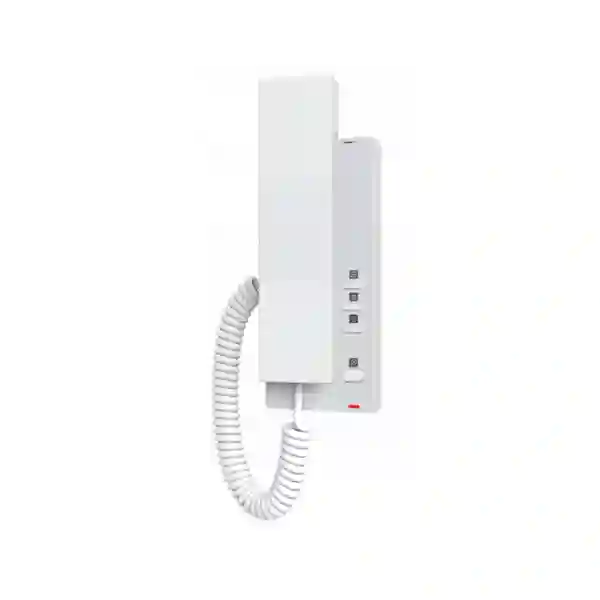
The Fanvil i501 is positioned by Fanvil as a cost-effective screenless indoor station for environments where occupants or staff need to receive calls from a door station, speak with a visitor and trigger remote door unlocking. Its design is deliberately straightforward: there is no video screen, so the product focuses on audio intercom functions, physical controls and SIP connectivity. Fanvil documents two SIP lines, a magnetic handset, a built-in 1 W speaker, full-duplex hands-free calling with acoustic echo cancellation, three programmable keys, one short-circuit input, wired 10/100 Mbps Ethernet and PoE 802.3af. The i501 can be placed on a desk or mounted on a wall, giving project designers flexibility for reception counters, apartments, hotel rooms, guard points, offices and other indoor locations.
For buyers, the important distinction is between the i501 and the related i501W. The i501 is the wired model and supports PoE as well as DC 5 V / 1 A power. Wi-Fi capability belongs to the i501W variant, so a wired i501 project should be planned around an Ethernet connection. That makes the i501 especially logical where structured cabling and PoE switching are already part of the building. A single network cable can carry both data and power from a compatible PoE switch, reducing the need for a local power adapter and making it easier to place the station where the access workflow requires it.
2 SIP Lines
Two SIP registrations support flexible intercom or communication design with compatible SIP platforms.
PoE 802.3af
The wired i501 can receive power through its network connection, simplifying compatible Ethernet deployments.
HD Voice
Wideband G.722 and Opus codecs complement full-duplex hands-free audio and acoustic echo cancellation.
Remote Unlock
A dedicated programmable workflow can support one-touch remote door unlocking in a compatible intercom system.
Verified Fanvil i501 technical highlights
| Function | Fanvil i501 |
|---|---|
| SIP | 2 SIP lines; SIP 2.0 over UDP, TCP or TLS |
| Network | 10/100 Mbps adaptive Ethernet |
| Power | PoE 802.3af or DC 5 V / 1 A |
| Audio | 1 W speaker, full-duplex hands-free calling, AEC, G.722 and Opus plus documented narrowband codecs |
| Interface | 1 × short-circuit input |
| Controls | 3 programmable keys; defaults documented for management office, DND and door unlock |
| Installation | Desk or wall mounted |
| Dimensions | 195 × 181 × 30 mm |
Compatibility should be validated against the exact SIP door station, PBX, relay or access-control design before quantity purchase. Feature support on one device does not guarantee that every third-party platform implements the same signaling, unlocking method or provisioning workflow.
Deployment, SIP integration and buying guidance
A reliable i501 deployment starts with the complete call path. The door station needs to reach the correct SIP account, the indoor station needs to register reliably, and the unlock action must be mapped to the compatible door-control mechanism. Network addressing, VLANs, PoE capacity, PBX rules and firewall policy can all affect the result. Where several indoor stations are used, define a repeatable naming and provisioning convention before installation so that extensions, room numbers, management calls and unlock functions remain easy to support.
The absence of a screen is an important design choice rather than a limitation in every project. In a hotel room, staff office, apartment, villa or reception point, audio-only visitor communication may be preferred because it is simple to use and requires less visual interaction. If the project requires live visitor video, touchscreen control or app-style building functions, a different Fanvil indoor station should be evaluated instead of assuming the i501 provides those capabilities. Procurement teams should state whether audio-only operation is acceptable, whether PoE is available, how many SIP accounts are needed, what door station is being used and whether the intended PBX has already been tested with the access workflow.
Related FourTeck Tanzania resources
Use the shop to compare business telephony, network, security and infrastructure products that may sit around an intercom deployment.
Relevant when the i501 is part of a wider SIP, switching, access-control or structured-cabling project.
A related two-account SIP desk endpoint for users who need conventional business calling rather than an indoor door station.
Useful for comparing how PoE can simplify a broader SIP endpoint rollout on managed network switches.
A business-phone alternative when the requirement is desk telephony rather than building-entry communication.
Provides another SIP endpoint reference for offices planning a combined PBX and access-intercom environment.
Learn how FourTeck approaches IT, telecom, networking and security requirements as connected systems.
Fanvil i501 SIP Indoor Station Tanzania
Organizations evaluating the Fanvil i501 SIP Indoor Station in Tanzania should begin with the operating workflow rather than the handset alone. The device is most relevant where a visitor at a compatible SIP door station needs to call an indoor user, the user needs clear two-way audio, and an authorized person needs a simple way to trigger remote door unlocking. In apartments, villas, hotels, offices and mixed-use buildings, that can mean placing the i501 at a reception desk, in an administrative office, at a security point or inside an occupied unit. Its screenless design keeps the interaction simple, while the magnetic handset and hands-free speaker give users a choice between more private handset conversation and quick speaker operation. Two SIP lines can support a structured deployment where the station participates in more than one logical communication path, subject to the design of the PBX or intercom platform.
For Tanzania projects, network and power planning deserve equal attention. The i501 uses wired 10/100 Mbps Ethernet and supports PoE 802.3af, which can make installation cleaner when an appropriate PoE switch and structured cable run are available. A PoE design can also centralize power protection when the switch is connected to a suitable UPS, although continuity still depends on the PBX, door station, network and access-control equipment remaining powered. Before ordering, confirm the port location, cable route, VLAN or IP addressing plan, SIP registration method, door-unlock signaling and the expected relationship between the short-circuit input and surrounding access system. These details are especially important when a building already has locks, door contacts, controllers or legacy intercom equipment that will remain in service.
A Tanzania quotation should therefore include the quantity of i501 units, the number and model of door stations, the SIP server or IP PBX platform, switch model and available PoE budget, cabling status, mounting preference, power-continuity expectations and any third-party access-control components. Buyers should also clarify whether audio-only indoor stations satisfy the user experience or whether selected locations need video-capable indoor terminals. FourTeck Tanzania can frame the i501 within a broader communications and security design so procurement teams can evaluate the complete working system rather than a box price in isolation. For network-ready projects, the related telecom and integration services can help connect SIP endpoints, switching and physical-security requirements into one deployment plan.
Fanvil i501 SIP Indoor Station Dar es Salaam
In Dar es Salaam, the Fanvil i501 can fit commercial and residential environments where visitor access needs to be managed without putting a video screen at every indoor point. Property managers may use indoor stations in apartments or villas, hotels may place them in guest or staff areas, and offices can deploy them at reception, administration or controlled zones. The device supports two SIP lines and audio communication through a handset or built-in speaker, making it practical for users who need to answer a door call and then decide whether to release access. Three programmable keys provide a simple physical interface, with Fanvil documenting management-office, do-not-disturb and unlock functions as defaults. That simplicity can be useful in busy environments where users should not need to navigate a complex touchscreen simply to handle a visitor call.
Dar es Salaam deployments often combine multiple IP systems on the same building network: business data, Wi-Fi, CCTV, IP phones and access devices may all share switching infrastructure. The i501 should therefore be planned as a managed network endpoint. A dedicated voice or security VLAN may be appropriate depending on the architecture, and the switch port should provide the correct PoE standard if PoE will be used. Quality of Service can be considered where voice traffic competes with heavy data use, although correct LAN design and sufficient capacity remain the foundation. If the indoor station must communicate with a cloud-hosted or remote SIP platform, firewall and internet policies should be reviewed without unnecessarily exposing management interfaces. The station’s support for SIP over UDP, TCP and TLS creates options, but the selected signaling method must also be supported and configured by the server.
For a Dar es Salaam procurement request, it is useful to supply floor plans or at least a clear list of station locations, door-entry points and network closets. State whether the equipment will be desk mounted or wall mounted, whether Cat5e/Cat6 cabling already reaches each position, and whether the PoE switches have adequate spare ports and power budget. Include the existing door lock and controller details because remote unlocking is a system-level function, not something the indoor station can accomplish independently of compatible door hardware. If the project includes conventional SIP desk phones as well, compare devices by role rather than standardizing blindly; the Dinstar C60SP PoE phone is an example of a separate endpoint class for office calling, while the i501 is specialized for indoor intercom and access communication.
Fanvil i501 SIP Indoor Station Mwanza
Mwanza organizations considering the Fanvil i501 may be modernizing an older analog intercom, extending an existing SIP environment or building a new access-communication system from the start. Each scenario creates a different buying checklist. In a retrofit, the first task is to establish which parts of the existing cabling, locks, controllers and door stations can realistically remain. The i501 is an Ethernet SIP endpoint, so legacy two-wire intercom cabling should not be assumed to provide the connectivity it needs. In a greenfield installation, structured cabling and PoE switching can be planned around the indoor-station locations, making it easier to centralize network and power management. In an existing IP system, compatibility testing should confirm SIP registration, call routing, DTMF or unlock behavior and any special intercom signaling used by the door device.
The i501’s audio design is well suited to straightforward visitor conversations. Fanvil specifies a 1 W speaker, acoustic echo cancellation and wideband G.722 and Opus support, alongside common narrowband codecs. Actual audio quality depends on the complete path, including the door station, SIP platform, network conditions and remote codec negotiation. If the station is installed in a noisy reception or operational area, the handset may provide more private and controlled listening than speaker mode. Wall mounting can keep the unit accessible without consuming desk space, while desk placement may be more convenient for staff who answer frequent calls. The correct position should be chosen around user behavior rather than simply the nearest network outlet.
For Mwanza projects, supportability is another useful design objective. Document the IP addresses or DHCP policy, SIP extension mapping, switch ports, VLANs, firmware version and programmed function keys for each unit. A consistent configuration makes replacement and troubleshooting easier, particularly when multiple branches or buildings are involved. Procurement teams should request exact quantities and identify any spare-unit requirement separately instead of assuming availability. They should also state whether installation, configuration, testing and user handover are part of the required scope. FourTeck’s Tanzania business technology shop and integration services can provide context for the surrounding switch, telephony and security components that an i501 deployment may depend on.
Fanvil i501 SIP Indoor Station Arusha
Arusha buyers may encounter the Fanvil i501 in hospitality, tourism administration, offices, gated residential properties, educational environments and other sites where a visitor needs to communicate with an indoor user before entry. The product’s value is strongest when the required interaction is primarily audio. A guest, courier or visitor can call through a compatible SIP door station; the recipient can answer using the magnetic handset or hands-free speaker; and a properly integrated system can allow the authorized user to trigger remote unlocking. Because the i501 is screenless, it avoids unnecessary visual complexity for users who only need voice verification and access control. Projects that require video identification at every indoor station should instead compare Fanvil’s screen-based indoor station families before finalizing the bill of materials.
Hospitality and multi-room environments should pay particular attention to extension planning. Room numbers, reception, management and service areas need a consistent dialing and naming scheme so the intercom remains understandable to both staff and technical support teams. The i501’s two SIP lines provide flexibility, but the PBX or intercom server determines how calls are routed. Three programmable keys can support commonly used functions, and do-not-disturb can be useful where certain occupants should not receive calls at particular times. Configuration should be aligned with the operational policy so that security-critical calls are not inadvertently blocked or redirected. User training can remain simple if the button functions and call flows are documented clearly at handover.
Arusha sites should also plan physical installation carefully. Confirm the wall surface or desk location, cable entry, network outlet, PoE source and distance to the switch. If a UPS is used, include the PoE switch, PBX, door station and access controller in the continuity assessment rather than protecting only the indoor station. For quotations, provide the number of buildings or floors, number of door stations, i501 quantity, PBX platform, network topology and lock-control method. Where ordinary business desk phones are needed alongside the intercom, the Dinstar C63G Business IP Phone offers a separate office-telephony reference point; selecting endpoint types by job keeps the solution clearer and avoids overbuying features that users do not need.
Fanvil i501 SIP Indoor Station Dodoma
In Dodoma, the Fanvil i501 can serve organizations, institutions, offices, residential developments and hospitality properties that want standards-based SIP intercom communication at controlled entrances. The station is suited to locations where an indoor user needs a familiar handset plus hands-free calling, rather than a full touchscreen panel. Its two SIP registrations, programmable keys and remote-unlock workflow can be mapped into a broader call-routing design so that visitors reach the correct person or control point. For example, a door station may call a primary indoor extension and, depending on the SIP platform, calls may be routed or escalated to a management or reception endpoint according to defined business rules. Those behaviors should be designed in the server rather than assumed from the endpoint alone.
Government, institutional and larger office environments may also require more formal network controls. The i501 supports SIP over TLS in addition to UDP and TCP, but secure signaling is effective only when certificates, PBX configuration and network policy are implemented correctly. Administrator passwords, management access and firmware practices should be included in the deployment standard. If network segmentation is used, the security team should define which systems the intercom VLAN can reach and which traffic is blocked. Door-access systems occupy a sensitive position because communication endpoints can be connected to physical entry workflows, so configuration should balance convenience with least-privilege access and operational reliability.
Dodoma procurement teams can make quotations more accurate by separating endpoint hardware from project services and supporting components. List the exact i501 quantity, door-station models, PoE switch capacity, cabling condition, PBX licensing or extension requirements, lock and relay interfaces, mounting needs and desired test procedure. If the project involves several branches, specify whether a common configuration template is required. If business telephony is also being refreshed, consider related SIP desk phones separately; the Dinstar C62UP PoE Business IP Phone illustrates how office calling endpoints have different user-interface and feature priorities from an indoor intercom station. A well-scoped Dodoma project should end with tested call paths, tested unlock behavior and documented settings rather than only installed hardware.
Fanvil i501 SIP Indoor Station UAE
For organizations operating in the UAE as well as Tanzania, the Fanvil i501 can provide a repeatable wired SIP indoor-station standard where audio intercom and remote door unlocking are sufficient. Multi-country businesses often gain operational value from consistent configuration principles even when local sites differ in cabling, PBX hosting and access-control hardware. The i501’s two SIP lines, 10/100 Ethernet, PoE 802.3af, magnetic handset, built-in speaker and programmable controls make it suitable for reception areas, staff access points, villas, hotels, apartment settings and controlled office entrances. Standardization should focus on user workflow and configuration documentation rather than assuming every branch can use identical network settings or door-control interfaces.
UAE projects commonly use managed switching and structured cabling, making PoE a useful deployment method for the wired i501. Designers should confirm switch power budgets, VLAN policy and any centralized PBX or SIP-security requirements before ordering. If a building automation or access-control platform is already installed, the integration method should be reviewed at interface level: which device operates the lock, what signal triggers release, how the SIP station communicates with the door phone, and what happens if the network or PBX is unavailable. The short-circuit input documented by Fanvil should be used only according to the supported design and should not be treated as a substitute for a complete access controller where the door system requires one.
For regional coordination, FourTeck UAE provides broader IT, telecom and security context for UAE requirements, while the Tanzania deployment can be coordinated through the Tanzania site. A multinational quotation should identify quantities by country and site, PBX topology, door-station models, PoE switching, firmware standard, security policy and whether remote management is required. Avoid assuming that stock, lead time or local support coverage is identical in every market; these should be confirmed during quotation. A consistent technical standard can still reduce training and troubleshooting effort because the same core intercom workflow, button functions and documentation method can be repeated across locations while allowing site-specific network and access-control details.
Fanvil i501 SIP Indoor Station Uganda
Ugandan organizations evaluating the Fanvil i501 may be looking for a simple indoor endpoint for SIP door communication in offices, hotels, residential developments, schools or controlled facilities. The station’s screenless format is especially relevant where visual identification is handled elsewhere or is not required at every indoor position. Users can answer with the magnetic handset or use hands-free calling through the built-in speaker, while the access workflow can include remote door unlocking when paired with compatible equipment. Two SIP lines allow the endpoint to participate in a structured SIP environment, but call routing, failover and dialing behavior remain functions of the server design. That means the i501 should be evaluated together with the door station and PBX rather than as a standalone security device.
For branch and multi-site organizations in Uganda, centralized provisioning and documentation can improve support. Define how devices receive network settings, how SIP credentials are protected, which firmware release is approved and how function keys are configured. A consistent naming convention using site, building, floor or room identifiers can make troubleshooting more efficient than maintaining an informal list of extension numbers. PoE can simplify power distribution because the i501 supports 802.3af, although the complete system still needs a continuity strategy if calls and door control must remain available during power interruptions. Network, PBX and access components should be considered in the same UPS and resilience plan.
Buyers can use FourTeck Uganda for regional project context while coordinating the product requirement with the broader FourTeck network. A useful quotation request should include site location, number of controlled entrances, indoor-station quantity, door-station model, PBX or SIP server, available switch ports, PoE budget, existing cabling, lock and controller type, desired mounting and any requirement for installation or configuration. If remote sites have limited IT presence, include the handover and documentation requirement at the beginning. The goal is a repeatable working communication path from visitor to authorized indoor user, with tested unlock behavior and a network design that is maintainable after installation.
Fanvil i501 SIP Indoor Station Kampala
Kampala offices, apartment developments, hospitality properties and institutional buildings can use the Fanvil i501 when the required indoor experience is centered on audio intercom rather than video. In a reception or security workflow, the station can provide a dedicated endpoint for calls from a SIP door station while keeping the controls understandable for nontechnical users. The magnetic handset offers a familiar interaction, and full-duplex hands-free capability can help users answer quickly when privacy is not necessary. Programmable keys can be assigned according to the deployment, and remote unlock can be positioned as a controlled action rather than a general-purpose button. That distinction matters in shared workspaces where only certain staff should authorize entry.
A larger Kampala building may already carry Wi-Fi, CCTV, business voice and user data across the same managed LAN. The i501’s traffic demand is modest compared with video systems, but the security and reliability of the endpoint still depend on correct network design. Place the station in the intended VLAN, restrict management access, use stable addressing or controlled DHCP, and make sure the PBX path is available from the endpoint network. Where SIP over TLS is selected, test certificate handling and call behavior before rollout. PoE 802.3af can reduce desk-side adapters, but the switch must have spare power capacity. If a computer or other device also needs connectivity at the same position, remember that the i501 itself is an indoor station, not a two-port office desk phone designed to act as a PC pass-through.
Kampala procurement should be tied to the door workflow. Specify who receives the visitor call, whether unanswered calls need an alternative destination, what unlock mechanism is used, whether an audit trail is provided by the surrounding access platform, and what should happen during network or power loss. These questions determine the architecture more effectively than comparing endpoint prices alone. Where separate office phones are required, the Dinstar C60S SIP desk phone is an example of a different device class for employee calling. Keeping intercom and desk-telephony roles explicit helps the Kampala bill of materials remain understandable and easier to support.
Fanvil i501 SIP Indoor Station Arua
Arua deployments may benefit from the Fanvil i501 where organizations want a straightforward SIP indoor station that can be supported as part of a centrally managed network. Branch offices, guest facilities, institutions and controlled residential or commercial properties can use a screenless indoor endpoint when the main requirement is voice verification and door-release authorization. The i501’s two SIP lines allow a flexible extension design, while the handset and hands-free speaker cover different user preferences. Because the interface is compact and physical, user training can be kept focused on answering, speaking, do-not-disturb policy and unlocking rather than navigating a complex touch interface.
Remote support is particularly valuable for sites where specialist technical staff are not present every day. Documentation should record the station MAC address, switch port, IP assignment, SIP account, firmware level, programmed keys and the door station or server with which it communicates. Before a larger rollout, a pilot can validate registration, inbound calling, two-way audio, codec negotiation and remote unlocking. A successful pilot is more valuable than assuming compatibility from shared SIP terminology because vendors can implement door-control workflows differently. If secure signaling is required, test SIP over TLS end to end rather than enabling it on only one component.
Power and connectivity should also be planned for the site. The i501 can use PoE 802.3af, which allows a compatible access switch to provide both data and power. Where the switch is backed by UPS, this can contribute to a cleaner continuity design, but the door station, PBX and lock-control system must also remain available for the end-to-end function to work. A quotation for Arua should state station quantities, door count, cable availability, switch and PoE details, PBX platform, access-control interfaces and installation scope. For wider Uganda coordination, buyers can reference FourTeck Uganda’s regional IT and VoIP resources. Clear documentation and remote-manageable network design can reduce support complexity after the handover.
Fanvil i501 SIP Indoor Station Mbarara
In Mbarara, the Fanvil i501 can be considered for hotels, offices, education, residential projects and other facilities where visitors need to reach an indoor user before access is granted. Its screenless approach can be an advantage when the building wants a dedicated intercom function rather than a general-purpose touchscreen. Users can answer through a handset for privacy or switch to hands-free conversation when appropriate. The endpoint supports two SIP lines, allowing the system designer to map calls into the chosen PBX or intercom platform. An unlock key can support door release, but the complete action depends on compatible door hardware and system configuration; procurement teams should avoid describing the indoor station as the lock controller itself.
A Mbarara installation should begin with a site map that marks door stations, indoor stations, switches and control equipment. This exposes cable distances, available Ethernet points and the physical path between the endpoint and the network closet. Where cabling is new, structured Cat5e or Cat6 can support the 10/100 Mbps interface and PoE power. Where cabling already exists, test it rather than assuming it is suitable because the same jacket type is present. Poor termination or damaged pairs can create intermittent SIP issues that appear to be device faults. PoE switch power budget should be checked across all connected devices, including cameras, access points and other endpoints sharing the switch.
Operational planning should define what happens when the intended recipient does not answer. The PBX may be able to route calls to a second extension or management point, but that behavior must be configured and tested. DND should be governed by site policy so visitor calls are not unintentionally blocked at critical times. For quotation, include unit count, SIP server, door-station brand and model, lock type, controller details, network topology, PoE capacity, required mounting and the expected installation and testing scope. Regional support resources on FourTeck Uganda can help frame wider communications projects. The best outcome is a documented visitor-access workflow that staff can use consistently, not simply a collection of installed indoor stations.
Fanvil i501 SIP Indoor Station Gulu
Gulu organizations can deploy the Fanvil i501 as part of a SIP access-communication system where simplicity, wired reliability and clear audio matter more than an indoor video display. Potential environments include offices, accommodation facilities, residential units, campuses and controlled operational sites. The product provides a magnetic handset, speakerphone operation, two SIP lines and programmable keys in a compact form that can sit on a desk or mount on a wall. That makes it flexible for reception counters, staff rooms, security positions or individual units. The intended user experience should be agreed before purchase so people know which calls arrive on the station, what each key does and under what circumstances door release is authorized.
From a technical perspective, a Gulu installation should treat the i501 as part of the IP network. The endpoint uses 10/100 Ethernet and can be powered by PoE 802.3af, so the switch infrastructure and cabling condition should be reviewed. For multi-building sites, confirm how inter-building links are protected and whether the SIP server is reachable across routed VLANs or WAN links. If the PBX is hosted at another location, internet resilience may become part of the access-communication design. Some organizations may prefer a local call path for critical doors rather than relying exclusively on remote connectivity; this is an architectural decision that should be discussed with the system integrator and supported platform vendor.
A practical procurement checklist for Gulu includes indoor-station quantity, door-station quantity, SIP platform, extension plan, call-routing behavior, unlocking method, Ethernet cabling, PoE switch model, UPS plan, mounting style and support responsibilities. Add a test script for commissioning: place a door call, answer by handset, test hands-free audio, verify programmable keys, confirm door release and check recovery after network restart. This turns acceptance into an observable process. Buyers coordinating requirements across Uganda can use FourTeck Uganda for regional solution context while maintaining a consistent technical standard across branches. Accurate scoping reduces the risk that a low-cost endpoint becomes expensive to retrofit because cabling, switching or access-control dependencies were overlooked.
Fanvil i501 SIP Indoor Station Kenya
Kenyan businesses and property projects can evaluate the Fanvil i501 where an audio-focused SIP indoor station fits the visitor-access model. The station is appropriate for residences, hotels, office buildings and similar environments in which a visitor initiates a call at the door and an indoor user responds before allowing entry. Two SIP lines offer flexibility for the surrounding call architecture, while the handset, 1 W speaker and acoustic echo cancellation support clear two-way communication. Because there is no screen, the i501 is best selected when users do not need to see live visitor video at that endpoint. Projects that mix audio-only and video indoor stations can assign the i501 to cost-sensitive or simpler positions while using screen-based devices at locations with stronger visual-identification requirements.
Kenya projects should define whether the SIP system is local, cloud-hosted or integrated with a wider IP PBX. A local PBX may keep intercom calling within the building network, while cloud or multi-site designs introduce WAN and firewall considerations. The i501 supports SIP over UDP, TCP and TLS, but signaling choice should be coordinated with the server. PoE 802.3af makes wired deployment convenient when managed switches already power other endpoints. Network teams should ensure the access switch has adequate PoE capacity and that the intercom network is not exposed unnecessarily to untrusted devices. Firmware and administrative access should be included in the maintenance plan.
Organizations operating across East Africa can coordinate Kenyan requirements through FourTeck Kenya while maintaining common product and documentation standards with Tanzania. For a Kenya quotation, provide the number of stations, buildings and doors, PBX platform, door-phone model, lock/controller information, switch and cabling details, power-resilience requirement and installation scope. Clarify whether the price request is for hardware only or a working deployed solution with configuration and testing. Comparing quotations on the same scope is important: a lower handset price may omit PoE switching, cabling, access-control components or configuration. A complete bill of materials should make those dependencies visible so technical teams and procurement teams are evaluating the same outcome.
Fanvil i501 SIP Indoor Station Kuwait
In Kuwait, the Fanvil i501 can be used in residences, offices, hospitality properties and other controlled-entry environments that need a compact SIP audio indoor station. The product’s physical handset and dedicated buttons can be attractive where users want predictable interaction without a touchscreen. A visitor call can be delivered from a compatible SIP door station, answered privately on the handset or through the hands-free speaker, and followed by a remote-unlock action when the system is configured to support it. Two SIP lines allow the indoor station to participate in a flexible communication design, but the PBX or intercom server remains responsible for the higher-level call rules.
Structured cabling is a natural fit for the wired i501 because it provides 10/100 Mbps Ethernet and PoE 802.3af. During design, confirm that the selected switch is standards-compatible and has enough available PoE budget for the full endpoint count. Where network closets are UPS-backed, PoE can centralize power resilience for indoor stations, but a true access-continuity plan must include the door stations, server and controllers as well. Security policy should control access to web or device management interfaces, and SIP credentials should be treated as protected configuration data. If TLS is used, certificate and PBX configuration should be tested at pilot stage.
Kuwait buyers working through a regional procurement team should separate confirmed product specifications from site-specific assumptions. State the number of rooms or stations, number of controlled doors, expected call path, SIP platform, network topology, lock hardware and whether installation is required. Do not assume availability, warranty terms or lead time from another country; request those details specifically for the intended purchase. If a multi-country organization also has Tanzania, Kenya or Uganda sites, consistent endpoint naming, configuration templates and commissioning checklists can make the system easier to manage. FourTeck’s broader regional network can help coordinate technical requirements even when commercial terms differ by country. The i501 should be selected because its screenless audio workflow fits the project, not simply because it is the lowest-complexity indoor station.
Fanvil i501 SIP Indoor Station Ghana
Ghanaian organizations planning SIP-based visitor communication can consider the Fanvil i501 for indoor points where voice interaction and controlled door release are the main requirements. The unit’s screenless design can reduce unnecessary complexity in offices, hotels, residences and facility-management locations where occupants do not require video at every station. Users can pick up the magnetic handset for a conventional conversation or use full-duplex hands-free calling through the built-in speaker. Two SIP registrations can support a structured call plan, while programmable keys can be aligned to common actions. The exact unlock method should be defined around the compatible door station and access-control system because the indoor station is one component in the overall entry workflow.
Network preparation determines how reliably the endpoint performs. The wired i501 supports 10/100 Ethernet and PoE 802.3af, so it can fit a structured LAN where switches already support powered endpoints. For a multi-floor office or property, map the indoor stations to access switches and verify both port count and PoE power. Segmenting security or voice devices can help keep administration clear, but routing and firewall rules must still allow the SIP and control traffic the system requires. If the SIP service is centralized or cloud-based, internet availability becomes part of the design. The project team should decide whether any critical door workflow needs a local fallback and confirm supported options with the platform vendors.
For regional guidance, FourTeck Ghana can provide context for IT, networking and communications requirements. A Ghana quotation should include exact i501 quantities, door station models, SIP server, switch infrastructure, cabling, power resilience, lock/controller interfaces and expected services. If the organization is comparing audio-only and video indoor stations, list which positions truly need a display; this can prevent paying for screens where users only need to speak and unlock. Commissioning should verify inbound door calls, handset audio, speaker audio, DND policy, programmed keys and door release. Documenting the final configuration protects the investment by making future troubleshooting, device replacement and extension changes easier for the support team.
Fanvil i501 SIP Indoor Station Nigeria
Nigerian businesses, estates, hospitality sites and institutional facilities can deploy the Fanvil i501 where a wired SIP indoor station is needed for visitor calls and access communication. The i501 is deliberately focused: two SIP lines, handset and hands-free audio, programmable keys, one short-circuit input, Ethernet and PoE. That makes it a practical endpoint for projects that prefer physical controls over an indoor touchscreen. It can be installed at reception, inside a residential unit, in a security room or at another staff position where users need to hear a visitor and make an access decision. When several entry points exist, the SIP platform should be designed so users can understand which door is calling and which unlock action applies.
Large Nigerian sites may need careful network segmentation because intercom devices can share infrastructure with IP cameras, Wi-Fi, desk phones and business applications. The station’s bandwidth demand is modest, but reliable voice still benefits from a stable LAN and predictable latency. PoE can simplify cable and power design, particularly where central switches are protected by UPS systems, but resilience must include the server and door-control components. Device credentials, firmware and management access should be governed as part of the cybersecurity baseline. Where SIP TLS is selected, test the complete certificate chain and platform support rather than assuming encryption becomes active automatically.
Buyers can reference FourTeck Nigeria for regional IT and communications context. A strong quotation request should specify the type of property, number of doors, number of indoor stations, door-phone model, PBX or SIP server, existing network, PoE switch capacity, lock/controller design and whether installation, configuration and testing are required. If the site experiences frequent power interruptions, include a realistic continuity objective: which doors and communication points must remain operational, and for how long? That requirement influences UPS and power architecture far beyond the indoor station itself. Choosing the i501 should therefore be part of a complete access-communication decision that balances user simplicity, network readiness, audio-only requirements and maintainability.
Fanvil i501 SIP Indoor Station Seychelles
In Seychelles, hospitality properties, villas, offices and residential developments may find the Fanvil i501 useful where indoor users need a reliable audio intercom endpoint without a video panel. The magnetic handset can suit guest rooms, reception spaces or staff points where privacy matters, while hands-free operation allows quick communication when the user is already working at a desk. Two SIP lines provide flexibility for integration with the chosen communication platform. The i501 can also support remote door unlocking in a compatible design, allowing a receptionist, resident or authorized employee to complete a simple visitor workflow from one indoor station.
Island and distributed-property deployments should pay special attention to maintainability. A simple endpoint does not remove the need for documentation, but it can reduce user-interface complexity and make spare-unit replacement more predictable. Record station identifiers, SIP accounts, network settings, firmware, button programming and the associated door station for each location. If multiple buildings are connected over routed links, test SIP behavior and management access across the actual topology. PoE 802.3af can centralize power and reduce local adapters, provided the switches are compatible and adequately sized. Environmental placement should remain indoors within the manufacturer’s specified operating conditions; outdoor exposure belongs to the door-station side of the solution, not to the i501 indoor terminal.
A Seychelles quotation should identify each building, indoor-station count, door-station count, SIP server, switching environment, cabling readiness, lock/control interface and desired support scope. Hospitality projects should also define the guest experience: whether a guest answers the door directly, whether calls go first to reception, whether management can receive escalation calls and how do-not-disturb should behave. Those business rules determine configuration. Multi-country organizations can maintain the same i501 configuration philosophy while adapting network details locally. Commercial availability and service terms should be confirmed specifically for Seychelles rather than inferred from another region. The result should be a straightforward, documented intercom workflow that staff and occupants can use confidently, with the network and access-control dependencies clearly understood before installation begins.
Fanvil i501 procurement checklist
Include these inputs in the quotation request so the response can distinguish product supply from the supporting network, intercom, access-control and installation components needed for a complete working solution.
Frequently asked questions about the Fanvil i501
Does the Fanvil i501 have Wi-Fi?
No. The i501 is the wired Ethernet model. Wi-Fi functionality belongs to the related i501W variant. Plan the i501 around a 10/100 Mbps Ethernet connection.
Does the Fanvil i501 support PoE?
Yes. Fanvil documents PoE 802.3af support for the i501. It can also use DC 5 V / 1 A power. Confirm the selected PoE switch standard and available power budget before deployment.
How many SIP lines does the i501 support?
The i501 supports two SIP lines. The way those registrations are used depends on the PBX, SIP intercom server and project call-flow design.
Can the i501 unlock a door remotely?
The product supports remote door unlocking as part of a compatible intercom system. The actual lock-release path depends on the door station, controller, relay and configuration, so integration should be verified before deployment.
Can the i501 be wall mounted?
Yes. Fanvil documents both desk and wall mounting. Confirm the final position, cable route and user reach before installation.
Does it support HD audio?
Yes. Fanvil lists wideband G.722 and Opus codecs, alongside a 1 W speaker, full-duplex hands-free calling and acoustic echo cancellation. End-to-end quality still depends on the other SIP endpoint, server and network.
Decision recap
The Fanvil i501 is a strong fit when the project needs a wired, screenless SIP indoor station with two SIP lines, PoE, clear audio, programmable physical controls and a remote door-unlock workflow. It is not the right choice when every indoor point requires visitor video or Wi-Fi connectivity. In those cases, evaluate a screen-based or wireless model instead.
The most important buying questions are therefore architectural: What door station will call it? Which SIP platform will register it? How will the lock be controlled? Is PoE available? Does the user need audio only? How will the system behave during network or power loss? Answering these questions produces a reliable bill of materials and reduces integration surprises.
Regional FourTeck network resources
Organizations coordinating projects beyond Tanzania can use the wider FourTeck network for regional context. FourTeck Kenya supports Kenya-focused IT and VoIP planning, FourTeck Uganda provides Uganda-focused technology coverage, FourTeck Ghana addresses Ghana business IT requirements, FourTeck Nigeria covers Nigeria technology solutions, and FourTeck UAE provides UAE-focused IT, telecom and security context. Commercial terms, availability and project scope should always be confirmed for the relevant country rather than assumed across regions.
Talk to FourTeck about your i501 deployment
Share the number of indoor stations and doors, your door-station model, SIP PBX or intercom server, switch and PoE details, cabling status, lock/controller information and whether you need supply only or a complete installation. This gives the sales and technical team enough context to build a more accurate quotation.



Reviews
There are no reviews yet.