
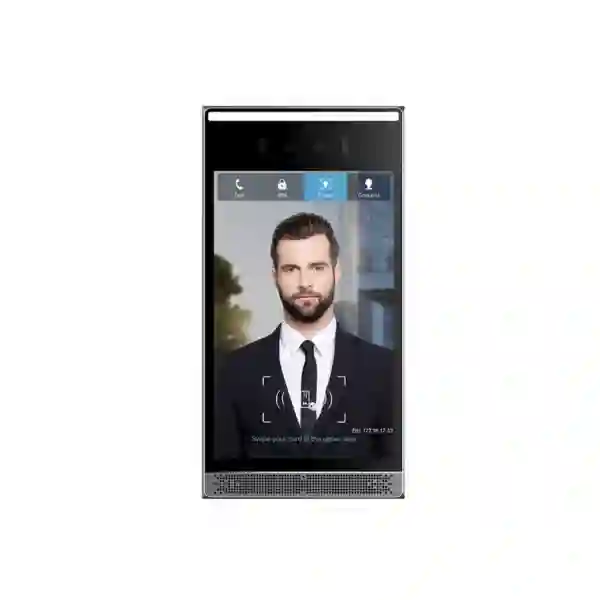
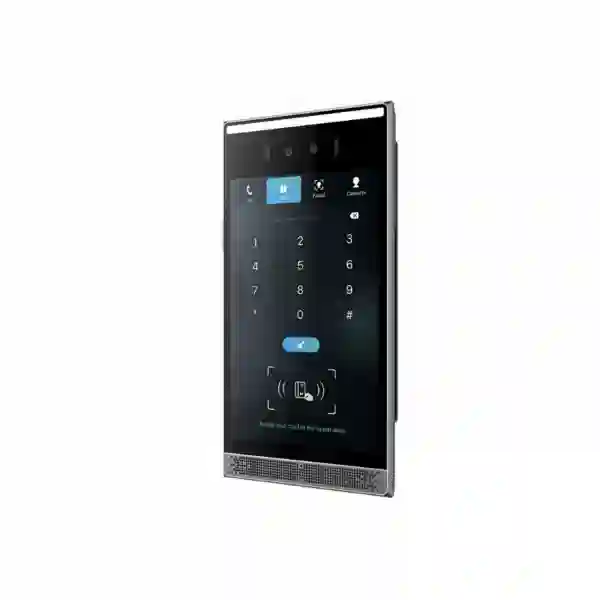
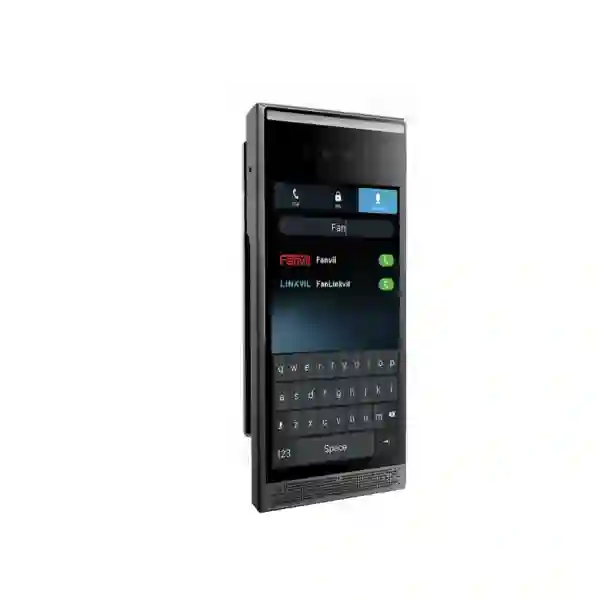
Fanvil i68 Face Recognition Door Phone Tanzania
The Fanvil i68 Face Recognition Door Phone brings facial recognition, access control and SIP-based audio/video intercom into one business-ready entrance device. For organizations in Tanzania evaluating a modern door station for apartments, offices, hotels, mixed-use properties or managed residential communities, the i68 provides a practical combination of visitor communication, multiple credential methods and network integration. Its 8-inch IPS touchscreen presents a clear user interface, while the dual 2MP camera system supports visual verification and the face-recognition workflow. Fanvil specifies anti-spoofing liveness detection designed to help reject presentation attempts involving photos, video or masks. The same unit can communicate with compatible IP phones, indoor stations and mobile applications, allowing entrance decisions to become part of a wider IP communications and security architecture rather than an isolated door reader.
What the Fanvil i68 solves
Traditional entrance systems often separate intercom, card access, video verification and door-release logic into multiple devices. The Fanvil i68 is designed to combine several of those functions at the entrance point. It can be used to recognize enrolled faces, read supported IC and ID cards, accept PINs, use QR codes, receive DTMF-based release commands and support Bluetooth or app-assisted unlocking. The value is not simply the number of methods; it is the ability to design a controlled entry workflow around different user types. Employees may use an enrolled credential, residents may use a chosen method, visitors may call an indoor station or IP phone, and temporary users can be given a controlled access path where the project design supports it.
The i68 also fits IP-based building projects because Fanvil specifies SIP 2.0 over UDP, TCP and TLS, together with ONVIF Profile S. SIP support allows intercom calling to be considered alongside compatible PBX, IP phone and indoor-station infrastructure, while ONVIF can be useful where a security design requires standardized video integration with supported platforms. The device includes a built-in relay, two short-circuit inputs and a Wiegand interface, so the final door design can include lock control, exit inputs and access-control integration. These capabilities should still be planned against the actual lock, door hardware, emergency-release requirements, network design and site security policy.
Verified Fanvil i68 features
Display and camera
Fanvil specifies an 8-inch IPS touchscreen at 800 × 1280 pixels and a 2MP dual-lens camera system using a 1/2.8-inch CMOS sensor. The published field of view is 65° horizontal, 40° vertical and 73° diagonal, with 0.1 Lux minimum illumination and support for IR or white-light illumination.
Credential flexibility
Supported access methods include face recognition, IC/ID card, PIN, QR code, DTMF code, BLE and the Fanvil Link app. Fanvil publishes capacities of 10,000 faces and 10,000 cards for the i68, making capacity planning straightforward for larger managed-entry projects.
Network integration
The i68 supports SIP 2.0 over UDP/TCP/TLS and ONVIF Profile S. It provides full-duplex HD audio, H.264 video, an open API, one built-in relay, two short-circuit inputs and one Wiegand interface supporting Wiegand 26/34.
Physical protection and power
The aluminum-alloy housing is rated IP66 and IK07. Fanvil specifies a wall-mounted installation, 12 VDC 2 A power for non-PoE use, or IEEE 802.3at Class 4 PoE+. Published operating temperature is −20 °C to +55 °C.
Technical specifications
| Display | 8-inch IPS touchscreen, 800 × 1280 |
|---|---|
| Camera | 2MP dual-lens camera, 1/2.8-inch CMOS, auto illumination |
| Video codec | H.264 baseline and main profile |
| Face / card capacity | 10,000 faces / 10,000 cards |
| Protocols | SIP 2.0 over UDP/TCP/TLS; ONVIF Profile S |
| Access methods | Face, IC/ID card, PIN, QR code, DTMF code, BLE, app |
| Interfaces | 2 short-circuit inputs, 1 short-circuit output, 1 Wiegand interface (26/34) |
| Card types | MIFARE Classic 1K/4K, DESFire, Ultralight, Plus; 13.56 MHz and 125 kHz |
| Power | 12 VDC 2 A or PoE+ 802.3at Class 4 |
| Protection | IP66, IK07 |
| Dimensions | 123.8 × 240.0 × 20.5 mm |
Integration and deployment planning
A professional i68 deployment begins with the door rather than the device. The project team should confirm whether the entrance uses an electric strike, magnetic lock or another locking method; whether fail-safe or fail-secure behavior is appropriate; where emergency release is required; whether a door contact or request-to-exit input will be used; and how the door should behave when network or power is unavailable. The network design should confirm PoE+ capacity on the selected switch port, VLAN policy, IP addressing, SIP reachability, NTP and DNS where required, and whether the video stream will be integrated with an ONVIF-compatible surveillance platform. The access-control policy should define which credential types are permitted, who can enroll faces or cards, how user records are removed when people leave, and how temporary access is controlled.
For customers planning a broader security environment, FourTeck Tanzania’s technology services overview explains how access control, networking, CCTV and communications can be planned as connected systems. Buyers can also review the FourTeck Tanzania technology shop when the door phone is part of a larger procurement involving PoE switches, IP phones, cameras or supporting infrastructure. Where organizational due diligence requires more context, the About FourTeck Tanzania page provides background on the company’s integrated technology approach.
Fanvil i68 Face Recognition Door Phone Tanzania
For Tanzania-based businesses, property managers, hospitality operators and developers, the Fanvil i68 is most relevant when the entrance must do more than simply ring a bell. A corporate reception can use the device as a visible visitor-intercom point while enrolled employees use face, card or PIN access. An apartment or mixed-use building can use the door station as the shared entrance endpoint, allowing residents or security staff to receive calls and verify visitors through compatible indoor stations, IP phones or mobile applications. Hotels and managed compounds can also evaluate the i68 where a premium entrance interface, flexible credentials and integration into an IP network are priorities. The 8-inch touchscreen is particularly useful at entrances where users need a clear visual interface rather than a small keypad or audio-only call button.
Procurement in Tanzania should be based on the complete entrance design. A quotation should identify the i68 quantity, lock hardware, exit button, door contact, mounting position, PoE+ switch requirement, cabling, network configuration, SIP destination, indoor stations or IP phones, and any ONVIF integration with the surveillance environment. It is also important to decide how many people will be enrolled and which credential methods will be allowed. Face recognition can be convenient, but organizations should also define privacy, consent, retention and administrator permissions according to their own policies and applicable requirements. The published 10,000-face and 10,000-card capacities are useful planning figures, yet operational administration is just as important as capacity.
Tanzania projects frequently combine access control with CCTV, voice and network infrastructure, so the i68 should be designed within the same switching and security architecture. If the door phone shares a network with cameras, phones or business devices, VLAN segmentation and access policies can help reduce unnecessary exposure. PoE+ can simplify field cabling by carrying power and data on a single Ethernet link, but the switch must have adequate PoE budget and suitable backup power if the entrance is expected to remain available during short utility interruptions. The IP66 and IK07 ratings make the i68 suitable for demanding entrance environments within the manufacturer’s published operating conditions, but mounting location, shading, drainage and physical protection still matter. For a Tanzania quotation, FourTeck can help translate the entrance workflow into a bill of materials instead of treating the i68 as a standalone box.
Fanvil i68 Face Recognition Door Phone Dar es Salaam
Dar es Salaam deployments often involve busy commercial entrances, apartment buildings, hotels, clinics, education facilities and multi-tenant properties where visitor traffic is constant and the security team needs a clearer process than a conventional doorbell. The Fanvil i68 can act as the first interaction point at such an entrance. Visitors can place an audio/video call to a compatible destination, while authorized occupants use enrolled access credentials. Because the device combines intercom and access functions, the entrance workflow can be simplified for reception staff and security personnel: the same front-end can support visitor calling, visual confirmation and controlled door release. The 8-inch screen is also helpful in higher-traffic environments where a clearly presented interface can reduce confusion for first-time visitors.
For a Dar es Salaam office, a practical design discussion should include whether reception needs to answer on an IP phone, indoor station or mobile application; whether the building already operates a SIP PBX; and whether entrance video should be visible in an ONVIF-compatible VMS or recorder. If multiple entrances are involved, administrators should define consistent naming, access schedules and enrollment procedures from the beginning. The i68 supports SIP 2.0 and ONVIF Profile S, but compatibility with the specific PBX, VMS, network security policy and firmware combination should be validated before rollout. The built-in relay and short-circuit inputs can support common door-control workflows, yet lock power and emergency egress must be engineered independently to suit the physical door and local safety requirements.
Coastal conditions and outdoor exposure make installation quality important in Dar es Salaam. The i68 carries IP66 and IK07 ratings, but good installation still means selecting a sensible wall location, sealing cable entries correctly, protecting upstream network and power equipment, and avoiding unnecessary direct exposure where architectural options allow. A project should also check PoE+ budget, UPS backup for the switch and access-control power, and the route from the entrance back to the network room. Organizations planning a larger security upgrade can combine the i68 with CCTV coverage of the approach path, a managed PoE switch and documented network segmentation. That creates a more complete entrance solution in which the door phone is one component of an auditable security workflow rather than an isolated device attached to the wall.
Fanvil i68 Face Recognition Door Phone Mwanza
In Mwanza, organizations evaluating access control for offices, residential developments, hospitality sites, schools or managed facilities can use the Fanvil i68 where a combined video intercom and credential-based entry point is desirable. The device’s multiple access methods are useful when one site serves different groups. Permanent staff might use face recognition or cards, managers may prefer app-assisted access, visitors can call a reception point, and temporary credentials can be considered where organizational procedures support them. This flexibility reduces pressure to select a single authentication method for everyone, while still allowing the site administrator to standardize the entrance device and management approach.
For Mwanza projects, network planning should come before installation. The i68 can be powered by 12 VDC or 802.3at PoE+, so a site with modern structured cabling can use a PoE+ switch to simplify the field connection. The selected switch should have sufficient total power budget and should ideally be connected to suitable backup power if the door function is operationally important. IP addressing, VLANs, SIP routing and administrator access should be documented. Where a recorder or video-management platform will consume the door-phone stream, ONVIF Profile S support can be considered, but the specific integration should be tested with the chosen platform rather than assumed from protocol support alone. Likewise, SIP calling should be validated with the intended PBX or call destination before the site is handed over.
A Mwanza buyer should request a quotation that includes the entrance hardware around the i68, not just the door station. The physical lock, exit mechanism, door contact, power supplies, surge protection, cable route, mounting accessories and network switch can all determine whether the solution works reliably. Enrollment and user lifecycle also require a process: who adds or removes users, who can change door schedules, how lost cards are handled, and what happens when an employee leaves. Because face recognition involves personal data, organizations should define appropriate governance and retention rules. Fanvil’s published capacity figures make the i68 suitable for sizeable user databases, but good administration prevents the database from becoming outdated. A complete Mwanza project therefore combines device capability with disciplined physical, network and operational design.
Fanvil i68 Face Recognition Door Phone Arusha
Arusha has a mix of corporate offices, hospitality properties, institutions, tourism-related operations and residential developments that may require a polished yet controllable entrance experience. The Fanvil i68 can suit those environments because it presents a large touchscreen to visitors while giving administrators several ways to authenticate known users. At a hotel or managed property, the entrance can be configured so that staff, contractors and guests follow distinct workflows rather than sharing a single card or code. At an office, reception can use SIP-based audio/video communication to interact with visitors before releasing the door. At a residential property, compatible indoor stations or mobile workflows can help occupants handle calls without requiring a dedicated guard desk for every interaction.
An Arusha installation should be designed around operational reliability. The i68’s IP66 enclosure rating and IK07 impact rating support use in exposed entrance environments, but these ratings do not remove the need for good construction practice. The installer should check wall flatness, mounting height, camera angle, face-recognition position, lighting, rain exposure and cable sealing. Entrance lighting should allow both the visitor and the camera system to perform consistently at the times the door is used. The published minimum illumination and IR/white-light support are useful device characteristics, but the overall entrance scene can still benefit from properly planned architectural lighting and CCTV coverage.
For procurement, Arusha customers should decide whether the i68 will operate as a standalone door endpoint, connect to an existing SIP communications system, feed video into a VMS, or become part of a wider access-control architecture using Wiegand. Those choices affect the required switch ports, IP configuration, software setup and handover documentation. A strong quotation should also define who provides the lock, whether door-release wiring is included, what testing is performed, how many user records are initially enrolled and whether administrator training is included. The device supports a broad set of credentials, but a simpler policy is often easier to manage: select a small number of approved access methods for each user group, document them, and keep a fallback method for exceptional cases. This approach helps an Arusha site use the i68’s flexibility without creating unnecessary operational complexity.
Fanvil i68 Face Recognition Door Phone Dodoma
Dodoma organizations considering modernization of controlled entrances can evaluate the Fanvil i68 when they need visitor intercom, face recognition and IP-based management capabilities in one wall-mounted device. Government-facing facilities, professional offices, campuses, residential developments and business properties may all have entrances where identity, visitor handling and event visibility matter. The i68 allows authorized users to enter with several credential options, while visitors can initiate a call to an appropriate destination. Because the platform supports SIP, the design can be aligned with existing IP telephony where compatibility is confirmed. That can reduce the number of separate endpoint types that an IT team must support and gives reception a familiar communications workflow.
The technical design for Dodoma should confirm that the LAN can support a security endpoint at the door. PoE+ simplifies powering the unit, but the path from the network cabinet to the entrance should be checked for cable distance, termination quality and environmental protection. The switch port can be placed in an appropriate VLAN with only the network access required for SIP, management, NTP, DNS or video integration. Administrator access should be restricted and credentials changed from defaults as part of commissioning. Firmware should also be managed as part of the device lifecycle. Fanvil publishes current firmware for the i68, so procurement teams should include update responsibility and change control in the support plan rather than treating firmware as a one-time installation task.
Physical-door requirements are equally important. The i68 has one built-in relay and supporting inputs, but the lock, emergency release, request-to-exit devices and power supply must be matched to the door and site policy. If biometric access is enabled, Dodoma organizations should determine who approves enrollment and how records are removed. Cards or PINs may be preferable for some user groups, while mobile or QR workflows can be reserved for others. A structured handover should document the door name, IP address, switch port, relay logic, SIP destination, administrator roles and user-management process. This gives the customer a maintainable system that can be expanded or troubleshot later without depending on undocumented settings left by the original installer.
Fanvil i68 Face Recognition Door Phone UAE
The Fanvil i68 can also be specified for UAE projects where apartment towers, offices, hotels, gated properties and commercial developments require an entrance station that combines premium presentation with flexible authentication. The 8-inch portrait-style IPS screen gives visitors a clear interface, while face recognition, cards, PIN, QR, Bluetooth and app-based unlocking allow the security design to separate permanent users from visitors and temporary users. SIP-based audio/video calling can connect the entrance into compatible IP communications infrastructure, which is useful in buildings where reception, security desks and indoor stations are already part of a managed voice network. ONVIF Profile S can be considered for video integration with supported VMS or recorder platforms.
UAE deployment planning should account for heat, direct sunlight and the physical architecture of the entrance. Fanvil publishes an operating range up to +55 °C, but the installer should still avoid unnecessary thermal stress where possible by selecting an appropriate mounting position and following enclosure and ventilation guidance. Outdoor projects should confirm cable sealing, protective conduit, surge protection and upstream UPS requirements. PoE+ can simplify cabling, especially in large buildings with centralized network closets, but the switch should have sufficient power budget and a well-documented security VLAN. For higher-security environments, the network path between the door phone, PBX, VMS and management stations should be carefully restricted.
Regional buyers comparing supply and integration options can review FourTeck UAE for broader UAE IT, telecom and security solution context. A good i68 quotation for a UAE project should still be site-specific: number of doors, user population, lock type, exit requirements, intercom destinations, integration platform and support expectations should be stated explicitly. The door station itself is only one part of a compliant entrance. Building-management, fire-alarm release and life-safety requirements must be reviewed by the responsible project parties. When the i68 is selected because of its biometric capability, privacy notices, consent processes and retention practices should also be aligned with the organization’s policies and applicable UAE requirements before user enrollment begins.
Fanvil i68 Face Recognition Door Phone Uganda
Uganda organizations looking for an IP-based entrance solution can use the Fanvil i68 where access control and visitor communication need to be combined. Corporate offices, schools, hospitals, apartment buildings, hospitality properties and gated facilities may all benefit from an entrance device that handles known users and visitors differently. Employees can authenticate with face, card or PIN according to site policy, while visitors can call a security desk, receptionist or other compatible SIP destination. This makes the i68 useful in projects where the access-control team and communications team want one coordinated entrance endpoint rather than parallel systems that never share information.
A Uganda project should begin by defining the door workflow. Who is allowed to enter without approval? Who answers visitors? What happens after office hours? Will a mobile app be used, or will the customer depend on fixed indoor stations and IP phones? Is video required in a central VMS? Once those questions are answered, the integrator can define the network and field hardware. The i68 supports PoE+ 802.3at, allowing power and data to use one Ethernet cable where the LAN is designed appropriately. A managed switch can place the device on a dedicated VLAN, and UPS-backed switching can help preserve operation through short power disturbances when the rest of the lock system is also protected.
Customers comparing regional support channels can review FourTeck Uganda for related networking, telecom and security solution information. For procurement, include every dependency in the quote: i68 units, lock hardware, power supply where required, exit devices, door contact, cabling, switch ports, configuration, SIP integration and commissioning. Do not assume that protocol support automatically guarantees integration with every PBX or VMS; a representative test is preferable where the customer has a defined third-party platform. It is also useful to document the enrollment and removal process for faces and cards, because operational discipline determines whether the access database remains accurate after the system is handed over.
Fanvil i68 Face Recognition Door Phone Kampala
Kampala commercial buildings often have multiple user groups moving through the same entrance: employees, tenants, contractors, customers and delivery personnel. The Fanvil i68 can support a structured entrance workflow because it combines an intercom with several credential methods instead of forcing every user through the same process. Permanent users can be enrolled with an approved credential, visitors can place a video call, and security staff can make a release decision from compatible devices. The 8-inch touchscreen gives a modern front-of-house appearance, while the dual 2MP camera system allows the entrance station to contribute visual information to the visitor interaction.
Kampala projects should pay special attention to network and power continuity. A PoE+ connection is convenient, but both the network switch and the physical lock power path need to be considered if the customer expects access control to remain available during utility interruptions. UPS capacity can be sized for the network and security components that actually need continuity. Cable routes to entrances should be protected from accidental damage, and the device’s IP66/IK07 ratings should be complemented by correct mounting and weather sealing. If the i68 is integrated with an IP PBX, the configuration should define the extension or call target, call handling outside office hours, and any remote door-release procedure.
For larger Kampala sites, consistent naming and documentation become essential. Each entrance should have a clear device name, IP address, switch port, lock mapping and support record. If faces are enrolled, the organization should define which administrators can manage biometric data and how records are removed when people leave. If cards are used, lost-card handling should be part of the user-support process. QR or app-based methods can be introduced only where they add operational value. By keeping the policy straightforward, a Kampala customer can benefit from the i68’s broad capability without creating a confusing mix of credentials. The purchasing decision should therefore assess not only hardware price, but also deployment labor, network readiness, door hardware, integration testing, user administration and long-term support.
Fanvil i68 Face Recognition Door Phone Arua
Arua businesses and institutions may need secure entrance control without adding several unrelated devices at the same doorway. The Fanvil i68 is attractive in that scenario because it can combine biometric recognition, card or PIN entry and SIP visitor calling within one wall-mounted unit. A smaller office can use it as a managed main-door endpoint, while a larger campus can deploy the same model across selected entrances and standardize training and support. The published 10,000-face and 10,000-card capacities provide headroom for sizeable deployments, although user-count planning should still be based on the actual operating model rather than on maximum database size.
Connectivity is a key design question in Arua. Because the device depends on an IP network for many of its communication and integration features, the LAN path should be stable and documented. Where PoE+ is available, one Ethernet cable can deliver both data and power, simplifying field wiring. If the entrance is far from the main communications room, cable distance and topology should be checked before procurement. For multi-building environments, fiber uplinks or local switching may be more appropriate than attempting unsupported copper distances. The same design review should identify where the PBX, indoor station or security workstation is located and whether any routed or firewall-controlled path is needed.
Arua customers should also plan fallback procedures. If face recognition is temporarily unavailable for a user, will a card or PIN be accepted? If the network is down, which door functions remain available under the chosen configuration? If a visitor arrives after hours, who should receive the call? These questions are more important than simply enabling every possible feature. A clear policy reduces user frustration and improves support. During handover, the installer should provide administrator credentials securely, record device settings, explain enrollment and removal, and demonstrate the door-release workflow. With those operational elements in place, the i68 can serve as a practical bridge between physical security and IP communications rather than becoming a feature-rich device that nobody knows how to manage.
Fanvil i68 Face Recognition Door Phone Mbarara
Mbarara organizations planning new offices, upgraded entrances or managed residential properties can consider the Fanvil i68 when they want a modern entry point that supports both authenticated users and visitors. The intercom function allows a visitor to contact an approved destination, while enrolled users can use face recognition, cards, PINs or other supported methods. For a business, this can reduce dependence on physical keys and provide a more controlled process for granting and revoking access. For a property manager, the same device can help standardize the main entrance while keeping visitor communication within the broader IP communications environment.
Before ordering in Mbarara, it is useful to survey the door and network. The door survey should identify lock type, frame condition, cable path, request-to-exit method and emergency-release requirement. The network survey should confirm a PoE+ capable port or 12 VDC supply, VLAN assignment, routing to the SIP system, and administrator access. If CCTV integration is required, the VMS should be checked for ONVIF Profile S interoperability with the chosen firmware. If the customer already operates IP phones or a PBX, the call flow should be tested so that visitor calls reach the right user during working hours and have a defined outcome after hours.
Long-term administration is another buying consideration. The i68 can hold a large number of user credentials, but a database is only useful when it reflects current users. Mbarara organizations should assign responsibility for creating, reviewing and deleting access records. The same person or team should understand how to replace lost cards, reset PINs and respond when face recognition does not work as expected for an individual. For biometric deployments, privacy and consent requirements should be considered during project governance. Procurement teams can improve quote accuracy by providing the expected user count, number of doors, preferred credential types, existing PBX or VMS brands and the required level of installation support. That information allows the proposal to include the hardware and integration work that actually determines a successful deployment.
Fanvil i68 Face Recognition Door Phone Gulu
Gulu customers evaluating an intelligent door station can use the Fanvil i68 to combine several entrance functions without losing the advantages of standards-based IP communication. The device can authenticate registered users through multiple methods, provide two-way audio/video communication for visitors and connect into a compatible SIP environment. This makes it relevant to offices, education facilities, residential compounds, hotels, clinics and other properties where security staff need a clear way to distinguish known users from visitors. The large touchscreen also supports a more intuitive user experience at the entrance than a simple reader with minimal visual feedback.
A robust Gulu deployment should separate the access-control requirement from the convenience features. The first priority is safe and reliable door operation: correct lock selection, emergency release, exit button or sensor, door contact and appropriate power. The second layer is network functionality: PoE+, SIP, management and optional ONVIF video integration. The third layer is user experience: face recognition, cards, PINs, QR codes, BLE or app use. Building the project in that order helps prevent a common problem where the endpoint is configured correctly but the physical door system is incomplete. It also makes acceptance testing easier because each layer can be validated separately.
For procurement, Gulu organizations should ask for documentation that states what is and is not included. Does the proposal include the lock? Does it include cabling, switch configuration, mounting, enrollment, PBX setup and VMS integration? Is administrator training included? What assumptions are made about internet or LAN availability? Clarifying these items prevents a low initial device price from becoming an incomplete project. Organizations should also decide whether firmware updates and configuration backups will be managed internally or under a support arrangement. Fanvil continues to publish i68 firmware, so lifecycle management should be part of ownership. With a documented design and clear responsibilities, the i68 can deliver the strongest value as a managed security endpoint instead of a one-time hardware installation.
Fanvil i68 Face Recognition Door Phone Kenya
Kenya buyers can consider the Fanvil i68 for commercial buildings, apartment entrances, hotels, gated properties and institutional facilities that want a combined face-recognition intercom and access-control endpoint. The product is positioned above a basic video door phone because it incorporates a large touchscreen, dual cameras, multiple credential methods and integration protocols that can place the entrance inside a broader IP security design. Employees or residents can use assigned credentials, while visitors can call a reception or indoor endpoint. This is especially useful at managed properties where the security process needs to remain consistent across different shifts and user groups.
For a Kenyan project, compatibility should be validated with any existing PBX, indoor station or VMS. SIP 2.0 support creates a strong basis for telephony integration, but feature behavior can vary across platforms and configurations. ONVIF Profile S similarly helps with standardized video integration, but a live test is preferable for projects where recording, event handling or operator viewing is critical. Network switches should provide 802.3at PoE+ if the device will be powered over Ethernet, and the design should check total PoE budget rather than only the presence of a PoE label. Security VLANs, administrator restrictions and UPS planning can improve maintainability and resilience.
Kenyan customers can review FourTeck Kenya when evaluating related regional IT, telecom and security requirements. A complete quotation should identify the i68 model, quantity, door hardware, cabling, PoE switching, configuration and integration scope. It should also state the customer’s responsibilities, such as providing network access, approving user policies and confirming the physical door design. Biometric features deserve a governance discussion before enrollment begins. Organizations should define who can add users, how consent is handled, what records are retained and how access is revoked. These operational questions make the difference between a technically capable entrance device and a security system that remains trustworthy throughout its lifecycle.
Fanvil i68 Face Recognition Door Phone Kuwait
Kuwait projects often require entrance hardware that can operate in demanding environmental conditions while presenting a professional interface to residents, guests and staff. The Fanvil i68 provides an 8-inch IPS display, face recognition, multi-method access and SIP intercom in an aluminum-alloy enclosure rated IP66 and IK07. Those characteristics make it suitable for consideration at apartment lobbies, office entrances, gated facilities and hospitality properties. The face-recognition and credential functions can support regular users, while visitors can use the communication workflow to reach an authorized person before the door is released.
Environmental design remains important even with the published ratings. Kuwait installations should consider shade, direct solar load, wall temperature, dust, cable gland sealing and the condition of the enclosure over time. Fanvil specifies operation up to +55 °C, so the project engineer should compare the expected mounting environment with the manufacturer’s limits and avoid locations that add unnecessary heat stress. PoE+ can reduce the number of local power components at the entrance, but upstream switches, racks and UPS systems must be sized appropriately. If the i68 is connected to a shared business network, segmentation and access rules should restrict management and signaling to authorized systems.
A Kuwait quotation should also describe integration boundaries. If the door phone must call a SIP PBX, identify the platform and destination. If video must be recorded, identify the VMS and test ONVIF behavior. If Wiegand is used with another access-control system, define which platform remains authoritative for user management. Projects can become difficult to support when credentials are duplicated across several systems without a documented source of truth. Organizations should therefore decide where users are enrolled, who administers them and how access is revoked. For high-value properties, the i68 can be part of a layered security design with CCTV coverage, guarded reception and documented visitor procedures. The strongest deployment is one where the device’s broad feature set is mapped to a simple operational policy rather than enabled indiscriminately.
Fanvil i68 Face Recognition Door Phone Ghana
Ghana organizations can use the Fanvil i68 in office, residential, hospitality and institutional projects where controlled entry and visitor communication must share the same network architecture. The unit supports face, card, PIN, QR, DTMF, BLE and app-based methods, allowing administrators to select credential types according to user role. A staff member may use face or card access, while a visitor initiates a call and waits for authorization. Because the i68 also supports SIP 2.0, it can participate in compatible IP communications systems instead of requiring a separate proprietary call network solely for the door.
A Ghana deployment should define the security objective before the technology is configured. Some entrances primarily need visitor screening, while others need strict user authentication and event logging. The lock design, exit path and emergency behavior should match that objective. Network design should confirm PoE+, IP addressing, VLANs and the path to any PBX or VMS. If the site wants the entrance video inside a surveillance platform, ONVIF Profile S provides a standards-based starting point, but compatibility should be verified with the chosen recorder or VMS. The dual 2MP camera and published low-light support can contribute useful entrance video, yet a dedicated CCTV camera may still be appropriate when the security team needs a wider scene or independent recording angle.
For wider regional technology planning, buyers can visit FourTeck Ghana to review related IT, networking and security solutions. Procurement teams should include quantities, door types, user counts and integration requirements in the request for quotation so the proposal reflects the actual project. The enrollment process should also be treated as part of deployment. Biometric data needs appropriate governance, and administrators need a repeatable process for creating and deleting users. A clear handover with device naming, network details, support contacts and configuration records helps the organization maintain the i68 after installation and makes future expansion easier when additional entrances are added.
Fanvil i68 Face Recognition Door Phone Nigeria
Nigeria has a wide range of commercial and residential environments where entrance control is an operational priority, from corporate offices and estates to hotels, schools, clinics and managed facilities. The Fanvil i68 can support these projects by combining identity verification, visitor intercom and door release in one IP endpoint. The large display offers a clear visitor interface, while regular users can authenticate with face recognition or other approved methods. For sites with a central security desk, SIP calling can route visitor calls to a compatible phone or station, giving operators an audio/video interaction before access is granted.
Power and network resilience should be central to the Nigeria design. The i68 supports PoE+ and 12 VDC, but the whole entrance system must be considered: switch, lock power, controller interfaces, router and communication endpoints. If the customer expects uninterrupted operation during short outages, appropriate UPS or backup-power architecture is required beyond the door phone itself. Managed switching allows the device to be placed in a security VLAN and gives administrators visibility into the port. Where WAN connectivity is unreliable, the design should identify which functions depend on external services and which remain local, then ensure the core door workflow does not depend unnecessarily on the internet.
For large Nigerian organizations, user lifecycle management is a significant issue. A capacity of 10,000 faces or cards is useful only when records are kept current. Access should be linked to employment, tenancy or contractor status, with removal procedures defined when that status ends. Projects should also consider privacy obligations before collecting biometric data. From a buying perspective, request a quote that separates hardware supply, installation, network configuration, PBX integration, VMS integration and user enrollment. This makes proposals easier to compare and prevents assumptions about what a “door phone installation” includes. The i68 is most valuable when those dependencies are visible from the start and the final system is documented for the customer’s IT and security teams.
Fanvil i68 Face Recognition Door Phone Seychelles
Seychelles hospitality, commercial and residential properties may evaluate the Fanvil i68 where a visually refined entrance device is required together with modern access-control options. Hotels, villas, apartments and business sites can use the touchscreen intercom to present a professional front-door interaction while separating permanent users from visitors. Face recognition, cards, PINs and mobile-oriented methods provide flexibility, while SIP calling allows the entrance to connect with compatible IP communication endpoints. For properties that already use network-based security and voice systems, this can reduce the number of isolated technologies at the front door.
Island and coastal environments make installation details particularly important. Although the i68 is rated IP66 and IK07, installers should still protect cable entries, choose appropriate mounting hardware and inspect the installation periodically for environmental wear. The network path to the door should be protected and documented, and surge protection may be relevant depending on the site design. PoE+ can simplify field wiring, which is useful where access to power outlets at the entrance is limited, but the selected switch must have adequate power budget. A UPS-backed network can help maintain communication, provided the lock and other door components are included in the continuity design.
Seychelles buyers should decide early whether the door phone is primarily an access device, an intercom, a video source or all three. That decision affects whether the project needs PBX integration, indoor stations, mobile applications, VMS recording or connection to another access-control platform through Wiegand. Each integration should have an owner and an acceptance test. For hotel and guest environments, administrators should pay particular attention to temporary-user workflows and prompt removal of expired credentials. For staff access, clear enrollment and offboarding processes are essential. A complete quotation should include the physical door components, networking, configuration and training required to make those workflows reliable. This approach helps the i68 deliver a polished user experience without sacrificing maintainability behind the scenes.
Regional solution planning beyond Tanzania
Organizations operating across several African markets can also review FourTeck Africa for wider regional technology context. The technical principle remains the same in every country: choose the i68 because its verified capabilities match the door workflow, then engineer the lock, network, power and administration around that requirement. Do not assume that one configuration should simply be copied to every branch. Building layout, reception workflow, security policy, privacy requirements, PBX platform and available network infrastructure can differ significantly between sites.
Buying and quotation checklist
Door and lock
State the number of entrances, door construction, lock type, fail-safe/fail-secure behavior, request-to-exit method, door contact and emergency-release requirements.
Users and credentials
Provide estimated user count, visitor volume and preferred credential methods. Identify who will administer faces, cards, PINs, QR or mobile access after handover.
Network and power
Confirm PoE+ availability, switch model, VLAN requirements, UPS expectations, cable distance, internet dependencies and any firewall rules needed for SIP or management.
Integration
List the PBX, IP phones, indoor stations, VMS/NVR or access-control platform that must interoperate with the i68 so compatibility can be checked before deployment.
Fanvil i68 FAQs
Does the Fanvil i68 support face recognition?
Yes. Face recognition is one of the i68’s core access methods. Fanvil also specifies anti-spoofing liveness detection intended to resist presentation attempts involving images, video and masks. Biometric use should be governed by the customer’s privacy, consent and administrator policies.
How many faces and cards can the Fanvil i68 store?
Fanvil’s current datasheet lists a face capacity of 10,000 and a card capacity of 10,000. Operational capacity should still be managed through a clear enrollment and offboarding process.
Can the i68 be powered by PoE?
Yes. Fanvil specifies IEEE 802.3at Class 4 PoE+, with 12 VDC 2 A available as the non-PoE power method. The selected switch should have enough per-port capability and total PoE budget.
Does it work with SIP phone systems?
The i68 supports SIP 2.0 over UDP, TCP and TLS. That makes it suitable for integration with compatible SIP systems, but the exact PBX, phone or indoor-station behavior should be validated for the intended deployment.
Can it integrate with video surveillance?
Fanvil specifies ONVIF Profile S, which provides a standardized basis for compatible video-platform integration. Recording, live view and event behavior should be tested against the specific VMS or NVR used by the customer.
Is the i68 suitable for outdoor entrances?
The manufacturer rates the i68 IP66 and IK07, with an operating-temperature range of −20 °C to +55 °C. Correct mounting, cable sealing, environmental assessment and protection of upstream power/network equipment remain necessary.
Decision recap
Choose the Fanvil i68 when your project needs a premium SIP video door phone with face recognition, an 8-inch touchscreen, multiple access methods, ONVIF interoperability, PoE+ and a rugged IP66/IK07 enclosure. Its strongest fit is a planned entrance solution where door hardware, visitor calling, user credentials, network security and administration are designed together. For a useful quotation, share the number of doors, expected users, lock type, preferred credentials, existing PBX or VMS, PoE availability and installation scope.
Consultation panel
Before finalizing the i68, confirm the entrance workflow, user population and integration targets. FourTeck can use that information to determine whether the i68 should be supplied as a standalone door endpoint or as part of a wider access-control, IP telephony, CCTV and managed-network design. A pre-installation discussion is particularly useful when the site already has a PBX, ONVIF VMS, PoE switching or existing door hardware, because those systems affect compatibility and the final bill of materials.




Reviews
There are no reviews yet.