
Fanvil business IP telephony
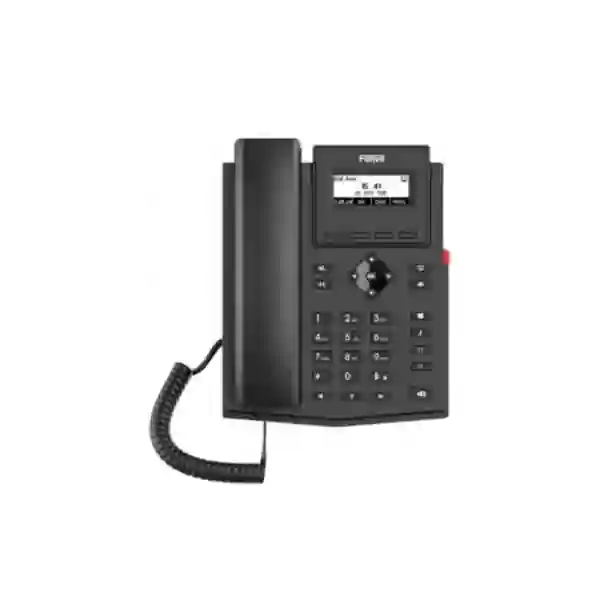
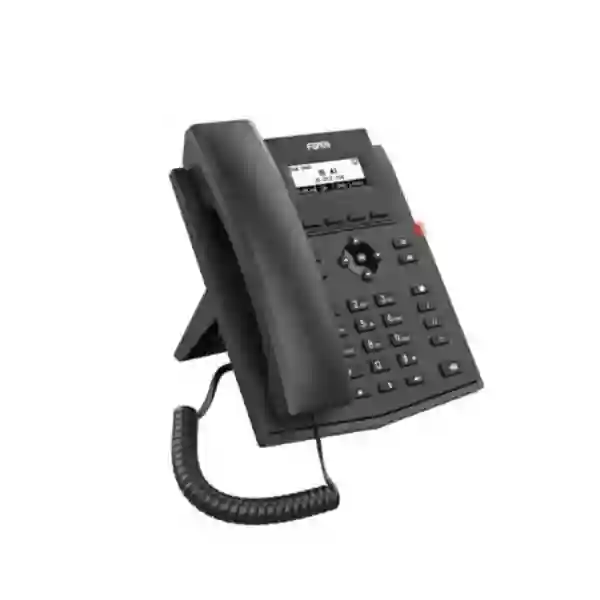
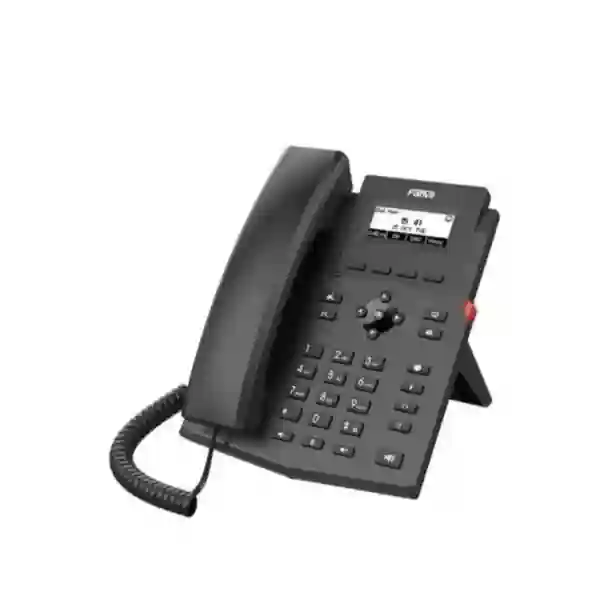
Fanvil X301G Gigabit Entry Level IP Phone
The Fanvil X301G is designed for organisations that want a simple SIP desk phone without giving up Gigabit Ethernet, Power over Ethernet or modern wideband voice. Fanvil positions the X301G as an entry-level Gigabit SIP phone with two SIP lines, a compact dot-matrix display, HD audio, six-way audio conferencing, dual 10/100/1000 Mbps network ports and integrated PoE. For buyers in Tanzania, that combination makes the model particularly relevant where desk phones share wired network infrastructure with PCs and where a clean, centrally powered VoIP rollout is preferred.
What the Fanvil X301G solves
Many organisations do not need a premium executive IP phone at every desk. Standard office users often need reliable call handling, two SIP registrations, clear audio, a headset option and easy deployment through the existing Ethernet network. The X301G addresses that role directly. Its dual Gigabit ports can allow a workstation and the phone to share one desk network point, while integrated PoE can reduce the need for a separate power adapter when the access switch supports suitable PoE. The model therefore fits cost-conscious VoIP projects where network speed, cabling simplicity and day-to-day calling matter more than a large colour screen.
The phone also supports wideband codecs including G.722 and Opus, full-duplex speakerphone functions, six-way audio conferencing and EHS wireless-headset integration. These features can be useful for general administration, operations, customer-service, sales, education, hospitality back offices and branch teams. Before purchase, the important checks are SIP/PBX compatibility, PoE availability, VLAN and QoS policy, headset requirements, provisioning method and the quantity of extensions being deployed.
Gigabit desk connectivity
Dual 10/100/1000 Mbps Ethernet ports suit offices that want to avoid creating a 100 Mbps bottleneck between the user PC and the LAN when the phone sits inline at the desk.
PoE-ready deployment
Integrated PoE can combine network and power on one Ethernet cable when used with a compatible PoE switch, simplifying desk cabling and centralising power protection.
Business voice features
Two SIP lines, HD audio, headset mode, call transfer, forwarding, hold, redial, DND, voicemail indication and conferencing cover common daily VoIP workflows.
Provisioning and management
Fanvil documentation lists web management and auto-provisioning options that can help administrators roll out and maintain multiple phones with repeatable settings.
Verified Fanvil X301G specifications
| SIP lines | 2 | Audio conference | 6-way |
| Display | 2.3-inch dot-matrix display | Wideband codecs | G.722, Opus |
| Ethernet | Dual 10/100/1000 Mbps | PoE | Integrated |
| Headset | RJ9 / EHS support | Installation | Desktop stand; wall mounting via suitable accessory |
Display resolution has appeared differently across Fanvil documentation revisions, so procurement should confirm the specification on the current shipping version rather than relying on an older datasheet revision. The core X301G positioning—two SIP lines, Gigabit Ethernet, PoE, HD voice and six-way conferencing—is consistent across current Fanvil product information.
Compatibility, PBX and network planning
An IP phone is only one part of the voice environment. The Fanvil X301G should be evaluated with the SIP platform, extension plan, PoE switching, DHCP, VLAN policy, firewall configuration and internet or SIP-trunk path. Two SIP lines can support a straightforward user profile, but reception teams or users who need many line appearances and programmable keys may be better served by a higher-tier phone. Likewise, Wi-Fi is not the reason to choose the X301G; this model is aimed at wired Gigabit connectivity.
For a broader deployment discussion, FourTeck Tanzania’s business technology overview explains how IP phones, PoE switches, VLANs, firewalls and structured cabling fit together. Buyers that are standardising across East Africa can also review FourTeck Kenya and FourTeck Uganda, while multi-country procurement involving the Gulf can reference FourTeck UAE. These links are useful for organisations that want a consistent IP-telephony approach across offices rather than treating every branch as an isolated purchase.
Fanvil X301G Gigabit Entry Level IP Phone Tanzania
For Tanzanian organisations, the Fanvil X301G is most relevant when a business wants a wired SIP endpoint that can be deployed in quantity without sacrificing Gigabit pass-through at the desk. In an office where a single structured-cabling point is available to each workstation, the phone can sit between the network switch and the user’s computer. That makes the dual Gigabit design important: voice traffic can be carried while the workstation retains Gigabit-capable wired connectivity. The purchasing conversation should therefore include the phone and the access-layer network together. A buyer should confirm how many desks need phones, how many switch ports are available, whether the switch provides sufficient PoE capacity, whether voice VLANs are planned, and whether the PBX or hosted SIP service supports the call features users require. If those questions are answered early, a low-cost desk phone becomes part of a well-managed business communications platform rather than an isolated device.
Tanzania deployments can include corporate offices, NGOs, education sites, hospitality administration, clinics, professional services, retail back offices and branch operations. Those environments often need a mix of user profiles. A standard office user may fit the X301G well, while receptionists or supervisors may need a higher-level model with more programmable keys and a larger screen. Purchasing one model for every role can look simple at first but may create usability problems later. A better approach is to identify the number of basic users, high-call-volume users and shared-area phones, then create a small approved endpoint list. For the X301G group, confirm headset usage, caller-ID presentation, voicemail behaviour, transfer workflow and whether users need direct access to multiple SIP accounts.
Power continuity also matters in VoIP. If the phone is powered by PoE, the availability of calling during a power interruption depends on the switch, PBX, router, firewall and internet equipment remaining powered. A central UPS strategy can therefore be more useful than relying on individual phone adapters. Network quality should be reviewed as well: packet loss, congestion and poorly configured QoS can reduce call quality even when the handset itself is operating correctly. For quotation preparation in Tanzania, provide the desired quantity, PBX platform, switch model, PoE status, office locations, headset requirements and any rollout schedule. That information makes it easier to confirm whether the Fanvil X301G is the correct standard phone for the environment.
Fanvil X301G Gigabit Entry Level IP Phone Dar es Salaam
Dar es Salaam buyers often evaluate IP phones as part of a wider office move, branch rollout, PBX replacement or network refresh. In that context, the Fanvil X301G can be a sensible desk endpoint for staff whose communication needs are straightforward: two SIP registrations, clear handset and speakerphone audio, standard call-control functions, Gigabit Ethernet and PoE. The key procurement advantage is not simply that the handset is entry level; it is that the Gigabit network ports are better aligned with modern office switching than a 10/100-only phone placed inline with a user PC. Organisations using cloud applications, large files, video meetings or centrally hosted business systems should avoid creating an unnecessary 100 Mbps desk bottleneck when their access network is designed for Gigabit speeds.
A Dar es Salaam deployment should start with the call flow. Identify whether staff receive direct inbound numbers, shared hunt-group calls, queue calls or internal extensions only. Confirm what happens when a call is unanswered, whether voicemail is used, who needs call pickup, and whether users transfer callers frequently. The X301G supports the common functions needed for these workflows, but the PBX configuration determines how they behave in practice. For teams using headsets, confirm the exact headset and EHS arrangement before ordering accessories. For mass deployment, standardised extension names, DHCP behaviour, VLAN settings and provisioning rules can reduce installation time and make later support easier.
Physical network preparation is equally important. Desk outlets should be tested, PoE budgets should be calculated across the access switch, and voice traffic should be considered alongside Wi-Fi, CCTV and normal user data. If phones are expected to remain operational during brief power interruptions, include the switch, router, firewall and PBX or edge equipment in the UPS calculation. For multi-floor offices, document which switch and patch-panel port serves each phone so moves and troubleshooting are simple. When requesting a Fanvil X301G quotation for Dar es Salaam, include quantity, target departments, PBX type, switch details, PoE availability and any need for configuration or deployment support rather than asking for handset price alone.
Fanvil X301G Gigabit Entry Level IP Phone Mwanza
In Mwanza, the Fanvil X301G can suit organisations that need a repeatable wired VoIP standard for offices, service desks, education administration, healthcare administration, trading businesses and branch operations. The phone’s two SIP lines and familiar desk-phone layout keep the user experience simple, while the dual Gigabit ports help it fit into an office LAN where the same outlet may serve both phone and PC. For buyers with limited rack space or a preference for cleaner desks, integrated PoE can also simplify power distribution because the phone can receive power from a compatible switch rather than requiring a separate adapter at every workstation.
A practical Mwanza deployment plan should consider resilience. If the office depends on SIP calling to reach customers or coordinate teams, voice availability relies on more than the handset. The LAN switch, router, firewall, internet circuit and PBX service all influence whether calls continue. Organisations should therefore decide which parts of the voice path require backup power and whether a secondary connectivity option is appropriate for critical sites. This is especially important for branches that communicate with a head office or cloud PBX over the internet. The X301G itself supports useful business networking functions, but stable latency and low packet loss remain essential for consistent audio.
When comparing the X301G with other entry-level phones, focus on the role rather than only the device price. Check whether two SIP accounts are sufficient, whether Gigabit pass-through is important, whether users need a wireless headset, whether Wi-Fi is necessary, and whether the PBX can provision the model efficiently. Users who need many monitored extensions or frequent one-touch keys may require a different class of endpoint. For standard users, however, the X301G offers a sensible balance between basic call handling and business network features. A Mwanza quotation request is strongest when it includes the phone quantity, user types, PBX platform, PoE switch information and whether installation, provisioning or headset accessories should be included.
Fanvil X301G Gigabit Entry Level IP Phone Arusha
Arusha organisations in tourism, hospitality, professional services, education, logistics and administration often need dependable front-office and back-office communications while keeping the endpoint experience straightforward. The Fanvil X301G is aimed at the standard desk-user role rather than advanced receptionist use. Its two SIP lines, HD voice, speakerphone, headset support and six-way conferencing can cover everyday calling, while its dual Gigabit Ethernet ports make it suitable for wired workstations that share one network outlet with the phone. Where PoE switching is already part of the network, integrated PoE can reduce desk-side power adapters and make central backup power more practical.
Hospitality and multi-department environments should define user roles carefully. A reservations or reception team may need more programmable keys, visible line status and higher call-handling capacity than the X301G provides, whereas accounting, administration, procurement and supervisory offices may fit the model well. This distinction keeps the project cost controlled without forcing every user onto the same high-end phone. If a property or campus has several buildings, extension numbering, VLANs, DHCP options and provisioning should be designed consistently so phones can be moved or replaced without manual reconfiguration becoming a recurring support burden.
Arusha buyers should also review the physical network path. A phone can support HD voice, but audio quality can still suffer if uplinks are congested, internet jitter is high or voice is competing with large backups and video traffic. Managed switches, sensible QoS and a clean IP addressing plan can improve predictability. If the phones are part of a cloud-hosted PBX, confirm firewall and SIP requirements with the service provider. If they are part of an on-premises PBX, confirm firmware compatibility and provisioning templates. A useful quotation request should specify the number of extensions, locations, phone quantities, PoE switch capacity, PBX platform, any headsets and whether wall mounting or desk stands are required for particular areas.
Fanvil X301G Gigabit Entry Level IP Phone Dodoma
For Dodoma offices, institutions, projects and service organisations, the Fanvil X301G can provide a practical standard endpoint where users primarily need reliable SIP calling rather than complex programmable-key workflows. The phone’s Gigabit Ethernet is particularly useful in modern structured networks because a desktop computer can share the same cable path without being forced through a 100 Mbps handset interface. That matters when staff use cloud services, document systems, video collaboration or other bandwidth-sensitive applications. Integrated PoE can also support a cleaner installation, especially where the access switches and UPS systems are centrally located.
Procurement teams should treat the phone specification and the telephony service as separate but connected decisions. The X301G supplies the endpoint functions, but extension licensing, SIP trunks, inbound numbers, IVR, queues, recording, voicemail and call routing belong to the PBX or hosted platform. Before ordering, document which features are required by each department and verify that the PBX exposes them to the handset. Two SIP lines are suitable for many standard users, but users responsible for multiple queues or monitored extensions may need a device with more keys and visual status indicators.
For a Dodoma deployment, build a basic bill of materials that includes phones, PoE switch capacity, any power adapters needed for non-PoE locations, patch leads, headsets where required, PBX licences or extensions, and UPS capacity for network equipment. Confirm whether wall mounting is needed for shared points or whether desktop installation is sufficient. During rollout, use consistent naming, VLAN tagging and extension templates. After installation, record the MAC address, extension, desk location and switch port for each phone. This simple documentation reduces troubleshooting time and makes later staff moves easier. When requesting pricing, include these deployment facts so the quotation reflects the operational requirement rather than just a unit count.
Fanvil X301G Gigabit Entry Level IP Phone UAE
In the UAE, the Fanvil X301G can serve as a cost-conscious wired SIP phone for standard business users in offices, retail back offices, warehouses, service companies and multi-branch operations. Organisations that already operate Gigabit switching can benefit from the phone’s dual Gigabit ports because the handset can be installed inline with a workstation without intentionally reducing the wired access speed to 100 Mbps. Integrated PoE also aligns with managed office deployments where switches are centrally powered and desks are kept free of unnecessary adapters. The main purchasing question is therefore whether the user profile fits two SIP lines and a compact display, not whether the phone can deliver the core network and audio functions expected from a modern entry-level endpoint.
UAE projects often involve mixed user profiles and multiple sites. The X301G may be appropriate for general employees, while reception, executive, contact-centre or supervisory roles may need larger displays, more line keys, Bluetooth or other advanced features. Standardising two or three approved phone profiles can improve procurement and support while avoiding overspending on every desk. For a branch rollout, keep extension numbering, VLAN IDs, firmware levels and provisioning templates consistent where the PBX design allows it. This makes replacement easier and gives administrators a predictable baseline across sites.
Before ordering in the UAE, confirm the local PBX or hosted-voice platform, SIP registration method, PoE class and available switch budget, voice VLAN requirements, headset compatibility and any regulatory or telecom-provider dependencies relevant to the customer’s service. The handset itself does not replace SIP trunking or PBX licensing. For organisations linking UAE and East African operations, a coordinated endpoint policy can simplify training and support across offices. FourTeck’s regional sites can be used to align requirements, but availability, commercial terms and delivery scope should always be confirmed in the actual quotation rather than assumed from a product page.
Fanvil X301G Gigabit Entry Level IP Phone Uganda
Ugandan businesses evaluating the Fanvil X301G should look at it as a standard wired SIP endpoint for users who need dependable calling and Gigabit desktop networking without advanced executive-phone functions. Two SIP lines can cover many office-user scenarios, while HD voice, speakerphone operation, call transfer, forwarding and conferencing support normal business communications. Dual Gigabit Ethernet makes the model relevant where a single cable drop serves the phone and user PC, and integrated PoE can reduce desk-side adapters when the switch infrastructure supports it.
The most important deployment decision is how the handset fits into the wider voice platform. Confirm whether the business uses an on-premises IP PBX, a hosted PBX or another SIP service, then validate registration, codecs, provisioning and call-feature behaviour. If branches connect back to a central system, internet quality and firewall configuration become part of voice design. For sites where connectivity is variable, monitoring jitter and packet loss can be more useful than repeatedly replacing endpoints. Voice VLANs and QoS can help keep phone traffic organised, but they should be configured consistently across switches and routers rather than applied only at the handset.
Uganda procurement teams can also separate endpoint quantity from role. A general staff desk may need the X301G, while a reception desk may require a different model with additional programmable keys. Shared spaces may need wall mounting or a more specialised phone. Headset users should have their EHS requirements confirmed before accessories are ordered. For multi-site standardisation, keep firmware, naming and extension templates aligned. A quotation request should therefore include quantity, office or branch locations, PBX type, PoE switch details, headset needs and whether configuration is expected. That approach produces a more useful project price than comparing phone unit cost in isolation.
Fanvil X301G Gigabit Entry Level IP Phone Kampala
Kampala organisations with dense office environments, branch offices and customer-facing teams can use the Fanvil X301G as a baseline phone for standard employees while reserving higher-tier endpoints for users with more complex call handling. This role-based approach is important because the X301G is deliberately simple. It provides two SIP lines, Gigabit Ethernet, PoE, HD audio and headset support, but it is not designed to replace a multi-key receptionist console. For many finance, administration, sales, operations and support desks, that simplicity can be an advantage because users get the functions they need without unnecessary complexity.
A Kampala rollout should consider switch capacity as carefully as handset quantity. Count the number of phones to be powered, check the total PoE budget of each access switch, and reserve capacity for other PoE devices such as wireless access points and cameras. If PCs are daisy-chained through the phones, verify that the access ports and uplinks are configured for the intended data and voice VLANs. Where the PBX is cloud hosted, test call performance during busy periods rather than assuming that internet bandwidth alone guarantees quality; latency, jitter and packet loss can have more immediate effects on voice.
For supportability, central provisioning is valuable. Standardise display names, extension formats, server addresses, time settings and feature keys, then document the final configuration. Headset users should test their chosen EHS combination before a large accessory purchase. If staff frequently relocate, maintain a simple inventory mapping phone MAC address to user and extension. Kampala buyers planning several sites can use FourTeck Uganda as a regional reference for IP PBX and VoIP solution planning. Commercial availability and implementation scope should still be confirmed for each project.
Fanvil X301G Gigabit Entry Level IP Phone Arua
For an Arua office or branch, the Fanvil X301G is best evaluated as part of a reliable voice-and-network package. The phone itself provides two SIP lines, Gigabit wired connectivity, integrated PoE, HD voice and headset support, but the end-user experience also depends on internet or WAN quality, PBX availability and the local switch design. This is particularly relevant for branch environments where calls may register to a central or cloud platform. Before ordering, test the intended connectivity path and decide what should happen if the primary internet connection is unavailable. Critical sites may require a broader resilience plan at the router or WAN layer rather than any change to the handset.
The X301G’s dual Gigabit ports can be useful where structured cabling is limited and the phone must share the desk outlet with a computer. However, cabling quality still matters. Poor terminations or damaged patch leads can produce intermittent problems that look like phone faults. During installation, label outlets and switch ports, verify link speed, confirm PoE delivery and keep voice settings consistent. If a voice VLAN is used, ensure DHCP, gateway and DNS services are available in that VLAN and that the PBX can be reached through the intended firewall policy.
User-role planning remains important. A two-line entry phone can be a good fit for general staff, but a reception or dispatch role may need more direct keys and better visibility of extensions. EHS headset support can help users who spend long periods on calls, though exact accessory compatibility should be verified. For an Arua quotation, state how many users need standard desk phones, how many require enhanced call handling, whether PoE switches already exist, and whether the PBX is local or remote. That information helps build an appropriate bill of materials and avoids discovering missing power, switching or accessory requirements during installation.
Fanvil X301G Gigabit Entry Level IP Phone Mbarara
Mbarara businesses that are moving from analogue extensions to SIP, expanding an IP PBX or replacing older 10/100 desk phones can consider the Fanvil X301G for standard user positions. Its dual Gigabit interfaces reduce the risk that the phone becomes an artificial speed limit for the attached PC, while integrated PoE can simplify installation where managed PoE switching is available. HD voice and wideband codecs can improve clarity when both endpoints and the network path support them, and six-way audio conferencing gives users a local collaboration option for smaller discussions.
Before rollout, decide whether the phone will obtain network settings from the same VLAN as PCs or from a separate voice VLAN. A dedicated voice VLAN can make policy, QoS and troubleshooting more organised, but it should be planned end to end. LLDP, DHCP and switch configurations need to work together. If the business uses a hosted PBX, firewall rules and NAT behaviour should follow the provider’s requirements rather than generic SIP assumptions. If an on-premises PBX is used, keep the server, switch and phones on documented firmware and configuration versions.
Mbarara procurement should also consider what the user actually does. General administration, stores, accounting and office staff may need only a basic two-line phone. A supervisor monitoring many extensions may need more visible status information. A call-heavy sales user may value a tested headset combination. Shared desks may require hot-desking features configured on the PBX. The aim is to avoid both under-specifying and over-specifying. When requesting the X301G, include the planned quantity, existing network switch models, available PoE budget, PBX brand or hosted service, accessory requirements and whether professional configuration or staged deployment is needed.
Fanvil X301G Gigabit Entry Level IP Phone Gulu
For Gulu offices and institutional sites, the Fanvil X301G can provide a straightforward SIP endpoint that fits well into managed Ethernet infrastructure. The phone supports two SIP lines, HD voice, six-way conferencing, Gigabit pass-through, PoE and EHS headset use. These features cover many everyday calling requirements while keeping the interface relatively simple. The model is especially useful when the organisation wants to standardise a large number of general staff positions and keep more advanced phones only for reception, management or specialist call-handling roles.
Network design has a direct effect on voice stability. If the phone connects through a PoE switch, calculate the switch’s total power budget rather than only counting PoE-capable ports. If cameras and wireless access points use the same switch, their power consumption and traffic should be included as well. On the data side, voice does not normally require high bandwidth, but it does require consistent delivery. Congestion, packet loss and unstable WAN links can create audible problems. VLAN separation and QoS can help organise traffic when configured across the full path.
A good Gulu deployment also includes documentation. Record extension numbers, users, phone MAC addresses, desk locations and switch ports. Keep a standard configuration template for SIP server settings, time zone, codecs, transfer behaviour and voicemail access. For organisations with several sites, this level of consistency allows a replacement phone to be provisioned faster. Before purchase, confirm whether a power adapter is needed at any non-PoE location, whether wall-mounting accessories are required, and which staff need headsets. Quotation requests that include these details are more likely to cover the whole deployment instead of leaving accessories or network changes to be discovered later.
Fanvil X301G Gigabit Entry Level IP Phone Kenya
Kenyan businesses comparing entry-level SIP phones will often find the Fanvil X301G attractive because it pairs a basic user interface with Gigabit networking and integrated PoE. That distinction matters when a company is replacing older phones that only pass 10/100 Mbps traffic to the attached PC. In a modern office with Gigabit switching, the X301G can preserve the intended desktop network speed while still serving as the voice endpoint. Two SIP lines, HD audio, six-way conferencing and EHS headset support make it suitable for many general office roles.
Kenya deployments can range from a single Nairobi office to multi-branch environments. In either case, the purchasing process should identify the PBX platform and user groups first. General staff may fit the X301G, reception teams may need more programmable keys, and remote or mobile users may use softphones or Wi-Fi devices instead. This role-based approach improves usability and can reduce overall project cost. For branches, standardise firmware and provisioning templates where possible so IT teams do not maintain a different configuration for every location.
If the phone shares a desk port with a PC, plan the data and voice VLANs carefully. Check that DHCP, DNS and gateway services are available and that the PBX can be reached securely. PoE switches should be sized for all powered endpoints, including phones, access points and cameras. For organisations procuring across Kenya and Tanzania, FourTeck Kenya provides a regional point of reference for VoIP and IP PBX requirements, while the Tanzania site can address Tanzania-specific projects. Availability, price, taxes, delivery and implementation scope should be confirmed through a current quotation rather than inferred from online listings.
Fanvil X301G Gigabit Entry Level IP Phone Kuwait
In Kuwait, the Fanvil X301G can be evaluated for standard office extensions where wired reliability, Gigabit pass-through and PoE are more important than premium display features. The device is intended for entry-level business use, so it is best matched to employees who need common call functions, two SIP registrations, speakerphone operation and optional headset use. Its dual Gigabit interfaces suit desks where the handset is installed inline with a PC, while PoE can centralise power when the access switch supports it.
Kuwait procurement teams should first confirm the business telephony platform. The phone is a SIP endpoint, not a PBX service by itself. Inbound numbers, call queues, IVR, recordings, extension licences and trunk capacity are provided by the wider voice system. Confirm that the chosen platform supports the required functions on the X301G and that firmware versions are approved. For hosted services, follow provider guidance for NAT, firewall and security. For on-premises systems, ensure the PBX, switching and endpoint networks are segmented and documented appropriately.
Large office projects should calculate PoE budgets by switch and floor, account for UPS requirements, and decide whether phones remain active during power interruptions. If users handle calls for long periods, test headset compatibility before mass purchase. If users need many extension-status keys or high call volumes, choose an endpoint class better suited to that role. For the X301G user group, maintain consistent extension labels, provisioning and codec policy. A Kuwait quotation request should identify quantity, PBX type, network switch models, headset needs, wall-mounting needs and any requirement for configuration or staged rollout, allowing the commercial proposal to cover the actual deployment rather than only handset units.
Fanvil X301G Gigabit Entry Level IP Phone Ghana
For Ghanaian businesses, the Fanvil X301G can be a practical endpoint for office staff who need SIP telephony with Gigabit Ethernet and PoE but do not require a high-end colour phone. The combination is useful where structured cabling is already in place and a single network outlet serves both the handset and the desktop computer. Two SIP lines can meet many general-user needs, while HD audio, wideband codecs, speakerphone operation and headset support provide the everyday communication tools expected in a modern office.
The main design work sits around the phone. Confirm that the switch can supply enough PoE power for all connected endpoints and that any voice VLAN is available on the relevant ports. Ensure the DHCP and DNS services used by phones are reliable. For cloud PBX services, monitor internet latency and packet loss. For on-premises PBX deployments, make sure the server, firewall and switching path are included in backup-power planning. These infrastructure decisions often have more effect on perceived call quality than the difference between two similar SIP handsets.
Role-based selection is equally important. Standard office users may fit the X301G well, while a reception area or busy customer-service position might need a phone with additional keys and line visibility. If headsets are required, verify the exact EHS accessory combination and user preference. Large rollouts should use repeatable provisioning templates and maintain an inventory of MAC addresses, extensions and desk locations. For Ghana-based procurement, provide the planned quantity, PBX environment, PoE switch details, location count and accessory needs. This helps the quotation reflect the full project and avoids unsupported assumptions about stock, local delivery time or warranty terms.
Fanvil X301G Gigabit Entry Level IP Phone Nigeria
Nigerian organisations planning a new IP PBX, replacing ageing desk phones or standardising branch communications can consider the Fanvil X301G as a basic Gigabit SIP endpoint. The model supports two SIP lines and offers HD voice, six-way conferencing, dual Gigabit Ethernet and PoE. That feature set is appropriate for many desk users, particularly in offices where the PC connects through the phone and where maintaining Gigabit access is desirable. A simple handset can also reduce training overhead when staff mainly need answer, hold, transfer, conference, voicemail and headset functions.
Nigeria deployments should pay close attention to network and power resilience. PoE can simplify the desk, but it also means the phone depends on the access switch. If the organisation wants phones to continue through short power events, UPS capacity needs to include the PoE switches, PBX or gateway, router and internet edge. For sites that depend on cloud telephony, WAN resilience may need to be addressed separately. Voice traffic is sensitive to jitter and packet loss, so consistent connectivity and sensible QoS are more important than raw bandwidth numbers alone.
The X301G should be assigned to the correct user category. A general employee can be well served by two SIP lines, while a receptionist handling multiple queues may need a more advanced phone. Before ordering, confirm PBX compatibility, provisioning, firmware, PoE, VLAN configuration, headset accessories and any wall-mount requirements. For multi-branch organisations, create a standard template for extension numbering, display names and network parameters. A complete quotation request should include all of these elements so pricing can be built around the deployment need, while availability, warranty and logistics are confirmed in the current commercial offer rather than assumed.
Fanvil X301G Gigabit Entry Level IP Phone Seychelles
In Seychelles, businesses in hospitality, administration, services and multi-site operations can consider the Fanvil X301G for standard wired extensions that need Gigabit Ethernet and PoE. The phone is compact in capability rather than network performance: it gives users two SIP lines, HD voice, speakerphone operation, six-way conferencing and headset support, while the dual Gigabit ports allow a workstation to share the same Ethernet path without intentionally limiting it to Fast Ethernet. For properties with structured cabling and central PoE switching, this can produce a tidy and manageable desk deployment.
Hospitality environments should distinguish guest-room telephony from staff-office telephony. The X301G is primarily a business desk SIP phone and may fit administration, reservations back office, finance, procurement, management support and technical offices better than specialised guest-room applications. Reception teams may need more visible line keys or an expansion-oriented phone. Defining those roles avoids buying the wrong endpoint simply because all locations use SIP. The PBX call flow should also be documented, including extensions, transfer destinations, hunt groups, after-hours routing and voicemail.
Because island operations can have different logistics and connectivity constraints, procurement planning should include accessories and spares in the original bill of materials where appropriate. Confirm the required number of power adapters for any non-PoE points, wall-mount accessories, headsets, patch cables and switch capacity. If the PBX is remote or cloud hosted, test call quality over the actual WAN path and plan for the organisation’s required level of internet resilience. A Seychelles quotation request should describe quantity, user roles, PBX platform, PoE environment and expected deployment services so the project can be evaluated as a complete communications requirement.
Buying guidance: is the X301G the right Fanvil phone?
Choose the X301G when you need a straightforward wired Gigabit SIP phone for standard desk users, especially where PoE and PC pass-through are useful. Consider a different model when the user needs built-in Wi-Fi, a large colour display, many line or DSS keys, Bluetooth, advanced executive features or specialised reception-console behaviour. The right purchase is the model that fits the user role and the existing PBX/network design, not simply the phone with the longest feature list.
For a useful quotation, prepare the quantity, locations, PBX or hosted platform, number of SIP accounts per user, PoE switch model, VLAN requirements, headset needs, wall-mount needs and desired rollout scope. If replacing existing phones, include the current model and any problems you want to solve. If building a new system, include the number of users, departments, inbound numbers and expected call flows.
Fanvil X301G FAQs
Does the Fanvil X301G support Gigabit Ethernet?
Yes. Fanvil specifies dual 10/100/1000 Mbps Ethernet ports on the X301G, making it suitable for phone-and-PC desk connectivity on Gigabit networks.
How many SIP lines does the X301G support?
The X301G supports two SIP lines. Buyers who need many monitored extensions or numerous line appearances should compare a higher-tier endpoint.
Does the Fanvil X301G have PoE?
Yes. Integrated PoE allows power and network connectivity over Ethernet when connected to a compatible PoE switch.
Can the X301G work with a headset?
Yes. Fanvil lists headset mode and EHS wireless-headset support. The exact headset and EHS cable combination should be confirmed before purchase.
Is the Fanvil X301G a Wi-Fi phone?
No. The X301G is the Gigabit wired model in the X301 family. Buyers that specifically need Wi-Fi should evaluate a model designed for wireless connectivity.
What should I confirm before ordering?
Confirm PBX compatibility, quantity, PoE availability, switch capacity, VLAN and QoS design, headset needs, power or wall-mount accessories and the required configuration or deployment scope.
Quotation checklist for Fanvil X301G projects
State the number of standard users, reception users and headset users.
Identify the on-premises or hosted SIP platform and any licensing requirements.
Provide switch models, available PoE budget and voice VLAN information.
List EHS headsets, wall-mount accessories, adapters or patch leads required.
Related FourTeck planning resources
For a complete Tanzania deployment, use the FourTeck Tanzania IT, telecom and networking overview to consider the switching, IP PBX, firewall, Wi-Fi and cabling around the handset. The FourTeck Tanzania contact page is the verified route for quotation and consultation requests.
For cross-border standardisation, FourTeck Kenya covers business VoIP and PBX planning in Kenya, while FourTeck Uganda supports regional IP PBX and VoIP requirements. Organisations with UAE offices can use FourTeck UAE as the corresponding Gulf-region technology reference.
These resources are intended to help procurement teams connect endpoint selection with the surrounding network and communications platform. Product availability, final pricing, warranties, delivery scope, service coverage and compatibility should be confirmed in the current quotation for the actual project.
Decision recap
The Fanvil X301G is strongest when the requirement is a simple two-line business SIP phone with Gigabit Ethernet, PoE, HD voice, conferencing and headset support. It is well suited to standard wired office users and can help preserve Gigabit desktop connectivity when the PC shares the phone’s network path. The final decision should be based on PBX compatibility, user role, PoE design, network quality and accessory needs. For receptionists, executives or users who need more programmable keys, compare a higher-tier endpoint rather than forcing an entry-level model into a role it was not designed to fill.
Plan your Fanvil X301G deployment
Share your quantity, office locations, PBX platform, PoE switch details, headset requirements and expected call flow. FourTeck can use that information to help frame a quotation around the actual voice and network environment rather than treating the phone as a standalone purchase.




Reviews
There are no reviews yet.