
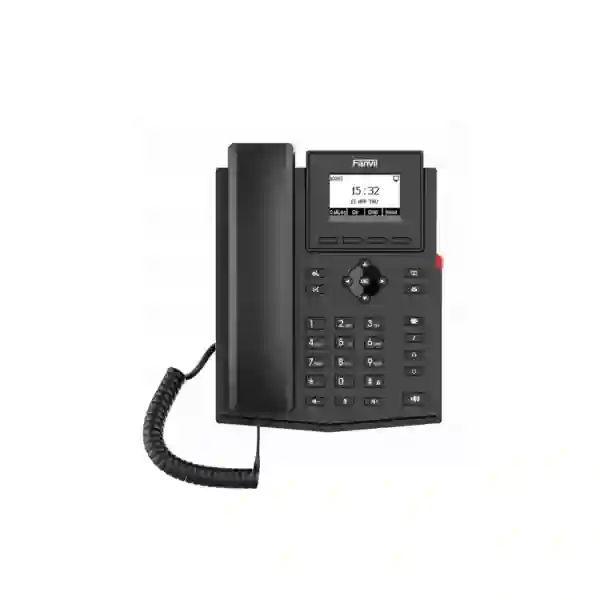
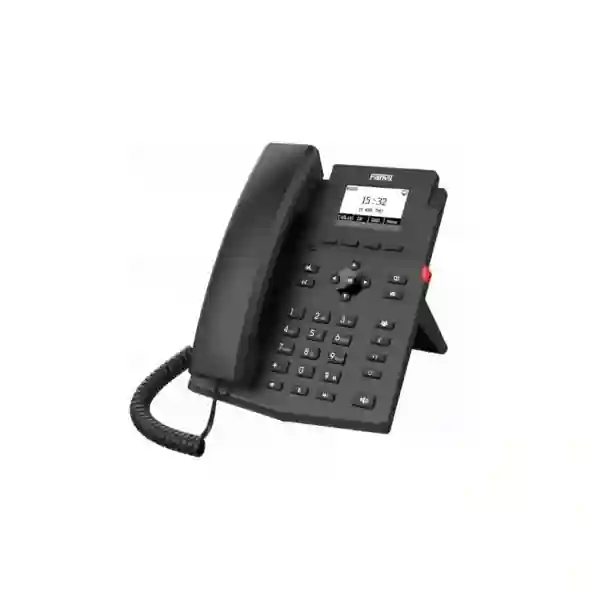
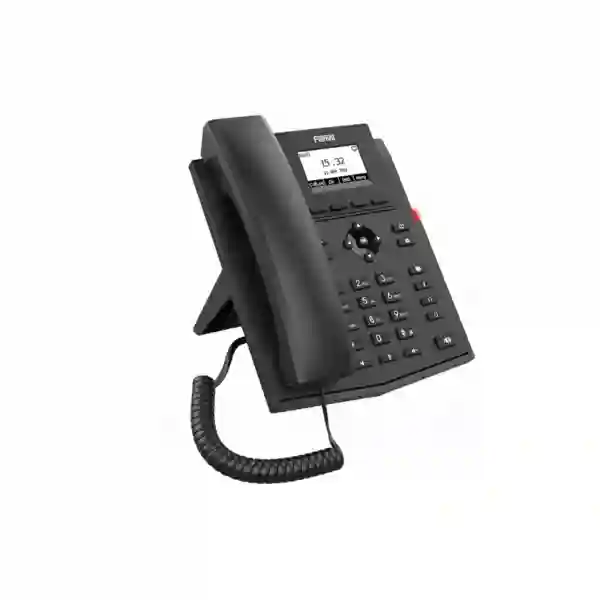
Fanvil X301W Wi-Fi Entry Level IP Phone
The Fanvil X301W is designed for organizations that need a simple, professional SIP desk phone with flexible network connectivity. Its built-in 2.4GHz and 5GHz Wi-Fi can reduce dependence on a network cable at the desk, while two SIP lines, HD voice, G.722 and Opus codecs, six-way audio conferencing and headset support cover the everyday requirements of many office users.
For Tanzania deployments, the real buying question is not only whether a phone supports SIP. It is whether the device fits the PBX, wireless coverage, VLAN policy, call-flow design, user role and support model. FourTeck can help buyers assess those dependencies before quantity purchasing or rollout.
Best suited to standard desks, branch offices, service counters and users who need two SIP accounts, wireless connectivity and HD voice without a complex enterprise-key layout.
What makes the Fanvil X301W useful for business?
The X301W sits in a practical part of the IP-phone market: users who need a dependable business handset but do not require a large color screen, dozens of programmable keys or advanced executive-phone functions. Fanvil positions the model as an entry-level Wi-Fi IP phone with two SIP lines and a compact dot-matrix display. Built-in dual-band Wi-Fi is the distinguishing deployment feature, particularly for desks where network cabling is unavailable, inconvenient or reserved for another endpoint.
Built-in 2.4GHz and 5GHz Wi-Fi provides a wireless network path when a wired desk drop is not practical. Wireless quality still depends on access-point coverage, interference and network design.
Two SIP lines support common extension scenarios such as a primary account plus a secondary line, branch identity or alternate service profile, subject to PBX configuration.
Fanvil lists G.722 and Opus among the supported audio codecs, helping the phone deliver wideband voice when the rest of the call path supports compatible codecs and sufficient network quality.
Local six-way conferencing can help users bring several parties into a discussion without moving immediately to a separate meeting platform.
RJ9 headset connectivity and EHS support make the phone more practical for staff who spend significant time on calls. Exact headset and EHS-cable compatibility should be checked before ordering.
Fanvil documents auto-provisioning methods including FTP, TFTP, HTTP, HTTPS, DHCP Option 66, SIP PnP and TR-069, which can simplify repeatable rollouts.
Fanvil X301W verified technical highlights
| Positioning | Entry-level Wi-Fi IP phone |
| SIP lines | 2 |
| Display | 2.3-inch dot-matrix display; current Fanvil material lists 132×64 pixels |
| Wireless | Built-in 2.4GHz and 5GHz Wi-Fi |
| Wideband codecs | G.722 and Opus |
| Conference | 6-way audio conference |
| Ethernet | Dual 10/100 Mbps ports for network and PC bypass |
| Network protocols | SIP 2.0 over UDP/TCP/TLS, RTP/RTCP/SRTP, IPv4/IPv6, DHCP, PPPoE, LLDP, 802.1X, L2TP, OpenVPN and related management protocols |
| Installation | Desktop stand; wall mounting supported with appropriate accessory |
| Headset | RJ9 headset port and EHS wireless-headset support |
| Provisioning | FTP/TFTP/HTTP/HTTPS, DHCP Option 66, SIP PnP, TR-069 and web management |
Specifications should be confirmed against the final Fanvil datasheet and shipped hardware revision before a large procurement, because vendor documentation can be revised over time.
Deployment, PBX compatibility and network planning
A Wi-Fi phone can make a desk easier to place, but wireless connectivity should not be interpreted as freedom from network design. Voice is sensitive to packet loss, delay, jitter, congestion and weak roaming behavior. Before deploying X301W phones over Wi-Fi, confirm that the intended desks have stable signal quality on the selected band, that access points are not overloaded, and that business voice traffic is handled appropriately by the network. Where a wired connection is available, the dual Ethernet ports can also support conventional desk deployment and PC pass-through.
The phone supports SIP 2.0, but SIP compatibility is broader than basic registration. Organizations should validate registration method, authentication, TLS/SRTP policy, voicemail signaling, transfers, conference behavior, directory access, provisioning and any vendor-specific PBX features needed by users. This is especially important when the phone will connect to an existing IP PBX rather than a new system designed around the handset.
For larger rollouts, centralized provisioning should be planned before devices are handed to users. A repeatable configuration can include extension assignment, time zone, NTP, codecs, dial plan, security settings, directory sources, firmware policy and user-facing key behavior. Provisioning reduces configuration drift and makes replacement easier if a handset must be swapped later.
FourTeck Tanzania’s technology services page explains the wider integration approach for voice, switching, Wi-Fi and infrastructure. Buyers planning telephony can also review the FourTeck Tanzania technology shop for related business hardware, while the Tanzania solutions overview describes how IP phones depend on network readiness, voice design and supporting infrastructure.
Who should choose the X301W?
For employees who primarily answer, place, hold and transfer calls and need a familiar desk-phone workflow without advanced executive controls.
Wi-Fi can help where permanent desk cabling is limited or where teams move between prepared work areas, provided the wireless network is voice-ready.
The model can suit straightforward operational positions that need a dedicated extension, headset support and predictable calling features.
Organizations standardizing many basic extensions can consider the X301W where two SIP lines and its feature set are sufficient for the user role.
Related FourTeck Tanzania resources
A phone is only one part of an IP-telephony system. The pages below help procurement teams consider the supporting systems around the handset rather than treating it as an isolated purchase.
Call routing, IVR, extensions, queues, trunks and branch telephony considerations.IP phones and desk telephony
User-role selection, SIP endpoints, headsets and provisioning considerations.Network switching
LAN design, VLANs, uplinks and endpoint connectivity for business voice.Wi-Fi and access points
Wireless coverage, capacity and segmentation relevant to a Wi-Fi desk phone.Cabling, racks and UPS
Supporting physical infrastructure for switches, PBX systems and network resilience.Telephony service planning
Practical guidance for extensions, call flows, reception and branch communication.Tanzania contact and quotation
Share quantity, PBX platform and deployment requirements for a commercial discussion.
Regional procurement and deployment guidance
Fanvil X301W Wi-Fi Entry Level IP Phone Tanzania
For organizations searching for the Fanvil X301W in Tanzania, the useful purchasing conversation starts with the role of the phone inside the wider voice system. A two-line Wi-Fi handset can be a strong fit for standard office extensions, branch desks, service counters, education offices, hospitality back offices and small professional teams, but the phone still relies on a correctly designed SIP and network environment. Buyers should confirm the PBX or hosted voice platform, extension count, call-routing plan, wireless coverage, security requirements, headset needs and provisioning approach before standardizing the model across multiple users.
The X301W’s built-in 2.4GHz and 5GHz Wi-Fi is particularly relevant where desks do not have dedicated Ethernet outlets or where workplace layouts change. That flexibility should be balanced with a wireless survey or at least a practical signal check at intended desk positions. Voice traffic needs consistent connectivity; a phone that is close to an access point during testing can behave differently once offices are busy and many laptops, mobile devices and meeting-room systems compete for airtime. Where wired Ethernet is available, the phone’s 10/100 Mbps network interfaces provide another deployment path. Businesses should also decide whether phones will use a separate voice VLAN, whether QoS policies are required and how firmware and configuration updates will be controlled.
For quotation preparation in Tanzania, provide the number of phones, existing PBX brand and version if applicable, whether Wi-Fi or Ethernet will be used, headset quantities, wall-mount requirements, extension numbering and any centralized phonebook requirement. For a new phone system, include the number of incoming lines or SIP channels, receptionist workflow, department ring groups, remote users and branch locations. This information helps prevent a handset-only quotation from overlooking the infrastructure that determines call quality and usability. FourTeck Tanzania can align the endpoint decision with IP telephony, Wi-Fi, switching and infrastructure planning so the X301W is assessed as part of a working business communication system rather than as an isolated device.
Fanvil X301W Wi-Fi Entry Level IP Phone Dar es Salaam
Dar es Salaam businesses often operate across a mix of modern offices, retail locations, logistics sites, professional-service spaces and multi-floor commercial buildings. For these environments, the X301W can be attractive when buyers want standard SIP desk calling with the ability to connect through Wi-Fi. The first deployment decision should be whether wireless connectivity solves a genuine cabling problem or simply appears more convenient. In a dense office, many wireless clients may already share the same access points. A phone used throughout the working day benefits from deliberate access-point placement, stable signal quality and separation of guest traffic from business devices.
A Dar es Salaam rollout should classify users before quantities are finalized. Receptionists who need many monitored extensions may require a higher-tier phone with more programmable keys, while general administrative staff may be well matched to the X301W’s simpler layout. Accounts, HR, branch coordinators, service-desk staff and managers with moderate call volumes can often work effectively with two SIP lines, transfer, hold, conference, voicemail integration and headset support. For call-intensive teams, confirm the headset model and EHS cable rather than assuming every wireless headset will work directly.
Procurement teams should also review the PBX and internet path. If the system uses a local IP PBX, confirm SIP registration, codec policy and LAN security. If it uses a cloud PBX, WAN reliability and firewall configuration become more important. A secondary internet strategy may be relevant for sites where voice continuity is important, but no handset can compensate for a poorly engineered network. A useful quotation request should therefore include phone quantity, site count, PBX platform, Wi-Fi environment, extension plan and any installation or configuration scope. Customers considering a broader communications refresh can review FourTeck Tanzania’s integration and lifecycle services to connect endpoint purchasing with call-flow and network planning.
Fanvil X301W Wi-Fi Entry Level IP Phone Mwanza
For buyers in Mwanza, the X301W can support offices, education administration, clinics, hospitality operations, distributors and branch locations that require a straightforward SIP extension without extensive enterprise-phone controls. Wireless connectivity can be useful in buildings where existing structured cabling does not reach every desk or where a branch is being fitted out in stages. Before relying on Wi-Fi, test signal strength and stability in the exact work area, not only near the router or access point. Voice quality depends on consistent packet delivery, and walls, floors, shelving and other site features can affect coverage.
Mwanza procurement projects should also consider supportability. A small branch may have only a few phones, but standard settings still matter: extension naming, time synchronization, codec configuration, directory access and firmware versions should be documented. If several branches will use the same model, centralized provisioning can reduce setup time and make replacements easier. The X301W supports multiple provisioning methods, allowing administrators or integrators to create a repeatable baseline rather than configuring each handset independently at the keypad.
When requesting a quotation, distinguish the phone hardware from any PBX, SIP trunk, switch, access point, cabling, UPS or configuration work required. This makes commercial comparisons clearer and helps the organization understand which elements are one-time hardware costs and which relate to broader communications infrastructure. For users with basic calling needs, the X301W can be a sensible endpoint; for reception or high-volume operators, a model with more keys or display capability may be more appropriate. FourTeck can help review that role-based mix so an organization does not overspend on every desk or under-specify the users who need more control.
Fanvil X301W Wi-Fi Entry Level IP Phone Arusha
Arusha organizations frequently include hospitality, tourism, professional services, education, NGOs, offices and operational sites with different communication patterns. A basic desk extension in a back office has different requirements from a front desk handling continuous calls, and the X301W should be selected accordingly. Its two SIP lines, HD voice and six-way audio conferencing support make it capable for routine business communication, while dual-band Wi-Fi can simplify placement where a wired outlet is unavailable. The model is best viewed as a flexible standard-user phone rather than an advanced receptionist console.
For hospitality and service environments, confirm whether the PBX requires special features such as room status, customized keys, specific provisioning templates or integrations beyond standard SIP calling. Those requirements can change the endpoint choice. For administrative and support offices, the X301W’s standard call functions may be sufficient. Headset users should confirm the actual headset interface and EHS accessory required, especially where staff need to answer and end calls from a wireless headset.
Wireless deployment deserves equal attention. A hotel or multi-building office can have excellent guest Wi-Fi while still needing a separate business SSID, appropriate security and controlled device access for phones. Voice devices should not simply join an unmanaged guest network. Organizations should consider SSID design, authentication, VLANs, QoS and the path from the wireless network to the PBX. When the network and PBX are planned together, wireless phones can be easier to operate and troubleshoot. A quotation for Arusha should therefore identify sites, phone quantity per site, existing PBX, Wi-Fi coverage, headset requirements and any installation or provisioning scope.
Fanvil X301W Wi-Fi Entry Level IP Phone Dodoma
In Dodoma, the X301W may suit government-related offices, professional firms, project offices, education environments, branch operations and small businesses that need standards-based IP telephony. Buyers should begin by mapping user groups: normal office extensions, reception, managers, conference spaces and call-heavy positions. The X301W is strongest for general users who need reliable everyday calling, two SIP lines, headset support and Wi-Fi flexibility. Users who require many visible line keys, color applications or sophisticated executive controls may be better served by a different model.
For new office deployments, include voice requirements in the network design from the start. It is easier to plan VLANs, wireless coverage, switch capacity, UPS protection and PBX connectivity before desks are occupied than to correct the network after call-quality complaints appear. The phone supports both Wi-Fi and Ethernet, so different desks can use different access methods while sharing a common provisioning standard. This is helpful when some rooms have structured cabling and others do not.
A well-prepared Dodoma quotation should state whether the project requires hardware supply only or a configured telephony solution. For configuration scope, specify extensions, ring groups, IVR, voicemail, call forwarding, working hours, remote users and any recording requirement. For hardware scope, confirm accessories and wall mounting where needed. Organizations should also decide who will administer the system after deployment and how backups, firmware and configuration changes will be controlled. The goal is to choose an endpoint that fits the operating model and remains easy to support as staff and offices change.
Fanvil X301W Wi-Fi Entry Level IP Phone UAE
For UAE buyers, the X301W addresses the common requirement for a compact SIP desk phone that can operate over wired Ethernet or dual-band Wi-Fi. Offices that use hot desks, serviced spaces, branch locations or temporary project teams may value the ability to place phones without depending exclusively on a dedicated data outlet. As in any region, wireless voice should be deployed on a stable business network with adequate coverage and policy control rather than treated as a consumer-device connection.
The commercial evaluation should include PBX compatibility, user profile and support process. Two SIP lines are sufficient for many standard users, but reception and trading-style desks may require more programmable keys. Headset compatibility matters for customer-service teams, while centralized provisioning matters for organizations rolling out dozens or hundreds of endpoints. Security settings such as SIP over TLS, SRTP, 802.1X and management access may also be relevant depending on corporate policy.
Organizations sourcing across the Gulf can use the broader FourTeck UAE technology network for regional infrastructure and communications discussions. The purchasing brief should include quantity, office locations, PBX environment, network policy and configuration scope, plus any accessories required. For multinational teams, it is useful to standardize extension templates, firmware, directories and security settings across sites even when local telecom services differ.
Fanvil X301W Wi-Fi Entry Level IP Phone Uganda
Uganda organizations evaluating the Fanvil X301W can use it as a standard-user endpoint in office, branch and service environments where two SIP lines and core business calling functions are adequate. Dual-band Wi-Fi helps where desk cabling is incomplete or where work areas change, but organizations should verify the wireless network before depending on it for voice. Coverage, access-point loading and power continuity remain important operational factors.
When the phone is part of a new PBX deployment, define the call flow first. Extension count, reception handling, queues, IVR, after-hours routing and branch connectivity determine the broader system design. When it is added to an existing PBX, confirm firmware, SIP authentication, codec support and any provisioning template already used for other phones. The X301W’s automated provisioning options can be valuable when a consistent configuration is required across many users.
For Uganda regional support and project discussions, organizations can review FourTeck Uganda. A useful quotation request includes the number of handsets, target users, current PBX, connectivity method, headset needs and whether configuration or installation is required. This helps separate a simple hardware purchase from a full communication-system project and reduces the risk of missing dependencies such as network readiness or call-routing configuration.
Fanvil X301W Wi-Fi Entry Level IP Phone Kampala
Kampala offices often combine fast-changing workspace layouts with a need for predictable business communication. The X301W can be useful where a standard desk phone is preferred over a softphone but wireless connectivity is desirable. Its built-in Wi-Fi can reduce cabling at selected desks, while the Ethernet ports allow conventional wired installation where the network is already available. This mixed-deployment flexibility can help organizations standardize one endpoint across rooms with different infrastructure.
Before rollout, classify the wireless environment. Shared consumer-grade access points may be adequate for light use in a small office but can become unreliable as more devices and meetings load the network. Business deployments should consider channel planning, SSID security, VLANs and access-point capacity. If the PBX is cloud-hosted, stable internet and firewall behavior are also part of call quality. If the PBX is local, LAN design and server availability become the main dependencies.
For purchasing, avoid comparing quotations only on handset price. Check whether power supplies, wall brackets, headsets, configuration, PBX licenses, installation or support are included. Verify the exact hardware revision and current Fanvil specification at order time. A clear bill of materials makes supplier proposals easier to compare and supports future expansion when additional users are added.
Fanvil X301W Wi-Fi Entry Level IP Phone Arua
In Arua, a business or institutional buyer may prioritize simplicity, remote manageability and the ability to deploy phones without extensive recabling. The X301W’s dual-band Wi-Fi can support that goal, especially for small branches and administrative offices, but successful deployment still depends on stable local connectivity. A phone located at the edge of wireless coverage may register correctly during setup yet experience intermittent audio problems during normal use. Testing at the actual desk location is therefore more useful than assuming coverage from a floor plan alone.
For branches that are managed from another city, standardized provisioning becomes particularly valuable. Administrators can prepare common settings for extension format, codecs, directories, time settings and security and then apply user-specific account credentials. This reduces the number of local configuration steps and creates a cleaner support baseline. The X301W supports several auto-provisioning mechanisms that can fit different management environments.
When preparing procurement for Arua, identify whether the device will connect to a local PBX, a central PBX over VPN or a hosted voice platform. Each architecture has different bandwidth, firewall and resilience considerations. Share branch size, internet arrangement and expected call usage with the supplier or integrator. That context helps determine whether the X301W itself is sufficient or whether network upgrades, VPN configuration or alternate connectivity should be considered.
Fanvil X301W Wi-Fi Entry Level IP Phone Mbarara
Mbarara organizations looking for an affordable business IP-phone endpoint can consider the X301W for employees whose daily work centers on routine calls rather than complex multi-line control. Two SIP lines, HD audio, conferencing and headset connectivity cover many office roles. The built-in Wi-Fi can be useful for branches, training spaces and offices where adding new cable runs is disruptive, but wireless design should still be considered part of the telephony project.
A practical selection process starts with the PBX. Confirm whether the system supports generic SIP endpoints and whether the features users need have been tested with the selected phone. Common items include attended and blind transfer, voicemail indication, hold, call waiting, directory lookup and conference behavior. Where businesses use a managed cloud voice service, ask the provider whether a validated Fanvil template is available. Where the PBX is locally managed, a pilot handset can help confirm provisioning before a larger order.
The quotation should also describe the intended support model. If a branch has no dedicated IT staff, remote provisioning and clear labeling can reduce future support effort. Record the extension assignment, device MAC address, user and location so replacement and troubleshooting are easier. Small administrative disciplines like these often create more long-term value than adding advanced features that users do not need.
Fanvil X301W Wi-Fi Entry Level IP Phone Gulu
For Gulu offices and branch environments, the Fanvil X301W offers a combination of standard SIP desk-phone behavior and wireless deployment flexibility. Buyers should evaluate it against actual user roles. Staff who make ordinary internal and external calls, use voicemail and occasionally conference may be well matched to the model. Reception teams or supervisors who monitor many extensions may need a phone with a larger display and more programmable keys.
Network resilience deserves attention when voice supports daily operations. Wi-Fi phones depend on access points, switching and upstream power. If the site experiences short power interruptions, UPS protection for the network equipment may preserve communications longer than protecting only individual endpoints. For cloud-based voice, internet continuity should also be reviewed. For local PBX deployments, server and switch availability matter more. These dependencies should be included in the project plan rather than discovered after handset installation.
A useful procurement request for Gulu should state how many phones are required, whether the project is a new system or expansion, how users connect to the PBX, which desks will use Wi-Fi, whether headsets are needed and who will configure the phones. This supports a quotation that reflects the working environment rather than just the product model name.
Fanvil X301W Wi-Fi Entry Level IP Phone Kenya
Kenya buyers have a broad VoIP market with many entry-level and midrange IP phones available, so the X301W is best evaluated on fit rather than on headline features alone. Its dual-band Wi-Fi differentiates it from basic wired-only phones, while two SIP lines and six-way conferencing cover many general office scenarios. Organizations comparing models should verify current vendor specifications because reseller pages can contain older display, power or conference information.
For a Kenyan office, determine whether Wi-Fi is a primary requirement or merely an optional convenience. If every desk already has a managed Ethernet connection, a wired model may be sufficient. If teams work in rented spaces, flexible seating or branches with limited structured cabling, built-in Wi-Fi can simplify deployment. In either case, ensure the PBX supports the functions users need and create a standardized configuration for extensions, directories, firmware and security.
Regional project discussions are also available through FourTeck Kenya. When comparing procurement proposals, separate device price, tax, accessories, configuration, installation, PBX licensing and support. The lowest handset price may not represent the lowest deployment cost if important accessories or configuration tasks are omitted.
Fanvil X301W Wi-Fi Entry Level IP Phone Kuwait
Kuwait organizations planning SIP desk-phone deployments may consider the X301W for standard extension users who need HD audio, two SIP lines and wireless network capability. Flexible seating, project offices and small branches can benefit from built-in Wi-Fi where fixed data outlets are not present. However, the phone should join a managed business network with appropriate security rather than a general guest WLAN.
For larger companies, centralized provisioning is one of the strongest operational considerations. Standard templates allow IT teams to control firmware, account parameters, directories and feature settings and to replace devices with less manual effort. The X301W supports common provisioning protocols, making it more suitable for repeatable deployments than phones that rely heavily on local manual setup.
Kuwait buyers should request a quotation that lists hardware, power requirements, mounting accessories, headset compatibility, PBX configuration and any support scope. If the organization manages multiple sites across regions, standardizing models and configuration where possible can simplify user training and spare-device planning. FourTeck’s regional network can be consulted through FourTeck Kuwait for related infrastructure and communication requirements.
Fanvil X301W Wi-Fi Entry Level IP Phone Ghana
Ghana businesses can use the X301W as a practical endpoint for everyday SIP calling, especially in branch, administrative and SME environments where built-in Wi-Fi solves a real deployment constraint. As with any wireless voice device, access-point placement and internet reliability may have more influence on call quality than the phone specification itself. Organizations should therefore assess the whole path from handset to PBX or hosted voice platform.
A pilot deployment is useful before a large order. Register one or two phones, test internal and external calls, transfers, voicemail, conference behavior, directories, headset use and provisioning. Confirm how the phone behaves after power loss and network reconnect. This practical validation catches integration details that are not visible in a feature list and gives administrators a baseline configuration for the rest of the rollout.
For broader regional sourcing, FourTeck Ghana can support related project conversations. Quotations should include quantities, PBX platform, Wi-Fi requirements, user roles, accessories and whether remote or onsite configuration is expected. Buyers should not assume stock, delivery time or warranty terms without confirming them for the specific quotation.
Fanvil X301W Wi-Fi Entry Level IP Phone Nigeria
Nigeria deployments can range from a few office extensions to multi-branch systems with centralized call routing. The X301W is most appropriate where users need a standard SIP phone and where two lines meet the role requirement. Its dual-band Wi-Fi can help in offices with limited cabling or temporary layouts, while Ethernet connectivity remains available for fixed desks. Businesses should decide which connection method will be the standard and document exceptions rather than allowing each phone to be configured differently without reason.
For multi-branch organizations, network and PBX architecture become more important than the handset alone. Phones may register to a central PBX across VPN, use a hosted platform or connect to local systems at each branch. Each design affects bandwidth, firewall policy, resilience and troubleshooting. Central provisioning and consistent firmware are strongly recommended when many devices are distributed across sites.
FourTeck’s regional presence can be explored through FourTeck Nigeria. A procurement brief should include branch count, phones per branch, PBX topology, headset requirements, installation constraints and support expectations. Clear scope prevents a hardware quotation from being mistaken for a complete telephony solution and helps procurement teams compare proposals fairly.
Fanvil X301W Wi-Fi Entry Level IP Phone Seychelles
For Seychelles businesses, hotels, offices and service organizations, the X301W can be useful where SIP telephony needs to reach desks that are not conveniently served by structured cabling. Dual-band Wi-Fi provides flexibility, but island and hospitality environments can include complex building layouts, thick walls and separate guest networks. Business voice devices should use a controlled network with stable coverage and suitable access to the PBX.
Hospitality buyers should verify whether the intended PBX needs hotel-specific functions or integrations that go beyond generic SIP calling. The X301W is an entry-level business phone, so specialized guest-room workflows may call for a hotel-focused model. For administration, back office, reservations support or standard staff desks, the X301W may be more appropriate. User-role mapping avoids applying one model to every position simply for procurement simplicity.
Quotations should account for shipping scope, accessories, configuration and the technical support model without assuming local inventory or same-day service. Provide the PBX platform, phone quantity, intended users and network layout. If Wi-Fi is the reason for selecting the model, include floor plans or access-point information where available so the network requirement can be assessed alongside the handset.
FourTeck regional network for connected telephony projects
Organizations procuring across more than one market can use regional FourTeck resources for connected infrastructure and communication discussions. Relevant regional references include FourTeck UAE, FourTeck Kenya, FourTeck Uganda, FourTeck Ghana and FourTeck Nigeria. Each regional project should still be quoted and validated according to the actual site, telecom service and support scope.
Fanvil X301W frequently asked questions
Does the Fanvil X301W have Wi-Fi?
Yes. Fanvil lists built-in 2.4GHz and 5GHz Wi-Fi. The actual quality of a Wi-Fi voice deployment depends on access-point coverage, interference, network loading and security configuration.
How many SIP lines does the X301W support?
The X301W supports two SIP lines. This is suitable for many standard office users but may be limiting for reception or high-volume multi-line roles.
Does the Fanvil X301W support HD voice?
Yes. Fanvil specifies HD voice and includes G.722 and Opus among the wideband codecs. End-to-end voice quality also depends on PBX, trunk, remote endpoint and network support.
Can the X301W be wall mounted?
Fanvil documents desktop and wall-mount installation. Wall mounting may require the appropriate optional mounting accessory, so confirm the accessory in the quotation.
Does it support wireless headsets?
The phone supports an RJ9 headset and EHS headset workflows. Confirm the headset brand, model and required EHS cable before purchase because compatibility can depend on the accessory combination.
Can it work with an existing IP PBX?
The X301W supports SIP 2.0, but buyers should validate the exact PBX, firmware, authentication, provisioning and required call features. Generic SIP registration alone does not prove every PBX function will behave identically.
Is Wi-Fi better than Ethernet for this phone?
Neither is universally better. Ethernet is predictable where cabling exists; Wi-Fi is valuable where cabling is inconvenient. Choose according to desk infrastructure, wireless quality and operating requirements.
What should I provide for a quotation?
Provide quantity, target location, PBX platform, whether phones will use Wi-Fi or Ethernet, headset needs, wall-mount needs, and whether you require supply only, configuration, installation or a complete IP-PBX solution.
Quotation checklist
Decision recap
Choose the Fanvil X301W when the target users need a straightforward SIP desk phone, two lines are sufficient, HD voice matters and dual-band Wi-Fi offers practical installation value. Do not choose it solely because it is inexpensive or wireless. Compare the user role, PBX feature requirements and network environment first.
For a multi-user rollout, pilot the phone with the intended PBX, confirm headset and directory behavior, validate wireless coverage and build a centralized provisioning template before deploying at scale.
Consultation panel
Need help deciding whether the X301W is the right endpoint for your users? Share the phone quantity, PBX platform, office locations, wireless environment, headset requirements and call-flow needs. FourTeck can help structure the request so the handset, PBX and network dependencies are considered together.




Reviews
There are no reviews yet.