

Fanvil X306 IP Phone Tanzania
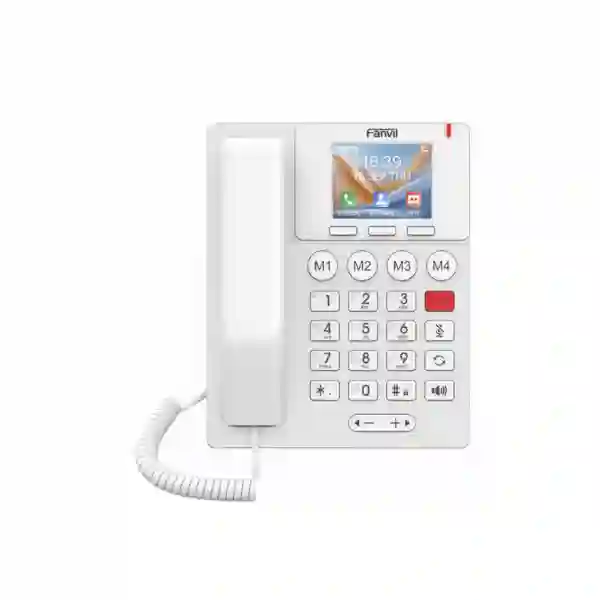
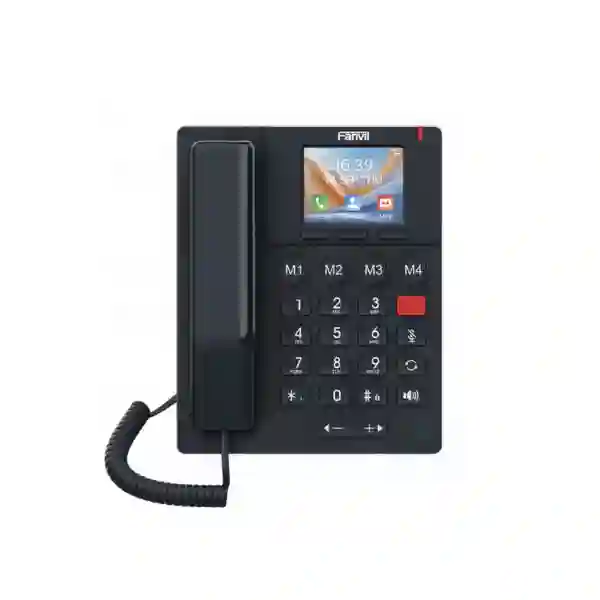
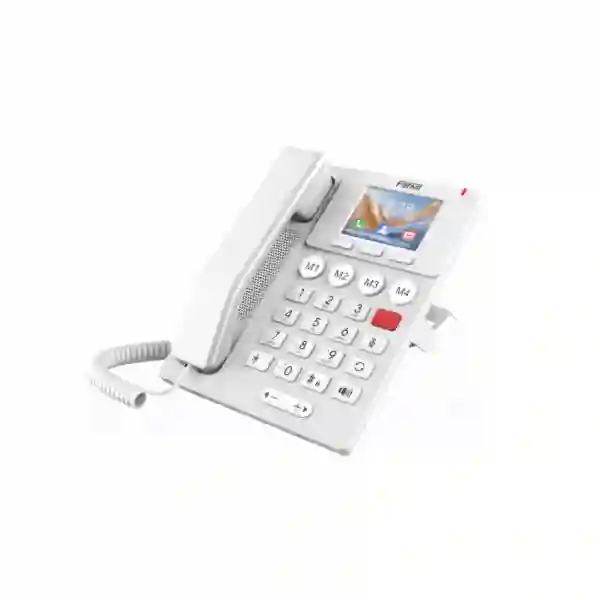
The Fanvil X306 is an easy-to-use IP phone designed for organizations and users who value clear visuals, large controls, dependable SIP calling and flexible wired or wireless connectivity. Fanvil equips the X306 with a 3.5-inch 320×240 color display, two SIP lines, four DSS keys, oversized numeric keys with Braille markings, a prominent customizable red key, HD voice, a 5W speaker, long-distance voice pickup, dual-band Wi‑Fi 6 and Bluetooth 5.0. For Tanzanian businesses, it can serve as a practical endpoint for offices, reception counters, clinics, care settings, hospitality desks, common areas and home-office environments where usability is as important as core telephony functionality.
Quick buying summary
Choose the X306 when users need a straightforward SIP phone with a color display, large keys, strong speaker volume, headset-friendly connectivity and both Ethernet and Wi‑Fi options. Before ordering, confirm PBX/SIP compatibility, extension count, PoE availability, network VLAN requirements, headset needs and whether the deployment will use wired Ethernet or Wi‑Fi.
What makes the Fanvil X306 different?
The X306 is not positioned merely as another compact office telephone. Its design places unusually strong emphasis on ease of operation. The 3.5-inch color display gives users a clearer visual interface than basic monochrome SIP endpoints, while the oversized keypad improves day-to-day dialing. Braille markings on the numeric keys add an accessibility-oriented detail that can make the phone more suitable for mixed-user environments. Fanvil also provides a bright red customizable key that can be configured for one-touch calling, which can be useful for frequently dialed contacts or assistance workflows depending on the PBX configuration and organizational policy.
Audio capability is another important part of the X306 proposition. Fanvil documents HD voice, support for wideband codecs including G.722 and Opus, a 5W speaker and dual-microphone pickup designed to capture voices from a greater distance. These features are relevant in reception areas, shared offices and environments where a normal low-volume desk phone may be difficult to hear. The X306 also supports full-duplex speakerphone operation, acoustic echo cancellation, noise-reduction functions, jitter buffering and packet-loss concealment, all of which are designed to help maintain understandable voice conversations when network conditions or room acoustics are less than ideal.
Connectivity is flexible. The phone has 10/100 Mbps Ethernet, built-in dual-band Wi‑Fi 6 covering 2.4 GHz and 5 GHz, Bluetooth 5.0, and IEEE 802.3af PoE. The combination means a business can use conventional desk cabling and PoE where available or choose wireless LAN connectivity when running an Ethernet drop is inconvenient. Bluetooth can support compatible wireless headsets and mobile-phone pairing scenarios. Actual deployment design should still be planned carefully: Wi‑Fi voice performance depends on coverage and radio conditions, while PoE requires suitable switching capacity and correct power budgeting.
3.5-inch color screen
A 320×240 color LCD presents call information and phone menus in a clear, easy-to-read format.
2 SIP lines
Two SIP lines allow the phone to register suitable accounts or extensions according to the chosen PBX or hosted voice platform.
Wi‑Fi 6 + Bluetooth 5.0
Built-in wireless connectivity can simplify flexible desk placement and compatible headset or mobile integrations.
PoE support
IEEE 802.3af PoE can carry power over the network connection when used with a suitable PoE switch or injector.
Large accessible controls
Oversized numeric keys with Braille markings and a prominent customizable red key support straightforward operation.
4 DSS keys
Four DSS keys can be mapped to supported functions, helping users reach commonly needed actions quickly.
Verified Fanvil X306 technical specifications
| Category | Fanvil X306 specification |
|---|---|
| Display | 3.5-inch 320×240 color screen |
| SIP | 2 SIP lines; SIP v1/v2 support |
| Programmable keys | 4 DSS keys plus customizable red speed-dial key |
| Audio | HD handset and speaker; G.722 and Opus wideband codecs; 5W speaker; dual-microphone long-distance pickup |
| Wireless | Dual-band Wi‑Fi 6: 2.4 GHz 802.11 b/g/n/ax and 5 GHz 802.11 a/n/ac/ax; Bluetooth 5.0 |
| Ethernet | 10/100 Mbps Ethernet |
| Power | DC 5V/2A or IEEE 802.3af PoE; power adapter is optional according to Fanvil documentation |
| IP and network | IPv4, IPv6, static IP, DHCP, PPPoE, 802.1X, VLAN, LLDP, QoS, OpenVPN and L2TP |
| Security protocols | TLS 1.3, SRTP support, HTTPS and network-access security features |
| Management | Web management, auto-provisioning, configuration import/export, firmware upgrade, syslog and diagnostic tools |
Where the X306 fits in a business voice system
A SIP phone is one component in a complete voice environment. The X306 requires a compatible SIP service, IP PBX or hosted communications platform to provide the extension, call routing and telephony features used by the organization. Before rollout, administrators should confirm account provisioning, VLAN policy, DHCP behavior, DNS, firewall rules, QoS, codec settings and whether the phone will connect by Ethernet or Wi‑Fi. For multi-phone deployments, centralized provisioning reduces repetitive manual setup and helps keep configuration consistent.
The FourTeck Tanzania business technology overview explains how voice endpoints interact with switches, Wi‑Fi, firewalls and broader infrastructure. The technology services page is relevant when a project includes installation, configuration or support, while the FourTeck Tanzania shop provides a route to other business technology products. These verified pages are more useful than fabricated product-category URLs when planning a complete deployment.
Organizations operating across borders can also consult the wider FourTeck network for regional technology requirements, including FourTeck Uganda, FourTeck Kenya, FourTeck Kuwait, FourTeck Ghana, FourTeck Nigeria and the specialist FourTeck IP phone resource. Regional availability, pricing and service scope should always be confirmed at quotation stage rather than assumed.
Fanvil X306 Tanzania
For organizations evaluating the Fanvil X306 in Tanzania, the most useful buying question is whether the phone matches both the user and the network. Its accessible keypad, clear color display and simplified controls can work particularly well in environments where multiple people share a telephone or where users prefer more visible, tactile controls. Typical possibilities include company reception areas, administrative departments, medical and care-related environments, hospitality desks, retail counters, common areas, home offices and branch locations. Because the phone supports two SIP lines, it can fit users who need straightforward access to one or two extensions or accounts without the complexity of a high-end executive console.
Tanzanian deployments should also consider network readiness. If the phone is connected by Ethernet, a managed PoE switch can simplify cabling by supplying both network and power through one connection. When PoE is not used, the separate 5V/2A power option must be planned; Fanvil identifies the power adapter as optional in its datasheet, so the exact quotation should clearly state whether an adapter is included. For Wi‑Fi deployment, confirm that the 2.4 GHz or 5 GHz WLAN has stable coverage at each desk and that voice traffic receives appropriate treatment. Strong signal does not automatically guarantee good call quality if the wireless network is congested or poorly designed.
The X306’s support for VLAN, QoS, LLDP, 802.1X and IPv4/IPv6 gives network administrators useful tools for fitting the phone into structured business networks. PBX compatibility should be checked against the required features such as BLF, transfer, hold, call pickup, voicemail indication, directory integration and provisioning. Because some functions depend on the server, buyers should avoid assuming every feature behaves identically across all platforms. A pre-deployment test with the intended PBX is good practice for larger projects.
For quotation preparation in Tanzania, provide the number of phones, intended locations, PBX or hosted voice platform, SIP-provider details where applicable, PoE switch availability, headset requirements and whether installation or configuration is needed. This information allows a supplier to price the endpoint together with any necessary accessories, cabling or network work. FourTeck’s verified Tanzania contact page is the appropriate route for current price and availability enquiries.
Fanvil X306 IP Phone Dar es Salaam
Dar es Salaam businesses often need telephony that can scale from a small office to larger multi-department environments. The Fanvil X306 can be considered for users who need reliable desk calling without an oversized feature set. Its two SIP lines, color display and DSS keys are useful for general staff, reception overflow positions, branch administrators and other roles where the primary requirement is to answer, place, hold and transfer calls efficiently. The large buttons and strong speaker output also make it relevant for shared counters and operational spaces where visibility and audible clarity matter.
In a Dar es Salaam office deployment, the X306 should be planned as part of the LAN. If desk ports are already available, PoE can help reduce power-adapter clutter and simplify deployment. Where furniture layouts change frequently or cabling is difficult, built-in Wi‑Fi 6 provides another connection method, but a voice-aware wireless design remains important. Businesses should check coverage, access-point loading and the path from Wi‑Fi to the PBX or SIP provider. The X306’s 5 GHz support can be useful in dense wireless environments, although actual band selection should be based on coverage and network policy rather than a generic preference.
Headset users may benefit from Bluetooth 5.0, especially at desks where mobility matters. The phone also supports Bluetooth external-line functionality with compatible mobile pairing, which can be useful in selected workflows. Organizations should test the exact intended scenario during commissioning because user expectations around mobile contact synchronization and call handover can differ. For staff who spend most of the day on voice calls, headset comfort and microphone quality should be included in the procurement decision, not treated as an afterthought.
When requesting a Dar es Salaam quotation, it helps to state whether the project is a new PBX deployment, an endpoint refresh or an expansion. Include extension quantities, switch model, PoE status, cabling condition and any need for VLAN configuration. That information makes it easier to determine whether the X306 can be deployed directly or whether switching, Wi‑Fi or PBX work must be included in the project scope.
Fanvil X306 IP Phone Mwanza
For businesses in Mwanza, the Fanvil X306 can suit offices and operational sites that need a clear, practical SIP endpoint without unnecessary complexity. Its 3.5-inch color screen supports easier menu navigation, while the large Braille-marked keypad can reduce dialing difficulty in shared environments. Two SIP lines provide sufficient account flexibility for many general office roles, and the four DSS keys can be assigned to commonly used functions supported by the PBX.
Network design deserves particular attention whenever voice is carried across existing data infrastructure. A phone may be technically connected yet still deliver poor call quality if the WAN is unstable, the LAN is congested or QoS policies are missing. The X306 supports QoS and VLAN features, but those capabilities are most effective when matched by suitable switch and router configuration. If branches in Mwanza connect to a central PBX elsewhere, WAN latency, packet loss and firewall policy should be checked as part of commissioning. Site-to-site VPN or other secure connectivity may be appropriate depending on the architecture.
Wireless installation can be attractive where desk cabling is limited. Because the X306 includes dual-band Wi‑Fi 6, it can connect without an Ethernet cable for data, while still requiring appropriate power. Wireless voice should be validated in the exact room or floor where the device will be used. Coverage maps, user density, interference and roaming behavior can influence performance. For fixed desks with reliable cabling, Ethernet and PoE often remain the simplest operational model; Wi‑Fi is best viewed as a flexible deployment option rather than an automatic replacement for structured cabling.
Mwanza buyers should request a quotation that separates phone hardware, power options, headsets, PBX configuration, installation and network work. This makes comparisons more meaningful and avoids situations where a low hardware price excludes necessary deployment services. Exact stock and delivery should be confirmed directly rather than inferred from a product page.
Fanvil X306 IP Phone Arusha
Arusha organizations in hospitality, travel, professional services, education and general commerce can use the Fanvil X306 where a straightforward SIP telephone is preferred. Front desks and administrative teams often need a phone that makes core actions obvious. The X306’s large keypad, color display, four DSS keys and prominent red programmable key support that type of simple workflow. The red key can be assigned according to organizational needs, such as a frequently called internal destination or designated assistance number, subject to PBX capability and policy.
For hospitality-style environments, phone placement and user turnover are important. A device used by rotating staff needs predictable operation, clear labels and stable provisioning. Centralized configuration can help administrators maintain consistent settings, while remote phonebook support can make common contacts available across multiple endpoints. Where the X306 is deployed in guest-facing or public areas, administrators should also consider which functions should be exposed and whether outbound calling needs to be restricted through the PBX.
The phone’s audio design can be useful for reception and service counters. Fanvil specifies a 5W speaker and long-distance pickup, but acoustics still vary by room. Hard surfaces, open lobbies and background conversation can affect hands-free calling, so real-world testing is worthwhile when speakerphone use will be frequent. A Bluetooth headset may be preferable for privacy and concentration in busier environments.
For Arusha procurement, confirm how the X306 will connect to the wider communications system. Existing SIP trunks, PBX licensing, extension configuration, PoE capacity and network addressing may influence the implementation. Where the customer is replacing legacy analog phones, the move to SIP may require more than simply swapping handsets; switching, cabling, firewall and PBX design should be reviewed together.
Fanvil X306 IP Phone Dodoma
Organizations in Dodoma evaluating IP telephony often need solutions that are easy to standardize across departments. The Fanvil X306’s focused feature set can make it suitable for general users, shared desks and service points. Two SIP lines, programmable DSS keys, HD voice and a readable color screen cover common business requirements, while accessibility-oriented controls differentiate it from phones designed around small buttons and dense menus.
Standardization matters because support becomes easier when phones share a consistent firmware level, provisioning template, directory configuration and VLAN policy. Fanvil supports automated provisioning methods and browser-based management, allowing administrators or integrators to configure phones more systematically. For larger deployments, organizations should document extension assignments, device locations, firmware versions and switch ports so future moves and troubleshooting do not depend on memory.
The X306 supports security-related network features including TLS and SRTP, but endpoint security is only one layer. Strong administration passwords, controlled provisioning servers, firewall rules, switch-port security and secure remote access are also important. SIP services exposed directly to the internet can attract scanning and abuse, so a deliberate voice-security architecture is preferable to ad hoc configuration. The correct setup depends on whether the PBX is hosted, on premises or accessed through a secure private network.
Dodoma customers preparing a purchase should document expected user roles before selecting phone quantities. Not every employee needs the same endpoint. The X306 may be ideal for users who prioritize simplicity, while receptionists or executives may need models with additional line keys, larger displays or expansion modules. Role-based selection often gives better value than deploying a high-end phone everywhere.
Fanvil X306 IP Phone UAE
For UAE businesses operating regional offices or procurement programs, the Fanvil X306 can be evaluated as a simple SIP endpoint for standard users and accessibility-conscious deployments. Its dual-band Wi‑Fi 6, Bluetooth 5.0 and PoE support make it flexible for contemporary office environments, while the oversized keypad and strong speaker output can suit shared areas and service desks. Buyers should evaluate the product against the chosen PBX or unified communications platform rather than purchasing purely on hardware specifications.
UAE projects frequently involve managed networks with voice VLANs, centralized security and structured PoE switching. The X306’s LLDP, VLAN, QoS and 802.1X support can help it fit into such environments. Administrators should verify how the phone obtains VLAN settings, whether the switch supplies adequate power and how SIP signaling and RTP traffic traverse the firewall. For hosted telephony, internet resilience and failover may be as important as the endpoint itself.
For multinational organizations, maintaining a consistent endpoint model across UAE and African offices can simplify training and support, provided regional PBX and carrier requirements are compatible. Standard templates, naming conventions and firmware policies can reduce configuration variance. However, procurement teams should separately confirm local availability, power accessories, warranty terms and service scope in each country.
FourTeck’s broader regional network can support customers comparing voice requirements across locations. The purpose of regional coordination should be consistent technical design, not assumptions about identical pricing or stock. Each order should be quoted according to destination, quantity, implementation scope and local requirements.
Fanvil X306 IP Phone Uganda
Ugandan organizations looking for an approachable business desk phone can consider the Fanvil X306 for general office and shared-use environments. The phone emphasizes practical usability through a color display, large keys, Braille markings, loud audio and a clearly differentiated red programmable key. It remains a standards-based SIP endpoint, so its value depends on successful integration with the organization’s PBX, network and calling provider.
For branch deployments, planners should review connectivity between the site and the PBX. If the PBX is centralized, packet loss or unstable internet can degrade calls even when the phone itself is functioning normally. QoS can help prioritize voice within the local network, but it cannot correct all problems on an external internet link. Where business continuity matters, organizations may need dual internet paths, backup power and documented fallback call-routing plans.
The X306’s Wi‑Fi 6 capability can support flexible locations where Ethernet is unavailable, while PoE can simplify standard wired desks. A mixed deployment is possible, but administrators should maintain clear records so troubleshooting is straightforward. The Bluetooth 5.0 capability can also support compatible headsets, useful for staff who need hands-free operation.
Uganda buyers can use FourTeck Uganda when regional coordination is appropriate. For Tanzania-origin projects that include Ugandan branches, procurement teams should clearly separate endpoint quantities by location, PBX design and required services so the quotation reflects the actual deployment.
Fanvil X306 IP Phone Kampala
Kampala offices often combine corporate LANs, Wi‑Fi networks and cloud applications, making a flexible SIP endpoint useful. The Fanvil X306 offers wired Ethernet, Wi‑Fi 6 and Bluetooth in one device, giving designers multiple options for desk connectivity. For conventional office desks, PoE Ethernet can provide the most predictable connection. For temporary desks, renovated spaces or locations where cabling is difficult, Wi‑Fi may reduce installation work if coverage and capacity are already adequate.
The phone’s two SIP lines can cover many standard users without the expense or complexity of a larger multi-line console. Four DSS keys can expose common functions, while the phone supports standard operations such as hold, transfer, forwarding, call waiting, do-not-disturb and voicemail functions depending on the server. Before a bulk order, administrators should test any business-critical feature against the specific PBX because provisioning and feature behavior vary across platforms.
For busy Kampala offices, headset selection may materially affect user comfort. Bluetooth enables compatible wireless headset options, but procurement teams should validate headset interoperability. If privacy is important, a headset can be preferable to speakerphone use in open offices. For occasional conference-style calling at a desk, the X306’s full-duplex speakerphone and strong speaker output may be sufficient, but it is not a substitute for a purpose-designed conference-room system in larger spaces.
A complete Kampala quote should state phone quantity, extension requirements, PBX platform, switch model, PoE budget, cabling status, headset count and installation scope. That approach reduces ambiguity and makes it easier to compare bids on a like-for-like basis.
Fanvil X306 IP Phone Arua
In Arua, the X306 can be considered for branch offices, service counters, educational facilities, clinics and other locations that need a straightforward SIP telephone. The large controls may be helpful where a phone is shared by multiple users or where staff should be able to use the device with minimal training. Because the X306 retains business features such as VLAN, QoS, VPN support and centralized provisioning, simplicity at the user interface does not require an unmanaged network design.
Connectivity should be chosen according to site conditions. A stable wired link is usually easiest to troubleshoot, while Wi‑Fi can help where the physical office layout makes cabling difficult. The X306’s dual-band radio supports modern Wi‑Fi 6 standards, but planners should ensure access points provide sufficient coverage and internet connectivity is stable if calls depend on a cloud PBX. Where links are less reliable, PBX design may need retry, redundancy or local survivability features at the system level.
Power planning is equally important. PoE is convenient only when the switch and upstream power infrastructure are reliable. If continuity during short interruptions matters, network switches, routers and the PBX or internet equipment may need UPS protection. Supplying power to the handset alone does not preserve calls if the rest of the network is unavailable.
For Arua procurement, buyers should ask for the exact scope: hardware, optional adapters, configuration, installation, training and post-deployment support. Clear scope definition is especially valuable for branch projects where remote support and travel can influence the implementation plan.
Fanvil X306 IP Phone Mbarara
Mbarara businesses can evaluate the Fanvil X306 when they need a balanced endpoint for standard users rather than an executive desk console. The 3.5-inch screen, four DSS keys and two SIP lines provide practical everyday control, while large keys and enhanced audio support easier use in shared or public-facing environments. This combination can fit administrative offices, branch counters, reception backup points and facilities where the phone may be used by people with different levels of technical familiarity.
A successful Mbarara rollout should begin with a simple call-flow map. Identify each extension, incoming number, ring group, transfer destination, voicemail requirement and after-hours behavior. This information determines PBX configuration before the phones are installed. Programmable DSS keys can then be assigned to actions users actually need rather than being configured arbitrarily.
Network checks should include switch capacity, PoE budget, VLAN settings and WAN performance. If phones share the same physical network as business data, separating voice logically can make policy and troubleshooting cleaner. QoS can prioritize latency-sensitive voice packets when the local network becomes busy. Administrators should also consider secure management and firmware updates as part of lifecycle maintenance rather than only during installation.
When comparing prices, Mbarara buyers should distinguish the device cost from the full working solution. An inexpensive handset that still requires a PBX license, SIP service, PoE switch, cabling and configuration may have a different total cost than the hardware price suggests. A quotation checklist helps ensure those dependencies are visible before purchase.
Fanvil X306 IP Phone Gulu
Gulu organizations seeking dependable branch telephony can use the Fanvil X306 as a standards-based SIP endpoint where usability is a priority. Its color display and prominent controls reduce the learning curve for routine calling, while HD voice and wideband codecs can improve perceived clarity when the PBX and network support them. The phone’s feature set is particularly appropriate when users do not require dozens of programmable line keys but still benefit from a few custom functions.
For distributed organizations, remote provisioning is valuable. The X306 supports common auto-provisioning methods as well as web-based management, allowing configuration templates to be applied more consistently. Remote management should be secured carefully; management interfaces should not be exposed unnecessarily, and credentials should be changed from defaults as part of commissioning.
Where the phone connects to a cloud PBX, internet reliability becomes part of voice reliability. Organizations may wish to monitor packet loss, latency and jitter rather than relying only on a speed test. Voice consumes relatively modest bandwidth per call, but it is sensitive to delay and inconsistent delivery. A stable modest connection can outperform a faster but unstable link for telephony.
Gulu procurement should therefore combine endpoint selection with connectivity review. Quote requests should note the number of concurrent users, phone quantity, internet setup, PBX location and desired support model. This makes the implementation more predictable and reduces the risk of purchasing phones before the supporting infrastructure is ready.
Fanvil X306 IP Phone Kenya
Kenyan organizations with multi-site or regional operations can evaluate the Fanvil X306 as a standardized general-user endpoint. Its support for common SIP protocols, wired Ethernet, Wi‑Fi 6, Bluetooth and PoE makes it adaptable to different office layouts. The accessibility-led keypad design can also be valuable in sectors where ease of use is prioritized over an elaborate executive feature set.
When a regional company wants to standardize phones across Kenya and Tanzania, the technical baseline should include firmware, provisioning templates, time settings, directory structure, VLAN IDs, security settings and headset standards. A consistent baseline simplifies help-desk procedures and user training. Local carrier or PBX differences should still be accounted for instead of forcing identical configuration in every country.
The X306’s support for both IPv4 and IPv6 provides flexibility for modern network environments, although most organizations will deploy according to their existing addressing policy. Security functions such as TLS, SRTP and HTTPS should be enabled where supported by the PBX and network design. Administrators should also keep firmware current after validating compatibility with their production system.
Kenya-based requirements can be coordinated through FourTeck Kenya. Regional purchasing teams should request separate confirmation of stock, lead time, warranty and implementation scope for each destination rather than treating one country’s quotation as automatically transferable to another.
Fanvil X306 IP Phone Kuwait
Kuwait businesses planning SIP telephony can consider the Fanvil X306 for roles that need a clear interface, flexible connectivity and strong audio. The phone is suitable for desk deployment using Ethernet and PoE, while Wi‑Fi 6 can support locations where structured cabling is unavailable. Bluetooth 5.0 adds options for compatible headsets and selected mobile integration workflows.
In managed corporate environments, network admission and segmentation can be important. The X306 supports 802.1X, VLANs, LLDP and QoS, enabling integration into networks that enforce device identity and traffic separation. These settings should be configured consistently through provisioning rather than manually at every phone where possible. The PBX, switch and security gateway must all support the intended design.
Organizations with offices across Kuwait and Africa may benefit from using the same endpoint family, but only after confirming local PBX and regulatory requirements. The phone hardware alone does not determine compliance with telecom rules or carrier services. SIP-trunk selection, emergency calling and numbering remain system-level decisions that should be handled according to local requirements.
For Kuwait-focused procurement, FourTeck Kuwait can be used for regional enquiry. Buyers should provide the intended PBX platform, number of extensions and installation scope to obtain a useful quotation rather than requesting only a generic unit price.
Fanvil X306 IP Phone Ghana
For Ghanaian businesses, the Fanvil X306 can serve as a practical endpoint in offices, reception areas and distributed branches where users need simple controls and modern connectivity. The large keypad, Braille markings and prominent red key create a different user experience from compact phones built around dense menus. This can be advantageous where devices are shared or where training time should be minimal.
The phone can be powered by IEEE 802.3af PoE, which is useful in offices already equipped with suitable managed switches. PoE design should consider total switch power budget across phones, access points and cameras. Organizations should also connect critical network equipment to appropriate power protection if continued service during brief outages is important.
Cloud PBX deployments should be tested against local internet conditions and firewall configuration. SIP signaling and media paths need to traverse the network reliably, while security rules should limit unnecessary exposure. The X306 supports encrypted signaling and media options, but those functions depend on matching configuration on the PBX. A pilot deployment can validate call quality, transfers, voicemail, directory functions and provisioning before a larger rollout.
Ghana requirements can be coordinated through FourTeck Ghana. For group purchasing across Ghana and Tanzania, maintain separate site inventories and configuration records so devices can be supported efficiently after deployment.
Fanvil X306 IP Phone Nigeria
Nigerian companies evaluating business voice endpoints can consider the Fanvil X306 where ease of use, strong audio and wireless flexibility are central requirements. The phone’s two SIP lines are suited to many general users, while four DSS keys provide room for common shortcuts. The combination of Wi‑Fi 6 and Ethernet means deployment can adapt to different office conditions without changing the endpoint model.
Power and connectivity resilience should be considered in the complete design. PoE can centralize phone power at the switch, which is helpful when the switch is protected by UPS capacity. However, internet-dependent voice also relies on routers, firewalls and service-provider links, so continuity planning must cover the full path. Depending on business needs, organizations may consider redundant internet connections or failover calling at the PBX level.
For larger Nigerian deployments, configuration consistency is critical. Auto-provisioning can distribute account details, firmware settings and feature keys in a repeatable way. Administrators should maintain device inventories and avoid exposing phone-management interfaces directly to the internet. Firmware upgrades should be tested before organization-wide rollout to reduce compatibility surprises.
Nigeria-focused enquiries can be directed through FourTeck Nigeria. A useful quotation should separate handsets, optional power accessories, headsets, PBX licensing, configuration, installation and support so buyers understand total project cost.
Fanvil X306 IP Phone Seychelles
Seychelles organizations in hospitality, professional services and multi-site operations may find the Fanvil X306 useful where a simple, easy-to-read SIP endpoint is needed. Hotels and service desks often benefit from phones with clear keys and predictable behavior, especially where multiple staff members may use the same device. The X306’s color display, large keypad and configurable DSS keys support those workflows without requiring a complex executive interface.
For island or distributed-site environments, remote management can reduce the need for on-site configuration. Fanvil provides web management and auto-provisioning capabilities, which can help administrators deploy standard profiles. Secure provisioning and strong credentials are important, particularly when devices reach a remotely hosted PBX over the internet. Network monitoring should include call-quality indicators as well as ordinary connectivity checks.
Wi‑Fi 6 can be useful in renovated hospitality environments where new cabling is difficult, although voice over Wi‑Fi should be carefully validated. Access-point placement, channel use, roaming and client load can affect stability. For fixed front desks with existing network cabling, Ethernet and PoE may provide a simpler support model. Headsets can be selected for staff who require privacy or longer call handling.
Seychelles buyers should confirm shipping, power accessories, warranty and support arrangements at quotation stage. FourTeck should not be assumed to hold local inventory or provide a specific delivery timeline unless that is explicitly confirmed in the offer. The technical discussion should focus first on compatibility and project scope, followed by commercial confirmation.
Selection and deployment checklist
Confirm SIP registration and any required features with the exact PBX or hosted platform.
Decide between IEEE 802.3af PoE and the optional 5V/2A adapter.
Choose wired Ethernet or Wi‑Fi based on coverage, cabling and operational requirements.
Validate Bluetooth headset compatibility when hands-free working is important.
Plan centralized templates, firmware control and extension mapping for multi-phone projects.
Use strong credentials, secure provisioning, firewall policy and encrypted SIP/media where supported.
Fanvil X306 compatibility, provisioning and security
The X306 is based on SIP and supports common network protocols, making it suitable for integration with many standards-based IP telephony systems. Compatibility should nevertheless be verified at the feature level. Basic registration is only the first step; businesses often depend on transfer behavior, BLF, voicemail indication, shared directories, time synchronization, call pickup, provisioning and security options. A short pilot on the intended PBX can prevent surprises before a bulk rollout.
Fanvil documents auto-provisioning through protocols and mechanisms including FTP, TFTP, HTTP, HTTPS, DHCP Option 66, SIP PnP and TR‑069. The best method depends on the PBX and management architecture. HTTPS-based provisioning is generally preferable when supported and configured securely. Configuration export/import and browser administration can also help during testing and support.
For voice security, the phone supports TLS and SRTP options as well as HTTPS management. These capabilities should be matched with certificates, PBX policy and network architecture. Encryption should not be treated as a simple check box without considering key management and interoperability. At a minimum, administrators should change default credentials, restrict management access, keep firmware maintained and avoid exposing unnecessary services to public networks.
The X306 also supports OpenVPN and L2TP at the endpoint level. Whether these are appropriate depends on the deployment. Some organizations prefer to secure branch traffic at the firewall rather than building a VPN from each phone. The design should be driven by operational simplicity, security policy and supportability.
Frequently asked questions about the Fanvil X306
Does the Fanvil X306 support Wi‑Fi?
Yes. Fanvil specifies built-in dual-band Wi‑Fi 6, supporting 2.4 GHz and 5 GHz networks. Wireless call quality still depends on access-point coverage, interference, capacity and the internet or PBX path.
Does the X306 support Bluetooth?
Yes. The X306 includes Bluetooth 5.0 and can connect to compatible Bluetooth headsets. Fanvil also documents mobile pairing and Bluetooth external-line capabilities.
How many SIP lines does the Fanvil X306 support?
The X306 supports two SIP lines, making it suitable for general users who do not need a large number of line appearances.
Can the Fanvil X306 be powered by PoE?
Yes. It supports IEEE 802.3af PoE. Fanvil also specifies DC 5V/2A power, with the power adapter identified as optional in the datasheet.
What is the red key on the X306 used for?
Fanvil describes the prominent red key as customizable for speed dialing, including emergency-contact or frequently used dialing scenarios. The actual configured destination should follow organizational policy and PBX capability.
Is the Fanvil X306 suitable for accessibility-focused deployments?
It includes oversized numeric keys with Braille markings, a clear color display, strong speaker output and a HAC handset, all of which can help in deployments where ease of operation and accessibility are important. Suitability should still be assessed against the needs of the actual users.
Does the X306 require a PBX?
It requires a compatible SIP service or PBX environment for business calling. The endpoint itself does not replace the call-control platform that supplies extensions, routing, voicemail and other system features.
How do I get Fanvil X306 pricing in Tanzania?
Request a current quotation through FourTeck Tanzania and specify quantity, PBX platform, power method, accessories and installation scope. Pricing and availability can change and should be confirmed directly rather than assumed from static web content.
Quotation checklist for Fanvil X306 projects
For a faster and more accurate quotation, include the following information when contacting FourTeck:
- Required quantity of Fanvil X306 phones.
- PBX, hosted voice platform or SIP provider name.
- Number of extensions and whether any phones require two SIP accounts.
- Existing switch model and whether PoE ports are available.
- Whether phones will use wired Ethernet, Wi‑Fi or a combination.
- Bluetooth headset requirements and approximate quantities.
- VLAN, 802.1X, VPN or other network-security requirements.
- Need for installation, provisioning, testing, user guidance or documentation.
- Delivery location and requested project schedule.
Decision recap: is the Fanvil X306 right for your users?
The Fanvil X306 is best suited to deployments where ease of use, accessible controls, clear audio and connectivity flexibility are more important than a large number of line keys. Its two SIP lines, four DSS keys, 3.5-inch color screen, oversized Braille-marked keypad, HD voice, Wi‑Fi 6, Bluetooth 5.0 and PoE create a balanced feature set for general business and shared-use environments.
Choose a different endpoint if users need many simultaneous line appearances, a much larger touchscreen, expansion modules or specialized executive functions. The most efficient rollout usually assigns phone models by role rather than using one high-end device everywhere. The X306 can cover straightforward users while more advanced endpoints serve reception or executive desks.
A successful purchase should include more than the phone model. PBX compatibility, provisioning, switch power, VLAN design, network quality, accessories and support all affect the final result. FourTeck Tanzania can be contacted to discuss the endpoint within the broader voice and network environment.
Talk to FourTeck about the Fanvil X306
Share your phone quantity, PBX platform, location, PoE availability and installation requirements. FourTeck can use that information to prepare a more relevant quotation and identify any network, power or provisioning items that should be included.




Reviews
There are no reviews yet.