
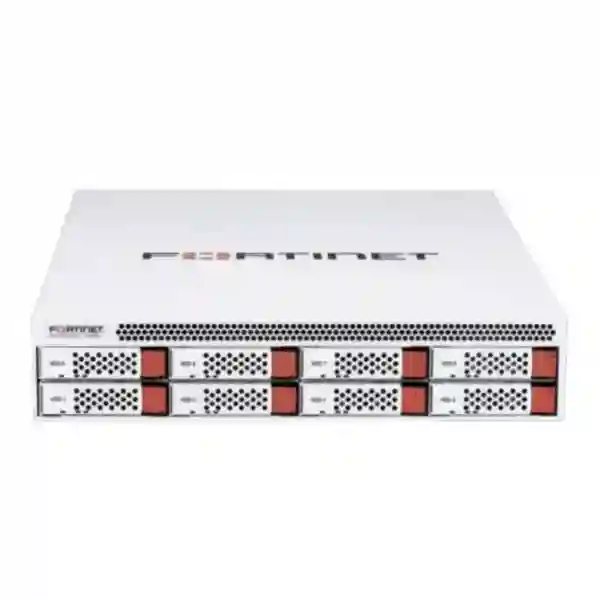
FortiAnalyzer FAZ-1000G Tanzania
FortiAnalyzer FAZ-1000G is a centralized logging and security analytics appliance built for organizations that need to turn large volumes of Fortinet security data into usable operational intelligence. For enterprises, service providers, public institutions, financial organizations, campuses and distributed businesses in Tanzania, the platform provides a dedicated foundation for consolidating logs, investigating events, producing reports and improving visibility across a growing Fortinet Security Fabric. Rather than treating logs as isolated records on individual security devices, teams can centralize information and establish a more consistent process for review, investigation and reporting.
The FAZ-1000G is positioned for demanding environments. Fortinet specifies 32 TB of storage, up to 660 GB of logs per day, 20,000 sustained logs per second, 30,000 sustained logs per second in collector mode, support for up to 2,000 devices or VDOMs and up to 50 ADOMs. Connectivity includes two 2.5GbE RJ45 interfaces and two 25GbE SFP28 interfaces. These figures make sizing important: a procurement decision should consider present log volume, expected growth, retention objectives, device count, administrative separation and the wider security operations workflow.
Maximum published daily log capacity for FAZ-1000G.
Integrated storage for centralized log and analysis workloads.
Published sustained logging rate for the appliance.
Maximum published devices or VDOMs supported.
Centralized Security Visibility for Growing Fortinet Environments
Security teams frequently reach a point where reviewing logs device by device is no longer practical. Branch firewalls, data-center security gateways, remote sites, segmented networks and virtual domains can create a large and continuous stream of events. FortiAnalyzer provides a central destination for collecting, organizing and analyzing that information. This improves the operational context available to administrators and can make recurring reporting, incident review and security investigations more manageable.
The value of FAZ-1000G is therefore not simply its storage specification. Its role is to help security operations teams establish a repeatable analytics workflow around the data generated by Fortinet infrastructure. Organizations evaluating the appliance should map expected log generation against the published capacity, decide how long important information needs to be retained and determine how many managed devices, VDOMs and administrative domains will be required during the planned service life.
Procurement note: capacity should be based on measured or carefully estimated log generation rather than device count alone. Security policy verbosity, traffic volume, enabled security functions and retention objectives can materially affect sizing.
FortiAnalyzer FAZ-1000G Technical Highlights
| Specification | FAZ-1000G |
|---|---|
| Product role | Centralized logging and analysis appliance |
| Storage | 32 TB |
| Log capacity | Up to 660 GB/day |
| Sustained logging | 20,000 logs/second |
| Collector mode sustained rate | 30,000 logs/second |
| Devices / VDOMs | Up to 2,000 |
| ADOMs | Up to 50 |
| Network interfaces | 2 × 2.5GbE RJ45 and 2 × 25GbE SFP28 |
What FAZ-1000G Helps Security Teams Solve
Log Consolidation
Central collection reduces dependence on separately reviewing individual security appliances. A consolidated repository gives teams a broader view of activity across branches, campuses, data centers and segmented environments.
Investigation Context
Centralized data can make it easier to trace related activity and examine events over time. This is useful when analysts need historical context rather than a narrow snapshot from one device.
Reporting Workflows
Structured reporting can support operational reviews, management visibility and internal governance processes. Reporting requirements should be defined during deployment so storage and retention decisions align with actual business needs.
Sizing and Deployment Guidance
A well-sized FortiAnalyzer deployment starts with data. Buyers should identify current Fortinet devices, VDOM counts, approximate daily log generation and peak logging rates. They should then consider growth, planned branch additions, new security controls and changes to logging policy. A design that only matches current averages can become restrictive when additional sites or more detailed security logging are introduced.
Retention is another central decision. Different organizations have different operational and governance requirements, so there is no single retention period that fits every deployment. Determine which logs are operationally important, how long analysts need them online and whether external archival processes form part of the overall design. The published 32 TB storage capacity should be evaluated in that context.
Network placement also matters. The appliance needs reliable connectivity to the devices sending logs, and administrators should account for routing, segmentation, management access, resilience and data-center standards. The two 25GbE SFP28 interfaces provide high-speed connectivity options, while the 2.5GbE RJ45 interfaces support additional network integration choices. Exact interface use should follow the approved architecture rather than a generic template.
FortiAnalyzer FAZ-1000G Tanzania
Organizations searching for FortiAnalyzer FAZ-1000G in Tanzania are often moving beyond basic firewall administration toward a more structured security-operations model. A business with multiple FortiGate deployments may have security events distributed across head offices, branches, data centers and remote facilities. Centralized analytics becomes increasingly valuable as that footprint grows because teams need a consistent way to collect logs, review incidents and produce operational reports. FAZ-1000G provides substantial published capacity for this role, but the purchase should be connected to a clear log-retention and device-growth plan.
For Tanzania deployments, procurement teams should prepare an inventory of existing Fortinet infrastructure before requesting a quotation. Include model counts, VDOMs, approximate daily log generation, peak rates where known, required retention, expected expansion and any administrative separation requirements. This allows the proposed architecture to be assessed against the FAZ-1000G limits of 660 GB/day, 20,000 sustained logs per second, 2,000 devices/VDOMs and 50 ADOMs. It also helps identify whether the physical appliance is the right form factor for the organization’s data-center strategy.
Operational ownership should be discussed at the same time. Decide who will maintain log sources, review dashboards, investigate events, manage reports and monitor appliance health. Centralizing logs creates the technical foundation, but effective outcomes depend on processes around the platform. Organizations can also review broader FourTeck Tanzania technology solutions when planning complementary infrastructure and security requirements.
FortiAnalyzer FAZ-1000G Dar es Salaam
Dar es Salaam organizations frequently operate environments where head-office systems, data-center resources, internet security and remote branches must be monitored as one security estate. FortiAnalyzer FAZ-1000G can serve as a central analytics platform for Fortinet-generated logs in such designs. The practical starting point is not simply selecting the largest available appliance; it is understanding how much security telemetry the environment generates and how quickly that volume may grow as additional controls and locations are connected.
Enterprises in banking, logistics, professional services, hospitality, education, manufacturing and other sectors can use centralized log analysis to improve consistency across distributed operations. Before deployment, network and security teams should document the path from each logging device to FortiAnalyzer, management-access controls, time synchronization, administrative responsibilities and backup or archival requirements. Where multiple business units or customers require separation, ADOM planning should be included early rather than added after the system is populated.
A quotation request for a Dar es Salaam deployment is more useful when it includes current device counts, VDOMs, average and peak logging rates, expected retention and projected growth. Buyers should also clarify the required FortiCare and FortiAnalyzer subscription or protection options appropriate to the intended operational model. These items can affect the complete procurement scope, so comparing only the base hardware part number may not represent the final solution.
FortiAnalyzer FAZ-1000G Mwanza
For organizations in Mwanza, a centralized Fortinet analytics platform can be particularly useful when the IT environment extends beyond a single site. Branch connectivity, remote offices, warehouses, service locations and centralized applications can all generate security events that need consistent review. FAZ-1000G gives administrators a dedicated appliance for bringing this information together and maintaining a structured security-analysis workflow.
Planning should include the reliability and bandwidth of links between log sources and the central analyzer. Logging architecture should be designed so security telemetry reaches the platform predictably without creating unnecessary operational complexity. Teams should decide which devices will send logs, which categories of logs are required and how retention aligns with investigation and governance needs. This can prevent indiscriminate logging from consuming capacity without delivering corresponding analytical value.
Mwanza buyers should also consider growth over the expected lifecycle. If the organization expects new sites, additional FortiGate VDOMs or more detailed security inspection, future log generation can differ significantly from today’s baseline. The FAZ-1000G’s published scale provides a strong platform for larger environments, but measured sizing remains essential. Include expansion assumptions in the procurement brief so the proposed solution can be evaluated against future requirements rather than current device count alone.
FortiAnalyzer FAZ-1000G Arusha
Arusha businesses evaluating FortiAnalyzer FAZ-1000G may include hospitality groups, institutions, multi-site enterprises and organizations that need consolidated oversight across geographically separated networks. In these environments, central log analysis can reduce fragmentation and give security teams a consistent place to examine events generated across the Fortinet estate. This is particularly useful where a small central team is responsible for several sites.
The design process should identify which security events need immediate operational attention and which logs primarily support historical investigation or reporting. This distinction helps teams build useful workflows rather than simply collecting data. Reports, event review procedures and escalation responsibilities should be planned alongside technical configuration. When these processes are defined early, FortiAnalyzer can become part of day-to-day security operations rather than only a repository that is consulted after an incident.
Procurement should include physical installation requirements, connectivity, licensing or subscription needs, support coverage and implementation scope. Buyers should avoid assuming that a base hardware quotation includes every service required for the desired operating model. A complete request should state the number of Fortinet devices, VDOMs, expected log volume and required retention, giving the supplier enough context to prepare an appropriate solution proposal.
FortiAnalyzer FAZ-1000G Dodoma
Organizations in Dodoma that manage distributed networks can use FortiAnalyzer FAZ-1000G as a central point for security logging, analysis and reporting across Fortinet infrastructure. Public institutions, enterprises, education environments and service organizations often need security information to be accessible to a central operations team while network services remain distributed across different facilities. Centralized logging can support that model by reducing dependence on isolated device-level records.
Deployment planning should consider administrative separation and reporting needs from the beginning. If different departments, environments or operational groups require distinct visibility, the available ADOM architecture should be mapped before implementation. Likewise, retention expectations should be translated into realistic storage requirements using measured log volumes. The 32 TB integrated storage is substantial, but actual retention depends on the organization’s log generation and configuration.
For procurement in Dodoma, request a design discussion that covers current infrastructure, planned expansion, management access, support requirements and the desired security-operations workflow. This gives decision makers a clearer basis for evaluating FAZ-1000G than a hardware-only comparison. The objective should be a platform that fits the organization’s operational processes, capacity requirements and future growth assumptions.
FortiAnalyzer FAZ-1000G UAE
UAE enterprises often operate dense, highly connected environments with multiple branches, data centers, cloud-connected services and demanding security operations. FAZ-1000G can provide centralized analytics for Fortinet infrastructure where daily telemetry and device counts require a dedicated physical platform. The published 660 GB/day capacity and 20,000 sustained logs per second should be evaluated against measured workloads and future expansion.
A UAE deployment may also involve strict internal governance, segmented business units and formal incident-response procedures. In these situations, buyers should map ADOM requirements, reporting responsibilities, retention objectives and analyst workflows before implementation. Physical data-center standards, high-speed network connectivity and support options should be included in the procurement scope. Organizations comparing regional sourcing can review FourTeck UAE for related technology procurement context and Fortinet-focused UAE solutions when planning the broader security estate.
The quotation should distinguish the base FAZ-1000G appliance from any support and protection bundles being considered. Contract duration, subscription scope and implementation services should be explicit. This avoids comparing offers that contain materially different components and helps procurement teams evaluate total solution scope rather than a single headline price.
FortiAnalyzer FAZ-1000G Uganda
Ugandan organizations with Fortinet deployments across headquarters, branches and remote facilities can use centralized log analysis to improve visibility across the full environment. FAZ-1000G is designed for large log volumes and device estates, making it relevant when distributed security infrastructure has outgrown device-by-device monitoring. Its value is strongest when the organization has defined processes for reviewing and acting on the collected information.
Sizing should account for actual telemetry rather than relying only on the number of firewalls. Different security profiles and traffic levels can produce very different log volumes. Teams should capture a representative baseline, add a reasonable growth assumption and define retention. The same exercise should include VDOM and ADOM requirements, because administrative structure is part of the overall scale calculation.
Organizations can review FourTeck Uganda technology solutions for regional procurement context. When requesting FAZ-1000G, include support term, implementation expectations, network integration requirements and any need for migration from an existing logging platform. A structured request reduces ambiguity and helps ensure the quotation addresses the intended operational outcome.
FortiAnalyzer FAZ-1000G Kampala
Kampala-based enterprises often centralize IT and security operations while supporting users and services across multiple locations. FortiAnalyzer FAZ-1000G fits this operating model by providing a dedicated location for Fortinet log collection and analysis. Security teams can use centralized data to support investigations, recurring reports and a more consistent review process across the network.
Before procurement, teams should identify their current daily logging baseline and peak events per second. They should also estimate how new branches, VDOMs or expanded security inspection could affect those figures. This matters because logging demand can grow faster than the device count. A capacity plan based on evidence makes it easier to determine whether FAZ-1000G offers suitable headroom.
Implementation planning should include access control, management-network placement, time synchronization, administrative domains, report ownership and escalation procedures. These operational details determine how useful centralized analytics will be after installation. Kampala organizations should therefore treat the purchase as a security-operations project rather than simply adding another rack appliance.
FortiAnalyzer FAZ-1000G Arua
For Arua organizations connected to a wider enterprise network, centralized security analytics can help local infrastructure become part of a unified monitoring model. Logs generated by Fortinet security devices can be forwarded to a central FortiAnalyzer platform, giving the security team broader historical and operational context while reducing the need for isolated review at each site.
Network connectivity and log-forwarding design deserve particular attention in distributed environments. Teams should understand available bandwidth, routing and resilience between sites and the central analyzer. Logging policies can then be tuned to collect the information that supports security and reporting objectives without creating avoidable overhead. This design work is important even when the central appliance has substantial capacity.
Arua procurement requirements should document the local devices that will participate in the architecture, anticipated expansion and any centralized support model. If the FAZ-1000G will serve multiple regions, the sizing exercise should aggregate all expected sources rather than assessing Arua independently. This creates a more accurate view of daily logs, sustained rates and retention requirements.
FortiAnalyzer FAZ-1000G Mbarara
Mbarara businesses planning centralized Fortinet monitoring can evaluate FAZ-1000G when log volumes, device counts or retention requirements justify a larger dedicated appliance. The platform can consolidate information from distributed security infrastructure and provide analysts with a consistent environment for investigation and reporting.
The project should begin with an inventory of log sources and a review of operational priorities. Some organizations need long retention for historical investigation; others place more emphasis on current event analysis and regular reporting. Those priorities influence storage consumption and workflow design. The published specifications provide capacity boundaries, but the practical fit depends on the organization’s configuration and usage.
For a useful quotation, Mbarara buyers should include existing Fortinet models, VDOM counts, daily log estimates, desired retention, support term and expected growth. They should also identify whether configuration assistance, migration or operational handover is required. This provides a clearer scope for both procurement and deployment.
FortiAnalyzer FAZ-1000G Gulu
Gulu organizations operating as part of a multi-site network can benefit from a centralized approach to Fortinet log management. FAZ-1000G provides the capacity and interfaces required for larger security analytics workloads, while centralization can help security teams review events across sites from a common operational perspective.
A distributed architecture should be designed around reliable log transport and clear operational responsibility. Teams need to know which devices send logs, what happens during connectivity interruptions and how administrators access the platform. They should also define who reviews alerts and reports, how investigations are escalated and how configuration changes are governed.
Gulu buyers should include future network growth in the sizing process. New branches, more detailed logging or additional virtual domains can change the workload significantly. By documenting these assumptions before purchase, the organization can evaluate whether the FAZ-1000G provides suitable headroom and whether the proposed support and subscription package matches its planned use.
FortiAnalyzer FAZ-1000G Kenya
Kenyan enterprises with regional networks can use FAZ-1000G to consolidate Fortinet security telemetry across branches, data centers and segmented environments. Central analytics is particularly useful where one security operations team supports a large number of devices and needs consistent reporting and investigation processes.
Capacity planning should combine daily log volume, sustained event rates, retention and device or VDOM growth. Organizations should also assess ADOM needs if different business units or managed environments require separation. These factors should be documented before comparing procurement options so each quotation is based on the same operational assumptions.
For related regional infrastructure planning, buyers can review FourTeck Kenya solutions. The FAZ-1000G request should specify the desired support term, any protection subscription, implementation scope and integration requirements. A complete bill of requirements makes commercial comparison more meaningful than comparing the base appliance alone.
FortiAnalyzer FAZ-1000G Kuwait
Kuwait organizations evaluating FAZ-1000G may be seeking a dedicated platform for high-volume Fortinet logging and security analytics. Large enterprises and distributed environments can generate substantial telemetry, making centralized capacity, retention and operational workflow important design considerations.
The appliance’s 32 TB storage and published logging scale should be mapped to the organization’s measured workload. Security teams should avoid assuming a fixed number of retention days without considering log volume and configuration. They should also review interface requirements and data-center connectivity when integrating the 25GbE SFP28 and 2.5GbE RJ45 options into the management network.
Regional buyers can consult FourTeck Kuwait technology solutions for related procurement context. A quotation should clearly state hardware, support, subscriptions and professional services so stakeholders can understand the complete scope and avoid mismatched commercial comparisons.
FortiAnalyzer FAZ-1000G Ghana
Ghanaian organizations with expanding Fortinet estates can use centralized analytics to maintain visibility as branch and security-device counts grow. FAZ-1000G is suited to larger logging workloads, but organizations should first establish how much telemetry they generate and what retention period supports their operational needs.
A good deployment plan combines technical sizing with security processes. Teams should define report audiences, investigation responsibilities, access controls and administrative separation. If multiple operational groups will use the platform, ADOM planning should be completed early. These decisions influence both configuration and the long-term usability of the system.
Buyers can review FourTeck Ghana solutions when coordinating regional requirements. Procurement documentation should include device inventory, expected growth, log volume, retention, support term and any deployment assistance so the resulting proposal reflects the complete project.
FortiAnalyzer FAZ-1000G Nigeria
Nigeria’s large and geographically distributed enterprise environments can produce substantial security telemetry across branches, data centers and segmented networks. FAZ-1000G provides a centralized platform for Fortinet logging and analysis, enabling security teams to work from a consolidated data set rather than relying on separate device-level records.
Organizations should measure typical and peak logging before finalizing the design. Traffic patterns, enabled security services and policy configuration all influence log generation. Retention requirements should then be evaluated against the appliance’s storage and expected growth. This evidence-based approach is more reliable than selecting an appliance solely from the number of firewalls deployed.
For regional procurement context, organizations can review FourTeck Nigeria solutions. Quotations should identify the exact FAZ-1000G hardware and any support or protection package separately, together with implementation and integration services where required.
FortiAnalyzer FAZ-1000G Seychelles
Seychelles organizations may operate a smaller number of sites than very large continental enterprises while still requiring strong centralized visibility, particularly in hospitality, financial services, government and multi-property environments. FAZ-1000G should be evaluated where the required logging scale, retention or growth profile justifies its capacity.
Connectivity between sites and the central logging location is an important design consideration. Teams should document how remote devices reach FortiAnalyzer, what logs are essential and how operational procedures handle connectivity interruptions. Central analytics is most effective when log collection, review and escalation processes are clearly defined.
Procurement teams should avoid over- or under-sizing by comparing measured telemetry with the published limits. Include planned new sites, VDOMs and policy changes in the forecast. A complete request should also state support duration, subscription requirements and whether deployment or migration assistance is expected.
Compatibility, Integration and Operational Planning
FortiAnalyzer is designed as part of the Fortinet ecosystem, and version compatibility should be checked against the exact FortiAnalyzer release and connected Fortinet products before upgrades or deployment. Fortinet publishes supported-model and compatibility documentation that should be used during implementation. This is especially important in established estates where devices may be running different software branches.
Teams should also establish a controlled upgrade process. Security analytics infrastructure is operationally important, so version changes should be reviewed for compatibility, release notes and organizational change windows. Configuration backups, documented access and a clear ownership model help reduce avoidable operational risk.
Buying Checklist for FAZ-1000G
Before requesting a formal quotation, prepare the following information so the proposed solution can be sized and scoped accurately:
✓ Current Fortinet device and VDOM count
✓ Average daily log volume and peak logs per second where available
✓ Desired online retention period
✓ Expected device and traffic growth
✓ Number of administrative domains required
✓ Data-center network interface requirements
✓ Existing FortiAnalyzer platform, if this is a migration
✓ Required support duration and subscription scope
✓ Installation, configuration or migration assistance requirements
✓ Reporting, investigation and operational ownership expectations
FortiAnalyzer FAZ-1000G FAQs
How much log data can FAZ-1000G handle per day?
Fortinet publishes a capacity of up to 660 GB of logs per day for the FAZ-1000G. Actual deployment planning should also consider sustained logging rate, retention and growth.
What is the sustained logging rate?
Fortinet lists 20,000 sustained logs per second and 30,000 sustained logs per second in collector mode for FAZ-1000G.
How many devices or VDOMs can FAZ-1000G support?
The published maximum is 2,000 devices or VDOMs. Buyers should still size against log volume and operational requirements because device count alone does not determine workload.
Does FAZ-1000G include storage?
Yes. Fortinet specifies 32 TB of storage for the FAZ-1000G appliance.
What should be included in a Tanzania quotation request?
Include the exact FAZ-1000G requirement, device and VDOM counts, daily log volume, retention target, growth estimate, support term, subscription needs and any implementation or migration services.
Decision Recap
FortiAnalyzer FAZ-1000G is a high-capacity centralized logging and analysis appliance for organizations that need a dedicated Fortinet security analytics platform. Its 32 TB storage, up to 660 GB/day log capacity, 20,000 sustained logs per second and support for up to 2,000 devices/VDOMs make it suitable for substantial distributed environments. The key purchasing question is whether those published capabilities align with your measured logging, retention, administrative and growth requirements.
Plan Your FAZ-1000G Deployment
A useful consultation should cover the current Fortinet estate, daily telemetry, retention, future sites, VDOMs, ADOMs, support terms and deployment scope. Bring these details to the discussion so the hardware and associated services can be matched to the intended security-operations model.




Reviews
There are no reviews yet.