
FortiAP FAP-431G Tanzania
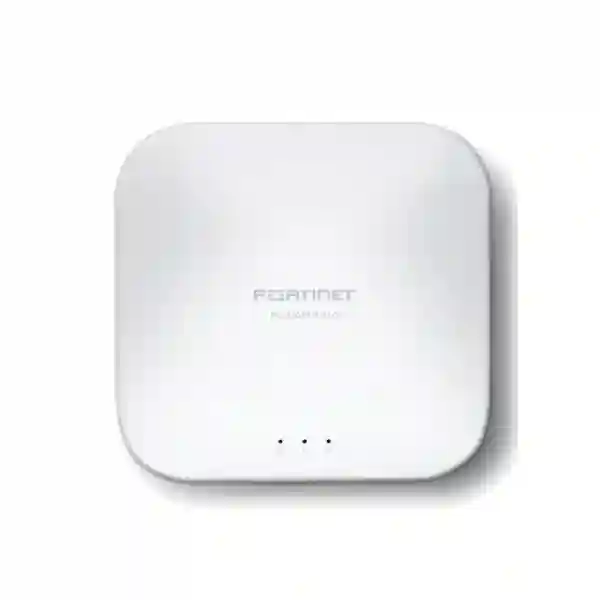
FortiAP FAP-431G is a high-performance indoor Wi-Fi 6E access point for organisations that want modern wireless capacity to operate as part of a broader secure network. Fortinet positions the FAP-431G as an enterprise-class extended-frequency-band access point with three radios, four spatial streams per service radio, internal antennas, 4×4 MU-MIMO, 6 GHz capability where permitted, and multigigabit Ethernet connectivity. For Tanzanian businesses, the practical value is not simply faster Wi-Fi: it is the opportunity to design staff, guest, operational and device connectivity around controlled network policy, suitable switching and a management platform that can grow with the organisation.
IEEE 802.11ax with 2.4 GHz, 5 GHz and 6 GHz operation depending on regulatory domain and configuration.
Designed for demanding indoor business environments where capacity, client density and predictable wireless operation matter.
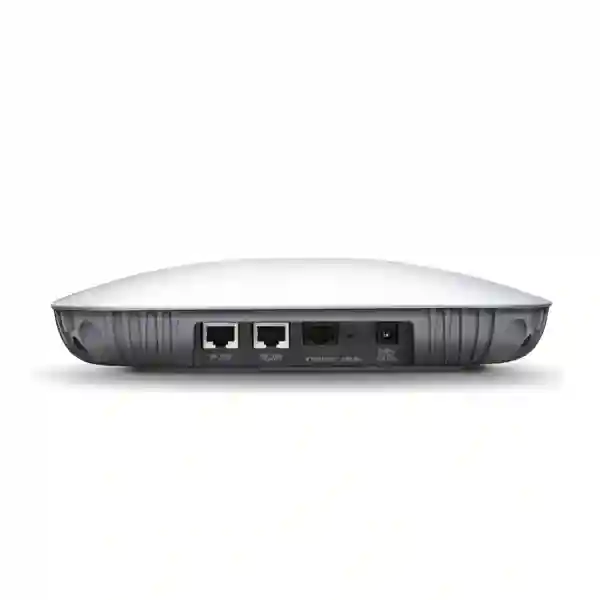
Two multigigabit RJ45 interfaces help prevent the wired uplink from becoming an unnecessary bottleneck in capable networks.
FortiAP FAP-431G Overview
The FAP-431G sits in Fortinet’s secure wireless portfolio as an indoor Wi-Fi 6E access point intended for high-performance business deployments. Its radio design can support simultaneous 2.4 GHz, 5 GHz and 6 GHz service, or alternative dual-5 GHz and scanning arrangements supported by the platform. Fortinet documentation lists maximum radio data rates up to 1148 Mbps, 2402 Mbps and 4804 Mbps across the relevant radios. These are theoretical radio rates rather than guaranteed application throughput, so real-world performance still depends on client capability, channel width, interference, regulatory settings, Ethernet design, power mode, placement and upstream network capacity.
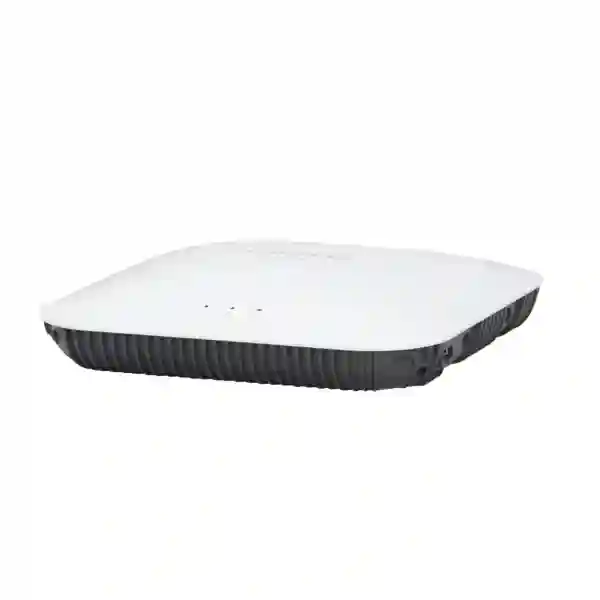
The model includes eight internal Wi-Fi antennas plus an internal BLE antenna, making it appropriate for indoor ceiling or wall-oriented enterprise designs where a clean integrated form factor is preferred. Bluetooth/BLE and ZigBee-related capabilities can support location, beacon and IoT-oriented use cases according to the selected Fortinet design. For wired connectivity, Fortinet documentation identifies two 100/1000/2500/5000 Base-T RJ45 interfaces. Power planning deserves attention: full operation is associated with suitable 802.3bt PoE or supported DC power, while lower PoE modes can impose functional or transmit-power restrictions. A procurement conversation should therefore cover the AP, compatible power method and switching design together.
What FAP-431G Solves
Business Wi-Fi problems often appear as slow meetings, unstable roaming, crowded channels, weak guest separation, difficult troubleshooting or a wired network that cannot keep pace with newer wireless clients. FAP-431G addresses the access-layer part of that challenge with Wi-Fi 6E capacity, multiple radios, multigigabit uplinks and integration into Fortinet management. It is especially relevant when an organisation already uses FortiGate or is designing a Fortinet-led secure branch or campus architecture. The access point should still be selected through a site survey and capacity plan rather than by model name alone.
Verified Technical Highlights
| Wireless generation | Wi-Fi 6E / IEEE 802.11ax |
| Radio design | Three Wi-Fi radios plus BLE; tri-band or supported dual-5 GHz/scanning configurations |
| Spatial design | 4×4 MU-MIMO |
| Maximum listed radio rates | Up to 1148 Mbps + 2402 Mbps + 4804 Mbps |
| Ethernet | 2 × 100/1000/2500/5000 Base-T RJ45 |
| Antennas | 8 internal Wi-Fi antennas plus internal BLE antenna |
| Management | FortiGate integrated WLAN controller, FortiEdge Cloud or supported SASE management path depending on design |
Compatibility, Power and Deployment Planning
A strong FAP-431G deployment begins upstream of the access point. Confirm whether the existing switch ports can negotiate multigigabit Ethernet and provide the required PoE mode. Cabling quality must support the intended link rate, and switch PoE budget must be calculated across every access point rather than for one unit in isolation. If a lower PoE class is used, consult the current Fortinet documentation because radio, USB or transmit-power behaviour can be restricted. This is particularly important for projects that expect full radio capability.
Management should also be decided before purchase. FortiAP can fit naturally into a FortiGate-managed environment, while cloud and SASE-oriented paths may suit other operating models and can involve subscriptions. Confirm FortiOS/FortiAP firmware compatibility, desired controller architecture and support term before ordering. For 6 GHz, verify local regulatory availability and client support. A Wi-Fi 6E access point does not automatically make legacy devices 6 GHz capable; compatible client hardware, operating system support, security settings and drivers are necessary.
FortiAP FAP-431G Tanzania
Tanzanian organisations evaluating FortiAP FAP-431G are typically trying to solve a broader wireless design question: how to give employees and approved devices fast access without losing control of segmentation, guest traffic and network policy. In corporate offices, a modern WLAN may carry cloud productivity platforms, voice and video meetings, ERP access, mobile devices and visitor traffic simultaneously. In hospitality, education, healthcare and retail, the same access layer can face very different client densities and roaming patterns. The FAP-431G’s 4×4 Wi-Fi 6E architecture makes it a candidate for demanding indoor zones, but quantity and placement should be based on coverage and capacity measurements rather than a simple square-metre estimate.
For procurement in Tanzania, prepare a short technical brief before requesting a quotation. Include the building type, number of floors, approximate concurrent users, existing FortiGate model if present, current switch model and PoE budget, internet capacity, desired SSIDs, guest-access requirement and whether 6 GHz clients are expected. This allows the access point discussion to include cabling and switching rather than discovering after purchase that the upstream network limits performance. Organisations with older one-gigabit switches should specifically review whether a multigigabit refresh is justified for high-capacity AP locations.
Security design is equally important. Staff, visitors, IoT equipment and operational devices should not automatically share one trust zone. A Fortinet-managed WLAN can be planned with VLANs, authentication and firewall policy appropriate to the organisation. The exact configuration depends on the controller and network architecture. Buyers can also review Fortinet wireless security solutions for Africa for broader wireless planning context, including FortiGate and switching considerations. FourTeck can use the project brief to prepare a model, support and accessory conversation without assuming stock, price or lead time until quotation.
FortiAP FAP-431G Dar es Salaam
Dar es Salaam businesses often operate in multi-floor offices, hotels, commercial buildings, logistics environments, clinics, educational facilities and mixed-use properties where wireless traffic can vary sharply by time and zone. An FAP-431G design for a boardroom floor is different from one for a busy lobby or training centre. High client counts do not simply require more transmit power; they require sensible cell sizing, channel planning, client distribution and sufficient wired capacity. Wi-Fi 6E can provide additional spectrum where permitted and where compatible clients are available, which can help planners create more capacity options alongside 2.4 and 5 GHz service.
A Dar es Salaam quotation request should identify whether the project is a new fit-out or an upgrade. New sites can plan Cat6A or appropriate structured cabling, multigigabit switching and PoE budgets from the beginning. Upgrade projects should audit existing cable runs, patch panels, switch capabilities and controller versions before assuming the AP can operate at its full design potential. If FortiGate already provides the security edge, the WLAN can be considered as part of the same operational ecosystem, reducing the need to treat wireless policy as an isolated platform.
For hospitality and customer-facing sites, guest access, captive portal expectations and isolation from internal systems should be documented. For offices, meeting-room density and roaming between work areas can matter more. Warehouses and logistics locations need attention to racking, device types and movement paths. FourTeck’s role in the buying process is to translate these requirements into a structured request covering access points, switching, power and management. Buyers with cross-border projects can also use the FourTeck UAE regional platform when procurement coordination extends into Gulf operations.
FortiAP FAP-431G Mwanza
Mwanza organisations considering FAP-431G may be supporting offices, healthcare sites, education, hospitality, distribution operations or growing branch networks. The right wireless plan starts with the applications and devices that must work reliably. A cloud-heavy office may prioritise consistent video and SaaS access, while a school may need predictable classroom density and controlled guest or student networks. A warehouse may value roaming behaviour for handheld devices. The same access point can participate in these designs, but RF placement and policy should be adapted to the actual environment.
The FAP-431G offers significant radio capability, so upstream infrastructure should not be ignored. Its dual multigigabit Ethernet interfaces make it sensible to review switch uplink speed and PoE capacity. If the site uses older switching, a staged deployment can identify which high-demand areas benefit most from multigigabit connectivity. Power planning should use Fortinet’s current guidance, because reduced PoE modes can restrict features. Where 6 GHz is considered, confirm regulatory rules and the proportion of Wi-Fi 6E-capable clients before making it central to the capacity model.
Mwanza procurement teams can improve quotation accuracy by providing a floor plan, ceiling height, wall construction, estimated concurrent devices and details of the existing Fortinet environment. Include any need for separate staff, guest, voice, scanner or IoT SSIDs. This gives technical teams enough context to discuss AP quantity, switch requirements and controller architecture. The aim is to avoid purchasing access points in isolation and later discovering that cabling, power or security policy needs redesign. For organisations expanding beyond Tanzania, Fortinet solutions in Kenya provide a useful neighbouring-market route for regional standardisation discussions.
FortiAP FAP-431G Arusha
Arusha has a mix of hospitality, tourism-related operations, professional offices, education and service organisations where dependable indoor wireless can directly affect staff productivity and customer experience. For a hotel or lodge administration area, the network may need to keep guest traffic separate from reservations, finance and operational systems. In a business office, the priority may be stable conferencing and cloud applications. Education environments may need multiple SSIDs and careful capacity planning. FAP-431G is relevant where an indoor enterprise Wi-Fi 6E platform and Fortinet-integrated management align with these requirements.
Placement should be based on radio conditions rather than visual symmetry. Thick walls, floor slabs, decorative materials, service areas and neighbouring wireless networks can change coverage. A site survey helps determine where 5 GHz and, where legally available, 6 GHz can provide useful capacity without creating coverage gaps for legacy clients. Because 6 GHz propagation differs from lower bands, planners should not simply copy an older 2.4 GHz access-point layout. Client capability also matters: devices without Wi-Fi 6E continue to rely on supported 2.4 or 5 GHz service.
Arusha buyers should include support-term and management questions in the commercial request. Confirm whether FortiGate will manage the APs, whether a cloud-managed route is intended, and what subscription or support options are required for the chosen architecture. For projects with several branches, standard SSID naming, VLAN design, firmware policy and documentation can make future operations easier. FourTeck can help frame the bill of materials around the site requirement, while final availability and commercial terms should be confirmed in the quotation rather than assumed from generic web listings.
FortiAP FAP-431G Dodoma
Dodoma organisations planning new offices or modernising existing networks can use the FAP-431G as part of a secure indoor wireless architecture where capacity and central control are priorities. Government-adjacent organisations, professional services, education, healthcare and distributed businesses may all have different authentication and segmentation requirements. The access point’s value comes from combining modern Wi-Fi radio capability with Fortinet management options, but successful deployment still depends on network design choices made around it.
A practical Dodoma project begins with a user and device inventory. Count laptops, phones, tablets, meeting-room systems, printers, scanners and IoT endpoints expected during peak periods. Identify applications sensitive to latency and packet loss, then map physical areas where users gather. This information is more useful than selecting AP quantity solely from building area. The FAP-431G’s 4×4 architecture and multiple radio modes can serve high-demand indoor areas, while less demanding spaces may warrant a different FortiAP model. Mixed-model designs should be validated for management and firmware compatibility.
For procurement, request confirmation of the correct regional model, power accessories if required, support term and management licensing relevant to the selected design. Do not assume 6 GHz operation until local regulatory availability is confirmed. The switch layer should be checked for multigigabit Ethernet and appropriate PoE. If the network is being refreshed at the same time, planning FortiAP with FortiSwitch and FortiGate can create a more coherent operational model. The purchasing decision should therefore be based on the full wireless path from client to access point, switch, firewall and internet or application destination.
FortiAP FAP-431G UAE
UAE organisations evaluating FAP-431G may be building high-density offices, hospitality spaces, clinics, schools, retail sites or regional headquarters where wireless capacity and central security operations need to work together. Wi-Fi 6E can be useful in environments with compatible devices and permitted 6 GHz operation, but design should still account for the large installed base of 5 GHz and 2.4 GHz clients. A tri-band strategy can therefore be planned around actual device capability rather than marketing labels.
Enterprise sites should verify multigigabit switching and PoE before deployment. Two 5GbE-capable interfaces provide wired design flexibility, while full AP capability depends on suitable power. High-end offices can also have dense meeting rooms and reflective materials that influence RF behaviour. A survey and channel plan should determine AP placement, power levels and radio use. Where FortiGate is already installed, integrated WLAN management may provide an operationally consistent path; organisations choosing cloud or SASE management should confirm the relevant subscriptions and architecture.
Regional procurement can involve several sites with different local regulations, so the exact region code and wireless domain must be checked for every destination. A UAE headquarters standard should not automatically be copied to Tanzania, Uganda or another market without validation. FourTeck’s UAE platform can support a broader regional conversation for organisations standardising Fortinet networks across multiple countries. Quotations should identify destination, quantity, support term, power method and expected management path to reduce ambiguity during procurement.
FortiAP FAP-431G Uganda
Ugandan businesses considering FAP-431G can approach it as a secure wireless component rather than a standalone Wi-Fi device. The model is suited to indoor enterprise projects that require high radio capacity, internal antennas and integration with Fortinet management. Offices, hotels, clinics, campuses and distributed branches can use separate SSIDs and network segmentation to keep visitor, employee and operational traffic aligned with different security policies.
Before ordering, review whether the site’s switches support the intended multigigabit link speed and required PoE class. Existing Cat5e installations may need validation depending on distance, condition and target Ethernet rate. A site survey should also identify interference and user concentration. Wi-Fi 6E’s 6 GHz option is valuable only where local rules allow it and client devices support it; therefore, 5 GHz capacity remains an important design consideration. Fortinet’s configurable radio modes can help planners align the AP with the actual environment.
For Uganda procurement and regional coordination, organisations can review FourTeck Uganda. Provide the existing FortiGate model, switch details, number of users, building plan and desired support term when requesting a quote. Multi-site buyers should also describe whether policies will be administered centrally. That context helps distinguish a simple AP purchase from a managed branch architecture and makes accessory, power and licensing discussions more accurate.
FortiAP FAP-431G Kampala
Kampala offices and commercial environments can experience concentrated wireless demand in meeting spaces, shared work areas, training rooms, hospitality zones and customer-facing locations. FAP-431G provides an enterprise Wi-Fi 6E platform for sites where 4×4 radio capacity and multigigabit wired connectivity fit the network plan. The best deployment is not necessarily the one with the fewest access points; it is the one that balances coverage, capacity and roaming while avoiding excessive co-channel interference.
A Kampala site assessment should record floor construction, ceiling type, user density, neighbouring networks and critical applications. Modern video conferencing and cloud applications can expose weak roaming or congested channels quickly. Where compatible clients and local regulations support 6 GHz, the additional band can expand channel-planning options. Legacy devices still require 2.4 or 5 GHz service, so a mixed-client strategy remains necessary. Network teams should test real client behaviour rather than relying only on theoretical AP data rates.
Commercial planning should cover the correct regional unit, PoE, support and management path. If FortiGate is already deployed, confirm firmware and controller compatibility. If cloud management is preferred, confirm the current subscription requirements. Organisations with branches outside Kampala can standardise configuration templates while still adapting RF plans to each building. This approach reduces operational inconsistency without assuming every site has identical physical conditions.
FortiAP FAP-431G Arua
Arua buyers may be planning wireless for branch offices, education, healthcare, NGOs, service operations or hospitality locations where IT teams need dependable connectivity without creating a difficult management burden. FAP-431G can fit an indoor Fortinet architecture when the site needs enterprise radio capacity and central policy integration. Remote-site manageability can be as important as peak throughput, particularly when specialist IT staff are not continuously present at the location.
For a branch deployment, document the WAN design, FortiGate model, switching and local power environment before selecting the AP count. Wireless performance is affected by the complete network path. A high-capacity AP connected to an overloaded uplink or undersized PoE switch cannot deliver its intended experience. Separate SSIDs for staff, guests and operational devices can simplify policy, but the VLAN and firewall design must be planned end to end. Where 6 GHz is not available or clients do not support it, the FAP-431G can still be designed around supported 2.4 and 5 GHz operation.
Procurement teams should request a quote with site destination, quantity, support period, management preference and any required power accessories. If the project includes several Ugandan locations, define a common configuration baseline while allowing local RF tuning. This makes future troubleshooting easier and gives administrators a consistent naming and security structure across branches. Final stock and delivery timing should be confirmed commercially for the specific order rather than inferred from regional web content.
FortiAP FAP-431G Mbarara
Mbarara organisations can consider FAP-431G for indoor business wireless where users expect reliable access to cloud applications, voice, collaboration and internal services. Healthcare, education, hospitality and professional offices may have very different device profiles, so AP selection should follow an application and density review. In a clinic, for example, staff mobility and device separation may matter more than guest throughput. In hospitality, visitor onboarding and capacity in shared areas can become the priority.
The access point’s multigigabit interfaces are a reminder that switching matters. Review port speeds, PoE class, aggregate switch power budget and uplinks. If several FAP-431G units share a switch with other PoE devices, calculate total power rather than assuming each port can deliver full capability simultaneously. Structured cabling should also be tested where the installation is being upgraded from older access points. These checks can prevent a premium wireless platform from being constrained by the access layer.
Security and operations should be documented before installation. Decide how staff, visitors and devices will authenticate, which VLANs they will use, and what firewall policy applies. Confirm the chosen Fortinet management method and support term. For multi-branch businesses, central templates can help maintain consistency, while channel and power settings should still be adapted to each physical site. A quotation request that includes these details produces a more useful bill of materials than a request containing only the AP model and quantity.
FortiAP FAP-431G Gulu
Gulu projects may involve branch offices, education, healthcare, hospitality and organisations that need centrally manageable connectivity across geographically distributed sites. FAP-431G is most relevant where an enterprise indoor AP with Wi-Fi 6E capability and Fortinet integration matches the security architecture. A branch does not always need the highest available wireless specification, so planners should compare expected client count, applications and future growth before standardising on this model.
When the FAP-431G is selected, the installation should account for power and wired capacity. Full capability requires an appropriate power design, and the dual multigigabit Ethernet ports should be paired with switching that supports the intended topology. In smaller sites, one multigigabit uplink may be sufficient for the design; larger or resilience-oriented projects may evaluate the second interface according to Fortinet guidance. Avoid assuming that theoretical wireless data rates equal internet speed, because real performance depends on the complete network and RF environment.
For Gulu, remote support considerations can shape the design. Clear AP naming, documented switch ports, controller templates and configuration backups reduce troubleshooting time. If the organisation operates sites in Kampala or other countries, a common Fortinet architecture can simplify administration, but regional wireless rules must still be respected. Confirm 6 GHz availability, correct region code and current firmware compatibility before deployment. FourTeck can structure the commercial discussion around these requirements and provide current quotation details on request.
FortiAP FAP-431G Kenya
Kenyan enterprises evaluating FAP-431G may be modernising office Wi-Fi, expanding hospitality networks, improving campus connectivity or standardising branches around Fortinet. The model’s 4×4 Wi-Fi 6E design is particularly relevant in busy indoor spaces where many capable clients compete for airtime. Planning should distinguish coverage from capacity: an AP signal may reach a room while still being overloaded by too many active users. High-density areas therefore need client and application estimates as well as RF measurements.
For Nairobi and other business centres, multigigabit switching can be important where newer clients and high local traffic justify it. Confirm PoE class, cable capability and switch uplink capacity. Wi-Fi 6E client adoption should be measured rather than assumed. A mixed device estate can benefit from careful use of 2.4, 5 and, where permitted, 6 GHz bands. The Fortinet management model also allows wireless policy to be considered alongside broader security controls when FortiGate is part of the network.
Kenyan buyers can use FourTeck’s dedicated Kenya resources to discuss Fortinet procurement and related network components. For cross-border East African organisations, standardising the access point family can simplify spares and operational knowledge, but each country and building still requires correct regional configuration and RF planning. Provide floor plans, concurrent client estimates, current firewall and switch details, desired support term and installation city when seeking a quotation.
FortiAP FAP-431G Kuwait
Kuwait organisations considering FAP-431G may require high-capacity wireless for offices, retail, hospitality, healthcare or education. Indoor enterprise deployments often have dense client clusters and extensive use of cloud applications, so wireless design must consider airtime, roaming and upstream internet or application capacity. Wi-Fi 6E adds a modern spectrum option for compatible devices where permitted, while 2.4 and 5 GHz remain important for broad device compatibility.
Building materials and neighbouring networks can significantly affect RF behaviour. Site surveys should identify high-demand zones and potential interference before final placement. Because the FAP-431G can support multigigabit Ethernet, switch selection should match the desired performance target. Appropriate PoE is required for full functionality. Where the AP is part of a FortiGate-led architecture, confirm controller and firmware compatibility; cloud-managed designs should include any relevant subscription in commercial planning.
Kuwait procurement teams managing multiple regional offices should specify the destination of each unit and confirm region-specific wireless requirements. Support terms, power accessories and management architecture should be stated on the quotation. A central IT team can maintain common SSID and policy standards while allowing local channel plans to vary. This approach supports operational consistency without treating every building as an identical RF environment.
FortiAP FAP-431G Ghana
Ghanaian businesses can evaluate FAP-431G for secure indoor wireless projects where a high-performance access point must fit into a managed security architecture. Offices, education, healthcare, hospitality and distributed commercial operations can all benefit from separating staff, guest and device traffic. The exact value of Wi-Fi 6E depends on local spectrum rules and client support, so a practical design should preserve strong 5 GHz service and use 6 GHz strategically where available.
A procurement brief should include the current firewall and switch environment, site size, floor plan and user density. If existing switches provide only one-gigabit ports or insufficient PoE, decide whether an access-layer refresh is part of the project. The FAP-431G’s dual 5GbE-capable ports can support demanding designs, but buying the AP without reviewing cabling and switching may leave capacity unused. Power mode should be validated against Fortinet’s current documentation.
For multi-site organisations, central management can help standardise wireless policy, firmware processes and naming. Local RF tuning remains essential because construction and interference differ by site. Ghana buyers should request current availability, region code, support options and any required management subscription as part of the quotation. If the project spans Africa, FourTeck Africa provides a regional route for coordinating broader network requirements.
FortiAP FAP-431G Nigeria
Nigeria’s large enterprise, education, hospitality, healthcare and commercial environments can create demanding wireless conditions. FAP-431G can be considered for indoor zones that need 4×4 Wi-Fi 6E capacity and Fortinet management integration. High-density projects should model concurrent active devices and application behaviour rather than total registered users. A training centre with hundreds of simultaneously active devices can require a different cell design from an office with the same employee count but lower concurrency.
Power resilience and network architecture also deserve attention. The AP requires suitable PoE for full capability, and multigigabit Ethernet should be supported by the switch where the design intends to use that capacity. UPS planning for the switch layer can help keep wireless service available during power events according to the organisation’s continuity strategy. The internet link, firewall and core network should also be sized appropriately; an advanced AP cannot compensate for an undersized WAN or congested switching uplink.
Nigeria procurement teams should confirm regional wireless configuration, support term and management model before ordering. If 6 GHz is part of the business case, verify current local regulatory availability and client compatibility. For national organisations with branches in multiple cities, configuration templates can simplify operations, while site surveys should remain location specific. A detailed quotation request should include AP quantity, building type, existing FortiGate and switch models, PoE availability, support period and project destination.
FortiAP FAP-431G Seychelles
Seychelles hospitality, professional services and institutional environments may require business Wi-Fi that balances guest experience, staff access and operational security. FAP-431G can fit indoor high-performance areas where Fortinet management and Wi-Fi 6E capabilities are appropriate. Hotels and resorts should distinguish guest wireless from back-office, payment, building-management and staff systems through suitable network segmentation. The access point is one component of that architecture rather than the complete security solution.
Island procurement can make accurate planning particularly valuable because missing accessories or incompatible power arrangements can delay a project. Confirm the correct regional model, PoE method, switch capability, support term and controller path before shipment. A floor plan and site survey can identify where high-capacity indoor APs are needed and where other models may be more suitable. Outdoor or exposed areas should use products designed for those environmental conditions rather than assuming an indoor FAP-431G can be installed everywhere.
Where 6 GHz is intended, verify regulatory availability and compatible clients. Hospitality sites should also test roaming, captive portal behaviour and real guest-device diversity. Multi-building projects can use consistent SSID and policy standards while tuning channels and transmit power per structure. FourTeck can use these details to prepare a more complete commercial discussion covering wireless, switching and security integration rather than an isolated access-point order.
Industries and Use Cases
Secure staff access, meeting rooms, guest networks and high-capacity cloud application use.
Guest and staff wireless with segmentation, density planning and managed access.
Classrooms, administration and shared spaces requiring policy-based wireless access.
Staff, visitor and approved device connectivity with attention to segmentation and availability.
Buying and Sizing Guidance
Do not size a FAP-431G deployment from floor area alone. Begin with expected concurrent clients, device types, application mix, construction materials, ceiling height and roaming requirements. Identify high-density zones and areas where legacy devices still dominate. A predictive survey can establish an initial plan, while on-site validation provides stronger evidence for final placement. Consider capacity at the switch and firewall as well as at the radio layer.
Also decide whether the FAP-431G is required everywhere. Some locations may benefit from this 4×4 Wi-Fi 6E model, while lower-density rooms or outdoor spaces may be better served by other FortiAP models. A mixed design can optimise cost and coverage if management compatibility and operational consistency are maintained. Fortinet’s current product matrix should be checked during design because the portfolio and software support evolve over time.
Quotation Checklist
For a useful FortiAP FAP-431G quotation, provide: project country and city; required quantity; building type and floor plan; expected concurrent devices; existing FortiGate model and firmware family; switch model, available multigigabit ports and PoE budget; cabling category; required staff, guest and device SSIDs; preferred management path; support term; expected 6 GHz client use; and any installation or configuration assistance required. This information helps reduce revisions and exposes missing dependencies before procurement.
FortiAP FAP-431G FAQ
Is FAP-431G Wi-Fi 6E?
Yes. Fortinet lists FAP-431G as an indoor Wi-Fi 6E access point supporting IEEE 802.11ax and tri-band operation including 6 GHz where permitted by the applicable regulatory domain.
Does FAP-431G have 5GbE?
Fortinet documentation lists two RJ45 interfaces supporting 100/1000/2500/5000 Base-T. The switch and cabling must also support the intended Ethernet rate.
Can FortiGate manage FAP-431G?
Fortinet positions FortiAP access points for FortiGate integrated WLAN controller management, with other supported management paths including FortiEdge Cloud and SASE-oriented designs. Compatibility should be checked against current firmware documentation.
Does every client use 6 GHz?
No. 6 GHz requires compatible Wi-Fi 6E or newer client capability, suitable software and local regulatory availability. Other clients can continue using supported 2.4 GHz or 5 GHz service.
What PoE should be planned?
Fortinet documentation identifies 802.3bt as the default full-capability PoE mode and also documents lower-power behaviours. Confirm the current datasheet and switch power budget for the exact deployment.
Is FAP-431G an outdoor access point?
No. Fortinet positions FAP-431G as an indoor model. Outdoor or exposed deployments should use a suitable outdoor-rated FortiAP selected for the environment.
Decision Recap
Choose FAP-431G when the project needs a high-performance indoor Fortinet access point, 4×4 Wi-Fi 6E capability, multigigabit Ethernet and a management model aligned with the Fortinet ecosystem. Validate the decision against client density, regulatory 6 GHz availability, PoE, switch capacity, cabling, controller compatibility and support requirements. If those dependencies are not yet known, gather them before finalising quantity and accessories.
Talk to FourTeck About FAP-431G
Share your site location, floor plan, user count, current FortiGate and switch models, and preferred support period. FourTeck can use that information to discuss the FAP-431G requirement, related switching and management considerations, and a current commercial quotation. Price, availability, lead time and regional configuration should always be confirmed for the specific order.



Reviews
There are no reviews yet.