
FORTINET SECURE WIRELESS • TANZANIA
FortiAP FAP-432G Tanzania
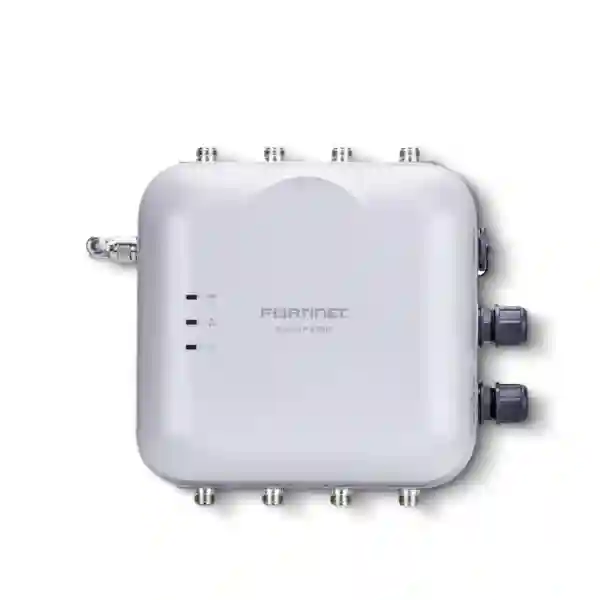
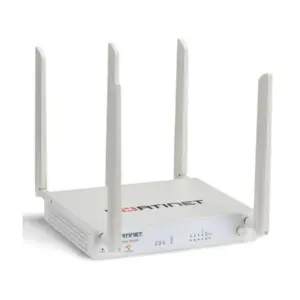
FortiAP FAP-432G is a ruggedized Wi-Fi 6E 4×4 MIMO outdoor access point for organizations that need high-capacity wireless coverage in exposed, campus, industrial, hospitality, logistics and multi-building environments. Its tri-radio architecture supports 2.4 GHz, 5 GHz and, where permitted by the applicable regulatory authority, 6 GHz operation. A 10GE RJ45 interface helps prevent the wired uplink from becoming an avoidable bottleneck in demanding designs, while an additional 1GE interface supports flexible edge connectivity. For organizations standardizing on Fortinet Secure Networking, the access point can be centrally managed through FortiGate, FortiEdge Cloud or supported SASE deployment models.
802.11ax tri-band design with 2.4 GHz, 5 GHz and regulatory-dependent 6 GHz capability.
Three Wi-Fi radios with four spatial streams for high-capacity enterprise wireless designs.
A 10 Gigabit Ethernet primary interface plus an additional Gigabit Ethernet interface.
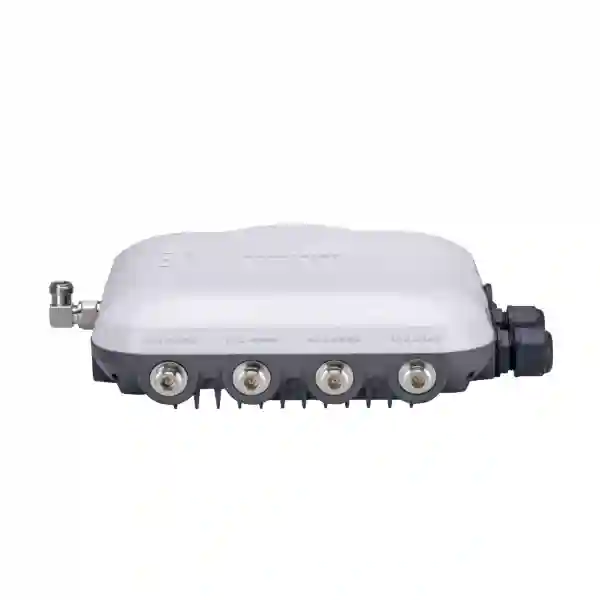
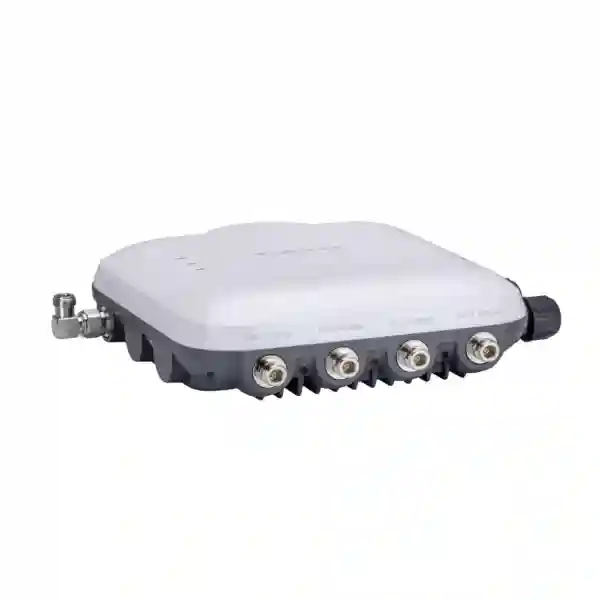
Ruggedized form factor with external antennas for planned outdoor and demanding wireless deployments.
What is the FortiAP FAP-432G?
The FAP-432G is part of Fortinet’s FortiAP portfolio and is positioned as an enterprise-class Wi-Fi 6E outdoor access point. Fortinet specifies three Wi-Fi radios plus an integrated BLE radio. The wireless architecture uses 4×4 service chains across the main radios and supports modern Wi-Fi 6/6E mechanisms such as OFDMA and MU-MIMO. The model uses external antennas, which gives wireless designers the ability to select and position antenna systems appropriate to the deployment rather than relying only on a fixed internal antenna pattern.
The practical value of this design is not simply a higher headline wireless rate. Outdoor enterprise Wi-Fi must be engineered around client density, channel reuse, mounting height, obstructions, antenna choice, roaming boundaries, switch uplink capacity, PoE budget, VLAN architecture and security policy. FAP-432G gives network teams a platform that can participate in a Fortinet-managed wired and wireless architecture, making it particularly relevant where the organization already uses or plans to use FortiGate security and centralized network policy.
For Tanzania projects, buyers should confirm the regulatory domain and allowed frequency operation before treating 6 GHz as an available production band. Wi-Fi 6E capability does not mean every country, location or configuration permits identical 6 GHz operation. A professional bill of materials should therefore include the correct regional hardware suffix, suitable external antennas, mounting accessories, compatible 802.3bt power delivery, switching capacity and any required management or support subscriptions.
FortiAP FAP-432G verified technical highlights
| Wireless generation | Wi-Fi 6E / IEEE 802.11ax |
| Deployment class | Ruggedized outdoor access point |
| Radios | 3 Wi-Fi radios + 1 BLE radio |
| MIMO | 4×4 on client-serving radios |
| Antennas | External antenna architecture; Fortinet documentation identifies dual-band, tri-band/scanning and BLE/Zigbee antenna connections |
| Ethernet | 1x 10GE RJ45 + 1x GE RJ45 + RS-232 RJ45 serial port |
| Power | 802.3bt PoE; maximum power consumption listed by Fortinet as 41.2 W |
| SSID modes | Local-Bridge, Tunnel and Mesh |
| Management | FortiGate, FortiEdge Cloud or supported SASE-managed deployment |
Planning an FAP-432G deployment
Start with a wireless requirement rather than an access-point quantity. Document the physical coverage area, expected concurrent users, device types, applications, outdoor obstacles, building materials, existing RF environment and areas where roaming must remain stable. A yard used by handheld terminals has different requirements from a resort pool area, university courtyard, loading bay, warehouse perimeter or inter-building walkway. Antenna selection and orientation should follow the required coverage pattern, not aesthetics alone.
The wired network should be reviewed at the same time. FAP-432G can connect at up to 10GE, so switch selection, uplinks and cabling should be chosen according to the actual design. The access point also requires 802.3bt PoE for the documented power profile. Verify that the selected switch provides sufficient per-port power and total PoE budget for every access point, particularly when many high-power devices share the same switch. Cat6A may be appropriate where the design intends to use multi-gigabit or 10-gigabit copper over supported distances and conditions.
Security architecture matters as much as RF. Define employee, guest, IoT and operational-device networks separately where appropriate. Map SSIDs to VLANs and policies, establish authentication requirements, decide whether traffic is bridged locally or tunneled, and document administrative access. Organizations using FortiGate can integrate wireless policy into a broader Fortinet security architecture. Cloud-managed designs should similarly define ownership, subscriptions, administrative roles and monitoring expectations before rollout.
Important 6 GHz note
Fortinet explicitly notes that use of the 6 GHz band on FAP-432G is subject to approval by the relevant regional regulatory authority. Procurement teams should therefore confirm the correct regional SKU/suffix and local permitted operation before finalizing a Wi-Fi 6E design. The access point’s 2.4 GHz and 5 GHz capabilities remain important for legacy and mainstream client compatibility, while 6 GHz should be treated as a deployment capability that depends on local rules and compatible client devices.
FortiAP FAP-432G Tanzania
Organizations evaluating FortiAP FAP-432G in Tanzania are typically solving a broader wireless requirement: reliable outdoor coverage, high client capacity, controlled guest access, connectivity between operational zones, or standardized secure networking across a campus. Tanzania deployments can include corporate compounds, hospitality properties, educational campuses, logistics facilities, industrial locations, healthcare sites and public-facing business areas. Each environment changes the RF plan. Open spaces may permit longer propagation, while reinforced walls, metal structures, warehouse racking, machinery, trees and neighboring wireless systems can change usable coverage significantly.
For procurement, specify FAP-432G by exact model, quantity and intended regulatory domain. Add the antenna requirement, mounting method, PoE source, switch port speed and management method. If the access points will connect to an existing FortiGate, include the FortiGate model and software environment in the technical review. If cloud or SASE management is preferred, identify the subscription term and operational ownership. This prevents a quotation from covering only the access-point chassis while leaving out the components needed for deployment.
Tanzania customers should also assess the physical route from the network cabinet to each outdoor mounting point. Cable length, surge exposure, weather protection, grounding practices and safe mounting affect long-term reliability. The high-capacity radio design is useful only when the wired uplink and internet path can support the applications being carried. For guest Wi-Fi, cloud applications, voice and video, capacity planning should include both WLAN airtime and WAN bandwidth.
FourTeck Tanzania presents Wi-Fi access points as part of an integrated network that also includes switching, firewalls, structured cabling and support. Buyers can review the Wi-Fi and wireless planning approach, the switching and LAN infrastructure guidance, and the Tanzania quotation contact page when preparing a project enquiry.
FortiAP FAP-432G Dar es Salaam
A Dar es Salaam FAP-432G project may need to serve office compounds, warehouses, hotels, logistics yards, retail developments, educational sites or mixed indoor-outdoor business areas. Dense commercial activity can create a busy RF environment, so an outdoor access point should not simply be installed at maximum transmit power. Channel planning, antenna placement and the relationship between indoor and outdoor cells should be considered together. The objective is predictable client association and roaming, not merely a visible signal across the largest possible area.
Coastal conditions make physical installation planning important. Mounting hardware, cable entries, weather sealing, surge protection and the suitability of supporting infrastructure should be reviewed for each site. The FAP-432G’s external antenna design is valuable because the antenna system can be selected around the coverage requirement, but that flexibility also means the bill of materials must be complete. Confirm antenna type, connectors, brackets and cable considerations before purchase rather than assuming every outdoor deployment uses the same accessory set.
For multi-floor offices or compounds, consider how the FAP-432G integrates with indoor FortiAP models. Outdoor areas may use the 432G while indoor areas use models optimized for ceilings or walls. A unified management design can then apply consistent SSID, authentication, VLAN and security policy while RF parameters remain appropriate to each physical zone. If FortiGate is already deployed, include its model and current configuration in the design discussion so controller compatibility and software planning can be checked.
A useful Dar es Salaam quotation request should state the number of outdoor zones, approximate area, user density, applications, existing switches, available PoE, internet bandwidth and whether 10GE connectivity is expected. Site drawings or marked-up plans can improve the RF discussion. For related infrastructure, see FourTeck Tanzania’s structured cabling and rack guidance and firewall and network-security planning.
FortiAP FAP-432G Mwanza
In Mwanza, organizations may consider FAP-432G for business campuses, hospitality properties, industrial yards, education facilities, warehouses and outdoor operational areas where conventional indoor access points are not the right physical fit. The first design question is where users actually need service. A site survey should distinguish between coverage for people carrying phones and laptops, connectivity for handheld operational devices, and fixed wireless endpoints. Those device classes can have different antenna characteristics and roaming behavior.
Outdoor RF planning should account for terrain, building placement and obstructions. An access point mounted high enough to clear obstacles may create broad coverage, but excessive height can also make client uplink performance or cell boundaries less predictable. External antennas should be selected according to the required pattern. Omni-directional coverage may suit a central open area, while other antenna choices may be more appropriate when the service area is directional. Antenna availability and compatibility should be confirmed against current Fortinet documentation.
The network cabinet feeding the access point needs equal attention. FAP-432G’s 802.3bt requirement means PoE capability must be verified at the exact switch port and across the total switch power budget. If a long cable path, intermediate building or fiber backbone is involved, plan the transition carefully. The 10GE interface provides substantial wired headroom, but actual port negotiation and end-to-end throughput depend on switch capability, cabling, clients, channel conditions and the rest of the network.
For Mwanza procurement, include installation conditions in the request for quotation rather than asking only for an access-point price. A complete request can identify mounting location, expected users, coverage area, existing Fortinet equipment, PoE switch model and management preference. FourTeck’s Tanzania technology shop provides a broader procurement entry point, while the contact page can be used for exact-model and project enquiries.
FortiAP FAP-432G Arusha
Arusha businesses evaluating FortiAP FAP-432G may include hospitality, tourism, education, offices, compounds and operational sites where outdoor Wi-Fi needs to remain centrally manageable. Hospitality environments are a useful example: guests expect wireless access across rooms, reception, restaurants, gardens and outdoor common areas, yet those zones should not be treated as one oversized RF cell. Outdoor access points can complement indoor APs when coverage and roaming are engineered as one WLAN.
Guest networks should be separated from internal business resources. Depending on the architecture, SSIDs can map to dedicated VLANs and security policies, with access controlled through the selected Fortinet management model. Staff devices, point-of-sale systems, operational equipment and guest clients may have different access requirements. The FAP-432G supports local-bridge, tunnel and mesh SSID types, giving designers options, but the correct mode depends on network topology and management objectives.
For outdoor areas, plan coverage around where users sit, walk and work rather than around the edge of the property. Trees, walls, roof structures and elevation can influence propagation. A predictive design can provide a starting point, but validation after installation is valuable because the real RF environment includes details that drawings may miss. Where 6 GHz is contemplated, verify both regulatory permission and client support. Many installed devices will continue using 2.4 GHz or 5 GHz.
An Arusha quote should include the desired management method, quantity, antenna requirement and whether the project includes switches, cabling, firewall policy or installation. FourTeck Tanzania’s integrated IT lifecycle guidance explains why wireless is best considered with its switching, security and support dependencies rather than as an isolated device purchase.
FortiAP FAP-432G Dodoma
Dodoma organizations can evaluate the FAP-432G where outdoor enterprise wireless must support campuses, offices, institutions, warehouses, training facilities or public-facing business spaces. A key planning decision is capacity. The number of people in an area does not directly equal the number of active Wi-Fi clients: many users carry multiple devices, and background synchronization can consume airtime even when a person is not actively browsing. Design estimates should therefore include concurrent devices and application behavior.
Wi-Fi 6E introduces additional spectrum capability, but spectrum alone does not remove the need for channel planning. 2.4 GHz remains useful for compatibility and range, 5 GHz carries a large share of enterprise client traffic, and 6 GHz can provide cleaner spectrum for compatible devices where regulations permit. The FAP-432G’s three-radio design provides flexibility to use these bands within a managed architecture. Actual radio configuration should follow the site survey and local regulatory domain.
Power and cabling are often the hidden constraints in outdoor AP projects. Confirm the 802.3bt PoE source, switch power budget, cable category, distance and protection of outdoor runs. If the access point is mounted on a pole or exterior structure, installation should provide safe service access and protect connectors and cabling. A UPS-backed network cabinet may improve resilience during short power interruptions, but the full power path should be assessed rather than assuming PoE alone provides continuity.
For procurement teams in Dodoma, send a requirement that includes the exact FAP-432G model, intended location, quantity, expected users, switch environment and whether antennas and mounting hardware are required. FourTeck Tanzania’s verified contact page lists Dodoma among its office locations and accepts product-selection and quotation enquiries, making it the appropriate place to submit the project details.
FortiAP FAP-432G UAE
UAE deployments of FortiAP FAP-432G can involve outdoor corporate campuses, logistics sites, hospitality properties, schools, industrial facilities and mixed indoor-outdoor developments. High temperatures, exposed mounting locations and dense neighboring wireless networks make disciplined planning important. The access point should be placed according to the required service area and approved installation conditions, with appropriate external antennas and mounting hardware selected for the project.
For enterprises already using Fortinet security, the FAP-432G can fit into a Secure Networking design where FortiGate participates in wireless management and policy. This can simplify operational visibility across firewall, switch and WLAN layers when the architecture is designed consistently. Cloud or SASE-managed approaches may be appropriate for other organizations, especially multi-site environments. The choice should be based on operational ownership, subscription requirements, existing infrastructure and desired management model.
UAE procurement should use the correct regional hardware suffix and confirm local 6 GHz rules. Wi-Fi 6E regulations vary by jurisdiction, so a design copied from another market may not have identical permitted channels or power settings. The same caution applies to antenna selection. Use current Fortinet documentation and regional ordering information when building the bill of materials.
FourTeck customers with UAE requirements can also review the FourTeck Fortinet UAE specialist site for Fortinet-focused enquiries and FourTeck UAE for integrated IT and networking requirements. Regional links are provided as supporting resources; final product availability, price and exact configuration should be confirmed through a quotation.
FortiAP FAP-432G Uganda
Uganda customers considering FAP-432G may need outdoor wireless for enterprise compounds, schools, hospitality, warehouses, branch campuses and operational environments. The device’s ruggedized outdoor design and external antennas make it suitable for projects where antenna coverage must be engineered around the site. Before purchase, identify whether the requirement is primarily coverage, capacity, roaming, device connectivity or a combination of these objectives.
The wireless plan should be matched by a wired plan. A 10GE-capable access point can expose limitations in older switches, cabling or uplinks if those components were sized for earlier Wi-Fi generations. That does not mean every deployment requires a 10GE switch port; it means the selected wired architecture should be intentional. Review expected aggregate traffic, PoE requirements and the broader network before deciding the appropriate port speed and switch model.
Management choice is another procurement item. FortiGate-managed deployments can be attractive where the firewall platform is already part of the network. FortiEdge Cloud or SASE-managed models can support different operational approaches. Support subscriptions and lifecycle planning should be quoted with the intended ownership model. For 6 GHz, verify the permitted regional operation and compatible client estate rather than assuming every Wi-Fi 6E feature will be active.
FourTeck’s Uganda technology solutions site can support regional project discussions, while the Tanzania product page remains useful for customers coordinating East African standards across multiple locations. A cross-border standard can simplify SSID naming, VLAN design and security policy, but regulatory settings and procurement SKUs still need country-specific validation.
FortiAP FAP-432G Kampala
Kampala enterprises often need wireless networks that support dense offices, hospitality areas, education facilities, warehouses and outdoor business spaces. FAP-432G is most relevant where an outdoor-grade access point and external antenna flexibility are required. In a mixed campus, indoor APs may serve offices and meeting areas while FAP-432G covers courtyards, loading areas, parking zones or outdoor operational spaces under one management framework.
Dense environments require careful cell design. Raising transmit power is not a substitute for capacity planning because client devices have their own transmit limitations and neighboring cells can interfere. The design should balance coverage with channel reuse and roaming. Where 6 GHz is available, compatible devices can gain access to additional spectrum, while 5 GHz remains central to mainstream enterprise connectivity. 2.4 GHz may continue to support legacy or longer-range device requirements.
A Kampala project should also review authentication and segmentation. Guest users should not automatically share the same network permissions as staff. IoT or operational endpoints may require restricted access to specific services. Fortinet management can connect wireless policy with broader security controls, but policy should be designed around business roles and applications. Document SSIDs, VLANs, DHCP scopes, authentication sources and firewall rules before a large rollout.
When requesting a Kampala quote, include quantity, site type, current firewall and switch models, expected client density and whether antennas, mounts, PoE switching or installation are part of the scope. This gives the supplier enough context to distinguish a simple hardware request from a complete wireless infrastructure project and reduces the risk of missing accessories.
FortiAP FAP-432G Arua
Arua projects may prioritize dependable outdoor coverage across compounds, institutions, warehouses, hospitality sites or operational facilities where wired access is concentrated in a few buildings but users work across a larger area. FAP-432G can form part of such a design, but wireless should not be used to compensate for missing backbone planning. Where practical, provide robust wired or fiber connectivity to the access-point distribution points and use Wi-Fi for the client access layer.
For sites where technical visits are less convenient, documentation and remote manageability become especially important. Label switch ports, record access-point names and mounting locations, back up configurations and define who receives alerts. Central Fortinet management can help operations teams view device status without physically visiting every location, but internet dependency and administrative access should be considered in the chosen management architecture.
Power resilience can also affect perceived Wi-Fi reliability. An outdoor AP may be functioning correctly while its upstream switch, firewall or ISP equipment loses power. Review the complete chain from access point to PoE switch, uplink, firewall and internet service. UPS capacity should be calculated for the equipment that must remain available, and outdoor cable routes should be protected appropriately.
For an Arua quotation, provide the intended coverage zones and any site map available. State whether the project needs point coverage around buildings, broad courtyard service or multiple cells across a campus. Include existing Fortinet equipment if present. These details help determine whether FAP-432G is the right model and how many units and accessories should be evaluated.
FortiAP FAP-432G Mbarara
Mbarara organizations can use an outdoor Wi-Fi 6E platform in environments such as campuses, education facilities, hospitality, warehouses, business compounds and operational yards. The FAP-432G’s 4×4 radio architecture is designed for enterprise capacity, but the user experience still depends on client capabilities. A modern laptop may use newer Wi-Fi features while an older handheld or IoT endpoint connects with more limited capabilities. The network should be designed for the actual client mix.
Antenna planning deserves explicit attention because FAP-432G uses external antennas. Confirm the approved antenna models, gain and intended band support. The physical orientation of antennas can affect coverage and polarization. Avoid purchasing the access point first and deciding on antennas later; antenna choice is part of the RF design and bill of materials. Mounting height and surrounding structures should also be included in the site plan.
The wired network must provide suitable PoE and uplink capability. If existing switches cannot deliver 802.3bt, include an appropriate power strategy rather than relying on assumptions. If the organization is upgrading from older Wi-Fi, check whether the existing copper cabling can support the desired Ethernet speed. Wireless modernization can expose weaknesses in cabling and switching that were not visible with lower-throughput access points.
A Mbarara buyer comparing FAP-432G with other FortiAP models should focus on environment, radio capacity, antenna type and uplink requirements rather than model number alone. Indoor sites may be better served by an indoor model; smaller outdoor requirements may not need the same 4×4 platform. Request a configuration review when the correct form factor is uncertain.
FortiAP FAP-432G Gulu
Gulu deployments can benefit from a structured approach to outdoor wireless where coverage is needed between buildings, across institutional grounds, in hospitality spaces or around business and logistics facilities. FAP-432G should be positioned as part of the LAN architecture. Each AP needs a reliable data path, suitable PoE, defined VLANs and a management connection. Treating the AP as a standalone radio can leave operational gaps after installation.
For larger sites, divide the property into service zones and estimate device density in each zone. A parking area used occasionally has a different capacity profile from an outdoor training area or dining space where many users are active simultaneously. Applications also matter. Messaging and basic browsing place different demands on the network than cloud backup, video streaming, voice or real-time operational applications.
Security policy should follow the same zoning logic. Staff, visitors and operational devices may require separate SSIDs or identity-based policies. Avoid creating excessive SSIDs without purpose because management complexity and wireless overhead can increase. Fortinet documents support for multiple SSIDs per client-serving radio, but the design should use only those needed for clear business segmentation.
When requesting FAP-432G for Gulu, include the coverage objective, number of zones, current LAN design and management preference. If the project is part of a multi-branch standard, specify the common configuration requirements and any local differences. Standardized naming, templates and documentation can make remote support easier while still allowing site-specific RF settings.
FortiAP FAP-432G Kenya
Kenya organizations considering FortiAP FAP-432G may be building secure outdoor Wi-Fi for offices, schools, hotels, warehouses, logistics sites, campuses and industrial operations. The model’s combination of Wi-Fi 6E, external antennas and a high-speed wired interface makes it a candidate for demanding designs, but model selection should follow the environment. Confirm that an outdoor 4×4 platform is justified by capacity, coverage and integration requirements.
In campus networks, it is common to combine several AP types. Indoor access points handle offices and corridors, while rugged outdoor models serve courtyards and exposed areas. The WLAN should provide consistent authentication and policy even when radio hardware differs. Centralized Fortinet management can help standardize configuration and monitoring. Roaming performance still depends on RF cell design and client behavior, so management integration does not replace site planning.
Kenya procurement teams should validate regional 6 GHz regulations and the exact orderable suffix. They should also confirm the antenna and support items needed. If a deployment expects to exploit the 10GE interface, the switching and cabling design should support that objective. For many environments, the key benefit may be future-ready uplink capacity rather than immediate sustained 10-gigabit traffic from one AP.
For regional assistance, the FourTeck Kenya technology site provides a country-specific entry point. Organizations standardizing Fortinet across Kenya and Tanzania can use a common architecture while confirming local regulatory domains, sourcing and implementation details separately for each country.
FortiAP FAP-432G Kuwait
Kuwait FAP-432G projects can include exposed corporate, education, hospitality, logistics and industrial environments where outdoor wireless must cope with demanding physical conditions. Environmental planning is important: mounting position, direct sun exposure, dust, cable protection and approved operating conditions should be checked against current Fortinet documentation and local installation practices. Ruggedized hardware reduces environmental risk but does not eliminate the need for correct installation.
High-capacity outdoor Wi-Fi can also be affected by dense neighboring networks. RF planning should identify existing channels and signal levels before finalizing channel assignments. 6 GHz may offer additional spectrum for compatible devices where locally permitted, while 5 GHz remains important for a broad client base. Avoid assuming that a Wi-Fi 6E deployment can move all users to 6 GHz immediately.
The access point’s 802.3bt PoE requirement should be part of switch selection. Verify per-port power, overall PoE budget and uplink capacity. If switches are located in environmentally controlled cabinets away from the AP, confirm cable distances and pathways. Outdoor copper routes may require additional protection based on site conditions and engineering standards.
Kuwait procurement should include the exact regional product code, compatible antenna set, mounting requirements, management model and support term. Do not compare quotations solely on the AP chassis price because included accessories and services can differ. A complete bill of materials makes commercial comparisons more meaningful and reduces surprises during installation.
FortiAP FAP-432G Ghana
Ghana organizations may evaluate FAP-432G for campuses, hospitality, education, logistics, warehouses, offices and outdoor operational areas. Outdoor wireless design should begin with service expectations: which zones require connectivity, how many devices are expected, what applications are important and whether roaming between indoor and outdoor coverage is required. These inputs influence AP quantity and placement more reliably than a simple distance estimate.
The external antenna platform enables flexible RF design but requires disciplined component selection. Confirm that proposed antennas support the required bands and are approved for the access point and regulatory environment. Cable losses, connector quality and installation can affect the effective RF system. Where long antenna cable runs would be required, reconsider AP placement rather than accepting unnecessary loss.
Operationally, centralized monitoring can help teams manage distributed access points. Establish alerting, configuration backup, firmware procedures and administrator roles. If FortiGate manages the WLAN, changes to firewall and wireless configuration should be coordinated. If cloud management is used, subscription lifecycle and account ownership should be documented so the organization retains clear control of the environment.
A Ghana quotation request should state whether the need is hardware supply only or a complete design that includes switches, cabling, security policy and implementation. This distinction matters because the FAP-432G depends on the supporting LAN. Buyers should request confirmation of exact included accessories, support and lead time rather than assuming those commercial details from model specifications.
FortiAP FAP-432G Nigeria
Nigeria enterprises can consider FAP-432G for outdoor Wi-Fi across corporate campuses, education sites, hospitality, logistics, industrial facilities and multi-building operations. Larger sites often need multiple cells rather than one high-power AP. Capacity, roaming and interference are improved when access points are positioned according to demand and configured with coordinated channels and transmit power.
Power continuity deserves particular planning in any business-critical WLAN. The FAP-432G receives power through 802.3bt PoE, so the upstream switch and its power source are part of service availability. Where continuity is required, assess UPS or backup power for the switch, firewall, management components and internet edge. A powered AP cannot provide useful service if its upstream network is unavailable.
For high-density client areas, application behavior should inform the design. Video, cloud collaboration and large file transfers can consume significant airtime and upstream bandwidth. Quality of Service and segmentation may help prioritize business applications, but the underlying capacity must still be sufficient. Use site surveys and post-install validation to tune channels and power rather than relying only on default settings.
Nigeria buyers should verify the regulatory domain for 6 GHz and obtain the correct orderable variant. Request compatible antennas, mounting hardware, PoE infrastructure and support in the same bill of materials where required. For multi-country organizations, document which settings are global standards and which are country-specific so templates do not accidentally apply an inappropriate radio configuration.
FortiAP FAP-432G Seychelles
Seychelles deployments may place unusual emphasis on hospitality, resort, campus and outdoor guest environments. FAP-432G’s outdoor form factor and external antennas can support planned coverage across terraces, pathways, common areas and operational zones, but coastal exposure makes installation quality especially important. Mounts, connectors, cable paths and environmental protection should be selected for the actual location and maintained over time.
Guest experience depends on more than signal strength. Users move between indoor and outdoor areas, use voice and video applications and expect sessions to remain stable. AP placement, channel planning, authentication design and internet capacity all contribute to that experience. A resort with strong Wi-Fi radios but insufficient WAN bandwidth can still produce poor results during busy periods.
Operational networks should be separated from guest access where appropriate. Staff devices, payment systems, building systems and IoT equipment may require different policies. A Fortinet-managed architecture can provide a common policy framework, but administrators should define roles, logging and change control. Keep SSID design simple enough to operate and document.
For Seychelles procurement, include site maps, outdoor zone descriptions and expected occupancy where available. Confirm 6 GHz regulatory status, regional hardware code, antenna selection and support. If equipment must be coordinated across several properties, a standard design can simplify operations, but each property should still receive RF validation because building layout and outdoor conditions differ.
Related network components for FAP-432G
PoE switching: FAP-432G requires an 802.3bt-capable power source for its documented power profile. The switch should also have sufficient total PoE budget and appropriate Ethernet speed for the design. Review FourTeck Tanzania’s network switching and LAN infrastructure section when the AP is part of a broader refresh.
Firewall and security: FortiGate can provide integrated WLAN management and security-policy context in supported designs. Review the firewall and VPN planning section for network segmentation considerations.
Cabling and power: Outdoor APs depend on correctly designed cable routes, racks and power protection. The structured cabling, fiber, rack and UPS section explains these supporting layers.
Wireless design: The Wi-Fi and wireless access point section covers coverage, capacity, guest networking, roaming and controller/cloud management as connected design topics.
FAP-432G quotation checklist
✓ Exact model: FortiAP FAP-432G
✓ Country/regulatory domain
✓ Quantity and deployment zones
✓ External antenna requirements
✓ Wall/pole mounting requirements
✓ Existing switch model and PoE capability
✓ Required Ethernet uplink speed
✓ Existing FortiGate model, if applicable
✓ Management preference
✓ Support/subscription term
✓ Approximate users and devices
✓ Indoor/outdoor roaming requirement
✓ Site drawing or coverage zones
✓ Cabling and installation scope
✓ Target project timeline
FortiAP FAP-432G FAQs
Is FAP-432G an outdoor access point?
Yes. Fortinet positions FAP-432G as a ruggedized outdoor Wi-Fi 6E access point. Installation should still follow current Fortinet environmental, mounting, antenna and cabling guidance.
Does FAP-432G support 6 GHz Wi-Fi?
The hardware is Wi-Fi 6E capable and supports 6 GHz operation, but Fortinet states that 6 GHz use is subject to approval by the applicable regional regulatory authority. Confirm the country and regulatory domain before deployment.
What Ethernet interfaces does FAP-432G have?
Fortinet lists one 10GE RJ45 interface, one GE RJ45 interface and an RS-232 RJ45 serial port. The wired design should be selected according to expected traffic, cabling and switch capabilities.
What PoE standard does FAP-432G require?
Fortinet specifies 802.3bt PoE for FAP-432G and lists maximum power consumption of 41.2 W in its current wireless product matrix. Confirm per-port and total switch PoE budget.
Can FAP-432G be managed by FortiGate?
Yes. Fortinet describes FortiAP access points as manageable through the integrated WLAN controller of FortiGate, and also supports FortiEdge Cloud and SASE-managed approaches for applicable deployments.
What information should I send for a Tanzania quotation?
Send the exact model and quantity, deployment location, intended coverage area, expected client count, existing switch and FortiGate models, antenna needs, mounting method, management preference and whether installation, cabling or support should be included.
Decision recap
Choose FAP-432G for projects that specifically need a ruggedized outdoor Fortinet Wi-Fi 6E platform, 4×4 radio capacity, external antenna flexibility and high-speed wired connectivity. Validate the supporting 802.3bt PoE switch, cabling, antenna set, regulatory domain and management architecture before ordering.
If the site is indoor, has lower capacity requirements or does not need external antennas, compare other FortiAP models rather than selecting FAP-432G only because it has higher specifications. The correct access point is the one that fits the RF environment, clients, wired network and operational model.
Discuss a FortiAP FAP-432G project
FourTeck Tanzania accepts product-selection, quotation and integrated project enquiries. For a useful response, include the model, quantity, site type, outdoor coverage requirement, current network equipment and target timeline. Where the project includes switching, firewall, cabling or multiple access points, describe the complete scope so dependencies can be reviewed together.
For regional coordination, customers may also use FourTeck Uganda, FourTeck Kenya, FourTeck UAE, and the Fortinet UAE specialist resource according to the project market.


Reviews
There are no reviews yet.