
FortiAP FAP-433G Tanzania
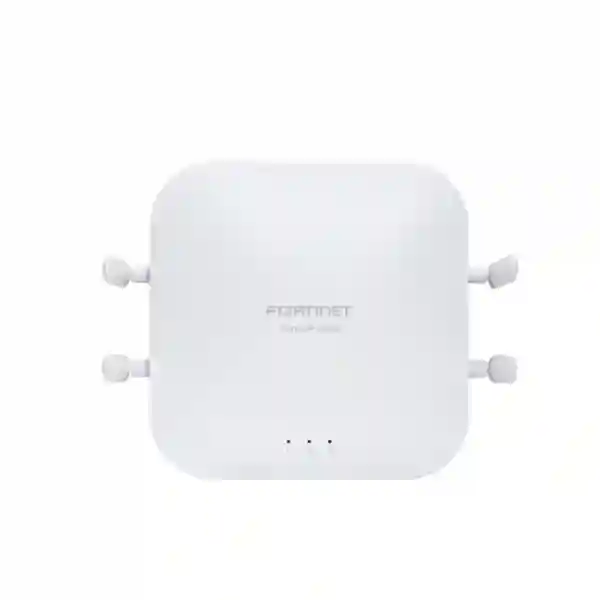
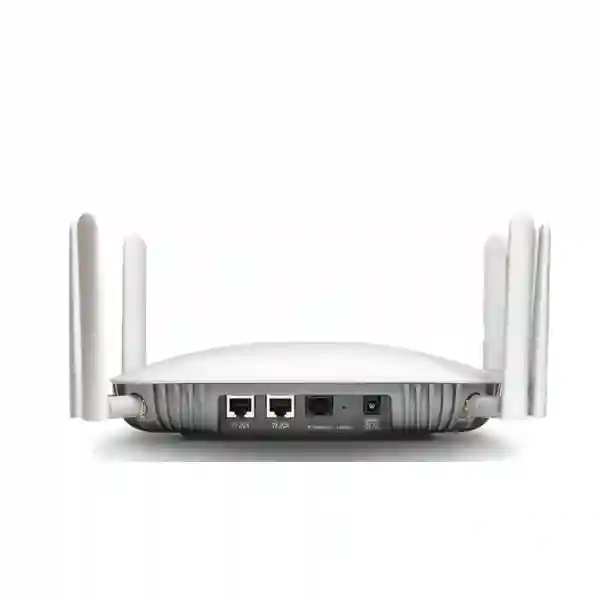
The Fortinet FortiAP FAP-433G is a high-performance enterprise-class indoor Wi-Fi 6E access point for organizations that need greater wireless capacity, modern spectrum options and security-aware network management. It supports three radios, four spatial streams, the 6 GHz band, OFDMA, 4×4 MU-MIMO and a 5 Gigabit Ethernet interface. Its external-antenna design makes it particularly useful where wireless planners need more control over RF coverage than a fixed internal-antenna access point can provide.
Wi-Fi 6E performance
FAP-433G can operate across 2.4 GHz, 5 GHz and 6 GHz spectrum. Fortinet documents radio configurations that can provide simultaneous access across all three bands, or use the radios for alternate service and scanning strategies. This flexibility helps wireless architects balance compatibility with older clients, capacity for modern devices and RF monitoring requirements.
Secure networking integration
FortiAP access points can be managed through FortiGate, FortiEdge Cloud or supported SASE-oriented deployment models. For organizations already standardizing on Fortinet, this can reduce the operational gap between wireless access, segmentation, policy enforcement and network-security visibility.
External antennas
The FAP-433G is the external-antenna indoor model in this Wi-Fi 6E family. Antenna selection and placement should be engineered for the intended environment, client density, building materials and coverage objectives rather than treated as a one-size-fits-all decision.
Verified FAP-433G technical highlights
Fortinet positions the FAP-433G as a high-performance indoor Wi-Fi 6E access point. Published Fortinet material identifies three radios plus BLE, four spatial streams, external antennas, OFDMA, 4×4 MU-MIMO and 6 GHz operation. The documented maximum PHY rates are up to 1148 Mbps, 2402 Mbps and 4804 Mbps across the applicable radio configuration. These are theoretical radio data rates rather than guaranteed application throughput; actual results depend on client capabilities, channel width, interference, RF design, uplink design and network load.
| Attribute | FAP-433G |
|---|---|
| Wireless generation | Wi-Fi 6E / IEEE 802.11ax family |
| Deployment | Indoor enterprise access point |
| Radio architecture | Tri-radio with BLE support |
| MIMO | 4×4 MU-MIMO |
| Spectrum | 2.4 GHz, 5 GHz and 6 GHz capability, subject to regional regulatory availability |
| Ethernet | 5 Gigabit Ethernet documented by Fortinet |
| Management | FortiGate, FortiEdge Cloud and supported Fortinet deployment options |
Why businesses consider the FortiAP FAP-433G
Wireless upgrades are increasingly driven by more than headline speed. Offices, hotels, schools, healthcare environments, meeting spaces and multi-floor commercial buildings may have hundreds of client devices competing for airtime. Wi-Fi 6E adds access to the 6 GHz band for compatible clients, creating additional spectrum that can reduce contention where local regulations and client support permit its use. The FAP-433G also supports modern efficiency mechanisms such as OFDMA and MU-MIMO, helping network designers serve many active endpoints more effectively.
The external-antenna form factor matters when coverage must be intentionally shaped. Rather than assuming that a high-powered access point solves every coverage problem, organizations should begin with floor plans, construction materials, expected client counts, application requirements and RF conditions. A correctly planned deployment can use antenna characteristics, AP placement and channel strategy to deliver more predictable coverage while reducing excessive overlap.
FortiAP FAP-433G deployment and integration
For a new deployment, start by identifying where 6 GHz capable devices will be used and where legacy 2.4 GHz or 5 GHz clients remain important. Then map wired uplinks, PoE capacity, switching throughput, VLAN design, authentication, guest access and security policy. A multigigabit access point should not be planned in isolation: the switch port, cabling, power budget, firewall capacity and upstream internet or WAN design should support the intended traffic profile.
Fortinet’s secure-networking approach allows wireless management to be integrated with the broader Fortinet environment. This is relevant to customers who want consistent policy and visibility between wired, wireless and security layers. Before procurement, confirm the intended management platform, required support entitlement, firmware compatibility and any cloud or SASE service requirements applicable to the chosen architecture.
FortiAP FAP-433G Tanzania
Organizations evaluating the FortiAP FAP-433G in Tanzania should approach procurement as a complete wireless design exercise. The AP is well suited to indoor environments requiring Wi-Fi 6E capacity, external antennas and Fortinet-integrated management, but the correct quantity and antenna configuration depend on the building. Corporate offices may prioritize meeting-room density, secure employee access and guest segmentation. Hotels may need coverage across rooms, corridors, reception areas and conference facilities. Education environments can require high client counts in classrooms and shared spaces. In each case, RF planning is more valuable than simply estimating access points from floor area.
Tanzanian buyers should also verify client-device support for 6 GHz before making it the central reason for an upgrade. Wi-Fi 6E delivers its additional spectrum benefits only to compatible devices and where the relevant regulatory rules permit operation. A mixed estate can still benefit from the FAP-433G because its radio design supports 2.4 GHz and 5 GHz service alongside newer spectrum strategies. Procurement teams should document user counts, device types, critical applications, floor plans, cabling and switching infrastructure when requesting a quotation.
For businesses already using FortiGate security appliances, FortiAP integration can simplify administration and policy consistency. For greenfield projects, the wireless decision should be coordinated with firewall, switching, identity, guest access and WAN requirements. FourTeck can use a project brief to help align the access-point model with the intended deployment rather than treating the FAP-433G as an isolated hardware purchase.
FortiAP FAP-433G Dar es Salaam
Dar es Salaam organizations commonly evaluate enterprise wireless for headquarters, branch offices, hospitality venues, professional services, retail environments, education facilities and multi-tenant commercial buildings. The FAP-433G is relevant when an indoor project requires modern Wi-Fi 6E capability together with an external-antenna design. In dense office environments, the design objective should be usable capacity and roaming quality rather than maximum signal strength everywhere. Too much RF overlap can be as problematic as insufficient coverage.
A Dar es Salaam project brief should identify the number of floors, construction materials, expected concurrent users, voice and video usage, guest traffic, IoT devices and high-density rooms. Network planners should also verify whether the existing access switches can provide the required power and multigigabit connectivity. Cabling quality matters because an advanced access point connected to a constrained edge port may not deliver the intended network performance.
Where FortiGate is already part of the network, administrators can consider integrated wireless management and security policies. New deployments should also define VLANs, authentication, guest isolation, monitoring and firmware-management responsibilities. These details help turn a product quotation into a deployable design with fewer surprises during installation.
FortiAP FAP-433G Mwanza
For Mwanza businesses, the FAP-433G can be considered for indoor enterprise wireless where performance, client density and controlled antenna design are priorities. Suitable project types can include administrative offices, education facilities, healthcare buildings, hotels and growing commercial networks. The most important procurement question is not simply whether Wi-Fi 6E is faster, but whether the client estate, wired network and RF environment can make practical use of its capabilities.
A site assessment should identify coverage obstacles, areas with concentrated users and spaces where stable roaming is important. External antennas provide design flexibility, but they also require deliberate selection and positioning. Buyers should therefore include floor plans and expected usage patterns when seeking design guidance. Where older devices remain in service, the 2.4 GHz and 5 GHz bands continue to be important, while compatible newer clients may use 6 GHz subject to regulatory availability.
Procurement planning should cover AP quantity, mounting, antenna requirements, PoE and switching, management method and support. This produces a more useful bill of materials than ordering access points alone and discovering infrastructure gaps during deployment.
FortiAP FAP-433G Arusha
Arusha organizations in hospitality, tourism, education, offices and professional services can evaluate the FAP-433G where secure high-capacity indoor wireless is required. Hospitality projects in particular should separate guest experience requirements from back-office and operational networks. Guest Wi-Fi, staff devices, payment systems and operational endpoints may need different segmentation and policy controls even when they share the same physical wireless infrastructure.
The FAP-433G’s tri-radio Wi-Fi 6E architecture gives designers options for serving established 2.4 GHz and 5 GHz clients while introducing 6 GHz connectivity for compatible devices. A successful deployment still depends on RF design, channel planning, interference conditions, client capabilities and the wired network. External antennas can help adapt coverage to the physical environment when chosen appropriately.
When requesting a quotation for an Arusha site, include room counts or floor areas, expected concurrent devices, building plans where available, existing switches and firewalls, and the required management model. These inputs help determine whether FAP-433G is the right model and how many units are likely to be needed.
FortiAP FAP-433G Dodoma
Dodoma deployments may include government-adjacent offices, institutions, education, commercial facilities and expanding enterprise networks. For these environments, wireless procurement should emphasize security architecture, manageable growth and predictable coverage. FAP-433G provides Wi-Fi 6E capabilities and Fortinet management integration for indoor projects that require an enterprise access point with external antennas.
Capacity planning should account for concurrent users rather than total registered users alone. Video meetings, cloud applications and large file transfers can create very different airtime demands from basic web access. Network teams should also review authentication, VLAN segmentation, guest access and monitoring requirements. If FortiGate is already deployed, the wireless design can be aligned with existing security policy and management workflows.
Before purchase, verify regional radio requirements, compatible antennas, PoE capacity, switch interfaces and support options. A structured requirements list makes it easier to compare the FAP-433G with alternative FortiAP models without relying only on maximum radio-rate figures.
FortiAP FAP-433G UAE
UAE enterprises considering FAP-433G typically need secure indoor wireless for offices, hospitality, education, retail, healthcare or branch environments. High client density and extensive use of cloud applications make RF capacity and wired uplink design important. The access point’s Wi-Fi 6E architecture can add 6 GHz spectrum for compatible clients while continuing to support established bands according to the configured radio strategy.
External antennas give wireless engineers more flexibility for specialized coverage patterns. This should be paired with a professional RF plan rather than arbitrary antenna selection. Procurement should also account for multigigabit switching, PoE, cabling and Fortinet management architecture. Buyers operating multi-country networks may benefit from standardizing configuration principles while still respecting country-specific radio regulations.
For regional Fortinet projects, visit FourTeck UAE for broader infrastructure context and coordinate the wireless requirement with firewall, switching and security design.
FortiAP FAP-433G Uganda
Ugandan organizations evaluating FAP-433G can use the same disciplined planning process: define client density, applications, coverage zones, wired infrastructure and security requirements before selecting quantities. Wi-Fi 6E is most valuable when compatible devices can use the additional spectrum, while 2.4 GHz and 5 GHz remain essential for mixed client estates.
Enterprise sites should review PoE budgets, multigigabit switch ports and uplink capacity. Wireless segmentation should be designed for employee, guest and operational traffic as required. Fortinet management options can be particularly useful for organizations standardizing security and networking under a common operational framework.
For Uganda-focused infrastructure planning, see FourTeck Uganda. Confirm model availability, antenna requirements and support terms at quotation time rather than assuming a generic bundle.
FortiAP FAP-433G Kampala
Kampala offices, hotels, schools and multi-floor business premises can consider FAP-433G for high-capacity indoor wireless where external antennas and Fortinet integration are desirable. Dense urban RF conditions make channel planning and interference analysis important. Increasing transmit power is not a substitute for correct AP placement and cell design.
A Kampala deployment should identify high-density areas such as conference rooms, classrooms, lobbies and shared workspaces separately from low-density corridors or storage areas. This supports a capacity-led design instead of a uniform spacing approach. The switching layer should be checked for suitable PoE and multigigabit connectivity, and authentication and VLAN policies should be documented before installation.
Where 6 GHz clients are expected, confirm regulatory availability and endpoint compatibility. This avoids designing a project around capabilities that client devices cannot yet use.
FortiAP FAP-433G Arua
Arua businesses and institutions considering enterprise Wi-Fi should focus on reliability, manageable expansion and a clear support model. FAP-433G provides a modern indoor Wi-Fi 6E platform, but site conditions determine whether it is the most economical fit. Smaller sites with modest client counts may not need the same radio capability as dense campuses, while larger facilities may require multiple APs with careful RF coordination.
External antennas make the model adaptable, but antenna choice should follow the coverage objective. Buyers should document building dimensions, wall materials, expected user locations and wired network readiness. Power and switching should be reviewed alongside the AP purchase so installation does not encounter avoidable bottlenecks.
A quotation request should therefore include the site profile, device estimates, desired management method and existing Fortinet infrastructure. This enables model selection based on deployment requirements rather than product naming alone.
FortiAP FAP-433G Mbarara
Mbarara organizations can evaluate FAP-433G for business, education, healthcare and hospitality wireless projects where indoor capacity and centralized management matter. Wi-Fi design should distinguish coverage from capacity: a signal may reach a room while the cell still lacks enough airtime for many simultaneous devices. Wi-Fi 6E and modern scheduling features can help when the surrounding network and client estate are properly matched.
For mixed-device environments, preserve adequate service for 2.4 GHz and 5 GHz clients while planning 6 GHz adoption. The FAP-433G radio architecture provides configuration flexibility for these needs. Network teams should also plan secure SSIDs, segmentation, guest policies and monitoring.
Include switches, PoE, cabling, antennas and management requirements in procurement discussions. A complete bill of materials is more useful than a hardware-only quote.
FortiAP FAP-433G Gulu
Gulu enterprises and institutions seeking to modernize indoor wireless can consider FAP-433G when Wi-Fi 6E, external antennas and Fortinet ecosystem integration align with project needs. The strongest deployments begin with application requirements: voice, video, cloud systems, guest access and operational devices each create different expectations for latency, roaming and security.
Site surveys and floor plans help determine AP positions and antenna strategy. Existing Ethernet infrastructure should be checked for multigigabit readiness and adequate PoE. Where FortiGate is used, administrators can evaluate integrated wireless control and consistent security policy.
Before ordering, confirm country-specific radio rules and the client devices expected to use 6 GHz. This provides a realistic view of the immediate and future benefits of Wi-Fi 6E.
FortiAP FAP-433G Kenya
Kenyan enterprises can deploy FAP-433G in indoor campus, branch, hospitality and office environments requiring a 4×4 Wi-Fi 6E platform with external antennas. Nairobi and other dense commercial areas can present complex RF conditions, making professional channel and power planning important. High-density rooms should be designed around concurrent clients and application demand rather than simple coverage radius.
A complete design considers the AP, antennas, switching, PoE, cabling, firewall, identity and management layers together. Organizations already using Fortinet can align wireless policy with their broader secure-networking architecture. Those building a new environment should compare management choices and support requirements before purchase.
For Kenya-related procurement context, visit FourTeck Kenya. Availability, regulatory domain and support options should be confirmed for the specific quotation.
FortiAP FAP-433G Kuwait
Kuwait businesses considering FAP-433G may be planning wireless for corporate offices, retail, hospitality, education or other indoor enterprise environments. Wi-Fi 6E adds the possibility of 6 GHz operation for compatible devices, while the AP’s radio flexibility supports established bands for broader endpoint compatibility. External antennas allow RF engineers to tailor coverage to the building and use case.
Procurement should verify local regulatory requirements, antenna selections, switch-port capability and PoE. Dense environments benefit from capacity planning, while multi-floor facilities require attention to vertical RF propagation and roaming. Security design should cover segmentation, authentication and guest access alongside basic connectivity.
Regional buyers can consult FourTeck Kuwait for relevant infrastructure planning and quotation coordination.
FortiAP FAP-433G Ghana
Ghanaian organizations evaluating enterprise Wi-Fi can consider the FAP-433G for indoor sites where high wireless capacity and Fortinet integration are important. The model’s Wi-Fi 6E capability supports newer 6 GHz clients while retaining service options for existing device populations. This makes migration planning practical when organizations cannot replace every endpoint at once.
External antennas require deliberate RF design. Offices, schools, hotels and healthcare buildings have different wall materials, user patterns and roaming requirements, so AP quantity should not be estimated solely from square metres. Switching, PoE and uplink capacity should also be reviewed to avoid creating wired bottlenecks behind a high-performance AP.
For Ghana-focused project discussions, visit FourTeck Ghana and provide a site brief for model and bill-of-material review.
FortiAP FAP-433G Nigeria
Nigeria’s large enterprise, education, hospitality and commercial environments can create demanding wireless-density requirements. FAP-433G is relevant where an indoor 4×4 Wi-Fi 6E access point with external antennas and Fortinet management is appropriate. Designers should use capacity targets, application requirements and client characteristics to determine cell sizes and AP counts.
The wired edge is equally important. Check PoE, multigigabit switching, cabling and upstream firewall capacity. For resilient business networks, wireless planning should also consider WAN availability and segmentation, although those requirements are separate from the AP itself. Security policies for employee, guest and operational networks should be defined before rollout.
For Nigeria-related infrastructure requirements, see FourTeck Nigeria. Confirm the correct regional model and radio requirements when requesting a formal quotation.
FortiAP FAP-433G Seychelles
Seychelles hospitality, office and institutional environments can evaluate FAP-433G where indoor wireless performance and centralized security management are priorities. Hotels and resorts in particular should map guest rooms, public spaces, meeting areas and operational zones separately because their capacity and coverage needs differ. External antennas provide flexibility when RF coverage must be shaped for specific indoor spaces.
Wi-Fi 6E can offer additional spectrum for compatible devices, but planners should confirm local regulatory conditions and endpoint support. A mixed-client network will continue to rely on 2.4 GHz and 5 GHz for many devices. Backhaul, switching and PoE should be designed to complement the AP’s capabilities.
For island deployments, procurement planning should be especially thorough: identify hardware quantities, antennas, mounting, support requirements and spares strategy in advance. This reduces the risk of discovering missing infrastructure components during installation.
Buying and quotation checklist
For an accurate FAP-433G quotation, provide the number of sites, floor plans or approximate areas, expected concurrent devices, high-density rooms, critical applications, existing FortiGate and FortiSwitch models, available PoE, cabling type, guest-access requirements, authentication method and preferred management approach. Also indicate whether external antennas are already specified by an RF design. This information helps distinguish a simple hardware request from a complete wireless solution.
FortiAP FAP-433G FAQ
Is the FAP-433G Wi-Fi 6E?
Yes. Fortinet identifies the FAP-433G as an indoor Wi-Fi 6E access point with 6 GHz capability in addition to established Wi-Fi bands, subject to regional regulations and compatible clients.
Does FAP-433G use external antennas?
Yes. The FAP-433G is the external-antenna indoor variant in its family. Antenna selection should match the intended RF design and supported Fortinet options.
Can FortiGate manage the FAP-433G?
Fortinet documents FortiGate-managed deployment for the FortiAP series, along with FortiEdge Cloud and supported SASE-related management options. Compatibility and software requirements should be checked for the intended deployment.
How many FAP-433G access points do I need?
There is no reliable universal number based only on floor area. AP quantity depends on building materials, client density, applications, antenna design, interference, channel plan and required signal levels. A site survey or predictive RF design is recommended for larger deployments.
Decision recap
Choose the FAP-433G when your indoor wireless design benefits from Wi-Fi 6E, 4×4 MU-MIMO, external antennas, tri-radio flexibility and integration with Fortinet secure networking. Validate the wired edge, client mix, regulatory requirements and management architecture before ordering. For broader Fortinet and enterprise infrastructure information, visit FourTeck or the regional resources linked above.
Plan your FortiAP FAP-433G deployment
Share your site profile, expected user count, floor plan, current switches and firewall environment with FourTeck. A requirements-led discussion can help identify the correct access-point quantity, antenna approach, switching dependencies and management model for your wireless project.



Reviews
There are no reviews yet.