
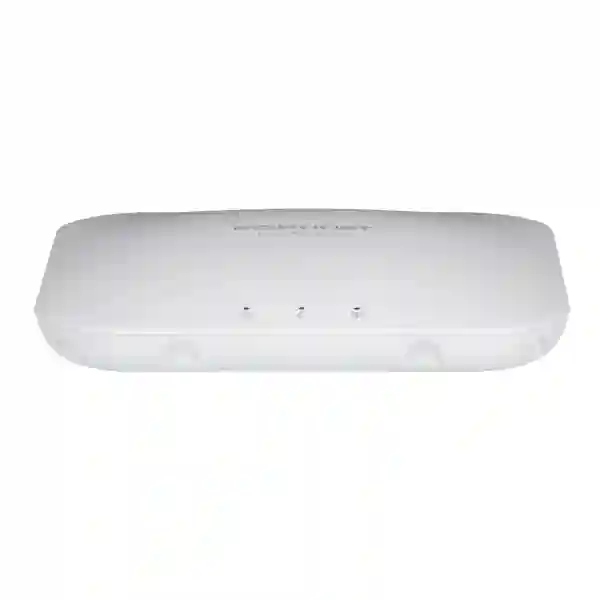
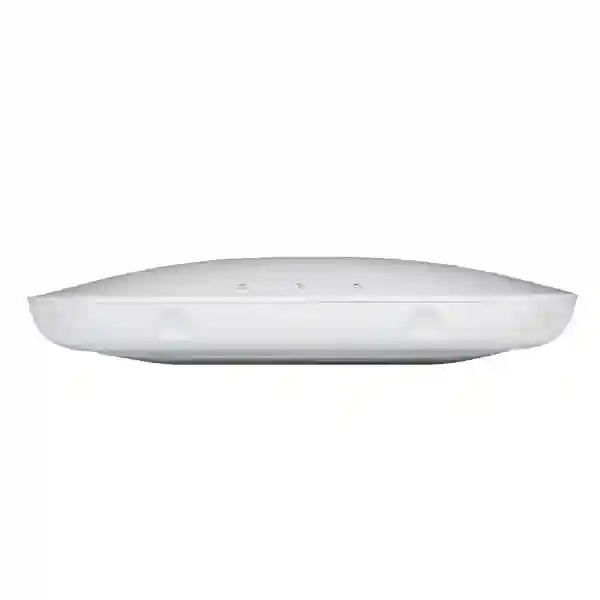
FortiAP FAP-441K Tanzania
FortiAP FAP-441K is Fortinet’s indoor Wi-Fi 7 access point for organizations planning a higher-capacity wireless edge. The platform combines 4×4 wireless operation, internal antennas, 2.4 GHz, 5 GHz and 6 GHz service radios, a dedicated scanning radio, BLE/ZigBee capability, multigigabit wired interfaces and centralized Fortinet management. For Tanzanian businesses modernizing office, campus, hospitality, education or collaboration networks, the FAP-441K provides a practical path toward Wi-Fi 7 while keeping wireless policy aligned with the wider Fortinet security architecture.
Designed for modern indoor enterprise wireless deployments with 4×4 radio capabilities and internal antennas.
Supports 2.4 GHz, 5 GHz and 6 GHz client connectivity, with a separate tri-band scanning radio for wireless monitoring.
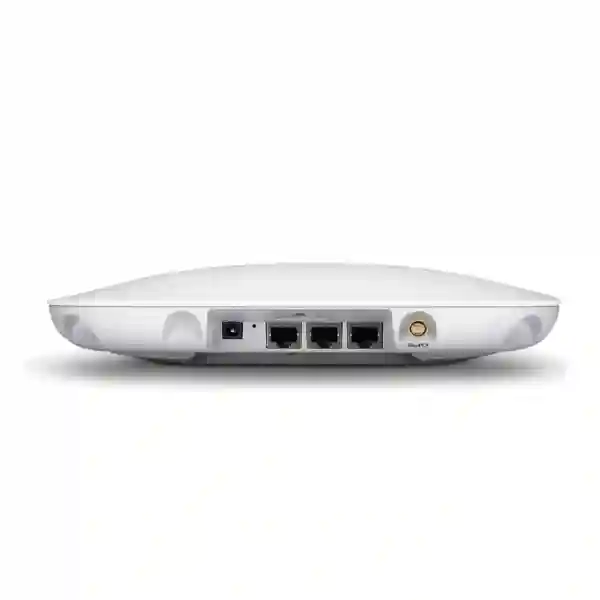
Two RJ45 interfaces support 10/5/2.5/1 Gigabit Ethernet, helping wired infrastructure keep pace with high-capacity WLAN design.
FortiAP FAP-441K overview
The FAP-441K belongs to Fortinet’s current Wi-Fi 7 access-point portfolio and is positioned as a 4×4 indoor model with internal antennas and SASE support. Fortinet specifies four Wi-Fi radios plus BLE functionality: a 2.4 GHz 4×4 service radio, a 5 GHz 4×4 service radio, a 6 GHz 4×4 service radio and a 2×2 scanning radio capable of monitoring the 2.4, 5 and 6 GHz bands. This architecture is useful when an organization needs client capacity and wireless visibility without dedicating a service radio to background scanning.
Wi-Fi 7 introduces capabilities intended to increase usable throughput, spectrum efficiency and responsiveness for compatible clients. The FAP-441K supports wide channels on the 5 GHz and 6 GHz radios, including up to 320 MHz on 6 GHz where local regulations and channel availability permit. Fortinet also highlights 4096-QAM among the Wi-Fi 7 capabilities of this platform. Actual client performance remains dependent on endpoint capability, channel plan, interference, regulatory domain, switching design, cabling, power and upstream internet or application capacity, so access-point selection should be accompanied by a proper RF and LAN assessment.
Verified technical highlights
| Deployment | Indoor Wi-Fi 7 access point, internal antennas |
| Radios | 4 Wi-Fi radios plus BLE; three client-service radios and one scanning radio |
| 2.4 GHz | 4×4, 20/40 MHz |
| 5 GHz | 4×4, up to 240 MHz channel capability |
| 6 GHz | 4×4, up to 320 MHz channel capability |
| Scanning radio | 2×2 tri-band scanning across 2.4/5/6 GHz |
| Ethernet | 2 x 10/5/2.5/1 GE RJ45 plus RS-232 RJ45 serial port |
| PoE | 802.3bt default or dual 802.3at current sharing |
| Maximum power consumption | 41.7 W |
| SSID support | Local-bridge, tunnel and mesh; up to 24 simultaneous SSIDs |
Security, management and integration
A major reason to evaluate FortiAP is the management relationship with the wider Fortinet networking stack. Fortinet documents centralized management through the integrated WLAN controller in FortiGate, through FortiEdge Cloud, and for supported models through FortiSASE. This gives organizations different operational models: a FortiGate-centric branch or campus architecture, cloud-oriented access-point administration, or a broader secure-access design. The appropriate option should be selected according to the existing security estate, licensing requirements, topology and operational ownership.
Wireless authentication support includes WPA, WPA2 and WPA3 with enterprise or pre-shared-key approaches, alongside supported EAP methods and captive-portal options. In an enterprise rollout, these features should be translated into a clear access policy for employees, managed devices, guests, contractors, voice devices and IoT endpoints. Network segmentation, identity, VLAN design, firewall policy and application controls are as important as raw radio speed. A Wi-Fi 7 refresh is therefore best treated as a wired, wireless and security project rather than as a simple replacement of access points.
Organizations already using FortiGate can explore broader Fortinet solutions through FourTeck Tanzania. For cross-border projects, the FourTeck network also provides regional starting points for Kenya technology projects, Uganda technology projects, Ghana technology projects and Nigeria technology projects.
Planning a FortiAP FAP-441K deployment
Start with coverage and capacity rather than a simple access-point count. Floor construction, ceiling height, room density, neighboring RF activity, user concentration and client mix all influence the design. A boardroom with many modern laptops has a different traffic profile from a warehouse office, lecture hall, hotel lobby or open-plan workspace. A predictive design can establish a starting point, while a site survey and post-install validation help confirm signal, roaming and channel behavior in the real environment.
The wired edge also deserves attention. Because the FAP-441K includes multigigabit Ethernet and requires suitable PoE, organizations should verify switch-port capability, PoE budget, cable category and condition, uplink capacity and redundancy. Installing a high-performance Wi-Fi 7 AP on a constrained 1 GbE access layer or insufficient power budget can prevent the overall system from realizing the intended design. Where dual Ethernet or resilient architectures are considered, the switching and controller design should be reviewed as one system.
Client readiness is another procurement factor. Wi-Fi 7 endpoints can use the newest capabilities, while older Wi-Fi clients can remain part of the environment according to supported standards and configured policy. A phased refresh can therefore make sense: upgrade high-density or business-critical areas first, verify client behavior, then expand. This approach can reduce disruption while creating a repeatable configuration template for subsequent floors, branches or sites.
FortiAP FAP-441K Tanzania
Organizations searching for FortiAP FAP-441K in Tanzania are commonly planning wireless modernization for corporate offices, institutions, hospitality sites, healthcare environments, professional services, technology businesses and multi-site operations. The key purchasing question is not simply whether Wi-Fi 7 is newer than Wi-Fi 6 or Wi-Fi 6E; it is whether the wider LAN, security and endpoint environment can benefit from the additional capacity and spectrum options. The FAP-441K is particularly relevant where high client density, collaboration traffic, cloud applications, large file transfers and long-term WLAN planning justify a 4×4 tri-band indoor platform.
For a Tanzania quotation, buyers should provide the number of sites, approximate floor areas, expected concurrent users, existing switch models, current FortiGate model if applicable, available PoE capability, internet bandwidth and any special segmentation requirements. This allows the discussion to cover not only AP quantity but also power, switching, controller or cloud management, licenses, mounting and implementation needs. Where building plans are available, they can help establish an initial access-point layout before physical validation.
Regulatory settings matter in every wireless deployment. Available channels, transmit power and 6 GHz operation depend on the configured regulatory domain and applicable national rules. Procurement teams should therefore avoid assuming that every feature demonstrated in another country will operate identically in Tanzania. The correct regional hardware, software settings and approved spectrum use should be confirmed for the deployment. This is especially important when organizations operate standardized networks across several countries.
A secure wireless project can also include SSID consolidation, guest access, employee authentication, IoT segmentation, firewall policy, application visibility and monitoring. The objective should be a manageable network that supports user experience and security policy together. For Tanzania projects, request a bill of materials that clearly separates access points, switching, power, subscriptions or management services, accessories and implementation scope so procurement teams can compare like-for-like proposals.
FortiAP FAP-441K Dar es Salaam
Dar es Salaam organizations often operate in busy commercial environments where wireless networks serve staff, visitors, collaboration systems, cloud applications and mobile devices simultaneously. For offices, hotels, training facilities, professional-services firms and larger commercial premises, the FAP-441K can be evaluated as an indoor Wi-Fi 7 platform where capacity and future client growth are priorities. Dense neighboring wireless networks make RF planning especially important: simply increasing transmit power or installing more APs can create contention rather than improve performance.
A Dar es Salaam deployment should begin with the business areas that carry the most important wireless traffic. Meeting suites may need reliable video conferencing; open offices may need consistent roaming and application responsiveness; reception areas may require isolated guest access; and technical teams may need higher-throughput local transfers. These requirements can be mapped to SSIDs, VLANs, identity policies and firewall rules. The FAP-441K’s dedicated scanning capability is useful within a managed design because monitoring does not have to rely solely on client-serving radios.
Power and cabling should be confirmed before installation. The AP’s 802.3bt default power method and multigigabit interfaces mean that an older access switch may need review. A project quotation should identify whether existing switches provide the necessary PoE and port speeds, whether cable runs are suitable, and whether switch uplinks can accommodate aggregate WLAN demand. This prevents an AP upgrade from exposing bottlenecks elsewhere in the network.
For procurement in Dar es Salaam, provide building drawings where possible and identify floor count, wall construction, high-density rooms and expected device numbers. Ask for the proposed management method as part of the solution rather than treating management as an afterthought. If FortiGate is already deployed, its role in WLAN control and policy can be reviewed; if cloud or SASE management is preferred, applicable licensing and compatibility should be confirmed before ordering.
FortiAP FAP-441K Mwanza
Businesses and institutions evaluating FortiAP FAP-441K in Mwanza may be replacing aging wireless infrastructure, expanding user capacity or standardizing network security across multiple locations. The strongest business case usually comes from combining a clear capacity requirement with operational simplification. Instead of deploying isolated consumer-grade APs, a centrally managed enterprise WLAN can provide consistent SSIDs, authentication rules, segmentation and monitoring across covered areas.
For offices, educational environments, hospitality properties and service organizations, first identify where users actually gather. High-density conference rooms, training spaces, reception areas and shared workspaces can require a different AP placement strategy from corridors or lightly occupied rooms. The FAP-441K’s 4×4 client radios can support demanding indoor designs, but RF performance still depends on physical placement and channel planning. Concrete walls, metal structures, shelving, equipment rooms and other obstructions should be considered during design.
Mwanza buyers should also review WAN dependency. Wi-Fi 7 can improve local wireless capability, but internet-based applications remain bounded by ISP capacity and upstream network design. Where cloud systems, voice, video and remote access are important, traffic priorities and firewall policies may need adjustment alongside the WLAN upgrade. For multi-branch organizations, consistent Fortinet policy can help operations teams avoid maintaining a different wireless approach at every site.
When requesting a quotation, include the intended installation environment, approximate square metres, number of floors, expected concurrent devices, existing firewall and switch inventory and desired management model. Ask separately about mounting accessories, PoE switching, configuration and support. This produces a more useful project estimate than requesting a unit price alone and reduces the chance that essential infrastructure is discovered only after the access points arrive.
FortiAP FAP-441K Arusha
Arusha has a varied mix of hospitality, tourism, professional services, institutions and business operations, each with different wireless priorities. A hotel or lodge may focus on guest capacity and staff segmentation, while an office may prioritize secure employee access and video collaboration. The FortiAP FAP-441K can fit indoor enterprise projects that need Wi-Fi 7 capability, internal antennas and centralized Fortinet management, but deployment should be based on the actual use case rather than a generic AP-per-floor formula.
Hospitality networks, for example, can have sharp changes in demand between rooms, conference facilities, restaurants and public areas. A design should distinguish guest traffic from operational systems and business devices. Corporate environments may instead require identity-based access, separate networks for managed and unmanaged endpoints, and predictable roaming between work areas. These are policy and architecture questions that should be defined before final AP placement.
For Arusha projects, 6 GHz can add useful spectrum for compatible devices, while 2.4 GHz and 5 GHz remain important for existing endpoints. This mixed-client reality makes tri-band planning valuable. Not every device will support Wi-Fi 7, and not every client needs the widest available channel. A balanced design considers coverage, contention, channel reuse and application needs rather than configuring maximum channel width everywhere.
Procurement teams should ask for a documented scope covering hardware, licenses where required, PoE, switching, installation, configuration and acceptance testing. If the organization has multiple properties or branches, request a standardized configuration approach with site-specific RF tuning. That makes future expansion easier and gives IT teams a clearer operational baseline for troubleshooting and lifecycle management.
FortiAP FAP-441K Dodoma
FortiAP FAP-441K deployments in Dodoma can support organizations that need modern indoor wireless for administrative offices, institutions, campuses, professional environments and growing multi-building networks. A Wi-Fi 7 refresh is an opportunity to review not only radio technology but also network segmentation, access control and wired infrastructure. The FAP-441K’s integration options make it particularly relevant to organizations already standardizing on Fortinet security and networking.
Planning should distinguish between coverage-driven and capacity-driven areas. A lightly occupied office wing may need broad reliable coverage, while a training hall or meeting facility may require several carefully placed radios to support concentrated client demand. The number of devices per user is also important because employees increasingly connect laptops, phones and other endpoints simultaneously. A design based only on employee headcount can therefore underestimate real WLAN load.
The switch layer should be included in the Dodoma project assessment. Verify PoE budget, multigigabit port availability, cable quality and switch uplinks. If existing infrastructure cannot supply the AP as designed, the bill of materials may need suitable switching or power changes. Where FortiGate provides WLAN management, firmware compatibility and sizing should also be reviewed before deployment. Cloud-managed alternatives should be evaluated with their applicable subscriptions.
A useful quotation request should state whether the project is a new installation, a replacement of existing APs or an expansion. Include current pain points such as dead zones, roaming issues, guest-network complexity, overloaded meeting areas or difficult troubleshooting. These details help convert a product request into an architecture discussion and make it easier to define measurable acceptance criteria for the completed wireless project.
FortiAP FAP-441K UAE
Organizations evaluating FortiAP FAP-441K in the UAE may be planning high-density offices, hospitality spaces, retail environments, education sites or distributed branches. Wi-Fi 7 is especially relevant where endpoint refresh cycles, collaboration workloads and high-speed LAN infrastructure justify moving beyond earlier WLAN generations. The FAP-441K provides an indoor 4×4 platform with internal antennas, 6 GHz support and multigigabit wired connectivity, while Fortinet management can align wireless operations with security policy.
UAE projects frequently involve modern structured cabling and higher-speed switching, but infrastructure should still be verified site by site. The AP’s power and Ethernet requirements need to match the access layer, and 6 GHz availability must follow the applicable regulatory domain. Large offices should avoid assuming that wide channels always produce the best result; in dense deployments, channel reuse and interference planning can matter more than peak theoretical rate.
For cross-region customers, a standardized Fortinet architecture can simplify policy while allowing local RF settings to follow national regulations. Procurement teams can review the broader FourTeck UAE technology portfolio and specialist Fortinet UAE solutions when coordinating projects that span Tanzania and the Gulf. The design should clearly identify which management, support and licensing components apply in each country.
Before requesting pricing, document the required number of sites, estimated AP count, switch estate, firewall platform, user density and rollout timetable. Ask whether the proposed design includes survey, installation, configuration and post-deployment validation. Separating these services from hardware pricing helps stakeholders understand the complete cost and avoids confusing an equipment quote with a finished wireless solution.
FortiAP FAP-441K Uganda
For organizations considering FortiAP FAP-441K in Uganda, the product is most relevant where enterprise wireless capacity, security integration and centralized operations are priorities. A company with branches, schools, hospitality facilities or professional offices can use a standardized FortiAP design to create consistent WLAN policy while adapting RF placement to each site. Wi-Fi 7 can provide a longer technology runway for environments where new laptops and mobile devices will increasingly support 6 GHz and newer capabilities.
The network should be assessed end to end. Access-point performance depends on switch power, port speed, cabling, uplinks, firewall capacity, WAN services and client capability. A 4×4 Wi-Fi 7 AP may be appropriate in high-use areas, but smaller or lower-density spaces could require a different model. This is why a mixed-model FortiAP deployment can sometimes be more efficient than applying the same AP to every room.
Uganda procurement teams should specify whether FortiGate management, cloud management or another supported Fortinet approach is preferred. If a FortiGate is already installed, provide its model and software version for compatibility review. If the WLAN will support guests, IoT and corporate users, document the desired segmentation and authentication methods so the wireless configuration can be planned together with firewall and switching policy.
Organizations coordinating Tanzanian and Ugandan sites can use FourTeck Uganda as a regional reference point while maintaining a consistent project specification. The quotation should still distinguish country-specific regulatory settings, installation conditions and service scope. Standardization is valuable, but it should not override local RF and operational requirements.
FortiAP FAP-441K Kampala
Kampala businesses often need wireless networks that handle dense office occupancy, visitor access, cloud collaboration and mobile-first workflows. The FortiAP FAP-441K can be considered for indoor areas where 4×4 Wi-Fi 7 capacity and 6 GHz readiness align with the client roadmap. The best results come from treating the AP as part of a complete secure LAN rather than an isolated radio upgrade.
In multi-floor commercial buildings, RF propagation between floors can complicate design. APs should be positioned according to expected client locations and measured building characteristics rather than arranged solely by visual symmetry. Meeting rooms and training areas may require more capacity than corridors or private offices. The dedicated scanning radio can contribute to wireless visibility while service radios continue supporting clients.
Kampala projects should verify PoE and multigigabit switching before finalizing quantities. Older switches may provide adequate connectivity for legacy APs but lack the power or port capability expected by a Wi-Fi 7 design. Cabling certification can also be worthwhile when existing runs are being reused. These checks are less expensive before installation than troubleshooting unstable power or limited uplink performance afterward.
For a commercial quotation, include user count, device count, floor plans, current WLAN issues and existing Fortinet equipment. If the site needs guest onboarding, employee 802.1X authentication or segmented IoT networks, state those requirements explicitly. This allows the proposal to address configuration and security policy as well as hardware, producing a more complete basis for procurement approval.
FortiAP FAP-441K Arua
Organizations searching for FortiAP FAP-441K in Arua may be building new offices, upgrading institutional networks or improving the reliability and manageability of existing Wi-Fi. In these projects, the value of an enterprise AP is often operational consistency: centralized configuration, controlled security policy, visibility and a repeatable architecture can be more important than headline wireless speed alone.
Arua deployments should first identify the applications users depend on and the areas where wireless availability is critical. Administrative workspaces, customer-facing areas, training rooms and shared facilities can have very different capacity profiles. A survey-based design helps account for wall materials, room layout and interference. If several buildings are involved, each structure should be assessed rather than assuming identical AP density.
The FAP-441K’s tri-band client service supports a mixed environment in which newer devices can use 6 GHz while established endpoints continue operating on 2.4 GHz or 5 GHz. The WLAN configuration should avoid unnecessary SSID proliferation, because too many broadcast networks can add management and airtime overhead. Instead, segmentation can be designed around genuine security and business requirements.
When requesting a quote for Arua, specify whether installation and configuration are required, whether switches need upgrading, and whether FortiGate or cloud-based management is planned. Ask for assumptions to be documented, especially AP quantity and coverage expectations. This creates a clearer procurement record and makes later changes easier to evaluate if site conditions differ from the initial information.
FortiAP FAP-441K Mbarara
FortiAP FAP-441K projects in Mbarara can address businesses, institutions and hospitality environments seeking a secure, centrally managed indoor WLAN with a path to Wi-Fi 7 clients. The model’s 4×4 architecture is suited to demanding areas, but buyers should align AP choice with actual density and application needs. A network may combine higher-capacity APs in busy zones with other FortiAP models elsewhere.
For an existing network upgrade, collect evidence before replacing hardware. Identify dead zones, peak utilization periods, roaming complaints, overloaded radios and areas where wired bottlenecks exist. This information helps determine whether the issue is RF coverage, capacity, interference, upstream bandwidth or policy. Replacing APs without diagnosing the underlying problem can leave the same user experience in place.
Security planning should include employee, guest and device access. WPA3 and enterprise authentication can form part of a stronger WLAN posture, but authentication servers, certificates, device onboarding and fallback requirements must be planned. IoT devices may have different wireless capabilities from laptops, so compatibility testing can be useful before a broad rollout.
A Mbarara quotation should include the proposed management platform, required subscriptions, switching and PoE assumptions, accessories and implementation scope. If the network is part of a larger Uganda rollout, define a common baseline configuration but preserve site-specific channel and power settings. This approach makes operations easier while respecting the fact that RF conditions are local to each building.
FortiAP FAP-441K Gulu
Gulu organizations evaluating the FortiAP FAP-441K can use a Wi-Fi 7 project to modernize both wireless access and the operational model around it. Centralized WLAN management can reduce configuration drift across APs and sites, while integration with Fortinet security can help align wireless users with broader access policy. This is relevant for offices, education, hospitality, service organizations and other indoor enterprise environments.
Capacity planning should consider concurrent devices rather than only registered users. A single person may connect several endpoints, and meeting or training spaces can concentrate many devices in a small area. The FAP-441K provides high-capacity radio hardware, but channel planning, client distribution and wired uplinks remain essential. Where older clients dominate, the migration plan should account for their capabilities alongside Wi-Fi 7 devices.
Infrastructure readiness includes power, switching and cabling. The access switch should be checked for suitable PoE and multigigabit interfaces, while uplinks should have enough headroom for aggregate traffic. If the current network was designed around much older APs, a switching refresh may be part of the project. Documenting this early makes the business case more accurate.
For Gulu procurement, share site drawings and identify critical areas, existing network equipment and expected growth. Request a proposal that explains assumptions rather than only listing hardware. A clear design narrative helps technical and non-technical stakeholders understand why particular AP quantities, switches, licenses or services are included and provides a better foundation for implementation acceptance.
FortiAP FAP-441K Kenya
Kenyan organizations considering the FortiAP FAP-441K may be modernizing headquarters, branch offices, hospitality properties, educational sites or technology-intensive workplaces. Wi-Fi 7 is relevant when the organization wants to prepare for newer client devices and higher application demand while retaining centralized policy. The FAP-441K’s internal-antenna indoor design makes it suitable for professional environments where a ceiling-mounted enterprise AP is appropriate.
A Kenya deployment should balance 2.4 GHz, 5 GHz and 6 GHz according to client capability and local regulatory settings. Newer endpoints can benefit from 6 GHz capacity, while many operational devices will continue to depend on established bands. This means WLAN modernization is a transition rather than a single-generation cutover. Pilot testing can help IT teams understand client behavior before scaling across many sites.
The wired access layer should support the intended design. Multigigabit ports and appropriate PoE allow the AP to operate without avoidable edge constraints, while sufficient switch uplink capacity supports aggregate traffic. Organizations can reference FourTeck Kenya when coordinating regional technology requirements alongside Tanzanian operations.
For procurement, define whether the project includes RF design, installation, FortiGate integration, cloud management, switch upgrades, configuration and post-install testing. Ask for a clear list of included and excluded services. If the organization has several branches, identify a standard AP profile and security policy while allowing each location to receive its own channel and placement plan.
FortiAP FAP-441K Kuwait
FortiAP FAP-441K in Kuwait is relevant to indoor enterprise wireless projects that need high-capacity Wi-Fi 7, 6 GHz readiness and integration with Fortinet security and management. Corporate offices, hospitality sites, education environments and distributed branches can evaluate the model where 4×4 performance and multigigabit wired connectivity match the broader network design.
Regulatory-domain configuration is important because available 6 GHz channels and power rules differ by jurisdiction. A multinational organization should not copy an RF template from another country without local validation. The same applies to channel widths: while the FAP-441K supports very wide channels, dense deployments may benefit from a more conservative plan that improves reuse and reduces contention.
Kuwait buyers should review access switching, PoE and cabling together with the AP. High-capacity wireless is only one segment of the traffic path. Firewalls, switch uplinks, WAN services and cloud application performance all contribute to the user experience. A complete assessment can reveal where investment has the greatest effect.
For regional procurement, FourTeck Kuwait provides a relevant network destination for Kuwait-focused requirements. When a project also includes Tanzania, use a consistent equipment and policy baseline where practical, while documenting country-specific regulatory settings, implementation scope and support arrangements separately.
FortiAP FAP-441K Ghana
Ghanaian businesses and institutions evaluating FortiAP FAP-441K may be seeking a wireless platform that supports increasing device density and modern security operations. The AP’s Wi-Fi 7 radios and internal-antenna indoor format suit offices and other enterprise spaces where centralized management and predictable policy are important. The design should still be driven by measured requirements rather than maximum theoretical performance.
A successful Ghana deployment starts with a client and application inventory. Identify which endpoints support Wi-Fi 6E or Wi-Fi 7, which depend on older bands, and which business applications are sensitive to latency or packet loss. This helps determine where 6 GHz can add value and where coverage on 2.4 GHz or 5 GHz remains essential. It also informs whether a phased rollout is appropriate.
Switching and PoE should be verified at every planned AP location. Existing cabling may need testing, particularly in older buildings or where cable routes are long or difficult to access. The management architecture should also be defined before purchase, including FortiGate, cloud or SASE options as applicable. Licensing and support should be listed clearly in the bill of materials.
Organizations coordinating Ghana and Tanzania can reference FourTeck Ghana for regional requirements. For quotations, provide site size, expected devices, switch and firewall details, desired authentication methods and implementation scope. This enables a proposal that addresses deployment readiness rather than only AP unit cost.
FortiAP FAP-441K Nigeria
Nigeria deployments can range from single offices to large multi-site organizations, making WLAN standardization an important operational consideration. The FortiAP FAP-441K can serve as a high-capacity indoor Wi-Fi 7 option where 4×4 radios, 6 GHz capability and Fortinet management align with business needs. It is particularly worth evaluating in areas with concentrated users, collaboration traffic or a planned refresh of high-speed switching.
In large offices, capacity planning should use realistic concurrency estimates and application profiles. Video meetings, cloud storage, software updates and large local transfers can create different traffic patterns from web browsing. High-density areas should be identified separately from general coverage areas. The result may be a design that mixes AP models and channel widths rather than using one configuration everywhere.
Security requirements can include employee identity, guest access, contractor onboarding and IoT segmentation. These policies should be mapped before deployment so SSIDs, VLANs and firewall controls remain manageable. The FAP-441K supports modern authentication capabilities, but the full workflow can also depend on identity systems, certificates and endpoint support.
For Nigeria-focused coordination, see FourTeck Nigeria. Multi-country organizations should request separate site assumptions while maintaining a shared architecture where possible. This makes procurement easier to govern and allows local RF settings and implementation details to be handled correctly.
FortiAP FAP-441K Seychelles
Seychelles organizations evaluating FortiAP FAP-441K may include hospitality properties, professional offices and institutions where reliable indoor wireless is central to customer and staff experience. Wi-Fi 7 can be relevant for new-build or major refresh projects that want a longer technology lifecycle and increased capacity for modern endpoints. The FAP-441K provides a high-specification indoor platform, but physical site characteristics remain central to design.
Hospitality deployments deserve particular attention to room layout, corridors, common areas, conference spaces and back-office networks. A single AP placement strategy rarely suits all of these environments. Guest access should be isolated appropriately from operational systems, and staff or business devices may require different authentication. Site surveys and floor plans help determine where APs should be positioned and whether wall attenuation creates coverage challenges.
Island deployments can also make project preparation especially important because missing accessories, incompatible switching or underestimated power requirements can complicate installation schedules. A complete bill of materials should therefore identify APs, mounts, switching, PoE, licenses and any required services. Firmware and management compatibility should be reviewed before equipment is staged.
For a Seychelles quotation, provide property type, building count, floor plans, expected guest or user density, current network equipment and desired management approach. If the organization also operates in Tanzania or other African markets, standardize security policy and naming conventions where practical while keeping RF plans specific to each site and regulatory domain.
Buying and sizing guidance
Do not size an FAP-441K deployment from a square-metre figure alone. Start with floor plans and identify work areas, meeting rooms, high-density spaces, guest zones, IoT locations and roaming paths. Record expected concurrent clients and important applications. Then review wall and ceiling materials, interference sources and existing AP placement. This information supports a defensible initial design and highlights where an on-site survey may be needed.
Next, assess the wired network. Confirm suitable PoE, multigigabit Ethernet, cabling and uplink capacity. Review FortiGate or alternative management requirements, software compatibility and any subscription components. Decide how employee, guest and device networks will authenticate and segment. Finally, define acceptance criteria such as coverage targets, roaming behavior and application performance. This procurement sequence reduces the risk of selecting AP hardware without the infrastructure required to support it.
Quotation checklist for FortiAP FAP-441K
✓ Country, city and number of sites
✓ Building floor plans and approximate area
✓ Expected users and concurrent devices
✓ Current AP and WLAN pain points
✓ Existing FortiGate model and software where applicable
✓ Existing switch models and PoE budget
✓ Cabling type and condition
✓ Guest, employee and IoT segmentation needs
✓ Preferred management approach
✓ Installation, configuration and support scope
FortiAP FAP-441K FAQ
Is the FortiAP FAP-441K a Wi-Fi 7 access point?
Yes. Fortinet lists the FAP-441K as an indoor Wi-Fi 7 access point with 4×4 internal-antenna radio capabilities and support for 2.4 GHz, 5 GHz and 6 GHz client service.
Does FAP-441K support 6 GHz?
Yes. The model includes a 6 GHz 4×4 service radio with channel capabilities up to 320 MHz. Actual use depends on the regulatory domain, available spectrum, configured channel plan and compatible clients.
What Ethernet ports does it provide?
Fortinet specifies two RJ45 interfaces supporting 10/5/2.5/1 Gigabit Ethernet, plus an RS-232 RJ45 serial port. The switch and cabling design should be reviewed to support the intended throughput and power requirements.
How is the FAP-441K managed?
Fortinet documents FortiAP management through FortiGate’s integrated WLAN controller, FortiEdge Cloud and supported FortiSASE deployments. The appropriate option depends on architecture, compatibility and licensing.
Can older Wi-Fi devices connect?
The FAP-441K supports multiple IEEE 802.11 generations in addition to 802.11be. Client compatibility and actual features vary by endpoint, band and configured security policy, so representative legacy devices should be tested during migration planning.
How many FAP-441K access points do I need?
The quantity depends on building materials, floor layout, user density, client mix, applications, channel plan and required coverage. A floor-plan review and, for demanding environments, an RF survey are better sizing methods than using a fixed area-per-AP rule.
Decision recap
Choose the FortiAP FAP-441K for evaluation when your project needs a premium indoor Wi-Fi 7 platform with 4×4 radios, 6 GHz support, internal antennas, multigigabit Ethernet and integration with Fortinet management. Before ordering, validate RF design, regulatory requirements, switch PoE, cabling, uplink capacity, management compatibility and client readiness. For lower-density spaces or different antenna and outdoor requirements, compare other FortiAP models rather than assuming the FAP-441K is required everywhere.
Plan your FortiAP FAP-441K deployment
Share your floor plans, expected user density, current Fortinet equipment and deployment locations. FourTeck can use these project inputs to prepare a more relevant commercial discussion around access points, switching, management, accessories and implementation requirements. For wider African and international requirements, the FourTeck Africa technology site can also support regional solution research.




Reviews
There are no reviews yet.