
FORTINET NETWORK VIDEO SECURITY
FortiCamera FCM-FD50 Tanzania
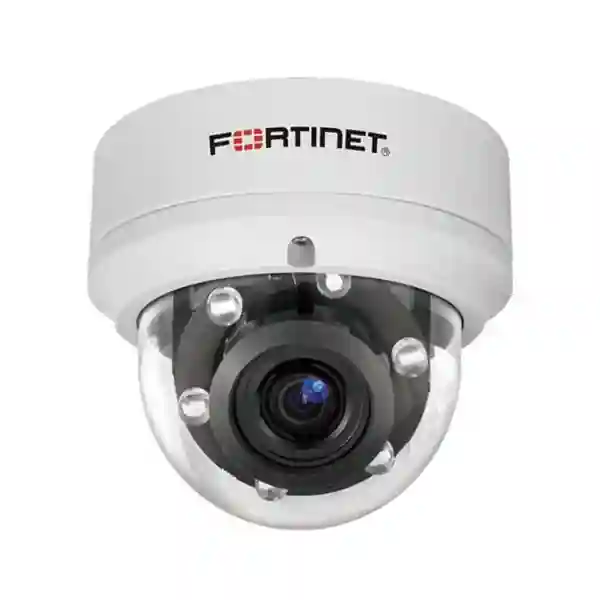
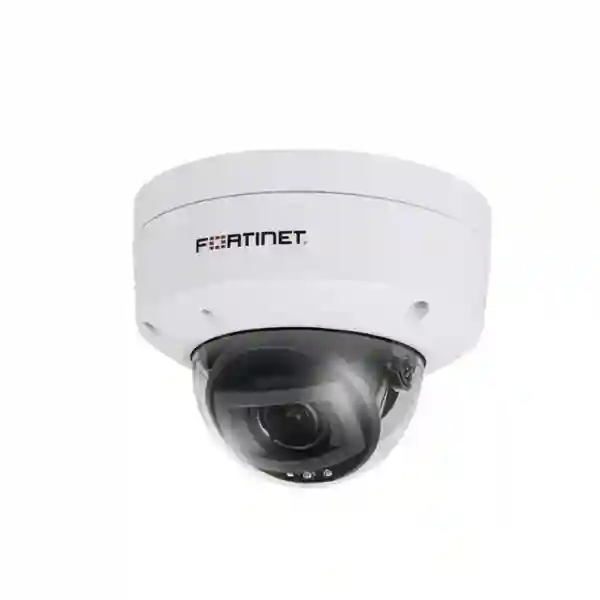
FortiCamera FCM-FD50 is a professional fixed-dome IP video camera for indoor and outdoor surveillance. Its 5-megapixel low-light CMOS sensor, motorized 2.8–12 mm autofocus lens, infrared illumination and PoE network connection make it suitable for entrances, offices, retail areas, warehouses, campuses and other locations where organizations need adjustable coverage and centralized video management.
5MP at up to 20 fps • 4MP at up to 30 fps • 2.8–12 mm motorized autofocus • 4x optical zoom • 30 m IR • RTSP • MJPEG/H.264/H.265 • two-way audio • 10/100 Ethernet • 802.3af PoE.
What the FortiCamera FCM-FD50 delivers
The FCM-FD50 is designed for surveillance projects where a fixed dome form factor and remotely adjustable optics are more useful than a fixed field of view. The motorized 2.8–12 mm lens lets an installer frame a wider scene or narrow the view toward a doorway, corridor, loading point, cashier zone or perimeter approach. Autofocus simplifies final image tuning after the camera has been physically positioned. Fortinet lists the model with a 5-megapixel 1/2.7-inch low-light CMOS sensor and a viewing range of approximately 30–90 degrees horizontally, 23–65 degrees vertically and 38–115 degrees diagonally.
For mixed lighting, the camera supports shutter WDR greater than 120 dB and 3D noise reduction. Infrared illumination is rated to 30 metres, supporting monitoring after visible light drops. The camera can produce 5MP video at up to 20 frames per second when WDR is off, or 4MP video at up to 30 frames per second, with additional stream options available for practical network and recording design. H.265 can help reduce bandwidth and storage demand compared with older compression approaches when the rest of the surveillance system supports it.
The FCM-FD50 connects through 10/100 Ethernet and supports IEEE 802.3af PoE, allowing data and power to share one Ethernet cable when connected to a compatible PoE source. Fortinet specifies average power consumption around 9 W and a maximum of 12.95 W with IR operating. For system designers, those values matter when calculating PoE-switch capacity, UPS sizing and the number of cameras per access switch.
5MP detail
A 5MP sensor gives security teams more scene detail than basic HD cameras, subject to lens position, lighting, motion and recording settings.
Motorized varifocal lens
The 2.8–12 mm motorized autofocus lens supports flexible framing during commissioning without relying on a single fixed angle.
Night monitoring
Integrated IR illumination reaches up to 30 m under specified conditions, while day/night operation supports changing illumination.
Efficient IP deployment
PoE, RTSP and modern H.264/H.265 compression make the camera practical for structured Ethernet surveillance networks.
FortiCamera FCM-FD50 technical specifications
| Format | Fixed dome, indoor/outdoor, vandal-resistant positioning |
| Sensor | 5MP, 1/2.7-inch low-light CMOS |
| Lens | 2.8–12 mm motorized autofocus, 4x optical zoom |
| Video | 5MP up to 20 fps; 4MP up to 30 fps; MJPEG/H.264/H.265 |
| Low light / IR | 0.035 lux color; 0.005 lux B/W; IR up to 30 m |
| Network | RJ45 10/100 Mbps Ethernet, RTSP |
| Audio | Two-way audio, built-in microphone, line out |
| Power | PoE IEEE 802.3af Class 0; approximately 9 W average, 12.95 W maximum with IR |
| Operating temperature | -10°C to 60°C |
Planning a Fortinet video surveillance deployment
A camera specification is only one part of a dependable surveillance design. Before ordering FCM-FD50 units, identify the scenes that must be observed, required identification distance, lighting changes, recording retention period, acceptable frame rate, network topology and PoE budget. A wide overview and a tight identification shot are different design goals; the varifocal lens helps, but camera placement remains critical. Determine mounting height and direction so that faces, doors, vehicle approaches or operational areas are captured at useful angles rather than merely maximizing the visible area.
Recording capacity should be estimated from the number of cameras, chosen resolution, frame rate, codec, scene activity and retention target. Fortinet positions FortiCamera alongside FortiRecorder and FortiCentral video management software, enabling centralized surveillance workflows. Organizations already using Fortinet infrastructure may also value the broader physical-security integration available through the Fortinet ecosystem. For related network security planning, explore FourTeck Tanzania technology solutions, Fortinet solution resources, FourTeck Africa infrastructure solutions, and FourTeck Uganda technology solutions.
FortiCamera FCM-FD50 Tanzania
Tanzanian organizations evaluating the FortiCamera FCM-FD50 typically need more than a camera model number. A useful procurement plan begins with the areas to protect, the operational purpose of each view and the network resources available at every mounting point. For a corporate office, the priority may be entrances, reception, corridors and restricted rooms. Retail environments may focus on doors, transaction areas and stock movement. Warehouses can require coverage of loading zones, aisles and access points. Schools, healthcare facilities, hospitality sites and industrial premises may each require different mounting heights and retention policies. The FCM-FD50’s motorized varifocal lens is valuable in these mixed projects because the field of view can be adjusted to the scene rather than forcing every position into one fixed lens angle.
In Tanzania, project planners should assess cabling distance, switch placement, available PoE capacity, UPS protection and the environmental conditions around each camera. PoE simplifies installation by combining network connectivity and electrical power, but the total switch power budget still needs to accommodate all connected devices. Network design should also account for camera traffic and recording destinations. Where surveillance crosses VLANs or sites, routing, firewall policy and access controls should be designed deliberately. H.265 compression can help manage storage and bandwidth, while actual consumption depends on scene complexity, frame rate, resolution and encoding settings.
A quotation request is more accurate when it includes camera quantity, approximate mounting locations, indoor/outdoor classification, target retention period, recorder requirements, existing PoE-switch details and whether installation accessories are required. Buyers should also clarify whether they need only cameras or a complete Fortinet video-security solution including recording, management and supporting network infrastructure. This avoids comparing incomplete bills of materials and makes it easier to plan a scalable surveillance system.
FortiCamera FCM-FD50 Dar es Salaam
Businesses in Dar es Salaam may use fixed-dome surveillance across offices, commercial premises, warehouses, hospitality properties, retail locations and multi-tenant facilities. The FCM-FD50 suits locations where a discreet dome form factor and adjustable optical framing are desirable. During site planning, identify high-value observation points rather than selecting camera counts from floor area alone. Entrances need a different field of view from parking approaches, reception counters or warehouse aisles. The 2.8–12 mm motorized lens lets the installer tune each view after mounting, which can reduce compromises where a fixed-lens camera would be either too wide or too narrow.
Dar es Salaam deployments should also account for network resilience. Cameras can be distributed across access switches, but designers should calculate PoE consumption and uplink capacity and determine how recording traffic reaches the recorder. If a site has multiple buildings, the surveillance VLAN, inter-building links and protection against unauthorized camera access should be part of the design. UPS-backed switching can keep cameras and recording paths available during short power interruptions when appropriately engineered.
For procurement, prepare a camera schedule showing location, scene objective, approximate mounting height and expected lighting. Note whether two-way audio is needed and whether IR will be relied upon after dark. Confirm recording retention and who needs access to live or recorded footage. These details help convert a general request for “CCTV cameras” into a technical bill of materials built around measurable operational requirements. Buyers can then compare the FCM-FD50’s 5MP resolution, varifocal optics, WDR, IR and PoE capabilities against each planned scene rather than purchasing on resolution alone.
FortiCamera FCM-FD50 Mwanza
For Mwanza organizations, surveillance design can cover administrative offices, retail premises, warehouses, educational facilities, accommodation sites and operational compounds. The FCM-FD50 can be positioned where dome construction, infrared night capability and a motorized lens fit the intended scene. Start by defining what an operator must be able to see. General activity monitoring, recognizing a person at an entrance and observing a distant access route require different pixel density and lens framing. The adjustable focal length gives installers flexibility, but correct placement remains essential.
Structured cabling should be checked before camera installation. Ethernet distance, pathway condition, switch port availability and PoE budget affect deployment quality. The camera’s 802.3af PoE capability can reduce the need for separate power cabling at the mounting point. For larger premises, segmenting surveillance traffic and documenting switch-to-camera mappings can simplify troubleshooting. Recording design should be based on retention needs and realistic encoding assumptions rather than a generic storage estimate.
When requesting a Mwanza quotation, provide floor plans or a camera list where possible. Indicate which views are indoors, exposed, low-light or backlit, and identify any existing FortiRecorder or video-management environment. A complete request should also mention rack space, switching, UPS and remote viewing requirements. This information allows the camera choice to be assessed as part of a complete video-security architecture and helps prevent overlooked infrastructure costs during implementation.
FortiCamera FCM-FD50 Arusha
Arusha buyers considering the FCM-FD50 may be planning surveillance for hotels, offices, institutions, retail environments, compounds or logistics facilities. Dome cameras are often selected for visible yet compact mounting, while the FCM-FD50’s varifocal lens supports more precise framing than a fixed lens. In hospitality or public-facing environments, planners should balance security coverage with sensible camera placement and access governance. The objective is not simply to create the widest view; it is to capture useful evidence and operational visibility while keeping the system manageable.
The model’s WDR capability is relevant where bright backgrounds and shaded foregrounds appear in the same scene, such as glazed entrances or covered approaches. IR supports low-light monitoring, although reflective surfaces, nearby walls and physical obstructions should be considered during placement. For each proposed camera, document the expected daytime and nighttime conditions. This helps determine whether the selected position can make effective use of the camera’s imaging features.
Network planning should include PoE switch sizing, bandwidth, recorder connectivity and administrator access. A surveillance system also benefits from clear user roles, password management and controlled remote access. If cameras are being added to an existing environment, confirm recorder compatibility and capacity before procurement. An Arusha quotation can be made more precise by including the number of cameras, retention target, current switching environment and whether installation, commissioning or system expansion is part of the requirement.
FortiCamera FCM-FD50 Dodoma
Dodoma organizations can evaluate the FortiCamera FCM-FD50 for office, institutional, commercial and campus surveillance where adjustable dome-camera coverage is required. A strong design begins with risk and operational objectives: which doors, corridors, perimeter approaches or service areas matter most, and what level of detail is needed? The FCM-FD50 offers 5MP imaging and a motorized 2.8–12 mm lens, allowing commissioning teams to adjust the view after installation. This is useful when several camera positions require different focal lengths within one project.
Infrastructure readiness is equally important. Verify cable routes and lengths, switch capacity, PoE budget and recording connectivity. The maximum camera power requirement should be included in PoE calculations rather than relying on average consumption alone. Where cameras are distributed across multiple network cabinets, document uplinks and ensure sufficient capacity for aggregate surveillance traffic. Recording retention should be selected according to operational policy and available storage, with codec and frame-rate choices tested against the required image quality.
Procurement teams should request a clearly itemized proposal. Separate cameras, recording appliances, storage, PoE switching, mounting accessories, cabling and professional services so the complete project scope is visible. If an existing Fortinet surveillance environment is already deployed, provide recorder model and current camera count to assess expansion. This approach supports a more accurate FCM-FD50 purchase decision than comparing camera unit prices without the surrounding system requirements.
FortiCamera FCM-FD50 UAE
UAE projects using the FCM-FD50 may range from office and retail surveillance to warehouses, hospitality sites and distributed commercial facilities. The camera’s dome format, 5MP sensor, motorized autofocus lens and IR capability support varied scene design. Buyers should map each camera to an observation objective and account for lighting, mounting height and required identification detail. For bright entrances and mixed-light environments, WDR is an important imaging consideration, while night scenes require thoughtful IR placement to avoid reflection and overexposure near walls or glossy surfaces.
For multi-camera deployments, the network architecture should be designed alongside the camera plan. PoE switch budgets, uplink bandwidth, VLAN segmentation, recording capacity and administrator access all affect system performance. H.265 support can reduce storage and bandwidth demand when configured appropriately, but retention estimates should be calculated using the intended resolution, frame rate and scene conditions. Organizations expanding an existing FortiRecorder deployment should verify recorder capacity before adding cameras.
A UAE quotation request should specify quantities, mounting environments, recorder requirements and retention targets. For broader Fortinet infrastructure context, FourTeck UAE provides a regional technology reference point. Buyers planning deployments across Tanzania and the UAE can standardize technical requirements while still adapting cabling, installation and procurement scope to each site.
FortiCamera FCM-FD50 Uganda
Ugandan businesses and institutions considering the FCM-FD50 should define surveillance outcomes before choosing quantities. A 5MP camera can provide detailed imagery, but useful results depend on lens framing, placement and recording settings. The motorized 2.8–12 mm lens supports both wider and narrower views, making the model adaptable across entrances, corridors, counters, warehouse aisles and external approaches. Infrared illumination supports monitoring after dark, while WDR helps with challenging contrast.
For network design, confirm Ethernet routes and PoE capacity at every switch. Larger sites may benefit from dedicated surveillance VLANs and documented port assignments. Recording storage should be planned around actual retention policy. Remote access should be controlled rather than exposed casually, with permissions aligned to operational responsibilities. If FortiRecorder is part of the project, confirm the recorder model, available camera capacity and storage before ordering additional devices.
A useful Uganda procurement brief includes the camera schedule, site count, retention requirement, existing network equipment and whether the project needs supply only or installation and commissioning as well. This supports accurate scoping and reduces the chance of missing PoE switches, storage or mounting accessories from the initial bill of materials.
FortiCamera FCM-FD50 Kampala
In Kampala, the FCM-FD50 can fit business surveillance projects where a fixed dome camera with adjustable optics is required. Offices may use it at entrances and common areas, retailers may position it around access and stock zones, and warehouses can use it to observe loading and internal movement. The key is to match each lens setting to the scene objective. Wider framing provides context; tighter framing provides more pixels on a target. The motorized lens makes that balance easier to tune during commissioning.
Camera performance also depends on supporting infrastructure. PoE simplifies edge installation, but switch power and UPS capacity should be calculated for the whole system. Network traffic from cameras should be considered when sizing uplinks to the recorder. If footage is retained for extended periods, storage requirements can become a major part of project cost, so resolution and frame-rate choices should be aligned with policy rather than automatically set to maximum values everywhere.
Kampala buyers can improve quotation accuracy by providing site drawings, camera quantities and existing equipment details. If remote monitoring is required, state how many users and locations need access. A documented requirement lets the supplier evaluate cameras, recording, switching and services as one system rather than treating the camera as an isolated purchase.
FortiCamera FCM-FD50 Arua
Arua surveillance projects may prioritize practical coverage of entrances, stores, offices, compounds and operational areas. The FCM-FD50’s fixed-dome housing and adjustable lens can support these different scenes within one camera family. During planning, identify the distance from each camera to the area of interest and whether the scene is primarily daytime, low-light or mixed-light. These details guide lens framing and help determine whether the built-in 30 m IR range is suitable for the intended view.
Infrastructure assessment should cover cabling condition, PoE switching, rack and UPS availability and the path to the recording system. A camera may be straightforward to mount but still perform poorly if network or power design is inadequate. H.265 compression can help optimize resources, while actual storage depends on configuration and scene activity. Security teams should also establish who can administer cameras and retrieve recordings.
For procurement, list each camera position and purpose rather than providing only a total quantity. Include the desired retention period and any existing recorder details. This enables a more complete proposal and helps identify accessories and infrastructure requirements before deployment begins.
FortiCamera FCM-FD50 Mbarara
Mbarara organizations evaluating FortiCamera FCM-FD50 can use its varifocal dome design for scenes that need more framing flexibility than fixed-lens cameras provide. Typical business requirements include monitoring access points, internal circulation, inventory areas and external approaches. The camera’s 5MP imaging provides useful resolution, while WDR and infrared capabilities address challenging illumination when camera positioning is planned carefully.
The network should be treated as part of the surveillance system. Check PoE capacity, cable length, uplink bandwidth and recording connectivity before installation. Where many cameras share one switch, calculate the maximum PoE load and aggregate traffic. Retention requirements should be agreed with stakeholders early because they affect recorder storage and potentially the number or size of recording appliances.
A Mbarara request for quotation should identify whether the need is camera supply, system expansion or a complete new deployment. Existing FortiRecorder users should provide model and capacity information. New projects should state desired retention, camera count and key scene types. This makes it possible to scope a balanced system around the FCM-FD50 rather than simply ordering cameras without recording and network planning.
FortiCamera FCM-FD50 Gulu
Gulu businesses and institutions can assess the FCM-FD50 for indoor and outdoor surveillance positions requiring a dome form factor and remotely adjustable field of view. For each proposed camera, determine whether the goal is overview, detection, recognition or closer identification. That objective influences lens setting and mounting location. The 2.8–12 mm motorized autofocus lens supports a useful range of views, while 5MP imaging gives designers additional detail to work with.
Night performance should be validated against the real scene. Built-in IR is rated up to 30 m, but walls, reflective objects and scene geometry influence practical results. Mixed lighting may benefit from WDR. Network readiness is equally important: confirm PoE switching, UPS support, cable routes and recorder connectivity. H.265 support can be used as part of a bandwidth and storage strategy where compatible.
Procurement teams should include camera quantity, mounting locations, retention goals and existing infrastructure in their inquiry. A complete scope allows cameras, recorders, storage, switching and installation requirements to be assessed together, producing a clearer project budget and deployment plan.
FortiCamera FCM-FD50 Kenya
Kenyan organizations considering the FCM-FD50 can apply the camera across offices, retail, warehousing, hospitality and institutional environments. The combination of a 5MP sensor, motorized varifocal lens, WDR and infrared night monitoring is useful where a single camera family must cover multiple scene types. Project designers should still validate every position individually because lens angle, distance and lighting determine whether a camera captures actionable detail.
For larger Kenyan deployments, surveillance network segmentation, PoE capacity and recorder architecture should be planned from the beginning. The camera’s H.265 support can help control network and storage consumption, but storage sizing must reflect actual settings. Multi-site organizations should also decide whether viewing and administration are centralized and how access is secured across locations.
A quotation should include the number of cameras per site, required retention, existing switching and recording equipment, and installation scope. Buyers can also reference FourTeck Kenya for regional technology context when coordinating cross-border or Kenya-based infrastructure requirements.
FortiCamera FCM-FD50 Kuwait
Kuwait deployments may use the FCM-FD50 in commercial, office, warehouse and institutional surveillance projects. The dome format is suitable where a compact camera profile is preferred, while the motorized lens allows installers to refine framing after physical placement. WDR can assist in high-contrast scenes and IR supports low-light operation. Outdoor placement should always consider the complete mounting environment and installation method rather than relying on camera specifications alone.
System planning should include PoE switch budgets, recording bandwidth, storage retention and secure administration. For multi-site deployments, standardizing camera settings and documentation can simplify support. Each camera should be recorded in an asset schedule with location, switch port and scene purpose, helping future troubleshooting and expansion.
Kuwait procurement inquiries should state quantities, scene types, retention and whether recorders or network upgrades are required. Clear technical requirements make it easier to compare proposals on equivalent scope and avoid hidden differences in storage, switching or services.
FortiCamera FCM-FD50 Ghana
Ghanaian organizations evaluating the FCM-FD50 can use its 5MP dome platform for surveillance projects requiring adjustable viewing angles and infrared night coverage. Before selecting camera quantities, survey entrances, circulation routes, inventory areas and perimeter approaches. Define the evidence or operational visibility expected from each scene. This creates a rational camera schedule and lets the motorized lens be used effectively during commissioning.
Network and recording design should be completed at the same time. PoE port availability, power budgets, cabling and recorder capacity determine whether the cameras can operate as intended. Storage planning should account for resolution, frame rate, codec and retention. Administrators should also control camera and recording access through documented user roles.
A Ghana quotation request should include site count, camera schedule and retention target. Where a business is coordinating multiple African locations, standard specifications can simplify procurement while site surveys address local installation differences. The FCM-FD50 can form part of that standardized design when its optical and environmental characteristics match each scene.
FortiCamera FCM-FD50 Nigeria
Nigerian enterprises may evaluate the FCM-FD50 for branch offices, commercial facilities, warehouses, campuses and other premises requiring centrally managed IP surveillance. Its adjustable 2.8–12 mm lens supports different framing requirements within one model family, and 5MP imaging offers a useful balance of detail and network demand. WDR and IR capabilities help with changing lighting, provided installation positions are selected carefully.
For branch-heavy organizations, consistent network architecture is valuable. Define surveillance VLANs, PoE switch standards, recording strategy and administrator permissions. Estimate storage from realistic configuration assumptions and establish retention by business requirement. If recordings need to be reviewed centrally, WAN design and security controls should be considered separately from local recording traffic.
Procurement teams should request a bill of materials that distinguishes cameras, recorders, storage, switching, accessories and services. This makes proposals easier to compare and provides a clearer path for phased expansion. Camera selection should remain tied to the scene objective, not only headline resolution.
FortiCamera FCM-FD50 Seychelles
Seychelles organizations planning IP surveillance can consider the FCM-FD50 for business premises where dome mounting, adjustable optics and night monitoring are required. Hotels, offices, retail premises and operational facilities can have very different observation goals, so camera positions should be designed around entrances, circulation, restricted areas and asset protection rather than using uniform spacing. The motorized varifocal lens supports precise final framing.
Environmental and infrastructure planning are important for island deployments. Cabling pathways, network cabinets, PoE capacity, UPS support and mounting conditions should be assessed before procurement. Where cameras are exposed to challenging environments, the full installation method—including mounting hardware and cable protection—should be reviewed. Recording storage and remote viewing should be sized according to policy and available network resources.
A useful Seychelles quotation brief lists each camera location, required retention, existing recorder or network equipment and installation scope. For multi-property operators, consistent camera and recording standards can simplify administration while allowing each site’s coverage plan to remain specific to its layout and operational risks.
FCM-FD50 buying and quotation checklist
For a useful quotation, provide: total camera quantity; number of sites; intended indoor and outdoor positions; scene objectives; approximate camera-to-target distances; desired recording retention; existing FortiRecorder model if applicable; existing PoE switch details; rack and UPS availability; remote viewing requirements; audio requirements; and whether installation, cabling, commissioning or user handover is needed. For expansion projects, include current camera count and recorder capacity. For new systems, ask for a complete bill of materials rather than cameras alone.
FortiCamera FCM-FD50 FAQs
Is the FortiCamera FCM-FD50 a 5MP camera?
Yes. Fortinet lists the FCM-FD50 with a 5-megapixel low-light CMOS sensor. It supports 5MP video at up to 20 fps under specified settings and 4MP at up to 30 fps.
Does FCM-FD50 support PoE?
Yes. The camera supports IEEE 802.3af PoE, allowing compatible network switching to provide data and power over Ethernet.
How far does the infrared illumination reach?
Fortinet specifies IR illumination up to 30 metres. Practical night results still depend on the scene, mounting, reflective surfaces and environmental conditions.
What lens does the FCM-FD50 use?
It uses a motorized 2.8–12 mm autofocus lens with 4x optical zoom, giving installers flexibility to tune the field of view.
Can FCM-FD50 be used with FortiRecorder?
Fortinet positions FortiCamera models as part of its network-based video-security solution with FortiRecorder and FortiCentral. Recorder model, capacity and software compatibility should be confirmed for the intended deployment before purchase.
Decision recap
Choose the FortiCamera FCM-FD50 when your design calls for a 5MP fixed-dome network camera with motorized varifocal autofocus, 30 m infrared illumination, WDR, two-way audio capability, modern video compression and 802.3af PoE. Before ordering, validate scene geometry, camera count, PoE budget, recording retention, recorder capacity and installation requirements. Those checks determine whether the model is the right fit for each position and prevent under-scoped surveillance projects.
Plan your FortiCamera FCM-FD50 deployment
Share your site count, camera quantity, retention target and existing Fortinet or network infrastructure when requesting a proposal. FourTeck can use those requirements to structure a product and deployment discussion around the correct camera, recording and network scope without assuming stock, delivery time or project conditions.



Reviews
There are no reviews yet.