
FortiCamera FCM-FD51 Tanzania
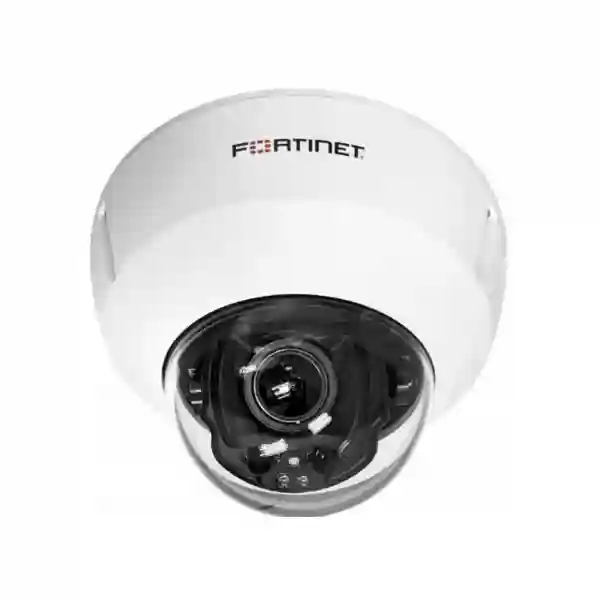
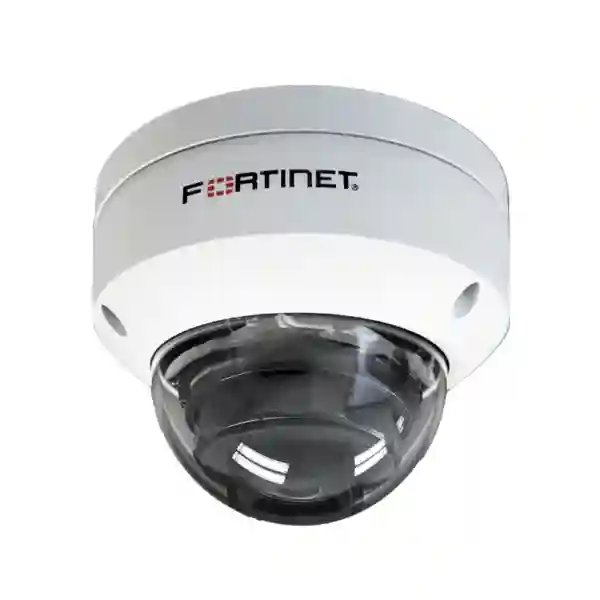
FortiCamera FCM-FD51 is a fixed dome network camera for organizations that need a durable, wide-angle surveillance endpoint integrated into a Fortinet video-security environment. Fortinet specifies 5MP resolution at 20 fps, a fixed 2.8 mm lens, 30 m infrared illumination, PoE power, Digital I/O, true-shutter WDR-oriented low-light capability, and IP66/IK10/ONVIF ratings. For Tanzanian offices, warehouses, retail premises, institutions and operational sites, the model is best evaluated as part of a complete camera, switching, recording, storage, power and secure-management design rather than as an isolated camera purchase.
What the FortiCamera FCM-FD51 is designed to do
The FCM-FD51 belongs to Fortinet’s on-premises FortiRecorder camera family. Its dome format suits ceiling or wall installation where a compact, protected camera body is preferred. A fixed 2.8 mm lens provides a broad scene rather than motorized optical zoom, so the camera should be positioned after deciding exactly what must be observed. A wide view can be useful for entrances, corridors, reception zones, general office areas, warehouse aisles and other spaces where situational coverage matters. Identification requirements should still be validated against distance, mounting height, lighting and the number of pixels available on the target.
Fortinet rates the camera for indoor or outdoor environments and lists IP66 weather protection and IK10 impact resistance. These ratings help when a camera is exposed to dust, rain or potential physical impact, but good installation remains important: cable entry, junction protection, mounting surface, drainage, surge protection and network-cabinet power all affect reliability. The specified operating-temperature range is -30°C to 60°C, giving system designers useful environmental headroom for many deployments while still requiring attention to direct sun, enclosed mounting spaces and site-specific conditions.
Fortinet’s ordering guide specifies 5MP resolution at up to 20 frames per second for the FD51.
A fixed wide-angle lens favors broad coverage and makes pre-installation positioning important.
Integrated IR supports surveillance after ambient light falls, subject to scene reflectivity and installation conditions.
Weather, impact and interoperability ratings support professional indoor/outdoor network-camera deployments.
Technical specification overview
| Camera format | Fixed dome |
| Resolution | 5MP at 20 fps |
| Focal length | 2.8 mm fixed |
| Infrared | 30 m |
| Power | PoE (802.3af) |
| Environmental / interoperability | IP66 / IK10 / ONVIF |
| Operating temperature | -30°C to 60°C |
| Mounting listed | Ceiling or wall |
FortiRecorder and surveillance-system integration
The FCM-FD51 is positioned for FortiRecorder-based on-premises surveillance. Fortinet’s broader video-security architecture combines FortiCamera endpoints with FortiRecorder network video recorders and FortiCentral video-management software. This matters in procurement because a useful surveillance system is determined by the complete recording and management workflow: how many cameras are required, how long footage must be retained, who may view or export video, what monitoring stations are needed, and how the camera network is separated from ordinary user traffic.
Before ordering cameras, calculate the PoE port requirement and power budget, verify uplink capacity, decide whether camera traffic needs a dedicated VLAN, and size recording storage from the intended stream settings and retention period. The FD51’s Digital I/O also creates opportunities to integrate physical events such as sensors or alarms into a broader security workflow. The precise design should be documented before deployment so camera names, IP addresses, switch ports, recording profiles and physical locations remain understandable when the system expands.
FortiCamera FCM-FD51 Tanzania
For buyers in Tanzania, the most useful starting point is the surveillance objective rather than the camera count. A business may need entrance identification, general monitoring, after-hours evidence, warehouse visibility, restricted-area oversight or a combination of these. The FCM-FD51’s fixed wide-angle lens can be appropriate where the required scene can be covered from a known mounting position, while projects requiring adjustable optical framing may need another camera model. A site plan should therefore mark each viewing objective and approximate mounting point before quantities are finalized.
Network readiness is equally important. Because the FD51 uses PoE, a deployment can combine data and power on the Ethernet connection when compatible switching is available. This simplifies field power arrangements but transfers responsibility to the switch and UPS design. The PoE budget should cover all cameras with margin, and uplinks should be checked against aggregate video traffic. In sites where business data, Wi-Fi, voice and CCTV share switching infrastructure, VLAN separation and documented access rules can make operations and troubleshooting clearer.
Recording retention should be defined before storage is purchased. Camera quantity, resolution, frame rate, codec choices, scene activity and recording schedule can all affect capacity. Security teams should also define who can access live and recorded footage, how exports are controlled and how firmware and credentials are maintained. FourTeck Tanzania’s integrated IT and security overview explains how CCTV, PoE switching, racks, UPS systems and network security can be planned together, while the Tanzania technology enquiry page provides a route for model, quantity and project discussions.
FortiCamera FCM-FD51 Dar es Salaam
Organizations evaluating the FortiCamera FCM-FD51 in Dar es Salaam may be planning surveillance for offices, retail locations, logistics facilities, hospitality environments, commercial compounds or multi-floor buildings. Dense operational environments can create a mix of indoor and outdoor camera positions, so the IP66 and IK10 ratings are useful product characteristics, but they do not replace installation planning. Outdoor cable paths should be protected, mounting points should be mechanically sound, and camera placement should account for direct sunlight, headlights, reflective surfaces and night-time scene conditions.
A fixed 2.8 mm lens is simple and predictable once the correct viewpoint has been selected. During planning, test whether the intended field of view gives enough detail at the important target distance. A camera that sees a large area may not provide the same identification detail as one deliberately framed on a doorway or checkpoint. Separating overview and identification objectives often produces a better design than expecting every camera to perform both roles from one position.
For quotation preparation, specify the number of cameras, approximate locations, recording-retention target, monitoring requirements, existing PoE switching, available rack space and UPS arrangement. Where an existing CCTV network is being expanded, include the recorder model and current channel/storage usage. FourTeck’s verified Tanzania contact page specifically asks CCTV buyers to explain coverage areas, recording needs and retention expectations, which helps turn an FD51 product request into a practical bill of materials.
FortiCamera FCM-FD51 Mwanza
A Mwanza deployment may involve a standalone commercial site or a branch that needs to follow a security standard established elsewhere. In either case, repeatable camera naming, IP addressing, VLAN design and recording policies make future support easier. The FCM-FD51 can form part of that standardized architecture when its fixed wide-angle view matches the scene. Its PoE interface also allows the surveillance endpoint to fit into a structured network design rather than depend on separate local power adapters at each camera position.
For sites with outdoor or semi-exposed mounting, installers should assess weather exposure, cable entry and physical accessibility. IP66 and IK10 describe the camera’s tested enclosure characteristics, but installation accessories and cable terminations need equivalent attention. Infrared illumination is specified to 30 metres; actual night images depend on scene geometry, reflective surfaces and ambient light. A practical commissioning process should therefore inspect day and night footage rather than accepting a daytime view as proof that the final position is correct.
Businesses comparing camera options should also decide whether they need a fixed view or motorized optical zoom. The FD51 uses a fixed 2.8 mm lens, so a different FortiCamera model may be more appropriate where framing must be adjusted remotely. This distinction is valuable during procurement because it prevents paying for capabilities that are unnecessary or selecting a fixed camera where an adjustable lens is operationally important.
FortiCamera FCM-FD51 Arusha
In Arusha, surveillance requirements can range from offices and hospitality properties to institutional, retail and mixed indoor/outdoor sites. The FD51’s dome format can provide a relatively discreet installation while its IP66 and IK10 ratings support more demanding placements. Camera selection should still be driven by what the operator needs to see. Reception desks, access points, corridors, perimeter approaches and parking areas can have very different identification and coverage requirements even within one property.
The network design should treat every camera as a managed IP endpoint. Use structured cabling, identify switch ports, calculate PoE consumption, document addressing and restrict management access appropriately. If camera streams traverse building or floor uplinks, verify capacity and avoid creating hidden bottlenecks. Recording equipment, switches and monitoring workstations should be supported by suitable power protection where continuity matters.
For an Arusha quotation, buyers can improve accuracy by providing a floor plan or simple site sketch, marking indoor and outdoor locations and explaining retention expectations. The existing FourTeck Tanzania contact information identifies Arusha among its office locations and accepts product-selection and CCTV project enquiries. The final camera count should follow coverage objectives and recorder capacity rather than a generic cameras-per-building rule.
FortiCamera FCM-FD51 Dodoma
For Dodoma offices, institutions and operational facilities, an FD51 project can be planned around controlled coverage zones. Start by identifying entrances, restricted rooms, reception areas, circulation routes and exterior approaches where video has a defined security purpose. The camera’s 5MP stream and fixed 2.8 mm lens provide a useful combination for broad fixed views, while 30 m IR supports low-light surveillance. Actual image suitability should be validated at the intended mounting distance.
A professional deployment should also include recorder and storage planning. Retention requirements are a business policy decision that directly influences storage. Rather than buying disks first, determine camera count, recording schedule and quality targets, then calculate capacity. Access to footage should be role-based, and exported evidence should follow the organization’s procedures. Firmware maintenance, credential control and configuration backups belong in the operational plan from the beginning.
FourTeck Tanzania’s contact page identifies Dodoma among its listed office locations and encourages buyers to provide product quantity, site type, existing equipment and intended outcome. For the FD51, adding the recorder model, PoE switch details and approximate cable distances can further improve technical review before a quotation is prepared.
FortiCamera FCM-FD51 UAE
Organizations procuring the FCM-FD51 for UAE operations should treat environmental and infrastructure design as part of camera selection. Although Fortinet specifies an operating range up to 60°C and an IP66 enclosure rating, direct solar exposure and enclosed mounting conditions can differ significantly from measured ambient temperature. Placement, shading, cable protection and equipment-room cooling should therefore be assessed site by site. The IK10 rating is useful where impact resistance matters.
For multi-country companies, standardizing on a FortiCamera and FortiRecorder architecture can simplify documentation and operator training. Standard camera names, VLANs, recorder policies and user roles make it easier to understand sites across regions. The FD51 is particularly straightforward where a fixed 2.8 mm field of view is known in advance. Where variable framing is required, the design team should compare another FortiCamera model with motorized optical zoom rather than trying to compensate through digital cropping.
Regional technology planning can also be coordinated through FourTeck UAE, while Tanzania-led projects can retain the same documented design principles. Procurement teams should request current commercial terms separately because availability, price, warranty terms and delivery schedules are not fixed technical specifications and should not be assumed from the model name alone.
FortiCamera FCM-FD51 Uganda
For Uganda deployments, the FCM-FD51 can support fixed-view surveillance where 5MP video, PoE and a rugged dome enclosure align with the site requirement. Projects spanning Kampala and regional branches benefit from a consistent design template covering camera labels, IP addressing, switching, recorder capacity and retention. This reduces configuration drift and gives support teams a predictable baseline without assuming that every branch requires the same camera quantity.
The camera’s 30 m IR specification should be interpreted as an illumination capability rather than a guarantee of identification at that distance. Night performance depends on target size, angle, surfaces and other light sources. Commissioning should check real night footage, especially at gates, entrances and outdoor approaches. Digital I/O can also be considered where external sensors or alarms are part of the physical-security workflow.
For regional procurement and project coordination, FourTeck Uganda is the matching FourTeck network destination. A useful quotation request should state exact model, quantity, site count, recording platform, retention target and whether switching, cabling, UPS and installation are also required.
FortiCamera FCM-FD51 Kampala
Kampala businesses considering the FD51 may be replacing legacy cameras, extending a FortiRecorder deployment or designing a new IP surveillance system. In replacement projects, do not assume existing cabling and switches are automatically suitable. Verify cable condition, PoE capability, port availability, uplink capacity and recorder compatibility. A camera upgrade can expose limitations in the network or storage layer that were not visible with lower-resolution equipment.
For new installations, map security objectives first. Use overview cameras for broad awareness and deliberately positioned cameras where identification detail matters. Because the FD51 has a fixed lens, physical positioning is the main framing tool. The dome can be ceiling or wall mounted, giving designers flexibility, but the selected surface must support a secure installation and useful viewing angle.
Multi-site operators should also decide where video is monitored and who administers devices. Centralized procedures can improve consistency, while local users may need limited viewing permissions. Documenting these roles during commissioning is more reliable than sharing administrator credentials between sites. Fortinet’s FortiRecorder and FortiCentral ecosystem is intended to provide centralized video-management capabilities for connected FortiCamera systems.
FortiCamera FCM-FD51 Arua
In Arua, camera-system reliability can depend as much on supporting infrastructure as on the endpoint. A PoE camera relies on the switch, cabling and upstream power, so UPS sizing and clean network-rack installation should be considered when continuity is important. Where network links between buildings are involved, distance and surge exposure can affect whether copper or fiber is the better backbone approach.
The FD51’s fixed wide-angle lens makes it suitable for defined scenes that do not require optical adjustment after installation. Before fixing the mount, use a temporary position or commissioning view to verify that the scene captures the required area. At night, confirm infrared behavior and check for nearby surfaces that can reflect IR back into the lens. Small installation adjustments can make a significant difference to useful footage.
Procurement requests should distinguish the camera hardware from the complete solution. A complete bill may include FortiRecorder capacity, hard drives or storage, PoE switches, racks, UPS, patching, structured cabling, mounting accessories and operator displays. Defining this scope early helps prevent a camera-only quote from being mistaken for a complete surveillance project.
FortiCamera FCM-FD51 Mbarara
Mbarara sites can use the FD51 for fixed indoor or outdoor observation when the wide-angle 2.8 mm view is appropriate. For warehouses and commercial compounds, camera placement should account for shelving, vehicle routes, loading areas and changing obstructions. For offices and institutions, entrances and circulation points may deserve different framing from open-area monitoring. One camera model can serve several roles, but the mounting geometry should be designed for each role.
Network segmentation is useful when CCTV shares the business LAN. A dedicated camera VLAN, controlled management access and documented switch ports can reduce accidental exposure and simplify troubleshooting. The switch must provide compatible 802.3af PoE and sufficient budget for the installed cameras. If the system expands later, spare ports, uplink capacity and recorder channels should be considered during the first phase.
The FCM-FD51 is an on-premises FortiRecorder camera rather than one of the cloud-suffixed camera models shown in Fortinet’s current ordering guide. Buyers who specifically require direct FortiCamera Cloud workflows should verify the appropriate cloud-model portfolio instead of assuming all FortiCamera models have identical deployment options.
FortiCamera FCM-FD51 Gulu
For Gulu deployments, a clear acceptance checklist can make surveillance commissioning more useful. Check each camera name, physical location, day image, night image, time synchronization, recording status, retention estimate, user permissions and switch-port documentation. Confirm that the recorder can retrieve footage efficiently and that operators know how to find and export an incident. A camera that is online but poorly documented can still create operational problems when footage is urgently needed.
The FD51’s IP66 and IK10 ratings make it relevant to robust fixed-dome deployments, while the -30°C to 60°C operating range gives broad environmental specifications. Site conditions still require engineering judgment. Cable glands, junctions, external conduits and surge exposure are installation factors, not camera specifications, and should be addressed in the project scope.
When requesting a quote, include whether the project is new or an expansion. For an expansion, provide current recorder and switch models and the number of spare channels and ports if known. For a new system, provide coverage zones and desired retention. This separates model selection from assumptions and helps determine whether the FD51 is the right camera for every location or one component in a mixed-camera design.
FortiCamera FCM-FD51 Kenya
Kenyan organizations can evaluate the FD51 as part of a standardized Fortinet physical-security architecture across offices, branches and operational sites. A common platform can simplify training and documentation, but camera choice should remain scene-specific. The FD51 provides a fixed 2.8 mm lens; projects requiring optical zoom or a different form factor should compare other FortiCamera models rather than forcing one model into every position.
A regional bill of materials should separate repeatable standards from site-specific quantities. Standards might include naming, VLANs, recorder policies, user roles and documentation. Site-specific items include camera count, cable length, switch size, storage and UPS capacity. This approach helps organizations keep a consistent architecture without overbuying equipment for smaller branches.
For Kenya-focused procurement, FourTeck Kenya provides the matching regional route. Buyers should confirm current quotation details directly rather than assuming pricing or stock from another country. Technical comparison should focus on required view, environmental rating, recording design and compatibility with the intended FortiRecorder environment.
FortiCamera FCM-FD51 Kuwait
Kuwait deployments should pay particular attention to heat exposure, dust, mounting and equipment-room conditions. Fortinet specifies IP66 and an operating range up to 60°C for the FD51, but field conditions can be affected by direct solar load and enclosure placement. Outdoor installations should be reviewed for cable protection and surge risk, while switches and recorders need adequate ventilation and power protection.
The 2.8 mm fixed lens suits predictable wide-angle scenes. For building entrances or checkpoints where a narrower adjustable view is required, another camera may be a better fit. Surveillance design should therefore define pixels-on-target needs and viewing objectives before model quantities are finalized. Night commissioning should validate the specified 30 m IR capability in the actual scene.
For Kuwait-specific commercial enquiries, FourTeck Kuwait is the relevant regional network site. Cross-border organizations can maintain common technical standards while obtaining country-specific commercial terms and installation scope.
FortiCamera FCM-FD51 Ghana
Ghana projects can use the FD51 where a rugged fixed dome and broad view are appropriate for the security objective. For multi-site businesses, surveillance standards should cover more than model numbers. Consistent camera naming, recorder configuration, time settings, user roles, retention policy and network segmentation make systems easier to support and audit.
PoE simplifies endpoint power but makes switch and UPS design part of the CCTV system. Verify the number of PoE ports, total power budget and uplink capacity. Where cameras connect across multiple buildings, backbone design should be assessed separately. Storage should be calculated from actual recording policy rather than an arbitrary disk size.
For Ghana-focused requirements, FourTeck Ghana provides a regional route for technology enquiries. Procurement teams can use the same technical checklist across regions while confirming current availability and commercial terms locally.
FortiCamera FCM-FD51 Nigeria
Nigeria deployments may involve large compounds, branch networks, offices, retail operations or industrial facilities where camera count can grow quickly. Scalable design begins with network and recording architecture. Rather than adding cameras until switch ports or recorder channels run out, plan expected growth and leave appropriate capacity in switching, storage and rack infrastructure.
The FD51 can provide 5MP fixed-dome coverage with 30 m IR and PoE. Its Digital I/O may be useful where physical sensors or alarms need to participate in a security workflow. The exact integration should be engineered around the chosen FortiRecorder and site processes. User access should be controlled, and remote viewing should be implemented securely rather than exposing management interfaces directly to the public internet.
For Nigeria-specific commercial discussions, FourTeck Nigeria is the matching FourTeck network destination. Technical teams should provide site count, camera quantity, retention target and existing infrastructure so quotations can distinguish endpoint supply from a complete integrated surveillance scope.
FortiCamera FCM-FD51 Seychelles
Seychelles surveillance projects can include hospitality, offices, retail and operational properties where indoor and outdoor environments meet. The FD51’s IP66 enclosure is relevant for weather-exposed use, but coastal conditions and mounting hardware deserve additional site-specific attention. Installation materials, junctions and cable routes should be selected for the actual environment rather than relying only on the camera’s enclosure rating.
The fixed wide-angle lens can be useful for reception zones, corridors and general-area monitoring when mounting positions are well chosen. For outdoor scenes, validate night performance and avoid positions where nearby surfaces dominate infrared illumination. The 30 m IR specification provides a design reference, while commissioning determines whether the final scene meets the operational requirement.
Organizations coordinating Seychelles alongside East African operations can use FourTeck Africa for broader regional context and the Tanzania site for Tanzania-led project coordination. Current supply, logistics and commercial terms should always be confirmed for the specific destination.
Related infrastructure for an FD51 deployment
A FortiCamera project depends on supporting infrastructure. The FourTeck Tanzania CCTV surveillance overview discusses camera positioning, NVR/VMS recording and storage planning. The same site’s IP camera and video-management guidance explains PoE, VLANs and secure remote access; its network-switch planning section is relevant to PoE ports and uplinks; the structured cabling, racks and UPS section addresses the physical foundation; the access-control section is relevant where cameras support door-security workflows; and the firewall and VPN section is useful when surveillance networks require segmentation or secure remote connectivity. These are verified content areas on the Tanzania site; they currently resolve through the main integrated-solutions page rather than separate verified product URLs.
Buying and quotation checklist
FortiCamera FCM-FD51 FAQs
What resolution does the FortiCamera FCM-FD51 support?
Fortinet’s current ordering guide specifies 5MP at 20 fps for the FD51.
Is the FCM-FD51 suitable for outdoor use?
Fortinet describes it for indoor or outdoor environments and lists IP66 weather protection and IK10 impact resistance. Installation method and accessories must still suit the site.
Does the FD51 have optical zoom?
No motorized optical zoom is listed for the FD51. It uses a fixed 2.8 mm focal length. If adjustable optical framing is required, compare an appropriate FortiCamera zoom model.
How is the FCM-FD51 powered?
Fortinet lists PoE based on IEEE 802.3af. The switch must have sufficient compatible PoE ports and total power budget for the deployment.
How far does the infrared illumination reach?
Fortinet specifies 30 metres of IR for the FD51. Real-world image usefulness depends on scene conditions, target size, mounting and reflective surfaces.
What should I send when requesting a quotation?
Provide model, quantity, site locations, coverage objectives, recording-retention target, existing recorder and switch details, and whether you also need cabling, PoE switching, UPS, installation or configuration.
Decision recap
Choose the FCM-FD51 when the project calls for a FortiRecorder-oriented fixed dome camera with a broad 2.8 mm view, 5MP/20 fps specification, 30 m IR, PoE and IP66/IK10 protection. Validate the scene before purchase because the lens is fixed. Treat recorder channels, retention storage, PoE switching, VLAN design, cabling, UPS and operator access as part of the same surveillance decision. For projects needing motorized optical framing or a direct cloud-camera model, compare the relevant FortiCamera alternatives before finalizing the bill of materials.
Plan your FortiCamera requirement
Send the exact model, quantity, camera locations, retention requirement and current network/recording details. FourTeck Tanzania’s verified contact page accepts CCTV, IP-camera, product-selection and quotation enquiries and provides guidance on the project details that improve solution accuracy.


Reviews
There are no reviews yet.