
FortiCamera FCM-FE120B Tanzania
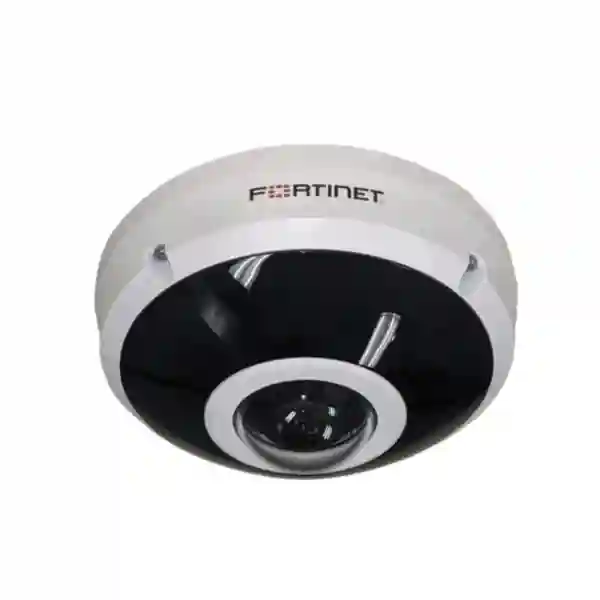
FortiCamera FCM-FE120B is a 12-megapixel panoramic fisheye IP camera for organizations that need broad scene visibility from a compact, vandal-resistant network camera. Fortinet specifies a 1.22 mm fixed lens, 20 m infrared illumination, a 10/100/1000 Ethernet interface with 802.3at PoE, audio capability, indoor/outdoor suitability and IP66 protection. For Tanzanian businesses planning reception-area, retail, office, warehouse, education, hospitality or other monitored spaces, the FE120B offers a practical way to reduce blind spots while keeping video surveillance integrated with a network-based architecture.
12 MP panoramic imaging
The fisheye format is designed to capture a wide scene from a single mounting position. Fortinet identifies the FE120B as a 12-megapixel panoramic camera, making it suitable where operators need broad situational awareness rather than a narrow fixed view.
20 m infrared
Integrated IR illumination supports monitoring in low-light conditions. Camera placement, ambient light, reflective surfaces and the monitored scene should still be reviewed during design so the final installation produces useful footage.
PoE network deployment
A Gigabit Ethernet port with 802.3at PoE allows network and power delivery over Ethernet infrastructure, helping simplify camera cabling when the connected switch or injector is correctly sized and configured.
FortiCamera FCM-FE120B overview
The FCM-FE120B belongs to Fortinet’s network-based video-security portfolio. It is positioned as a fisheye camera and can form part of a broader FortiCamera and FortiRecorder deployment. A panoramic camera is particularly useful when a conventional camera would otherwise cover only one direction. Depending on mounting position and operational requirements, organizations can use a fisheye view to monitor a broad area and then manage recorded or live video through the appropriate surveillance platform.
Procurement should start with the scene rather than the camera specification alone. Buyers should document the physical area, mounting height, desired identification or observation objective, lighting conditions, retention requirement, network topology, available PoE budget and recording architecture. This avoids selecting a high-resolution camera without confirming whether the lens position and viewing geometry suit the security objective.
Verified technical highlights
| Model | FortiCamera FCM-FE120B |
| Camera format | Fisheye panoramic IP camera |
| Sensor resolution | 12 megapixels |
| Lens | 1.22 mm fixed lens |
| Infrared | 20 m IR LED |
| Network | 1 x 10/100/1000 Ethernet |
| Power over Ethernet | 802.3at PoE |
| Environment | Indoor/outdoor, IP66 |
| Construction | Vandal-resistant design |
Deployment and integration planning
A reliable FE120B project requires more than mounting the camera and connecting a cable. Survey the scene first and define what the security team expects to see. A panoramic camera can provide excellent context, but placement affects usable detail. Ceiling, wall or other supported mounting approaches should be selected according to the required view, structural conditions and approved accessories. Fortinet documents the FCM-FE120B-PCP-4 pendant cap accessory for the FE120B, while shared mounting components may be used in supported combinations.
Network planning should account for PoE availability, switching capacity, VLAN design where used, address assignment, uplink capacity and recording traffic. Storage planning depends on recording settings, retention period, motion/event strategy and the number of cameras. These values should be calculated for the actual project instead of inferred from camera resolution alone. Organizations that already use Fortinet infrastructure can also evaluate how surveillance management fits their broader operational and security model.
For related security infrastructure, explore FourTeck Tanzania technology solutions. Regional organizations can also reference FourTeck Africa, FourTeck Kenya, FourTeck Uganda, FourTeck Ghana and FourTeck Nigeria when planning projects across multiple markets.
FortiCamera FCM-FE120B Tanzania
Organizations searching for FortiCamera FCM-FE120B in Tanzania are often trying to solve a coverage problem rather than simply buy another camera. A fisheye camera can be useful in open areas where operators need broad awareness from a central position. Before requesting a quotation, document the number of locations, approximate mounting heights, indoor or outdoor exposure, expected lighting, available Ethernet cabling, PoE switching and recording requirements. This gives the supplier enough information to distinguish a camera-only request from a complete surveillance deployment.
In Tanzania, deployment environments vary from controlled offices and retail interiors to dusty or weather-exposed entrances, logistics areas and institutional facilities. The FE120B’s IP66 rating and vandal-resistant construction are relevant characteristics, but environmental suitability should still be assessed at the exact mounting point. Installers should consider direct sunlight, rain exposure, physical access, vibration, cable entry, grounding and maintenance access. A camera that is technically outdoor-rated can still perform poorly if it is positioned against harsh backlighting or mounted where cleaning and service are difficult.
For network design, confirm whether existing switches provide 802.3at PoE and whether the total PoE budget supports all connected devices. The camera’s Gigabit interface should be integrated into a planned surveillance network with appropriate addressing and access controls. Recording capacity should be calculated using the intended video settings and retention policy. Buyers should also determine whether they need on-premises recording, cloud-oriented services where supported, or a hybrid approach. These decisions affect hardware, licensing, bandwidth and ongoing operations.
A useful Tanzania quotation request should therefore include site count, camera quantity, desired recording duration, monitoring location, preferred management architecture, switch availability and installation scope. This allows a more meaningful bill of materials and reduces later changes. Businesses comparing CCTV options should evaluate total system fit: scene coverage, recording, networking, mounting, support and lifecycle requirements together.
FortiCamera FCM-FE120B Dar es Salaam
For Dar es Salaam businesses, the FCM-FE120B can suit commercial environments that need broad visual coverage such as reception areas, retail floors, hospitality spaces, offices, education facilities and selected warehouse zones. Dense commercial sites frequently have multiple networked systems sharing switching and uplink infrastructure, so surveillance planning should include network segmentation, PoE capacity and recorder connectivity from the beginning rather than treating cameras as isolated devices.
A site survey should identify entrances, high-traffic areas, lighting changes and any locations where a panoramic view can replace or complement several directional views. Fisheye cameras are strongest when the mounting position gives an unobstructed perspective. Columns, hanging signs, shelves and partitions can create blind areas even with wide-angle coverage. In coastal conditions, installers should also consider the actual exposure of cabling, connectors and mounting hardware and follow appropriate installation practices.
Procurement teams in Dar es Salaam should request a quote based on an intended outcome: general observation, incident review, customer-flow awareness or security monitoring. The required level of detail at specific distances should be discussed before camera placement is finalized. Recording retention and storage should be calculated rather than guessed, especially for multi-camera deployments. If the site already uses Fortinet networking or security products, the surveillance project can be reviewed in the context of that infrastructure.
For phased projects, it is useful to separate immediate camera needs from future expansion. Confirm switch ports, PoE headroom, recorder capacity and cable pathways for the expected final scale. This approach helps Dar es Salaam organizations avoid redesigning the supporting network after additional cameras are added.
FortiCamera FCM-FE120B Mwanza
Mwanza organizations considering the FortiCamera FCM-FE120B can use a panoramic camera strategy for broad indoor or protected outdoor areas where a single viewpoint needs to capture activity across a wide scene. Typical planning scenarios may include offices, stores, institutional facilities, reception areas and logistics environments. The correct design depends on the security objective, not simply floor area. A camera intended for general situational awareness may be mounted differently from one intended to capture useful detail around a specific counter or access point.
The 12 MP sensor and fisheye optics provide the foundation for panoramic monitoring, while the 20 m IR specification supports low-light operation. Real-world night performance is influenced by surfaces, obstacles and ambient lighting, so installers should inspect the scene after dark when low-light monitoring is important. Reflective walls or nearby objects can affect infrared illumination, while large open areas may require complementary lighting or additional cameras.
For Mwanza procurement, include mounting requirements and network readiness in the bill of materials. The FE120B uses 802.3at PoE, so the selected switch or injector must support the required standard and have adequate power budget. Cable distance, pathway quality and surge or grounding considerations should be addressed according to the site. Recording and retention requirements should then be matched with the chosen FortiRecorder or supported management architecture.
Buyers can improve quotation accuracy by supplying a basic floor plan, camera count, expected retention period and information about existing switches. A design-led request produces a more useful solution than asking only for unit pricing because it exposes accessory, storage, power and integration requirements early.
FortiCamera FCM-FE120B Arusha
In Arusha, the FCM-FE120B may be considered for hospitality, office, education, retail and institutional environments where panoramic visibility is valuable. For customer-facing spaces, camera placement should balance security coverage with practical considerations such as ceiling height, lighting fixtures, architectural finishes and maintenance access. The fisheye form factor can be especially useful when the goal is to observe activity across an open area from a central location.
A professional design should map the intended field of view and identify areas where detail is critical. Wide coverage does not automatically mean every part of the image delivers the same identification value. For entrances, cash-handling areas or other critical points, a complementary directional camera may be appropriate. The FE120B should therefore be evaluated as one component of the complete surveillance plan rather than a universal replacement for every camera type.
Network and recording architecture are equally important. Confirm 802.3at PoE availability, Ethernet cabling, switch capacity and connectivity to the recording or management platform. Define retention targets and who will review footage. Organizations should also plan user access, administrative responsibility, time synchronization and procedures for exporting footage when incidents need investigation.
For Arusha projects that may expand across multiple buildings or sites, standardizing camera, switch and recording practices can simplify operations. Requesting a quote with current and planned camera counts helps ensure the infrastructure is sized for growth rather than only the first installation phase.
FortiCamera FCM-FE120B Dodoma
Dodoma buyers evaluating the FortiCamera FCM-FE120B should begin with site requirements and governance. Government-related, education, enterprise and institutional environments may have formal requirements for recording retention, access to footage, network segmentation and equipment documentation. The FE120B provides a 12 MP panoramic camera platform, but the surrounding design determines how effectively it supports those operational requirements.
During a survey, record ceiling or wall mounting options, cable pathways, lighting conditions and exposure to dust or weather. IP66 and vandal-resistant construction support demanding environments, yet the exact mounting point should still protect connectors and allow safe maintenance. The pendant cap accessory documented for the model can be considered when the physical design calls for compatible pendant mounting components.
For network planning, verify PoE standard, switch power budget, VLAN policy and recorder connectivity. Storage should be calculated using the planned stream settings and retention period. If a site has limited uplink capacity between buildings, recording location and traffic flow become especially important. Multi-site deployments should also define who manages cameras and how incidents are reviewed.
A Dodoma quotation request is more effective when it includes technical and operational information rather than just quantity. State the intended camera locations, recording days, monitoring method, existing network equipment and whether installation or configuration support is required. This creates a clearer basis for comparing proposed solutions.
FortiCamera FCM-FE120B UAE
Organizations sourcing the FortiCamera FCM-FE120B for UAE projects can evaluate it for panoramic surveillance in commercial, hospitality, office, retail and institutional environments. Project specifications in the UAE can be detailed, so procurement should confirm the exact model, mounting accessories, recording architecture, support requirements and any project-specific compliance obligations before purchase.
High ambient temperatures and strong sunlight make placement important for outdoor cameras. Although the FE120B is designed for indoor/outdoor use, installers should follow manufacturer environmental guidance and avoid poor mounting locations that unnecessarily expose equipment to harsh conditions. Indoor projects should likewise consider ceiling height, reflections and lighting transitions.
The camera’s 802.3at PoE interface simplifies structured-cabling designs where compatible PoE switching is already present. For larger sites, engineers should calculate aggregate PoE consumption, switching capacity, uplink traffic and recording storage. Security teams should define user roles and retention policies before commissioning.
For broader UAE technology requirements, FourTeck UAE provides a regional point of reference. When requesting an FE120B quote, include quantity, project location, mounting requirements and whether the request covers cameras only or a complete surveillance solution.
FortiCamera FCM-FE120B Uganda
Ugandan organizations can consider the FCM-FE120B where broad panoramic coverage supports security operations in offices, retail sites, institutions, hospitality facilities and selected logistics areas. The value of a fisheye camera comes from its placement, so the design should identify an unobstructed mounting point and define which parts of the scene need observation versus detailed identification.
Infrastructure readiness is a key procurement question. Confirm that switches support 802.3at PoE, that cabling is suitable and that the recording platform can support the intended number of cameras and retention period. Sites with unstable or constrained connectivity should design recording and remote viewing around realistic network conditions rather than assuming continuous high-bandwidth access.
The FE120B’s IP66 rating and vandal-resistant construction support indoor/outdoor applications, but installers should still evaluate rain exposure, heat, dust, mounting security and electrical grounding. Low-light performance should be tested in the actual environment, particularly when IR illumination is expected to cover open spaces.
For regional solution context, buyers can visit FourTeck Uganda. A quotation request should specify camera quantity, retention expectations, existing network equipment and installation scope so the supporting components can be assessed together.
FortiCamera FCM-FE120B Kampala
Kampala businesses often operate in busy multi-use premises where security teams need context across entrances, reception zones, retail areas and shared spaces. A panoramic FE120B can help provide a broad scene from one location, but designers should map obstacles and critical areas before selecting the final position. Shelving, partitions and signage can reduce the practical value of a fisheye view.
Network design should include a dedicated assessment of PoE and recording traffic. The FE120B uses 802.3at PoE and Gigabit Ethernet. When many cameras share a switch, the total power budget and uplink capacity matter. Recording retention should be translated into storage requirements using the planned stream configuration, rather than relying on a generic estimate.
Kampala organizations with multiple branches should also define whether video is managed locally at each site or centrally. This choice influences recorder placement, WAN traffic and administrative workflow. User access should be limited according to operational roles, and incident-handling procedures should identify who can view, export and retain footage.
When requesting pricing, state whether mounting accessories, PoE switching, recording, configuration and installation are part of the requirement. A complete scope makes proposals easier to compare and helps prevent missing infrastructure from appearing later as an unplanned cost.
FortiCamera FCM-FE120B Arua
For Arua projects, the FortiCamera FCM-FE120B can be evaluated for broad surveillance coverage in business, institutional and logistics environments. Sites should first determine whether panoramic monitoring is the correct camera strategy. Open areas with a clear central viewpoint are generally more suitable than narrow corridors or scenes where detailed long-distance identification is the main objective.
Network reliability and local recording design deserve careful attention. The camera can be powered through 802.3at PoE, reducing the need for separate local power at the camera position when compatible switching is available. However, switch power budget, cable condition and backup-power strategy should be considered as part of the complete system.
For low-light monitoring, the 20 m IR specification is useful planning information, but actual results depend on the scene. Installers should check reflective surfaces and obstructions and validate the night image after commissioning. Outdoor mounting should also address weather exposure and secure cable termination.
Arua buyers can reduce procurement uncertainty by providing a simple site description, quantity, recording duration and network details with the quote request. This helps identify whether additional switching, recording capacity or mounting components are needed and supports a more complete project plan.
FortiCamera FCM-FE120B Mbarara
Mbarara organizations planning CCTV upgrades can consider the FCM-FE120B when a wide panoramic view is useful for monitoring open commercial or institutional spaces. The camera’s 12 MP sensor provides high-resolution source imagery, while fisheye optics capture a broad scene. The project team should still define what operators need to recognize at different parts of that scene.
A complete design should include mounting, networking and recording. Confirm 802.3at PoE availability and ensure switch capacity covers the full camera count. Determine where video will be recorded, how long it must be retained and who will monitor or retrieve it. If a site is expanding, reserve capacity for future cameras in the switch and recorder design.
Environmental conditions also matter. For outdoor or semi-exposed positions, the IP66 rating is relevant, but good installation practice remains essential. Cable entry, grounding, mounting strength and maintenance access should be checked. Indoors, avoid positions where strong windows or lighting create difficult contrast without first validating image quality.
For procurement, request the exact FCM-FE120B model and specify whether the project needs compatible mounting accessories, recorder capacity, switching or professional installation. Clear scope helps buyers compare total solution cost rather than camera price alone.
FortiCamera FCM-FE120B Gulu
Gulu customers evaluating the FE120B should match the panoramic camera to the physical scene. A fisheye camera can provide valuable overview coverage in open areas, but security-critical points may still need dedicated directional cameras. A mixed-camera design can combine broad context with targeted detail where required.
The FE120B’s network interface and 802.3at PoE support IP-based deployment over structured cabling. Before installation, verify cable routes, switch PoE budget and recorder connectivity. If the site depends on backup power, include network switches and recording equipment in the resilience plan rather than protecting only the camera endpoints.
For outdoor use, assess rain, dust, direct sun and physical access to the camera. IP66 and vandal-resistant construction provide useful protection characteristics, while careful mounting helps preserve image quality and serviceability. Night viewing should be validated after installation because real scenes can differ substantially from laboratory conditions.
Gulu procurement teams should provide quantity, site type, retention requirement and existing network details when asking for a quotation. This allows a supplier to identify supporting hardware and reduces the risk of incomplete scope during installation.
FortiCamera FCM-FE120B Kenya
Kenyan organizations can use the FortiCamera FCM-FE120B as part of a network-based surveillance design where panoramic visibility is required. Potential environments include retail, offices, education, hospitality and logistics facilities. Selection should be based on the monitored scene, expected detail and recording workflow rather than megapixel count alone.
The camera’s 1.22 mm fixed fisheye lens is intended for broad coverage. Designers should model or test the view at the proposed mounting height and identify whether additional cameras are needed at entrances or other high-value areas. Low-light conditions should be tested with the integrated IR capability in the actual scene.
Network readiness includes 802.3at PoE, switch capacity, cabling and recording bandwidth. Multi-site Kenyan deployments should also decide whether management and recording are centralized or distributed. The right architecture depends on WAN capacity, operational roles and retention requirements.
For regional enquiries, FourTeck Kenya can be referenced for broader technology requirements. Quote requests should state the exact model, quantity, mounting needs and desired installation scope.
FortiCamera FCM-FE120B Kuwait
For Kuwait projects, the FCM-FE120B can support panoramic monitoring where organizations need wide coverage from a compact IP camera. Commercial buildings, offices, retail and institutional sites can evaluate the model according to scene geometry and required security outcomes. Outdoor placement should account for environmental exposure and manufacturer operating guidance.
Structured cabling and PoE simplify installation, but designers should verify the 802.3at requirement against the selected switch. In larger systems, aggregate PoE draw and uplink capacity should be calculated. Recording storage should be sized from actual stream settings, retention policy and camera count.
Fisheye coverage works best when the camera has a clear view. High shelving, decorative features or partitions can create hidden areas. Critical doors or transaction points may benefit from additional directional cameras. The objective is not to maximize field of view at the expense of useful detail.
Kuwait buyers can consult FourTeck Kuwait for regional technology context. A complete request should identify quantity, mounting, recording and support expectations.
FortiCamera FCM-FE120B Ghana
Ghanaian businesses and institutions evaluating the FE120B can consider it for wide-area surveillance in open indoor and selected outdoor spaces. The 12 MP fisheye design provides panoramic source imagery, while 20 m IR supports low-light monitoring. A site survey remains important because camera height, lighting and obstacles determine practical results.
PoE deployment can simplify installation where structured Ethernet is available. Confirm that switches support 802.3at and have sufficient total power. Recording architecture should then be sized for camera count and retention needs. Organizations with multiple sites should decide how administrators will manage cameras and retrieve video.
Outdoor projects should assess weather exposure, cable entry and physical security. The camera’s IP66 and vandal-resistant design are useful specifications, but installation quality remains part of system reliability. Night image validation should be included during commissioning.
For Ghana-related enquiries, FourTeck Ghana provides regional context. Buyers should specify whether they need cameras only or a complete design including switching, recording and installation.
FortiCamera FCM-FE120B Nigeria
Nigeria deployments can range from single-site commercial installations to larger distributed surveillance systems. The FCM-FE120B is relevant where a broad fisheye view can improve situational awareness. Project teams should identify which spaces benefit from panoramic coverage and where dedicated directional cameras are still required.
Power and network resilience are important design topics. Because the camera uses 802.3at PoE, the supporting switch and backup-power architecture should be considered together. Recording should be located and sized according to retention requirements and network conditions. Remote viewing should be planned around realistic available bandwidth.
The camera’s indoor/outdoor, IP66 and vandal-resistant characteristics support varied environments. Nevertheless, mounting location, heat, direct sun, rain and maintenance access should be reviewed. Integrated IR should be tested after installation to ensure the monitored scene is illuminated effectively.
For regional technology requirements, visit FourTeck Nigeria. Procurement requests should include exact model, quantity, accessories, recording expectations and installation scope for a more complete proposal.
FortiCamera FCM-FE120B Seychelles
Seychelles organizations can evaluate the FortiCamera FCM-FE120B for panoramic surveillance in hospitality, commercial, institutional and office environments. In island and coastal settings, physical installation deserves careful attention. While IP66 provides environmental protection, installers should still select suitable mounting positions, protect connections and follow appropriate maintenance practices.
Hospitality and public-facing environments may benefit from broad scene awareness, but camera placement should respect operational requirements and applicable privacy policies. A fisheye camera mounted in an open area can provide useful context, while entrances or critical points may need separate targeted views.
Network planning should confirm 802.3at PoE support, cabling, switch capacity and recording design. For multi-building properties, uplink capacity and recorder location are important. Retention should be calculated from the intended configuration and organizational policy.
When requesting a Seychelles quote, provide site type, camera quantity, mounting conditions and recording duration. Clarifying whether the requirement includes switching, recording and installation helps produce a more useful bill of materials and project scope.
Buying and quotation checklist
For a well-scoped FortiCamera FCM-FE120B quotation, provide the exact camera quantity, site location, indoor/outdoor placement, approximate mounting height, desired retention period, monitoring requirement, existing PoE switch details, recorder or management platform, installation requirement and any expected future expansion. If a pendant installation is planned, identify the physical mounting arrangement so compatible accessories can be checked.
Also document the business objective for each camera. Panoramic observation, entrance identification and detailed monitoring of a distant target are different tasks. A clear objective allows the surveillance design to combine fisheye and directional cameras appropriately instead of relying on one form factor everywhere.
Frequently asked questions
What is the FortiCamera FCM-FE120B?
It is a Fortinet 12-megapixel fisheye panoramic IP camera with a 1.22 mm fixed lens, 20 m IR, Gigabit Ethernet with 802.3at PoE, audio capability, vandal-resistant construction and IP66 protection.
Is the FCM-FE120B suitable for outdoor use?
Fortinet lists the model for indoor/outdoor use and rates it IP66. The actual mounting location should still be assessed for sunlight, weather, cable protection, grounding and maintenance access.
Does it support PoE?
Yes. Fortinet specifies one 10/100/1000 Ethernet interface with 802.3at PoE. Confirm that the selected switch or injector supports the standard and has adequate total PoE budget.
What mounting accessory is documented for the FE120B?
Fortinet documents the FCM-FE120B-PCP-4 pendant cap mount kit for the FE120B. The complete mounting arrangement should be checked against the current Fortinet mounting documentation.
How should storage be sized?
Storage depends on camera count, stream settings, frame rate, recording schedule, event strategy and retention duration. It should be calculated for the intended deployment rather than estimated from resolution alone.
Decision recap
Choose the FortiCamera FCM-FE120B when the project benefits from a high-resolution panoramic fisheye view and the network can support its PoE, recording and management requirements. Validate the mounting position, night scene, storage plan and complementary camera needs before procurement. For Tanzania projects, a site-informed quotation is the best way to align camera quantity, accessories, switching and recording with the intended security outcome.
Consult FourTeck Tanzania
Share your camera quantity, site type, mounting requirements, existing network details and recording expectations. FourTeck can use this information to prepare a more relevant commercial discussion around the FCM-FE120B and the supporting surveillance infrastructure.



Reviews
There are no reviews yet.