
FortiExtender 101G (FEX-101G) Tanzania
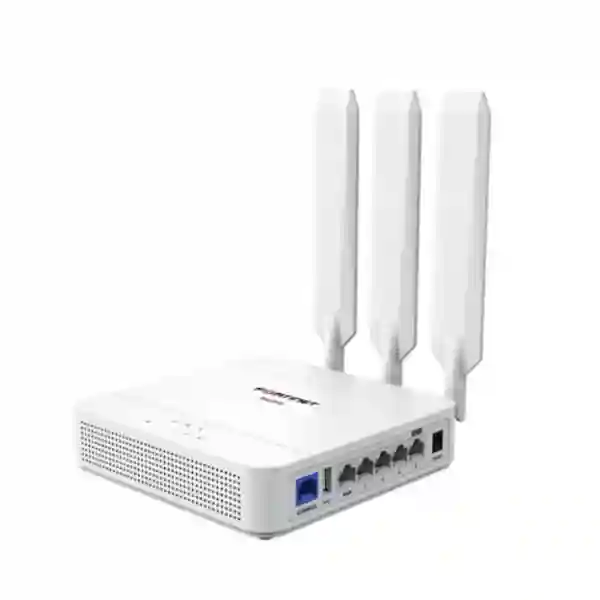
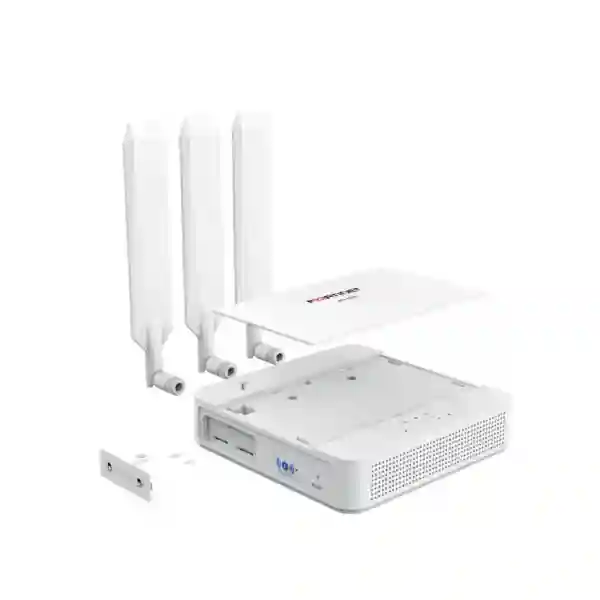
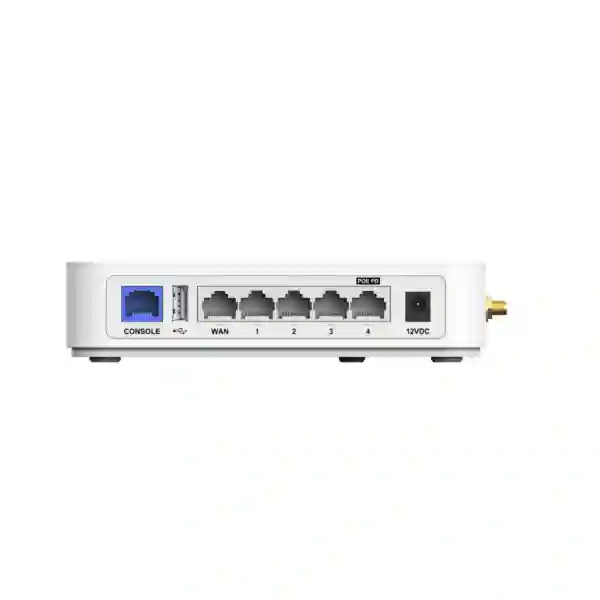
FortiExtender 101G is an indoor Fortinet LTE Cat-6 gateway for organizations that need cellular connectivity as part of a branch, backup-WAN or network-extension design. Fortinet specifies a single internal LTE Cat-6 modem, dual SIM plus eSIM capability, one dedicated Gigabit Ethernet WAN interface, four Gigabit Ethernet LAN interfaces, three external SMA antenna connections and PoE power support on Port4 using IEEE 802.3at. It can participate in FortiGate LAN-extension and WAN-extension deployments, giving network teams a practical way to place cellular connectivity where signal and cabling conditions make sense.
Single internal cellular modem for LTE connectivity.
Flexible cellular subscription options documented by Fortinet.
One 1GbE WAN plus four 1GbE LAN interfaces.
Supports documented LAN-extension and WAN-extension use cases.
What FortiExtender 101G solves
Business connectivity is often constrained by where the primary internet circuit enters a building, where the firewall is installed and where usable cellular signal is available. FEX-101G helps separate those concerns. Instead of assuming that the best cellular reception exists beside the firewall rack, a deployment can position the cellular gateway in a more suitable indoor location and integrate it with the network architecture. This is valuable for branches, retail locations, temporary operational areas, distributed offices and sites that want an alternative path when wired connectivity is unavailable or unsuitable.
The product should be selected as part of an overall design rather than simply as a generic mobile router. Cellular band availability, carrier service, signal quality, antenna placement, FortiGate firmware compatibility, management approach, addressing and failover policy all affect the outcome. FourTeck can help buyers define these inputs before quotation so the requested FEX-101G is matched to the intended deployment.
Verified FEX-101G technical highlights
| Cellular modem | 1 internal LTE Cat-6 modem |
| SIM | Dual SIM plus eSIM |
| Ethernet | 1 × 1GbE WAN, 4 × 1GbE LAN |
| Antennas | 3 external SMA: 2 LTE + 1 GNSS |
| PoE powered | Port4, IEEE 802.3at (25.5W) |
| USB | 1 × USB 2.0 Type-A |
| Bluetooth | BLE 5.0+ |
Deployment, FortiGate integration and buying guidance
Fortinet documents FortiGate LAN-extension and WAN-extension modes for FortiExtender deployments. WAN extension is particularly relevant when the cellular service is intended to become a WAN path controlled by a FortiGate. LAN extension supports scenarios where a remote or extended network segment needs to integrate with FortiGate policy. Before replacing an older FortiExtender or adding FEX-101G to an existing environment, confirm the FortiExtender firmware and FortiOS compatibility. Fortinet specifically calls this out in its replacement guidance for older models.
A quotation request should therefore include the FortiGate model and FortiOS release when integration is required, the intended carrier or SIM strategy, whether cellular is primary or backup connectivity, approximate signal conditions, installation location, power method and quantity. Buyers planning branch resilience should also define how failover should behave and which applications remain critical during a wired-link interruption. For broader security architecture, review FourTeck Tanzania’s integrated IT and cybersecurity portfolio, the Tanzania technology shop, and product guidance and quotation contact. The main Tanzania site also covers firewall and VPN design, network switching, Wi-Fi, structured cabling and lifecycle services that commonly sit around a cellular-WAN deployment.
FortiExtender 101G Tanzania
For organizations evaluating FortiExtender 101G in Tanzania, the strongest use case is not simply “internet through a SIM.” The more useful design question is how cellular connectivity fits into the site’s wider network. A Dar es Salaam headquarters may want a secondary path for business applications when a fixed circuit has an incident. A branch outside a primary commercial district may need an alternative where fixed-line options are limited. A temporary site may need connectivity while permanent infrastructure is being arranged. FEX-101G gives planners an LTE Cat-6 gateway with Fortinet ecosystem integration, while the four LAN ports and dedicated WAN port provide practical Ethernet connectivity around the device.
Tanzania procurement should start with carrier and signal validation. LTE service quality can vary by exact building, room, antenna position and network conditions, so a model specification cannot guarantee a particular real-world speed. Buyers should identify the proposed installation position, test relevant cellular services where possible and decide whether dual SIM or eSIM flexibility is part of the resilience plan. The external antenna connections also mean antenna placement deserves deliberate attention rather than hiding the gateway in a metal rack simply because other network equipment is there.
For FortiGate environments, include the firewall model, FortiOS version and desired extension mode in the project brief. This makes it easier to check compatibility and determine whether the cellular connection will serve as failover, an additional WAN path or part of another branch design. Power should also be considered: FEX-101G can be powered through the documented IEEE 802.3at option on Port4, but the complete installation should be planned around available switching, UPS strategy and cabling. FourTeck Tanzania’s network-security guidance helps place the gateway in the context of firewall, LAN and wireless infrastructure. For procurement, send exact model FEX-101G, quantity, carrier strategy, FortiGate details and site information through the Tanzania enquiry page.
FortiExtender 101G Dar es Salaam
Dar es Salaam buyers commonly operate environments where internet availability affects cloud applications, VPN connectivity, voice, payment workflows, collaboration and access to centralized systems. FEX-101G can be considered when a business wants cellular connectivity integrated into a Fortinet-oriented branch or head-office design. The gateway’s LTE Cat-6 modem and flexible SIM options are relevant to continuity planning, but the design should still begin with the applications that must remain available and the amount of traffic expected when the cellular path is active.
In a multi-floor office, hotel, retail operation, warehouse or professional-services site, the network rack may not be the location with the strongest cellular signal. A key advantage of an extender architecture is the ability to think about placement independently from the firewall’s rack position. Survey signal in candidate locations and consider cable paths, power and physical security. Avoid assuming that a window location is automatically optimal; the practical choice should be based on measured service and an installation that remains maintainable.
If the device will back up a FortiGate internet circuit, document what should happen when the primary service fails and recovers. Critical business traffic may need priority over nonessential downloads during a cellular failover event. Network teams should also consider monitoring, alerting and how staff will know that a branch is operating on its backup path. When requesting a Dar es Salaam quotation, provide the exact FEX-101G model, quantity, FortiGate model and software release, preferred carrier arrangements, site type and desired role. The verified FourTeck Tanzania contact page lists Dar es Salaam contact information and accepts product-selection and quotation enquiries.
FortiExtender 101G Mwanza
Organizations searching for FortiExtender 101G in Mwanza may be supporting offices, trading operations, hospitality sites, distribution points or other branches where connectivity continuity matters. FEX-101G offers an indoor LTE Cat-6 option that can complement fixed internet, but a useful deployment plan should distinguish between emergency backup and everyday primary connectivity. Those roles have different expectations for data consumption, application performance, monitoring and carrier plans.
For backup use, identify the services that must survive an outage. Email and cloud ERP may be essential while large software updates, guest traffic or media services can be deprioritized. If a FortiGate controls the WAN policy, the team can design failover behavior around the broader network rather than treating the cellular gateway as an isolated router. Fortinet’s extension modes make this ecosystem relationship an important reason to consider FEX-101G in an existing Fortinet environment.
Mwanza deployments should also consider physical placement, temperature and indoor installation conditions, antenna orientation and the quality of the selected cellular service at the actual site. The FEX-101G is listed by Fortinet as an indoor gateway, so projects requiring outdoor or ruggedized equipment should evaluate the appropriate FortiExtender category rather than force an indoor model into an unsuitable environment. A quotation brief should include site address or general area, expected installation environment, SIM/carrier plan, FortiGate details and power approach. Related switching, UPS, firewall and cabling requirements can be discussed through FourTeck Tanzania so the extender is purchased as part of a workable branch design rather than as an unplanned standalone component.
FortiExtender 101G Arusha
Arusha businesses evaluating FEX-101G may include hospitality, tourism-support, administration, education, professional services and distributed enterprises. For these environments, cellular resilience can be useful where business operations rely on cloud booking systems, secure VPNs, collaboration or centralized applications. FortiExtender 101G provides LTE Cat-6 connectivity with dual SIM plus eSIM options, which gives network planners flexibility when designing cellular service arrangements.
The best design begins with an availability objective. Decide whether cellular is expected to carry all business traffic during an outage or only a protected set of services. That choice affects data-plan selection and firewall policy. If guest Wi-Fi exists at the same site, it may be sensible to prevent high-volume guest use from consuming limited backup capacity while operational applications need it. Similar considerations apply to CCTV remote viewing, cloud backup and large file transfers.
Placement is another important Arusha planning factor. A gateway should be installed where cellular reception, Ethernet access, power and maintenance requirements can be balanced. The three SMA antenna interfaces include two LTE connections and one GNSS connection according to Fortinet’s datasheet. If a FortiGate is involved, confirm software compatibility before rollout and document whether WAN extension or LAN extension is intended. FourTeck Tanzania’s verified contact page lists an Arusha office contact and can be used to submit the exact product, quantity and integration requirement. Include existing firewall information and any planned UPS or PoE arrangement so the quotation discussion covers the supporting infrastructure as well as the gateway.
FortiExtender 101G Dodoma
For FortiExtender 101G procurement in Dodoma, buyers should evaluate the gateway against branch continuity, secure connectivity and deployment simplicity. Public-sector-adjacent organizations, professional offices, education sites and distributed enterprises may all have different traffic priorities, but the common requirement is often a dependable alternative path when the primary connection cannot be used. FEX-101G’s cellular interface can become part of that plan without requiring the cellular modem to sit inside the FortiGate chassis.
A practical design document should identify the primary ISP, expected cellular carrier, critical subnets or applications, FortiGate model, management method and desired recovery behavior. It should also define who monitors the cellular path. Backup links that are never tested can create false confidence, so organizations should include periodic operational checks in their maintenance procedures while controlling unnecessary data consumption.
Dodoma sites should assess indoor signal where the gateway could realistically be mounted. Power and Ethernet cabling should be protected and documented. The IEEE 802.3at PoE-powered option can simplify some placements when the supporting network equipment is appropriate, while UPS-backed switching may help preserve the connectivity path during short power disturbances. Fortinet lists FEX-101G as a global hardware variant in its ordering guide, but local carrier service and project requirements still need validation. FourTeck Tanzania’s contact page lists Dodoma contact details; buyers can provide model FEX-101G, quantity, FortiGate version, cellular strategy and installation context to start a quotation or compatibility discussion.
FortiExtender 101G UAE
In the UAE, FEX-101G can be considered for branch connectivity, retail resilience, temporary business sites and Fortinet deployments that need an LTE Cat-6 path. The country’s strong fixed and mobile infrastructure does not remove the need for network diversity: businesses still need to decide how applications behave if a primary circuit becomes unavailable. Cellular backup is most useful when it is engineered into firewall policy, monitored and tested rather than connected only after an outage occurs.
UAE procurement should confirm carrier compatibility, service plan, signal conditions and the precise FortiGate integration requirement. For multi-branch businesses, consistent templates for device naming, extension mode, alerting and failover policy can reduce operational complexity. The dual SIM plus eSIM capability offers subscription flexibility, but the actual carrier arrangement should be selected according to commercial and technical requirements. Where LTE Cat-6 is sufficient, FEX-101G is the entry-level appliance in Fortinet’s current FortiExtender ordering guide; sites requiring 5G should evaluate the relevant 5G models instead.
FourTeck’s specialist Fortinet UAE resource provides a regional route for Fortinet-related enquiries. A useful request includes quantity, intended carrier, whether the link is primary or secondary, FortiGate model and FortiOS version, and the installation environment. This helps distinguish a simple hardware requirement from a branch-resilience project involving firewall rules, SD-WAN decisions, switching, power protection and monitoring.
FortiExtender 101G Uganda
Uganda organizations can use FEX-101G as an LTE connectivity component for branches and distributed sites where Fortinet integration is valuable. The product’s role should be defined around actual operational requirements: resilient access to cloud systems, an alternative WAN path, connectivity for a smaller office, or an extension architecture managed with FortiGate. The single LTE Cat-6 modem is suitable where LTE meets the project’s capacity target; it should not be represented as a 5G device.
When planning deployment, test the relevant mobile service at the intended site rather than relying on general coverage assumptions. Building construction, room location and antenna position can materially affect results. Dual SIM plus eSIM options can support flexible carrier planning, although automatic behavior and service terms should be confirmed for the final configuration. Network teams should also document which traffic is allowed during backup operation so important business applications receive appropriate priority.
For a regional procurement route, visit FourTeck Uganda IT and network solutions. Include FEX-101G quantity, FortiGate information, site type, cellular requirement, power method and any supporting switch or UPS needs. For organizations operating in both Uganda and Tanzania, standardizing compatible Fortinet designs can simplify support, but each site’s carrier conditions and software compatibility should still be checked individually.
FortiExtender 101G Kampala
Kampala branches often support cloud applications, IP communications, secure remote access and centralized business systems, making WAN continuity a design consideration rather than a luxury. FortiExtender 101G can provide an LTE Cat-6 cellular path that integrates with FortiGate extension architectures. For offices already standardized on Fortinet, this can provide a more coherent operational model than adding an unrelated consumer cellular router.
Before procurement, determine whether the cellular service is for failover, load-sharing architecture, temporary service or another defined role. Measure signal at candidate mounting points and confirm that the indoor environment suits the product. Where the FortiGate is installed in a communications room with poor cellular reception, the extender concept can allow more practical placement while maintaining network integration. Ethernet cabling and PoE design should be included in the site plan.
Kampala buyers should provide their FortiGate model and FortiOS version because compatibility matters, particularly when adding or replacing FortiExtender hardware. Also list the preferred carrier arrangement, required SIM strategy, quantity and critical applications. FourTeck Uganda can be used for regional discussions, while Tanzania-based multi-country organizations can coordinate the design with the broader FourTeck network. The objective should be a tested resilience workflow with clear monitoring and recovery, not merely ownership of a backup device.
FortiExtender 101G Arua
For an Arua site, FEX-101G may be relevant when a business wants an LTE-based branch connection or backup path integrated into a Fortinet network. Distributed operations can benefit from standardized network equipment because configuration, documentation and troubleshooting become more repeatable. However, standardization should not override site-specific checks: cellular signal, carrier service and installation conditions must be assessed at each location.
The FEX-101G provides one dedicated Gigabit WAN and four Gigabit LAN interfaces alongside its LTE Cat-6 modem. Those interfaces create flexible topology options, but the final design should be based on the FortiGate extension mode and network architecture rather than on using every available port. If PoE power is planned, confirm the upstream equipment can provide the documented IEEE 802.3at requirement on Port4 and consider how that upstream switch is protected during power interruptions.
Arua procurement requests should specify whether the device will serve an existing branch firewall, a new site rollout or replacement of older FortiExtender hardware. Include firmware details when known. Fortinet’s technical guidance for replacing older extenders emphasizes checking FortiExtender firmware against FortiOS compatibility. Buyers should also decide how backup traffic will be limited or prioritized. For regional coordination, FourTeck Uganda provides the closest approved FourTeck country resource, while the Tanzania team can assist customers planning standardized deployments across borders.
FortiExtender 101G Mbarara
Mbarara organizations evaluating FortiExtender 101G should treat cellular connectivity as one layer of branch resilience. A backup LTE gateway is most effective when firewall policy, DNS dependencies, VPNs, cloud applications and user expectations have already been considered. FEX-101G offers Fortinet-managed integration options and an LTE Cat-6 modem, making it relevant to sites where LTE capacity is appropriate and 5G is not a requirement.
Dual SIM plus eSIM capability can support a flexible subscription design, but the business should choose carrier arrangements using local service testing and commercial requirements. The strongest carrier in one building may not be the strongest at another. Antenna placement, walls and equipment-room location can influence signal. Because FEX-101G is an indoor gateway, outdoor or harsh-environment deployments should use equipment intended for those conditions.
For FortiGate-managed branches, define whether LAN extension or WAN extension is needed and confirm software compatibility. Also consider monitoring: operations staff should be able to identify when traffic has moved to cellular and investigate the primary link rather than allowing an unnoticed failover to continue indefinitely. A complete Mbarara quotation request should include model, quantity, FortiGate details, site purpose, carrier plan, installation environment and desired power method. These details help scope the gateway, supporting cabling and any network changes as one deployment.
FortiExtender 101G Gulu
In Gulu, an LTE gateway can support branch connectivity strategies where businesses need an alternative to a single fixed internet path. FortiExtender 101G is designed as an indoor cellular gateway and can integrate with FortiGate using Fortinet’s documented extension modes. This makes it particularly relevant to organizations already operating Fortinet firewalls and seeking a consistent management and architecture approach.
Capacity expectations should be realistic. LTE Cat-6 is the modem category, but actual application performance depends on carrier network conditions, signal, subscription and traffic demand. Before purchase, identify which applications are essential during cellular operation. A branch may choose to maintain ERP, email, VPN and business communications while restricting bandwidth-heavy updates or guest usage. This policy-level planning can make a cellular backup more useful during a real incident.
Installation planning should cover antenna location, Ethernet path, PoE or other power arrangements and physical protection. For sites with UPS-backed network switching, PoE can help keep the extender connected through short power events when correctly designed. Organizations operating multiple Gulu and other Uganda branches can use common documentation templates while validating cellular service per site. Contact the FourTeck Uganda network solutions team or coordinate with FourTeck Tanzania for cross-border projects, providing exact FEX-101G quantities and FortiGate compatibility details.
FortiExtender 101G Kenya
Kenya businesses can consider FortiExtender 101G for LTE-based branch resilience, temporary connectivity and FortiGate extension deployments. The product sits at the entry level of Fortinet’s current FortiExtender appliance range and uses a single LTE Cat-6 modem. It is therefore important to match it to the requirement: organizations specifically requiring 5G capacity should evaluate Fortinet’s 5G models rather than assuming the “G” in 101G means 5G.
For offices, retail branches, service locations and distributed enterprise sites, the procurement discussion should include the existing WAN, desired backup behavior, carrier options and critical applications. Network teams should also decide whether the extender will be centrally managed through the chosen Fortinet architecture and confirm FortiOS compatibility. Signal testing at the proposed mounting location is advisable because cellular performance is highly site-dependent.
FourTeck’s Kenya IT and network-security site provides a regional route for Kenyan requirements. A well-prepared enquiry includes FEX-101G quantity, FortiGate model, FortiOS release, preferred carrier/SIM approach, branch count, power arrangement and expected deployment role. If the project spans Kenya and Tanzania, document which elements can be standardized and which require country-specific carrier or installation decisions. That approach makes procurement easier without pretending that every branch has identical connectivity conditions.
FortiExtender 101G Kuwait
Kuwait organizations evaluating FEX-101G may use LTE as a backup WAN, temporary business connection or integrated Fortinet branch path. The device combines a single LTE Cat-6 modem with dual SIM plus eSIM flexibility and Gigabit Ethernet interfaces. It can therefore fit compact branch designs where LTE performance is sufficient and where a Fortinet-aligned management approach is preferred.
Cellular backup planning should account for the applications that must remain online and the possibility that a backup connection has different bandwidth or data-plan constraints from the primary circuit. Firewall and SD-WAN policy can be designed so priority services continue while nonessential traffic is restricted. For FortiGate integration, confirm firmware compatibility and the required extension mode before deployment.
Physical installation still matters in a highly connected market. Equipment rooms can attenuate cellular signal, so assess practical indoor mounting points and antenna conditions. The FEX-101G’s PoE-powered option can help separate placement from local AC outlets when the upstream network supports IEEE 802.3at and is properly protected. Visit FourTeck Kuwait IT solutions for a regional enquiry route. Provide model, quantity, carrier plan, FortiGate details and whether the requirement is new deployment, expansion or replacement so the quotation can reflect the actual network context.
FortiExtender 101G Ghana
For Ghana deployments, FortiExtender 101G offers an LTE Cat-6 option for organizations that want cellular connectivity integrated with Fortinet branch infrastructure. Potential scenarios include offices, retail operations, professional services and distributed sites that need a secondary path to cloud applications or central systems. The device should be chosen after determining whether LTE meets the expected traffic and performance requirements.
Dual SIM plus eSIM support gives planners options, but carrier diversity only becomes meaningful when the selected services are tested and operational procedures are defined. Organizations should know which SIM is intended for which role, how failover is monitored and what happens when the primary fixed link returns. If the cellular path is rarely used, periodic testing should form part of maintenance so configuration or subscription issues are discovered before an emergency.
FortiGate integration can simplify policy control in an existing Fortinet environment, subject to software compatibility. Include the FortiGate model and FortiOS release in the procurement request, along with branch count, intended cellular carriers and power method. For Ghana enquiries, visit FourTeck Ghana business technology solutions. Multi-country customers can use a common technical baseline while still validating carrier and site conditions locally, reducing unnecessary design variation without making unsupported assumptions about coverage.
FortiExtender 101G Nigeria
Nigeria’s diverse branch and enterprise environments can make network resilience a significant design concern. FortiExtender 101G can add an LTE Cat-6 cellular path to a Fortinet architecture for sites where that capacity and indoor form factor are appropriate. The gateway is particularly relevant when the organization wants cellular connectivity to work as part of FortiGate policy rather than as an unmanaged standalone device.
Large geographic differences make site-level validation essential. A carrier arrangement that works well for one branch should not be assumed to deliver the same result elsewhere. Test service, evaluate antenna placement and define data-plan requirements. Dual SIM plus eSIM capability can contribute to a flexible design, but actual resilience depends on carrier selection, configuration and operating procedures. Businesses should also identify which applications receive priority if the cellular link has less capacity than the primary service.
Fortinet’s datasheet documents four Gigabit LAN ports and one Gigabit WAN port, while FortiGate extension support creates several topology possibilities. The design should use only what the project requires and remain easy to support. For Nigerian requirements, use FourTeck Nigeria IT services as the regional contact route. Include exact FEX-101G quantities, branch locations, FortiGate models and releases, preferred carrier strategy and whether installation requires PoE, UPS integration or new Ethernet cabling.
FortiExtender 101G Seychelles
Seychelles organizations considering FEX-101G may include hospitality, offices, retail, administration and distributed operational sites where a secondary cellular path can support business continuity. FortiExtender 101G is an indoor LTE Cat-6 gateway, so its suitability depends on the cellular services available at the exact site and on the capacity required by critical applications. It should not be selected on model name alone.
Island and multi-site operations can benefit from clear resilience procedures. Define what happens if the primary circuit fails, which applications are allowed over LTE, who receives an alert and how recovery is confirmed. If FortiGate controls the branch, WAN-extension integration can place the cellular path within a consistent security and routing architecture. Firmware compatibility should be checked before rollout, particularly for existing FortiGate estates.
Installation should consider indoor cellular reception, antenna positioning, secure mounting, Ethernet distance and power protection. PoE support can be useful where the best cellular location is away from a convenient outlet, subject to the documented IEEE 802.3at requirement and suitable upstream equipment. Seychelles buyers can coordinate through the broader FourTeck technology network or the Tanzania team for regional projects. A useful enquiry includes exact model, quantity, site type, FortiGate details, cellular carrier plan and intended primary/backup role.
Related network and security planning
FEX-101G rarely operates in isolation. A resilient branch may also require a correctly sized FortiGate, managed switching, UPS protection, VLAN design, Wi-Fi and structured cabling. FourTeck Tanzania’s firewall and VPN solutions explain the security layer; its network switching and routing guidance covers LAN infrastructure; its Wi-Fi planning guidance addresses wireless access; its structured cabling, racks and UPS guidance covers physical infrastructure; and its integrated IT lifecycle services provide a broader project view. The FourTeck Tanzania shop is useful for product browsing, while the contact page is the correct route for an exact quotation.
FEX-101G quotation checklist
To receive a more relevant product discussion, provide: exact model FortiExtender 101G / FEX-101G; required quantity; deployment country and city; existing FortiGate model and FortiOS version; whether cellular is primary, backup or temporary connectivity; preferred mobile carrier or SIM strategy; number of branches; proposed indoor mounting conditions; PoE or local-power preference; critical applications that must operate during failover; and any requirement for switching, UPS, firewall configuration or structured cabling. Do not assume a carrier, subscription, license or accessory is included unless it is explicitly listed in the quotation.
FortiExtender 101G FAQs
Is FortiExtender 101G a 5G gateway?
No. Fortinet specifies FEX-101G with an LTE Cat-6 modem. Buyers requiring 5G should evaluate FortiExtender models that Fortinet explicitly identifies as 5G gateways.
How many Ethernet ports does FEX-101G have?
Fortinet documents one 1GbE WAN port and four 1GbE LAN ports.
Does FEX-101G support dual SIM?
Yes. Fortinet’s current ordering guide lists dual SIM plus eSIM for the 101G.
Can FEX-101G work with FortiGate?
Yes. Fortinet documents FortiGate LAN-extension and WAN-extension support. Confirm FortiExtender firmware and FortiOS compatibility for the planned deployment.
Can FortiExtender 101G use PoE power?
Fortinet specifies PoE power on Port4 using IEEE 802.3at at 25.5W. The upstream power source and installation should be checked accordingly.
What should I send for a Tanzania quotation?
Send the exact FEX-101G model, quantity, site, FortiGate model and software version, intended carrier/SIM arrangement, primary-versus-backup role, installation conditions and any supporting networking requirements.
Decision recap
Choose FEX-101G when the requirement calls for an indoor LTE Cat-6 FortiExtender with FortiGate extension integration, dual SIM plus eSIM flexibility and Gigabit Ethernet connectivity. Reassess the model if the project requires 5G, rugged outdoor operation or a different modem architecture. The best procurement decision also validates carrier service, FortiOS compatibility, placement, power and failover policy before installation.
Consult FourTeck Tanzania
For product selection, compatibility checks and quotation planning, contact FourTeck Tanzania with your FEX-101G quantity and deployment details. The team can discuss the gateway alongside FortiGate, switching, Wi-Fi, cabling and power requirements so the cellular connection is considered as part of the complete network rather than as an isolated purchase.



Reviews
There are no reviews yet.