
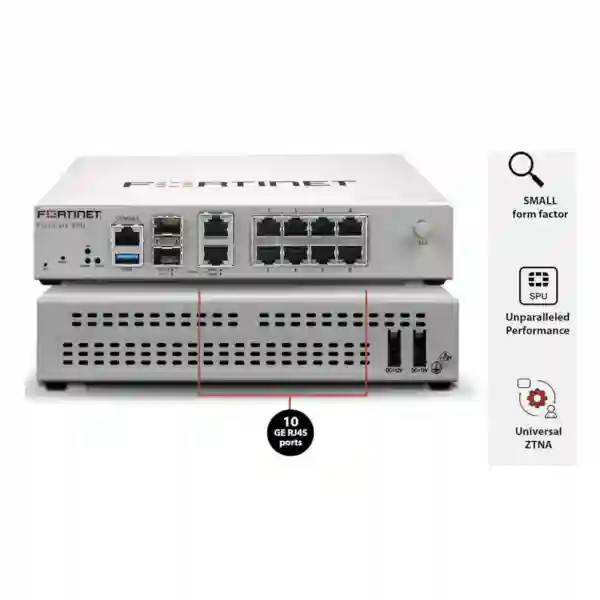
FortiGate 90G Series Tanzania
FortiGate 90G Series brings next-generation firewall security, Secure SD-WAN and modern branch connectivity into a compact Fortinet platform designed for distributed enterprise sites. For organizations in Tanzania evaluating secure internet access, multi-WAN resilience, IPsec VPN, application visibility, segmentation and centrally managed security, the 90G family provides a practical foundation without separating routing and security into unrelated appliances.
Verified Fortinet positioning
Fortinet positions the FortiGate 90G Series for security-driven networks at distributed enterprise sites. The platform runs FortiOS and combines networking and security functions including NGFW enforcement, Secure SD-WAN and zero-trust access capabilities. Fortinet currently publishes 4.5 Gbps IPS, 2.5 Gbps NGFW and 2.2 Gbps threat-protection figures for this series; real production sizing should still account for enabled inspection, traffic mix, VPN use, growth and resilience requirements.
90G or 91G?
The family includes FortiGate 90G and FortiGate 91G variants. Buyers should specify the exact model and required local-storage approach in the quotation rather than treating every 90G-series SKU as interchangeable. Interface media, FortiGuard subscription, FortiCare term, transceivers, high-availability requirements and implementation services should also be documented before purchase.
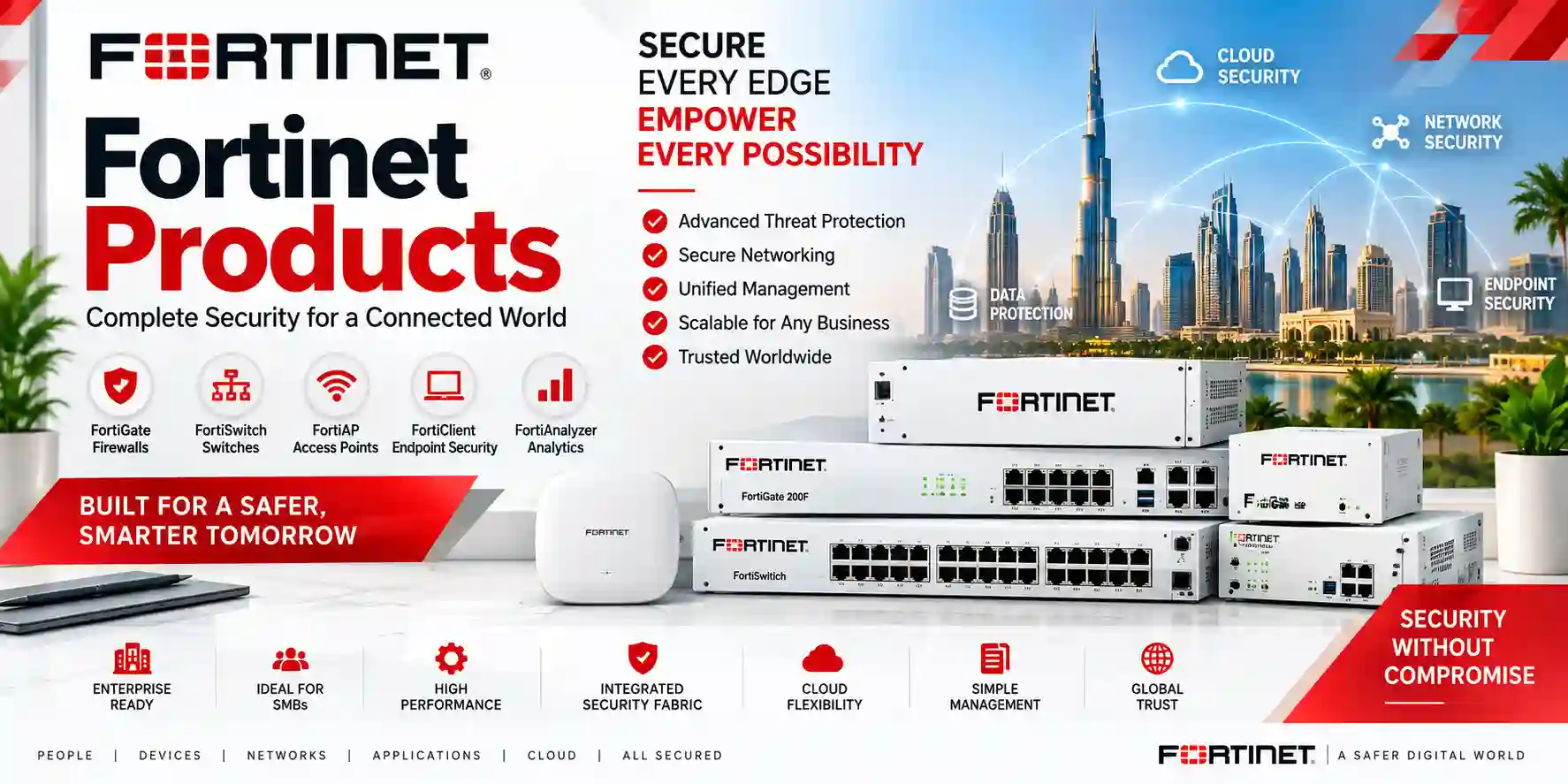
What FortiGate 90G Series can solve
A branch firewall decision is rarely about raw throughput alone. Businesses typically need to protect internet traffic, separate user and device groups, connect sites, control application access, support remote users and maintain predictable WAN performance. FortiGate 90G consolidates these requirements around FortiOS. Secure SD-WAN can be used to steer traffic across multiple links according to business policy, while IPsec VPN can connect branches and data-centre or cloud environments. FortiGuard services extend the appliance with security intelligence and inspection capabilities according to the selected subscription. This combination is particularly relevant where IT teams want fewer disconnected management points and a repeatable branch architecture.
For a Tanzania deployment, sizing should start with measured internet bandwidth, expected encrypted traffic, user and device counts, number of VLANs, VPN topology, business applications, inspection policies and expected growth. Organizations should also identify whether the firewall will control FortiSwitch or FortiAP infrastructure, whether logs must be retained centrally, and whether a second appliance is needed for high availability. These design inputs create a more useful quotation than simply requesting a firewall by model name.
Key capabilities for business buyers
Policy enforcement, application-aware controls and threat inspection can be brought together on one FortiOS platform.
Use multiple WAN paths and application-aware policies to improve branch connectivity and resilience planning.
Build encrypted site-to-site connectivity and support secure access designs according to the organization’s remote-access architecture.
Integrate the firewall with relevant Fortinet security, switching, wireless, management and analytics components.
FortiGate 90G Series Tanzania
Organizations searching for FortiGate 90G Series Tanzania are commonly trying to balance cybersecurity, WAN reliability and procurement clarity. A useful deployment plan begins with the network rather than the appliance. Document internet circuits, critical applications, branch links, cloud services, guest networks, voice systems, cameras, servers and administrative access. Then define which flows require inspection and which services must remain available during an ISP failure. This gives the security team a basis for selecting policies and gives procurement a clearer scope for hardware, FortiGuard and FortiCare terms.
Tanzania businesses with multiple sites can use the 90G family as part of a standardized branch approach. Secure SD-WAN can help organizations use more than one connection and apply business rules to traffic paths. Site-to-site IPsec VPN can connect offices where appropriate, while segmentation can separate staff, servers, guest Wi-Fi, IoT or operational devices. The important point is to design these controls around actual business risk instead of enabling features without a policy objective. Where centralized administration is required, management and logging architecture should be included in the project discussion.
Quotation preparation should identify the exact FortiGate variant, subscription level and term, support requirement, interface media, required optics, migration work and any high-availability pair. Buyers replacing an older firewall should provide the existing model, current WAN speeds, policy count, VPN details and any unusual NAT or routing requirements. FourTeck can use those inputs to frame a more accurate commercial discussion. Customers planning broader Fortinet estates can also review FourTeck’s Fortinet-focused resources for related security planning.
FortiGate 90G Series Dar es Salaam
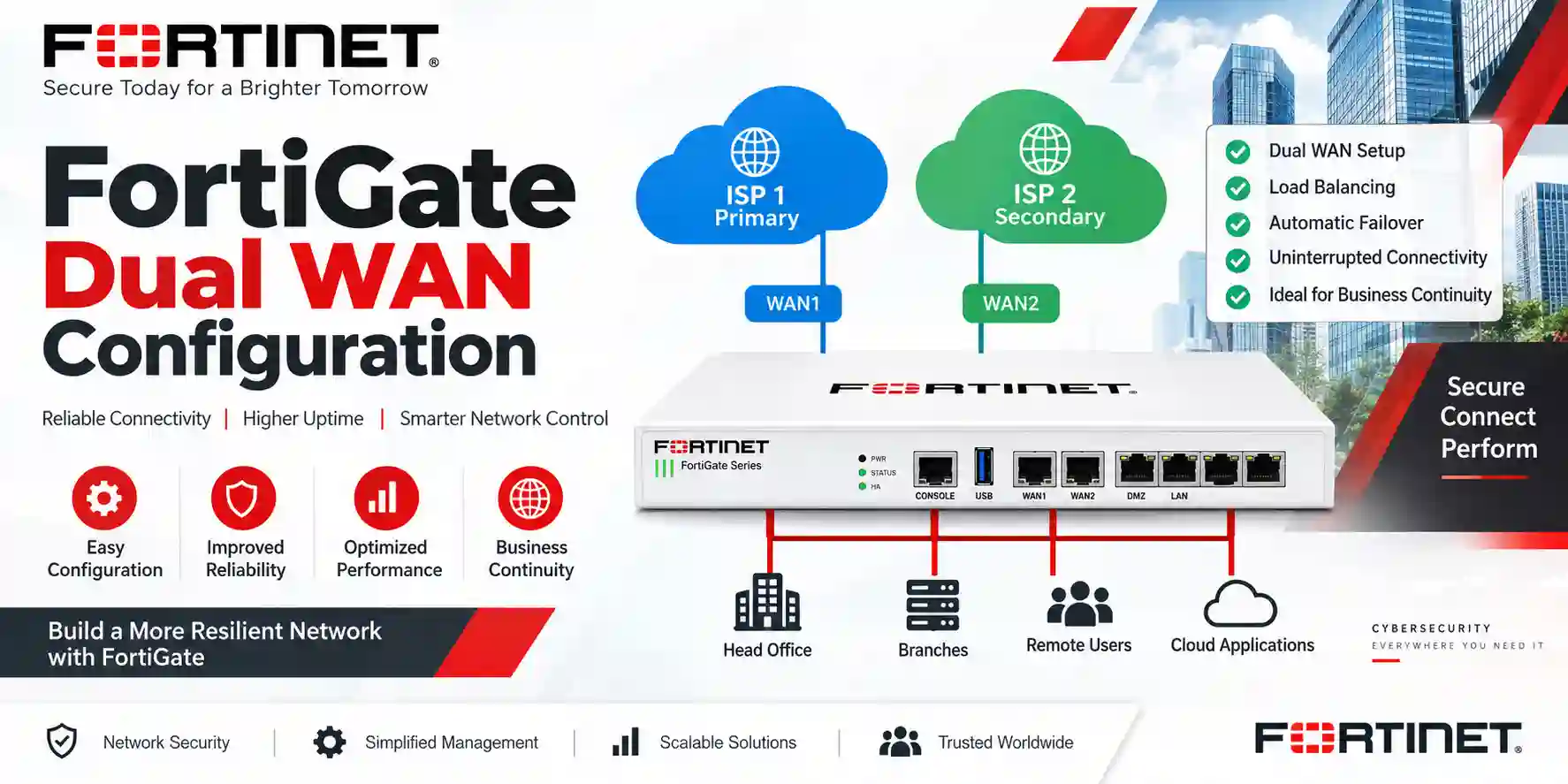
FortiGate 90G Series Dar es Salaam searches often come from organizations supporting headquarters, branch offices, logistics operations, professional services, hospitality, retail or mixed on-premises and cloud workloads. In these environments, the firewall may sit at a critical point between users, business applications and one or more internet providers. The design therefore needs to address security inspection and operational continuity together. A dual-WAN architecture, for example, is most useful when failover criteria, health checks, application priorities and recovery behavior are explicitly defined.
Before ordering, IT teams should map network zones. Finance systems, guest wireless, staff endpoints, servers, CCTV and management interfaces should not automatically share one trust level. FortiGate policies and VLAN-aware designs can help enforce separation, but the required switching and wireless architecture must support the intended segmentation. If the project also includes FortiSwitch or FortiAP equipment, include those components in the design rather than treating the firewall as an isolated purchase. The resulting architecture is easier to document, audit and support.
Dar es Salaam buyers should request quotations that clearly separate appliance, subscription, support, accessories and implementation. State whether the project is a new installation or a migration, and include current bandwidth, user counts, VPN needs and expected growth. If internet continuity is important, describe both WAN handoffs and whether they use copper or fibre. This helps determine interface and transceiver requirements. For a practical visual overview of resilient connectivity, see FourTeck’s FortiGate dual-WAN planning illustration. A complete scope reduces surprises during installation and makes competing quotations easier to compare.
FortiGate 90G Series Mwanza
For FortiGate 90G Series Mwanza requirements, the buying conversation should focus on the services the network must protect and the availability the business expects. A growing office may begin with secure internet access and remote connectivity, then add additional branches, cloud applications, IP telephony, wireless networks and connected devices. Choosing a firewall should therefore account for future traffic and inspection requirements, not only today’s broadband speed. Published performance figures are useful reference points, but actual sizing depends on the security profile and traffic mix enabled in production.
Multi-site organizations can use FortiGate VPN and SD-WAN functions to build a more consistent branch architecture. Policy standards can define how users reach cloud applications, how branches communicate with central services and how backup links are used when the preferred path is degraded. Segmentation is equally important: business systems, guest access and unmanaged devices should be assigned appropriate trust boundaries. This is a design exercise, not merely a checkbox on the firewall specification.
When requesting a Mwanza quotation, provide the number of locations, internet circuits per site, approximate user/device counts, required VPN topology and any central logging or management goals. Identify subscription and renewal expectations early because the security service term affects the commercial scope. If a second firewall is planned for resilience, request matched hardware and aligned subscription terms. Organizations coordinating East African infrastructure may also consult FourTeck Kenya and FourTeck Uganda when planning related regional requirements, while keeping each site’s bandwidth, regulations and operational needs distinct.
FortiGate 90G Series Arusha
FortiGate 90G Series Arusha can suit organizations that need a compact security platform for business internet, inter-site connectivity and controlled access to applications. Hotels, travel operations, professional offices, education environments and other organizations may have very different traffic profiles even when their user counts look similar. Guest traffic can create large session volumes, cloud collaboration can increase encrypted traffic, and video or backup workloads can consume WAN capacity. These factors should be captured before selecting inspection policies and bandwidth expectations.
A sound Arusha deployment separates security zones according to business purpose. Staff devices, guests, servers, building systems and management interfaces can be assigned different policies and access paths. Where two ISPs are available, Secure SD-WAN can support path selection and resilience strategies, but the project should define which applications are prioritized and what happens during partial degradation. VPN requirements should likewise distinguish branch-to-branch tunnels from remote-user access so that authentication, routing and security controls are planned correctly.
Procurement teams should ask for a bill of materials that names the exact 90G-series model, FortiGuard/FortiCare term, any optical modules, rack or installation accessories, and professional services. Migration projects should include configuration review and change-window planning rather than assuming the old configuration can simply be copied. Organizations should also decide who owns policy changes and subscription renewals after go-live. A useful starting point for broader security context is the FourTeck Africa technology resource, while Tanzania-specific requirements can be discussed through the local FourTeck site.
FortiGate 90G Series Dodoma
Buyers researching FortiGate 90G Series Dodoma may include public-facing institutions, offices, education organizations, service providers and businesses that need controlled connectivity between users, internet services and remote sites. The procurement process benefits from a written security requirement: identify protected networks, required applications, remote users, branch connections, audit expectations and acceptable downtime. This prevents a model number from becoming a substitute for a security design.
FortiGate 90G combines firewall and SD-WAN functions under FortiOS, which can simplify architectures that would otherwise use separate routing and security appliances. That convergence can be useful when an organization wants consistent policy and visibility, but it still requires careful configuration. Administrators should define segmentation, least-privilege access, DNS and web controls where licensed, VPN authentication, administrative access and log handling. If the firewall will participate in a wider Fortinet Security Fabric, document which systems need integration and how management responsibilities will be divided.
For a Dodoma quotation, include current and planned WAN bandwidth, number of users and devices, expected encrypted traffic, required interfaces and whether a backup ISP is available. State whether the firewall needs to be delivered as hardware only or with configuration, migration and testing. Subscription terms should be matched to the organization’s budgeting and renewal process. High-availability projects require a separate design discussion because two appliances, aligned licensing and appropriate switching/WAN connectivity are normally involved. FourTeck can review these inputs before a commercial proposal so the request reflects the operational environment instead of relying on a generic firewall bundle.
FortiGate 90G Series UAE
FortiGate 90G Series UAE demand often centers on branch standardization, secure connectivity, hybrid work and regional procurement. Organizations operating between the UAE and Africa may want consistent firewall policies across offices while allowing each location to use locally appropriate WAN providers and network services. The 90G family can form part of such a design by combining NGFW, SD-WAN and VPN functions in FortiOS. Standardization is most effective when the organization also standardizes configuration templates, subscription terms, logging practices and renewal ownership.
UAE projects frequently include fibre or high-speed Ethernet handoffs, so buyers should confirm whether required connections will use RJ45 or optical media and specify compatible transceivers separately when needed. Multi-WAN designs should document primary and secondary circuits, health checks, application steering and failback behavior. Where the site is a regional hub, VPN topology and routing become especially important because branch traffic may traverse the UAE location to reach shared services or cloud environments. Those dependencies should be tested during deployment.
Commercially, request the exact appliance and FortiGuard/FortiCare bundle rather than a vague “90G with license.” Include the desired term and professional services scope. Organizations coordinating GCC projects can review FourTeck UAE and the specialist firewall solutions resource for regional context. Tanzania buyers sourcing for a connected UAE office should still validate model, subscription, support and deployment requirements for each location instead of assuming one bill of materials fits every site.
FortiGate 90G Series Uganda
FortiGate 90G Series Uganda projects can range from a single business edge to a multi-branch rollout linked with Tanzania, Kenya or other regional operations. The appliance is relevant where organizations want to combine secure internet access, application control, VPN and SD-WAN in a common FortiOS environment. For multi-country networks, consistency can reduce operational complexity, but bandwidth, ISP characteristics and local application dependencies should still be assessed independently at each branch.
A practical Uganda design begins by classifying traffic. Business-critical SaaS, voice, payment systems, guest access, backups and general browsing have different performance and security needs. Secure SD-WAN policies can use link health and application intent to influence path selection, while firewall policies can enforce segmentation between network zones. VPN architecture should define whether branches connect directly, through a hub, or through a broader overlay. Authentication and administrative access should be planned with the same care as throughput.
For procurement, request a documented scope that includes hardware variant, security subscription, FortiCare, term length, interface accessories and implementation. If the organization expects rapid growth, include projected bandwidth and user counts rather than sizing only for the present. Where local logging or centralized analytics is required, include that requirement before the quotation is finalized. Organizations with regional operations can use FourTeck Uganda for Uganda-focused discussions while coordinating Tanzania requirements separately. This helps procurement maintain a common technology strategy without overlooking site-specific design inputs.
FortiGate 90G Series Kampala
For FortiGate 90G Series Kampala, businesses commonly need a firewall that can protect cloud-connected offices while supporting reliable branch and remote connectivity. The right configuration depends on more than headcount. A small organization moving large backups or inspecting substantial encrypted traffic may create a heavier workload than a larger office with simple web access. IT teams should therefore measure WAN utilization, identify peak periods and list the security profiles they expect to enable.
Kampala offices using multiple internet services can consider Secure SD-WAN for policy-driven path selection and failover. This does not remove the need for sound ISP diversity or testing. Teams should verify physical handoffs, addressing, routing and failure scenarios. Network segmentation should be planned at the same time, especially when staff, guest wireless, CCTV, voice and server networks coexist. The firewall policy should reflect business relationships between those zones rather than permit broad access for convenience.
A quotation request should identify the exact 90G-series appliance, desired FortiGuard and FortiCare term, VPN requirements, any high-availability plan, and configuration or migration services. If the site is part of an East African network, include the expected number of tunnels and routing design. Centralized management and logging requirements should also be stated. These details allow suppliers and integrators to quote comparable scopes and reduce the risk of discovering missing licenses or accessories late in the project. Buyers can coordinate Uganda-specific requirements through FourTeck’s Uganda presence while using the Tanzania contact channel for Tanzania procurement and cross-border project planning.
FortiGate 90G Series Arua
FortiGate 90G Series Arua requirements may involve branch connectivity where WAN resilience and remote administration are as important as perimeter security. In a distributed organization, local sites need consistent policy without requiring every change to be improvised on-site. FortiOS provides a common operating environment for firewall, VPN and SD-WAN functions, which can support a standardized architecture when the organization has clear configuration and change-management practices.
Before deployment, identify the site’s primary and backup links, addressing method, critical cloud services, branch applications and remote support needs. If link quality varies, define measurable health checks and application priorities rather than relying only on a basic link-up/link-down state. Segmentation can separate business users from guest or device networks, reducing unnecessary lateral access. Where a branch connects to headquarters, routing and VPN failover should be tested under realistic conditions before the installation is considered complete.
Arua procurement teams should include subscription and support terms in lifecycle budgeting. Advanced security capabilities depend on the selected services, and renewal planning is part of maintaining the intended protection level. The bill of materials should also identify optics or cabling requirements, power/environment considerations and whether configuration is included. If the organization is deploying several branches, ask for a standard configuration baseline plus documented site-specific differences. This approach makes later troubleshooting and policy review easier. FourTeck can use a completed network questionnaire to discuss a suitable 90G-series scope without making assumptions about stock, delivery timing or service coverage.
FortiGate 90G Series Mbarara
Organizations evaluating FortiGate 90G Series Mbarara should consider how the firewall fits into the complete access network. A branch may include managed switches, wireless access points, IP phones, cameras, printers and cloud-managed applications. Security improves when these components are grouped into intentional zones and access policies rather than a single flat LAN. FortiGate can act as the policy enforcement point, while compatible switching and wireless infrastructure can support VLAN segmentation and controlled access.
WAN design is another major factor. If two providers are available, Secure SD-WAN can help define preferred paths and failover behavior for selected applications. If only one primary service exists, the organization can still plan for alternative connectivity according to its business continuity requirements. VPN design should consider whether users need access into the branch, whether the branch connects to a central office, and which networks should be reachable across each tunnel. Administrative interfaces should be restricted and protected according to the organization’s security policy.
For a useful Mbarara quotation, specify internet bandwidth, user/device estimates, inspection requirements, VPN counts, subscription term and any integration with FortiSwitch, FortiAP, FortiManager or FortiAnalyzer. Do not assume accessories or services are automatically included with the appliance. Ask for each component to be itemized. For replacement projects, document the current firewall and any special NAT, routing or application rules that must be migrated. This gives the implementation team enough context to plan testing and reduces the chance that a business-critical dependency is discovered only during cutover.
FortiGate 90G Series Gulu
FortiGate 90G Series Gulu can be evaluated for offices and branches that require secure internet access, encrypted site connectivity and a platform capable of supporting changing WAN requirements. The 90G family is not simply an internet router; its value comes from applying security policy and inspection while integrating networking functions such as SD-WAN. That means sizing should account for the security services that will actually be enabled, not only the headline firewall-throughput figure.
A branch assessment should list critical services, users, devices, network zones and remote dependencies. If the site relies on cloud applications, determine which traffic needs priority and how users should be affected when a WAN path fails. If local servers exist, define who may reach them and from which networks. If guest wireless is offered, isolate it appropriately. These decisions create the policy framework that the FortiGate will enforce. Logging and alerting should also be planned so important events are visible rather than simply recorded locally and forgotten.
Gulu buyers should request clear licensing and renewal information with the initial proposal. FortiGuard security services and FortiCare support should be matched to the intended deployment and organizational support model. Where an HA pair is needed, request two appropriately matched appliances and plan upstream/downstream connectivity to avoid creating a single point of failure elsewhere. Include configuration, migration, documentation and handover requirements in the statement of work. A well-scoped request allows FourTeck to discuss the 90G Series in terms of the customer’s operational objectives rather than presenting a generic appliance-only quote.
FortiGate 90G Series Kenya
FortiGate 90G Series Kenya searches frequently reflect demand for business firewalls that combine threat protection with branch networking and VPN. Organizations operating across Kenya and Tanzania can benefit from using a common FortiOS policy framework, especially when IT teams manage several offices. Standardization can simplify documentation, staff training and renewal tracking, but every location should still be sized according to its bandwidth, users, traffic and availability needs.
Kenya deployments with multiple WAN services can use Secure SD-WAN to define how business applications use available paths. This is valuable for branch continuity, but resilient design also requires diverse upstream services, suitable addressing and tested failover. Security segmentation should separate business systems, guest access, voice, cameras and administrative networks where appropriate. For organizations using site-to-site VPN, document tunnel topology, routing and expected encrypted bandwidth. If remote users are part of the scope, authentication and endpoint-access requirements should be addressed separately from branch tunnels.
Procurement should specify hardware, subscription, FortiCare, term, accessories and services. Buyers comparing quotations should check whether one offer includes only the appliance while another includes a security bundle or deployment work. Avoid comparing totals until the scope is normalized. FourTeck’s Kenya technology site provides a regional route for Kenya requirements, while FourTeck Tanzania remains the appropriate starting point for Tanzania projects. Cross-border organizations should align renewal dates and configuration standards where practical while keeping local deployment documentation accurate.
FortiGate 90G Series Kuwait
FortiGate 90G Series Kuwait projects may involve branch security, regional VPN connectivity, SD-WAN and standardized policy across GCC operations. The platform’s converged networking and security approach is useful when an organization wants one FortiOS environment to handle firewall enforcement and WAN policy. As with any security appliance, however, model selection should be based on expected inspected traffic, VPN requirements and growth rather than raw internet speed alone.
Organizations linking Kuwait with UAE or African branches should document the network topology before procurement. Identify which sites act as hubs, which applications are centralized, and whether traffic must reach cloud services directly from each branch or traverse a central location. These decisions affect VPN routing, bandwidth and failure behavior. Multi-WAN sites should define preferred paths and health criteria. Segmentation should protect administrative, user, guest and device networks according to business requirements.
A Kuwait quotation should identify exact model, FortiGuard/FortiCare subscription and term, interfaces, transceivers, HA requirement and professional services. If procurement is coordinated regionally, ensure that each site’s support and renewal ownership is recorded. Hardware standardization is most valuable when it is accompanied by standardized configuration templates and change controls. Customers can review FourTeck Kuwait for Kuwait-focused technology requirements and coordinate Tanzania needs through the Tanzania site. This regional approach can help multi-country IT teams keep commercial and technical scopes organized without assuming identical service conditions in every market.
FortiGate 90G Series Ghana
FortiGate 90G Series Ghana is relevant to organizations seeking a modern branch firewall with integrated SD-WAN and VPN capabilities. For a single site, the priority may be secure internet access and segmentation. For a distributed business, the priority may shift toward repeatable branch policies, resilient WAN connectivity and centralized visibility. The same appliance can participate in different architectures, so a procurement request should explain the intended role rather than list only the model.
Security planning should start with traffic and trust boundaries. Determine which networks contain sensitive systems, which users need remote access, which applications are business critical and which devices should have limited connectivity. Then define inspection and access policies. If dual WAN is available, Secure SD-WAN can help direct applications across paths based on policy and link health. If the branch connects to other offices, IPsec VPN design should include routing, tunnel redundancy and expected encrypted traffic.
Ghana buyers should also plan lifecycle costs. Security subscriptions and support terms should be stated in the quote, and renewal responsibility should be assigned before deployment. If local logging is important, confirm the selected model and logging architecture. If centralized analytics or management is required, include those systems in the design. FourTeck’s Ghana technology site can support Ghana-focused enquiries, while Tanzania projects can be scoped independently through FourTeck Tanzania. For multi-country organizations, aligned policy templates and renewal calendars can reduce administration while still allowing each branch to retain the settings required by its local network.
FortiGate 90G Series Nigeria
FortiGate 90G Series Nigeria can support organizations that need secure branch networking, VPN and multi-WAN policy in a compact platform. Where internet connectivity is business critical, the firewall design should consider not only cybersecurity but also link diversity, application priority and failure behavior. Secure SD-WAN can use policy and health information to steer traffic, but a resilient outcome depends on the quality and independence of the underlying circuits.
Nigeria deployments should map user, server, guest, voice and device networks into appropriate security zones. This is especially important at sites with a mixture of corporate endpoints and operational or unmanaged equipment. Application controls and threat-inspection services should be selected according to the organization’s risk profile and subscription. For VPN, document branch topology, remote access requirements and authentication methods. If a site acts as a regional hub, account for traffic from downstream branches when estimating capacity.
Commercial requests should name the exact FortiGate 90G-series variant, required FortiGuard and FortiCare term, accessories and implementation scope. Ask suppliers to separate hardware, subscription and services so comparisons are meaningful. If an HA design is required, include both units and the surrounding switching/WAN dependencies in the plan. Organizations can use FourTeck Nigeria for Nigeria-specific requirements and coordinate Tanzania projects through the Tanzania team. A consistent regional firewall standard can simplify operations, but it should never replace site-specific capacity assessment, documentation and testing.
FortiGate 90G Series Seychelles
FortiGate 90G Series Seychelles requirements can be shaped by the importance of reliable connectivity, remote administration and secure access to cloud or regional services. Hotels, professional organizations, distributed businesses and other sites may carry a mix of staff, guest and operational traffic. Those networks should be segmented according to trust and business purpose, with firewall policy controlling necessary communication between zones. The design should also consider how much encrypted traffic will be inspected and how peak internet usage affects the security appliance.
Where more than one WAN service is available, Secure SD-WAN can support policy-based path selection and failover. Critical applications can be treated differently from bulk traffic, provided the deployment has appropriate link monitoring and tested policies. VPN can connect Seychelles sites with regional offices or cloud environments, but routing and redundancy should be documented in advance. Remote administration should be tightly controlled and integrated with the organization’s broader access-security practices.
Procurement should include a complete bill of materials: exact 90G-series model, subscription, support term, interfaces or optics, configuration, migration and documentation. Buyers should avoid assuming that advertised appliance pricing includes FortiGuard services or implementation. For regional organizations, it can be useful to standardize hardware and policy templates while recording site-specific WAN and VLAN details. FourTeck can discuss a Seychelles requirement through its broader Africa technology channel while Tanzania enquiries remain centered on the Tanzania site. Availability, delivery and service scope should be confirmed in the quotation rather than assumed.
FortiGate 90G deployment and buying checklist
For a useful quotation, provide: current and planned WAN bandwidth; number of users and devices; required VLANs and security zones; critical SaaS and on-premises applications; number and type of VPN connections; primary and backup ISP details; expected FortiGuard security services; FortiCare/support term; centralized management or logging requirements; high-availability requirement; copper or fibre handoffs; transceiver needs; migration source firewall; configuration and testing scope; documentation and handover expectations; and desired renewal term. This information helps distinguish appliance sizing from complete project sizing.
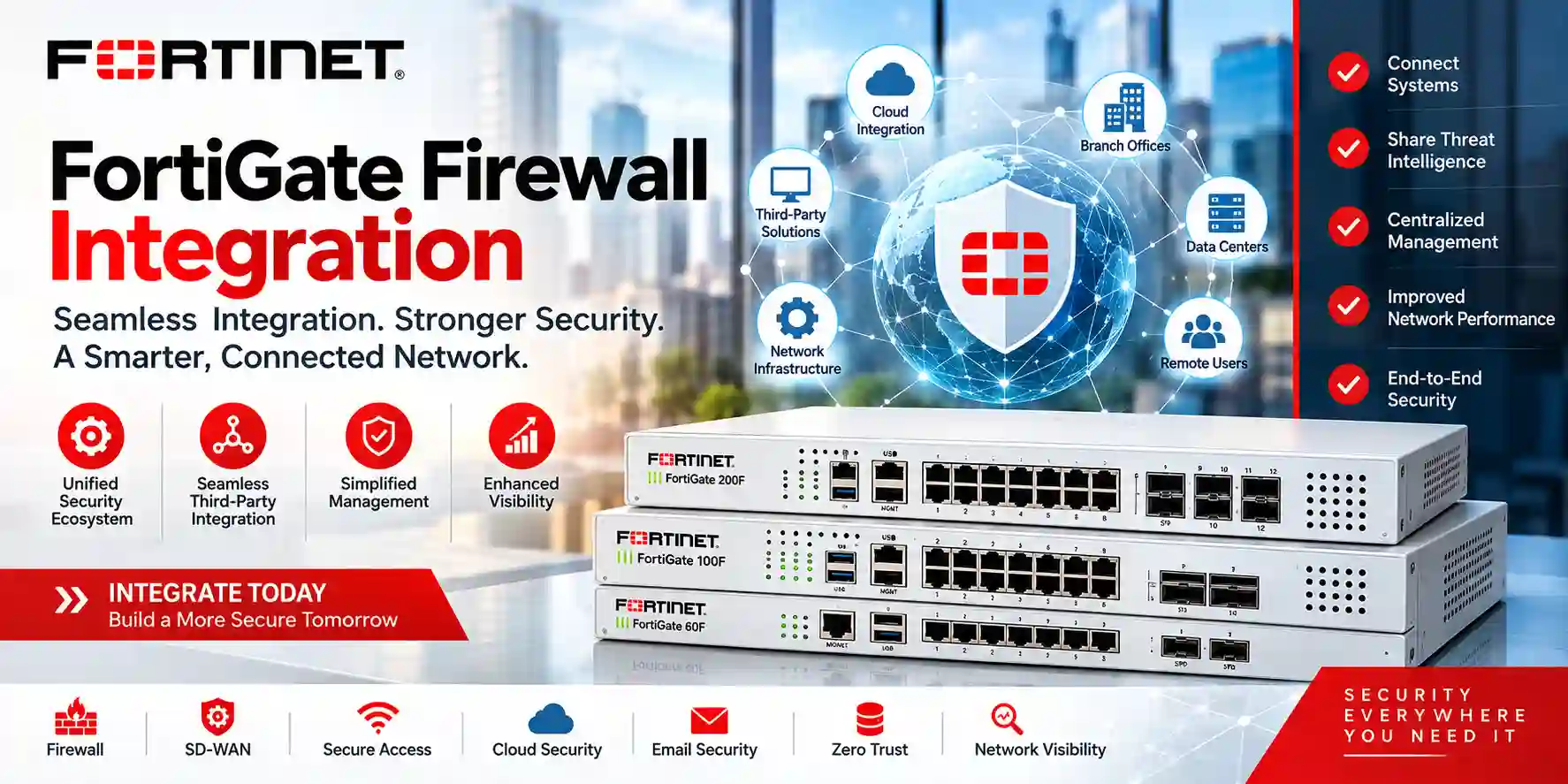
FortiGuard licensing and renewal planning
FortiGate hardware and the security-service lifecycle should be planned together. FortiGuard AI-powered security services add capabilities according to the selected bundle and term, while FortiCare addresses support entitlements. Exact bundle contents can change, so the quotation should name the current Fortinet part number and included services rather than relying on an informal label. Organizations should assign an internal owner for renewal dates and keep subscriptions aligned where multiple branches are deployed. A lapse in a required security service can undermine the operating model even when the hardware remains installed.
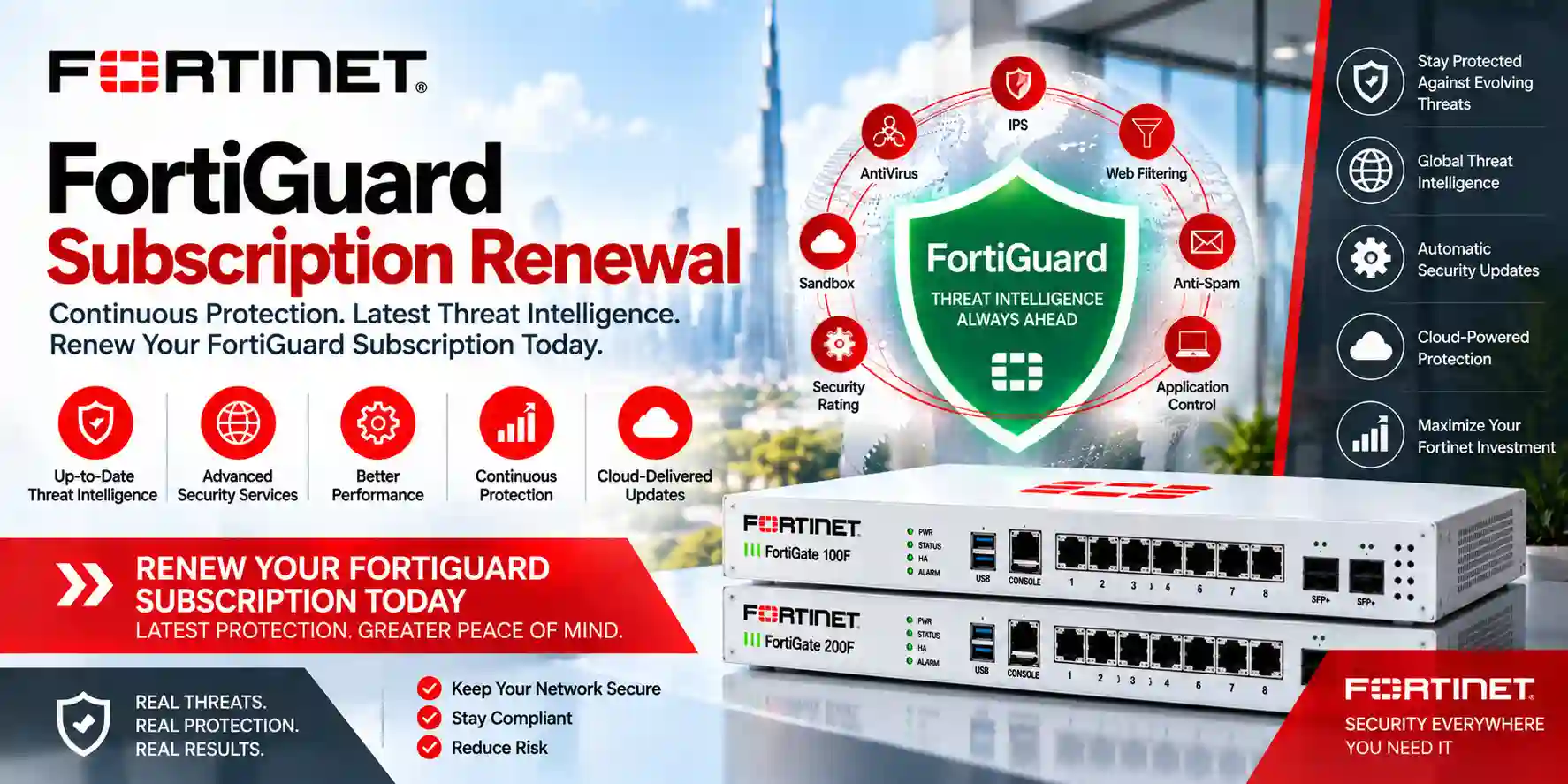
For multi-site rollouts, consider whether common renewal dates simplify budgeting and administration. Also decide how firmware upgrades, policy changes, configuration backups and security alerts will be managed. The firewall purchase is the start of an operational lifecycle, not the end of a procurement task. FourTeck’s supplied FortiGuard renewal visual can help frame internal discussions around subscription continuity.
Frequently asked questions
What is the FortiGate 90G Series?
It is a Fortinet next-generation firewall family designed for secure networking at distributed enterprise sites, combining FortiOS security, SD-WAN and related networking functions in one platform.
What threat-protection performance does Fortinet publish?
Fortinet currently lists 2.2 Gbps threat-protection throughput for the FortiGate 90G class. Published test figures are reference values; production sizing must consider enabled security features, traffic mix, VPN use and growth.
Can FortiGate 90G be used for dual-WAN and SD-WAN?
Yes. Secure SD-WAN is a core Fortinet use case for the 90G Series. A successful design should still define link health, application priorities, addressing, failover and failback behavior.
Does the appliance price automatically include FortiGuard services?
Do not assume so. Request a quotation that identifies the exact hardware SKU, FortiGuard/FortiCare bundle, term and services. Hardware-only and bundled offers are commercially different.
What information should I send for a Tanzania quote?
Send WAN bandwidth, user/device counts, required VPNs, number of sites, VLAN/security zones, critical applications, subscription term, HA requirement, interface media and whether you need configuration or migration assistance.
Decision recap
FortiGate 90G Series is a strong candidate when a branch or distributed organization needs converged NGFW security, Secure SD-WAN, VPN and FortiOS-based policy control. The correct purchase is not determined by model name alone. Validate inspected throughput needs, WAN design, segmentation, VPN topology, subscription level, management, logging, support and lifecycle ownership. Then request an itemized quotation that reflects the actual deployment.
Talk to FourTeck about FortiGate 90G Series
Share your Tanzania site count, bandwidth, users, VPN requirements and preferred subscription term. FourTeck can use those details to discuss the appropriate 90G-series scope, related Fortinet components and quotation structure. No stock, delivery time, price or service coverage is implied until confirmed in a formal quotation.




Reviews
There are no reviews yet.