
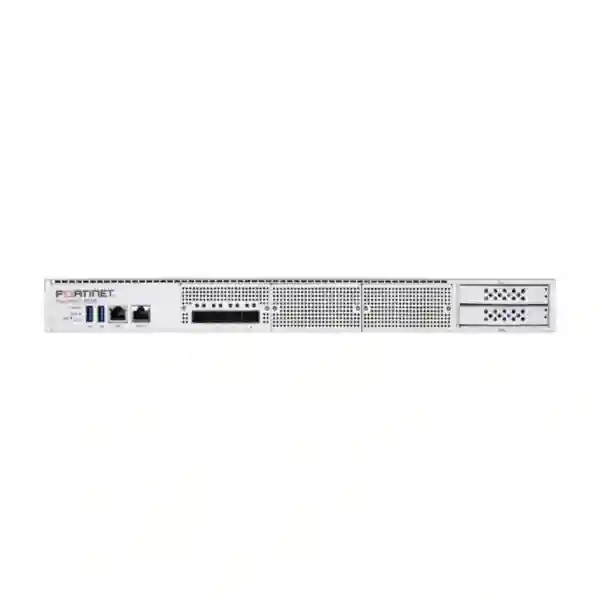
FortiNAC FNC-CA-600F Tanzania
FortiNAC FNC-CA-600F is a Fortinet Control and Application Server appliance for organizations that need scalable network access control across large wired, wireless, IoT and operational environments. Fortinet specifies capacity of up to 15,000 network ports per server. For buyers in Tanzania, the key purchasing question is not simply appliance capacity: successful NAC projects also depend on endpoint counts, switch and wireless infrastructure, authentication sources, segmentation objectives, licensing, rollout phases and operational ownership.
Verified platform role
Fortinet identifies FNC-CA-600F as a FortiNAC Control and Application Server. The current FortiNAC portfolio lists the appliance at up to 15,000 managed network ports per server. Fortinet documentation identifies the F-series as using FortiNAC-OS and provides installation, deployment, licensing and high-availability guidance that should be reviewed during design.
Procurement focus
A quotation should define the required appliance role, endpoint licensing, support, intended deployment architecture and integration scope. Network inventories, port counts, authentication systems, switch models, wireless controllers, VLAN strategy and guest or contractor access requirements should be documented before final sizing.
FortiNAC FNC-CA-600F features and deployment value
Network access control gives IT and security teams a structured way to identify what is connected, apply access policy and coordinate responses when devices do not meet organizational requirements. FortiNAC is designed around visibility and control of devices and users on the network. In a practical enterprise project, the FNC-CA-600F can form part of an architecture that helps teams understand network attachment, classify devices, implement access rules and automate selected remediation or segmentation actions. These outcomes depend on the surrounding network design and supported integrations, so compatibility validation is an important pre-purchase task.
| Item | FNC-CA-600F |
|---|---|
| Function | Control and Application Server |
| Published capacity | Up to 15,000 network ports per server |
| CPU | AMD EPYC 7413, 24 core, 2.65 GHz base frequency |
| Memory | 32 GB DDR4 |
| Storage | 2 × 960 GB SSD |
| Network interfaces | 1 × GbE RJ45 plus 4 × 1GbE SFP or 10GbE SFP+ |
| RAID | Software RAID 1 |
| Form factor | 1U rack mount |
FortiNAC FNC-CA-600F Tanzania
Organizations evaluating FortiNAC FNC-CA-600F in Tanzania are typically trying to bring greater control to networks that have grown beyond simple user-and-PC access. Corporate laptops, employee phones, IP phones, printers, cameras, access-control devices, wireless endpoints, servers and specialized equipment can all create different policy requirements. A NAC design begins with visibility: teams need an accurate picture of devices, connection methods and network ownership before deciding what should be permitted, restricted, isolated or monitored. The FNC-CA-600F offers a high-capacity physical Control and Application Server option for this type of program, with Fortinet publishing support for up to 15,000 network ports per server.
For Tanzania procurement, prepare a port and endpoint inventory rather than relying only on employee headcount. Count access-switch ports, wireless attachment, branch infrastructure, guest access, contractor devices, unmanaged endpoints and planned growth. Document authentication systems and network segmentation objectives. This information helps determine whether the appliance capacity is appropriate and what licensing and deployment model should accompany it. Organizations with distributed branches should also consider WAN dependency, centralized administration, operational escalation and how policy changes will be tested before broad enforcement.
A phased rollout can reduce operational risk. Discovery and profiling can be established first, followed by policy validation for controlled user or device groups. Enforcement can then be introduced according to business priorities. Buyers should request a quotation that clearly separates appliance, applicable endpoint licensing, support and professional deployment scope. For complementary security planning, review FourTeck Tanzania technology solutions, FourTeck Fortinet specialist resources and FourTeck Africa solutions. These resources help place NAC within the wider network-security and regional procurement discussion without assuming a one-size-fits-all architecture.
FortiNAC FNC-CA-600F Dar es Salaam
Dar es Salaam organizations often operate dense headquarters, multi-floor offices, hospitality environments, logistics facilities, campuses and branch-connected networks where the number and diversity of attached devices can change quickly. For an FNC-CA-600F project, a useful first step is mapping network access by building, floor, switch stack, wireless zone and business function. That produces a more useful design baseline than estimating only the number of users. NAC policies can then be planned around device identity, ownership, authentication and the level of access required for each operational role.
Before procurement, technical teams should record switching and wireless vendors, firmware versions, authentication services, VLAN structure, DHCP and DNS dependencies, directory services and any existing security integrations. The purpose is to identify compatibility questions before the appliance is installed. A proof-of-concept or controlled deployment segment is valuable where the network contains older switches, specialized equipment or devices that cannot use conventional user authentication. Such endpoints may require alternative identification and policy methods, and those methods should be documented rather than improvised during production rollout.
Dar es Salaam buyers should also define operational responsibility. Network teams, security teams and service desks need an agreed process for exceptions, quarantined endpoints, guest onboarding and policy changes. The published 15,000-port capacity provides a sizing reference, but architecture should still account for growth and resilience requirements. Procurement requests should identify required licensing, support term and implementation assistance separately. Organizations integrating NAC with perimeter controls can explore FourTeck firewall solution resources and FourTeck IT services for broader planning context. The objective is a deployment that improves visibility and policy consistency while fitting existing network operations.
FortiNAC FNC-CA-600F Mwanza
For organizations in Mwanza, FortiNAC FNC-CA-600F can be evaluated where a central IT team needs clearer control over users and devices across office, campus, warehouse, healthcare, education or distributed business environments. The buying process should start with the network itself. Identify which sites will participate, how many switch ports and wireless-connected devices exist, which endpoints are managed by IT, and which categories are unmanaged or specialized. Cameras, printers, phones, scanners, building systems and other connected equipment can materially change the access-control plan even when they do not correspond to individual employees.
A sound deployment plan distinguishes visibility from enforcement. During initial discovery, teams can validate device classification and identify exceptions. Policy can then be introduced in controlled groups so that critical business systems are not disrupted by an overly broad rule. This is particularly important for environments where network equipment has been accumulated over several upgrade cycles. Compatibility and supported integration should be checked against current Fortinet documentation for the intended FortiNAC software release.
When requesting an FNC-CA-600F quotation for Mwanza, include expected port scale, endpoint categories, existing authentication services, branch topology, resilience expectations and support requirements. Fortinet publishes the appliance as a Control and Application Server capable of managing up to 15,000 ports per server, making it relevant to substantial environments, but that figure should be treated as a capacity specification rather than a substitute for solution design. If the organization also needs security controls at internet or branch boundaries, FourTeck Tanzania can be used as the starting point for related solution discussions. A complete procurement brief makes licensing, implementation and operational requirements easier to scope accurately.
FortiNAC FNC-CA-600F Arusha
Arusha enterprises considering the FNC-CA-600F may have a mix of corporate users, guest networks, hospitality systems, education environments, nonprofit operations, tourism-related businesses and branch connectivity. These environments benefit from treating access control as a lifecycle rather than a single appliance installation. Devices first need to be discovered and identified, then associated with an appropriate policy. The organization also needs procedures for unknown devices, temporary users, contractors and equipment that cannot participate in conventional authentication workflows.
The FNC-CA-600F provides the physical Control and Application Server role in Fortinet’s FortiNAC architecture, with published capacity up to 15,000 network ports. Before selection, assess whether the organization prefers a physical appliance architecture and how it will fit rack, power, network-interface and resilience requirements. Fortinet lists the appliance as a 1U rack-mount platform with redundant power supplies, and the current data sheet should be used to validate hardware details during procurement. High-availability planning should follow documentation for the exact software release because Fortinet’s support guidance can evolve.
For Arusha deployment planning, create a list of critical business systems and device categories that must remain available during policy changes. Define test groups and rollback procedures before enforcement. The quotation request should specify the intended deployment scope, licensing needs, support period and whether implementation assistance is required. Regional organizations with sites beyond Tanzania can also review FourTeck Kenya solutions and FourTeck Uganda solutions to frame cross-border technology requirements. Consistent policy objectives can be shared across locations while each site’s network inventory and operational constraints remain independently validated.
FortiNAC FNC-CA-600F Dodoma
In Dodoma, organizations evaluating FortiNAC FNC-CA-600F may be focused on structured access governance for administrative networks, institutions, enterprises, education, healthcare or distributed operations. A NAC procurement should begin by defining the policy problem. Examples include unknown devices joining access networks, inconsistent guest access, limited visibility into IoT equipment, difficulty separating managed from unmanaged endpoints, or a need to apply network access rules more consistently. Clear objectives help prevent a project from becoming an appliance purchase without an operating model.
The FNC-CA-600F’s published capacity of up to 15,000 network ports makes it a candidate for larger networks, but design should include present scale and realistic growth. Teams should document switching infrastructure, wireless controllers, network segmentation, directory and authentication services, IP addressing and any security platforms expected to exchange information with FortiNAC. Current Fortinet compatibility documentation should be checked for the selected software release. Organizations should also decide who owns policy approval and who responds when an endpoint is denied, isolated or requires an exception.
A useful quotation brief for Dodoma includes appliance model, anticipated endpoint licensing, support, desired rollout phases, high-availability expectations and implementation scope. Where multiple sites are involved, state whether policies will be centralized and how branch connectivity affects administration. Avoid basing the purchase solely on headline port capacity. The practical value comes from a controlled deployment process, accurate classification and policies that match business risk. FourTeck Africa provides additional regional context for organizations coordinating technology across African operations, while the Tanzania site remains the appropriate contact point for this page’s quotation request.
FortiNAC FNC-CA-600F UAE
UAE enterprises considering FortiNAC FNC-CA-600F frequently operate high-density office, hospitality, retail, healthcare, education, logistics and multi-site networks. In such environments, network access is no longer limited to corporate laptops. Wireless endpoints, IoT systems, IP phones, cameras, printers and third-party equipment create a broad device population that needs visibility and policy. The FNC-CA-600F is positioned by Fortinet as a Control and Application Server with capacity up to 15,000 network ports per server, giving architects a physical appliance option for substantial deployments.
Procurement teams should pair the appliance decision with licensing and architecture analysis. Record active and planned ports, endpoint classes, authentication methods, segmentation requirements, switch and wireless platforms, guest workflows and security integrations. For regulated or business-critical environments, define change control and exception handling before enforcement begins. Discovery-only stages and controlled policy pilots can help validate device profiling before access restrictions are expanded. High availability, upgrade procedures and software compatibility should be checked against the current FortiNAC-F release documentation.
For organizations coordinating UAE and Tanzania infrastructure, it is useful to separate global policy objectives from local implementation details. The same device classification framework may be reused, while site-specific network hardware and operational requirements are validated independently. UAE-focused buyers can review FourTeck UAE technology solutions and FourTeck Fortinet UAE resources. Quotation requests should identify the exact model, licensing quantities, support term, implementation requirements and any integration expectations so that commercial scope can be compared against the technical design.
FortiNAC FNC-CA-600F Uganda
Uganda organizations can evaluate FortiNAC FNC-CA-600F when growing network scale and device diversity make manual access management difficult. A centralized enterprise may need to understand which endpoints are connected at headquarters and branches, distinguish trusted corporate assets from unmanaged devices, and apply network policy according to identity or device type. The FNC-CA-600F provides a high-capacity Control and Application Server option, with Fortinet publishing support for up to 15,000 network ports per server.
A Uganda deployment assessment should map network topology before licensing or implementation is finalized. Include wired access, wireless infrastructure, remote sites, guest connectivity, IoT and operational devices. Record network equipment models and software versions because NAC behavior depends on supported integrations. Authentication and directory dependencies should be documented, together with segmentation goals and exception processes. A phased deployment is particularly useful where branches differ in network maturity; policies can be validated against representative sites before broader enforcement.
Procurement should distinguish appliance capacity from endpoint licensing and services. Request a bill of requirements that states the appliance, license scope, support period and deployment responsibilities. If resilience is required, confirm the appropriate FortiNAC high-availability design for the intended software version rather than assuming that any two appliances can be paired without constraints. For regional planning, FourTeck Uganda can support the Uganda-specific commercial conversation, while FourTeck Tanzania remains relevant to Tanzania-led procurement. A well-defined scope improves both technical accuracy and quotation quality.
FortiNAC FNC-CA-600F Kampala
Kampala networks can contain dense user populations, multiple wireless zones, guest access and a growing number of non-user devices. For FNC-CA-600F planning, the useful question is how access should differ among corporate endpoints, personal devices, guests, contractors, phones, cameras, printers and specialized equipment. Once those categories are defined, technical teams can map the network signals and integrations needed to identify them reliably and enforce the desired policy.
Fortinet specifies the FNC-CA-600F as a Control and Application Server for up to 15,000 network ports per server. This provides an important scale reference for Kampala enterprises, campuses and multi-site organizations, but the actual solution design should consider growth, redundancy and operational workflow. The appliance uses FortiNAC-OS in the current F-series architecture. Deployment teams should use the documentation that corresponds to the exact release being installed, especially for open-port configuration, upgrades, high availability and supported integrations.
Before requesting a quote, build an inventory of access switches, wireless infrastructure, authentication services, VLANs, endpoint categories and branch connections. State whether the project requires discovery, profiling, guest control, policy enforcement, segmentation support or integration with other security systems. Define the rollout stages and acceptance criteria. Buyers can use FourTeck Uganda for regional solution context. The commercial request should identify licensing and support requirements separately from hardware so stakeholders can understand the complete lifecycle cost components without relying on an unverified public price.
FortiNAC FNC-CA-600F Arua
For organizations operating in Arua, the value of a NAC project may be strongest when a smaller local site forms part of a larger distributed network. Central security teams can benefit from consistent device categories and access principles while still accounting for differences in branch switching, wireless infrastructure and WAN connectivity. The FNC-CA-600F is a substantial physical Control and Application Server platform, so sizing should be based on the broader environment it will serve rather than a single office in isolation.
Start by documenting how endpoints connect and which business services must remain available during access-policy changes. Branch networks often contain devices such as printers, cameras, phones and specialized systems that are easy to overlook in a user-centric inventory. These should be identified before enforcement. Where connectivity between sites is important to the management architecture, teams should also define expected behavior during WAN interruption and the operational procedure for troubleshooting access issues.
Fortinet publishes capacity of up to 15,000 network ports for each FNC-CA-600F server. That specification can support consolidation in larger designs, but licensing, resilience and architecture still require separate planning. A quotation request for an Arua-linked project should state total network scope, site count, port estimates, endpoint categories, required support and implementation responsibilities. Current compatibility information should be validated for network infrastructure used at each site. FourTeck Uganda technology resources provide a regional starting point, while cross-border organizations can also reference FourTeck Africa. The goal is consistent governance without assuming every branch has identical infrastructure.
FortiNAC FNC-CA-600F Mbarara
Mbarara organizations assessing FortiNAC FNC-CA-600F should begin with the access-control outcomes they want to improve. A university, healthcare environment, enterprise, hospitality operation or distributed business may have very different device populations even when port counts are similar. Categorizing endpoints by ownership, function and required access makes it easier to build practical policies and identify which devices need special handling.
The appliance’s published 15,000-port capacity is suitable as an initial scale checkpoint. However, technical design should also include switch and wireless compatibility, authentication sources, segmentation, endpoint licensing, operational processes and growth. Discovery and profiling should be tested before broad enforcement so administrators can understand how devices are being identified. Exceptions should be documented with owners and expiry or review processes where appropriate, rather than becoming permanent undocumented bypasses.
For a Mbarara quotation, include the exact FNC-CA-600F model, expected licensed endpoint scope, support duration and deployment requirements. State whether high availability is expected and identify the FortiNAC software version being planned so the current Fortinet guidance can be applied. If the environment spans multiple Uganda locations, use a common inventory template for switches, wireless infrastructure, VLANs and endpoint categories; this makes site comparisons more reliable. FourTeck Uganda offers relevant regional context. Strong procurement documentation reduces ambiguity and helps ensure the commercial proposal reflects the intended architecture instead of treating NAC as a standalone rack appliance.
FortiNAC FNC-CA-600F Gulu
Gulu-based and Gulu-connected organizations can consider FortiNAC FNC-CA-600F when centralized network teams need more visibility into branch or campus access. Device populations should be inventoried beyond computers and phones. Networked cameras, printers, access-control systems, wireless equipment, building systems and other specialized devices can require distinct access policies and may not support conventional user authentication. Identifying these categories early reduces surprises during enforcement.
Fortinet positions FNC-CA-600F as a Control and Application Server with capacity for up to 15,000 network ports per server. For a distributed environment, capacity is only one design dimension. WAN dependencies, management workflows, supported switch integrations, authentication sources and incident-response responsibilities should be documented. A pilot at a representative location can help validate profiling accuracy and policy effects before rules are expanded to critical sites.
Procurement teams should request clear separation of appliance, licensing, support and implementation scope. Where high availability is part of the requirement, current Fortinet documentation should guide the exact pairing and upgrade approach for the planned software release. The organization should also define who can authorize exceptions and how the service desk will identify whether an access problem is caused by NAC policy, network infrastructure or endpoint configuration. FourTeck Uganda and FourTeck Africa can provide regional solution context. These planning steps make a Gulu deployment more manageable and keep access policy aligned with operational needs.
FortiNAC FNC-CA-600F Kenya
Kenya enterprises evaluating FortiNAC FNC-CA-600F may be managing headquarters, branches, campuses, data-center-connected offices or high-density wireless environments. A NAC program can help bring device visibility and policy discipline to these networks, but it should be designed around actual infrastructure. Inventory switch ports, wireless endpoints, IoT devices, guest access and third-party equipment, then classify each category according to business ownership and required network privileges.
The FNC-CA-600F is a physical FortiNAC Control and Application Server with Fortinet-published capacity up to 15,000 network ports per server. Buyers should use that number as a sizing boundary while separately validating licensing and architecture. Current Fortinet documentation should be consulted for software support, deployment, high availability and compatibility. Organizations with mixed network vendors or older infrastructure should place additional emphasis on integration validation before enforcement.
For procurement in Kenya, a complete request should identify the appliance, expected endpoint license quantity, support term, deployment sites, network platforms and desired policy outcomes. If a project includes multiple countries, define which policies are global and which requirements are local. Avoid assuming that a configuration proven in one site can be copied unchanged to another with different switching or authentication infrastructure. FourTeck Kenya provides Kenya-specific technology context, while FourTeck Africa can support wider regional planning. A structured technical discovery phase makes licensing and implementation quotations more meaningful.
FortiNAC FNC-CA-600F Kuwait
Kuwait organizations considering FortiNAC FNC-CA-600F can use the procurement process to align network access with device identity and business role. Modern enterprise networks frequently include corporate endpoints, contractors, guests, phones, printers, cameras, wireless systems and IoT equipment. The objective is to know what is connected and establish appropriate access decisions without relying on a single policy for every device type.
Fortinet lists the FNC-CA-600F as a Control and Application Server managing up to 15,000 network ports per server. The appliance should be evaluated alongside endpoint licensing, support and deployment architecture. For critical environments, resilience and change-control requirements should be defined at the design stage. Technical teams should inventory switching, wireless controllers, directory services, authentication, segmentation and security integrations, then confirm compatibility with the planned FortiNAC software release.
A Kuwait quotation request should state current scale and expected growth, the number and type of sites, the desired rollout phases and whether implementation services are needed. Policy enforcement should normally follow validation of discovery and classification, particularly where specialized devices could be affected by network restrictions. Buyers can review FourTeck Kuwait solutions for regional context and FourTeck Fortinet resources for related Fortinet-focused information. The resulting design should connect appliance capacity with the organization’s actual device population and operational processes.
FortiNAC FNC-CA-600F Ghana
Ghana enterprises assessing the FNC-CA-600F may be seeking stronger network visibility across corporate, education, healthcare, hospitality, financial or distributed business environments. The project should begin by identifying device categories and access expectations. Managed computers may follow one workflow, while personal devices, guests, printers, cameras, phones and specialized equipment require different identification and policy treatment.
Fortinet publishes up to 15,000 network ports per FNC-CA-600F server. This makes the appliance relevant to large networks, but the correct solution depends on more than port count. Licensing, network integrations, authentication, segmentation, high availability and operational support should be included in the architecture. Teams should use current Fortinet documentation for the exact release and validate compatibility with their switching and wireless infrastructure before moving from visibility to enforcement.
For Ghana procurement, document site count, port estimates, endpoint classes, expected growth, support requirements and implementation scope. Multi-site organizations should identify representative locations for pilot testing and create procedures for policy exceptions. A good quotation should make the hardware and licensing components clear rather than presenting an ambiguous bundle. FourTeck Ghana provides regional technology context, while FourTeck Africa can support broader cross-border planning. This approach helps buyers evaluate FNC-CA-600F as part of a complete NAC operating model rather than only as a hardware purchase.
FortiNAC FNC-CA-600F Nigeria
Nigeria organizations with large and distributed networks can evaluate FortiNAC FNC-CA-600F where device visibility and consistent access policy are strategic requirements. Corporate networks may span headquarters, branches, warehouses, campuses or service locations, with a mix of managed endpoints and unmanaged connected equipment. An accurate inventory is essential because user counts alone do not capture printers, cameras, phones, IoT devices and other equipment that consume network access.
The FNC-CA-600F is a FortiNAC Control and Application Server with a published capacity of up to 15,000 network ports per server. Large Nigerian deployments should also consider scalability beyond a single appliance, licensing, resilience and administrative structure. Integration testing should cover the actual switch and wireless platforms in production. Authentication services, VLANs, segmentation objectives and guest workflows should be documented before policy enforcement is enabled.
A Nigeria quotation should define hardware, endpoint licensing, support, deployment assistance and intended rollout. For multi-branch networks, specify how sites connect and which teams own policy and incident response. Begin with controlled discovery and classification so exceptions can be understood before restrictions affect production. FourTeck Nigeria offers country-specific context, and FourTeck Africa can support regional discussions. Clear requirements make it easier to assess whether FNC-CA-600F capacity and architecture align with the organization’s current network and expansion plans.
FortiNAC FNC-CA-600F Seychelles
Seychelles organizations evaluating FortiNAC FNC-CA-600F may include hospitality groups, enterprises, institutions and multi-property operations where guest connectivity, corporate devices and operational technology coexist. The network-access challenge can therefore involve both high device diversity and geographically separated sites. A NAC design should distinguish guest services from internal business access and identify specialized devices that need stable connectivity but cannot use normal employee authentication.
Fortinet rates the FNC-CA-600F for up to 15,000 network ports per server, making it a high-capacity option relative to many individual island-site requirements. Buyers should therefore consider whether the appliance is intended to serve a broader centralized architecture and how WAN connectivity affects operations. Network equipment compatibility, licensing, support, segmentation and resilience requirements should be validated against the planned deployment. Where properties use different generations of switching or wireless equipment, representative integration testing is particularly important.
For a Seychelles quotation, document each site’s network scale, endpoint categories, authentication sources, guest-access requirements and critical operational devices. Define which policies can be standardized and which need property-specific exceptions. Implementation planning should include controlled rollout and service-desk procedures so access incidents can be diagnosed efficiently. Regional buyers can use FourTeck Africa solutions as a broader technology reference and FourTeck Tanzania for the contact workflow associated with this product page. The aim is to match enterprise NAC capability to real operational needs without over-simplifying site differences.
Related security and infrastructure planning
Fortinet security ecosystem
NAC is most effective when device identity, network segmentation and security operations are planned together. Review FourTeck Fortinet resources for complementary Fortinet solution context.
Regional infrastructure
Organizations operating across borders can use FourTeck Africa, FourTeck Kenya, FourTeck Uganda, FourTeck Ghana and FourTeck Nigeria when coordinating country-specific requirements.
FortiNAC FNC-CA-600F quotation checklist
Prepare the following before requesting a commercial proposal: approximate wired and wireless port count; endpoint categories; number of sites; switching and wireless vendors and models; authentication and directory services; current VLAN and segmentation design; guest and contractor requirements; IoT or operational-device categories; desired policy outcomes; high-availability expectations; anticipated growth; licensing quantity; support term; and implementation assistance. This information helps distinguish a hardware request from a complete NAC solution requirement and reduces the chance of missing licensing or integration work.
FortiNAC FNC-CA-600F FAQs
What is the FNC-CA-600F?
It is a Fortinet FortiNAC Control and Application Server hardware appliance. Fortinet publishes capacity of up to 15,000 network ports per server.
Is licensing included automatically?
Licensing should be treated as a separate procurement requirement and confirmed in the quotation. Fortinet deployment documentation describes license pools and endpoint licensing, so the required quantity and license type should be determined for the intended architecture.
Can FNC-CA-600F be used in high availability?
Fortinet documents high-availability configurations for FortiNAC-F. Requirements can vary with software release, appliance type and upgrade considerations, so the current release documentation should be used during design.
What should be checked before ordering?
Validate port scale, endpoint licensing, network-device compatibility, authentication sources, segmentation objectives, resilience, support and implementation scope. A network inventory provides the strongest basis for accurate sizing.
Decision recap
FortiNAC FNC-CA-600F is designed for organizations that need a physical Control and Application Server at substantial network scale. Its published capacity of up to 15,000 network ports is an important sizing reference, while a successful purchase also requires validation of endpoint licensing, network integrations, operational policy, deployment method and support. Build the quotation around the full environment rather than the appliance alone.
Plan your FortiNAC deployment
Share your network size, sites, switch and wireless environment, endpoint categories and access-control goals with FourTeck Tanzania. A structured requirement makes it easier to discuss FNC-CA-600F sizing, licensing, integration and commercial scope without relying on unsupported assumptions about price, stock or delivery.




Reviews
There are no reviews yet.