
FORTINET VIDEO SURVEILLANCE • TANZANIA
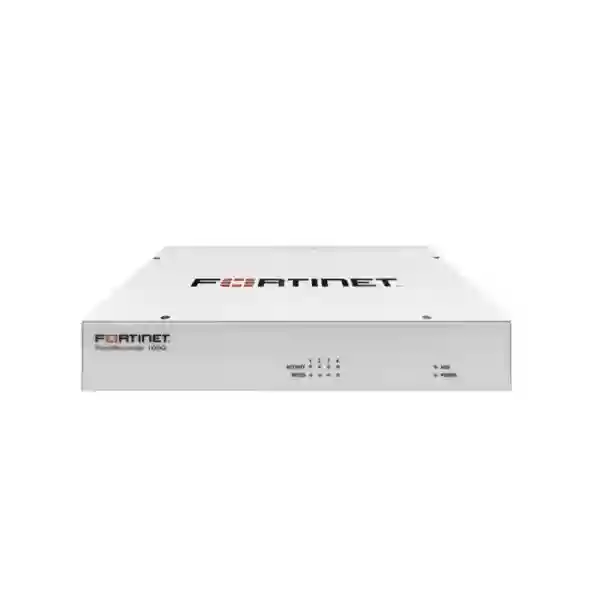
FortiRecorder 100G
FortiRecorder 100G (FRC-100G) is a compact Fortinet network video recorder designed for organizations that want an on-premises recording platform for up to 16 cameras. Fortinet specifies four Gigabit Ethernet RJ45 interfaces and one 2TB drive in the appliance. For buyers in Tanzania, the practical purchasing decision should go beyond channel count: camera bitrate, required retention, continuous versus event recording, simultaneous viewing, network topology, remote storage plans and future expansion all influence whether this recorder is the right fit.
What is FortiRecorder 100G?
FortiRecorder 100G is the smaller hardware NVR in Fortinet’s current FortiRecorder portfolio. It brings camera recording and surveillance management into a dedicated appliance rather than requiring a general-purpose recording server. Fortinet positions its video-security portfolio around FortiCamera, FortiRecorder and FortiCentral, with the 100G addressing smaller camera estates while the 400F and virtual editions address larger requirements. This makes the 100G especially relevant where a customer wants a defined appliance footprint and does not need the scale of a 64-camera 400F or a virtual recorder.
The official FRC-100G ordering description identifies a network video recorder with four GE RJ45 ports, 2TB storage and 16 channels. Fortinet lists the unit as a 1U desktop format measuring approximately 44 × 240 × 168 mm and weighing about 1.51 kg. Average power consumption is listed at 17.3 watts, with a 0–40°C operating range. These figures help with cabinet, shelf, ventilation and UPS planning, but they do not replace a proper surveillance design. A recorder can have enough channels and still be poorly matched if camera streams consume too much bandwidth or the desired retention period exceeds practical storage capacity.
Verified hardware
Fortinet specifies up to 16 cameras, four copper Gigabit Ethernet interfaces and one 2TB drive. The compact format suits deployments where a dedicated recording appliance is preferred without moving to a larger multi-drive chassis.
Sizing matters
Fortinet’s sizing guidance says recorder performance depends on camera streams, resolution, frame rate, bitrate, recording mode, NAS use and simultaneous playback. Retention depends on actual video bandwidth and available storage.
Deployment planning
A camera network should be designed with adequate switching, uplink bandwidth, reliable power, controlled user access and appropriate separation from ordinary client traffic. Fortinet recommends considering a dedicated camera connection path.
FortiRecorder 100G specifications
| Item | Fortinet specification |
|---|---|
| Official SKU | FRC-100G |
| Camera capacity | Up to 16 |
| Storage | 1 × 2TB |
| Ethernet | 4 × 10/100/1000 copper RJ45 |
| Format | 1U desktop |
| Average power consumption | 17.3 W |
| Operating temperature | 0–40°C |
| Dimensions | 44 × 240 × 168 mm |
| Weight | 1.51 kg |
Fortinet’s published bandwidth guidance for the FRC-100G lists experimentally determined reference values of 100 Mbps for continuous recording, 90 Mbps for continuous recording with NAS, 80 Mbps for continuous recording with motion, and 70 Mbps for continuous recording with motion plus NAS. Fortinet explicitly notes that these are laboratory values rather than hard limits and that real-world performance depends on network, storage and workload conditions. They should therefore be used as planning references, not as guaranteed field throughput.
Camera, storage and retention planning
The most important question for a FortiRecorder 100G project is not simply “Do I have 16 cameras or fewer?” A 16-camera site can generate very different workloads depending on resolution, scene complexity, frame rate, codec, image-quality setting and whether recording is continuous or event-driven. A reception entrance used for identification may need a different profile from a low-activity corridor. Outdoor scenes with traffic, trees, rain or changing light can also produce different bitrates from quiet indoor scenes.
Retention should be specified as a business requirement before the recorder is ordered. Decide how many days of footage must normally remain available, which cameras are most important, whether all cameras need identical retention, and whether policy or operational requirements impose longer retention. Fortinet notes that storage capacity is directly affected by aggregate camera bandwidth. After installation, actual consumption should be observed and recording profiles adjusted where necessary. If a project requires significantly more storage flexibility, more channels or a broader growth path, comparing the FortiRecorder 400F or FortiRecorder VM architecture is sensible before committing to the 100G.
Related FourTeck resources
A recorder depends on the rest of the surveillance and network architecture. Review FourTeck Tanzania IT, security and infrastructure solutions for the broader local project context, including CCTV, IP cameras, switching, firewalls, racks and UPS planning. For regional Fortinet security projects, FourTeck’s Fortinet specialist resource provides an additional Fortinet-focused path. Organizations operating across East Africa can also use FourTeck Kenya and FourTeck Uganda when coordinating regional technology requirements. For wider African projects, FourTeck Africa provides a broader regional reference.
FortiRecorder 100G Tanzania
Businesses evaluating FortiRecorder 100G in Tanzania commonly need a compact recorder for offices, retail premises, warehouses, clinics, schools, hospitality sites, professional facilities and smaller operational locations. The model’s 16-camera ceiling gives procurement teams a clear starting point, but a good Tanzania deployment should begin with a camera schedule rather than a product box. List every required view, state what each camera must achieve, record its expected resolution and frame rate, and define retention. This reveals whether 2TB is appropriate for the actual recording policy.
Network preparation is equally important. IP cameras place sustained traffic on the LAN, so the switch design should account for camera bandwidth, PoE requirements where relevant, uplink capacity and VLAN separation. Fortinet’s own sizing guidance recommends attention to recorder bandwidth and notes that a separate network and dedicated FortiRecorder port for camera connections can help. For a Tanzanian branch or head office, this is particularly useful when CCTV shares infrastructure with business applications, voice, Wi-Fi and internet traffic. Separating surveillance traffic makes capacity easier to understand and faults easier to isolate.
Power quality and environmental conditions also deserve attention. The appliance is specified for operation from 0–40°C, so the installation point should be ventilated and protected from excessive heat, dust and uncontrolled power interruption. A correctly sized UPS can support the recorder and relevant network equipment during brief disturbances, but UPS sizing should be based on the full connected load rather than the recorder alone. Before requesting a quotation in Tanzania, provide the FRC-100G model, required quantity, camera count, camera models if known, retention target, site type and whether installation, configuration, switching or UPS equipment is required. This creates a much more useful procurement conversation than requesting an NVR price without the recording workload.
FortiRecorder 100G Dar es Salaam
For Dar es Salaam organizations, FortiRecorder 100G can fit compact surveillance projects where centralized on-premises recording is required for no more than 16 cameras. Typical environments can include commercial offices, shops, clinics, schools, restaurants, warehouses and controlled business facilities. The design should begin with security outcomes: entrances may need identification-quality views, loading areas may need wider coverage, and sensitive internal areas may require restricted playback permissions. Those differences affect camera selection and recorder workload.
A Dar es Salaam project should also consider how footage will be reviewed. A security desk displaying several streams continuously creates a different output workload from a site where footage is accessed mainly after an incident. Fortinet notes that simultaneous video playback is CPU-intensive on viewing computers and that recorder output varies with user sessions, stream count, resolution and frame rate. Specify monitoring workstations and displays as part of the solution instead of treating them as an afterthought.
If the building already has IP cameras, confirm exact compatibility before assuming they can be migrated. FortiRecorder documentation supports Fortinet camera models and documents third-party ONVIF camera support in relevant software releases subject to feature licensing; compatibility should therefore be checked against the intended FortiRecorder firmware and camera model. For new projects, camera, switching and recorder selection can be planned together. When asking FourTeck Tanzania for a Dar es Salaam quotation, include the floor or site layout where possible, camera count, retention days, existing PoE switch details, monitoring locations and any remote viewing requirement. That information allows the quotation to focus on a working surveillance architecture rather than an isolated recorder.
FortiRecorder 100G Mwanza
In Mwanza, a FortiRecorder 100G deployment can suit a smaller site that wants local video recording without building a general-purpose recording server. The compact desktop chassis can simplify placement in a secure IT room or communications area, but physical security still matters. The recorder should not be left in an openly accessible reception or public area, because access to the recording appliance can become a security weakness even when cameras themselves are mounted securely.
For warehouses, workshops, offices and commercial facilities, camera traffic should be mapped across the LAN. If cameras are distributed between buildings or long distances, fiber uplinks or appropriate structured cabling may become part of the design. The recorder’s four Gigabit Ethernet interfaces do not mean every camera connects directly to the appliance; cameras typically depend on the network switching architecture. Plan switch port counts, PoE budget, uplink capacity and logical separation before installation. A surveillance VLAN can help isolate camera endpoints and make policy control clearer.
Retention planning is especially important for procurement because the built-in storage is fixed at one 2TB drive in Fortinet’s published hardware specification. Required days of recording vary significantly with bitrate and recording policy. A project using lower-rate event recording may retain footage differently from one recording multiple high-resolution streams continuously. Buyers should define the desired evidence window first and validate the estimate against the camera profiles. For a Mwanza quotation, send camera quantities and models, expected recording mode, desired retention, site topology, existing switching and whether remote or NAS storage is contemplated. If expansion beyond 16 cameras is likely, evaluate a larger FortiRecorder platform before deployment rather than designing around an immediate limit.
FortiRecorder 100G Arusha
FortiRecorder 100G in Arusha can be considered for hospitality, office, education, healthcare, retail and other business sites requiring a manageable on-premises NVR. The model is most compelling when the final camera estate remains within 16 channels and the storage plan works with its 2TB drive. A hotel reception, office entrance, storeroom and parking area can each require different camera profiles, so channel count alone should never determine the bill of materials.
Hospitality and customer-facing environments should pay particular attention to viewing permissions and operational workflow. Decide who can see live video, who can search recordings, who can export evidence and how administrator credentials are controlled. Surveillance systems become difficult to manage when every user shares one privileged account. A planned role structure, documented camera naming and consistent timestamps make incident review easier. Network time configuration and accurate device clocks are also operationally important when footage must be correlated with access, transaction or security events.
For Arusha sites with multiple buildings, the path from each camera to the recorder should be reviewed for bandwidth and resilience. Fortinet’s sizing guidance highlights network bandwidth as a common bottleneck and recommends considering dedicated camera connectivity. Where cameras cross uplinks, verify that those links have adequate headroom alongside other business traffic. UPS protection should include critical switches as well as the NVR; keeping the recorder powered while camera switches are down does not preserve recording. When requesting an Arusha quote, specify the number of cameras, locations, retention objective, monitoring screens, existing network equipment and whether the requirement includes installation or migration. This helps determine whether FRC-100G is a good fit or whether a larger architecture should be evaluated.
FortiRecorder 100G Dodoma
Organizations in Dodoma considering FortiRecorder 100G should treat the recorder as one component of a complete IP surveillance system. It can record up to 16 cameras and provides a compact Fortinet hardware platform, but successful deployment depends on camera coverage, switching, cabling, storage policy, user access and power. Offices, institutions, clinics, schools and controlled facilities can all have different evidence and retention requirements even when they use the same recorder model.
Procurement teams should document the intended recording profile before ordering. Ask whether every camera must record continuously, whether motion or event recording is acceptable in selected areas, and how many days of history are operationally useful. Higher resolution and frame rate can improve detail but consume more bandwidth and storage. The right balance should be chosen by camera purpose. An entrance intended to identify people may justify a stronger profile than a general overview camera in a low-risk corridor.
Network security should be included in the plan. Cameras and recorders are network devices and should be administered with controlled credentials, appropriate segmentation and restricted remote access. Avoid exposing surveillance management directly to the public internet merely for convenience. If remote viewing is required, design it through approved secure access methods and firewall policy. Firmware compatibility should be checked before upgrades, especially where third-party cameras are involved. For a Dodoma FortiRecorder 100G quotation, provide FRC-100G as the requested model, quantity, camera estate, desired retention, current network layout and support expectations. If the site is expected to grow beyond 16 cameras, discuss that growth before purchase so the initial architecture does not create an early replacement requirement.
FortiRecorder 100G UAE
For UAE buyers, FortiRecorder 100G addresses small-to-medium Fortinet video deployments that need a dedicated 16-channel NVR. Procurement can be straightforward when the exact requirement is known, but the quote should distinguish the base FRC-100G appliance from FortiCare support and any camera, switching, storage or installation components. Fortinet’s ordering information lists FortiCare Premium Support separately, so buyers should confirm the desired support term and service level rather than assuming it is automatically bundled with hardware.
Commercial sites in the UAE may operate surveillance continuously and can have strict internal retention policies. The 2TB internal drive therefore needs to be validated against the actual aggregate bitrate. Camera resolution, codec, frame rate and scene activity influence storage consumption. Fortinet’s administration guidance also shows that NAS use changes recorder bandwidth guidance, which is important if external storage is being considered. A design that depends on remote storage should be tested as an architecture, not treated as a simple capacity add-on.
Environmental planning remains relevant even in well-equipped facilities. The FRC-100G operating specification is 0–40°C, so installation in conditioned IT space is preferable to exposed utility areas. Rack shelves, ventilation, UPS protection and cable organization should be included where appropriate. Organizations with multiple UAE branches should also standardize camera naming, VLANs, user roles and retention policies so operators can move between sites without learning a different convention each time. For quotations, provide the exact FRC-100G requirement, camera count and models, recording policy, retention target, NAS requirement if any, FortiCare term and deployment scope. This produces a more accurate comparison between appliance-only procurement and a complete surveillance solution.
FortiRecorder 100G Uganda
FortiRecorder 100G in Uganda can support organizations that need a compact Fortinet recorder for a defined camera estate of up to 16 channels. Branch offices, stores, clinics, education sites, hospitality facilities and warehouses may fit this scale, but every deployment should be sized from video workload. The recorder’s 2TB drive is a known hardware specification; the number of days it can retain is not a fixed universal number because camera bitrate and recording mode differ.
For multi-site Ugandan businesses, decide whether each branch should record locally or whether a broader centralized design is required. Local recording can reduce dependence on WAN bandwidth for ingest, while centralized visibility may still be desired for operations. Fortinet’s portfolio includes FortiCentral for video management and larger FortiRecorder options, so an organization with several branches should consider management architecture at the same time as branch hardware. A collection of independent recorders without naming, access and update standards can become difficult to operate.
The LAN should provide dependable camera connectivity and sufficient PoE capacity where cameras are powered from switches. Separate camera traffic logically where appropriate and avoid pushing surveillance streams over constrained links unnecessarily. If remote viewing crosses an internet connection, consider its upstream capacity as well as security. For a Uganda quote, state the city and site type, number of cameras, desired retention, viewing users, existing switch model, remote access requirement and expected expansion. Organizations operating in both Tanzania and Uganda can also benefit from keeping device naming, VLAN structures and documentation consistent across branches, making troubleshooting and future upgrades easier.
FortiRecorder 100G Kampala
Kampala businesses looking for FortiRecorder 100G are often comparing a compact hardware NVR with larger recorder or VMS approaches. The FRC-100G is appropriate to evaluate when the requirement is within 16 cameras and local 2TB storage can satisfy the recording policy. The choice becomes less obvious when a site expects rapid expansion, many high-bitrate streams, long retention or extensive third-party camera integration. Those requirements should be identified before hardware is purchased.
A city office or retail environment can also generate multiple simultaneous viewing requirements. Security personnel may monitor a video wall while managers occasionally review footage. Fortinet notes that output workload depends on simultaneous sessions and playback streams, and viewing multiple videos can be CPU-intensive on client computers. Include operator workstations and display needs in the design, especially when many cameras are viewed at once. The recorder may be only one part of the performance chain.
Existing camera migration deserves a compatibility check. Do not assume that ONVIF branding alone guarantees every feature will behave identically. Confirm the exact camera model, firmware and FortiRecorder release, and identify any required feature license for third-party support. New Fortinet camera deployments can simplify ecosystem planning, but lens, mounting, illumination and scene requirements still need site-specific selection. For Kampala procurement, a useful request includes the FRC-100G SKU, camera schedule, retention days, viewing arrangement, current network details, support term and whether installation is required. This information lets suppliers quote the recorder alongside any necessary PoE switching, UPS, cabling or support rather than leaving critical dependencies unpriced.
FortiRecorder 100G Arua
For an Arua deployment, FortiRecorder 100G offers a compact physical recorder that can keep video recording local to the site. This can be useful where an organization does not want continuous camera ingest to depend on a wide-area connection. Local recording, however, still requires a stable local network. Camera switches, uplinks, cabling and power should be treated as part of the surveillance system, because a recorder cannot capture streams that do not reliably reach it.
Sites should define which infrastructure must remain active during short power interruptions. A UPS serving only the recorder leaves the system blind if PoE camera switches lose power. Conversely, powering cameras and switches without protecting the recorder also interrupts recording. The total protected load, desired runtime and safe shutdown strategy should guide UPS sizing. The FRC-100G itself has modest published average consumption, but the camera and switching estate can represent a much larger load.
Operational simplicity is another priority. Use clear camera names based on location, document IP addressing, record administrator ownership and establish a process for reviewing storage and device health. A small 16-camera installation can still become difficult to troubleshoot if cameras are called generic names or if no one knows which switch port feeds a failed camera. For Arua quotations, include the number and type of cameras, whether they are new or existing, required retention, local monitoring needs, internet connectivity, UPS expectations and future growth. If the organization expects more than 16 cameras soon, the correct decision may be to size a larger recorder platform now rather than fill the FRC-100G to its limit immediately.
FortiRecorder 100G Mbarara
FortiRecorder 100G can be considered in Mbarara for offices, retail locations, education sites, hospitality properties and other facilities that need a dedicated Fortinet NVR for up to 16 cameras. The value of a compact appliance is predictability: the hardware platform and channel ceiling are clear. The design work lies in deciding whether its internal storage and bandwidth profile align with the cameras and retention policy.
Camera selection should be driven by the scene. A wide overview camera, entrance identification camera and low-light outdoor camera may use different resolutions and bitrates. Recording every stream at the highest available settings is not automatically the best design if it consumes storage without adding useful evidence. Define what must be visible, then choose appropriate camera and recording profiles. After commissioning, verify actual bandwidth and estimated retention rather than relying only on pre-installation calculations.
For sites with an existing network, confirm spare PoE ports, PoE power budget and uplink utilization. Adding cameras can expose bottlenecks that were invisible when the LAN carried only office data. Surveillance traffic can be placed in a dedicated VLAN and routed or filtered according to policy. Secure remote access should be designed rather than achieved by exposing management interfaces directly. A Mbarara quote request should therefore include more than the recorder name: specify camera count, models, switch environment, recording mode, retention days, monitoring users and support requirements. This allows the full project cost to reflect any switching, cabling, UPS, display or service components needed to make the FortiRecorder 100G usable in production.
FortiRecorder 100G Gulu
Gulu organizations evaluating the FortiRecorder 100G should first establish whether the site is genuinely a 16-camera-or-smaller environment over the expected life of the system. A recorder that is perfectly sized today can become restrictive if new entrances, parking zones, warehouses or adjacent buildings are added next year. Reserve growth should be discussed during design, especially if the initial camera count is already close to the platform maximum.
Storage growth is a separate issue from channel growth. Even a smaller camera count can demand substantial retention when cameras use high resolution or continuous recording. Fortinet explains that video retention is governed by available storage and aggregate video bandwidth. Rather than promising a fixed number of days from 2TB, calculate an estimate from planned bitrates and then validate it after commissioning using real consumption. Motion-based policies may reduce storage in suitable scenes, but they should be chosen according to evidence requirements rather than only to save capacity.
The physical installation should place the recorder in a secure, ventilated location with controlled access. Network switches and power protection should be documented, and critical camera links should be labeled. If remote support or viewing is needed, plan secure connectivity and user permissions. FortiRecorder firmware and camera compatibility should be reviewed before major upgrades. For a Gulu procurement request, provide the exact FRC-100G model, number of cameras, expected expansion, recording policy, retention objective, existing network and any requirement for installation or support. This turns a product inquiry into a solution specification and makes it easier to compare the 100G with larger FortiRecorder options if the project is near its capacity limits.
FortiRecorder 100G Kenya
In Kenya, FortiRecorder 100G is relevant to organizations seeking a compact Fortinet NVR for a small-to-medium camera deployment. The appliance supports up to 16 cameras, but Kenyan buyers with multi-branch operations should think beyond the single-site hardware. Decide how administrators will manage multiple recorders, how camera naming and user roles will be standardized, and whether central visibility is needed. Fortinet’s broader video portfolio includes FortiCentral and larger recorder options, which may influence the architecture for growing estates.
For a standalone site, the key design variables are camera bitrate, retention, network capacity and viewing load. A high-resolution camera estate can consume the 2TB drive faster than a lower-bitrate deployment, while multiple operators viewing many streams can increase output demands. The network should have enough PoE capacity and uplink headroom, with camera traffic separated where appropriate. If NAS is planned, Fortinet’s published sizing guidance indicates that remote storage affects recorder bandwidth reference values, so NAS should be part of the original design and testing.
Procurement should separate hardware, support and implementation. Fortinet publishes FRC-100G as the appliance SKU and lists FortiCare support separately. Confirm the desired support duration and any feature licensing needed for third-party camera integration. For a Kenya quotation, provide exact camera models, quantities, desired recording period, network topology, storage approach and service scope. Organizations operating in Kenya and Tanzania may also standardize surveillance policies across both countries while still adapting camera placement and network design to each building. Consistent documentation can make regional support more efficient without assuming every site has identical infrastructure.
FortiRecorder 100G Kuwait
Kuwait buyers considering FortiRecorder 100G should evaluate it as a compact 16-channel Fortinet recording appliance rather than as an unlimited storage platform. Its 2TB internal drive is appropriate only when the planned camera bitrate and retention objective align. Sites with long retention policies, high-resolution continuous recording or aggressive expansion plans should compare larger FortiRecorder architectures before procurement.
Installation environment is particularly important in hot climates. Fortinet specifies an operating range up to 40°C for the FRC-100G, so the appliance should be installed in conditioned, ventilated IT space rather than an exposed or poorly cooled cabinet. Dust management, rack organization and UPS protection also contribute to reliability. If the recorder is placed on a shelf, maintain airflow and keep the area controlled against unauthorized physical access.
The camera network should be treated as production infrastructure. Managed PoE switching, VLAN separation, secure administrator access and documented IP addressing make a surveillance system easier to maintain. Remote viewing should use controlled security policy instead of direct public exposure. If cameras from another vendor are being retained, confirm compatibility and any required feature licensing with the intended FortiRecorder software release. A Kuwait quote request should list FRC-100G, camera count, camera brands and models, desired retention, recording mode, switch environment, NAS requirement if any, FortiCare term and installation scope. This information helps determine whether the 100G is correctly sized and avoids comparing quotes that include different assumptions about support, storage and deployment services.
FortiRecorder 100G Ghana
FortiRecorder 100G in Ghana can serve compact business surveillance deployments requiring local recording for up to 16 cameras. Offices, clinics, education sites, retail locations and warehouses can fit this scale, but the recording requirement should be expressed in operational terms. State which areas must be monitored, how much detail is required, whether recording is continuous, and how long footage must remain available. These inputs determine whether the built-in 2TB storage is a practical match.
Network planning is essential because every camera stream must reach the recorder reliably. Review PoE switching, uplinks, VLANs and cable quality. Where cameras are located in separate buildings, fiber or other appropriate links may be required. Fortinet’s guidance identifies network bandwidth as a frequent recorder bottleneck and recommends consideration of dedicated camera connectivity. Avoid allowing large camera flows to compete unpredictably with ordinary office traffic on constrained uplinks.
For organizations with branches, consistent documentation can be as important as the hardware. Use a naming scheme that identifies site and camera location, document switch ports and IP addresses, define user roles, and keep configuration backups according to policy. This reduces support time when a camera goes offline or footage must be found quickly. Ghana buyers should request quotations with the FRC-100G SKU, quantity, camera estate, retention target, current network, monitoring requirements and FortiCare preference. If the design is close to 16 cameras or retention estimates are tight, compare the 100G against a larger FortiRecorder option before purchase. Choosing additional capacity early can be more efficient than replacing a recorder shortly after deployment.
FortiRecorder 100G Nigeria
For Nigeria, FortiRecorder 100G can be evaluated for branch offices, retail sites, clinics, schools, hospitality environments and smaller facilities that require a dedicated Fortinet NVR. A 16-channel platform can be easy to standardize across multiple similar branches, but standardization should include more than the appliance. Camera profiles, VLAN conventions, administrator roles, retention policies, UPS expectations and documentation should also be standardized so support teams can manage sites consistently.
Power continuity deserves explicit design attention. The recorder’s average power figure is only one component of the surveillance load. PoE switches, cameras, routers, firewalls and monitoring displays may all be needed for the system to remain useful during a disturbance. UPS sizing should therefore be based on the complete critical path and the desired runtime. Installation spaces should also stay within the manufacturer’s environmental range and provide ventilation.
If a Nigerian organization has a larger headquarters and smaller branches, it may use different recorder sizes while retaining common operational standards. The 100G can address smaller sites, while higher-capacity hardware or virtual recorders can be considered where channel counts or storage needs are greater. Fortinet’s portfolio supports this kind of tiered planning. For a Nigeria quotation, identify each site, camera count, required retention, network layout, viewing users, existing cameras and desired support. Where third-party cameras are involved, confirm compatibility rather than assuming all functions are available through generic ONVIF support. A well-prepared bill of materials should account for recorder, cameras, PoE switching, storage strategy, power protection and services so the project can be evaluated as a complete operational system.
FortiRecorder 100G Seychelles
FortiRecorder 100G in Seychelles can be relevant to hotels, offices, retail sites, clinics and other facilities where a compact on-premises recorder is preferred. For island or distributed operations, local recording can reduce the need to send every camera stream over external connectivity. Remote viewing still needs bandwidth, but the primary recording path can remain on the local network when designed correctly.
Hospitality environments often have varied surveillance scenes: reception, entrances, corridors, service areas, stores and external zones may each need different camera characteristics. The recording profile should follow the security purpose of each view. High settings should be used where they add useful evidence, while general overview areas can be tuned appropriately. This makes better use of the 2TB internal storage and network bandwidth without compromising defined objectives. Retention should be validated after commissioning because actual scene activity affects variable bitrate streams.
Environmental protection also extends beyond the recorder. While the FRC-100G should be kept in controlled indoor IT space, outdoor cameras and cabling need appropriate protection for their installation conditions. Network equipment should be secured, labeled and protected by suitable power systems. If remote support is required, provide secure management access rather than exposing recorder interfaces directly. For Seychelles procurement, specify FRC-100G, camera count and models, site type, retention target, recording schedule, switch infrastructure, monitoring users and support requirements. If a property needs more than 16 cameras or expects significant expansion, compare larger FortiRecorder models or virtual architecture before ordering so the surveillance platform has a realistic growth path.
FortiRecorder 100G buying checklist
Before requesting a quotation, prepare the exact recorder quantity, camera count, camera manufacturer and model, recording resolution and frame rate where known, continuous or event recording policy, desired retention days, monitoring-user count, existing PoE switch details, uplink speeds, NAS requirement, remote-viewing requirement, UPS scope, installation location, expected growth and preferred FortiCare term. For existing surveillance sites, also provide current IP addressing or a network diagram if available. This information helps validate whether FRC-100G is correctly sized and identifies dependencies that might otherwise appear only during installation.
FortiRecorder 100G FAQs
How many cameras does FortiRecorder 100G support?
Fortinet specifies support for up to 16 cameras. Actual deployment planning should also consider bandwidth, recording mode, storage retention and viewing workload.
How much storage is included?
The official FRC-100G hardware specification lists one 2TB drive. Retention duration is not fixed because it depends on aggregate video bitrate and recording policy.
What is the official FortiRecorder 100G SKU?
Fortinet lists the appliance SKU as FRC-100G. FortiCare support is ordered separately under applicable service SKUs and terms.
Can FortiRecorder 100G work with third-party cameras?
Fortinet documentation for supported software releases identifies ONVIF-compliant third-party camera support with a feature license. Exact camera and firmware compatibility should be checked before procurement or migration.
Should I choose FortiRecorder 100G or a larger model?
Use camera count, bitrate, retention, storage architecture and growth expectations to decide. If the project is close to 16 cameras or needs substantially more storage flexibility, compare FortiRecorder 400F or FortiRecorder VM before committing.
Decision recap
FortiRecorder 100G is a compact FRC-100G network video recorder with four Gigabit Ethernet RJ45 interfaces, one 2TB drive and support for up to 16 cameras. It is best evaluated as part of a complete surveillance architecture that includes camera selection, network bandwidth, PoE switching, retention, secure access, monitoring workstations and power protection. Buyers should avoid choosing solely by channel count. A short sizing exercise before quotation can determine whether the 100G fits the current requirement and expected growth.
Consultation information
For a useful FourTeck Tanzania consultation, share your site type, camera count, desired retention, existing camera models, network topology, monitoring requirements and expansion plan. This allows the discussion to focus on compatibility, capacity and project scope rather than a generic price request.



Reviews
There are no reviews yet.