
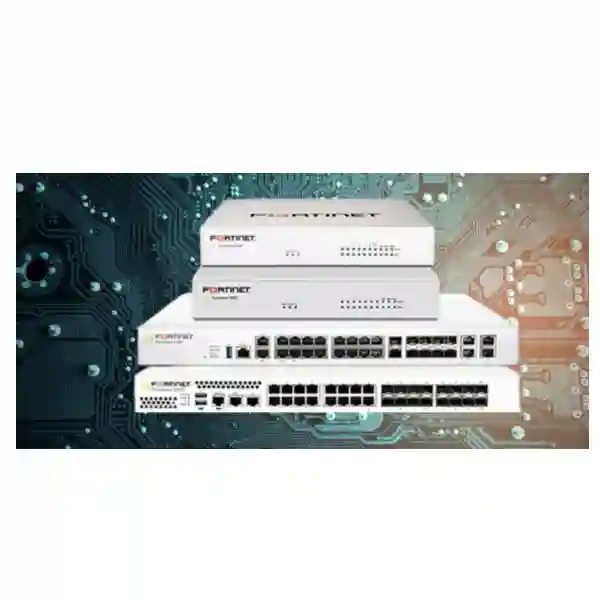
FortiSwitch 200 Series Tanzania
FortiSwitch 200 Series is a Fortinet secure-access switching family for organizations that need dependable 1 Gigabit Ethernet access, practical 24- or 48-port density, selected PoE options and integrated management with FortiGate through FortiLink. For Tanzania businesses planning branch, office, campus-edge, IP phone, wireless access point or surveillance connectivity, the family offers a structured way to bring wired access into the wider Fortinet Security Fabric rather than treating the LAN switch as an isolated appliance.
Quick buying questions
Do you need 24 or 48 access ports? Which endpoints require PoE? How much PoE budget is required? Will the switch be FortiGate-managed through FortiLink? What uplink and redundancy design is planned?
What is the FortiSwitch 200 Series?
Fortinet positions FortiSwitch as secure Ethernet switching that can be managed directly from FortiGate. Within the secure-access family, the 200 Series includes FS-224D-FPOE, FS-224E, FS-224E-POE, FS-248D, FS-248E-POE and FS-248E-FPOE. The model names represent different port-density and power-delivery choices, so procurement should start with the exact endpoint count and PoE requirement rather than assuming every 200 Series appliance has identical hardware.
The business value is strongest where network teams want the access layer to participate in a unified Fortinet architecture. FortiLink enables supported FortiSwitch devices to be discovered, configured and monitored from FortiGate. Documented secure-access functions include centralized VLAN configuration, client monitoring, device detection, 802.1X authentication, DHCP snooping, dynamic port profiles and FortiLink stacking. Feature availability can depend on model and software release, so the current FortiSwitch feature and compatibility matrices should be checked during design.
24 / 48-port choices
Select access density around real user, phone, AP, camera, printer and infrastructure counts while reserving sensible capacity for growth.
PoE model options
PoE and FPOE variants can simplify endpoint power design where supported phones, wireless APs and cameras are powered through Ethernet.
FortiGate integration
FortiLink management can bring switching configuration and visibility into the FortiGate administration workflow for an integrated branch or campus edge.
Security-aware access
Functions such as authentication, VLAN control, DHCP snooping and device visibility support a more policy-aware wired access environment.
FortiSwitch 200 Series models and selection logic
| Model | Access-port class | Power positioning | Planning fit |
|---|---|---|---|
| FS-224D-FPOE | 24-port class | Full-PoE variant | Power-dense 24-port access requirements |
| FS-224E | 24-port class | Non-PoE model | Wired endpoints where switch-delivered power is unnecessary |
| FS-224E-POE | 24-port class | PoE variant | Mixed data and powered-edge deployments |
| FS-248D | 48-port class | Non-PoE model | Higher-density wired access |
| FS-248E-POE | 48-port class | PoE variant | Higher-density mixed powered endpoints |
| FS-248E-FPOE | 48-port class | Full-PoE variant | Power-intensive access designs requiring many powered ports |
Exact port interfaces, PoE budgets, uplink capabilities, environmental limits and supported software features should be validated against the current Fortinet datasheet and feature matrix for the specific model before ordering. This avoids designing from a family-level summary when a project depends on a model-specific characteristic.
Where secure access switching fits
A switch purchase is rarely just a port-count exercise. Business networks increasingly combine employee devices, IP telephony, wireless access points, surveillance, printers, meeting-room systems and specialist equipment on the same physical access infrastructure. The design therefore needs sensible VLAN boundaries, endpoint authentication where appropriate, resilient uplinks, adequate power budgets and operational visibility. FortiSwitch 200 Series can fit this role where Gigabit access and the available model choices match the project.
For organizations already operating FortiGate, FortiLink is an important architectural consideration. Centralized management can reduce the operational split between firewall policy and access-switch administration. A deployment can map network segments to business purposes, apply consistent port profiles and improve visibility of connected devices. That does not remove the need for proper LAN design: teams still need to document VLANs, addressing, spanning-tree choices, uplink topology, authentication, PoE loads and change-control procedures.
Organizations without FortiGate should confirm the intended standalone or alternative management method and required feature set before procurement. Likewise, buyers replacing another switch family should inventory transceivers, fiber types, rack power, endpoint PoE requirements and existing VLAN trunks. The most cost-effective model is the one that satisfies those real design constraints with reasonable growth capacity, rather than simply the model with the largest port count.
Fortinet ecosystem planning
FortiSwitch is often evaluated alongside firewall, wireless and security operations requirements. For a broader security architecture, review FourTeck Tanzania technology solutions as a starting point for related infrastructure planning. Organizations coordinating projects outside Tanzania can also reference FourTeck Uganda, FourTeck Kenya and FourTeck UAE for regional technology enquiries.
For Fortinet-focused UAE requirements, FourTeck Fortinet UAE provides an additional specialist route. These links are useful for organizations coordinating multi-country standards, but product availability, commercial terms and support scope should always be confirmed for each project and destination.
FortiSwitch 200 Series Tanzania
Tanzania organizations evaluating FortiSwitch 200 Series typically need more than a generic managed switch. A practical buying process starts by mapping users and devices to the access layer: desktops, IP phones, printers, Wi-Fi access points, CCTV cameras, access-control devices and any operational equipment that will share the LAN. That inventory determines whether a 24-port or 48-port platform is appropriate and, crucially, how many endpoints require switch-delivered power. A non-PoE model can be sensible for conventional wired access, while PoE or full-PoE variants become relevant when the switch is expected to energize a significant number of compatible edge devices.
For Tanzanian businesses already standardizing on FortiGate, FortiLink can make the access layer easier to operate as part of one security architecture. Centralized VLAN configuration, device visibility and port-level controls can help IT teams maintain a clearer relationship between network access and firewall segmentation. During planning, document the current FortiGate model and FortiOS release, proposed switch model, number of switches, topology, uplink media, VLANs and authentication requirements. Compatibility should be checked against current Fortinet documentation before implementation.
Procurement teams should request an exact bill of materials rather than asking only for “FortiSwitch 200.” The quotation should identify the exact model, quantity, required optics or transceivers, rack and power considerations, support requirements and any management or service subscriptions relevant to the chosen deployment. If PoE is required, provide the endpoint count and power needs instead of assuming every powered device has the same demand. FourTeck Tanzania can use these details to help narrow the model choice and prepare a project-focused quotation without making unsupported assumptions about stock or delivery.
FortiSwitch 200 Series Dar es Salaam
In Dar es Salaam, FortiSwitch 200 Series is relevant to offices, multi-floor commercial premises, hospitality environments, professional services, retail operations and distributed business sites that need structured wired access. Dense offices often combine PCs, desk phones, wireless APs, meeting-room equipment and cameras, which makes port planning and PoE budgeting particularly important. Before choosing a 24-port or 48-port unit, count live endpoints by floor or communications room and reserve capacity for realistic expansion. This helps avoid a design that is full on day one or, conversely, unnecessarily oversized.
A Dar es Salaam deployment should also consider the physical network path. Identify whether switch uplinks use copper or fiber, the distance to aggregation points, existing transceiver types and whether redundant links are part of the design. If FortiGate is already deployed, confirm FortiLink compatibility and decide how switches will be grouped, named and monitored. VLAN planning can separate corporate users, voice, wireless guest access, cameras and other device classes according to the organization’s security policy. Features such as 802.1X and DHCP snooping can then be evaluated in the context of the actual authentication and access-control design.
For quotation preparation, provide the number of access switches, port density, powered-device count, expected PoE load, uplink requirements and existing Fortinet equipment. If the project is a migration, include the current switch model and a summary of VLANs and connected devices. That information enables a more useful discussion than a price-only request because it surfaces compatibility and sizing questions early. FourTeck can help customers compare the available FortiSwitch 200 Series variants and identify the documentation needed before procurement and deployment.
FortiSwitch 200 Series Mwanza
For businesses in Mwanza, the FortiSwitch 200 Series can serve as an access-layer option for branch offices, administrative buildings, warehouses, education environments and commercial facilities where stable Gigabit Ethernet connectivity is required. The selection question is not simply 24 versus 48 ports. IT teams should determine which endpoints are business-critical, which need PoE, how traffic is segmented, and whether the switch will be managed through a FortiGate. A documented endpoint schedule makes it easier to choose between non-PoE, PoE and full-PoE variants.
Sites with IP cameras, wireless APs and phones should calculate power demand carefully. PoE capacity is a design resource: the relevant figure is the combined requirement of powered endpoints, with headroom for growth and device replacement. Where devices are distributed across multiple areas, consider whether several access switches are operationally better than concentrating every cable in one location. Uplink media and distance also matter; fiber may be appropriate between buildings or communications rooms depending on the physical design. Exact supported interfaces must be confirmed for the selected FortiSwitch model.
Mwanza customers using FortiGate can assess FortiLink as part of a consolidated operating model. Central switch configuration and connected-device visibility can simplify routine administration when compared with separately managed infrastructure, but configuration standards still need to be documented. Include VLAN purpose, IP addressing, authentication, uplink design, switch naming and backup procedures in the implementation plan. For procurement, send FourTeck the required port count, PoE endpoints, proposed topology and existing Fortinet model details so the quotation can be aligned to the real network rather than a generic family description.
FortiSwitch 200 Series Arusha
Arusha organizations in hospitality, tourism, professional services, education and general enterprise environments may need an access network that supports both conventional users and a growing collection of connected devices. FortiSwitch 200 Series offers 24- and 48-port choices within the family, with selected PoE variants that can support a cleaner edge design where compatible phones, access points or cameras receive data and power over Ethernet. The correct model depends on the endpoint inventory and required power budget, not the industry label alone.
Hospitality and multi-zone premises should pay special attention to segmentation. Guest-facing connectivity, staff systems, voice, surveillance and administrative devices often have different access requirements. FortiSwitch managed through FortiGate can participate in a unified Fortinet design where VLANs and access policies are planned centrally. Network designers should validate FortiLink and software compatibility, define trunk and access ports, document any authentication requirements and consider how switch failure or uplink failure would affect each operational area.
For Arusha procurement, prepare a simple site worksheet before requesting a quotation: number of communications rooms, endpoints per room, PoE device types, expected expansion, uplink medium, rack space, power arrangements and existing firewall platform. If a project spans several buildings, identify inter-building links and distances rather than treating the site as one flat LAN. FourTeck can then help frame the appropriate FortiSwitch 200 Series model discussion and related Fortinet integration requirements. Availability, delivery arrangements and support scope should be confirmed as part of the formal quotation rather than assumed from a product-family page.
FortiSwitch 200 Series Dodoma
Dodoma enterprises, institutions and branch networks considering FortiSwitch 200 Series should approach switching as part of the wider security and connectivity design. An access switch sits directly between users and business systems, so port configuration, segmentation and device identity can materially affect network control. Fortinet documents capabilities including 802.1X authentication, centralized VLAN configuration, DHCP snooping and device monitoring in its secure-access portfolio. The exact feature support for a particular model and software release should be checked during engineering.
A useful sizing exercise separates ordinary data ports from powered ports. Count desktops, printers and other non-powered Ethernet endpoints, then list phones, APs, cameras or other PoE devices separately. Add growth allowance and determine whether a 24-port or 48-port class is more practical. Where many powered devices are planned, the total PoE budget becomes as important as the number of physical ports. Uplink requirements should be designed at the same time so that access capacity is not undermined by an unsuitable aggregation path.
If a Dodoma site already uses FortiGate, provide the firewall model and software version when discussing FortiSwitch. That allows compatibility and FortiLink design to be considered before equipment is ordered. For new deployments, define the intended network segments, management approach and security controls before selecting hardware. A complete quotation request should include model preferences if known, quantity, PoE requirements, optics, support expectations and implementation scope. FourTeck can help translate those project details into a clearer FortiSwitch 200 Series bill of materials and deployment conversation.
FortiSwitch 200 Series UAE
Organizations sourcing FortiSwitch 200 Series for UAE projects often need consistency across headquarters, branches, retail sites or regional operations. Standardizing the access layer can simplify configuration templates, spare strategy and operational training, particularly where FortiGate is already part of the network. The 200 Series family provides 24- and 48-port access choices and includes non-PoE, PoE and full-PoE variants, allowing designers to match hardware to endpoint density rather than applying one switch configuration everywhere.
For UAE multi-site deployments, create a site profile for each location. Record user ports, APs, phones, cameras, special devices, uplink type, rack power and expected expansion. This allows procurement to distinguish sites that need power-dense switching from those where a non-PoE model is adequate. It also helps network teams build repeatable VLAN and port-profile standards. Where FortiLink management is planned, validate FortiGate/FortiSwitch software compatibility and document the intended topology before rollout.
Regional procurement can also involve transceivers, support terms and deployment services, so an accurate bill of materials is important. Do not assume that a family name identifies every required accessory or entitlement. Organizations coordinating Tanzania and UAE infrastructure can use FourTeck’s regional channels to discuss consistent technical requirements while confirming commercial terms separately for each destination. The goal should be a supportable network standard: exact switch model, tested software combination, defined endpoint power load, documented uplinks and clear configuration ownership.
FortiSwitch 200 Series Uganda
Uganda businesses evaluating FortiSwitch 200 Series can use the family for secure access-layer planning where Gigabit Ethernet, 24- or 48-port density and Fortinet integration fit the network. Branches that already use FortiGate may benefit from FortiLink management because switching and security administration can be brought into a more unified workflow. Before choosing hardware, identify how many users and devices will connect, which ports require PoE and what uplink path connects the access layer to the rest of the network.
For distributed organizations, repeatability matters. A 24-port switch might suit a smaller branch while a 48-port PoE model could be more appropriate at a larger office with many phones or wireless APs. Using a common configuration standard does not require identical hardware at every site; it means documenting VLANs, port profiles, authentication, management and monitoring consistently while sizing each site correctly. Current Fortinet compatibility guidance should be checked whenever FortiGate and FortiSwitch software versions are selected.
Uganda procurement teams should include exact model requirements, quantities, PoE endpoint information, optics and support expectations in RFQs. Where the exact model is not yet known, provide the endpoint and topology requirements so the model can be selected from evidence. FourTeck Uganda and Tanzania channels can support regional project discussions, but availability and service scope should be confirmed through the applicable quotation. This approach reduces the risk of ordering a switch that has enough ports but does not align with the project’s power, uplink or management requirements.
FortiSwitch 200 Series Kampala
Kampala offices and commercial sites can have high endpoint density in relatively compact communications environments. FortiSwitch 200 Series offers practical access-layer choices for these designs, but a successful deployment begins with cable and endpoint records. Count active desk connections, voice endpoints, wireless APs, cameras, printers and room systems. Separate PoE demand from simple Ethernet demand and decide whether growth is better served by a higher-density switch or by distributing switching across network closets.
Where a Kampala organization operates FortiGate, FortiLink can simplify the management relationship between firewall and switch. Centralized VLAN configuration and device visibility are useful when network teams need to understand which endpoints are attached and how access ports are assigned. Security controls such as 802.1X and DHCP snooping should be implemented as part of an intentional access policy, with authentication infrastructure and operational procedures prepared in advance. They should not be enabled blindly without considering endpoint compatibility and support processes.
For a quotation, describe the current environment as well as the desired outcome. Existing switch count, uplink media, VLAN quantity, FortiGate model, expected PoE devices and any migration constraints can materially affect the bill of materials and implementation plan. If replacing legacy switches, confirm whether existing fiber modules are compatible rather than assuming reuse. FourTeck can help organize the FortiSwitch 200 Series selection around these requirements and identify questions that need vendor-document validation before purchase.
FortiSwitch 200 Series Arua
Arua businesses and institutional sites considering FortiSwitch 200 Series may prioritize straightforward branch connectivity, manageable expansion and secure integration with existing Fortinet infrastructure. The first design decision is access density: how many Ethernet endpoints exist today and how many are likely during the planned lifecycle? A 24-port platform can be appropriate for a compact environment, while 48-port models suit denser access requirements. PoE variants should be evaluated when powered endpoints form part of the network.
Branch resilience depends on more than the switch itself. Document power protection, rack conditions, uplink paths and how connectivity will be restored after a failure. If a FortiGate manages the switch through FortiLink, record the approved configuration and software combination so replacement or maintenance work can be performed consistently. VLAN separation for corporate devices, guest connectivity, voice and cameras can help create clearer traffic boundaries, while access authentication can be considered where identity-based control is required.
Arua procurement requests are more actionable when they include a small technical schedule. List required switch quantity, approximate port utilization, PoE endpoints, uplink type, FortiGate details and support expectations. For sites connected back to a central office, describe the WAN and local LAN relationship so engineers can distinguish switching needs from routing and firewall requirements. FourTeck can use that information to discuss suitable FortiSwitch 200 Series variants and related components without assuming stock, delivery timing or a one-size-fits-all configuration.
FortiSwitch 200 Series Mbarara
Mbarara organizations planning new offices, network refreshes or branch expansions can evaluate FortiSwitch 200 Series where secure Gigabit access and Fortinet integration align with the design. The family’s model range makes it possible to separate ordinary wired-access requirements from PoE-heavy deployments. This matters because a site with many phones, cameras or wireless APs has different power requirements from an office dominated by desktops and printers, even when both need a similar number of Ethernet ports.
Before procurement, map endpoint groups to VLANs and decide which ports need authentication or special profiles. If FortiGate is the management platform, validate the supported FortiLink topology and software versions. Consider uplink capacity and media, especially if traffic from multiple access switches converges on a small aggregation point. Good design leaves enough headroom for normal growth without buying capacity that has no likely use. It also records configuration standards so future additions do not become inconsistent one-off changes.
For Mbarara quotations, provide an endpoint count and an outline diagram if possible. Include switch locations, cable destinations, PoE device quantities, uplinks and existing Fortinet equipment. If cameras or APs are part of the project, identify their models or power requirements so PoE planning can be based on documented demand. FourTeck can then help frame the model-selection conversation and identify related components that may need to be included in the bill of materials. Commercial availability and project support should be confirmed at quotation stage.
FortiSwitch 200 Series Gulu
For Gulu networks, FortiSwitch 200 Series can be considered for branch access, administrative sites, education facilities and other business environments that require managed Ethernet connectivity. The family is most useful when its capabilities are matched to a documented LAN design. Start by counting ports, then identify powered endpoints and determine how the switch will connect upstream. This avoids a common procurement problem in which physical port count is considered but PoE demand, uplinks and management compatibility are left until installation.
FortiGate-managed deployments can use FortiLink to integrate switch administration into the Fortinet environment. This can support centralized VLAN configuration, device visibility and consistent port management. Organizations should still define their access-control objectives: whether users authenticate with 802.1X, how unknown devices are treated, which VLANs are permitted on trunks, and how guest or IoT-type devices are separated. DHCP snooping and other switch security functions should be aligned with the network’s actual addressing and trust design.
Gulu buyers requesting pricing should specify whether the project is new or a replacement, the number of switches, approximate used ports, powered-device requirements and the upstream equipment. Include rack and power constraints if they may influence installation. Where fiber uplinks are required, identify distance and existing fiber type so compatible optics can be evaluated. FourTeck can use these inputs to discuss the appropriate 200 Series variant and procurement scope while checking model-specific technical details against current Fortinet documentation.
FortiSwitch 200 Series Kenya
Kenya enterprises and regional organizations can evaluate FortiSwitch 200 Series for office and branch access networks where 24- or 48-port Gigabit switching and optional PoE meet the requirement. Multi-site organizations should build a standard around design principles rather than forcing the same switch into every location. A small branch may need fewer ports and limited PoE, while a larger office with dense wireless and voice deployment may justify a higher-density or full-PoE variant.
Where FortiGate is deployed, FortiLink offers an integrated management path that can simplify switch configuration and visibility. A regional standard can define VLAN names, port profiles, authentication policy, management addressing and monitoring conventions. Each site can then use the model that fits its port and power requirements while preserving operational consistency. Current compatibility matrices should be reviewed during rollout planning, particularly when existing FortiGate appliances run different FortiOS releases across sites.
Kenya procurement teams should request quotations using exact model numbers whenever the design is finalized. If it is not, provide a requirements schedule containing endpoint counts, PoE demand, uplink requirements and growth expectations. Include optics and support needs rather than treating them as afterthoughts. For organizations coordinating projects between Kenya and Tanzania, FourTeck’s regional sites provide separate contact paths while the technical standard can remain consistent. Availability, delivery and service coverage should be confirmed for each destination through the relevant commercial process.
FortiSwitch 200 Series Kuwait
Kuwait organizations considering FortiSwitch 200 Series may be planning office refreshes, branch standardization or integration with an existing Fortinet security stack. The family offers a straightforward choice between 24- and 48-port access classes, with PoE options for environments that power edge devices over Ethernet. Model selection should be tied to the endpoint inventory, uplink design and management approach, with current Fortinet documentation used to verify exact hardware specifications.
In centrally managed environments, FortiLink can make the switch an extension of the FortiGate-managed network. This is useful when teams want consistent VLAN deployment, endpoint visibility and port profiles across sites. Before implementation, confirm the supported topology and software versions and document the intended segmentation. Voice, wireless, surveillance and corporate data may require separate network policies even when they share the same physical switch, so logical design should precede hardware ordering.
A Kuwait RFQ should identify exact switch quantities, required PoE capacity, uplink media, optics and support expectations. Multi-site buyers can also state whether they need a repeatable standard across branches. That allows the design to distinguish common configuration from site-specific hardware sizing. FourTeck’s regional network can support discussions for organizations operating across the Gulf and Africa, while each project’s availability, delivery terms and implementation scope should be confirmed in writing. This produces a more reliable procurement outcome than selecting solely from a product-family name.
FortiSwitch 200 Series Ghana
Ghana businesses evaluating FortiSwitch 200 Series can use the family as part of a secure access architecture for offices, branches and commercial facilities. The primary planning variables are port density, PoE demand, uplink requirements and integration with the existing firewall environment. Because the family includes several models, a buyer should avoid assuming that every 200 Series switch has the same power or interface characteristics. The exact model datasheet remains the authority for final engineering.
For FortiGate environments, FortiLink management can help unify switch operations with the broader Fortinet deployment. Network teams can plan VLANs and access profiles around business roles and device classes, while using visibility functions to improve understanding of what is connected. Security features such as 802.1X and DHCP snooping are most effective when deployed with clear authentication, addressing and support procedures. A staged migration can be useful where legacy endpoints need testing before stronger access controls are enforced.
Ghana procurement requests should describe the project, not just the desired brand. Include site count, endpoint totals, PoE devices, switch locations, uplink media and existing Fortinet appliances. Where a network refresh is replacing older switches, record any fiber modules and special configurations that may need replacement or redesign. FourTeck can then help narrow the appropriate FortiSwitch 200 Series variant and related requirements. Pricing, availability, delivery and support scope should be confirmed through the formal quotation for the destination and project.
FortiSwitch 200 Series Nigeria
Nigeria organizations with branch, office or campus-edge requirements can evaluate FortiSwitch 200 Series when the network needs managed Gigabit access and Fortinet integration. Larger environments should divide requirements by wiring closet or floor instead of choosing one switch based on total building endpoints. This produces a clearer design for 24- and 48-port access density, uplinks and fault domains. It also makes PoE budgeting more accurate because powered endpoints can be mapped to the switch that actually serves them.
FortiLink can be valuable for organizations that already use FortiGate and want centralized switch management. The design should still define management boundaries, VLANs, authentication and operational responsibilities. If several switches are used, document inter-switch connectivity and the intended topology. Where business continuity is important, consider how a switch or uplink failure affects critical users and whether the wider architecture provides appropriate redundancy. Model-specific capabilities and supported configurations must be validated in current Fortinet documentation.
For Nigeria quotations, provide a bill-of-materials brief with site count, switches per site, user ports, PoE devices, uplink media, optics and existing FortiGate details. If exact models have already been selected, state them explicitly; if not, provide the technical requirement so selection can be evidence-based. FourTeck can support a structured procurement discussion for the FortiSwitch 200 Series and associated Fortinet environment. Stock status, delivery schedules, warranties and service coverage should not be assumed from general product information and should be confirmed in the commercial offer.
FortiSwitch 200 Series Seychelles
Seychelles businesses, hospitality environments and distributed commercial sites may evaluate FortiSwitch 200 Series where reliable managed access switching and Fortinet integration are required. In island and multi-site environments, careful bill-of-materials planning is especially valuable because missing optics, power components or an incorrectly sized PoE switch can complicate deployment. Start with a complete endpoint and cable schedule, then map devices to 24- or 48-port switch requirements and identify which endpoints need PoE.
Hospitality and guest-facing environments often require deliberate segmentation between staff, guest, voice, surveillance and operational devices. FortiSwitch under FortiGate management can support a unified Fortinet architecture with centralized VLAN configuration and device visibility. The network team should validate compatibility, document port profiles and decide how authentication and DHCP trust boundaries are implemented. Uplink design is equally important: access switching should connect to the rest of the network with appropriate capacity and a topology that reflects business continuity needs.
For Seychelles procurement, an RFQ should identify exact model or functional requirements, quantities, PoE loads, optics, support expectations and any deployment dependencies. If equipment is intended for several properties or branches, provide a site-by-site schedule so each location is sized correctly while maintaining a common configuration standard. FourTeck can help review the FortiSwitch 200 Series options and related Fortinet requirements. Commercial terms, availability, delivery arrangements and service scope should be explicitly confirmed for the project rather than inferred from a regional product page.
Deployment and integration checklist
1. Endpoint inventory
Count users, phones, APs, cameras, printers and special devices by switch location. Mark each PoE endpoint and record its documented power requirement.
2. Segmentation plan
Define VLAN purpose, addressing, DHCP, access rules and authentication before configuring access ports. Keep the design understandable for future support teams.
3. FortiLink validation
When using FortiGate management, check the current FortiLink compatibility matrix for the exact FortiGate, FortiSwitch and software versions.
4. Uplink design
Document copper or fiber uplinks, transceiver requirements, aggregation and redundancy. Confirm model-specific interfaces before ordering optics.
5. Power and rack
Confirm rack space, electrical supply, UPS strategy and PoE budget. Treat endpoint power as a calculated requirement rather than an assumption.
6. Operations
Plan naming, configuration backup, monitoring, firmware lifecycle, change control and escalation so the switch remains manageable after installation.
FortiSwitch 200 Series buying guidance
Choose a 24-port model when the local endpoint count, growth allowance and topology make that density appropriate. Choose a 48-port model when a wiring closet has greater concentration or when consolidating access ports is operationally sensible. Do not automatically choose 48 ports simply because it appears to offer better unit economics; resilience, cable layout and future expansion may favor distributing access across more than one switch.
For PoE, calculate rather than estimate. Identify every device that expects power from the switch, verify its requirement and compare the combined demand with the selected model’s documented budget. Leave reasonable headroom for startup behavior, future devices and replacements. If only a small number of endpoints require power, compare the operational simplicity of a PoE switch with alternative power arrangements, while considering that centralized switch power backed by UPS can be useful for phones, APs and cameras.
For management, decide whether the environment will use FortiLink with FortiGate and validate compatibility. Fortinet’s integrated approach is a major reason many existing FortiGate customers consider FortiSwitch, but it should be designed deliberately. Define which FortiGate will manage which switches, the topology, VLAN architecture, authentication method and maintenance process. A good procurement decision aligns hardware, software and operational ownership rather than treating them as separate after-purchase tasks.
Quotation checklist for FortiSwitch 200 Series
To receive a useful project quotation, include: destination country and city; exact FortiSwitch model if already selected; required quantity; 24- or 48-port preference; number and type of PoE endpoints; existing FortiGate model and FortiOS version if FortiLink will be used; required copper or fiber uplinks; known transceiver requirements; rack and power constraints; support expectations; implementation or configuration scope; and target project timing. If the model is not yet selected, send the endpoint inventory and topology instead. This gives the technical team enough context to discuss a suitable bill of materials without inventing requirements.
Frequently asked questions
Which models are in the FortiSwitch 200 Series?
Fortinet’s secure-access family documentation lists FS-224D-FPOE, FS-224E, FS-224E-POE, FS-248D, FS-248E-POE and FS-248E-FPOE under the 200 Series. Check current Fortinet documentation when ordering because lifecycle status and availability can change over time.
Can FortiSwitch 200 Series be managed by FortiGate?
Fortinet documents FortiLink-based FortiGate management for FortiSwitch secure access deployments. The exact FortiGate, FortiSwitch and software combination should be validated against the current compatibility matrix before implementation.
Does every FortiSwitch 200 Series model provide PoE?
No. The family includes non-PoE and PoE-oriented variants. Select the exact model after calculating the number and power requirements of endpoints such as phones, wireless access points and cameras.
Should I choose 24 or 48 ports?
Base the choice on endpoints in each wiring location, growth allowance, PoE demand, uplink design and resilience requirements. A 48-port switch is not automatically the better choice if the physical network is better served by distributed access switching.
What information should I send for a FortiSwitch quotation?
Send site location, quantity, endpoint count, PoE device details, preferred model if known, uplink and optics requirements, existing FortiGate information and any installation or support scope. This enables a more accurate technical and commercial discussion.
Can the 200 Series support VLAN-based segmentation?
Fortinet documents centralized VLAN configuration among its FortiSwitch secure-access capabilities. VLAN architecture should be planned around business roles, device types and security policy, with exact model/software support validated for the intended configuration.
Is 802.1X available for access control?
Fortinet’s secure-access documentation lists 802.1X authentication capabilities. Deployment requires appropriate authentication infrastructure and endpoint planning; verify the exact supported behavior for the chosen model and software release.
Decision recap
FortiSwitch 200 Series is most relevant when a project needs business access switching in the 24- or 48-port class and values integration with the Fortinet environment. Start with endpoint count, PoE demand, uplinks and FortiGate compatibility. Then select the exact model and validate current technical specifications. This sequence prevents a family-level product name from becoming a substitute for actual network design.
For Tanzania projects, FourTeck can help organize model selection and quotation requirements around the real site design. For multi-country projects, the same technical standard can be adapted to each location while commercial availability and support arrangements are confirmed region by region.
Discuss your FortiSwitch 200 Series requirement
Send FourTeck your port count, PoE endpoint list, FortiGate details, uplink requirements and project location. If you are unsure which 200 Series model fits, provide the network requirement rather than guessing the model. A requirements-led discussion makes it easier to identify the right switching class, related components and deployment questions before procurement.


Reviews
There are no reviews yet.