
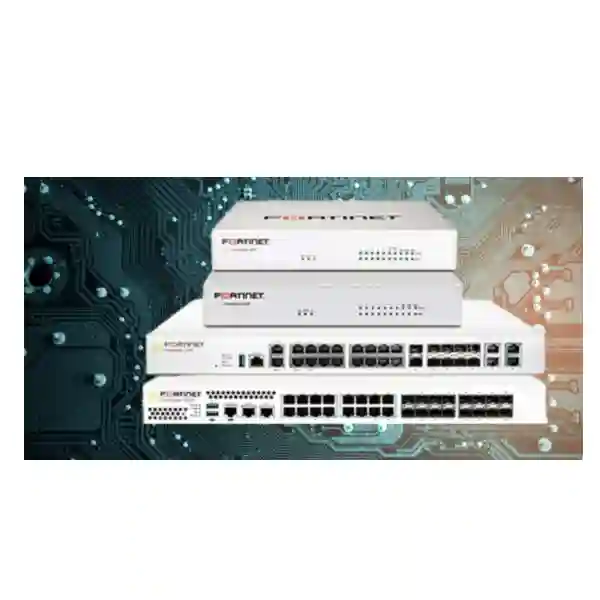
Secure multi-gigabit campus access switching
FortiSwitch 600 Series
FortiSwitch 600 Series is designed for modern campus access networks that need more bandwidth at the edge, high-speed uplinks and close integration between networking and security. Fortinet positions the 600 Series as multi-gigabit campus switching with up to 5GE access and 25GE uplinks. For organizations upgrading wireless infrastructure, connecting bandwidth-intensive endpoints or standardizing a Fortinet-based LAN, the series provides a practical bridge between access-layer capacity and a high-performance campus core.
Multi-gigabit copper access helps reduce the wired bottleneck between next-generation wireless access points and the rest of the campus network.
High-speed SFP28 uplinks provide capacity for aggregation and campus designs where many access devices share upstream links.
Full-PoE models support 802.3bt, useful when the switch must power compatible wireless access points and other higher-power Ethernet endpoints.
FortiSwitch 600 Series overview
The 600 Series sits in Fortinet’s campus switching portfolio as a high-performance access-layer family. Current Fortinet portfolio information identifies four principal configurations: FS-624F, FS-624F-FPOE, FS-648F and FS-648F-FPOE. The 24-port models provide 24 multi-gigabit copper interfaces capable of up to 5GE and four 25GE SFP28 uplinks. The 48-port models provide 32 multi-gigabit ports up to 2.5GE plus 16 ports up to 5GE, with eight 25GE SFP28 uplinks. Full-PoE variants add 802.3bt power capabilities, with the appropriate power budget and electrical design becoming important parts of deployment planning.
FortiSwitch can operate in a Fortinet architecture where FortiLink extends FortiGate management and security visibility into the Ethernet access layer. Fortinet also provides standalone and other centralized management options across the broader FortiSwitch portfolio. The correct operational model should be selected according to the customer’s existing FortiGate environment, network administration practices, site count and desired level of centralized control.
Models and verified interface choices
| Model | Access ports | Uplinks | PoE |
|---|---|---|---|
| FS-624F | 24 × multi-gigabit up to 5GE | 4 × 25GE SFP28 | No PoE |
| FS-624F-FPOE | 24 × multi-gigabit up to 5GE | 4 × 25GE SFP28 | 802.3bt, up to 1400W listed PoE output |
| FS-648F | 32 × up to 2.5GE + 16 × up to 5GE | 8 × 25GE SFP28 | No PoE |
| FS-648F-FPOE | 32 × up to 2.5GE + 16 × up to 5GE | 8 × 25GE SFP28 | 802.3bt, up to 1800W listed PoE output |
Where the 600 Series fits
The family is particularly relevant when conventional 1GbE access becomes a constraint. Wi-Fi 6E and Wi-Fi 7 access points, dense campus environments, large file workflows and high-performance workstations can create demand for multi-gigabit access. The switch should still be selected from a complete network design: endpoint speeds, cable capability, uplink oversubscription, redundancy, routing location, security policy and future growth all affect the result.
PoE planning
Choose an FPOE model when powered endpoints justify it, but do not select PoE from port count alone. Record each endpoint’s power requirement, calculate simultaneous demand, allow engineering headroom and confirm rack power and UPS capacity. High-power wireless access points can make 802.3bt useful, while non-PoE models may be more appropriate where endpoints have independent power or where the switch is used primarily for data connectivity.
FortiGate, FortiLink and secure LAN integration
A key buying reason for FortiSwitch is its ability to participate in Fortinet’s converged networking and security architecture. FortiLink can allow FortiSwitch configuration and visibility through FortiGate, helping administrators coordinate access-layer networking with security policy. This can simplify device onboarding, VLAN and policy operations in organizations already standardized on Fortinet. Buyers should confirm FortiOS compatibility, intended topology, FortiLink design, redundancy requirements and management responsibilities before rollout rather than treating integration as an automatic result of connecting the devices.
For related planning, review FourTeck Tanzania’s firewall, VPN and network security guidance, which explains why firewall sizing, segmentation and secure access should be considered alongside switching. The same Tanzania resource also covers Wi-Fi and wireless access-point planning, relevant because multi-gigabit switching is frequently selected to support higher-capacity wireless infrastructure.
Deployment and buying checklist
Separate 1GE, 2.5GE and 5GE requirements and identify how many ports must support higher-speed devices today and during the planned lifecycle.
List APs, cameras, phones and other powered endpoints with their standards and maximum expected draw before choosing an FPOE configuration.
Determine whether 25GE uplinks terminate on an aggregation or core switch and plan optics, fiber type, distances, redundancy and link aggregation accordingly.
Document whether FortiGate/FortiLink, standalone or another supported management approach will be used and who owns configuration and monitoring.
Related FourTeck Tanzania infrastructure
A switch project rarely stands alone. FourTeck Tanzania’s business technology shop provides a starting point for related product sourcing. For physical deployment, the site’s structured cabling, fiber, racks and UPS guidance is relevant because multi-gigabit access, 25GE uplinks and high PoE budgets depend on suitable cabling and power infrastructure. Its network switches, routing and LAN infrastructure guidance covers VLANs, fiber uplinks, link aggregation and rack design, while integrated IT support and lifecycle services provide context for configuration, documentation, troubleshooting and expansion. Buyers can also use the FourTeck Tanzania contact page to provide model, quantity, site and integration details for a quotation.
FortiSwitch 600 Series Tanzania
For organizations evaluating FortiSwitch 600 Series Tanzania deployments, the strongest starting point is to define why multi-gigabit access is needed. A campus with new high-throughput wireless access points has a different requirement from a server-heavy office, a CCTV environment or a building where most endpoints remain at 1GbE. The 600 Series becomes particularly useful where selected edge devices need 2.5GE or 5GE and where 25GE upstream connectivity can prevent the access layer from becoming an avoidable bottleneck. Tanzanian buyers should therefore prepare an endpoint schedule rather than selecting a switch only by the headline number of ports.
Power design deserves equal attention. The FS-624F-FPOE and FS-648F-FPOE can support high-power 802.3bt endpoints, but a project should calculate the real PoE load, UPS requirement and rack power capacity. This is important in offices, education environments, hospitality properties and other sites where access points, cameras or other Ethernet-powered devices share switching infrastructure. For installations with mixed endpoint types, documenting power class and expected growth helps avoid both undersizing and unnecessary cost.
Network architecture in Tanzania should also account for the building and available cabling. Multi-gigabit copper performance depends on a suitable cabling plant, while 25GE uplinks require compatible optics, fiber and upstream interfaces. A switch replacement can expose limitations in older patching or fiber infrastructure, so testing and documenting the physical layer before commissioning is worthwhile. Where FortiGate is already deployed, FortiLink integration can create a more unified operational model; where it is not, the management approach should be confirmed during design.
For quotation preparation, provide the preferred 24- or 48-port model class, PoE requirement, quantity, existing FortiGate model if applicable, access-point types, required uplink distances and any redundancy expectations. FourTeck Tanzania’s verified contact page accepts networking and switch enquiries and specifically recommends including users, devices, internet and infrastructure context. That level of detail helps turn a general request for a FortiSwitch 600 Series price in Tanzania into a bill of materials that includes the switch, appropriate transceivers, cabling dependencies, support requirements and deployment considerations.
FortiSwitch 600 Series Dar es Salaam
A FortiSwitch 600 Series Dar es Salaam project may serve corporate offices, multi-floor buildings, hotels, education campuses, technology environments or other organizations where wired and wireless traffic converges at the access layer. In these deployments, port count is only one dimension. The more useful design question is how much traffic each floor or access closet will generate and how that traffic reaches the core. The 25GE uplinks available on the 600 Series can be valuable where many multi-gigabit endpoints share an aggregation path.
For an office refresh, inventory existing access switches, wireless access points, cameras, phones and workstations. Identify which devices actually benefit from 2.5GE or 5GE and which can remain on standard Gigabit access. This avoids paying for capacity where it adds little value while reserving higher-speed ports for modern APs and demanding endpoints. In a new building, the same exercise can guide patch-panel design, fiber counts and rack placement before installation begins.
Dar es Salaam buyers considering FPOE models should include the electrical layer in the bill of materials. A large PoE budget can simplify endpoint power distribution, but the rack still needs adequate mains power, UPS capacity, cooling and organized patching. If the project is intended to support high-density Wi-Fi, the wireless design and switch design should be developed together. Access-point radio capacity, client density, uplink speed, VLANs and internet capacity all affect the user experience.
The FourTeck Tanzania contact page lists Dar es Salaam among its office contacts and accepts product-selection and quotation requests. A useful enquiry should specify site type, number of floors or closets, approximate endpoint count, required PoE devices, existing Fortinet equipment and expected uplink architecture. If fiber links connect floors or buildings, include approximate distances and existing fiber type. This enables a more precise discussion around FS-624F versus FS-648F capacity, PoE versus non-PoE variants and the transceiver requirements that accompany the switch hardware.
FortiSwitch 600 Series Mwanza
FortiSwitch 600 Series Mwanza requirements can arise when a growing site needs to modernize the access layer without creating a separate management island. Businesses planning higher-capacity wireless, larger local data transfers or a structured campus network can use the 600 Series to provide multi-gigabit edge ports with faster uplinks. The decision should be based on actual endpoint and traffic requirements rather than assuming every connected device needs the maximum port speed.
For a Mwanza site with multiple functional areas, segmentation is an important planning topic. Corporate users, guest wireless, IP cameras, voice devices and building systems can have different security and performance requirements. A managed switching design can use VLANs and access policies to keep those functions organized. Where a FortiGate and FortiLink architecture is selected, the access layer can participate in a broader Fortinet security and management model. The exact topology and compatibility should be confirmed against the deployed FortiOS environment before implementation.
Physical infrastructure should be reviewed before a high-speed switch arrives. Check rack depth and space, patching, copper cabling category and condition, fiber availability, UPS capacity and cooling. If the existing site was designed around 1GbE access, some cabling runs may need testing before relying on multi-gigabit operation. If the switch will power wireless access points, calculate the PoE requirement from the actual AP models and expected quantity rather than using a generic allowance.
Procurement teams can improve quotation accuracy by separating mandatory items from future expansion. State how many ports are needed immediately, the expected growth window, how many require PoE, how many require multi-gigabit access and what upstream interfaces are available. Include whether redundant uplinks are required and whether optics are already standardized. This gives FourTeck enough context to discuss an appropriate 24- or 48-port FortiSwitch 600 Series configuration and avoids treating the switch as an isolated line item without the transceivers, power and integration components needed for a usable deployment.
FortiSwitch 600 Series Arusha
A FortiSwitch 600 Series Arusha deployment may be relevant to hospitality, education, business offices and other environments where reliable wireless access is central to daily operations. Modern access points can exceed the practical limits of a single Gigabit Ethernet connection, so the 600 Series’ multi-gigabit ports provide a path to use higher wired capacity where compatible APs require it. The high-speed uplinks then help carry aggregated access traffic toward the campus core or security gateway.
Hospitality-style networks illustrate why design matters. Staff devices, guest Wi-Fi, surveillance, voice and operational systems can coexist on the same physical switching platform while remaining logically separated. Port profiles, VLANs and security policy need to be planned so guest traffic does not gain unnecessary access to business systems. If FortiGate and FortiLink are part of the design, switching and security operations can be coordinated, but the implementation should still be documented with clear VLAN, port and uplink assignments.
For PoE deployments, consider the entire power chain. High-capacity access points may require more than traditional PoE, making 802.3bt support relevant. The switch’s available PoE budget must be matched to endpoint demand, and the UPS must be sized for the combined network load if continued operation during short interruptions is required. Rack ventilation and cable organization become more important as port density and power consumption increase.
The verified FourTeck Tanzania contact page lists an Arusha office contact and encourages customers to provide site and network details. For a FortiSwitch 600 Series quotation, include AP quantities and models where known, number of wired users, camera or phone counts, desired redundancy, existing FortiGate information and the distance to the aggregation point. If the site has several buildings, specify inter-building fiber links. These inputs help determine whether the project needs one access switch or a broader campus switching design with multiple access closets and an appropriate core.
FortiSwitch 600 Series Dodoma
FortiSwitch 600 Series Dodoma projects can support organizations that are refreshing campus connectivity, consolidating access switches or preparing the wired network for higher-speed wireless. The family is most useful when the access layer requires a deliberate step above conventional Gigabit switching. FS-624F variants suit designs centered on 24 multi-gigabit access ports, while FS-648F variants provide higher port density with a mix of 2.5GE- and 5GE-capable interfaces.
For offices and institutional environments, plan the switch around services rather than desks alone. A single closet may connect employee devices, access points, phones, cameras, printers and building systems. Some require PoE, some need only Gigabit throughput, and selected APs or workstations may justify multi-gigabit links. Mapping those requirements to ports makes it easier to choose between PoE and non-PoE models and prevents the project from relying on assumptions about endpoint power.
Uplink architecture is another major consideration. The 600 Series supports 25GE uplinks, but that capability delivers value only when the upstream switch, optics and fiber path are compatible. Decide whether uplinks will be aggregated, whether diverse paths are required for resilience and where Layer 3 routing occurs. In a Fortinet Security Fabric design, also document how FortiLink is arranged and how the switches will be managed and monitored.
FourTeck Tanzania’s contact page lists Dodoma among its office contacts. A procurement request should include quantities, preferred model if known, number of PoE endpoints, desired uplink count, transceiver type if standardized and support expectations. If the project is part of a larger office or campus upgrade, include firewall, wireless and cabling requirements in the same enquiry. Coordinating these dependencies is more effective than purchasing the switch first and discovering later that the existing fiber, rack power or upstream equipment cannot support the intended design.
FortiSwitch 600 Series UAE
FortiSwitch 600 Series UAE procurement often sits within larger Fortinet campus, branch or wireless modernization projects. Buyers may be comparing a 24-port FS-624F platform against the denser FS-648F, or deciding whether an FPOE model is required for Wi-Fi and powered edge devices. The selection process should begin with a port and power schedule, because the difference between non-PoE and high-budget PoE switching has implications for rack power, UPS sizing and project cost.
The UAE market also commonly involves multi-site standardization. For organizations operating several offices, a repeatable switch template can simplify configuration, monitoring and support. Standardized VLAN IDs, port profiles, uplink designs and firmware processes reduce variation between sites. FortiLink can be attractive when FortiGate is already the chosen security platform, providing a converged operational model for LAN edge management. Compatibility and supported topology should be validated for the specific FortiGate and FortiOS release in use.
For dense wireless environments, do not treat a high-speed access switch as a substitute for RF planning. Multi-gigabit Ethernet removes one potential bottleneck, but user experience still depends on AP placement, channel planning, client capabilities and upstream internet or application capacity. Likewise, 25GE uplinks should be engineered according to actual aggregate traffic and redundancy requirements rather than enabled simply because the ports are available.
Regional buyers can review FourTeck UAE for broader IT and network solution context. When requesting a FortiSwitch 600 Series quote, include the exact model or desired port count, PoE device schedule, quantity, required optics, FortiGate model and any FortiCare support requirements. This information supports a cleaner bill of materials and helps distinguish hardware pricing from the complete deployment requirement.
FortiSwitch 600 Series Uganda
FortiSwitch 600 Series Uganda deployments can be considered by enterprises, institutions and multi-site organizations that need higher access-layer capacity while keeping network security and switching closely coordinated. A 600 Series switch is not automatically necessary for every endpoint; its value is strongest where multi-gigabit APs or other demanding devices need more than 1GbE and where 25GE uplinks fit the aggregation design.
For Uganda projects, prepare a current-state inventory before specifying hardware. Record switch models, port utilization, uplink speeds, PoE loads, access-point models, VLANs and any recurring performance issues. This establishes whether the upgrade should replace an entire access layer or target selected closets with higher bandwidth requirements. It also reveals whether the core can accept 25GE connections or requires a parallel upgrade.
Power and cabling are especially important for FPOE configurations. The network rack must provide appropriate electrical capacity and UPS protection for the intended load. Copper links expected to operate at multi-gigabit speeds should be tested, and fiber uplinks should be matched with compatible transceivers. Where remote sites are involved, consistent documentation and spare strategy can reduce troubleshooting complexity after rollout.
For regional solution context, FourTeck Uganda covers networking and IT requirements. A useful FortiSwitch enquiry should identify the city and site type, number of access closets, required switch quantities, PoE endpoint count, existing Fortinet security equipment and support expectations. For organizations spanning Uganda and Tanzania, keeping naming, VLAN and management standards consistent across sites can simplify operations while still allowing each location’s bandwidth and power requirements to determine its exact hardware.
FortiSwitch 600 Series Kampala
A FortiSwitch 600 Series Kampala deployment is well suited to a design discussion around campus density and wireless growth. Corporate offices, hotels, education facilities and other multi-user environments may have many access points and endpoints sharing a limited number of uplinks. The 600 Series combines multi-gigabit edge connectivity with 25GE uplink capability, making it possible to increase access capacity without immediately moving every endpoint to a higher-speed interface.
Start by identifying the high-value multi-gigabit ports. Next-generation APs are a common reason, but specialized workstations or other high-throughput devices may also qualify. Standard desktops, phones and many cameras may remain adequately served at 1GbE. This mixed approach allows the network to allocate performance where it changes the user experience while preserving a rational port and cost model.
For Kampala sites with FortiGate firewalls, FortiLink integration may reduce operational fragmentation by bringing switching visibility and configuration into the Fortinet environment. That does not eliminate the need for sound LAN engineering. Spanning-tree behavior, link aggregation, VLAN structure, DHCP and routing boundaries still require deliberate design and documentation. Redundant paths should be planned so failover behavior is understood before production use.
Procurement requests should distinguish hardware from project services. List the required switches, optics, power cords, support coverage and any implementation or configuration requirement separately. Include current core-switch interfaces and fiber distances so 25GE uplinks can be specified correctly. FourTeck Uganda provides regional IT solution context, while FourTeck Tanzania can coordinate enquiries tied to Tanzanian projects. For cross-border organizations, a common Fortinet architecture can provide operational consistency, but model selection should remain site-specific rather than forcing every branch into the same port density.
FortiSwitch 600 Series Arua
FortiSwitch 600 Series Arua planning should focus on whether the site genuinely benefits from high-density multi-gigabit access. A branch with mostly conventional office endpoints may need a different FortiSwitch family, while a larger facility with modern wireless infrastructure, centralized services or significant local traffic may justify 600 Series capacity. This needs-based approach prevents overspecification and keeps the network aligned with actual applications.
Where the 600 Series is appropriate, consider operational simplicity as well as raw speed. Remote or distributed sites benefit from standardized configuration, clear documentation and centralized visibility. In a Fortinet environment, FortiLink can support a converged management approach with FortiGate. Before deployment, confirm firmware compatibility and the desired management topology, then document switch names, VLANs, port roles and uplinks so remote troubleshooting does not depend on informal knowledge.
For FPOE models, build a power schedule that includes all access points and other powered devices. Do not assume every PoE endpoint draws the same wattage. The switch’s available power budget, the rack’s UPS and the building’s electrical environment should be evaluated together. If continuity is important, define which devices must remain powered during an interruption and size backup accordingly rather than simply backing up the entire rack without calculation.
Arua buyers requesting a quotation should provide site type, required port count, number and model of APs where known, existing firewall, uplink medium and approximate fiber distance. If the project involves several branches, indicate whether the goal is to standardize hardware or only management. That distinction can change the recommendation. A common operating model can sometimes be achieved with different switch sizes at different sites, allowing the larger 600 Series to be used where its multi-gigabit and uplink capacity is actually needed.
FortiSwitch 600 Series Mbarara
FortiSwitch 600 Series Mbarara deployments can support organizations that are moving from a basic access network to a more structured campus design. The key improvement is not simply faster ports; it is the ability to plan edge bandwidth, PoE and upstream capacity as one system. A 24-port FS-624F configuration may fit a focused high-performance closet, while an FS-648F can consolidate more endpoints where higher density is required.
When wireless is the main driver, check the Ethernet requirements of each access-point model. Some APs can use multi-gigabit links and higher-power PoE, while others may not. Matching switch capability to actual AP specifications avoids unused capacity and helps determine the required FPOE budget. The wireless controller or management model, VLAN structure and guest-access policy should be considered at the same time.
Uplinks should be designed from traffic flow. If applications and internet access are centralized upstream, the aggregation path may carry most user traffic. If substantial services are local, traffic patterns can differ. The 25GE SFP28 interfaces provide high capacity, but compatible optics and upstream ports are required. Fiber type and distance should be confirmed before ordering transceivers, especially when closets are separated across a large site.
For Mbarara procurement, send a bill-of-materials request with switch quantity, preferred model if known, PoE endpoint list, optics requirement and support term. If the exact model is not known, provide the business requirement instead: number of users, access points, cameras and floors, plus existing FortiGate and core switching. This allows model selection to be based on capacity and integration. For broader Uganda projects, FourTeck Uganda can provide regional solution context and help frame switching as part of the complete network rather than a standalone hardware purchase.
FortiSwitch 600 Series Gulu
FortiSwitch 600 Series Gulu requirements should be evaluated against growth, supportability and infrastructure readiness. The platform can provide substantial access capacity, but deploying it into an untested cabling plant or an undersized rack power environment can prevent the network from realizing that capability. A pre-deployment assessment of copper runs, fiber uplinks, patching, UPS and upstream switching is therefore a practical part of the project.
For sites expanding Wi-Fi, the 600 Series offers multi-gigabit connectivity that can keep the wired side from constraining compatible high-performance access points. The design should still account for wireless client density, RF conditions and internet bandwidth. Faster switching cannot compensate for poor AP placement or an undersized WAN circuit. Treat the LAN, WLAN and firewall as connected layers with shared performance and security dependencies.
Security segmentation is another reason to use managed campus switching. Staff, guest, voice, surveillance and operational devices can be assigned to separate VLANs and governed by appropriate policies. If FortiLink is used with FortiGate, the access layer can be integrated into the Fortinet management and security architecture. The final configuration should be documented so administrators understand which policies and VLANs apply to each port role.
For a Gulu quotation, specify whether the requirement is for a new site, refresh or expansion. Include existing switch and firewall models, desired port count, PoE demand, number of high-speed APs, uplink distances and resilience requirements. If project support is needed, distinguish installation, configuration, testing and documentation from hardware supply. This makes the scope clearer and helps ensure that optics, patch leads, rack power and other small but essential components are not omitted from the procurement plan.
FortiSwitch 600 Series Kenya
FortiSwitch 600 Series Kenya projects can address enterprise campus access where wireless and wired bandwidth demands have moved beyond conventional Gigabit designs. The series offers a choice between 24- and 48-port configurations, with FPOE variants for powered endpoints and 25GE uplinks for aggregation. Model selection should reflect endpoint mix, PoE load and upstream design rather than a simple preference for the largest switch.
For a Nairobi office, education campus, hospitality property or distributed enterprise, begin with a port matrix. Mark each endpoint as 1GE, multi-gigabit, PoE and non-PoE, then add realistic growth. This identifies whether the 24-port or 48-port platform fits and whether the high PoE budget of an FPOE model is justified. It also highlights cases where multiple smaller access switches may offer better physical distribution than one dense unit.
Organizations using FortiGate can evaluate FortiLink for centralized access-layer operations. This can align switching with the wider Fortinet Security Fabric, but a successful deployment still depends on good network design. Confirm FortiOS compatibility, VLAN and routing responsibilities, redundant uplink behavior and firmware management. For 25GE connections, specify compatible SFP28 optics and fiber based on the actual distance and upstream equipment.
For regional assistance, FourTeck Kenya covers IT, VoIP and network-security solution requirements. A FortiSwitch 600 Series quotation should include quantity, exact model if already selected, PoE devices, FortiGate model, transceiver needs and desired support term. Cross-border businesses operating in Kenya and Tanzania can benefit from common configuration standards, while still sizing each location according to its own user density, building topology and uplink requirements.
FortiSwitch 600 Series Kuwait
FortiSwitch 600 Series Kuwait deployments can support high-density business environments where next-generation wireless and campus access require more than standard Gigabit switching. The FS-624F and FS-648F families provide multi-gigabit copper access and 25GE uplinks, while FPOE variants support higher-power Ethernet devices. The correct choice depends on how many ports need multi-gigabit performance and how much powered-device capacity is required.
In new office or campus projects, coordinate switching with structured cabling from the beginning. Multi-gigabit access should be backed by tested copper cabling, and 25GE uplinks require compatible fiber and optics. Rack design should reserve space for patch panels, cable management, UPS and airflow. These details are easier to solve before installation than after switches and APs have already been purchased.
Where Fortinet security infrastructure is already in use, FortiLink can make the 600 Series part of a converged networking and security environment. Decide whether switching will be managed through FortiGate or another supported method and document the operational responsibilities. Multi-site businesses should also define configuration templates, naming and firmware practices so expansion does not create inconsistent network behavior.
For local solution context, FourTeck Kuwait covers networking and IT requirements. Procurement teams should provide the switch quantity, port density, PoE endpoint schedule, uplink count, optic distances and existing Fortinet environment when requesting pricing. If installation is part of the requirement, include rack, cabling and testing scope. A complete request makes it easier to separate the base switch from necessary transceivers, support coverage and deployment services.
FortiSwitch 600 Series Ghana
FortiSwitch 600 Series Ghana deployments can be considered for campus networks where access-point density, user bandwidth or application traffic calls for multi-gigabit switching. The platform’s 25GE uplinks also make it relevant when access closets need a higher-capacity path to aggregation. Before choosing the series, buyers should compare the current network load and expected growth with the capabilities of lower-speed FortiSwitch families to ensure the investment addresses a real requirement.
A Ghana project should document endpoint roles. High-performance APs may benefit from 2.5GE or 5GE, while phones, printers and many cameras may remain at Gigabit speeds. If PoE is required, total the expected power demand and check whether an FPOE model is appropriate. UPS and rack electrical design should then be based on the actual switch and endpoint load, with enough margin for planned growth.
For Fortinet-based networks, FortiLink integration can connect the access layer to FortiGate management and security. The design should establish VLANs, user and device access requirements, uplink redundancy and the location of routing and security policy. In larger campuses, it is useful to draw the access-to-core topology before procurement so the number of 25GE uplinks, transceivers and fiber paths is known.
For regional IT solution information, FourTeck Ghana provides a relevant FourTeck destination. When requesting a FortiSwitch 600 Series quotation, include whether the site is a new deployment or upgrade, current FortiGate and core models, required access ports, PoE endpoint list and support expectations. If several sites are involved, provide a per-site schedule so switch density can be right-sized instead of applying one configuration to every branch.
FortiSwitch 600 Series Nigeria
FortiSwitch 600 Series Nigeria projects may serve large offices, education environments, hospitality, financial operations and other sites where campus access capacity is important. Multi-gigabit switching is most valuable when endpoints can use it, so procurement should begin with a technical inventory. Identify which APs and wired devices support 2.5GE or 5GE, then determine whether the access-to-core path can take advantage of 25GE uplinks.
For PoE-heavy deployments, the FPOE models provide a high power budget and 802.3bt capability. The engineering task is to translate endpoint requirements into a realistic power schedule. Consider maximum draw, startup behavior, future AP additions and which devices need UPS-backed operation. The electrical and cooling environment of the rack should be assessed alongside the switch specification, particularly when multiple high-power access switches share the same cabinet.
Security and manageability should also be included in the decision. FortiLink can integrate FortiSwitch with FortiGate, helping organizations operate the LAN edge as part of the broader Fortinet architecture. This can be useful in multi-site environments that want common policy and visibility. The deployment should nevertheless have documented VLANs, port profiles, uplink design and firmware procedures so the network remains understandable as it grows.
For regional context, FourTeck Nigeria covers IT solution requirements. A quotation request should state city, site count, switch quantity, desired 24- or 48-port format, PoE devices, FortiGate model and fiber distances. Where exact models are not yet chosen, provide the endpoint and traffic requirement so the recommendation can focus on fit. For organizations with operations across Nigeria, Ghana, Kenya, Uganda and Tanzania, common Fortinet management standards can help simplify cross-site administration.
FortiSwitch 600 Series Seychelles
FortiSwitch 600 Series Seychelles projects can be relevant to hospitality, business and institutional environments where high-quality wireless connectivity and structured campus networking are important. The 600 Series provides multi-gigabit access for compatible devices and high-speed 25GE uplinks, making it possible to build access closets that are prepared for modern AP throughput and aggregated traffic. The series should be selected according to real port, power and uplink requirements.
Hospitality networks are a useful example because guest wireless, staff systems, voice, surveillance and operational technology may all share the switching infrastructure. These services should be segmented and assigned appropriate access policies. PoE requirements can also be significant where access points, cameras and phones are distributed throughout a property. An FPOE model can centralize power delivery, but the UPS and electrical design must be sized for the expected endpoint load.
For multi-building sites, fiber architecture deserves early attention. Determine the distance between racks, fiber type, available strands and required redundancy. The switch’s 25GE uplinks need compatible SFP28 optics and upstream ports, so these components should be part of the initial bill of materials. Copper runs intended for multi-gigabit access should also be tested, particularly in an existing building where cable history is uncertain.
When requesting a Seychelles quotation, provide property or site type, number of access closets, AP count and models where available, other PoE endpoints, existing FortiGate environment and desired support. If the project is a refresh, include current switch models and the performance problem being solved. This helps determine whether a FortiSwitch 600 Series deployment is appropriate across the site or only in high-density areas. Regional procurement can also be coordinated through the broader FourTeck Africa network context.
FortiSwitch 600 Series FAQs
Which models are in the FortiSwitch 600 Series?
Fortinet’s current portfolio lists FS-624F, FS-624F-FPOE, FS-648F and FS-648F-FPOE. The 624 models use 24 multi-gigabit access ports, while the 648 models provide 48 access ports. FPOE variants add 802.3bt PoE capability.
Why choose the 600 Series for Wi-Fi?
Compatible modern access points can require more than 1GbE of wired capacity. FortiSwitch 600 Series offers multi-gigabit access up to 5GE and 25GE uplinks, helping the wired network support higher-capacity wireless designs. Actual AP Ethernet and PoE requirements should be checked before selection.
Can FortiSwitch 600 Series be managed with FortiGate?
Fortinet supports FortiSwitch management through FortiGate using FortiLink. Compatibility, topology and FortiOS requirements should be verified for the intended deployment before implementation.
Do I need an FPOE model?
Choose an FPOE model when the switch must power compatible Ethernet endpoints and the calculated PoE demand justifies it. If endpoints use independent power, a non-PoE model may be more appropriate. Build a device-by-device power schedule before ordering.
What should I send for a FortiSwitch 600 Series quotation?
Send the required quantity, preferred model or port count, PoE endpoint list, access-point models, existing FortiGate and core switch information, uplink distances, optics requirements, site location and desired support term. If the exact model is unknown, describe users, devices and network goals instead.
Quotation checklist
For a faster technical review, include: project location; FS-624F or FS-648F preference if known; PoE or non-PoE requirement; quantity; number and type of access points; other powered devices; existing FortiGate model and FortiOS environment; core or aggregation switch model; required 25GE uplink count; fiber type and distance; rack and UPS information; redundancy requirement; and desired FortiCare support coverage. If you are replacing an existing switch, include its model and explain the capacity, reliability or management problem driving the upgrade.
Decision recap
Choose the FortiSwitch 600 Series when your access layer needs multi-gigabit Ethernet, high-speed 25GE uplinks and a campus switching platform that can integrate with Fortinet’s security and management architecture. Choose between 24- and 48-port density based on endpoint count, and between standard and FPOE variants based on calculated power demand. Validate cabling, optics, upstream interfaces, FortiGate/FortiOS compatibility and rack power before purchase. This turns a switch specification into a deployable network design.
Plan your FortiSwitch 600 Series deployment
FourTeck Tanzania can review a FortiSwitch requirement as part of the wider LAN, Wi-Fi, firewall, fiber and power design. Use the verified FourTeck Tanzania contact page and include the endpoint, PoE, uplink and existing Fortinet details listed above. This helps the discussion focus on compatibility, capacity and the complete bill of materials rather than hardware alone.


Reviews
There are no reviews yet.