
FortiSwitch FS-124G-FPOE Tanzania
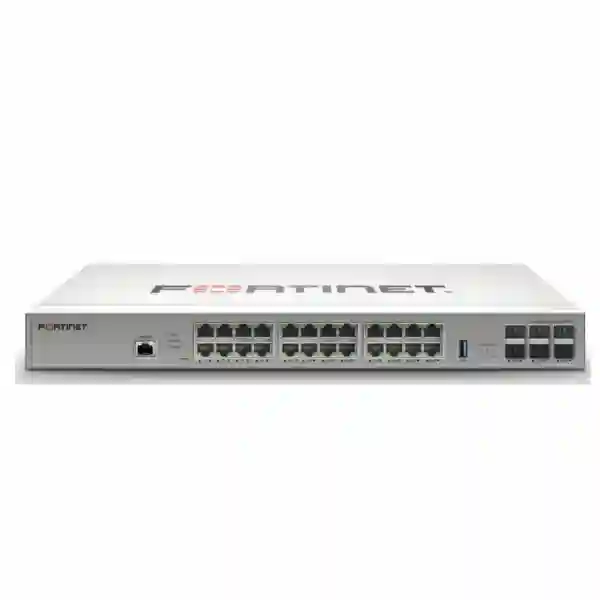
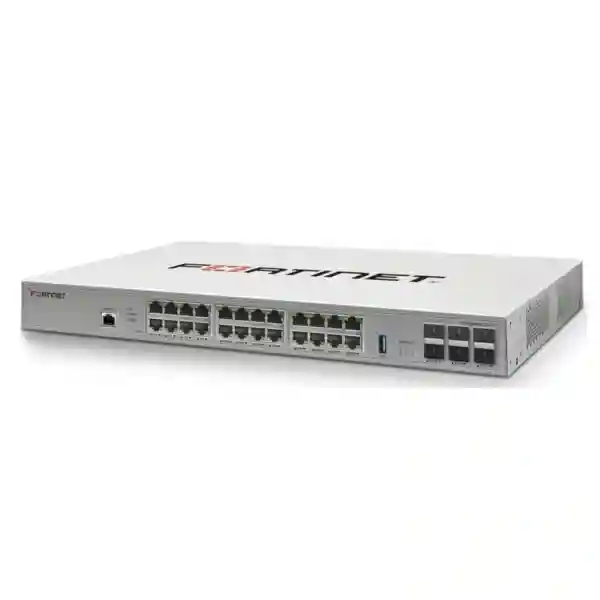
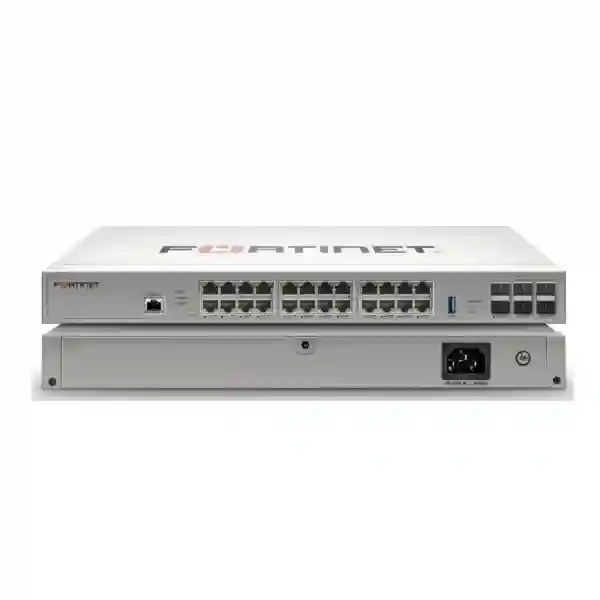
FortiSwitch FS-124G-FPOE is a multi-gigabit Fortinet access switch designed for networks that need more edge bandwidth, substantial Power over Ethernet capacity and a clean path into a Fortinet-managed LAN. Its 24 copper access interfaces support 2.5GbE, while six SFP+/SFP interfaces provide 10GbE/1GbE uplink flexibility. The full-PoE model provides eight 802.3bt ports capable of supplying up to 90W per supported port and sixteen 802.3af/at ports up to 30W, subject to the overall 780W PoE output limit. For Tanzania organizations modernizing Wi-Fi, CCTV, IP telephony and connected workplace infrastructure, that combination can reduce dependence on separate power injectors while giving high-performance endpoints more network headroom.
Multi-gigabit RJ45 access connectivity for capable endpoints.
High-speed fiber or compatible uplink choices for aggregation.
A substantial total power budget for mixed powered endpoints.
What the FortiSwitch FS-124G-FPOE solves
A conventional Gigabit access switch can become a limiting factor when a business deploys newer Wi-Fi access points, high-resolution surveillance, high-performance workstations or other devices capable of exceeding 1Gbps. The FS-124G-FPOE addresses this at the access layer with 2.5GbE copper connectivity across all 24 user-facing ports and multiple 10GbE uplinks. It also consolidates data and electrical power for supported Ethernet endpoints. This makes the model particularly relevant when a rack needs to serve a mixture of wireless access points, cameras, IP phones and business devices without filling the cabinet with standalone injectors.
The model is also designed to participate in Fortinet’s Secure Networking approach. FortiSwitch can be managed with FortiGate in supported deployments, helping administrators align switching with wider network-security operations. Buyers should still design the topology around the model’s intended access-layer role. Fortinet’s current reference architecture describes the 100G Series as access switches and notes that the series does not support MCLAG. Where endpoints must be dual-attached to two separate access switches, a different FortiSwitch family with the required architecture should be considered.
Verified hardware highlights
| Model | FortiSwitch-124G-FPOE / FS-124G-FPOE |
| Copper access ports | 24 × 2.5G/1G/100M RJ45 |
| Uplinks | 6 × 10G/1G SFP+/SFP |
| High-power PoE | 8 × 802.3bt, up to 90W per supported port |
| PoE / PoE+ | 16 × 802.3af/at, up to 30W per supported port |
| Maximum PoE output | 780W |
| Console | 1 × RJ45 console port |
PoE planning for Wi-Fi, CCTV and IP endpoints
The headline 780W budget is valuable, but correct PoE design requires more than adding device counts. Each powered device has a standard and power requirement. The first eight ports can support 802.3bt high-power devices, while the remaining sixteen provide 802.3af/at capability. A design should map each endpoint to the correct port class, calculate realistic maximum demand and leave operating margin for device startup, future additions and replacement models. A wireless access point that requires 802.3bt should not be treated as interchangeable with a lower-power phone simply because both use Ethernet.
For CCTV, PoE simplifies camera installation by carrying network traffic and power over the same structured cable, but camera quantity, resolution and recording architecture still affect uplink sizing. For Wi-Fi, the 2.5GbE edge ports are especially useful when access points can generate aggregate throughput beyond Gigabit Ethernet. For IP telephony, VLAN design, quality-of-service policy and UPS-backed switching may matter as much as raw PoE capacity. Fourteck’s Tanzania technology solutions overview explains how switching connects with Wi-Fi, cameras, voice, firewalls and other infrastructure rather than operating as an isolated purchase.
FortiSwitch FS-124G-FPOE and FortiGate integration
Organizations already using FortiGate can evaluate the FS-124G-FPOE as part of an integrated Fortinet LAN edge. Centralized switch control can simplify policy-oriented operations and provide a more consistent view of connected infrastructure. The practical benefit is not that every network becomes automatic; administrators still need deliberate VLAN, uplink, spanning-tree, PoE and access-policy design. The advantage is the opportunity to operate switching in the same broader security ecosystem rather than managing a collection of unrelated edge devices.
For a new project, document the FortiGate model, FortiOS release, planned FortiLink topology, number of switches, uplink media, VLAN requirements and endpoint groups before ordering optics or cabling. The Fourteck Tanzania technology shop is a useful starting point for related infrastructure requirements, while buyers with wider regional Fortinet projects can also review the Fourteck Fortinet specialist site.
FortiSwitch FS-124G-FPOE Tanzania
For Tanzania businesses, the FS-124G-FPOE fits projects where the access layer must support a growing mix of high-bandwidth and powered devices. A head office may use the switch for Wi-Fi access points, IP phones, meeting-room equipment, security cameras and selected wired users. A hotel may prioritize wireless access points and surveillance. A school or training environment may need dense wireless connectivity and lab ports. A warehouse can combine cameras, wireless coverage and operational terminals. The common design question is whether a 24-port multi-gigabit switch with a high PoE budget matches the actual endpoint map and uplink requirements.
Procurement should begin with a port schedule rather than a model name alone. Count current endpoints, identify which devices need 802.3bt versus 802.3at or 802.3af, note devices that can use 2.5GbE, and identify spare capacity for expansion. Then document the intended uplinks: copper access speed is only useful when traffic can move efficiently toward the firewall, server, distribution layer or other network destination. The six 10GbE SFP+ interfaces provide substantial uplink flexibility, but optics, fiber type, distance and peer-device compatibility must be selected separately.
Tanzania sites should also consider rack ventilation, UPS capacity, grounding and power continuity because a high-PoE switch can become a critical dependency for many endpoints. If a single switch powers wireless, phones and cameras, loss of that switch or its electrical supply can affect several services at once. Sensible UPS sizing and documented patching therefore matter. Fourteck can use the exact device list, building layout, current FortiGate environment and growth plan to prepare a more meaningful quotation rather than treating the switch as a standalone box.
FortiSwitch FS-124G-FPOE Dar es Salaam
Dar es Salaam organizations often operate busy offices, hospitality sites, retail environments, warehouses and multi-floor buildings where wireless density and IP-connected systems place increasing demand on the access network. The FS-124G-FPOE can serve as a strong access-layer option when 24 multi-gigabit ports are the right scale and powered endpoints form a large part of the design. Instead of assuming every port needs the same capability, planners should separate ordinary wired users from high-throughput access points and high-power devices, then map them to the available PoE classes.
In a multi-floor office, 10GbE fiber uplinks can be considered between access and aggregation points where cabling distance or traffic volume makes fiber appropriate. In a hospitality or customer-facing environment, Wi-Fi performance depends on radio design as well as switching, so access-point placement, channel planning and client density should be reviewed alongside the switch. In surveillance-heavy deployments, camera traffic, NVR placement and retention requirements can influence where uplinks terminate and how VLANs are separated.
A Dar es Salaam quotation request is more useful when it includes the number and model of access points, cameras and phones; existing rack and UPS information; the FortiGate model if present; fiber requirements; and expected expansion. This helps determine whether one FS-124G-FPOE is sufficient or whether the network should use multiple access switches and a separate aggregation design. Because the 100G Series is intended as an access family and does not provide MCLAG, topology requirements should be checked before using it in designs that expect dual-attached endpoints across separate access switches.
FortiSwitch FS-124G-FPOE Mwanza
Mwanza buyers evaluating the FS-124G-FPOE should focus on the combination of endpoint density, PoE demand and upstream bandwidth. A branch, education facility, healthcare environment, hospitality property or commercial site may have a relatively modest number of physical network ports yet still require high PoE power because modern wireless access points and specialized devices draw more power than traditional phones. The eight 802.3bt-capable ports make the model relevant to those high-power edge requirements, while the other sixteen ports support common 802.3af/at devices.
The switch can also be useful during a phased network modernization. Existing Gigabit and Fast Ethernet endpoints can coexist with newer 2.5GbE-capable devices, allowing a business to improve access speed without requiring every endpoint to be replaced simultaneously. Cabling quality should be assessed, especially when a project expects reliable multi-gigabit operation across existing horizontal cabling. Patch panels, terminations and cable condition can determine whether a theoretically capable endpoint achieves the intended link speed.
For Mwanza deployments, plan operational resilience around the services powered by the switch. If cameras, Wi-Fi and phones all rely on the same device, document the impact of maintenance and power loss. UPS runtime should be calculated from real load rather than switch nameplate assumptions alone. Keep configuration backups and port documentation, label uplinks and powered endpoints, and define which devices are business-critical. These steps make the network easier to troubleshoot and expand and help a procurement team understand the complete project cost, including optics, patching, rack space, UPS capacity and support.
FortiSwitch FS-124G-FPOE Arusha
Arusha businesses in hospitality, tourism, professional services, education and multi-building environments can evaluate the FS-124G-FPOE where reliable Wi-Fi and powered IP infrastructure are central to daily operations. Guest wireless, staff wireless, surveillance and voice traffic should not simply be placed on one flat network. A managed switching design can separate these functions using VLANs and appropriate policies, with FortiGate integration available for organizations building around the Fortinet ecosystem.
Hospitality environments illustrate why multi-gigabit and PoE planning must be combined. Access points may require higher power and faster wired backhaul, but the real user experience also depends on internet capacity, RF design and upstream switching. Cameras can add continuous traffic, while phones and operational devices need predictable connectivity. The FS-124G-FPOE supplies the physical access capabilities, but the final result depends on the architecture around it.
When requesting a quotation for an Arusha site, include floor plans or approximate coverage areas when wireless is involved, camera and phone counts, the expected location of network cabinets, fiber distances between buildings or floors and the existing firewall environment. If outdoor or detached-building connectivity is required, note surge protection, fiber preference and environmental considerations. Procurement teams should also identify whether FortiCare support is required and for what term. Hardware, support, optics and installation should be treated as separate line items unless a quotation explicitly bundles them, preventing assumptions about services that may not be included with the switch itself.
FortiSwitch FS-124G-FPOE Dodoma
Dodoma organizations planning office, institutional, education or public-facing network upgrades can use the FS-124G-FPOE where 24 multi-gigabit edge ports and high PoE capacity match the site. The model is particularly relevant when wireless access points are moving beyond ordinary Gigabit backhaul or when high-power PoE endpoints must be supported without separate injectors. Six 10GbE uplinks give designers options for connecting the access layer to distribution, server or security infrastructure.
A good design begins by distinguishing access requirements from redundancy requirements. Fortinet positions the 100G Series as an access family, and its architecture guidance states that it does not support MCLAG. If a Dodoma project needs endpoints dual-connected across two separate access switches, another FortiSwitch family should be evaluated. If endpoints are single-attached and the switch itself uses appropriate redundant upstream paths supported by the design, the FS-124G-FPOE may fit well.
Power planning deserves equal attention. The maximum 780W PoE budget is generous, but actual consumption depends on connected devices. Build a worksheet listing every powered endpoint, its required PoE standard, expected maximum draw and assigned switch port. Add growth allowance rather than consuming the entire budget on day one. For sites where continuity matters, size UPS equipment for the switch plus any firewall, router and other network devices that must remain available during an interruption. A clear bill of materials should also include required SFP/SFP+ optics, fiber patch leads, rack accessories and support coverage rather than quoting only the base switch.
FortiSwitch FS-124G-FPOE UAE
For UAE projects, the FS-124G-FPOE is relevant to offices, hospitality, retail, education, healthcare and branch environments that are refreshing the access layer for multi-gigabit wireless and PoE-heavy infrastructure. The model’s 24 2.5GbE ports allow capable Wi-Fi access points and wired endpoints to exceed the traditional 1Gbps edge ceiling, while six 10GbE uplinks provide capacity toward upstream network layers. The 780W PoE budget supports a mixed endpoint population, including up to eight 802.3bt high-power ports.
UAE buyers should confirm the exact hardware part number, support requirement, optics and implementation scope in the quotation. Do not assume that a hardware price automatically includes FortiCare, installation or transceivers. Organizations standardizing Fortinet across multiple branches should also document FortiOS and FortiSwitch software compatibility, FortiLink design, VLAN templates and naming standards so that each site can follow a repeatable deployment method.
Fourteck’s UAE technology solutions site can support broader regional infrastructure discussions. For companies operating between the UAE and East Africa, standardizing the access-layer design can simplify documentation and troubleshooting, but each site still needs its own assessment of electrical conditions, fiber distances, user density and endpoint quantities. A consistent model can be helpful only when it is actually sized correctly for every branch.
FortiSwitch FS-124G-FPOE Uganda
Uganda deployments can benefit from the FS-124G-FPOE when businesses need a compact 24-port access switch with high PoE capacity and multi-gigabit edge performance. Typical requirements include powering Wi-Fi access points, cameras and IP phones while also providing wired connectivity for business users. The model’s six 10GbE uplinks are useful where access traffic must be carried efficiently toward a FortiGate, aggregation switch or server environment.
Before purchase, determine whether the site needs one switch or a larger multi-switch topology. Count ports by device type and reserve spare capacity. Identify high-power devices that require 802.3bt and make sure they are mapped to the eight suitable ports. Calculate the combined PoE demand and account for future endpoints. Review the structured cabling if 2.5GbE is a goal, because cable condition and termination quality can affect real-world performance.
For multi-country organizations, the Fourteck Uganda technology site provides a regional point of reference. Standardized switching can simplify operational procedures between Tanzania and Uganda, but a branch template should still allow local differences in rack capacity, power protection, internet service and fiber layout. The best quotation will list hardware, support, optics and any deployment services separately so procurement teams can see exactly what is included.
FortiSwitch FS-124G-FPOE Kampala
Kampala offices and commercial sites often combine dense Wi-Fi, IP telephony, surveillance and business data on the same physical access infrastructure. The FS-124G-FPOE can provide the port speed and power foundation for such a design, but logical separation remains important. Staff, guest, voice, camera and management traffic should be segmented according to security and operational requirements rather than left in a single broadcast domain.
For wireless projects, identify the access-point models and their Ethernet and PoE requirements before deciding how many FS-124G-FPOE units are needed. Some modern APs can make practical use of multi-gigabit backhaul and higher-power PoE, while others do not need those capabilities. Matching the switch to actual endpoints avoids paying for capacity that is not used or, conversely, discovering after installation that the selected switch cannot fully power a device.
Kampala projects with fiber uplinks should specify distance, fiber type, connector type and peer equipment so the correct SFP+ optics can be selected. Uplink design should also consider traffic concentration: twenty-four 2.5GbE access ports can theoretically generate far more aggregate edge traffic than a single 10GbE uplink, so high-demand environments may use multiple uplinks or a carefully engineered traffic model. Real workloads, not the sum of interface labels, should guide design.
FortiSwitch FS-124G-FPOE Arua
For Arua sites, the value of the FS-124G-FPOE can be strongest where one access switch needs to support several infrastructure categories at once. Wireless access points, IP cameras, phones and business endpoints can share the same managed switch while remaining logically separated. Consolidation can reduce the number of individual power adapters, but it also makes the switch and its power source more important to overall site availability.
That is why power continuity and documentation should be included in procurement planning. Estimate actual switch and PoE load, select appropriate UPS capacity, and identify which powered endpoints must remain operational during an outage. Label ports and patch panels so technicians can quickly distinguish wireless, CCTV, voice and user connections. Keep configuration backups and a simple network diagram with uplink and VLAN information.
If an Arua site connects to a larger branch network, document WAN and firewall dependencies as well. The switch can provide 10GbE local uplinks, but application performance across sites still depends on WAN bandwidth, latency and security policy. A complete request for quotation should therefore describe the local LAN plus the upstream environment. This makes it easier to determine whether the FS-124G-FPOE is simply replacing an old switch or forms part of a broader network refresh.
FortiSwitch FS-124G-FPOE Mbarara
Mbarara businesses considering network expansion can use the FS-124G-FPOE as a high-capacity access-layer platform where 24 ports are appropriate. Its 2.5GbE copper interfaces provide a useful upgrade path for Wi-Fi and other multi-gigabit endpoints while retaining compatibility with lower-speed Ethernet devices. This allows phased modernization without requiring every connected device to be replaced at once.
PoE planning should remain device-specific. Eight ports support the higher 802.3bt power class, while sixteen support 802.3af/at. An installation team should map high-power endpoints before patching and confirm negotiated power after deployment. Where cameras or access points are mounted in difficult-to-reach locations, correct PoE selection reduces the need for local electrical outlets and separate injectors, but cable testing and length remain important.
For a branch or campus design, consider how the six 10GbE uplinks will be used. Some may connect upstream to aggregation or security equipment, while others may provide fiber links to adjacent network areas. Optics are not universal; transceiver type and fiber plant must be matched to distance and peer interfaces. A procurement specification should name the required links instead of adding generic SFP+ modules without engineering context.
FortiSwitch FS-124G-FPOE Gulu
Gulu organizations upgrading from unmanaged or basic Gigabit switching may find the FS-124G-FPOE attractive because it combines managed access, multi-gigabit copper, high-speed uplinks and extensive PoE in one rack-mounted platform. The biggest improvement, however, comes from using those capabilities deliberately. VLANs, port roles, uplink design, PoE allocation and management access should be documented before migration.
A migration can be staged by identifying critical services first. Wireless access points and cameras may require scheduled cutovers because moving them changes both network and power. IP phones may rely on voice VLAN settings and DHCP options. User ports may require authentication or policy changes. Testing a small group before moving the entire site reduces disruption and makes configuration errors easier to isolate.
If the Gulu site has limited rack space, confirm physical cabinet depth, ventilation and power distribution before ordering. High-PoE switching generates heat and should not be treated like a fanless desktop device. Maintain clear airflow, avoid overloaded power strips and provide grounding according to installation requirements. These infrastructure details are less visible than port count but have a direct effect on long-term reliability.
FortiSwitch FS-124G-FPOE Kenya
Kenya enterprises and branch networks can evaluate the FS-124G-FPOE when they need to standardize a Fortinet access layer across offices, hospitality sites, retail locations, schools or operational facilities. Multi-gigabit access is increasingly relevant as Wi-Fi capabilities advance, and a 2.5GbE wired link can remove a common bottleneck between a capable access point and the LAN. The six 10GbE uplinks also allow the access layer to feed higher-capacity upstream infrastructure.
Standardization across Kenya and Tanzania can reduce the number of switch models an IT team supports, but it should not replace sizing. A smaller site may not need 24 ports or 780W of PoE, while a larger site may need multiple switches, aggregation and a different redundancy model. The FS-124G-FPOE should therefore be selected where its specific port count, PoE classes and access-layer architecture fit the project.
Cross-border procurement teams should request clear part numbers and support terms. Fortinet’s ordering information identifies FS-124G-FPOE as the hardware SKU, while FortiCare support uses separate service SKUs. A quotation should also specify optics, cabling accessories and installation if required. This avoids comparing one hardware-only quote with another that includes support or deployment services.
FortiSwitch FS-124G-FPOE Kuwait
Kuwait deployments in offices, retail, hospitality and institutional environments can use the FS-124G-FPOE where dense powered edge connectivity and multi-gigabit access are required. High-power PoE is particularly useful for modern wireless access points and other devices that exceed traditional PoE+ requirements. The model also retains support for common lower-power endpoints, allowing a mixed device environment on one managed access switch.
Thermal and rack planning should be taken seriously in any high-PoE installation. The switch uses active cooling, and the rack should provide suitable airflow and environmental control. Power distribution and UPS design should account for the switch’s role as a power source for many connected devices. If the network cabinet loses power, endpoints powered from the switch will also go offline, so continuity requirements should be defined at project stage.
For fiber-connected buildings or floors, specify the intended 10GbE uplink distances and media. The six SFP+ interfaces create flexibility, but the correct transceivers depend on the optical plant and peer equipment. Where an organization already uses FortiGate, include FortiLink and software compatibility in the deployment checklist so switch onboarding and policy integration are planned before installation day.
FortiSwitch FS-124G-FPOE Ghana
Ghana businesses modernizing LAN infrastructure can consider the FS-124G-FPOE for access networks that combine wireless, video surveillance, IP voice and business data. Twenty-four 2.5GbE ports provide more bandwidth than conventional Gigabit access switching, while six 10GbE SFP+ uplinks support higher-capacity connections to upstream infrastructure. The 780W PoE budget helps consolidate power delivery for supported endpoints.
A practical design should classify devices into four groups: high-power PoE, standard PoE/PoE+, non-PoE multi-gigabit and ordinary lower-speed Ethernet. This makes port allocation clear and exposes whether the eight 802.3bt ports are sufficient. It also helps estimate the real PoE load rather than assuming that every connected device draws its maximum power continuously.
Organizations operating across West and East Africa can standardize configuration conventions even when hardware quantities differ. Use consistent VLAN names, management addressing, port descriptions and documentation templates. When a technician visits a new branch, familiar standards reduce troubleshooting time. Hardware standardization should follow those operational standards, not substitute for them.
FortiSwitch FS-124G-FPOE Nigeria
Nigeria enterprises with bandwidth-intensive branch or campus access requirements can use the FS-124G-FPOE where its 24-port scale fits the site. Multi-gigabit edge switching is useful for high-performance Wi-Fi, while high PoE capacity supports access points, cameras, phones and other powered infrastructure. The combination can simplify rack design by reducing separate PoE injectors and by concentrating edge management in a managed switch.
Because many services may depend on one PoE switch, resilience planning should consider both network topology and electrical power. The 100G Series is an access platform and does not support MCLAG, so projects that require dual-attached endpoints across two access switches should select a topology and FortiSwitch family that supports that requirement. For ordinary single-attached endpoints, the FS-124G-FPOE can provide strong access capabilities with appropriately engineered uplinks.
A Nigeria quotation should identify quantity, support term, FortiGate integration requirements, optic types, rack and UPS needs and whether configuration or installation is required. Avoid comparing online hardware prices without checking included services, tax, logistics and support, because those variables can make apparently similar offers materially different.
FortiSwitch FS-124G-FPOE Seychelles
Seychelles hospitality, office and service environments can benefit from a well-designed PoE access layer because wireless coverage, cameras, phones and building technology may be distributed across guest and operational areas. The FS-124G-FPOE provides 24 multi-gigabit copper ports and a high PoE budget in a single access switch, making it suitable where device concentration and network performance justify the model.
In hospitality projects, Wi-Fi design should start with coverage and capacity rather than switch port count. Once access-point quantity and location are established, the wired network can be sized around AP Ethernet speeds, PoE requirements and uplink traffic. Camera networks need similar planning around resolution, recording location and retention. The switch is a critical enabling component, but it does not replace wireless surveys, security design or storage calculations.
Island logistics can make accurate bills of materials especially important. Confirm required transceivers, patch leads, rack accessories, spare capacity and support before shipment so the installation is not delayed by a small missing component. Document the existing firewall and switching environment to verify compatibility and management approach. A clear pre-deployment checklist can reduce site visits and make remote support more effective after handover.
Selection and sizing checklist
Choose the FS-124G-FPOE because the project needs its specific capabilities, not simply because it is newer than a Gigabit switch. Confirm the total number of wired endpoints, the number that can use 2.5GbE, the number requiring PoE, the subset requiring 802.3bt, expected total PoE draw, desired spare ports, uplink count, fiber media, FortiGate integration and redundancy model. Check rack depth, ventilation, grounding, UPS capacity and available power. Confirm whether support services are required and whether optics are included in the bill of materials.
For Wi-Fi projects, list AP model and quantity. For CCTV, list camera count, PoE requirement and recording location. For voice, list phones and voice VLAN needs. For general office networks, estimate peak east-west and upstream traffic. These inputs allow the switch to be evaluated as part of a system rather than as an isolated specification sheet.
Related network planning
A switch upgrade can expose limitations elsewhere. A 2.5GbE access point connected to a multi-gigabit switch may still deliver poor user experience if the internet circuit, firewall inspection throughput, wireless RF design or upstream link is constrained. Likewise, high-resolution cameras can create storage and uplink pressure even when switch ports are fast enough. Review the complete path from endpoint to application.
Structured cabling is another dependency. Existing cable runs should be tested where multi-gigabit operation is important. Fiber uplinks should be documented by type and distance. Rack layout should reserve space for patch panels, cable management and airflow. Fourteck can help connect the switching requirement with wider firewall, wireless, cabling and power considerations so the quotation reflects the actual project.
Frequently asked questions
How many 2.5GbE ports does the FS-124G-FPOE have?
It has 24 RJ45 access ports supporting 2.5G/1G/100M Ethernet, giving capable endpoints a multi-gigabit wired connection.
Does every port support 802.3bt PoE?
No. Eight ports support 802.3bt up to 90W, while sixteen ports support 802.3af/at up to 30W. The maximum total PoE output limit is 780W.
How many 10GbE uplinks are available?
The model provides six 10G/1G SFP+/SFP interfaces. Transceiver selection depends on the required media, distance and peer equipment.
Can the FS-124G-FPOE be managed with FortiGate?
Fortinet describes the model as FortiGate switch-controller compatible. Deployment should still confirm software compatibility, FortiLink topology and the intended management design.
Does the 100G Series support MCLAG?
Fortinet’s current access-layer architecture guidance states that the 100G Series does not support MCLAG and positions these models as pure access switches for single-attached end devices. Designs requiring dual-attached endpoints across separate access switches should evaluate an appropriate MCLAG-capable family.
What should be included in a quotation request?
Include the switch quantity, endpoint list, PoE requirements, FortiGate model, uplink media and distance, required optics, support term, rack and UPS information and whether configuration or installation is required.
Quotation checklist for FS-124G-FPOE
For the fastest technical review, provide the number of switches, number and models of wireless access points, cameras and IP phones, existing FortiGate model, desired VLANs, number of floors or network cabinets, fiber distances, required support period and target deployment location. Mention any requirement for installation, configuration, testing or documentation. This allows the quotation to separate hardware, FortiCare, optics and services clearly.
Decision recap
FortiSwitch FS-124G-FPOE is best evaluated as a high-power, multi-gigabit access switch: 24 × 2.5GbE copper access ports, six 10GbE SFP+ uplinks, eight 802.3bt high-power PoE ports, sixteen 802.3af/at PoE ports and a 780W maximum PoE output budget. It is particularly relevant to Wi-Fi-heavy and converged IP environments using Fortinet networking. The main design checks are endpoint power, uplink architecture, cabling, FortiGate integration, rack power and the absence of MCLAG support in this access family.
Discuss your FortiSwitch requirement
Fourteck Tanzania can review the FS-124G-FPOE against your actual endpoint count, PoE load, wireless design, fiber uplinks and FortiGate environment. Use the Fourteck Tanzania contact page and include the model, quantity, deployment city and any existing network details. This helps turn a product enquiry into a complete bill of materials rather than an incomplete switch-only request.




Reviews
There are no reviews yet.