
FortiSwitch FS-424E-Fiber Tanzania
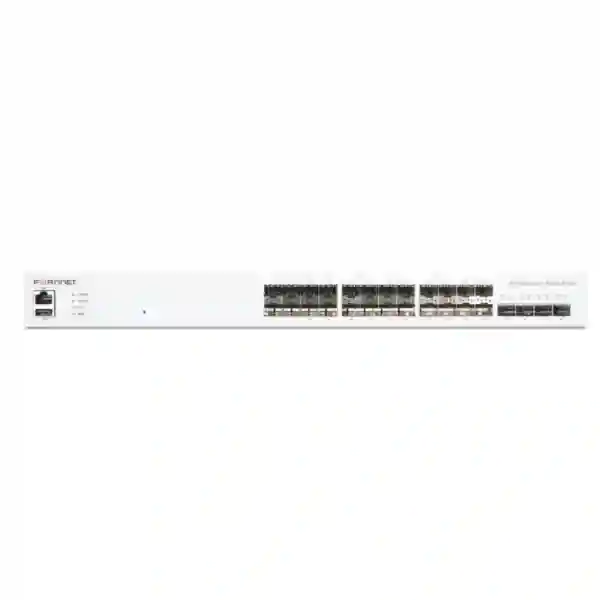
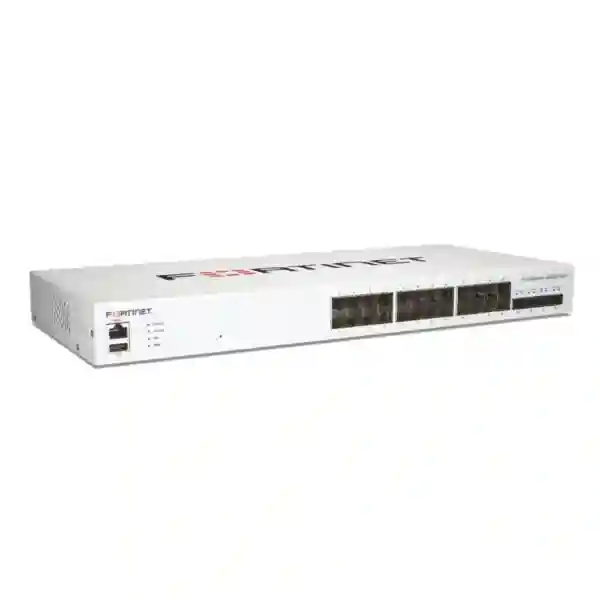
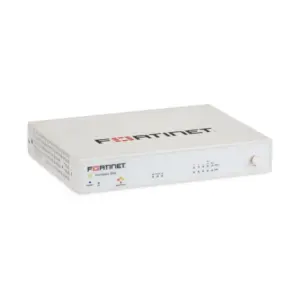
FortiSwitch FS-424E-Fiber gives organizations a purpose-built fiber switching platform for campus, branch, aggregation and distributed network designs that need a high concentration of SFP interfaces. The switch provides 24 GE SFP ports plus four 10GE SFP+ uplinks in a compact 1RU chassis. For IT teams standardizing on Fortinet, FortiLink and Fortinet Security Fabric integration can simplify visibility and control while preserving the flexibility required for fiber-connected buildings, floors, cabinets and infrastructure zones.
Fiber-facing network interfaces for flexible transceiver-based connectivity.
High-speed uplinks for aggregation, backbone and upstream connectivity.
Verified duplex switching capacity for the FS-424E-Fiber platform.
Rack-mount form factor for structured network and server-room deployments.
What the FortiSwitch FS-424E-Fiber solves
Copper access switching is not always the right answer when links must cross buildings, span larger distances, operate around electrically noisy environments or connect fiber-fed cabinets and equipment. The FS-424E-Fiber addresses these designs with a dense set of SFP slots rather than conventional RJ45 access ports. This makes the model particularly relevant for network architects who want to choose optics according to link distance and media requirements while retaining four faster SFP+ interfaces for uplinks.
The design is also useful when an organization already has fiber infrastructure and wants a Fortinet-aligned switching layer. Instead of converting many fiber runs back to copper at the switch edge, planners can build the access or aggregation layer around compatible transceivers. Exact optics should always be selected against Fortinet’s current transceiver compatibility information, the installed fiber type, connector plan, link budget and required distance.
Verified technical specifications
| Network interfaces | 24 × GE SFP and 4 × 10GE SFP+ |
| Dedicated management | 1 × 10/100 management port |
| Console | 1 × RJ45 serial console |
| Switching capacity | 128 Gbps duplex |
| Forwarding rate | 190 Mpps duplex |
| MAC address storage | 32K |
| VLANs supported | 4K |
| Network latency | Less than 1 microsecond |
| Packet buffer | 4 MB |
| Memory / flash | 1 GB DDR4 / 256 MB |
| PoE | Not applicable |
| Form factor | 1RU rack mount |
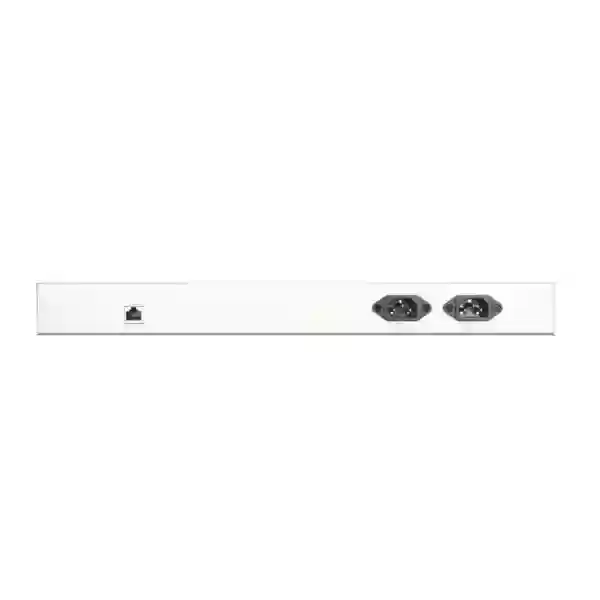
| Power | 100–240V AC, 50/60 Hz; built-in AC power supply; redundant AC supported |
Fiber design, transceivers and uplink planning
A fiber switch project should begin with the cable plant rather than with the switch alone. Record whether each run is single-mode or multimode, the connector type, approximate distance, patch-panel arrangement, required speed and whether an existing optic must be reused. The FS-424E-Fiber provides the slots, but the correct transceiver is determined by the physical link. Fortinet publishes a FortiSwitch-compatible transceiver matrix, and procurement teams should use the current matrix to validate optics before ordering.
The four 10GE SFP+ interfaces create useful options for upstream links, switch-to-switch connections and aggregation. Because Fortinet notes that these SFP+ ports are compatible with 1GE SFP, designers have flexibility when migrating an environment, but speed, optics and peer-device compatibility still need to be checked as a complete link. A clean bill of materials should therefore list the switch, each required transceiver, patch leads, rack accessories, power requirements and any support entitlement rather than treating the chassis as the entire solution.
FortiLink and management considerations
FortiSwitch can operate as part of a Fortinet network architecture where switching and security policies are coordinated through FortiGate using FortiLink. This is valuable for organizations that want stronger operational visibility across the LAN and security edge. The appropriate management design depends on the broader environment, existing FortiGate platform, FortiOS and FortiSwitchOS compatibility, topology and change-control process. Buyers should confirm software support and interoperability before a rollout or upgrade.
For standalone or alternative centralized management scenarios, Fortinet documentation also describes management options including FortiLAN Cloud and FortiSwitch Manager for supported deployments. The choice should follow operational requirements: a single campus may prioritize straightforward local administration, while a distributed organization may care more about standardized templates, remote visibility and controlled changes. The purchasing conversation should therefore include management ownership and lifecycle procedures, not only port counts.
Buying checklist for FS-424E-Fiber
FortiSwitch FS-424E-Fiber Tanzania
Organizations evaluating FortiSwitch FS-424E-Fiber Tanzania are commonly solving a fiber-distribution problem rather than a simple desktop access requirement. A headquarters campus may have fiber between buildings, a hotel may connect communications rooms across several blocks, a university may aggregate departmental cabinets, and an industrial facility may prefer optical links across areas where distance or electrical conditions make copper less attractive. In each case, the first design task is to map the physical fiber plant and decide where a 24-port SFP switch fits into the topology.
For Tanzania procurement, request a quotation that separates the chassis from optics and services. State how many GE SFP links are needed, how many 10GE uplinks will be used, fiber mode and distance for every connection, and whether FortiLink management with an existing FortiGate is part of the project. This reduces the risk of receiving a switch without the correct transceivers or ordering optics that do not match the installed cabling. It also helps purchasing teams compare complete project cost rather than a bare-hardware price.
The FS-424E-Fiber does not provide PoE, so it should not be selected as a direct substitute for a PoE copper access switch powering phones, cameras or wireless access points. Its value is dense optical connectivity. Where a project includes both fiber aggregation and PoE edge devices, a mixed architecture can use the FS-424E-Fiber for optical distribution and appropriate PoE FortiSwitch models closer to endpoints. For wider Fortinet planning, buyers can review FourTeck Tanzania and discuss a bill of materials based on actual topology.
FortiSwitch FS-424E-Fiber Dar es Salaam
Dar es Salaam buyers often need switching designs that support multi-floor offices, hospitality sites, logistics operations, commercial compounds and server-room connectivity. In these environments, fiber may already connect the main equipment room to remote cabinets or separate buildings. The FS-424E-Fiber can become a concentrated optical termination point, giving network teams 24 GE SFP interfaces while retaining four 10GE SFP+ ports for higher-speed upstream paths.
A practical Dar es Salaam quotation should include a port schedule. Identify each destination cabinet or device, link distance, fiber type, connector presentation and target speed. This turns procurement into an engineering-led process and makes it easier to determine how many optics are needed on day one versus reserved capacity for future expansion. If the switch will sit in a main rack, verify rack depth, power feeds, airflow and cable-management space before installation.
Organizations using FortiGate should also decide whether the switching layer will be integrated through FortiLink. Centralized visibility can be useful when the security and LAN teams want a coordinated architecture, but compatibility and software versions should be reviewed as part of the deployment plan. FourTeck can help structure a quote around the switch, supported optics and related Fortinet requirements without assuming that every fiber project has the same topology.
FortiSwitch FS-424E-Fiber Mwanza
For Mwanza organizations, the FS-424E-Fiber is relevant where a network must link separated areas over fiber while keeping switching administration consistent. Typical planning scenarios can include campuses, education environments, hospitality properties, healthcare sites, warehouses and growing commercial networks. Rather than focusing only on the number of ports, planners should evaluate the route of every fiber run and the capacity expected at the upstream core.
The 24 GE SFP interfaces provide room for multiple optical access or distribution links, while four 10GE SFP+ interfaces can be reserved for backbone or aggregation duties. This split is useful when many remote links operate at gigabit speed but their combined traffic must move toward a faster upstream layer. The exact oversubscription ratio should be based on application traffic, backup windows, surveillance flows, storage use and expected growth rather than a generic rule.
When requesting a Mwanza project quote, include fiber type, distances and required transceivers. Also state whether the network uses VLAN segmentation, redundant uplinks, link aggregation or a FortiGate-controlled FortiLink design. A detailed requirement allows the switch to be evaluated as part of the complete network rather than as an isolated item and reduces compatibility surprises during installation.
FortiSwitch FS-424E-Fiber Arusha
Arusha deployments can include hotels, tour operators, offices, schools, institutions and multi-building properties where fiber provides a clean way to connect communications rooms across distance. The FortiSwitch FS-424E-Fiber is particularly suited to projects where optical ports are a primary requirement and PoE at the aggregation point is unnecessary. Its 1RU format also makes it practical for structured rack installations where space must be used efficiently.
Before procurement, the IT team should inventory existing patch panels and optics. Reusing transceivers should never be assumed simply because they physically fit an SFP slot; vendor compatibility, wavelength, fiber mode and link partner must be verified. For new installations, selecting optics at the same time as the switch makes the bill of materials clearer and simplifies testing. Reserve appropriate spare optics if the organization’s maintenance policy requires rapid replacement capability.
If an Arusha site is part of a wider Fortinet environment, include management and security architecture in the design discussion. FortiLink can integrate supported FortiSwitch deployments with FortiGate, allowing network access to fit more naturally into a Security Fabric strategy. The final design should document management IP addressing, VLANs, uplinks, redundancy and configuration backup procedures before handover.
FortiSwitch FS-424E-Fiber Dodoma
Dodoma organizations planning structured campus networks may need reliable fiber distribution between buildings, departments and communications rooms. The FS-424E-Fiber provides a focused platform for that requirement: 24 gigabit SFP slots for optical connections and four 10-gigabit SFP+ uplinks for higher-capacity paths. This architecture can support a tidy hierarchy when access or distribution cabinets feed toward a central network location.
Public-sector, institutional, education and enterprise projects often benefit from detailed procurement documentation. A specification should state the exact FS-424E-Fiber model, required optics, fiber standards, rack accessories, support expectations and software-management design. It should also separate mandatory items from optional spares. This approach helps technical and procurement teams evaluate equivalent project scope and avoids treating an unpopulated fiber switch as a complete installed solution.
For a Fortinet-based network, consider how the switch will be monitored and managed after commissioning. Define administrator roles, firmware procedures, configuration backup, change approval and fault escalation. Hardware capability matters, but lifecycle discipline is what keeps a production network maintainable. FourTeck can support the quotation discussion with the technical inputs needed to prepare a more accurate project bill of materials.
FortiSwitch FS-424E-Fiber UAE
UAE projects evaluating the FS-424E-Fiber may involve commercial towers, campuses, hospitality properties, warehouses and distributed enterprise environments where fiber is already a standard part of the backbone. The switch’s 24 GE SFP ports make it suitable for dense optical connectivity, while four 10GE SFP+ uplinks provide faster paths toward a core, firewall or aggregation layer. The key purchasing question is not simply whether the model has enough ports, but whether the entire optical design matches the installed plant.
For UAE sourcing and broader Fortinet requirements, FourTeck UAE can be used as a regional reference point. Prepare the request with the exact switch model, optic quantities, fiber mode, wavelengths where known, required link distances and support expectations. If a project has mixed copper and fiber needs, document them separately so that suitable FortiSwitch models can be combined rather than forcing one chassis to serve incompatible roles.
Operational planning should cover redundancy, uplink utilization, VLAN design and monitoring. For FortiGate-integrated environments, FortiLink can bring switching into the broader Fortinet management model. Compatibility should be checked against the specific FortiGate and software versions planned for deployment, particularly when the network has formal maintenance windows and controlled upgrade cycles.
FortiSwitch FS-424E-Fiber Uganda
Uganda organizations may consider the FS-424E-Fiber for campus fiber, branch aggregation, multi-building compounds and backbone modernization. Its optical access design is different from the more common copper PoE switch, making it important to identify the role correctly. It is best evaluated where the requirement centers on fiber interfaces and where endpoint power is handled elsewhere in the topology.
A procurement request should specify whether links are single-mode or multimode and should identify expected distances. This information drives optic selection. The four 10GE SFP+ ports can then be planned for higher-speed upstream connectivity, link aggregation or resilient paths where the surrounding architecture supports those designs. Network teams should also document VLANs and routing boundaries before deployment so the switch configuration reflects the intended segmentation model.
For regional Fortinet sourcing context, visit FourTeck Uganda. Buyers comparing a fiber aggregation project with a broader Fortinet rollout should include FortiGate, FortiSwitch management, compatible optics and support needs in one technical scope. This produces a more meaningful quote and makes later installation planning easier.
FortiSwitch FS-424E-Fiber Kampala
Kampala enterprises with several floors, buildings or network cabinets can use fiber to avoid the distance limitations associated with conventional copper Ethernet. The FS-424E-Fiber offers 24 SFP slots for gigabit optical connections and four 10GE SFP+ uplinks, giving architects a practical way to concentrate fiber links in a rack-mounted platform. It can be particularly useful where the building backbone is already optical.
The design phase should identify which links terminate directly on the switch and which pass through distribution frames or patch panels. Labeling and documentation are important because dense fiber panels can become difficult to troubleshoot when port records are incomplete. Plan patch-cord length, bend radius, cable management and spare ports as carefully as the electronic configuration. For high-availability designs, document diverse paths rather than assuming two logical uplinks automatically provide physical resilience.
Kampala buyers should ask for a complete quotation including compatible optics rather than relying on chassis pricing alone. If the network is managed through FortiGate, include the FortiLink topology and software versions in the requirement. That gives the supplier enough context to discuss compatibility and helps the internal IT team prepare a controlled implementation plan.
FortiSwitch FS-424E-Fiber Arua
Arua projects that connect separate facilities or long internal network runs can benefit from an optical-first switching design. The FS-424E-Fiber provides a dense set of SFP interfaces without adding PoE hardware that is unnecessary at a fiber aggregation point. This distinction matters for budgeting: if powered endpoints are located at remote cabinets, PoE access switches can be positioned there while fiber connects them back to the FS-424E-Fiber.
When planning the project, document each remote cabinet’s expected traffic and growth. A one-gigabit link may be appropriate for many access locations, while busier aggregation paths may justify use of the 10GE SFP+ interfaces. Capacity should be based on real applications and concurrency, especially if the remote site carries cameras, backups, voice, Wi-Fi and business data over the same backbone.
Procurement teams should request validated transceiver choices and avoid generic optics assumptions. The Fortinet compatibility matrix provides the correct starting point for supported transceivers. Include installation and testing expectations in the scope so that optical power, link status, VLAN operation and failover behavior can be checked before the network is accepted into production.
FortiSwitch FS-424E-Fiber Mbarara
Mbarara businesses and institutions expanding beyond a single communications room may use fiber to link departments, buildings or equipment areas. The FS-424E-Fiber can sit at the center of that design when a 24-port optical platform is more appropriate than a copper access switch. Four 10GE uplinks add headroom for connections toward higher-capacity network layers.
A good project brief should include a simple topology diagram. Mark the main rack, remote cabinets, fiber types, approximate distances and target link speeds. Add the current FortiGate or core switch if one exists. This allows the switching requirement to be reviewed in context and exposes design questions early, such as whether redundant uplinks are needed or whether some links should terminate on a different switch tier.
Because FS-424E-Fiber has no PoE, endpoint power requirements must be solved separately. That is often an advantage in a clean aggregation design because the switch is focused on fiber connectivity, while edge switches can be selected according to phone, camera or access-point power budgets. Buyers should therefore evaluate the complete network bill of materials rather than comparing the FS-424E-Fiber directly with PoE access models that serve a different purpose.
FortiSwitch FS-424E-Fiber Gulu
Gulu organizations planning resilient LAN infrastructure can use fiber to connect distant network zones and keep the central rack electrically isolated from some remote paths. The FS-424E-Fiber’s 24 GE SFP interfaces support a substantial number of optical links, while the 10GE SFP+ uplinks can connect the switch to a faster upstream layer. The compact 1RU chassis makes it straightforward to integrate into a standard rack design.
For long-term maintainability, reserve time for documentation during deployment. Record optic part numbers, fiber pair assignments, patch-panel ports, switch ports, VLAN purpose and destination cabinet. Keep a configuration backup and document firmware versions. These practices make troubleshooting faster and reduce dependence on institutional memory when staff or contractors change.
A quotation request should also state whether the switch will be managed independently or integrated with FortiGate through FortiLink. If FortiLink is planned, include the firewall model and software environment so compatibility can be assessed. For networks expected to expand, identify how many ports are required immediately and how many should remain free for future buildings or cabinets.
FortiSwitch FS-424E-Fiber Kenya
Kenya buyers considering the FS-424E-Fiber may be building campus networks, hotel backbones, education networks, office towers, logistics sites or distributed enterprise infrastructure. The model is strongest where fiber density is the requirement: 24 GE SFP slots provide optical access or distribution connectivity, and four 10GE SFP+ ports provide higher-speed uplinks. It should be selected based on topology rather than simply as a 24-port alternative to a copper switch.
For Kenya sourcing and related Fortinet planning, see Fortinet Kenya solutions from FourTeck. A well-formed request should list fiber types, distances, transceiver quantities, uplink design and management requirements. If FortiGate is already deployed, include its model and software version when discussing FortiLink integration.
Network teams should also decide whether the FS-424E-Fiber will act as access, distribution or aggregation equipment. That role determines how VLANs, spanning tree, link aggregation, routing and redundancy should be planned. The hardware supports a broad set of campus-switching capabilities, but the implementation should follow the organization’s architecture and change-control standards rather than enabling features without a documented need.
FortiSwitch FS-424E-Fiber Kuwait
Kuwait projects with structured fiber backbones can evaluate the FS-424E-Fiber for dense optical termination in a 1RU form factor. The 24 GE SFP ports are useful for building or floor distribution links, while four 10GE SFP+ ports can serve faster uplinks. Because the platform is not a PoE switch, it is most naturally positioned in network layers where optical connectivity matters more than directly powering endpoint devices.
Procurement should be tied to an optic schedule. For each port, define the far-end equipment, fiber type and distance. This prevents last-minute transceiver substitutions and gives installers a clear testing plan. If the environment requires redundant upstream paths, make sure both logical and physical diversity are considered, including separate fiber routes where business continuity requirements justify them.
For regional IT sourcing, FourTeck Kuwait provides a related FourTeck market resource. Buyers can use the FS-424E-Fiber requirement as part of a broader Fortinet architecture discussion covering switching, security, management and support. Current availability and commercial terms should always be confirmed at quotation time rather than assumed from model listings.
FortiSwitch FS-424E-Fiber Ghana
Ghana organizations that depend on fiber between buildings, departments or communications rooms can use the FS-424E-Fiber as an optical switching and aggregation platform. The model combines 24 gigabit SFP interfaces with four 10-gigabit SFP+ uplinks, allowing many lower-speed optical links to feed toward a faster upstream layer. This can be a good architectural fit for campuses and multi-building commercial environments.
The buying process should begin with the fiber inventory. Determine whether installed links are single-mode or multimode, verify distances and connectors, and identify any existing optics that require compatibility checking. New transceivers should be validated against Fortinet’s current compatibility documentation. Where the network includes third-party equipment at the far end, both sides of the optical link must be considered.
After the physical design, define VLAN segmentation, uplink redundancy and management. If FortiGate is part of the environment, FortiLink may provide an integrated management approach. Include support and lifecycle expectations in the quotation request so the project accounts for ongoing operation as well as initial installation.
FortiSwitch FS-424E-Fiber Nigeria
Nigeria enterprise and campus networks can require substantial fiber distribution across office complexes, industrial facilities, hospitality properties, education sites and multi-building estates. The FS-424E-Fiber provides a compact way to terminate up to 24 GE SFP links while keeping four 10GE SFP+ interfaces available for higher-speed aggregation. This makes it a specialized fiber platform rather than a general-purpose PoE edge switch.
For large sites, capacity planning should account for traffic concentration. Multiple gigabit access links can collectively exceed a single upstream path during backups, surveillance peaks or heavy application use. The four 10GE ports give architects options, but the exact design should follow measured or estimated traffic and redundancy requirements. Link aggregation and resilient topology should be implemented only after checking the capabilities of both ends and the intended failure behavior.
Procurement documentation should specify the exact FS-424E-Fiber model and optics rather than using a generic ’24-port fiber switch’ description. This protects the intended design and makes quotations easier to compare. It also provides a clean basis for installation acceptance testing, including port status, VLAN reachability, uplink operation and management access.
FortiSwitch FS-424E-Fiber Seychelles
Seychelles organizations operating hotels, resorts, offices, institutions or multi-building properties may rely on fiber where links must cross a site or connect separate communications rooms. The FS-424E-Fiber is designed around this optical requirement, with 24 GE SFP ports and four 10GE SFP+ uplinks. A fiber-first switch can simplify the central rack when many remote locations already return over optical cabling.
For island and remote-site operations, maintenance planning deserves attention at procurement stage. Confirm which compatible optics are required and consider the organization’s policy for holding critical spares. Keep accurate port and fiber documentation, configuration backups and software records so troubleshooting does not depend on a single technician. These operational details can matter as much as the initial hardware selection.
The final bill of materials should reflect the complete deployment: switch, optics, patch leads, rack arrangement, power, management and support. If FortiGate integration is required, document the FortiLink design and validate software compatibility. Current pricing, stock and delivery expectations should be confirmed through a formal quotation because they can change and should not be inferred from a static product page.
Related Fortinet and FourTeck resources
A fiber switching project often sits inside a larger secure-network architecture. For Tanzania enquiries, start with FourTeck Tanzania. Regional teams can also review FourTeck UAE, Fortinet Kenya, FourTeck Uganda, and FourTeck Kuwait when a project spans multiple markets. These links are useful for coordinating regional procurement conversations while keeping the technical requirement anchored to the same FS-424E-Fiber model and compatible optical design.
Frequently asked questions
How many fiber ports does the FortiSwitch FS-424E-Fiber have?
It has 24 GE SFP ports plus four 10GE SFP+ uplink ports. The SFP+ uplink ports are also documented as compatible with 1GE SFP modules, subject to supported transceiver selection and link design.
Does FS-424E-Fiber provide PoE?
No. Fortinet lists PoE as not applicable for this model. If phones, cameras or access points need power, plan suitable PoE access switching elsewhere in the network.
What is the switching capacity?
Fortinet’s current Secure Campus data sheet lists 128 Gbps duplex switching capacity and 190 Mpps duplex packet forwarding for the FS-424E-Fiber.
Which transceivers should I order?
That depends on fiber type, distance, connector plan and link speed. Use Fortinet’s current FortiSwitch-compatible transceiver matrix and validate both ends of each link before ordering.
Can it integrate with FortiGate?
The model is FortiGate switch-controller compatible and can be used in FortiLink-based designs. Confirm the specific FortiGate model, FortiOS/FortiSwitchOS versions and topology against current Fortinet compatibility guidance before deployment.
Is FS-424E-Fiber suitable for a campus backbone?
It can be suitable for campus access or aggregation scenarios requiring many gigabit fiber links and 10-gigabit uplinks. Final suitability depends on traffic, topology, redundancy, routing and growth requirements.
How should I request a quotation?
Provide the exact FS-424E-Fiber model, number of required links, fiber type and distance, optic requirements, uplink design, FortiGate integration details, rack/power context and support expectations. This helps create a project quote rather than a chassis-only price.
Quotation checklist and decision recap
Choose the FortiSwitch FS-424E-Fiber when the network genuinely needs dense SFP-based fiber connectivity and four 10GE uplinks, not when the primary requirement is copper PoE access. Before requesting a quote, count active and future fiber links, identify single-mode or multimode cable, measure distances, define uplink speed and redundancy, confirm FortiGate/FortiLink requirements, and list compatible transceivers. Add rack, power, support and implementation scope so commercial comparison reflects the whole project.
Plan your FS-424E-Fiber deployment
Share your topology, fiber schedule and required uplinks with FourTeck Tanzania. A precise requirement makes it easier to discuss the correct switch quantity, compatible optics and surrounding Fortinet architecture while avoiding unsupported assumptions about stock, price or delivery.

Reviews
There are no reviews yet.