
FortiSwitch FS-448E Tanzania
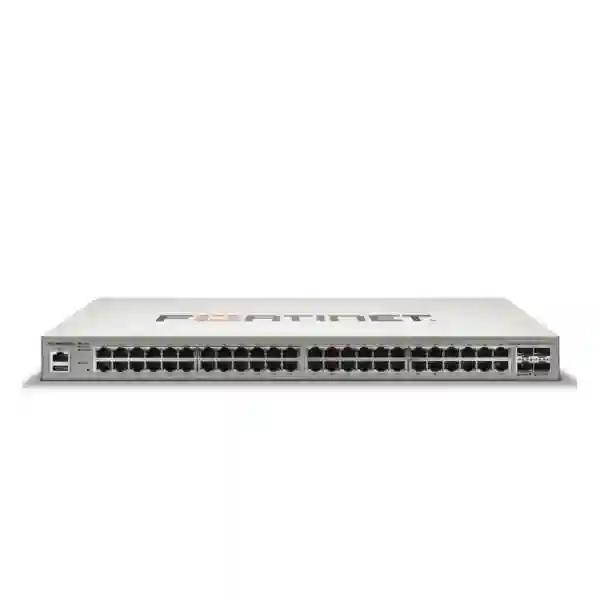
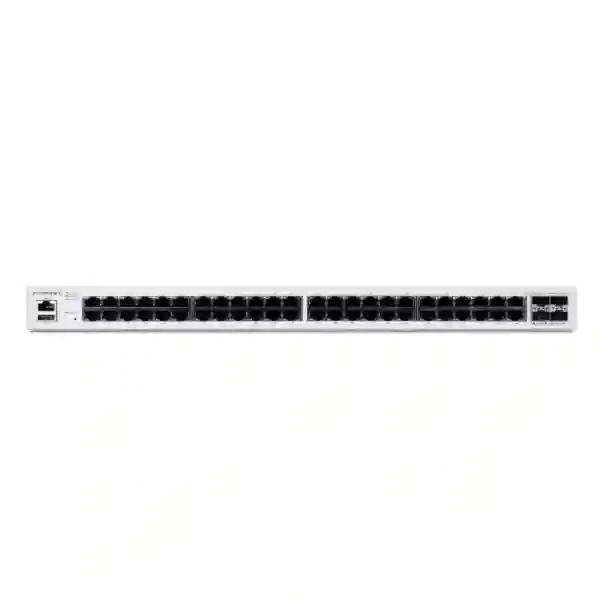
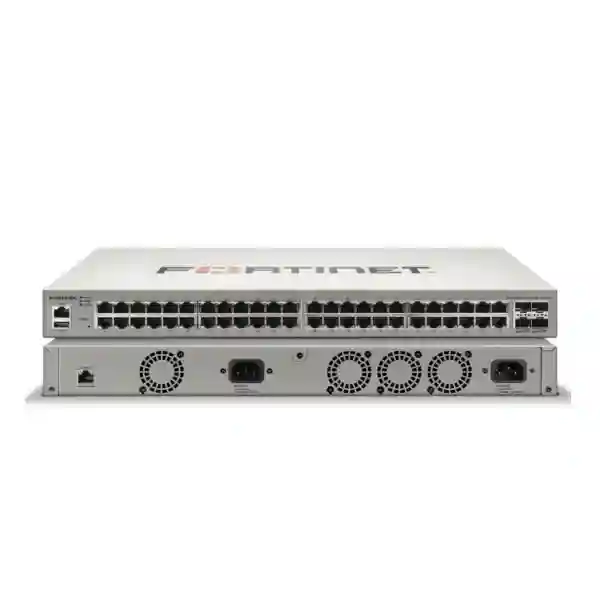
Build a dense, manageable wired access layer with the Fortinet FortiSwitch FS-448E. This Layer 2/3 switch provides 48 GE RJ45 ports and four 10GE SFP+ uplinks, giving business networks a practical combination of user/device connectivity and higher-speed aggregation. It is compatible with FortiGate switch-controller deployments, allowing organizations already standardizing on Fortinet security to design switching and security operations around a more unified architecture.
48 × GE RJ45
Forty-eight Gigabit Ethernet copper access ports provide density for desktops, printers, servers, appliances and other wired endpoints.
4 × 10GE SFP+
Four 10 Gigabit SFP+ interfaces support higher-speed uplink and aggregation designs where suitable transceivers and cabling are selected.
Layer 2/3
The FS-448E is positioned as a Layer 2/3 FortiGate switch-controller-compatible switch for secure campus and enterprise access requirements.
FortiSwitch FS-448E Overview
The FS-448E is the non-PoE member of the FortiSwitch 448E family. That distinction matters during procurement: the FS-448E itself is intended for wired Ethernet connectivity without a PoE budget, while FS-448E-POE and FS-448E-FPOE are separate models. Buyers should therefore map endpoint power requirements before finalizing the bill of materials. For ordinary PCs, printers, servers, storage interfaces and other independently powered devices, the standard FS-448E can provide a clean 48-port access layer. Projects that must power phones, cameras or wireless access points from the switch should evaluate an appropriate PoE model rather than assuming the base FS-448E supplies endpoint power.
Its four 10GE SFP+ ports are especially useful when the access layer must connect upstream to aggregation, core or security infrastructure at greater than 1GbE speeds. Fiber type, distance, transceiver compatibility, redundancy and link aggregation requirements should all be documented before quotation. For organizations using FortiGate, FortiSwitch can form part of a security-driven networking design in which switching is coordinated with the wider Fortinet environment.
Verified FS-448E Hardware Summary
| Item | FS-448E |
|---|---|
| Access interfaces | 48 × GE RJ45 |
| Uplink interfaces | 4 × 10GE SFP+ |
| Switching role | Layer 2/3 |
| FortiGate controller compatibility | Yes |
Secure Campus and Branch Network Planning
A 48-port switch is normally selected as part of a structured access-layer design rather than as an isolated device. Start with endpoint counts, expected growth, VLAN requirements, uplink topology, rack capacity, optical distances and resiliency targets. Separate business users, infrastructure, guest services, voice, cameras and operational technology where policy requires segmentation. Then determine how traffic should reach routing and security controls. The FS-448E can be particularly relevant where an organization wants many 1GbE copper ports while reserving 10GbE interfaces for uplinks.
Fortinet environments can also benefit from planning the switch alongside the firewall rather than treating LAN switching and perimeter security as unrelated purchases. Visit FourTeck Tanzania for related infrastructure planning, or review the wider FourTeck Africa technology portfolio when a deployment spans multiple African markets.
FortiSwitch FS-448E Tanzania
For Tanzania organizations, the FS-448E fits procurement searches for a dense Fortinet access switch with 48 copper Gigabit Ethernet ports and 10 Gigabit uplinks. A strong design starts by identifying what will connect to each port, where the switch will sit in the rack, and what upstream capacity is required. Corporate offices may use the access ports for staff workstations, printers and local appliances, while the SFP+ interfaces can connect to aggregation switches, server rooms or security infrastructure. Because the base FS-448E is non-PoE, a Tanzania quotation should explicitly separate ordinary wired endpoints from devices that require switch-supplied power.
Network planners should also document whether the switch will operate in a FortiGate-managed design, what VLANs and routing boundaries are required, and how redundancy should be handled. Fiber uplinks should be specified by speed, media type and distance rather than simply requesting “SFP modules.” This reduces procurement mistakes and helps ensure that transceivers, patching and upstream ports are compatible. Organizations refreshing older access switches can use the project to review port utilization, growth headroom and segmentation instead of replacing hardware one-for-one.
Tanzania buyers commonly need a commercial proposal that makes model identity, quantities, optics and support requirements clear. The FS-448E should be quoted distinctly from FS-448E-POE and FS-448E-FPOE. For broader regional technology sourcing, FourTeck provides a network-wide reference point, while the Tanzania site remains the appropriate starting point for local project discussions.
FortiSwitch FS-448E Dar es Salaam
Dar es Salaam businesses evaluating the FortiSwitch FS-448E often need high port density for office floors, commercial facilities, branch networks and centralized IT rooms. Forty-eight GE RJ45 interfaces allow a single rack unit class of access switching to consolidate many wired endpoints, while four 10GE SFP+ ports give designers options for higher-speed uplinks. Before ordering, map the physical floor plan and patch-panel count to the switch-port plan so that spare capacity is intentional rather than accidental.
In multi-floor buildings, the uplink design deserves particular attention. Copper access can terminate locally while fiber connects the access switch to a central distribution point. Specify fiber distances, connector types and compatible optics as part of the bill of materials. If the network uses FortiGate security, controller compatibility can support a more coordinated operational model. The goal is not simply to add ports but to create a manageable access layer with documented segmentation, naming, monitoring and change-control practices.
Power requirements must also be explicit. The standard FS-448E is non-PoE, so IP phones, wireless APs and cameras that depend on PoE require a different switch variant or separate power arrangements. A Dar es Salaam procurement request should therefore include endpoint types, switch quantity, uplink speed, optic requirements and whether FortiGate integration is planned. That information enables a more accurate technical and commercial response.
FortiSwitch FS-448E Mwanza
In Mwanza, the FS-448E can support organizations consolidating wired connectivity across offices, education environments, healthcare administration, hospitality back offices and distributed business operations. The 48-port layout is useful where many independently powered Ethernet devices must connect through a managed access layer. Four 10GE SFP+ uplinks can provide faster paths toward aggregation or security infrastructure, subject to the chosen topology and compatible optics.
A practical Mwanza design should begin with an endpoint inventory. Record active ports, expected additions, VLAN membership and whether any endpoints require PoE. The last item is essential because FS-448E is the non-PoE model. Where wireless access points, surveillance cameras or phones need power from Ethernet, compare the project requirements against the PoE variants instead of adding injectors by default. For non-PoE user and infrastructure ports, the standard model may keep the design simpler.
Also consider uplink resilience. Where business continuity matters, designers may use multiple uplinks according to the wider architecture rather than relying on a single path. Document the upstream switch or FortiGate interfaces, fiber runs and transceiver requirements. This makes the quotation more precise and helps installation teams understand the intended topology before equipment arrives.
FortiSwitch FS-448E Arusha
Arusha organizations can evaluate the FortiSwitch FS-448E for secure campus and office access networks requiring many Gigabit copper connections. Typical planning scenarios include business offices, tourism operations, institutions and multi-department environments where segmentation and centralized administration matter. With 48 GE RJ45 ports, the switch can serve a substantial group of wired endpoints, while four 10GE SFP+ interfaces provide uplink capacity for aggregation.
For a successful deployment, treat the switch as part of the network architecture. Define VLANs, address plans, uplink redundancy, management access and security policy before migration. If a FortiGate is already present, confirm how the FortiSwitch will be incorporated into the controller design and how configuration responsibility will be assigned. This can reduce fragmented management practices and make troubleshooting more structured.
Procurement should distinguish model variants and accessories. FS-448E has no PoE budget, so the endpoint list determines whether it is the correct member of the family. Optical modules are also separate design items: select them according to interface speed, fiber medium and distance. A clear Arusha request for quotation should state switch quantities, rack location, existing FortiGate model where relevant, uplink requirements and desired support scope.
FortiSwitch FS-448E Dodoma
For Dodoma offices and institutions, the FortiSwitch FS-448E offers a 48-port Gigabit Ethernet access platform with four 10GE SFP+ uplinks. It can be considered for network refresh projects where administrators need to replace lower-density or fragmented switching with a more structured Layer 2/3 platform. The model’s FortiGate switch-controller compatibility is relevant when the wider network uses Fortinet security infrastructure.
During design, count not only today’s active endpoints but also realistic expansion. Reserve ports for growth, maintenance moves and new departments. Identify devices that require PoE separately because the base FS-448E does not provide it. For uplinks, calculate expected aggregate traffic and identify whether links connect to a core switch, distribution layer or firewall. Four 10GE SFP+ interfaces create useful design flexibility, but the final topology depends on upstream capabilities.
A procurement-ready specification should include the exact FS-448E model, quantities, optics, patching assumptions and integration requirements. Avoid substituting a similarly named PoE model without confirming the business need, because power budgets and commercial scope differ. Planning these details early helps reduce installation changes and makes acceptance testing easier.
FortiSwitch FS-448E UAE
UAE organizations with Fortinet estates can evaluate the FS-448E for 48-port non-PoE campus access and aggregation-edge requirements. Its four 10GE SFP+ uplinks are useful in structured office networks where access switches connect to faster distribution infrastructure. Procurement teams should confirm lifecycle, support entitlement and exact project requirements at quotation time rather than relying on marketplace listings.
The UAE design process should identify whether endpoints need PoE, because FS-448E itself is non-PoE. It should also document rack environment, fiber runs, optics and FortiGate integration. Multi-site enterprises can standardize naming, VLAN structure and operational procedures across locations while adapting physical uplinks to each building. For UAE-focused technology sourcing and services, see FourTeck UAE and FourTeck Fortinet UAE solutions.
When comparing proposals, make sure each quote refers to the same FS-448E variant and includes equivalent optics and support scope. A lower headline hardware figure can be misleading if essential transceivers, subscriptions or implementation work are excluded. Technical normalization makes vendor comparisons more useful.
FortiSwitch FS-448E Uganda
Uganda enterprises can use the FS-448E as a dense wired access switch where 48 Gigabit copper ports and four 10Gigabit uplinks match the network design. Branch offices, institutional networks and corporate sites can benefit from planning access switching together with security, addressing and segmentation. FortiGate controller compatibility is particularly relevant for organizations already using Fortinet firewalls.
Before quotation, inventory powered and non-powered endpoints. The standard FS-448E does not provide PoE, so APs, phones and cameras requiring Ethernet power need an alternative plan. For uplinks, record fiber distances and upstream interface types. If the project spans multiple sites, document a standard switch template and define where exceptions are permitted.
Uganda procurement teams can also align equipment selection with implementation and support responsibilities. Specify who will configure VLANs, uplinks and management, and what acceptance tests will demonstrate a successful deployment. For related regional infrastructure sourcing, visit FourTeck Uganda.
FortiSwitch FS-448E Kampala
Kampala networks with dense office connectivity can evaluate the FS-448E where 48 GE RJ45 ports reduce the need to spread ordinary wired endpoints across multiple small switches. Four 10GE SFP+ ports can connect the access layer upstream at higher speed, depending on the architecture. This is useful in buildings where many user ports converge on a central rack and where structured cabling already supports a conventional access/distribution design.
A Kampala deployment plan should reserve capacity for growth and identify traffic classes that require separate VLANs or policies. If FortiGate is used, define the intended controller relationship and operational ownership. Because the base FS-448E is non-PoE, do not include PoE endpoints in the port plan without separate powering or selecting an appropriate PoE model.
Quotations are easier to compare when they specify exact model, quantity, optics, support and services. Include upstream equipment details and desired link speeds. This prevents a switch-only quote from omitting components necessary for the actual installation.
FortiSwitch FS-448E Arua
Arua organizations planning a wired LAN refresh can consider FS-448E for sites where many Gigabit endpoints need centralized switching and where 10GE uplinks are appropriate for the upstream network. The model’s 48 copper ports provide density without implying PoE capability. This distinction is useful for offices dominated by PCs, printers and independently powered appliances.
Remote-site design should emphasize clear documentation. Record port assignments, VLANs, uplink paths, management addresses and recovery procedures. Where FortiGate integration is planned, include that in the design and configuration scope. Fiber optics should be selected according to distance and interface compatibility rather than purchased generically.
For procurement, state whether installation, configuration and post-deployment support are required in addition to hardware. Also identify growth expectations so spare ports and uplink capacity can be evaluated. This produces a more useful quotation than requesting only “one 48-port switch.”
FortiSwitch FS-448E Mbarara
Mbarara businesses and institutions can evaluate the FortiSwitch FS-448E for managed 48-port Gigabit access where a Fortinet-aligned network architecture is desired. The four 10GE SFP+ ports can be used for higher-speed connections toward aggregation or security infrastructure, subject to the overall topology and compatible transceivers.
Endpoint classification is central to model selection. Standard workstations and printers may fit the non-PoE FS-448E well, while powered devices may point to a PoE variant. Keeping these categories separate avoids paying for unnecessary power capacity or discovering too late that required endpoints cannot be powered.
A robust Mbarara deployment brief should cover rack placement, environmental conditions, patching, fiber distances, VLANs, FortiGate integration and support expectations. Procurement can then request a complete bill of materials instead of comparing incomplete hardware-only offers.
FortiSwitch FS-448E Gulu
For Gulu network projects, FS-448E provides a practical combination of 48 GE RJ45 ports and four 10GE SFP+ uplinks. It can support office and institutional access layers where administrators need managed Layer 2/3 switching and compatibility with FortiGate switch-controller deployments. Its non-PoE design should be matched to independently powered endpoints.
Network teams should assess port density by location rather than by total organization headcount. A 48-port switch may be appropriate in one wiring closet but excessive or insufficient in another. Likewise, 10GE uplinks should be designed around actual aggregation needs, redundancy and upstream port availability. Documenting these details supports better equipment sizing.
For a Gulu quotation, provide switch quantity, endpoint categories, desired uplink media, FortiGate model if applicable and required implementation scope. Clear requirements reduce substitutions and make technical evaluation more consistent.
FortiSwitch FS-448E Kenya
Kenya organizations can consider the FS-448E for secure campus and enterprise wired access projects that require 48 Gigabit Ethernet copper ports with four 10GE SFP+ uplinks. In offices and institutional networks, this density can simplify access-layer consolidation while preserving faster connections to distribution infrastructure.
Selection should be based on the endpoint mix and wider Fortinet architecture. The base FS-448E is non-PoE, so projects dominated by powered access points, cameras or phones should compare the PoE family variants. Fiber uplinks require compatible optics and should be specified with distance and media. Where FortiGate is present, controller integration can be planned as part of the overall deployment.
Regional buyers can review FourTeck Kenya for Kenya-focused technology requirements. A useful request for quotation should include hardware quantity, optics, support period and any configuration or migration services required.
FortiSwitch FS-448E Kuwait
Kuwait enterprise networks can evaluate FS-448E for non-PoE 48-port Gigabit access with 10GE SFP+ uplinks. This configuration suits structured wired environments where endpoint power is handled separately and where high-density copper access connects to faster distribution links.
Procurement should validate the exact lifecycle and support options available at the time of purchase. Network teams should also confirm optics, rack design, FortiGate integration and configuration responsibilities. Comparing offers on an equivalent bill of materials is especially important when support and transceivers are quoted separately.
For regional sourcing context, visit FourTeck Kuwait. Include site count, port requirements, uplink distances and security architecture in the project brief so that the proposal reflects the complete deployment rather than only the switch chassis.
FortiSwitch FS-448E Ghana
Ghana organizations planning Fortinet-aligned campus networks can consider the FS-448E where 48 Gigabit copper access ports and four 10GE SFP+ uplinks match the site design. It is suitable for independently powered wired endpoints and can participate in a Layer 2/3 network architecture with FortiGate switch-controller compatibility.
The technical design should define VLANs, uplink redundancy, optical media and management before procurement. If PoE devices are present, quantify them and their power needs separately because the base FS-448E does not provide PoE. This prevents confusion with the similarly named PoE and full-PoE variants.
For Ghana-focused requirements, FourTeck Ghana provides a regional route for technology discussions. A complete RFQ should state quantities, optics, support and deployment scope.
FortiSwitch FS-448E Nigeria
Nigeria enterprise and institutional networks can evaluate the FortiSwitch FS-448E for high-density wired access. Its 48 GE RJ45 ports support ordinary Gigabit Ethernet endpoints, while four 10GE SFP+ interfaces give architects options for higher-speed uplinks. The model is Layer 2/3 and compatible with FortiGate switch-controller designs.
Large multi-site deployments should standardize the configuration approach as well as the hardware. Define VLAN naming, uplink design, management, monitoring and change control centrally, then adapt physical details to each site. The non-PoE nature of FS-448E should remain explicit in bills of materials so that powered endpoint requirements are not overlooked.
Nigeria-focused technology projects can reference FourTeck Nigeria. For accurate commercial comparison, request the same hardware variant, support scope and optical accessories from every bidder.
FortiSwitch FS-448E Seychelles
Seychelles organizations can consider the FS-448E for office, hospitality administration and institutional wired networks that require 48 Gigabit copper access ports and faster 10GE uplinks. Site design should account for rack placement, cabling routes and the upstream network rather than treating the switch as a standalone purchase.
Where fiber is used between buildings or network rooms, document distance and media so suitable SFP+ optics can be selected. If FortiGate security is deployed, include switch-controller integration in the implementation plan. Endpoint power needs should be checked carefully because the standard FS-448E is non-PoE.
For island deployments, a complete bill of materials and clear implementation plan are particularly useful for reducing avoidable follow-up shipments. Include spare strategy, optics, patching and support requirements in the quotation request, and verify current availability before committing project dates.
FS-448E Buying and Quotation Checklist
For an accurate quotation, provide the exact model FS-448E, required quantity, number and type of wired endpoints, expected growth, uplink speed, fiber type and distance, upstream device details, FortiGate model if applicable, VLAN and segmentation requirements, support expectations and whether installation or configuration assistance is required. Explicitly identify any PoE endpoints so the switch model can be validated before purchase.
FortiSwitch FS-448E FAQ
How many ports does the FS-448E have?
Fortinet specifies 48 GE RJ45 access ports and four 10GE SFP+ ports on the FS-448E.
Does the FortiSwitch FS-448E provide PoE?
No. The base FS-448E is the non-PoE model. FS-448E-POE and FS-448E-FPOE are separate variants with PoE capabilities.
Can FS-448E work with FortiGate?
Yes. Fortinet describes FS-448E as FortiGate switch-controller compatible. The exact deployment design should be validated against the FortiGate and software versions used in the project.
What should I include when requesting an FS-448E quote?
Include quantity, site count, endpoint mix, uplink media and distance, required optics, FortiGate integration, support scope and implementation requirements. This allows the proposal to cover the complete deployment rather than only the switch.
Decision Recap
Choose the FS-448E when the requirement is specifically for a non-PoE Fortinet Layer 2/3 switch with 48 GE RJ45 access ports, four 10GE SFP+ uplinks and FortiGate switch-controller compatibility. Validate endpoint power, optics, lifecycle/support and integration requirements before ordering. If PoE is required, evaluate the appropriate FS-448E PoE variant rather than assuming the standard model supplies power.
Talk to FourTeck About Your Switching Design
Share your port count, site topology, FortiGate environment, fiber distances and support requirements. FourTeck can use those details to prepare a more relevant commercial and technical discussion for your FortiSwitch project.



Reviews
There are no reviews yet.