
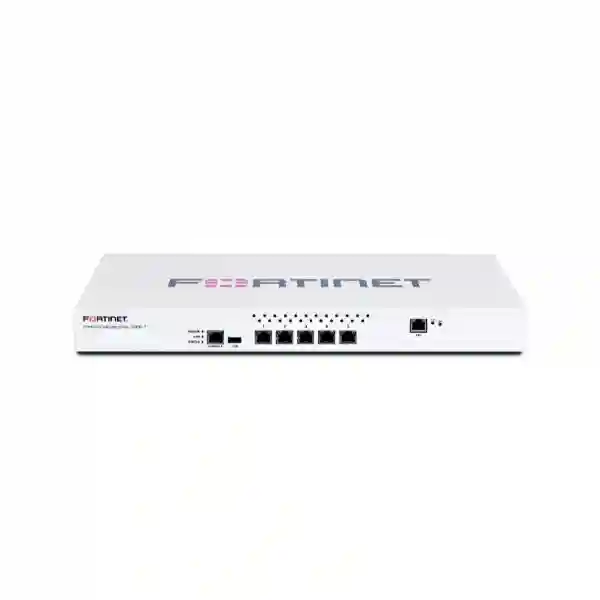
FORTINET ENTERPRISE UNIFIED COMMUNICATIONS
FortiVoice FVE-2000H Tanzania
FortiVoice FVE-2000H is a high-capacity Fortinet enterprise phone-system appliance for organizations that need structured IP telephony, centralized administration and room to scale. Fortinet currently positions the model for up to 2,000 extensions and 200 VoIP trunks. It can form the communications core for headquarters, multi-department organizations, branch-connected businesses, hospitality environments and contact-center use cases when the wider voice network, SIP services, endpoints and licenses are designed correctly.
Maximum extensions listed by Fortinet for the FVE-2000H platform.
VoIP trunks listed for the model, supporting substantial SIP connectivity planning.
FortiVoice combines business calling with unified communications and centralized management.
What is FortiVoice FVE-2000H?
The FortiVoice FVE-2000H is an on-premises enterprise communications appliance in Fortinet’s FortiVoice family. It is intended for larger organizations that want a dedicated platform to manage extensions, SIP trunks, call routing and unified communications rather than treating telephony as a collection of disconnected handsets. Fortinet documentation describes FortiVoice as a unified communications solution with HD voice, conferencing and fax capabilities, administered through a centralized management platform. For a buyer, the practical value is that user numbering, call flows, office schedules, trunks, endpoint policies and related communications functions can be planned as one system.
Capacity is only the starting point. A 2,000-extension ceiling does not mean every project should be designed at that limit, and a 200-trunk specification does not replace a concurrency study. The correct design should consider active users, expected simultaneous calls, reception traffic, call queues, recording requirements, branch connectivity, SIP provider limits, WAN quality, redundancy objectives and future growth. Organizations migrating from legacy PBX platforms should also document analogue dependencies, existing numbers, hunt groups, IVR menus, after-hours routing and emergency-calling requirements before cutover.
Fortinet lists FortiFone Softclient, Call Center, Hotel Management, Call Trunks and Notification among available add-ons for the FVE-2000H family. These capabilities should be scoped as project requirements rather than assumed to be included in every hardware purchase. FourTeck can help translate operational needs into a bill of materials and deployment checklist, including the phone system, endpoints, switching, firewall policies, SIP connectivity and applicable subscriptions or support.
Enterprise voice planning around the FVE-2000H
Call-flow design
Map direct numbers, reception, IVR menus, ring groups, queues, voicemail, schedules, overflow rules and escalation paths before configuration. Good call-flow documentation makes the PBX easier to operate and reduces surprises during migration.
Voice-ready networking
IP telephony depends on switching, VLAN design, PoE capacity, Quality of Service, firewall rules and dependable WAN links. Network readiness should be tested before a large handset rollout rather than after users report poor audio.
Licensing and support
Confirm required add-ons, support coverage, software version, endpoint quantities and any specialized call-center or hospitality functions during quotation. This keeps the commercial scope aligned with the intended operating model.
FortiVoice FVE-2000H technical and solution highlights
| Area | Verified / planning point |
|---|---|
| Extensions | Fortinet lists up to 2,000 extensions for FVE-2000H. |
| VoIP trunks | Fortinet lists 200 VoIP trunks. |
| Unified communications | FortiVoice supports integrated business communications, with softclient and collaboration capabilities available across the platform. |
| Add-ons | FortiFone Softclient, Call Center, Hotel Management, Call Trunks and Notification are listed for this model family. |
| Deployment guidance | Validate SIP services, endpoint compatibility, WAN performance, PoE, QoS, security, recording needs and resilience before procurement. |
Related FourTeck Tanzania solution areas
An enterprise PBX is most successful when it is designed with the surrounding infrastructure. FourTeck Tanzania’s IP PBX and VoIP solution coverage explains the wider approach to SIP, IVR, queues, voicemail, call routing and branch telephony. The same Tanzania solution page also covers IP phones and business desk telephony, which matters when choosing user endpoints and provisioning methods.
Voice quality also depends on the LAN. Review FourTeck Tanzania guidance for network switches and LAN infrastructure when planning PoE, VLANs and uplinks, and the firewall, VPN and network security section when voice traffic crosses site boundaries or depends on protected internet connectivity. For remote and wireless work areas, the Wi-Fi and wireless access point guidance helps connect mobility requirements to the network design.
Large deployments should also consider racks, power and cabling. FourTeck Tanzania describes structured cabling, fiber, racks and UPS as part of integrated infrastructure planning, while its IT support and lifecycle services section addresses design, installation, configuration, documentation and expansion. These are verified contextual sections on the current Tanzania homepage; separate unique product URLs were not available for all of them at research time.
FortiVoice FVE-2000H Tanzania
For organizations in Tanzania, the FVE-2000H is relevant when a voice project has moved beyond a small-office PBX and needs structured capacity for departments, branches or a large user population. The model’s published ceiling of 2,000 extensions and 200 VoIP trunks gives architects a clear starting point, but procurement should begin with actual call behavior. Count employees who need extensions, shared phones, meeting-room endpoints, reception consoles, common-area devices and softclient users. Then estimate concurrent calling, inbound peaks, outbound campaigns, queue traffic and inter-branch calls. This produces a more useful design than selecting the appliance only because its extension limit exceeds the headcount.
Tanzania deployments should also assess connectivity and power at each participating site. A headquarters may have robust fiber connectivity while a branch relies on a different access technology. Voice is sensitive to latency, packet loss and jitter, so the WAN path, firewall, QoS policy and failover strategy should be reviewed together. Where IP phones are powered by PoE, switching budgets and UPS runtime become part of the telephony design. If the organization has existing analogue devices, gateways or legacy lines, document them before migration so that required interfaces are not discovered late in the project.
Commercial planning should distinguish the base FVE-2000H appliance from optional functions and support. If the requirement includes a call center, hotel workflow, softclient deployment, notifications or other add-ons, include those needs in the quotation request. Likewise, identify the desired support term and operational ownership: who will administer extensions, manage call flows, review logs, maintain backups and coordinate with the SIP provider? FourTeck Tanzania can use these details to build a clearer scope. Buyers can review the broader Tanzania IT and telecom solution portfolio or send an exact model-and-quantity request through the FourTeck Tanzania contact page.
FortiVoice FVE-2000H Dar es Salaam
A Dar es Salaam FVE-2000H project may involve a headquarters, corporate campus, hotel, financial operation, logistics company, service desk or multi-branch organization that wants a central voice platform. The city’s larger business environments often make integration more important than the PBX hardware alone. A project team should inventory users by department and role, because reception, customer service, executives, back-office staff and mobile employees may require different endpoints and call permissions. This role-based approach also helps define programmable keys, queue membership, voicemail policy, recording requirements and softclient adoption.
For a high-user-count deployment, the LAN should be treated as voice infrastructure. Verify PoE switch capacity, VLAN configuration, uplink utilization and QoS across every floor or building. If voice traffic travels between a head office and branches, measure the WAN rather than assuming internet bandwidth alone guarantees quality. Firewall policies and NAT behavior should be tested with the selected SIP service. Resilience planning can include diverse internet circuits, protected power for the FortiVoice appliance and switching layer, configuration backups and documented recovery procedures. These decisions are particularly important for reception and customer-facing teams where a communications outage immediately affects operations.
Before requesting a quotation in Dar es Salaam, prepare the target extension count, expected concurrent calls, number of sites, SIP provider information, existing telephone numbers, endpoint quantities and any call-center or hospitality features. Note whether the deployment is a fresh installation or a migration, because migration requires number-porting coordination, old-PBX call-flow discovery and a cutover plan. Training is also worth budgeting: administrators need to understand everyday moves, adds and changes, while users may need guidance on voicemail, transfers, conferencing and softclient functions. FourTeck’s Tanzania sales enquiry page specifically encourages buyers to include extension counts, reception, queue, branch and existing-line details so the discussion can focus on fit rather than a generic product list.
FortiVoice FVE-2000H Mwanza
For a business evaluating FortiVoice FVE-2000H in Mwanza, the most useful first question is whether the communications system will serve one large site or act as the voice core for multiple locations. A single-site deployment may concentrate on departments, reception and internal mobility, while a distributed organization needs a branch architecture, WAN policy and clear survivability plan. The FVE-2000H’s published 2,000-extension capacity can accommodate substantial growth, but a sensible design should still define a three-to-five-year user forecast and avoid purchasing endpoints or licenses without a role-based requirement.
Mwanza projects can benefit from a careful site-readiness review before equipment is ordered. Check rack space, cooling, protected power, network switching and cable labeling. Identify where IP phones will connect and whether the existing switches provide sufficient PoE. Separate voice traffic with an appropriate VLAN design and verify that DHCP, DNS and routing are predictable. If calls rely on SIP trunks delivered over internet connectivity, test link quality during normal and busy periods. A backup link can improve resilience, but only when routing, firewall rules and provider behavior are designed and tested for failover rather than assumed to work automatically.
Operational workflow should shape configuration. A hotel may emphasize reception, room-related processes and hospitality functions; a healthcare or education environment may prioritize departments and shared endpoints; a commercial operation may need queues, reporting and mobile users. Fortinet lists Hotel Management and Call Center among available FVE-2000H add-ons, so those needs should be identified during commercial scoping. Procurement teams should ask for a quotation that separates appliance, support, optional licenses, endpoints, gateways if required, switching changes and professional services. That makes lifecycle cost easier to understand. For supporting infrastructure, FourTeck Tanzania’s networking, firewall, IP phone and structured-cabling solution guidance provides a useful checklist for the systems surrounding an enterprise PBX.
FortiVoice FVE-2000H Arusha
Arusha organizations considering the FVE-2000H may include hospitality groups, tour operators, institutions, regional offices and enterprises with customer-facing communications. In these environments, call handling is often more important than raw extension count. Document how incoming calls should reach reservations, sales, operations, finance or reception; what should happen after hours; how unanswered calls overflow; and whether calls need to be queued or recorded. Turning these business rules into a call-flow diagram before configuration reduces rework and gives users a system that reflects how the organization actually operates.
Hospitality-oriented buyers should not assume that every hotel function is included by default. Fortinet lists Hotel Management as an add-on for FVE-2000H, so requirements should be matched to the appropriate licensing and integration scope. Similarly, a customer-service team that needs formal call-center features should define agent counts, queue structure, supervisor needs, reporting and recording policy. If staff use smartphones or computers for business calling, FortiFone Softclient can be part of the design, but remote access, user security and network performance need attention. Microsoft Teams integration is also described within FortiVoice unified communications materials, making application workflow another useful discovery topic.
Arusha deployments should include practical infrastructure checks: reliable power to the appliance and switches, suitable rack conditions, PoE capacity for phones, structured cabling, QoS and WAN quality. For multi-property or multi-office businesses, establish whether sites will share centralized services and how calls behave when a WAN link is degraded. A staged migration can be preferable to an all-at-once change when the legacy environment is complex. Prepare a user list, extension plan, number inventory, SIP details, site list and endpoint quantities for quotation. FourTeck Tanzania’s verified contact page lists Arusha among its office locations and accepts product-selection, quotation and project enquiries.
FortiVoice FVE-2000H Dodoma
For Dodoma, FortiVoice FVE-2000H can be evaluated for institutions and enterprises that require a centrally administered voice platform with substantial user capacity. The procurement process should start with governance as well as technology. Define who owns numbering, user creation, call permissions, recording policy, system backups and change approval. In a large organization, telephony can quickly become difficult to manage when departments request ad-hoc changes without a naming and numbering standard. A planned extension range, department structure and documented call-routing policy make ongoing administration much more predictable.
The technical assessment should cover simultaneous calls rather than only registered users. Estimate busy-hour traffic, inbound trunk demand, conference usage and queue peaks. Confirm SIP provider capacity and numbering requirements, then verify the WAN and firewall path that carries those calls. Where several buildings or campuses are connected, switching and fiber uplinks may need review. Phones commonly rely on PoE, so switch power budgets and UPS capacity should be calculated for the real endpoint count. Voice VLANs and QoS policies should be applied consistently, and configuration should be documented so future network changes do not unintentionally affect call quality.
If the project includes remote staff or branches, define how those users connect and what happens during a connectivity interruption. Security is also part of deployment: administrator access should be controlled, credentials protected, software maintained and external exposure minimized. Optional functions such as softclient, call center, hotel management and notification should be quoted only where required. Procurement teams in Dodoma can improve proposal accuracy by supplying the number of users, sites, endpoints, existing lines, required call flows, integration needs and desired support term. The FourTeck Tanzania contact page lists Dodoma and provides a verified channel for technology and quotation enquiries.
FortiVoice FVE-2000H UAE
UAE buyers evaluating the FortiVoice FVE-2000H should treat the project as an enterprise communications design rather than a hardware-only purchase. With up to 2,000 extensions and 200 VoIP trunks listed by Fortinet, the platform can address substantial user populations, but local telecom requirements, SIP service availability and number provisioning must be validated for the intended deployment. Organizations with multiple emirates, branches or offices should map inter-site call flows and decide which services remain centralized and which require local continuity.
A strong UAE deployment brief includes user roles, extension count, concurrent-call estimates, DID requirements, reception design, call queues, recording, softclient users and conference needs. Network architects should review voice VLANs, QoS, PoE, firewall policy and WAN redundancy. Where the PBX supports customer-service operations, call-center requirements should be specified separately, including agent and supervisor workflows. Hospitality buyers should similarly identify property-management and hotel-telephony expectations before selecting optional functions. Fortinet’s listed add-ons provide flexibility, but the correct licenses and integrations depend on the actual business workflow.
For regional organizations, procurement may also involve standardizing the same telephony approach across UAE and African offices. Standard extension conventions, endpoint profiles, security policies and documentation can reduce support complexity even when carriers differ by country. A quotation should therefore distinguish common architecture from country-specific telecom services. FourTeck’s broader regional network can support solution discussions through FourTeck UAE, while organizations specifically researching IP PBX architecture can also review FourTeck IP PBX Dubai. Carrier approval, availability, price and delivery should always be confirmed for the exact project rather than inferred from another market.
FortiVoice FVE-2000H Uganda
In Uganda, the FVE-2000H is suited to evaluation by larger organizations that need a centrally controlled IP PBX and unified communications platform. Planning should begin with the organization’s topology: headquarters only, headquarters plus branches, or several sites with shared services. This determines how extensions register, how calls traverse the WAN, where SIP trunks terminate and what level of local survivability is required. The published 2,000-extension and 200-VoIP-trunk capacities provide useful sizing boundaries, but concurrency and application requirements still need separate analysis.
Network readiness is especially important for distributed deployments. Each site should have stable LAN switching, appropriate PoE for phones, consistent VLAN configuration and an internet or private-WAN service capable of carrying voice with acceptable latency and packet loss. QoS should prioritize real-time traffic where congestion can occur. Firewalls must be configured for the selected SIP architecture without unnecessarily exposing management services. Power protection for the FortiVoice appliance, switches and edge equipment should be considered as one continuity chain because an operational PBX cannot serve phones whose network switches are offline.
Procurement teams should identify optional functions before requesting final pricing. Softclient users, call-center agents, hospitality workflows and notification requirements can change the bill of materials and implementation effort. The project scope should also include endpoint models, headsets, gateways where necessary, support and administrator training. For regional coordination, buyers can review FourTeck Uganda for the Uganda IT and communications context while using the Tanzania page for the specific FourTeck Tanzania product enquiry. Cross-border projects should confirm regulatory and carrier conditions separately in every country rather than assuming one SIP design applies unchanged.
FortiVoice FVE-2000H Kampala
Kampala enterprises considering the FVE-2000H often need to balance user growth with operational simplicity. A large PBX should make everyday administration easier, not create a platform that only a specialist understands. Before deployment, establish extension naming conventions, department ranges, administrator roles, standard phone profiles and change procedures. Reception and service teams should have documented call flows showing opening hours, queues, overflow destinations, voicemail and escalation. This information becomes the configuration blueprint and the acceptance-test plan.
The network should be validated under realistic load. Voice traffic may share infrastructure with cloud applications, CCTV, Wi-Fi users and large data transfers, so bandwidth alone is not enough. Check switch uplinks, VLAN segmentation, QoS, firewall processing and WAN behavior during peak periods. For a multi-floor office, verify PoE budgets and cable condition at the access layer. For branches, define what happens when the main WAN path fails and whether a backup internet service can carry voice. SIP trunk behavior during failover should be tested with the provider rather than assumed.
Kampala buyers should request a commercial proposal that clearly identifies appliance, support, optional licenses, endpoints and implementation. If the organization expects call-center functionality, specify agent numbers and reporting needs. If mobile and hybrid work are important, include softclient quantities and remote-user security. If the system replaces an older PBX, provide a list of existing numbers, analogue dependencies and critical call routes. FourTeck Uganda’s regional IT solutions site can provide complementary local context, while the FourTeck Tanzania enquiry page can be used for the Tanzania-focused product request and regional coordination.
FortiVoice FVE-2000H Arua
For organizations assessing FortiVoice FVE-2000H in Arua, a distributed-site design can be more important than headline capacity. Businesses and institutions with a main office and remote facilities should map which calls must remain available when connectivity is impaired, which users need direct numbers and how inter-site dialing should work. A centralized PBX can simplify administration, but the WAN becomes part of the communications service. That means internet quality, backup connectivity and firewall configuration need to be evaluated alongside the FortiVoice appliance.
A practical readiness survey should document switch models, PoE capacity, UPS protection, cabling, available rack space and internet circuits. Voice endpoints should be placed on a well-planned network with predictable addressing and QoS. Remote users should not be added informally without considering authentication, device management and security. Where legacy analogue devices remain, identify them early so the project can determine whether gateways or alternative services are needed. These checks reduce the risk of ordering the central system while overlooking branch dependencies.
The FVE-2000H may provide more capacity than an individual Arua site requires, but it can still be relevant where Arua is one node in a larger Uganda or East Africa organization. In that case, procurement should be based on total enterprise users and calls, while deployment planning remains site-specific. Optional FortiVoice functions should be matched to the users who need them rather than applied uniformly. Ask for a proposal that separates hardware, support, licenses, phones, network remediation and professional services. Regional organizations can use FourTeck Uganda for broader Uganda solution context and coordinate the FVE-2000H requirement with documented user counts, branch topology and SIP needs.
FortiVoice FVE-2000H Mbarara
Mbarara organizations evaluating an enterprise phone platform should first define the operational problem the FVE-2000H is expected to solve. It may be growth beyond an existing PBX, inconsistent branch dialing, limited queue functionality, difficult administration or a need to bring desk and softclient users into one communications environment. Translating those problems into measurable requirements gives the project a clearer success criterion than simply replacing old hardware with a larger appliance.
For sizing, record total endpoints and expected growth, then estimate concurrent calls by department and busy period. The FVE-2000H’s Fortinet-listed capacities of 2,000 extensions and 200 VoIP trunks should be treated as platform boundaries, not as a promise that every network or carrier arrangement can sustain maximum traffic. SIP services, WAN links, firewall processing and call applications must be designed to match. Where call recording or call-center functions are required, storage, policy, user access and retention decisions should be made before go-live.
Implementation planning should include handset provisioning, PoE switching, VLANs, QoS, administrator training and user acceptance testing. If the organization operates branches, standard templates can make deployments easier to repeat and support. Document extension ranges, phone profiles, call permissions and escalation rules so each new location does not become a separate design. Commercially, confirm support coverage and optional licenses at quotation time, and avoid assuming that features shown across the FortiVoice family are automatically bundled with the base appliance. For broader regional planning, FourTeck Uganda provides Uganda-focused IT, networking and telephony context that can complement a structured FVE-2000H procurement exercise.
FortiVoice FVE-2000H Gulu
For a Gulu deployment, FortiVoice FVE-2000H should be assessed in relation to the complete communications path from user to carrier. The appliance can centralize extension and trunk management, but every call still depends on endpoint configuration, switching, power, routing and service-provider connectivity. A site survey should therefore capture the existing LAN, internet services, rack environment and power protection as well as the current telephone system. If the project is a migration, collect screenshots or documentation of IVR menus, hunt groups, schedules and number assignments before the legacy system is decommissioned.
Organizations with offices across northern Uganda can benefit from consistent standards. A common extension plan, voice VLAN, phone profile and security policy makes support easier across sites. However, connectivity conditions can differ, so each location should have its own readiness result and continuity plan. Backup internet is useful only when the voice service and firewall are configured to use it correctly. Test outbound, inbound, internal and emergency call scenarios during acceptance, including what happens after a link or power interruption.
FVE-2000H procurement should also account for how users work. Desk-based employees may need FortiFone endpoints, mobile teams may benefit from softclient functions, and service departments may require queues or call-center capabilities. Fortinet lists these add-on areas for the model family, so the quotation should specify quantities and terms rather than leaving them ambiguous. A good bill of materials can include the PBX appliance, support, licenses, phones, PoE switching changes, UPS requirements, gateways and implementation services where needed. Buyers can consult FourTeck Uganda for regional technology context and provide site-by-site details for a more accurate solution discussion.
FortiVoice FVE-2000H Kenya
Kenyan enterprises evaluating the FVE-2000H may be looking for a voice platform that can support a large headquarters, contact operation or multi-branch organization. The published 2,000-extension and 200-VoIP-trunk limits give the platform substantial scale, but project sizing should use actual traffic and user roles. Build a matrix of departments, endpoint types, direct numbers, queue membership, recording needs and mobility. This helps distinguish basic extensions from users who require softclient, call-center or specialized workflows.
For multi-site Kenya deployments, connectivity architecture deserves early attention. Decide where SIP trunks terminate, how branches reach the central system, what security controls protect that traffic and what continuity is expected during a WAN outage. QoS should be consistent across managed links, while internet-based paths should be tested for latency, jitter and loss. PoE switching and UPS capacity should be sized to the phone estate. If the organization already uses Fortinet networking or security products, integration can be considered as part of the overall architecture, but product compatibility and software requirements should be verified for the exact versions being deployed.
Procurement should separate recurring and one-time costs. Hardware, implementation and endpoints are different from support, optional licenses, SIP service and ongoing operational work. Confirm the exact commercial bundle rather than relying on a generic online price from another country. Numbering, telecom regulation and carrier availability are market-specific. For regional support and solution context, buyers can review FourTeck Kenya. Organizations standardizing communications across Kenya and Tanzania can also use common design principles—extension naming, phone profiles, security and documentation—while keeping each country’s carrier and regulatory requirements distinct.
FortiVoice FVE-2000H Kuwait
Kuwait buyers considering FortiVoice FVE-2000H should validate the complete local telecom design before procurement. The appliance’s enterprise scale can support large user populations, but SIP trunk services, number ranges, carrier requirements and any regulatory conditions must be confirmed for the intended organization. A headquarters deployment may focus on reception, departments and contact teams, while a distributed business may need branch dialing, centralized trunks and resilient WAN connectivity. These are architectural choices that should be agreed before the system is ordered.
A detailed design should include extension count, expected simultaneous calls, inbound numbers, IVR structure, queues, voicemail, recording, conference requirements and endpoint types. If users need desktop or smartphone calling, include softclient scope and remote-access security. If a call center is required, define agent counts, supervisors and reporting. Fortinet lists Call Center among FVE-2000H add-ons, but licensing should be verified in the commercial proposal. Similar care applies to other optional functions. The base hardware should not be assumed to include every capability available across the FortiVoice ecosystem.
Infrastructure preparation covers PoE switching, VLANs, QoS, firewall policy, rack power and UPS. Where business continuity is important, test failure scenarios rather than relying on theoretical redundancy. Document configuration backups and administration procedures so the system can be supported after handover. Regional organizations can coordinate common standards across Gulf and African offices while using country-specific carriers. FourTeck’s approved regional network includes FourTeck Kuwait for Kuwait-focused technology enquiries. Availability, pricing, support terms and exact Fortinet bundles should be confirmed at quotation time for the specific project.
FortiVoice FVE-2000H Ghana
For Ghana, FVE-2000H evaluation should begin with enterprise communications requirements rather than model selection alone. A large organization may need one central PBX for headquarters and branches, or it may need a phased migration from several legacy systems. Inventory all current extensions, telephone numbers, trunks, analogue devices and critical call flows. This discovery phase often reveals dependencies that are invisible in a simple headcount, such as fax, door phones, paging, common-area phones or specialized reception processes.
The FVE-2000H’s published capacity can provide growth room, but concurrency and network quality determine real operational experience. Estimate busy-hour calls, then align SIP service and WAN capacity. Voice VLANs, QoS and PoE should be standardized, especially when hundreds of endpoints are involved. Firewall configuration should protect the environment while allowing the required signaling and media paths. If branches use public internet, evaluate connection quality at each site and define how users operate during an outage. Protected power for network switches is as important as power for the PBX itself.
Commercial scoping should identify support and add-ons explicitly. Fortinet lists softclient, call center, hotel management, call trunks and notification options for the model. Include only what the organization needs, but include it from the beginning so the proposal reflects the desired outcome. Training, documentation and acceptance testing should be part of implementation planning. Regional customers can review FourTeck Ghana for country-focused IT context while coordinating a standardized communications architecture across multiple African markets. Exact product availability and telecom compatibility should be reconfirmed for Ghana before purchase.
FortiVoice FVE-2000H Nigeria
Nigeria enterprises with large user populations or many sites can evaluate FVE-2000H as the core of a structured voice environment. At this scale, governance and resilience are as important as features. Establish who manages the platform, how extension changes are approved, how backups are stored and how carrier incidents are escalated. Create a numbering plan that can accommodate departments and future branches without constant renumbering. For contact-heavy operations, document queue and recording policies before configuration so technology follows the business process.
Network design should consider diverse connectivity conditions across sites. The central office may have high-capacity fiber while smaller branches use different services. Measure each path and apply QoS where possible. Consider backup links for critical sites, but test SIP and firewall behavior during failover. At the LAN edge, verify PoE budgets for phones and keep voice traffic logically organized. UPS runtime should cover the communications chain, including switches and routers. These practical details can have more impact on user experience than adding features to the PBX.
When preparing a Nigerian procurement request, include user count, sites, simultaneous calls, number ranges, existing carriers, endpoints, remote users and desired add-ons. Fortinet’s published FVE-2000H capacity of 2,000 extensions and 200 VoIP trunks should be checked against these requirements, while optional call-center, hotel, softclient and notification functions are scoped separately. FourTeck’s regional network includes FourTeck Nigeria, which can provide Nigeria-focused technology context. For cross-border organizations, standardize configuration principles and documentation while keeping telecom services and regulatory checks specific to each country.
FortiVoice FVE-2000H Seychelles
Seychelles organizations considering the FVE-2000H may include hospitality groups, larger institutions and multi-property businesses where reliable customer communication is important. The first design step should be to determine whether the appliance’s enterprise capacity aligns with the total organization rather than a single property or office. If several sites will share one communications core, map connectivity between them and define what must continue locally during an interruption. This is especially important for reception, reservations and operational teams that depend on voice throughout the day.
Hospitality projects should document room, front-desk, back-office and service requirements separately. Fortinet lists Hotel Management as an add-on for the FVE-2000H, but the desired workflow and integration should be confirmed before licensing is selected. The same principle applies to call-center and softclient capabilities. A property group may need mobile staff to use software clients, while front-desk teams require dedicated endpoints and programmable keys. These different roles should be reflected in phone profiles, permissions and training.
Infrastructure planning includes PoE switching, cabling, QoS, firewall policy, internet resilience and protected power. Where sites are separated geographically, test real WAN conditions and plan failover carefully. Procurement should identify the exact appliance bundle, support term, optional licenses, endpoints and professional services, while local carrier and regulatory requirements are verified separately. Seychelles buyers with broader Africa requirements can use FourTeck Tanzania’s enquiry channel for regional coordination and can reference the broader FourTeck network when discussing multi-country standards. No stock, delivery-time or local-office claim should be assumed without a current quotation.
FortiVoice FVE-2000H buying and quotation checklist
✓ Total extensions now and expected growth.
✓ Estimated simultaneous inbound and outbound calls.
✓ SIP trunk provider, number ranges and porting needs.
✓ Reception, IVR, queues, voicemail and after-hours flows.
✓ Call recording, conference and reporting requirements.
✓ Desk phones, common-area phones and softclient quantities.
✓ Branch sites, WAN links, failover and QoS readiness.
✓ PoE switching, VLAN, firewall, rack and UPS requirements.
✓ Call Center, Hotel Management or other optional functions.
✓ FortiCare/support term, implementation, training and documentation.
Frequently asked questions
How many extensions does FortiVoice FVE-2000H support?
Fortinet currently lists the FVE-2000H for up to 2,000 extensions. Project sizing should also consider simultaneous calls, SIP capacity, applications and growth rather than extension count alone.
How many VoIP trunks are listed for FVE-2000H?
Fortinet lists 200 VoIP trunks for the FVE-2000H. Actual carrier services, concurrent-call allowances and local telecom conditions must be confirmed separately.
Can FVE-2000H support call-center or hotel requirements?
Fortinet lists Call Center and Hotel Management among available add-ons for the model family. The required license, user quantities and integration scope should be confirmed in the quotation.
What should be checked before deploying an enterprise IP PBX?
Check extension and call volumes, SIP services, number migration, call flows, endpoint quantities, PoE, VLANs, QoS, firewall policy, WAN performance, power protection, optional licenses, support and administrator responsibilities.
How do I request a FortiVoice FVE-2000H quotation in Tanzania?
Use the FourTeck Tanzania contact page and include the exact model, quantity, extension count, number of sites, SIP requirements, endpoint quantities and optional functions. This provides a stronger basis for confirming the correct commercial and technical scope.
Decision recap
Choose the FVE-2000H only after confirming that its enterprise capacity, deployment model and optional communications functions align with the organization’s requirements. The strongest procurement brief combines user and call-volume data with SIP, endpoint, network, power, support and migration information. This reduces the risk of buying a capable PBX that is constrained by an unprepared LAN or an incomplete licensing scope.
For multi-country organizations, use a common architecture where practical but validate telecom regulations, carrier services and availability independently in Tanzania, UAE, Uganda, Kenya, Kuwait, Ghana, Nigeria, Seychelles and other markets.
Plan your FortiVoice FVE-2000H deployment with FourTeck Tanzania
Send your user count, expected simultaneous calls, branch list, current PBX or SIP environment, endpoint quantity and required features. FourTeck can use that information to discuss product fit, surrounding network requirements and a quotation scope without assuming unverified stock, pricing or delivery.



Reviews
There are no reviews yet.