
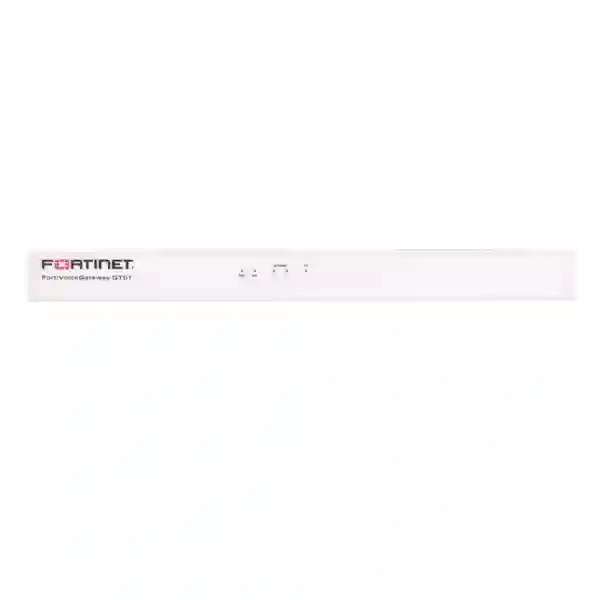
FortiVoice Gateway FVG-GT01 Tanzania
FortiVoice Gateway FVG-GT01 is a purpose-built PRI gateway for organizations that need to connect one T1/E1 digital telephony line to a SIP server-enabled PBX. The gateway provides a focused bridge between established PRI infrastructure and modern IP communications, helping businesses preserve useful carrier connectivity while moving call control into a SIP-based environment. For Tanzania buyers, the key procurement question is not simply whether a gateway can be installed, but whether the existing PRI service, PBX design, dial plan, network addressing and operational requirements have been reviewed together before deployment.
Single PRI Interface
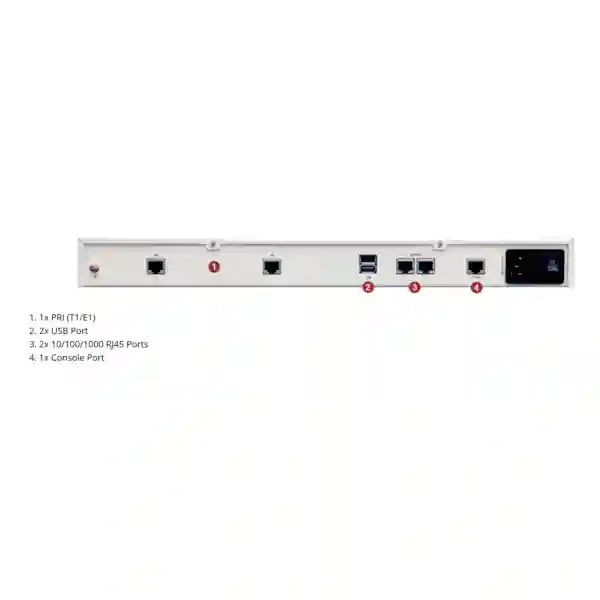
Fortinet documents the GT01 with one PRI T1/E1 digital line in a single-port configuration using PRI port 1 and span 1. This makes the model straightforward to evaluate when a site needs one PRI span rather than the dual-port architecture of the GT02.
PRI-to-SIP Bridge
The gateway enables calls arriving through the PRI connection to communicate with a SIP server-enabled PBX. This can support phased telephony modernization where organizations still depend on digital carrier circuits but want SIP-based call processing.
Operational Visibility
FortiVoice Gateway administration includes a web interface and usage-tracking capabilities such as call statistics and call-detail records, giving administrators useful information for day-to-day telephony operations and troubleshooting.
What the FortiVoice Gateway FVG-GT01 Solves
Many organizations do not replace their telephony environment in one step. A company may have a reliable PRI service from its carrier, established public telephone numbers and inbound routing, while its internal communications platform is moving toward SIP. The FVG-GT01 addresses this boundary. Instead of treating the carrier circuit and the SIP PBX as unrelated systems, the gateway creates the interface needed to bring PRI calls into the SIP environment and route outbound traffic in the opposite direction according to the configured call plan.
Procurement should begin with the line type. Fortinet identifies the GT01 as supporting one PRI T1/E1 digital line. A T1 PRI traditionally provides 23 bearer channels plus signaling, while an E1 PRI provides 30 bearer channels plus signaling. The actual carrier service, configuration and usable call capacity must be confirmed for the intended location rather than assumed from the gateway model alone. Organizations should also document number ranges, inbound destinations, outbound presentation requirements, emergency calling policies where applicable and any business continuity expectations before installation.
For a broader security and communications project, buyers can also review FourTeck Tanzania technology solutions, the regional FourTeck Africa portfolio, FourTeck Uganda, FourTeck Kenya and FourTeck UAE. These regional resources are useful when a multi-country organization is standardizing infrastructure while retaining country-specific carrier arrangements.
Technical Planning for FVG-GT01
| Planning Item | FVG-GT01 Context |
|---|---|
| Digital line | One PRI T1/E1 digital line |
| Port / span | Single-port configuration: PRI port 1, span 1 |
| PBX side | Designed to communicate with a SIP server-enabled PBX |
| Administration | Web-based GUI with gateway configuration workflows |
| Visibility | Call statistics and call-detail records are documented gateway capabilities |
Before ordering, map the complete call path: carrier PRI circuit, gateway, LAN switching and addressing, SIP PBX, extensions, outbound route and inbound destination. Confirm whether the intended FortiVoice system or other SIP-server-enabled PBX design is supported for the required deployment. Fortinet documentation for managed PRI gateways should be checked against the software release in use because platform support and lifecycle details can change over time.
Buying and Deployment Checklist
A useful quotation request should identify the country and site, PRI type, carrier, number of active PRI spans, existing PBX make and software version, SIP architecture, expected simultaneous calling, number ranges, rack and power requirements, LAN addressing, remote-management policy and target migration date. Include whether the PRI service is already live or is being ordered with the gateway. This information reduces the risk of selecting hardware before the telephony topology is understood.
The GT01 is specifically the one-PRI model. If a project requires two PRI digital lines, do not assume that two spans can be attached to one GT01; Fortinet documents GT02 as the dual-port model. Selection should therefore follow actual circuit count and design requirements. Where future expansion is expected, discuss the anticipated state during solution planning rather than sizing only for the first day of operation.
FortiVoice Gateway FVG-GT01 Tanzania
In Tanzania, FVG-GT01 procurement is most relevant to organizations that have an existing PRI T1/E1 service or a defined requirement to integrate a PRI circuit with a SIP-based PBX. The gateway can be considered for corporate offices, hospitality environments, institutions, contact operations and other sites where public telephony still arrives through PRI while internal communications are managed through IP. The technical value comes from connecting those two environments without requiring the carrier-side digital interface and the PBX-side SIP architecture to be the same technology.
Tanzania buyers should start by confirming the carrier handoff. Record whether the service is E1 or T1, the signaling arrangement provided by the carrier, assigned telephone ranges and the number of simultaneous calls expected. Fortinet identifies GT01 as a one-line PRI gateway, so this information determines whether the model fits the site. Do not base the choice only on the number of employees or extensions; a PRI gateway is selected around the digital trunk requirement and its relationship with the PBX.
The network team should then document the SIP side. Identify the PBX, IP addressing, VLAN strategy, routing and firewall policies needed for administration and SIP communication. The telephony team should document inbound and outbound dial plans, number normalization, caller-ID behavior and failover expectations. Keeping these responsibilities in one deployment worksheet makes commissioning more predictable and gives the quotation process a clear technical scope.
For Tanzania procurement, request a model-specific quotation rather than a generic “FortiVoice gateway” price because the FortiVoice family includes analog and PRI models with different port roles. Ask for FVG-GT01 by exact model and state that the requirement is one PRI T1/E1 digital line. Availability, lead time, support entitlement and any required accessories should be confirmed at quotation time rather than assumed. FourTeck can use the supplied topology and circuit details to help structure a more relevant commercial and deployment discussion.
FortiVoice Gateway FVG-GT01 Dar es Salaam
Organizations in Dar es Salaam often operate communications environments where legacy carrier services coexist with newer IP networks. For a head office, hotel, professional-services firm, institution or customer-facing operation that still receives a PRI circuit, the FVG-GT01 provides a defined point for integrating that digital line with a SIP server-enabled PBX. Its single-PRI design is particularly relevant when one circuit serves the location and the business wants to modernize PBX functions without immediately changing the carrier handoff.
A Dar es Salaam deployment should be scoped around the real site topology. Confirm where the carrier demarcation terminates, where the gateway will be mounted, how the LAN reaches the SIP PBX and who is responsible for carrier testing. Power protection and equipment-room conditions should be considered alongside telephony configuration. These details are operational rather than glamorous, but they can determine whether a migration window proceeds smoothly.
Dial-plan preparation is equally important. Document direct-dial numbers, reception routes, hunt groups, after-hours behavior and outbound caller identification before moving traffic through the gateway. If the PBX is being replaced at the same time, separate carrier-side testing from application-side testing so faults can be isolated. FortiVoice Gateway call statistics and call-detail records can support operational visibility after commissioning, while carrier records and PBX logs remain useful parts of troubleshooting.
When requesting a Dar es Salaam quote, provide the exact FVG-GT01 model, PRI type, carrier details, PBX platform and desired installation schedule. Avoid assuming local stock or immediate delivery; ask for current commercial availability. If the project is part of a wider infrastructure refresh, include switching, firewalling, WAN resilience and endpoint requirements in the discussion so the voice gateway is designed as part of the network rather than as an isolated appliance.
FortiVoice Gateway FVG-GT01 Mwanza
For businesses and institutions in Mwanza, the FVG-GT01 can fit projects where a site retains a single PRI digital trunk but wants call processing on a SIP-enabled PBX. The gateway’s role is specific: it terminates one PRI T1/E1 line and provides the connection into the SIP environment. That focused function makes technical discovery important, because the right question is whether the site has the correct trunk requirement rather than whether a gateway sounds generally suitable for business telephony.
Mwanza project planning should include the relationship between the local carrier circuit and any centralized PBX architecture. If the SIP PBX is located at the same site, confirm LAN addressing, switching and administrative access. If call control is centralized elsewhere, document WAN dependency, routing and continuity requirements before finalizing the design. The PRI circuit itself may continue to provide local public telephony, but the IP path to the call-control system becomes part of the end-to-end service.
Operational teams should create a test plan covering inbound calls to representative number ranges, outbound calls, caller ID, extension routing, busy conditions and recovery after planned restarts. Where the business has critical reception or customer-service numbers, schedule migration and rollback procedures before the change. A gateway purchase should therefore include deployment planning, not just hardware identification.
For procurement in Mwanza, provide a concise technical brief with the PRI circuit type, PBX, number plan, expected concurrent usage and target go-live date. Confirm current product availability and support options in the quotation. Where the organization has multiple Tanzanian sites, state whether Mwanza is independent or part of a centralized voice architecture; that distinction affects network planning, administration and the way future sites may be standardized.
FortiVoice Gateway FVG-GT01 Arusha
Arusha organizations evaluating the FortiVoice Gateway FVG-GT01 may include hospitality operators, travel businesses, institutions, corporate offices and other sites where dependable public telephone connectivity must integrate with a SIP-based communications platform. A single PRI gateway can be useful when the location already has one digital trunk and wants to preserve that carrier interface while modernizing the PBX side.
Hospitality and service environments should pay special attention to call routing and application dependencies. If a PBX integrates with front-desk workflows, call accounting, contact-center functions or other business applications, document those dependencies before changing the trunk path. The FVG-GT01 handles the PRI-to-SIP boundary, but application behavior is governed by the broader PBX and network design. Testing should therefore cover business workflows as well as basic inbound and outbound calls.
For Arusha deployments, confirm whether the PRI circuit is E1 or T1 and capture carrier signaling information. Verify the SIP PBX platform and software release, planned gateway addressing and administration method. Fortinet provides deployment and administration documentation for the GT01 family; using the documentation that corresponds to the deployed software version is important because configuration interfaces and supported management relationships can evolve.
A strong quotation request for Arusha should state the exact model FVG-GT01, the single-PRI requirement, the PBX environment and whether configuration assistance is expected. Ask separately about hardware availability, commercial terms and implementation scope. If voice continuity is business-critical, include backup calling strategy and WAN resilience in the design conversation rather than assuming that one gateway alone provides end-to-end redundancy.
FortiVoice Gateway FVG-GT01 Dodoma
In Dodoma, the FortiVoice Gateway FVG-GT01 can be evaluated for offices, institutions and organizations that need a controlled transition from a PRI digital circuit to a SIP-enabled PBX. The gateway is not a general replacement for the PBX; it is the interface that allows the PRI line to communicate with the SIP call-control environment. Understanding that boundary helps procurement teams define responsibilities correctly.
Start with an inventory of the existing telephone service. Record the PRI type, number ranges, inbound destinations, outbound dialing rules and peak concurrent calling. Then map the target SIP environment, including PBX address, network segment, security controls and extension plan. If the site is part of a wider organizational network, note whether call control is local or centralized and whether the WAN is involved in every call path.
Change management matters for sites with public-facing numbers. Establish a test sequence and rollback plan before the migration window. Confirm that reception, key departments and representative direct-dial numbers work as intended. Review call-detail records and PBX logs after cutover to identify unexpected routing behavior. The gateway’s web-based administration can simplify access to configuration and operational information, but administrative access should still follow the organization’s security policy.
For a Dodoma quotation, include enough detail to distinguish hardware supply from deployment services. Ask for current availability and any support requirements rather than relying on assumptions about stock or lead time. Organizations planning broader network modernization should also identify switching, firewall and WAN changes that may occur alongside the voice project, because those changes can affect SIP reachability and ongoing administration.
FortiVoice Gateway FVG-GT01 UAE
UAE organizations considering the FVG-GT01 may be managing a migration between established digital telephony and a SIP-based PBX. The model supports one PRI T1/E1 line, so it is best evaluated against the exact carrier circuit at the site. Multi-branch organizations should avoid treating every location as identical: one branch may use PRI, another may use SIP trunking directly, and a third may require a different gateway model.
For a UAE project, capture the service-provider handoff, signaling parameters, number ranges and required call presentation before configuration. On the SIP side, confirm the PBX platform, routing, addressing and firewall policy. Where voice traffic crosses site-to-site connectivity, include WAN performance and continuity in the design. The gateway provides the interface, but the quality and resilience of the overall solution depend on every component in the call path.
Businesses with regional operations can use the UAE deployment as part of a standard architecture while still documenting country-specific carrier differences. Standardize naming, IP addressing conventions, configuration backup procedures and change control where practical. Avoid copying a PRI configuration blindly between countries because carrier signaling, numbering and operational policies can differ.
Commercially, request the exact FVG-GT01 model and confirm current regional availability at quotation time. For UAE-specific technology requirements, the FourTeck UAE site provides a regional starting point. A complete request should state whether the need is hardware supply only or includes design, configuration, testing and migration planning.
FortiVoice Gateway FVG-GT01 Uganda
Uganda businesses with a single PRI circuit can evaluate FVG-GT01 when they need to connect that digital service to a SIP server-enabled PBX. The gateway can support a staged modernization strategy: keep the carrier-side PRI service while changing or consolidating the PBX architecture. This can be useful where telephone numbers and carrier arrangements remain important even as internal communications move toward IP.
Before procurement, verify the line technology and circuit count. GT01 is the one-PRI model, while requirements for multiple spans should be reviewed separately. Document inbound numbers, outbound routes and expected concurrency, then confirm how the SIP PBX will communicate with the gateway. Network addressing, VLANs, firewall rules and administrative access should be designed before the equipment arrives.
Organizations operating between Tanzania and Uganda should create a common deployment template without assuming identical carrier parameters. A template can standardize information collection, configuration ownership, testing and documentation while leaving line-specific settings to each site. This approach helps regional IT teams maintain consistency and makes future troubleshooting easier.
For Uganda procurement and regional context, review FourTeck Uganda. Request current availability, commercial terms and project scope explicitly. If the gateway is supporting a critical business line, discuss continuity requirements, configuration backup and escalation procedures as part of the project rather than treating them as post-installation tasks.
FortiVoice Gateway FVG-GT01 Kampala
Kampala offices and service organizations may encounter mixed telephony estates where PRI remains active at the carrier edge while a newer SIP PBX manages extensions and applications. The FVG-GT01 is designed for this precise interconnection when one PRI T1/E1 digital line is required. It can therefore be assessed as a migration component rather than as a complete communications platform by itself.
A Kampala design workshop should establish ownership of the carrier, gateway, LAN and PBX layers. Record the PRI circuit parameters and public number ranges, then define the SIP peer relationship and dial plan. If the PBX is hosted or centralized, map the WAN path and determine what happens to calling if that path is unavailable. Those questions influence business continuity far more than the physical installation alone.
Testing should include inbound calls, outbound calls, caller identification, direct-dial behavior, busy conditions and representative business applications. Administrators can use call statistics and call-detail records as part of ongoing monitoring. Keep configuration records and a change log so later troubleshooting can distinguish carrier changes from gateway or PBX changes.
When seeking an FVG-GT01 quotation for Kampala, specify the exact model, one-PRI requirement, carrier, PBX and expected implementation scope. Confirm availability rather than assuming inventory. For organizations with several Ugandan locations, identify whether each branch has its own carrier circuit or whether calling is centralized; this helps determine whether gateways are required at every site or only where PRI physically terminates.
FortiVoice Gateway FVG-GT01 Arua
For an Arua site, the decision to use FVG-GT01 should begin with the presence of a compatible PRI digital service and a SIP-enabled PBX requirement. If the site has one PRI T1/E1 circuit, the GT01 architecture aligns with that single-span use case. If the carrier service or PBX architecture differs, the solution should be reviewed before hardware is selected.
Distributed organizations should consider remote administration and troubleshooting from the start. Define secure management access, configuration backup, escalation contacts and the information local staff should capture before escalating a voice issue. Because a telephone fault can originate with the carrier, gateway, LAN, WAN or PBX, a simple troubleshooting checklist can reduce unnecessary changes and shorten fault isolation.
The deployment plan should include physical installation, power protection, PRI cabling, network connectivity, addressing and call-routing configuration. Test a controlled set of inbound and outbound scenarios before declaring the service complete. If public numbers support important customer interactions, maintain a documented rollback or alternative-call plan for the migration window.
For Arua procurement, state whether the project is standalone or part of a broader Uganda rollout. Regional standardization can simplify support, but each site’s carrier parameters must remain accurately documented. Ask for current FVG-GT01 availability and project scope in the quotation, and provide the technical discovery information upfront so hardware, configuration and migration expectations are aligned.
FortiVoice Gateway FVG-GT01 Mbarara
Mbarara organizations evaluating a move toward SIP communications may still need to retain a carrier-provided PRI circuit. FVG-GT01 offers the single-PRI interface needed to connect that digital line to a SIP server-enabled PBX. The gateway is therefore most valuable when the existing and target telephony architectures have been clearly documented.
A good design starts with capacity and routing rather than product branding. Identify the PRI line type, number of active channels supplied by the carrier, number ranges and peak calling patterns. Confirm that one PRI span is sufficient for the intended service. Then map how the SIP PBX handles inbound destinations, outbound routes, caller identity and extension dialing.
For branches connected to a central office, document WAN dependencies. A local PRI line can provide a carrier connection at the branch, but if the SIP call-control system is remote, IP reachability to that system remains essential to the designed call flow. Network resilience, routing and security should therefore be considered alongside the gateway purchase.
When requesting a quote for Mbarara, provide the exact FVG-GT01 model and state whether supply, configuration, migration testing or ongoing support is required. Confirm commercial availability at the time of purchase. Maintain a site-specific configuration record after commissioning, including carrier details, gateway addressing and dial-plan decisions, so future changes can be made with a reliable baseline.
FortiVoice Gateway FVG-GT01 Gulu
Gulu sites with a single PRI T1/E1 requirement can consider the FortiVoice Gateway FVG-GT01 as the interface between that carrier service and a SIP-enabled PBX. This is particularly relevant to organizations that want to modernize internal voice systems while maintaining an established digital trunk for public telephone connectivity.
Site readiness should be assessed before shipment. Confirm the equipment location, power protection, PRI handoff, Ethernet connectivity and management network. Record the carrier support process and PBX administrator contacts. These operational details become important during commissioning because successful call flow depends on coordination across multiple systems and service providers.
Configuration planning should document number translation and call routing in plain language before settings are entered. For example, list which public numbers should reach reception, departments or individual destinations, and define how outbound numbers should be presented. This creates a testable requirement and reduces the risk of treating configuration screens as the design itself.
For Gulu procurement, ask for current availability of FVG-GT01 and clarify the required service scope. If the site belongs to a larger organization, include centralized monitoring and configuration-management expectations. A consistent documentation format across locations can make regional support more efficient while preserving the unique carrier parameters and numbering plan of each branch.
FortiVoice Gateway FVG-GT01 Kenya
Kenya organizations can evaluate FVG-GT01 for a site where one PRI T1/E1 digital line needs to communicate with a SIP server-enabled PBX. The gateway supports a practical coexistence model between traditional digital carrier connectivity and IP call control. This can help a business phase its communications modernization rather than changing every external and internal component simultaneously.
The procurement team should first validate the actual trunk delivered by the carrier and the number of spans required. GT01 is a single-port PRI gateway. Capture the public number ranges, inbound routing expectations, outbound caller identity and anticipated concurrent calls. Then verify the PBX architecture, software release and network path used for SIP communication.
Multi-country organizations operating in Kenya and Tanzania should standardize project documentation while respecting local carrier differences. Use a common checklist for circuit details, addressing, security, testing, configuration backups and escalation. This provides operational consistency without assuming that signaling and numbering are identical across markets.
For Kenya-specific procurement context, visit FourTeck Kenya. Request the FVG-GT01 by exact model and confirm current availability, commercial terms and support scope. If the project includes broader network modernization, provide details of firewall, switching and WAN changes so SIP reachability and management are considered in the same implementation plan.
FortiVoice Gateway FVG-GT01 Kuwait
Kuwait businesses retaining a PRI digital circuit while adopting a SIP-enabled PBX can consider FVG-GT01 for the one-line gateway role. Its function is to bridge the PRI side and SIP side, which makes it useful in migration and coexistence designs. The product decision should follow the carrier and PBX design rather than precede it.
Before purchase, identify the PRI service type, circuit parameters, public numbers and expected concurrent usage. Confirm the SIP PBX and how it will reach the gateway across the LAN. If security controls separate voice and management networks, document the required routing and administrative access. A clear topology drawing can prevent misunderstandings between telephony, network and carrier teams.
Migration planning should define test cases for inbound and outbound calling, number presentation and important business routes. Retain configuration backups and record changes. For organizations with regional offices, use consistent naming and documentation conventions while keeping each country’s carrier configuration separate.
Commercial requirements should specify FVG-GT01 and one PRI line, along with any desired implementation assistance. Confirm product availability and lead time when requesting the quote. Where the gateway is part of a critical voice service, include continuity, support escalation and maintenance planning in the procurement discussion rather than limiting the scope to the appliance itself.
FortiVoice Gateway FVG-GT01 Ghana
Ghana enterprises and institutions may use the FVG-GT01 where one PRI digital line must integrate with a SIP server-enabled PBX. This allows an organization to retain a carrier-facing T1/E1 interface while managing extensions and call logic in an IP communications environment. The gateway should be viewed as an interconnection component within the larger telephony architecture.
A Ghana deployment should start with carrier confirmation. Document the PRI type, signaling, public number ranges and active service capacity. Then review the SIP PBX, LAN addressing, security policy and dial plan. Where the PBX is centralized in another location, include WAN dependency and recovery behavior in the design.
Operational readiness includes more than configuration. Establish who owns carrier escalation, who administers the gateway and who manages the PBX. Create a test script for important inbound numbers, outbound dialing and caller identification. Use call records and PBX logs to validate behavior after cutover and preserve the final configuration as a baseline.
For procurement, ask for FVG-GT01 by exact model and provide the one-PRI requirement. Confirm current availability and service scope in the quotation. Regional organizations should note whether the Ghana site is part of a shared communications strategy so design choices can align with other offices without incorrectly duplicating country-specific carrier settings.
FortiVoice Gateway FVG-GT01 Nigeria
Nigeria organizations with established PRI connectivity can evaluate FVG-GT01 when moving internal call control to a SIP-enabled PBX. The gateway supports one T1/E1 digital line, making it appropriate to investigate for single-span sites. Larger or multi-span requirements should be sized separately rather than assuming the GT01 can absorb additional PRI ports.
Discovery should include the carrier handoff, number ranges, inbound routing, outbound presentation and peak call patterns. On the IP side, document the PBX platform, addressing, network segmentation and any WAN path. Voice migration is most predictable when these facts are agreed before configuration begins.
For multi-site Nigerian businesses, decide whether each location requires a local carrier gateway or whether telephony is centralized. That architectural choice affects resilience, WAN dependency and operational ownership. If local PRI circuits remain at selected branches, maintain site-specific diagrams and configuration records so support teams know exactly where the public network enters the organization.
A quotation request should name FVG-GT01 explicitly and state whether the requirement includes design, configuration and testing. Confirm current commercial availability. Do not infer stock, delivery time or support coverage from a product listing alone. A detailed technical brief enables a more accurate conversation about hardware fit and implementation responsibilities.
FortiVoice Gateway FVG-GT01 Seychelles
Seychelles organizations that retain a single PRI digital service can assess the FVG-GT01 as a bridge into a SIP server-enabled PBX. The model’s one-port PRI design makes it a focused choice for sites where one T1/E1 span is the actual requirement. As with any telephony gateway, the product fit depends on the carrier circuit and target PBX design being compatible with the intended deployment.
For island operations, clear support procedures and configuration documentation can be especially valuable. Record carrier contacts, circuit details, gateway addressing, PBX ownership and the approved configuration. If remote administration is required, design it securely and ensure access does not depend on undocumented workarounds.
The commissioning plan should test the calls that matter to the business: main published numbers, direct-dial routes, outbound destinations, caller identity and any critical application workflows. If the organization relies heavily on telephone access for customers or guests, establish a migration window and fallback procedure before making production changes.
When requesting a Seychelles quote, identify FVG-GT01, the single-PRI circuit and the SIP PBX environment. Ask for current availability and define whether assistance is required for configuration, testing or migration. Where the organization operates across several countries, use a common architecture document but retain Seychelles-specific carrier and numbering information as a controlled part of the site record.
Compatibility, Integration and Migration Guidance
Fortinet documentation describes FortiVoice Gateway as a way to add PRI lines such as GT01 and GT02 to a SIP server-enabled PBX. For managed FortiVoice PRI gateway deployments, current documentation identifies specific FortiVoice system families and FortiVoice Cloud workflows. Because software support and product lifecycle can change, buyers should verify the current documentation for the PBX release they intend to deploy instead of relying on an older compatibility assumption.
Migration can be staged. First validate physical PRI status and carrier parameters. Next establish network reachability and gateway administration. Then configure the SIP relationship and dial plans. Test inbound and outbound calling before moving business-critical numbers. Finally, capture the production configuration, carrier details and test results. This sequence helps isolate issues because each layer is validated before the next is introduced.
Security planning should include administrative access, management credentials, network segmentation and change control. If the gateway communicates with a PBX across routed networks, allow only the connectivity required by the validated design and monitor the service according to organizational policy. Telephony availability also depends on power, LAN switching, WAN connectivity where applicable, PBX availability and carrier service, so resilience should be designed end to end.
Frequently Asked Questions
What is FortiVoice Gateway FVG-GT01?
It is Fortinet’s single-port PRI gateway model for one T1/E1 digital line. It is used to connect PRI telephony with a SIP server-enabled PBX environment.
How many PRI lines does GT01 support?
Fortinet documents GT01 with one PRI T1/E1 digital line using PRI port 1 and span 1. GT02 is the documented dual-port PRI model.
Can FVG-GT01 connect PRI to a SIP PBX?
Yes. Fortinet describes FortiVoice Gateway as allowing analog or PRI lines connected to gateway ports to communicate with a SIP server-enabled PBX. Compatibility should still be checked for the exact PBX and software release.
Does the gateway provide call records?
Fortinet documents usage tracking that includes call statistics and call-detail records. These can assist with operational monitoring and troubleshooting.
What information should I provide for a Tanzania quotation?
Provide the exact model, site, carrier, PRI type, number of spans, PBX platform, expected concurrent calling, number ranges, network topology and whether configuration or migration assistance is required. This creates a better basis for model validation and project scoping.
Quotation Checklist
Include: FVG-GT01 model, deployment country and city, carrier name, T1/E1 confirmation, number of PRI spans, public number ranges, PBX make and software version, SIP topology, expected concurrent calls, network addressing, target migration date, rack/power information and requested implementation scope. Ask for current availability, lead time and support terms in the actual quotation.
Decision Recap
Choose GT01 when the validated requirement is one PRI T1/E1 digital line connected into an appropriate SIP PBX architecture. Reassess the design if multiple PRI spans, different analog interfaces or another carrier technology is required. Successful deployment depends on carrier, network and PBX planning as much as on selecting the gateway itself.
Plan Your FortiVoice Gateway FVG-GT01 Deployment
Share your PRI circuit details, PBX platform and site requirements with FourTeck so the commercial discussion starts from a documented technical need. For Tanzania projects, use the FourTeck Tanzania contact page to request a quotation or discuss deployment planning.




Reviews
There are no reviews yet.