
FortiWeb FWB-100F Tanzania
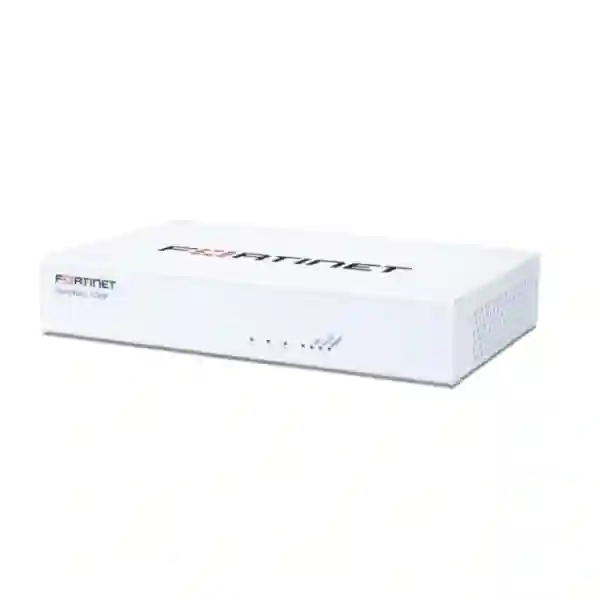
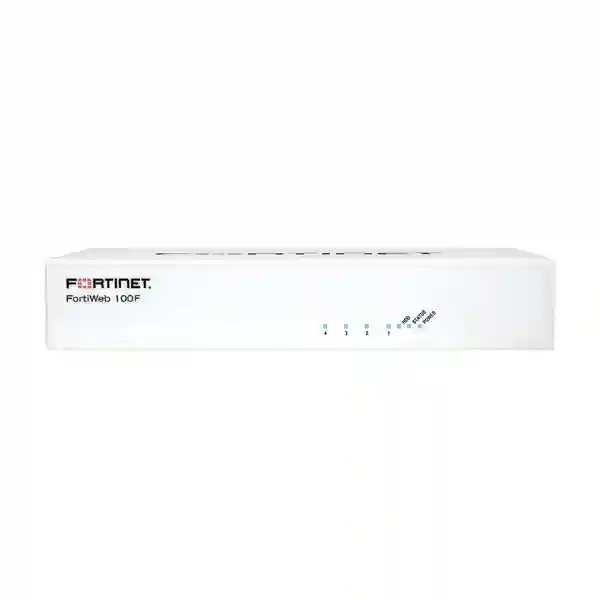
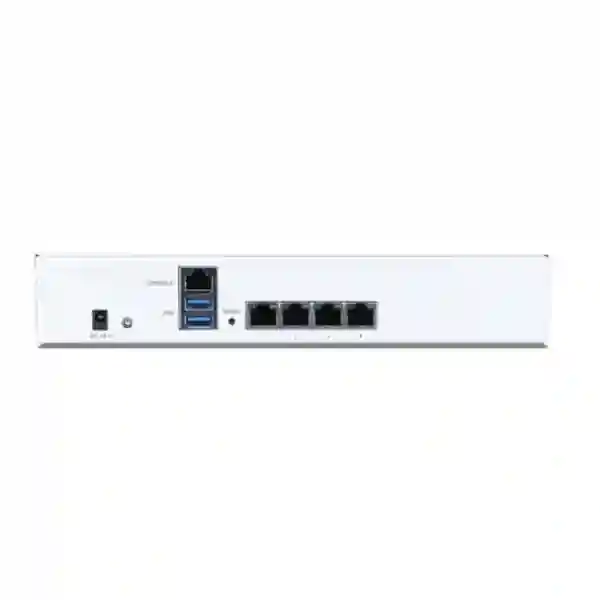
FortiWeb FWB-100F is a compact Fortinet web application firewall designed to help organizations protect internet-facing applications and APIs from application-layer attacks while giving security teams stronger visibility into web traffic. Fortinet specifies the FortiWeb 100F with up to 100 Mbps throughput, four 10/100/1000 RJ45 interfaces, 64 GB SSD storage, a desktop form factor, software SSL/TLS processing and support for active/passive or active/active clustering. For Tanzania organizations evaluating a dedicated WAF rather than relying only on perimeter firewall controls, the FWB-100F offers an entry hardware platform for focused application protection.
FortiWeb 100F verified specification highlights
Fortinet-published FortiWeb 100F throughput. Actual performance varies with configuration and traffic profile.
Four 10/100/1000 Ethernet interfaces support practical network integration for a compact WAF deployment.
Integrated solid-state storage in the desktop appliance.
Fortinet lists active/passive and active/active clustering support for FortiWeb 100F.
What FortiWeb FWB-100F helps protect
Business applications expose a different attack surface from ordinary network services. Login pages, customer portals, APIs, e-commerce systems, web forms and externally reachable application endpoints can be targeted through malicious requests that appear over normal HTTP or HTTPS sessions. A web application firewall is positioned to inspect application traffic and apply controls specifically intended for this layer. FortiWeb combines WAF capabilities with Fortinet security services and application-focused controls, helping security teams create a dedicated defensive layer in front of protected services.
The FWB-100F should be sized from measured application traffic, encrypted-session requirements, protected domains, expected growth, availability design and enabled security functions rather than from user count alone. Fortinet’s current ordering guidance identifies the 100F at 100 Mbps HTTP and HTTPS throughput and lists up to six machine-learning domains. Buyers should validate the current FortiWeb software release, service bundle and exact subscription entitlement for the intended project before ordering.
Deployment and procurement guidance
A sound FortiWeb project begins with an application inventory. Record public hostnames, backend server locations, HTTP and HTTPS traffic, certificates, API endpoints, authentication flows, peak bandwidth and business-critical transactions. This makes it easier to determine whether the FWB-100F has adequate headroom and which security policies need staged testing. Production deployment should also consider redundancy, maintenance windows, logging, monitoring and rollback procedures. Where application traffic is expected to exceed the 100F platform envelope, compare larger FortiWeb models rather than sizing only for today’s average load.
For broader security planning, explore FourTeck Tanzania technology solutions, Fortinet-focused solution guidance, Fortinet solutions for Kenya, and FourTeck Uganda. These resources can support regional procurement discussions without implying that stock, delivery times or local service availability are guaranteed.
FortiWeb FWB-100F Tanzania
Organizations in Tanzania evaluating FortiWeb FWB-100F typically need to protect a defined set of public web applications, customer portals or API services without deploying an oversized data-center WAF. The 100 Mbps appliance class can be relevant where measured protected application traffic remains within its published capacity and where the desktop form factor fits the planned network location. Procurement teams should document the application list, expected HTTPS traffic, growth allowance, resilience requirement and required security subscription before requesting a quote. This prevents a hardware-only comparison from overlooking the services and operational work needed for a useful WAF deployment.
For Tanzanian businesses, application availability can be commercially important because websites and APIs may support payments, bookings, customer self-service, ERP access, partner portals or mobile application backends. WAF planning therefore needs coordination between network, security and application owners. Teams should identify normal application behavior, maintenance periods, backend dependencies and certificate ownership before enforcement policies become strict. A phased approach can help administrators observe legitimate requests, tune controls and reduce the chance of blocking valid transactions.
The FortiWeb 100F provides four GE RJ45 interfaces and supports clustering, giving architects options when designing connectivity and availability. The exact topology should follow the application architecture and Fortinet deployment documentation. Logging also matters: alerts are more useful when an organization has a process for reviewing them, identifying recurring attack patterns and coordinating remediation with developers. WAF protection should complement secure coding, vulnerability management, patching, identity controls and perimeter security rather than replace those practices.
When requesting FortiWeb FWB-100F pricing in Tanzania, provide the desired appliance quantity, protected applications, approximate peak traffic, preferred subscription term, high-availability requirement and expected deployment timeline. Ask for the exact bill of materials so hardware, support and security services can be compared consistently. Availability, commercial terms and delivery should be confirmed at quotation time rather than assumed from a web page.
FortiWeb FWB-100F Dar es Salaam
Dar es Salaam businesses often operate web-facing systems that connect headquarters, customers, suppliers and cloud services. A FortiWeb FWB-100F project can be considered when the protected application traffic fits the 100 Mbps platform and the organization wants a dedicated application-security control in front of selected services. Before procurement, technical teams should map public DNS names to backend applications, identify whether workloads are on-premises, hosted or cloud-connected, and measure actual peak HTTP and HTTPS traffic. This produces a more defensible sizing decision than choosing a WAF only from the number of employees in an office.
For companies running customer portals, logistics applications, online ordering, hospitality systems, education portals or professional-service platforms, the most important design question is which application transactions are business critical. Authentication pages, upload functions, payment-related workflows and APIs deserve particular attention during policy testing. Administrators should establish baselines, review exceptions and coordinate with developers when legitimate application behavior changes. A WAF works best as part of an operational process, not as a device that is installed and then ignored.
Dar es Salaam procurement teams should also plan for encrypted traffic and certificate management. Fortinet lists software SSL/TLS processing on the 100F, so encrypted workload characteristics belong in the sizing conversation. High availability may be appropriate where application downtime would create material business impact; Fortinet lists both active/passive and active/active clustering for the model. The chosen architecture should be tested against actual network paths and recovery procedures.
A useful quotation request states the number of appliances, required subscription or service bundle, application count, traffic estimates, desired resilience and implementation scope. Buyers should ask suppliers to identify each line item clearly and avoid assuming that every security service is included with bare hardware. FourTeck can use this project information to prepare a more relevant commercial discussion for FortiWeb FWB-100F in Dar es Salaam.
FortiWeb FWB-100F Mwanza
Mwanza organizations considering the FortiWeb FWB-100F may be protecting regional business portals, internal applications published for remote access, customer services or APIs supporting mobile and web systems. The starting point should be application exposure rather than generic firewall requirements. List which services are reachable from the internet, what protocols they use, where backend servers reside and which transactions carry sensitive or operationally important data. The 100F is a dedicated WAF platform, so it should be evaluated for application-layer protection rather than confused with a FortiGate network firewall.
Bandwidth planning is especially important. Fortinet publishes 100 Mbps throughput for FortiWeb 100F, but real results depend on configuration and traffic. Peak protected traffic, HTTPS processing, enabled policies and growth should therefore be reviewed before selection. A system that averages modest traffic can still experience sharp peaks during registration periods, campaigns, reporting deadlines or customer activity. Capacity planning should preserve operational headroom instead of sizing exactly to an average measurement.
Mwanza IT teams should include monitoring and incident handling in the deployment plan. Decide who reviews FortiWeb events, how suspicious requests are escalated and how application owners are contacted when security controls reveal unusual behavior. Coordinate WAF policies with patching and development processes so that virtual protections do not become a reason to postpone fixing application weaknesses. If high availability is required, test failover behavior and document maintenance procedures before production reliance.
For a Mwanza quotation, include current application bandwidth, number of protected services, public domains, preferred support term and whether the project needs one appliance or a clustered design. This information allows a supplier to discuss the correct FortiWeb bundle and whether the FWB-100F remains the right size. Commercial availability and delivery schedules should be verified when the quote is prepared.
FortiWeb FWB-100F Arusha
Arusha businesses in tourism, hospitality, professional services, education and other sectors may depend on public booking systems, portals and APIs that need application-specific protection. FortiWeb FWB-100F provides a compact hardware WAF option where the traffic profile matches its published 100 Mbps throughput. A selection exercise should identify which applications are truly in scope, because protecting a few critical services has different capacity and policy implications from placing every public web property behind the same appliance.
Application security policy needs context. A booking workflow may include search requests, customer login, reservation changes, uploads and payment handoffs, while a corporate portal may have simpler behavior. Administrators should observe normal transactions and tune protections to the actual application. Change management is important because application releases can introduce new URLs, parameters and API methods. Security teams and developers should agree on a process for testing significant releases before strict WAF enforcement is applied.
The FWB-100F’s desktop form factor and four GE RJ45 interfaces make physical deployment straightforward in appropriately designed environments, but network placement still requires care. Plan addressing, routing, certificates, backend connectivity, management access, logging and recovery. If uptime requirements justify redundancy, Fortinet lists active/passive and active/active clustering support. The organization should decide whether the additional appliance and operational complexity are justified by the business impact of application downtime.
Arusha buyers can improve quotation accuracy by supplying application names, traffic estimates, HTTPS requirements, domain count, resilience needs and subscription duration. If growth projections suggest traffic may move beyond the 100F class, request a comparison with higher FortiWeb models before purchase. This protects the project from early replacement and gives decision makers a clearer total-cost discussion.
FortiWeb FWB-100F Dodoma
Dodoma organizations assessing FortiWeb FWB-100F should begin with the sensitivity and availability requirements of the applications they expose. Public portals, citizen or customer services, supplier systems and APIs can require controls that understand web requests rather than only network ports. FortiWeb is designed for this application-security role. The FWB-100F is the compact hardware model in the current FortiWeb range and is specified by Fortinet at up to 100 Mbps throughput.
A procurement specification should avoid vague phrases such as “protect the website” and instead describe traffic, domains, backend architecture, TLS use, authentication and expected availability. This helps technical reviewers determine whether the model has enough capacity and whether clustering is needed. Fortinet lists unlimited application licenses for the 100F in its data sheet, while current ordering guidance separately identifies machine-learning-domain limits; buyers should confirm the exact current subscription and software entitlements for the intended configuration.
Operational readiness is equally important. Identify administrators, log-review responsibilities, escalation contacts and the application team responsible for resolving discovered weaknesses. Establish backup and change-control procedures and test the WAF against normal business transactions before moving to strict blocking policies. Security controls are most effective when application owners understand why a request was blocked and can distinguish malicious behavior from a legitimate feature change.
For Dodoma procurement, a clear bill-of-material request should state appliance quantity, service term, high-availability requirement and implementation expectations. Buyers should confirm current product availability and commercial conditions directly at quotation time. FourTeck can assist with the product-selection conversation while the final architecture should remain grounded in measured traffic and the organization’s own application risk assessment.
FortiWeb FWB-100F UAE
UAE organizations evaluating FortiWeb FWB-100F may need a compact WAF for a defined set of corporate applications, portals or APIs. The model’s 100 Mbps published throughput positions it for workloads that fit an entry hardware appliance rather than high-volume data-center traffic. Before ordering, teams should measure peak protected traffic and account for encrypted sessions, security inspection, application growth and resilience. Where requirements exceed this envelope, Fortinet offers larger FortiWeb appliances and virtual or cloud deployment options that may be more appropriate.
Procurement in the UAE often involves coordination among security, infrastructure, application and commercial teams. A useful technical scope identifies protected domains, backend servers, certificate handling, management access, logging destination and expected deployment mode. This allows vendors to quote the appropriate hardware and service components and helps implementation teams avoid discovering critical dependencies late in the project.
FortiWeb policy tuning should be integrated with application release management. Modern web services change frequently, particularly API endpoints and authentication workflows. Establish a test process so security controls can be validated after significant releases. If the application is revenue-generating or operationally critical, consider the impact of appliance maintenance and component failure when deciding whether active/passive or active/active clustering is warranted.
UAE buyers can reference FourTeck’s Fortinet UAE resource for related regional security discussions. Current stock, pricing, subscriptions and delivery terms should still be confirmed through a formal quotation. The model name alone is not a complete bill of materials, so ask for exact part descriptions and service duration before comparing commercial offers.
FortiWeb FWB-100F Uganda
Uganda businesses considering FortiWeb FWB-100F can use the appliance as a dedicated application-security layer when public web and API traffic fits the platform’s published capacity. The design process should identify which services are exposed externally, how much traffic they generate and which business processes depend on them. A WAF is most valuable when the protected application set and security objectives are clearly defined.
Organizations should distinguish FortiWeb from a general network firewall. FortiWeb focuses on web application and API protection, while perimeter firewalling addresses broader network traffic. Many environments need both layers. The deployment plan should therefore document how the WAF connects with existing firewalls, load balancers, servers, cloud services and logging platforms. This reduces integration uncertainty and helps establish ownership between network and application teams.
Fortinet publishes four GE RJ45 interfaces, 64 GB SSD storage and clustering support for the 100F. These verified characteristics can guide physical and resilience planning, but they do not replace application traffic measurements. Administrators should reserve performance headroom and test policies before full enforcement. Where a business has seasonal or campaign-driven web traffic, peak demand matters more than a quiet-day average.
Uganda buyers can review FourTeck Uganda technology resources when coordinating regional procurement. A quote request should state appliance quantity, application count, bandwidth, subscription term and whether high availability is required. Confirm availability and delivery timing during the commercial process rather than relying on generic web claims.
FortiWeb FWB-100F Kampala
Kampala organizations with online portals, APIs and externally accessible business applications may evaluate FortiWeb FWB-100F when they want dedicated application-layer inspection in a compact appliance. The technical case should start with traffic and risk. Identify peak HTTP and HTTPS throughput, protected domains, application criticality and the likely effect of downtime. These measurements indicate whether the 100 Mbps FortiWeb 100F is suitably sized and whether redundancy should be included.
Application owners should participate in deployment because WAF rules interact with real application behavior. Login flows, uploads, API calls and custom parameters can look very different across systems. Establish an observation and tuning period, document approved exceptions and retest after application upgrades. This collaborative approach helps reduce false positives while preserving useful security enforcement.
Infrastructure teams should also plan management access, logging, time synchronization, certificates and backup procedures. If FortiWeb events are forwarded to a monitoring platform, define who reviews alerts and how incidents are escalated. The device can provide valuable visibility, but the operational benefit depends on people acting on that information. Security testing and software patching should continue even after the WAF is installed.
For a Kampala FortiWeb FWB-100F quotation, provide a concise project profile covering application count, bandwidth, topology, service duration and implementation expectations. If future traffic could exceed the platform’s capacity, request an alternative model comparison at the same time. This makes the purchase decision more resilient to growth and avoids treating initial hardware price as the only selection factor.
FortiWeb FWB-100F Arua
Arua businesses and institutions can consider FortiWeb FWB-100F for protecting a manageable set of internet-facing applications where traffic remains within the appliance’s published 100 Mbps class. Smaller regional deployments still benefit from formal application-security planning because public services can face the same automated probing and malicious web requests as systems hosted in larger commercial centers. The scale of the organization does not remove the need to understand application exposure.
Start by documenting public URLs, APIs, authentication methods, backend servers and normal traffic peaks. If applications are hosted remotely or in the cloud, map the network path so the proposed WAF placement makes architectural sense. Avoid purchasing a device first and designing the traffic path afterward. The four GE RJ45 interfaces on the FWB-100F provide connectivity options, but topology must be selected for the actual environment.
Operational simplicity is valuable for smaller IT teams. Define a manageable policy set, establish alert-review routines and coordinate changes with application administrators. Use WAF findings to support remediation rather than accumulating unreviewed events. Backup configuration and recovery procedures should be written down so maintenance does not depend on one administrator’s memory.
For Arua procurement, share bandwidth, domain count, application purpose, desired subscription period and availability expectations with the supplier. If a single appliance is acceptable, document the downtime implications; if continuous service is important, assess a clustered design. Confirm current commercial availability at quote time, and request clear separation of hardware, subscription, support and any implementation services.
FortiWeb FWB-100F Mbarara
Mbarara organizations deploying online business services can evaluate FortiWeb FWB-100F as a focused WAF for web applications and APIs. The appliance is not selected by office size alone; application throughput and security policy determine suitability. Measure peak web traffic, identify HTTPS use and consider how rapidly digital services are expected to grow. A conservative capacity plan leaves room for inspection overhead and unexpected demand.
Where applications support healthcare, education, retail, professional services or internal enterprise workflows, teams should classify data sensitivity and transaction importance. This helps prioritize policy testing and incident response. A blocked request affecting a critical workflow should have a clear escalation path, while genuinely malicious activity should generate actionable evidence for the security team. Good WAF operations balance protection with application availability.
Fortinet lists the 100F as a desktop appliance with 64 GB SSD, four GE RJ45 interfaces and software SSL/TLS processing. It supports active/passive and active/active clustering. These specifications are useful inputs for infrastructure planning, but exact deployment design should follow current Fortinet documentation and the organization’s network architecture. If traffic or resilience needs exceed the model, moving to a larger platform is preferable to forcing an undersized design.
Mbarara buyers should request a detailed quote based on the required appliance quantity and service term. Include whether configuration assistance, policy migration or integration is expected. Commercial offers are easier to compare when each one addresses the same technical scope. Current price and availability should be confirmed at the time of purchase.
FortiWeb FWB-100F Gulu
Gulu enterprises and institutions with public-facing digital services may need more than a conventional perimeter firewall when protecting web applications. FortiWeb FWB-100F provides an application-focused security layer for workloads that match its 100 Mbps performance class. It can be evaluated for customer portals, business web applications and APIs after traffic, topology and security requirements have been documented.
A practical deployment plan includes application discovery, baseline monitoring, policy tuning and a controlled move toward enforcement. Application teams should tell security administrators about planned releases so new endpoints and request patterns are not mistaken for attacks. Likewise, WAF findings should be communicated back to developers when they reveal weaknesses that should be fixed in code or configuration.
Availability planning deserves attention even at modest traffic levels. If a protected application is essential to operations, a single device may represent an unacceptable dependency. Fortinet supports clustering on the 100F, allowing architects to consider active/passive or active/active designs. The choice should reflect business recovery objectives, network design and budget rather than being added automatically.
For a Gulu procurement request, provide protected-domain count, approximate peak bandwidth, expected HTTPS use, service term and resilience requirement. Ask for the exact Fortinet bill of materials and verify that proposed subscriptions match the intended security features. This approach gives decision makers a clearer comparison than searching only for a headline “best price” without scope.
FortiWeb FWB-100F Kenya
Kenyan organizations evaluating FortiWeb FWB-100F can consider it for application and API protection where protected traffic fits the model’s 100 Mbps published throughput. The appliance’s desktop form factor may suit smaller application environments, branches hosting selected services or organizations that want dedicated hardware without moving immediately to a larger rack platform. Selection should still be based on measured application traffic and security requirements.
For Nairobi and other Kenyan business environments, public applications may connect to payment services, cloud platforms, databases and identity systems. Mapping these dependencies helps architects determine WAF placement and testing requirements. Application protection should be coordinated with perimeter firewalling, endpoint controls, secure development and vulnerability management so that the WAF becomes one layer in a broader security architecture.
Fortinet’s data sheet identifies four GE RJ45 interfaces, 64 GB SSD and clustering support for FortiWeb 100F. Buyers should also review the current ordering guide for available service bundles and machine-learning-domain limits. Licensing and subscription details can change, so procurement teams should validate the exact current SKU and entitlement set on the formal quote rather than copying an old bundle code from another project.
FourTeck’s Fortinet Kenya solutions page provides related regional context. For an FWB-100F quote, send application count, traffic estimates, high-availability needs and desired term. Availability and commercial conditions should be confirmed for the specific order.
FortiWeb FWB-100F Kuwait
Kuwait businesses planning web application security can assess FortiWeb FWB-100F for lower-throughput workloads that require dedicated WAF controls. The model provides up to 100 Mbps throughput in Fortinet’s published data and uses a compact desktop format. Before procurement, record peak application traffic, TLS requirements, protected domains and expected growth to determine whether this entry platform provides sufficient capacity.
A strong WAF project connects technical controls with application ownership. Security teams need to understand normal login behavior, API methods, uploads and other legitimate requests. Application teams need a process for reviewing blocks and security findings. This shared operating model is especially important when applications change frequently, because a release can alter traffic patterns even when the underlying infrastructure remains the same.
Network design should cover management access, certificates, backend connectivity, logging and redundancy. Fortinet lists clustering options for the 100F, but the value of a second appliance depends on application criticality and recovery objectives. Organizations should test failover and document procedures instead of assuming high availability is achieved simply by purchasing two units.
Kuwait procurement teams should ask for the exact appliance and subscription line items, implementation scope and support duration. If multiple applications are expected to grow rapidly, request comparison with higher FortiWeb models. A properly scoped quote helps distinguish initial hardware cost from the complete security service needed to operate the platform effectively.
FortiWeb FWB-100F Ghana
Ghana organizations with online portals and APIs can consider FortiWeb FWB-100F when their protected application traffic aligns with the appliance’s 100 Mbps class. The WAF should be positioned as a specialized control for web traffic, not as a replacement for all network security. Define the applications in scope and determine which business processes would be affected if those services were attacked or unavailable.
Capacity planning should use peak rather than average demand. Marketing campaigns, registration windows, reporting deadlines and customer activity can create bursts that are not visible in a short measurement. HTTPS processing and enabled security features also matter. Where forecasts approach the platform limit, selecting a larger FortiWeb model can provide safer operational headroom.
Deployment should include policy tuning and monitoring. Start with visibility into normal application behavior, review anomalies and coordinate exceptions carefully. Keep software patching and secure development practices active; a WAF can reduce exposure but should not become a substitute for correcting application vulnerabilities. Define alert ownership so security events are reviewed and acted upon.
Ghana buyers requesting FWB-100F pricing should provide domain count, application type, traffic estimates, desired subscription duration and high-availability needs. Ask the supplier to confirm current Fortinet part numbers and entitlements. This is particularly important when comparing quotes from different dates because service bundles can evolve over time.
FortiWeb FWB-100F Nigeria
Nigeria businesses operating customer portals, digital platforms and APIs may evaluate FortiWeb FWB-100F for a defined application-security workload. Fortinet publishes 100 Mbps throughput for this desktop model, so the first selection step is to quantify the traffic that will actually traverse the WAF. High-volume applications or rapidly growing services may require a larger appliance even when the number of protected domains is modest.
Application architecture should be documented before installation. Identify load balancers, reverse proxies, backend servers, cloud services, certificates and network security controls. This allows teams to select a deployment method that fits existing operations. If multiple teams manage different parts of the application stack, agree on change-control and incident-response responsibilities before moving policies into enforcement.
The FWB-100F offers four GE RJ45 interfaces, 64 GB SSD storage and Fortinet-listed clustering. These characteristics support compact deployment and resilience planning, but production suitability depends on the complete workload. Security administrators should test representative transactions and observe behavior after major application changes. Logs should feed an actionable review process rather than simply consume storage.
For Nigeria procurement, specify appliance quantity, support or security-service duration, protected applications and expected throughput. Request alternative sizing if growth could push the workload beyond the 100F range. Confirm stock, delivery and commercial terms in the formal quotation; these operational details are time-sensitive and should not be assumed from static product content.
FortiWeb FWB-100F Seychelles
Seychelles organizations in hospitality, services and other digital businesses may depend on internet-facing reservation, customer and partner applications. FortiWeb FWB-100F can be considered when those protected services fit within its published 100 Mbps throughput and when a compact hardware WAF is preferred. Application criticality should guide the project because even modest traffic can support transactions with high business value.
Teams should document normal application journeys, third-party integrations and API calls before enabling strict security policies. Hospitality and service platforms can integrate with payment, booking and identity systems, so changes outside the local application may affect traffic patterns. A staged tuning process helps distinguish expected transactions from malicious requests and reduces avoidable disruption.
Resilience is another design factor. If a protected service must remain available through appliance maintenance or failure, Fortinet’s clustering support can be evaluated. Network paths, certificate handling and failover behavior should be tested in the real environment. If a single appliance is selected, document recovery procedures and the business impact of a hardware outage.
Seychelles buyers can prepare a stronger FortiWeb FWB-100F quotation request by including protected domains, traffic measurements, desired subscription term and deployment expectations. Ask for the exact Fortinet components and confirm current availability. Where application growth or encrypted traffic creates uncertainty, compare a higher-capacity FortiWeb option before finalizing the order.
FortiWeb FWB-100F selection checklist
Before requesting a quote
Record peak HTTP/HTTPS traffic, protected domains, application and API inventory, expected growth, certificate requirements, backend topology, logging needs and required availability. Decide whether the project is hardware-only procurement or includes implementation and policy tuning.
Before deployment
Confirm software compatibility, management addressing, routing, DNS dependencies, certificates, backups, monitoring and change windows. Establish owners for application testing and security-event review. Validate failover if clustering is used.
Before acceptance
Test representative application transactions, verify expected logging, confirm administration access and document exceptions. Record the final configuration and renewal information so ongoing operations do not depend on undocumented knowledge.
FortiWeb FWB-100F FAQ
What is FortiWeb FWB-100F?
It is Fortinet’s FortiWeb 100F hardware web application firewall, a desktop appliance intended to protect web applications and APIs. Fortinet publishes up to 100 Mbps throughput for the model.
How many network ports does the FortiWeb 100F have?
Fortinet lists four 10/100/1000 RJ45 interfaces for the FortiWeb 100F.
Does FWB-100F support high availability?
Yes. Fortinet’s current data sheet lists active/passive and active/active clustering for FortiWeb 100F. The actual design should be validated for the intended topology.
Is FortiWeb the same as FortiGate?
No. FortiWeb is focused on web application and API security, while FortiGate is a broader network security and next-generation firewall platform. They can serve complementary roles in a layered architecture.
What information is needed for a FortiWeb quote?
Provide the exact model, quantity, protected application count, estimated peak throughput, desired subscription or support term, high-availability requirement and implementation scope. This helps produce a bill of materials that can be compared consistently.
Decision recap and consultation
Choose FortiWeb FWB-100F when a dedicated hardware WAF fits the application’s measured traffic, topology and operational requirements. Validate 100 Mbps capacity against peak traffic and future growth, confirm current Fortinet subscription entitlements, and decide whether clustering is needed for business continuity. FourTeck can assist with quotation preparation and product-selection discussions for Tanzania and regional projects without assuming stock or delivery until these are confirmed commercially.




Reviews
There are no reviews yet.