
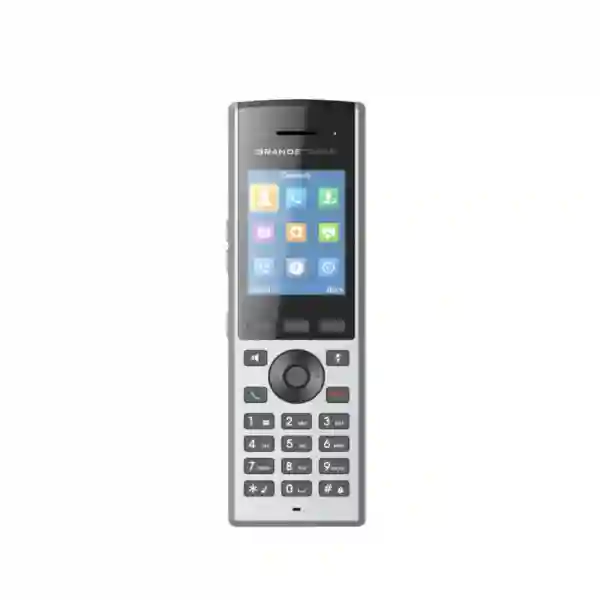
Grandstream DP730 DECT Cordless HD Handset
The Grandstream DP730 is a premium cordless DECT handset for organizations that need mobile voice communications without giving up business calling features. It is designed for staff who move between desks, aisles, counters, rooms, stock areas, production zones or service spaces while remaining connected to a SIP-based phone system. In Tanzania, the DP730 is particularly relevant for offices, warehouses, retail operations, hospitality teams, clinics, schools and multi-room workplaces that need clearer mobility than a fixed desk phone can provide.
240×320 TFT screen with three programmable soft keys for easier everyday call handling.
Up to 40 hours of talk time and up to 500 hours of standby time under laboratory conditions.
Up to 400 metres outdoors with DP752/DP755 and up to 50 metres indoors; actual range depends on the environment.
Up to 20 lines and SIP accounts with DP755, or up to 10 with DP752 and DP750.
Grandstream DP730 overview
The DP730 is not a standalone SIP endpoint in the same way as a desk IP phone with its own Ethernet connection. It is a DECT handset that communicates wirelessly with a compatible Grandstream DECT base station. The base station provides the IP-side connection to the PBX or SIP service, while the handset gives the user cordless mobility. This architecture is useful where users need to walk around a workplace while receiving and placing calls on business extensions.
Grandstream currently lists the DP730 for use with DP750, DP752 and DP755 base stations. The exact system capacity changes with the selected base. When used with DP755, the handset can access up to 20 lines and 20 SIP accounts. With DP752 and DP750, it supports up to 10 lines and 10 SIP accounts. This distinction matters when planning a multi-user deployment because the handset itself is only one part of the system. Buyers should size the base station, number of handsets, concurrent call requirement, extension plan and coverage area together.
For organizations planning a wider voice environment, FourTeck Tanzania also provides guidance for IP PBX and IP phone solutions, helping businesses connect endpoint choice with call flows, SIP connectivity, network readiness and support requirements.
Key verified features
HD audio is available on the handset, speakerphone and headset path, helping voice conversations remain clearer in business use.
A dedicated push-to-talk button is provided for environments where quick person-to-person communication is useful.
Users can take part in 3-way voice conferencing without needing a separate conference device for simple conversations.
A 3.5 mm headset jack supports hands-free working for staff who handle frequent calls while moving through a facility.
The handset supports DECT authentication and encryption as part of the cordless connection to a compatible base station.
Software and firmware updating can be performed over the air, simplifying administration across multiple handsets.
Technical specification summary
| Product type | DECT cordless HD handset for compatible Grandstream DECT base stations |
| Display | 2.4-inch, 240×320 color TFT LCD |
| Base station compatibility | Grandstream DP750, DP752 and DP755 |
| Outdoor range | Up to 400 m with DP752/DP755; up to 300 m with DP750, subject to environment |
| Indoor range | Up to 50 m, subject to building layout and construction |
| Talk / standby | Up to 40 hours talk time; up to 500 hours standby under laboratory conditions |
| Lines / SIP accounts | Up to 20 with DP755; up to 10 with DP752/DP750 |
| Audio | HD audio; full-duplex speakerphone; headset audio via 3.5 mm jack |
| Battery | Rechargeable 1500 mAh Li-ion battery |
| Sensors and controls | Proximity sensor, accelerometer, dedicated push-to-talk key, programmable soft keys |
Choosing the correct base station
The DP730 should be purchased as part of a complete DECT system plan. A DP750 can suit smaller requirements, while DP752 offers stronger outdoor range with the DP730. DP755 expands the supported line and SIP-account capacity and can support a larger handset environment. The best choice depends on user count, simultaneous calls, extension design, building coverage, future growth and PBX integration. Do not assume that adding more handsets automatically increases concurrent call capacity; the base station and SIP design must be sized together.
Grandstream DP730 Tanzania
For businesses in Tanzania, the Grandstream DP730 is best considered when staff mobility is part of the daily workflow. A receptionist who remains at one desk may prefer a fixed IP phone with more visible line keys, but warehouse supervisors, retail floor staff, hospitality teams, technicians, clinic staff and managers who move between rooms can benefit from a cordless extension. The DP730 lets those users carry one handset while remaining part of the organization’s SIP-based voice system through a compatible Grandstream DECT base station.
A Tanzania deployment should begin with a coverage plan. The manufacturer’s quoted maximum range is a useful reference, but real buildings contain walls, shelving, machinery, reinforced concrete, glass, doors and other materials that change radio behavior. A handset that performs across a large open area may have a shorter practical range inside a multi-room office or warehouse. Buyers should therefore map where users actually walk, where calls must remain stable, and where the base station can be connected to the LAN with dependable power and network access.
Network readiness also matters. The base station connects the DECT side to the IP voice environment, so SIP registration, PBX configuration, VLAN policy, Quality of Service, firewall behavior and internet or trunk reliability can all influence call performance. Organizations replacing analogue cordless phones should not treat the DP730 as a direct plug-in replacement without confirming the IP telephony architecture. A quotation should state the number of handsets, base stations, SIP extensions, simultaneous-call needs, PBX platform, charging points and any network changes required.
FourTeck Tanzania’s business technology shop is useful for buyers comparing voice, networking and supporting infrastructure as one project rather than treating the handset in isolation.
Grandstream DP730 Dar es Salaam
In Dar es Salaam, the Grandstream DP730 fits organizations that have active offices, warehouses, logistics environments, retail floors, clinics, educational facilities, hospitality spaces and service operations where employees are rarely seated in one place. The value of a DECT handset is not simply that it is wireless; it is that staff can remain part of the business extension system while moving between operational areas. For a busy facility, this can reduce missed calls, repeated call transfers and the need to return to a fixed desk before responding.
Before ordering, identify the physical zones that need voice coverage. A showroom with open floor space, a warehouse with tall metal shelving, and an office with reinforced partitions can behave very differently. The base station should be positioned with both network access and radio coverage in mind. Where one base cannot provide reliable service across the full site, the architecture should be reviewed rather than assuming the quoted maximum range will apply everywhere. Real-world testing is especially important when voice continuity is operationally important.
Dar es Salaam buyers should also decide whether the handset will be used by named employees, shared by shifts, or assigned to departments. That decision affects extension naming, voicemail policy, call groups and charging routines. Shared handsets should have a clear ownership process so devices are returned to their charging cradles and are available to the next shift. Named-user deployments may require individual SIP accounts and user-specific call permissions. Headset use, push-to-talk requirements and call-transfer behavior should also be defined before configuration.
For projects that combine the DP730 with switches, Wi-Fi, PBX or structured cabling, the broader FourTeck Tanzania technology portfolio provides a useful starting point for integrating voice with the rest of the site infrastructure.
Grandstream DP730 Mwanza
For organizations in Mwanza, the DP730 can be appropriate when staff need a business extension that follows them between work areas instead of remaining fixed to a desk. Typical use cases may include warehouses, education, retail, hospitality, clinics, administration buildings and businesses with back-office and front-office zones. The handset is especially useful where receiving a call promptly matters but the responsible person may be walking between rooms, stock areas or customer-facing spaces.
Planning should focus on the complete voice workflow. Ask how incoming calls reach the user, what happens when the handset is busy, whether calls should ring multiple devices, whether voicemail is required, and whether users transfer calls frequently. These answers determine PBX programming and can influence whether a single shared account or separate extensions make more sense. The DP730 supports common business telephony features such as hold, transfer, forwarding, call waiting, conference calling and push-to-talk, but the experience still depends on how the PBX and base station are configured.
Coverage should be assessed carefully in buildings with dense walls, multiple floors or metal structures. A long quoted outdoor distance does not translate directly into the same indoor distance. In practical deployments, the important measure is whether calls remain stable along the actual movement path used by employees. Place charging cradles where handsets are naturally returned rather than in remote technical rooms. Battery runtime is strong, but disciplined charging still improves availability for shared devices.
A Mwanza quotation should include handset quantity, compatible base-station model, expected number of simultaneous calls, PBX details, SIP-account count, charging accessories, headset requirements and any installation or configuration work. This creates a clearer procurement record and reduces the risk of receiving handsets without the infrastructure needed to make them operational.
Grandstream DP730 Arusha
In Arusha, businesses in hospitality, tourism support, offices, education, healthcare, retail and operational facilities may need mobile telephony that remains connected to a central business phone system. The Grandstream DP730 is designed for this type of requirement. Rather than using consumer cordless phones that operate separately from the company’s extension plan, a DP730 deployment can place mobile staff on the same SIP-based calling structure used by other users.
Hospitality is a good example. A supervisor may move between reception, service areas and back-of-house spaces while still needing to receive internal and external calls. A facilities technician may need to be reachable without carrying a desk phone or relying exclusively on a personal mobile number. A clinic or school may similarly need staff to move between rooms while retaining a managed extension. In each case, the handset should be configured around role-based call flows rather than installed with generic defaults.
Arusha deployments should account for building materials and site shape. Lodges, campuses and multi-building environments can present different coverage challenges from compact offices. DECT range is influenced by distance, walls and obstacles, so coverage planning should be based on the real site. If users move between detached buildings or across large compounds, confirm whether the intended base-station design can maintain reliable service before finalizing quantities. Avoid purchasing solely from a maximum-distance specification.
Procurement teams should also check what is included with the handset, how the base station will be powered and networked, whether the PBX is Grandstream UCM or another SIP-compatible platform, and whether centralized provisioning is part of the project. For organizations with several technology requirements, combining voice planning with LAN, switching and support can produce a cleaner operational result than buying the handset alone.
Grandstream DP730 Dodoma
The Grandstream DP730 can serve organizations in Dodoma that require cordless business voice in government-facing offices, professional services, education, healthcare, retail, warehousing and general commercial operations. Its practical advantage is mobility within a managed VoIP environment. Staff can carry the handset while remaining reachable on business extensions instead of routing every internal call to personal mobile phones.
A good Dodoma deployment starts by identifying the people who genuinely need mobility. Providing a cordless handset to every employee is rarely necessary. Desk-based users may be better served by fixed SIP phones, while supervisors, reception support staff, technicians, warehouse users and roaming administrators gain more value from DECT. Matching endpoint type to job role can reduce cost and simplify support. It also makes the extension plan easier to understand because cordless extensions are assigned where movement is part of the job.
The next decision is base-station capacity. DP750, DP752 and DP755 have different system capabilities, so the quote should state which base is included and why. If a business expects growth, the DP755’s higher line/account capacity may be relevant. If the requirement is modest, another compatible base may be sufficient. Simultaneous call needs should be checked separately from the number of registered handsets. A site with many handsets but only a few calls at the same time has a different requirement from a small team that handles several concurrent conversations.
Finally, clarify installation responsibilities. SIP credentials, PBX extensions, call permissions, ring groups, firmware, naming and testing should be assigned to a responsible technical party. Documenting these items during deployment makes future troubleshooting easier and helps procurement teams understand that the DP730 is one component of a complete business voice solution.
Grandstream DP730 UAE
For UAE businesses, the Grandstream DP730 is relevant to warehouses, retail outlets, offices, clinics, hospitality facilities, service centers and other environments that need cordless access to a SIP-based phone system. The handset’s combination of HD audio, long battery life, color display and push-to-talk functionality makes it suitable for users who spend significant time away from desks. The deployment principle remains the same as in Tanzania: the handset must be paired with a compatible Grandstream DECT base station and integrated into the organization’s IP telephony design.
UAE buyers should pay particular attention to scale and site layout. Large warehouses and multi-floor commercial premises can be demanding radio environments because shelving, walls, elevators, machinery and building materials affect coverage. The manufacturer’s maximum outdoor and indoor ranges are reference values rather than guarantees for every facility. A practical design should identify where staff move, where voice quality is essential and where base stations can be connected to the network. For large or complex premises, testing and a documented coverage plan reduce deployment risk.
Organizations with several branches should also standardize configuration. Consistent handset naming, extension ranges, firmware policy, call permissions and PBX templates make support easier across locations. The DP730 can participate in such a standardized approach because it supports centralized provisioning methods through the Grandstream ecosystem and works with Grandstream UCM environments. For multinational buyers, the broader FourTeck UAE technology site can provide additional regional context for telephony and infrastructure requirements.
When requesting a quote, specify handset count, chosen base-station model, required SIP accounts, simultaneous calls, PBX platform, site type and any headset or installation needs. This allows the proposal to cover the complete operating requirement rather than pricing only the handset.
Grandstream DP730 Uganda
In Uganda, the DP730 can be used by businesses that need mobile voice extensions across offices, stores, warehouses, hospitality properties, education facilities and service environments. A DECT system is often attractive where users must stay reachable inside the workplace but do not need to depend on a public mobile network for every internal call. The DP730 keeps the user connected to a compatible Grandstream base station, which in turn integrates with the SIP or PBX environment.
The most important buying decision is not simply the handset model. It is the system architecture around it. Organizations should count how many users need handsets, how many calls may occur at the same time, how many SIP accounts are required and which areas need coverage. The DP755 allows the DP730 to access up to 20 lines and SIP accounts, while DP752 and DP750 support up to 10. That difference can affect future growth and should be considered before standardizing on a base station.
For deployments outside major urban centers, reliability and supportability deserve additional attention. Administrators should know how handset registration, firmware updates, extension assignment and replacement procedures will be handled. A documented configuration is valuable if a handset is lost, damaged or moved to another user. Spare charging accessories, clear labeling and a simple replacement process can reduce downtime even when advanced technical support is not immediately on site.
Coverage expectations should remain realistic. The maximum range published by Grandstream is measured under favorable conditions and cannot account for every building. Test the actual site where possible, especially when calls must continue through corridors, stairwells, stock areas or reinforced spaces. Procurement should include all components required for an operational system rather than purchasing handsets without the matching base and PBX configuration.
Grandstream DP730 Kampala
Kampala organizations can use the Grandstream DP730 where employees need to move around offices, retail spaces, warehouses, clinics, educational facilities or hospitality sites while continuing to handle business calls. In these situations, a cordless extension can be more practical than routing staff to fixed phones in every room. The handset can support call transfer, forwarding, waiting, conference calling, speakerphone use and push-to-talk as part of the configured voice platform.
A deployment should first separate user roles. Receptionists may still require a fixed phone with visible programmable keys, while roaming supervisors and operational staff benefit from cordless mobility. This mixed-endpoint approach can be more efficient than choosing one phone style for everyone. The PBX can then provide common extension numbering and call routing across both fixed and cordless devices, preserving a consistent company calling experience.
The physical site should be reviewed before committing to handset quantities. Kampala offices can range from compact suites to multi-floor buildings and industrial compounds. DECT signals are affected by walls and construction materials, so the quoted 50-metre indoor figure should be treated as a maximum reference, not a guaranteed radius through every obstruction. Position the base where Ethernet connectivity, power and radio coverage can all be supported. For critical environments, test call stability along the routes users actually walk.
When preparing a Kampala quote request, include the number of cordless users, the existing PBX or SIP provider, current network layout, simultaneous-call expectation and intended coverage zones. If the company is replacing a legacy phone system, also document existing extension numbers and incoming-call routes. This information helps determine whether the DP730 is the right endpoint and which compatible Grandstream base station should be included.
Grandstream DP730 Arua
For businesses in Arua, the DP730 offers a practical way to extend a managed VoIP phone system to employees who need to move around the workplace. This can be valuable for warehouses, retail operations, clinics, schools, administrative facilities and service teams where a fixed desk phone would not follow the user to the places where work actually happens. The handset remains part of the business extension plan while communicating over DECT to a compatible Grandstream base station.
Reliability planning is especially important when the local technical team is small. The system should be documented so administrators know which handset belongs to which extension, how to register a replacement, where the base station is connected, and how to identify whether a fault is caused by the handset, base, PBX, network or SIP service. This structured approach can reduce unnecessary device replacement when the real issue lies elsewhere.
Arua buyers should also think about charging routines and shared-device management. The DP730 offers long stated battery endurance, but any cordless device can become unavailable if it is not returned to a charger. Shared handsets should have clearly assigned charging points, labels and handover rules. If the handset is used with a wired headset, the selected headset should be compatible with the 3.5 mm connection and suitable for the user’s work environment.
The quote should include all infrastructure needed to place and receive calls. This means the handset, correct Grandstream DECT base, PBX or SIP configuration, LAN connection, power arrangements and any required accessories. Coverage should be assessed against the actual building rather than relying only on a brochure distance. This produces a more dependable cordless deployment and gives procurement teams a clear view of the total solution.
Grandstream DP730 Mbarara
The Grandstream DP730 is well suited to Mbarara organizations that need cordless extension mobility across business premises. A common use case is a supervisor or service employee who moves between front office, back office, stock area and operational zones but still needs to answer calls on a company extension. Because the handset is connected through a compatible Grandstream DECT base, the user can remain within the organization’s existing PBX call flows rather than depending on an independent consumer cordless system.
Before deployment, decide how calls should behave. Should a department call ring several handsets? Should an unanswered call go to voicemail, another user or reception? Are internal extension calls more important than external calls? Does a user need call transfer and conference functions frequently? These workflow questions should be answered before programming the PBX. The DP730 provides the endpoint features, but the PBX configuration determines how useful those features become in daily operation.
Mbarara sites should also be checked for coverage barriers. Thick walls, metal storage, separate blocks and long corridors can reduce range. If the handset must work across a wide area, the technical design should test the real movement path. The manufacturer publishes strong maximum range figures, but actual performance depends on the environment. Placing the base station simply where a network socket is available may not deliver the best radio coverage.
Procurement teams can improve quotation accuracy by providing a floor-plan sketch, handset count, PBX model, approximate call volume and expected coverage areas. It is also useful to state whether the deployment is new or an expansion of an existing Grandstream DECT system. Existing users should verify current base-station capacity before adding handsets so registrations, accounts and concurrent-call requirements remain within supported limits.
Grandstream DP730 Gulu
In Gulu, the Grandstream DP730 can support businesses and institutions that need workers to remain contactable while moving through buildings or operational areas. The handset can fit offices, education, healthcare, retail, hospitality, storage and light industrial environments where staff cannot stay beside a desk phone. Its 2.4-inch display and business call controls provide a more structured communication experience than a simple consumer cordless handset.
The deployment should be sized around both users and calls. It is possible to have more registered handsets than simultaneous conversations, so administrators need to understand base-station concurrency separately from handset quantity. The selected base also determines the available line and SIP-account capacity. This is one reason quotes should identify the exact base model instead of describing the product simply as “DP730 cordless phones.”
Battery planning is another practical consideration. Grandstream specifies up to 40 hours of talk time and 500 hours of standby under laboratory conditions, but real runtime varies with usage, battery age, signal conditions and charging behavior. For shift-based workplaces, charging points should be placed where staff naturally return equipment. A labeling and check-in process can prevent handsets from disappearing between departments and ensures that devices remain charged for the next user.
Gulu organizations considering the DP730 should also confirm PBX and SIP compatibility, LAN stability, power and support procedures. If the business uses Grandstream UCM, centralized configuration features can simplify deployment. If another SIP platform is used, confirm the required features and registration behavior before rollout. The objective should be a manageable voice system with known responsibilities for user changes, firmware and troubleshooting rather than merely installing cordless hardware.
Grandstream DP730 Kenya
Kenyan organizations evaluating the Grandstream DP730 often compare it with fixed IP phones, Wi-Fi handsets and lower-cost DECT models. The correct choice depends on the working pattern. A fixed phone is appropriate for users who spend most of the day at one desk. A Wi-Fi handset can fit environments where enterprise Wi-Fi already provides excellent voice roaming. DECT is attractive when an organization wants a dedicated cordless voice layer with predictable handset-to-base behavior and does not want each mobile voice user to depend on the general-purpose Wi-Fi network.
The DP730 is positioned above simpler cordless models through its larger color display, long battery life, dedicated push-to-talk key, sensors and HD audio features. Buyers should still compare it against actual needs. If a user only needs basic calling, a simpler handset might be sufficient. If the role requires mobility, frequent calls, visibility and a more capable interface, the DP730 can justify the step up. This role-based comparison is more useful than selecting a handset purely by price.
Kenya deployments should also determine whether DP750, DP752 or DP755 best fits the site. Range, account capacity and expansion needs influence that decision. Organizations with multiple locations should standardize the chosen base and handset combinations where practical so administrators can reuse templates and spare devices. Consistent firmware and naming also make support easier.
When sourcing across East Africa, buyers should compare quotations on equivalent scope. One quote may include only a handset while another includes a base station, configuration, PBX integration or installation. Confirm exact quantities, accessories, base model, warranty terms, tax treatment, delivery scope and technical services before comparing totals. This avoids choosing an apparently lower cost that omits essential system components.
Grandstream DP730 Kuwait
For organizations in Kuwait, the Grandstream DP730 can support mobile users in offices, warehouses, retail operations, clinics, hospitality facilities and service environments. The handset’s DECT architecture is useful where teams need cordless mobility tied to the company’s SIP or IP PBX system. It keeps business extensions managed centrally while allowing users to move beyond a fixed workstation.
Kuwait buyers should pay close attention to radio coverage inside large commercial buildings. Metal shelving, concrete walls, plant rooms and long corridors can alter the practical range. The maximum figures published by Grandstream provide a useful planning reference but should not be interpreted as a guaranteed coverage radius. Base placement should balance Ethernet access, power and radio reach. When voice is operationally critical, test coverage at the edges of the intended service area before completing deployment.
Another important factor is PBX integration. The DP730 supports standard business call functions, but the PBX determines extension numbering, call permissions, voicemail, queues, groups and external routing. Organizations that already use a Grandstream UCM platform can take advantage of ecosystem integration and centralized provisioning options. Businesses on other SIP platforms should confirm feature behavior, codec preferences and account registration requirements before mass rollout.
Procurement teams should ask for a complete bill of materials. The handset, charging cradle and battery are only part of the solution if no compatible base station already exists. Include base stations, network ports, power, SIP accounts, PBX configuration, installation, testing and user handover where required. Clear scope makes quotations easier to compare and reduces the risk of receiving equipment that cannot be immediately put into service.
Grandstream DP730 Ghana
The Grandstream DP730 can be a strong fit for Ghanaian businesses that need mobile voice communication within a managed office or operational site. Warehouses, retail stores, hotels, clinics, campuses and administrative facilities often have employees who move continuously but still need access to internal extensions and external business calls. In these situations, a DECT handset can reduce dependence on fixed phones without forcing the organization to move every call to personal mobile devices.
A successful deployment begins with a call-flow map. Define which extension each handset should use, whether users need direct inbound numbers, how calls are transferred and what happens when a user does not answer. Then match the handset count to a compatible base station and confirm concurrent call capacity. The distinction between registrations and active calls is important because a system can register several handsets while supporting fewer simultaneous conversations.
Physical layout should be reviewed next. Open areas usually provide better range than dense indoor spaces. Concrete, glass, shelving and machinery can all affect the signal. The manufacturer’s maximum distance is useful for comparison but should not replace on-site validation. For buildings with difficult coverage, the solution may require a different placement strategy or broader DECT design rather than simply increasing handset quantity.
For procurement, ask suppliers to state the exact model and scope. Confirm whether the quote is for the DP730 handset only or a complete DECT solution, whether the chosen base is DP750, DP752 or DP755, and whether configuration is included. Also confirm the PBX platform, network readiness, charging needs and support arrangement. This makes the purchase easier to evaluate on operational value rather than unit price alone.
Grandstream DP730 Nigeria
For Nigerian organizations, the Grandstream DP730 provides a business cordless option for teams that need mobility across offices, warehouses, retail environments, hospitality spaces, clinics and other facilities. It can be particularly useful where employees need to remain on the company’s extension plan as they move around a site. The handset offers HD audio, a color display, speakerphone, headset connectivity and business call features through a compatible Grandstream DECT base station.
Power resilience should form part of planning for any IP telephony environment. Although the handset has its own rechargeable battery, calls still depend on the DECT base station, network switches, PBX and any internet or SIP-trunk connection. If those supporting devices lose power, a fully charged handset alone cannot keep the full system operating. Organizations that require continuity should consider UPS protection for the base station, switching and PBX infrastructure and should document what behavior is expected during longer outages.
Nigeria deployments should also consider branch standardization. A company with several offices can simplify support by using consistent handset profiles, base-station models, extension conventions and firmware versions. Standardization helps spare devices move between sites when appropriate and gives administrators a repeatable troubleshooting process. It also makes future procurement more predictable because the technical team understands the supported design.
When evaluating a quote, compare more than the handset cost. Check whether the proposal includes the correct base, PBX configuration, SIP accounts, power, network requirements and installation. Ask for the supported number of handsets and simultaneous calls in the selected design. A complete quotation should make these assumptions visible so the buyer knows exactly what the solution can do and what additional infrastructure is required.
Grandstream DP730 Seychelles
In Seychelles, the Grandstream DP730 can be particularly relevant to hospitality, resorts, offices, clinics, retail operations and service organizations where employees move between rooms, service zones and operational areas. A cordless business extension allows staff to remain reachable without depending on a desk phone in every location. The handset’s long battery life and business calling features can suit shift-based users when charging and handover routines are managed properly.
Hospitality environments should plan coverage carefully. Guest rooms, corridors, service areas, back-of-house spaces and separate buildings can create a complex radio environment. The DP730 offers strong published range, but actual coverage varies according to walls, building materials and distance. A base station placed for easy network access may not automatically provide the best coverage to every required area. Define the service zones first and test or validate the radio design before committing to a large rollout.
The phone system should also reflect operational roles. Front-desk staff may need fixed phones with many keys, while duty managers, housekeeping supervisors, maintenance staff and food-and-beverage teams may benefit from cordless extensions. Mixing endpoint types within the same PBX can provide a better fit than forcing every role onto one device category. Call groups and escalation rules can then route guest or internal requests to the right teams.
For procurement, identify whether the installation is a new phone system or an expansion. Existing Grandstream users should confirm base capacity, firmware and account availability. New installations should include the PBX or SIP platform, compatible base stations, LAN connection, power and configuration. A complete scope makes remote support easier and ensures the DP730 is purchased as part of an operational communication system rather than as an isolated handset.
Deployment and integration guidance
The DP730 works best when telephony and network responsibilities are clear. The handset communicates over DECT, but the base station still depends on the LAN and PBX or SIP service. Administrators should document the base IP address or management method, registered accounts, extension mapping, firmware version and physical location. Voice VLANs and Quality of Service may be relevant on larger networks, particularly where phones share infrastructure with data, video surveillance and wireless traffic.
For new deployments, start with a small pilot in the real building before registering every handset. Test incoming and outgoing calls, transfer, hold, voicemail, conference behavior, caller ID, headset operation and coverage. Walk the routes users actually take and note any weak areas. This is more useful than testing only beside the base station. After validation, standardize the configuration so additional handsets can be added consistently.
Who should choose the DP730?
Users need to walk around a workplace, require business extension features, need longer battery life, prefer a larger DECT handset display and can use a compatible Grandstream base station.
The user is always desk-based, needs many visible programmable keys, works mainly outside the DECT coverage area, or needs a ruggedized handset designed for harsher physical environments.
Related FourTeck resources
Use the FourTeck Tanzania shop when comparing the handset with switching, networking and other business-technology requirements. Review FourTeck Tanzania services for integrated IP telephony, network and lifecycle planning. The Tanzania technology solutions overview explains how IP phones, networking and security systems can be planned together. Organizations with UAE requirements can also review FourTeck UAE for regional technology solutions.
Grandstream DP730 FAQ
Does the Grandstream DP730 work without a base station?
No. The DP730 is a DECT handset and requires a compatible Grandstream DECT base station such as DP750, DP752 or DP755 to connect into the IP telephony system.
How many SIP accounts can the DP730 support?
It can access up to 20 lines and 20 SIP accounts when used with DP755. With DP752 or DP750, it supports up to 10 lines and 10 SIP accounts.
What is the DP730 range?
Grandstream publishes up to 400 metres outdoors with DP752/DP755 and up to 300 metres outdoors with DP750, plus up to 50 metres indoors. Actual range depends on walls, shelving, machinery, interference and building construction.
How long does the DP730 battery last?
Grandstream specifies up to 40 hours of talk time and up to 500 hours of standby time under laboratory conditions. Real battery performance varies with use, signal conditions, age and charging habits.
Can the DP730 be used with a headset?
Yes. The handset includes a 3.5 mm headset jack and supports HD audio through the headset path.
Is the DP730 suitable for warehouses?
Yes, it can suit warehouses where staff need cordless voice, but coverage should be tested because metal shelving, machinery and building layout can reduce practical range.
Quotation checklist
For a useful DP730 quotation, provide the handset quantity, preferred or existing base-station model, PBX platform, number of SIP accounts, expected simultaneous calls, site type, coverage areas, headset requirements, network availability and whether configuration or installation is required. If you already use Grandstream DECT, include the current base model and number of registered handsets so expansion capacity can be checked.
Decision recap
Choose the Grandstream DP730 when you need a capable cordless HD business handset with a larger color display, long battery life, headset support, push-to-talk and flexible SIP capacity through Grandstream’s DECT ecosystem. The handset is strongest when paired with a properly sized base station, PBX configuration and coverage plan. For Tanzania deployments, confirm user roles, simultaneous calls, building layout and existing voice infrastructure before finalizing the bill of materials.
Consultation panel
Need help deciding whether the DP730, another Grandstream DECT handset, a Wi-Fi handset or a fixed SIP phone better fits your users? Share your site type, handset quantity, PBX platform and coverage requirement. FourTeck can use those inputs to help structure a clearer product and deployment discussion without assuming that one endpoint fits every role.


Reviews
There are no reviews yet.