
Grandstream DP755 Tanzania
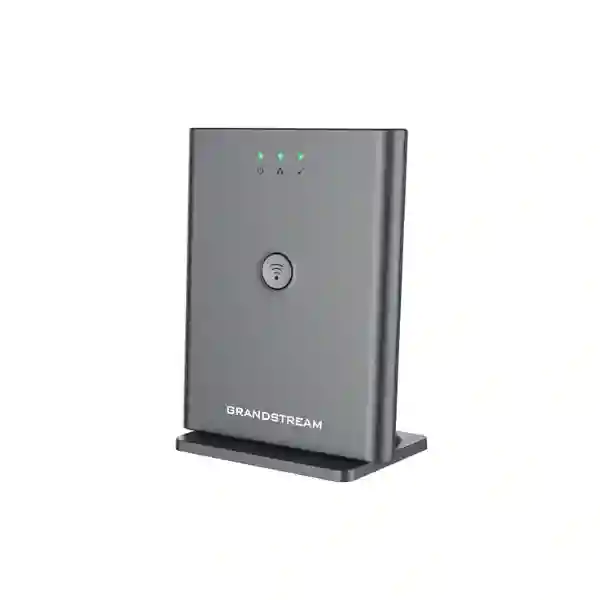
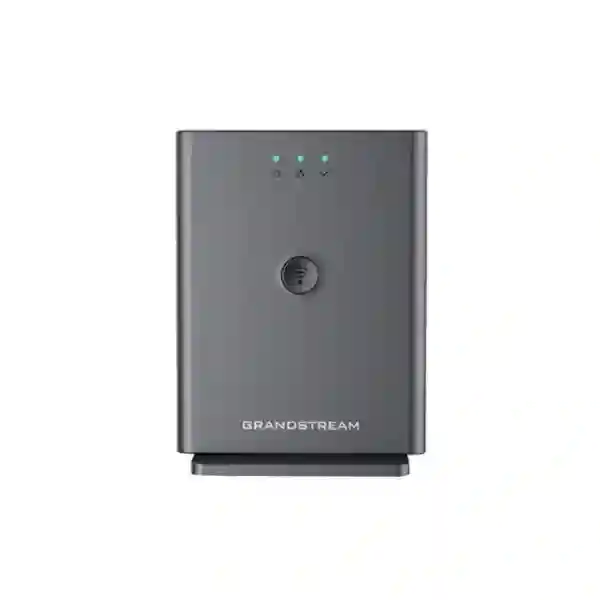
The Grandstream DP755 is a long-range DECT VoIP base station designed for organisations that want employees to move around a workplace while remaining connected to a SIP-based business telephone system. It pairs with up to ten compatible Grandstream DP-series handsets, supports up to twenty SIP accounts, provides integrated Power over Ethernet and adds secure provisioning, HD audio and flexible call features for offices, retail spaces, clinics, hospitality properties, warehouses and other mobile work environments.
compatible handsets
SIP accounts
integrated power
audio support
What is the Grandstream DP755?
The DP755 is the network-side DECT base in a Grandstream cordless voice deployment. It connects to the IP network through a 10/100 Mbps Ethernet interface with integrated PoE and registers SIP accounts to a compatible PBX or hosted SIP platform. Users then pair compatible Grandstream DP-series cordless handsets to the base. Grandstream specifies support for up to ten handsets and up to twenty SIP accounts per system, enabling a practical mix of personal extensions, shared department lines and role-based call routing.
The base supports up to eight concurrent calls, three-way voice conferencing, Push-to-Talk, downloadable phonebooks, call transfer, call forwarding, call waiting, flexible dial plans, server redundancy and fail-over. Security features include DECT authentication and encryption, TLS, SRTP, HTTPS, 802.1X and encrypted configuration options. Automated provisioning can use TR-069 or XML configuration files, while Grandstream UCM-series IP PBXs can provide Zero Config provisioning. For organisations that already use Grandstream telephony, the DP755 can therefore fit into a more centrally managed voice environment instead of being configured as an isolated cordless device.
Mobility
Grandstream rates indoor range up to 50 metres. Outdoor range can reach up to 400 metres when the DP755 is paired with compatible long-range models such as DP725, DP730 or DP735, subject to real site conditions.
Scalable extensions
Up to ten compatible handsets and twenty SIP accounts make the platform suitable for teams that need more cordless users than a simple single-handset residential base.
Simplified power
Integrated IEEE 802.3af PoE allows the network cable to carry both data and power when connected to a compatible PoE switch, helping reduce separate power-adapter dependence at the base location.
Secure SIP operation
TLS, SRTP, HTTPS, DECT authentication and encrypted configuration options provide a stronger foundation for business voice deployments where credentials and signalling should be protected.
Verified DP755 technical specifications
| Product type | Long-range DECT VoIP base station |
| Handset capacity | Up to 10 compatible Grandstream DP-series handsets |
| SIP accounts | Up to 20 per system |
| Concurrent calls | Up to 8 |
| Network | One 10/100 Mbps auto-sensing Ethernet port with integrated PoE |
| Indoor range | Up to 50 metres |
| Outdoor range | Up to 400 metres with DP725/DP730/DP735; up to 350 metres with DP720/DP722 |
| Provisioning | HTTP/HTTPS or FTP/FTPS firmware upgrade; TR-069 and encrypted XML configuration support |
| Security | TLS, SRTP, HTTPS, 802.1X, DECT authentication/encryption and encrypted configuration support |
Where the DP755 fits best
The strongest use case is a workplace where staff move between rooms, counters, aisles, service points or operational zones but still need access to business calling. A fixed desk phone is excellent for a permanent desk position; the DP755 addresses a different requirement. It keeps the extension connected while the user moves within the DECT coverage area. This can be valuable for warehouse supervisors, hotel operations teams, clinic staff, retail managers, school administration teams, maintenance staff, back-office users and residential users who need multiple SIP lines.
Because coverage is affected by walls, reinforced concrete, shelving, metal structures, building shape and placement, the published maximum range should not be treated as a guaranteed site-wide figure. A buyer should plan where the base will be mounted, how many walls or floors separate users from it, and whether the target handset has the desired long-range characteristics. Large or complex buildings may require a different architecture instead of assuming one base can cover every area.
For a broader telephony project, see FourTeck Tanzania’s technology services overview, which explains how voice, switching, power, cabling and wider IT infrastructure can be considered as connected requirements rather than unrelated purchases.
Compatibility, PBX integration and handset choice
The DP755 is a SIP-based base station, so a complete deployment typically includes compatible cordless handsets and an IP PBX or hosted SIP service. Grandstream documents compatibility with DP-series handsets including DP720, DP722, DP725, DP730 and DP735. Selection should be based on user role rather than simply choosing one handset for everybody. For example, a compact handset may suit general office mobility, while a rugged model can be more appropriate for demanding operational environments. Outdoor range also differs by handset family, so coverage expectations should be matched to the chosen model.
When used with Grandstream UCM-series IP PBXs, Zero Config provisioning can simplify initial configuration and ongoing administration. In third-party PBX or hosted SIP environments, administrators should confirm SIP registration settings, codec policy, VLAN and QoS design, NAT behaviour, DNS, firewall rules and provider requirements. The DP755 supports common codecs including G.711, G.723.1, G.729A/B, G.726-32, iLBC, G.722 and OPUS, but actual codec availability and quality depend on the connected system and end-to-end call path.
If you are standardising several African locations, the FourTeck Africa DP755 guidance page provides a broader regional perspective on handset matching, network planning and multi-country procurement.
Buying checklist before requesting a quotation
Grandstream DP755 Tanzania
For organisations searching for Grandstream DP755 Tanzania supply, the most important starting point is to define whether the purchase is a replacement base, a new cordless extension system or one part of a complete IP PBX deployment. The DP755 provides a capable platform for mobile SIP users because it brings multiple handset registrations, twenty SIP accounts, integrated PoE and business telephony functions into one base. A Tanzania buyer should therefore think beyond the base-station part number and identify how many cordless users will actually be active, what PBX they will register to, which rooms or operational areas require coverage and whether existing switching is ready to power the base and prioritize voice traffic.
Tanzania deployments can vary widely between multi-room offices, warehouses, hospitality properties, retail branches, clinics, schools and mixed-use facilities. Concrete construction, long corridors, metal shelving and equipment rooms can all affect DECT propagation, so the manufacturer’s range figures should be treated as planning limits rather than an automatic guarantee. Placement near the center of the intended coverage zone is generally more useful than hiding the base in a rack at one edge of the property. Where network cabling and PoE are available, administrators can locate the DP755 where radio coverage makes sense while keeping it connected to the business LAN.
Procurement teams should confirm the exact handset mix, the regional frequency version, power requirements, quantity and PBX compatibility before ordering. If a project includes multiple branch offices, standardising extension naming, VLANs, provisioning templates and handset roles can make support easier. FourTeck Tanzania’s business technology overview explains how IP telephony can be coordinated with switching, firewalls, Wi-Fi, structured cabling and power protection. This matters because a cordless base is still a network endpoint: call quality depends on the broader voice path, not simply on DECT signal strength.
When requesting a Grandstream DP755 Tanzania quotation, include the base quantity, handset quantity, current PBX or SIP platform, existing switch model if known and the type of site. That allows the conversation to cover the complete requirement rather than only a single hardware item.
Grandstream DP755 Dar es Salaam
Businesses looking for Grandstream DP755 Dar es Salaam options often operate in environments where staff movement is part of the daily workflow: offices with reception and back-office teams, retail floors, warehouses, clinics, service centres, hotels and distributed departments. In these situations, a cordless SIP extension can reduce the dependence on fixed desk locations. The DP755 is useful when an organisation wants professional call handling and mobility while still keeping extensions under the control of a PBX or hosted SIP service.
For Dar es Salaam sites, building layout should be reviewed before quantities are finalised. Multi-floor buildings, reinforced walls and metal storage environments can shorten practical DECT range. A useful planning exercise is to mark the areas where users must answer calls, estimate how many concurrent calls are expected and identify where Ethernet with PoE can reach the base. The DP755 can handle up to eight concurrent calls, but that does not automatically mean every environment should be designed for the maximum. Call patterns, department lines, shared reception numbers and user behaviour influence the right registration and ring-group configuration.
IT teams should also consider voice VLANs, DHCP, DNS, QoS and firewall rules. If the PBX is on-premises, the base should have a stable route to it. If the SIP platform is hosted, internet reliability becomes part of the voice service. Backup power for the switch, router, firewall and PBX can be more important than backing up the base alone because the complete IP path must remain available for calling. Centralized provisioning is especially helpful when multiple DP755 bases or Grandstream endpoints are deployed across branches.
A Dar es Salaam quotation request is stronger when it contains the number of users, the building type, PBX model, preferred DP-series handset and any shared-line requirements. FourTeck can then help review whether the DP755 fits the intended workflow and which supporting network components should be considered before purchase.
Grandstream DP755 Mwanza
The Grandstream DP755 can suit Mwanza organisations that need cordless business voice across offices, stores, healthcare environments, education facilities, hospitality sites or operational properties where employees do not remain at one desk. A DECT solution is particularly useful when mobile staff still need a defined extension identity, transfer functions and access to business call routing. Instead of forwarding every call to personal mobile phones, the organisation can retain SIP extensions inside its managed telephony environment.
For Mwanza buyers, the first decision is capacity. Up to ten compatible handsets can pair with one DP755, and up to twenty SIP accounts can be configured. The design can therefore support personal extensions, shared department numbers or a mixture of both. Ringing strategy matters. A reception or service line may need several handsets to ring together, while a maintenance or supervisory extension may be assigned to one user. Call forwarding, waiting and transfer behaviour should be defined in the PBX and endpoint plan so users do not receive confusing duplicate calls.
The second decision is radio coverage. Published outdoor figures assume favourable conditions and compatible handsets; indoor coverage is rated up to 50 metres, but actual performance depends on the site. Thick walls, stairwells, equipment and metal obstacles can change results. A practical installation places the base where network access and radio reach are both acceptable. Where the organisation already has a PoE switch, integrated PoE can simplify the placement because a local electrical outlet may not be required next to the base.
Mwanza procurement teams should request a quote that includes the exact handset models, chargers or accessories required, PBX compatibility information and planned deployment quantity. This avoids treating the DP755 as a complete cordless telephone by itself; it is the base station around which the compatible handset solution is built.
Grandstream DP755 Arusha
Grandstream DP755 Arusha deployments can be relevant to hospitality, tourism-related businesses, offices, schools, clinics and service organisations where team members move between front desk, administration, stores, operations and guest-facing areas. The advantage of the DP755 is not only range; it is the ability to combine cordless movement with the extension, SIP account and PBX features that businesses already use for structured call handling.
A hotel or lodge, for example, may want cordless handsets for operational teams while keeping incoming calls under a central business phone system. A clinic may need staff to answer internal or external calls while moving between rooms. A school administration team may want mobility between office and nearby operational areas. In each case, the correct deployment begins by mapping who receives which calls and where they need to remain reachable. The DP755 supports up to ten compatible handsets, so user grouping should be planned before ordering hardware.
Arusha sites should also consider environmental and infrastructure factors. The base operates through Ethernet, so the quality of cabling, switch stability and network configuration influence service. If PoE is used, confirm that the switch supports the required IEEE 802.3af power and has sufficient power budget. For voice quality, managed networks can use VLAN and QoS practices to separate and prioritize voice traffic where appropriate. Where internet-based SIP trunks or hosted PBX services are involved, reliable WAN connectivity and suitable firewall rules are equally important.
Buyers can use the FourTeck Tanzania contact and quotation page to provide Arusha project details such as handset count, site type, PBX model, required coverage zones and intended timeline. This gives the technical discussion enough context to review fit and supporting components.
Grandstream DP755 Dodoma
For Grandstream DP755 Dodoma requirements, organisations should consider the base station as part of a managed voice system rather than a standalone cordless phone. The DP755 connects SIP accounts to Grandstream DP-series handsets and is most effective when call routing, extension ownership and coverage are planned together. Government-related offices, professional firms, education sites, clinics, service organisations and growing businesses can all benefit from cordless mobility when employees need to move between rooms without losing access to business calling.
A common planning question is whether one base is enough. Manufacturer specifications provide up to 50 metres of indoor range and longer outdoor reach with compatible handsets, but the answer depends on wall construction, floor count and where users actually work. It is often more useful to test or model the important communication zones than to assume the full published distance will be achieved through several internal walls. Placing the base near the center of the required area and away from heavy obstruction can improve practical coverage.
Dodoma IT teams should document the network side as carefully as the radio side. The DP755 uses one 10/100 Mbps Ethernet port and supports PoE. If the deployment relies on PoE, check switch capacity and UPS protection. If multiple SIP accounts are shared between handsets, define how calls should ring, who can answer each number and which users require access to more than one line. Downloadable phonebooks, intercom, Push-to-Talk and conference features can also be assessed according to actual user workflows rather than enabling every feature by default.
A well-prepared Dodoma quote request should state base quantity, handset count, handset model, expected call concurrency, PBX type, network availability and any accessories required. That information helps avoid incomplete procurement and supports a cleaner deployment plan.
Grandstream DP755 UAE
Grandstream DP755 UAE projects often appear in corporate offices, warehouses, hospitality properties, retail operations and system-integration projects where cordless SIP mobility is required alongside structured PBX calling. For multi-country organisations with Tanzania and UAE operations, using a common Grandstream voice architecture can simplify user training and configuration standards, provided the correct regional product version and local requirements are confirmed separately for each destination.
UAE buyers should define whether the DP755 will register to a Grandstream UCM platform, another on-premises IP PBX or a hosted SIP service. The network design should account for PoE, VLANs, QoS and firewall traversal. Larger offices or warehouses should not rely only on headline range figures; building materials, racking and floor layout affect DECT performance. Where workers move between defined operational zones, site planning can identify the best base location before installation.
For procurement, compare total solution cost rather than only the base price. Compatible handsets, chargers, PBX capacity, switching, cabling, configuration and any required licenses or SIP service charges form part of the working system. Project buyers should also confirm the exact hardware region because DECT frequency bands differ by market. A model intended for one regulatory region should not automatically be assumed suitable for another.
FourTeck’s regional network can support organisations that standardise voice technology across multiple countries. The technical design can keep common elements such as extension numbering, provisioning policy and user roles while treating regional compliance, sourcing and delivery as separate procurement checks. That balance is more reliable than assuming a single stock item can simply be moved between markets without verification.
Grandstream DP755 Uganda
The Grandstream DP755 Uganda use case is strongest for businesses that need cordless SIP extensions across offices, clinics, retail sites, education campuses, hospitality properties and operational facilities. Up to ten compatible handsets can connect to one base, giving administrators a way to support multiple users without installing a fixed IP phone at every movement point. Twenty SIP accounts provide flexibility for personal extensions, department lines and shared call handling.
Uganda projects should begin with the PBX. If a company already has a SIP-based system, confirm registration compatibility and required security methods. If a new PBX is being selected, define extension count, call routes, trunk requirements and branch connectivity before choosing endpoint quantities. With Grandstream UCM systems, Zero Config can reduce manual provisioning effort. With other platforms, standard SIP settings can be applied according to the provider’s requirements.
Coverage planning remains site-specific. A wide warehouse with metal shelving presents different radio conditions from a small office with light partitions. A multi-storey building may need a different approach from a single-floor retail unit. PoE can make placement easier because the base can be positioned where DECT coverage is more useful, provided Ethernet reaches that point. Managed switching and appropriate QoS can help keep voice traffic predictable on a busy network.
For Uganda-specific project coordination, buyers can also review FourTeck Uganda. Multi-site organisations should provide location count, base and handset quantities, PBX environment and deployment schedule so the quotation can address complete system needs rather than an isolated base-station purchase.
Grandstream DP755 Kampala
Kampala businesses considering the Grandstream DP755 commonly need mobility inside busy offices, retail floors, clinics, hotels, service centres or storage environments. A cordless DECT handset allows staff to remain reachable without using personal mobile phones for every internal call. Because the DP755 registers to SIP infrastructure, extensions can still participate in business features such as transfer, call waiting, shared lines, phonebooks and conference calling.
The practical design starts with user roles. Reception may need a shared main number to ring on more than one handset. Supervisors may require personal extensions. Operations teams may value Push-to-Talk or intercom. Managers may need access to multiple SIP lines. Mapping these roles helps determine whether one base is sufficient and how the twenty available SIP accounts should be assigned. The handset mix should also be chosen by work environment, because a rugged handset may be justified in an operational setting while a lighter model may be better for office use.
Kampala network planning should check the PoE switch, VLANs, firewall and WAN path to the PBX. If a hosted platform is used, voice traffic depends on internet stability. If the PBX is local, LAN quality and backup power become especially important. The DP755 supports encrypted signalling and media options, but the PBX and service provider must support compatible settings for secure end-to-end operation.
For a quotation, include the number of users, whether calls are mostly internal or external, the building layout and any existing Grandstream infrastructure. This enables a more useful recommendation around base quantity, handset choice and supporting network needs.
Grandstream DP755 Arua
A Grandstream DP755 Arua deployment can serve organisations that need simple, centrally managed cordless voice across offices, healthcare environments, schools, retail spaces and operational locations. The system is particularly useful when several users need to share a SIP-based communication platform but cannot remain at fixed desks. Up to ten handsets can pair with the base, allowing a compact business to create multiple cordless extensions from one network point.
For Arua projects, infrastructure readiness is a major part of product fit. The DP755 itself is a network device, so Ethernet connectivity, DHCP or static addressing, DNS and PBX reachability must be available. Integrated PoE can simplify deployment, but only when a compatible PoE switch or injector is present. If the site experiences power interruptions, protecting only the handset chargers is not enough; the switch, router, PBX and internet equipment may also require backup to keep VoIP service available.
Coverage should be matched to the physical environment. An open outdoor area can behave very differently from a concrete interior. The published maximum distance is therefore a reference point, not a promise that one base will serve every corner of a property. Buyers should identify the critical call zones and place the base accordingly. If users move outside the intended footprint, an alternative architecture may be more appropriate.
Procurement should include the correct handset models, quantities and any accessories required for the user role. When seeking a DP755 Arua quotation, state the existing PBX, number of extensions and site type so the proposed solution can be checked for both technical and operational fit.
Grandstream DP755 Mbarara
Grandstream DP755 Mbarara enquiries may come from offices, hospitality businesses, healthcare facilities, education environments, retail operations and warehouses that need employees to answer business calls while moving around. The DP755 supports a higher handset and SIP-account count than entry-level cordless bases, making it attractive where several staff members require separate extensions or where multiple department lines need to be presented on cordless handsets.
Mbarara buyers should first decide how call ownership will work. A shared service number can ring on several handsets, while private lines remain assigned to individual users. Parallel and sequential ringing behaviour can be configured depending on workflow. The PBX should also define what happens when users are busy, unavailable or outside the coverage area. Voicemail, forwarding and overflow groups are often as important as the base station itself because they determine whether customer calls are handled consistently.
The physical installation should place the base where DECT coverage and Ethernet access align. Avoid assuming a communications rack is always the best radio location. If the rack is in a basement, enclosed room or far edge of the building, a PoE connection can allow the base to be mounted elsewhere while remaining connected to the same switch. Site testing is useful in larger buildings, especially where thick walls or metal equipment may reduce reach.
A complete Mbarara project quote should identify base count, handset count, handset models, PBX platform, call-flow expectations and network readiness. This helps create a solution that is easier to deploy and support than buying individual components without a common design.
Grandstream DP755 Gulu
For Grandstream DP755 Gulu projects, the product can be a practical bridge between mobility and managed business telephony. Instead of relying on a collection of unmanaged cordless phones, the organisation can register extensions to a SIP platform and use Grandstream DP-series handsets around the site. This is useful for administrative teams, service operations, clinics, schools, hospitality facilities and businesses where users move frequently between work areas.
A base supports up to ten compatible handsets, but the right quantity depends on simultaneous usage as well as user count. The DP755 supports up to eight concurrent calls, so a site with heavy calling should consider expected busy-hour traffic. If many users are likely to be on calls at the same time, the design must also ensure enough SIP trunk channels and PBX resources are available. Endpoint capacity solves only one part of the telephony equation.
Gulu deployments should also review the available network. The base uses wired Ethernet, which can provide more predictable backhaul than depending on Wi-Fi for the base itself. Integrated PoE can simplify power and allows administrators to protect the base through a centrally backed-up PoE switch. Secure provisioning through HTTPS and encrypted XML configuration options can be valuable for managed environments where multiple devices need consistent settings.
When preparing a Gulu quotation, include the quantity of users, site layout, PBX details, desired cordless coverage and whether the installation is new or an upgrade. That context helps determine whether the DP755 is a straightforward fit or whether additional telephony and network components should be considered.
Grandstream DP755 Kenya
Grandstream DP755 Kenya projects can support organisations that need reliable cordless SIP extensions across business premises while retaining centralized PBX control. The DP755 is relevant to offices, warehouses, clinics, schools, hotels and retail operations where staff move between locations but still need to answer internal or external calls through the company phone system. Up to ten handsets and twenty SIP accounts provide a flexible base for both individual and shared extensions.
Kenya buyers should confirm the correct regional DECT version and handset compatibility before purchase. The base supports multiple Grandstream DP-series handsets, but range differs by handset. Long-range models can provide up to 400 metres outdoors in suitable conditions, while indoor distance is rated up to 50 metres. Actual coverage in Nairobi offices, industrial areas or hospitality properties will vary with construction and interference, so placement should be based on site layout.
For organisations with multiple branches, provisioning is an important operational advantage. TR-069, encrypted XML files and Grandstream’s centralized management approach can reduce repetitive manual configuration. A consistent extension plan, VLAN standard and firmware policy can also make it easier to support sites over time. Where the company already uses a UCM IP PBX, Zero Config provisioning may simplify deployment.
Kenya-specific buyers can review FourTeck Kenya for regional technology coordination. A quote request should include handset quantities, PBX environment, coverage needs, network status and destination so the solution can be aligned with both technical and procurement requirements.
Grandstream DP755 Kuwait
The Grandstream DP755 Kuwait use case often involves offices, warehouses, hospitality environments, retail businesses and support teams that want cordless extensions without leaving the SIP-based telephone system. The DP755 can present multiple SIP accounts across compatible handsets and supports advanced telephony functions, making it useful for organisations that need mobility together with structured call routing.
Kuwait projects should confirm the regional hardware variant and local deployment requirements before ordering. DECT operates on different frequency allocations in different markets, so the destination should be part of the purchasing specification. This is especially important for companies sourcing centrally for offices in several countries. Standardising on one product family can be useful, but each location still needs a compliance and hardware-version check.
In larger buildings, coverage planning should be practical rather than theoretical. Indoor distance is rated up to 50 metres, but walls, structural materials and equipment can reduce it. Because the DP755 supports PoE, the base can be installed in a radio-friendly location if network cabling reaches it. IT teams should also review VLANs, QoS and firewall policies so the SIP traffic has a stable path to the PBX or provider. Where external SIP trunks are involved, NAT and security configuration should follow the PBX vendor’s guidance.
A Kuwait quotation should identify exact quantity, handset mix, PBX platform, delivery destination and whether configuration assistance is required. Including those details makes the commercial comparison more meaningful because the DP755 base is only one element of the complete cordless VoIP solution.
Grandstream DP755 Ghana
Grandstream DP755 Ghana deployments can help organisations give mobile staff access to SIP calling across offices, clinics, hospitality properties, warehouses, educational sites and retail environments. The product is especially relevant where employees need to move between work areas while still participating in a structured PBX environment with extensions, shared lines, call transfer and centralized configuration.
For Ghana buyers, handset planning is as important as base selection. The DP755 can pair with up to ten Grandstream DP-series handsets, but different handset models target different user needs. A ruggedized handset may be useful for demanding operational conditions, while a standard handset can be appropriate for office users. Outdoor range also depends on the selected handset, so procurement should specify the intended model instead of ordering bases separately and deciding later.
The network should be prepared for voice. Integrated PoE allows the base to receive power through Ethernet, simplifying cabling in suitable networks. Administrators should check switch power budget, VLAN configuration, DHCP, DNS and reachability to the PBX. If the PBX is hosted, internet quality and firewall settings become critical to consistent calling. TLS and SRTP support can strengthen signalling and media security when the connected platform is configured to use them.
For project buyers serving several West African or pan-African locations, FourTeck’s wider regional structure can help keep equipment standards aligned while procurement remains destination-specific. A Ghana quote request should include quantities, PBX details, required coverage and user roles so the DP755 solution can be scoped accurately.
Grandstream DP755 Nigeria
Grandstream DP755 Nigeria buyers often evaluate the product for offices, warehouses, hotels, clinics, schools, retail organisations and system-integration projects where cordless SIP mobility is required. The base can support up to ten compatible handsets and twenty SIP accounts, which makes it suitable for teams that have outgrown a simple single-line cordless phone but do not want every user tied to a desk endpoint.
A Nigeria deployment should assess call volume, not only handset count. Up to eight concurrent calls are supported by the base, but the PBX and SIP trunk must also have enough capacity. A customer-service environment with frequent calls will have different needs from a warehouse where cordless handsets are used mainly for occasional coordination. Ring groups, overflow routes and voicemail should be configured according to the actual call pattern so callers are not left ringing on unavailable handsets.
Power continuity can also influence VoIP reliability. Because the DP755 can use PoE, a centrally protected PoE switch can keep the base powered during short utility interruptions, but the router, firewall, PBX and internet equipment must also remain available. This systems view is important: protecting one device does not preserve service when another critical link goes offline.
For Nigeria procurement, verify the regional unit, handset models, quantities and warranty terms from the selected source. Business buyers should request project pricing with a clear bill of materials that includes bases, handsets and any required infrastructure rather than comparing only headline base-station prices from unrelated channels.
Grandstream DP755 Seychelles
The Grandstream DP755 Seychelles use case can be particularly relevant to hospitality, resorts, offices, service businesses, clinics and operational properties where users need to move between work areas while staying connected to a central phone system. A DECT solution can provide a dedicated business extension experience without forcing staff to depend on personal mobile devices for internal communications.
Seychelles properties should plan coverage around the real site. Hospitality environments can include thick walls, detached buildings, service corridors and outdoor areas. Published outdoor range figures do not automatically translate into coverage across several structures. The best design starts by identifying the critical operational zones, then locating the base and selecting the handset model accordingly. If one base cannot serve the entire property reliably, the architecture should be adjusted rather than forcing the product beyond its intended coverage.
Network integration is equally important. The DP755 connects by Ethernet and can be powered through PoE, making it easier to place where coverage is useful. SIP account configuration should be coordinated with the PBX, including extension numbers, call groups, voicemail and outside-line permissions. If guest or staff networks are separated, the voice VLAN and firewall rules should ensure the base reaches the required services without exposing unnecessary access.
A Seychelles quotation should describe the property type, number of mobile users, PBX platform and important coverage areas. For resort or multi-building projects, floor plans or a simple site diagram can help the technical discussion. This produces a more reliable bill of materials than quoting one base simply from the number of employees.
Frequently asked questions about the Grandstream DP755
How many handsets can the Grandstream DP755 support?
The DP755 supports up to ten compatible Grandstream DP-series DECT handsets. The correct number for a project should still consider concurrent calling, physical coverage and user roles.
How many SIP accounts are supported?
Grandstream specifies up to twenty SIP accounts per DP755 system. Accounts can be mapped to handsets according to the intended call flow and user permissions.
What is the indoor and outdoor range?
The DP755 is rated for up to 50 metres indoors. Outdoor range can reach up to 400 metres with DP725, DP730 or DP735 and up to 350 metres with DP720 or DP722 under suitable conditions. Actual range depends on the building and environment.
Does the DP755 support PoE?
Yes. The Ethernet interface includes IEEE 802.3af PoE support, allowing data and power to travel over one network cable when used with compatible PoE infrastructure.
Can it work with Grandstream UCM IP PBXs?
Yes. Grandstream specifically supports use with UCM-series IP PBXs and Zero Config provisioning. Exact deployment settings should be confirmed for the UCM model and firmware in use.
Is the DP755 itself a cordless handset?
No. The DP755 is the DECT VoIP base station. Compatible DP-series cordless handsets are selected separately as part of the working solution.
What should I include in a quotation request?
Include the number of bases and handsets, preferred handset models, PBX or SIP platform, site type, approximate coverage area, destination, network information and expected deployment schedule. This helps create a complete and comparable quote.
Related products and infrastructure to consider
A DP755 deployment may need compatible DP-series handsets, an IP PBX or hosted SIP service, PoE switching, structured cabling, UPS protection and suitable firewall configuration. A complete quote should therefore identify which items already exist and which must be supplied. Buyers replacing an older cordless system should also document the existing extension numbers and call flows before migration so users can retain familiar processes where appropriate.
FourTeck Tanzania’s business technology shop provides a wider view of IP phones, IP PBX, switches, networking and related infrastructure. For a DP755 project, these categories are directly related because the base needs a stable network, power and PBX path before cordless calling can work reliably.
Decision recap
Choose the Grandstream DP755 when the requirement is a SIP-based cordless voice solution with up to ten compatible handsets, up to twenty SIP accounts, integrated PoE, strong provisioning options and long-range DECT capability. It is a strong fit for mobile staff in offices, warehouses, hospitality, healthcare, retail and other environments where fixed desk phones do not match the workflow.
Do not select it on range figures alone. Confirm handset type, expected concurrent calls, building layout, PBX compatibility, network readiness, regional DECT version and the complete bill of materials. A well-planned deployment connects radio coverage, SIP configuration and network infrastructure into one design.
Consult FourTeck about your DP755 requirement
For a useful quotation, send the exact destination, number of cordless users, preferred handset models, current PBX or hosted SIP service, expected call volume and a short description of the building or site. If the project covers several branches or countries, include each location so regional versions and fulfilment can be reviewed separately.



Reviews
There are no reviews yet.