
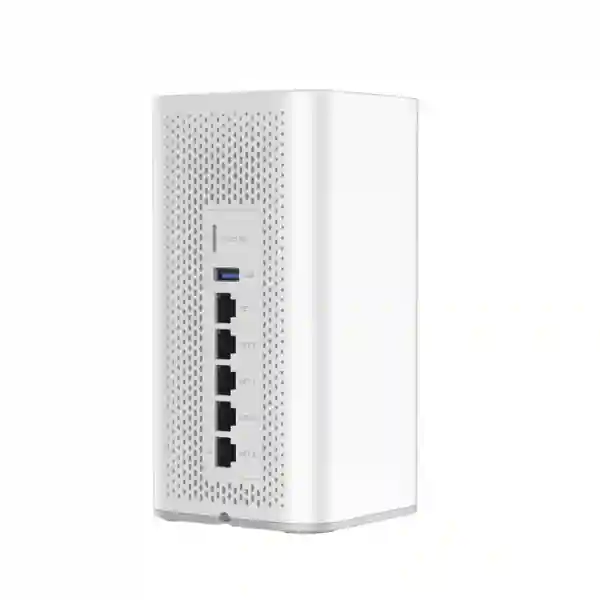
UC + Networking Convergence for Business
Grandstream GCC6010W Tanzania
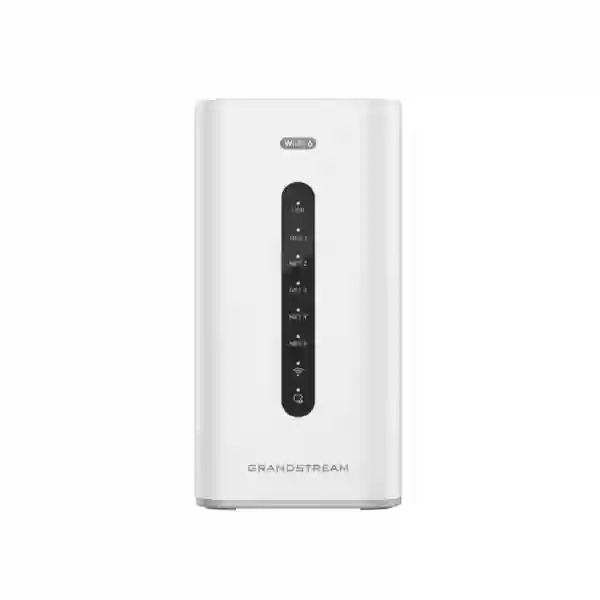
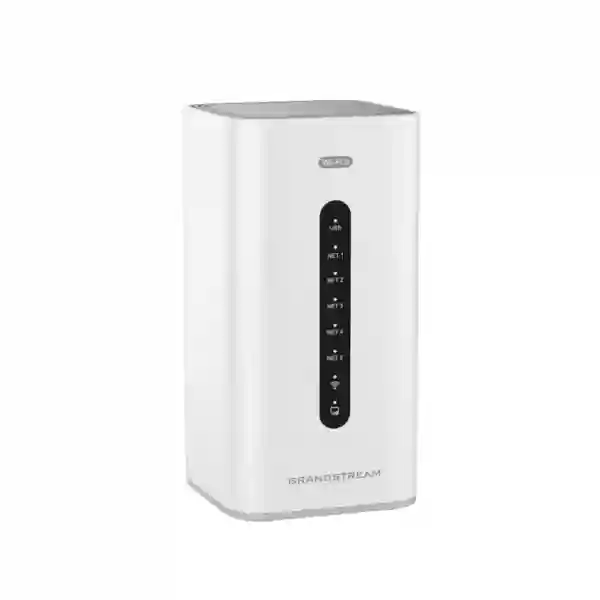
The Grandstream GCC6010W brings business routing, security, unified communications and Wi‑Fi 6 into one compact platform. For organizations that want fewer separate appliances to deploy and manage, the GCC6010W can operate as a VPN router, next-generation firewall, IP PBX and integrated wireless access point while also providing five configurable Gigabit Ethernet ports. It is particularly well suited to small and medium businesses, branch offices, professional practices, hospitality sites, education environments and distributed organizations that need a practical combination of connectivity, voice and security.
One appliance, four core roles
The GCC6010W combines VPN routing, next-generation firewall functions, IP PBX capabilities and Wi‑Fi 6 access in a single system, reducing the number of separate management interfaces needed in many compact business deployments.
Flexible WAN and LAN design
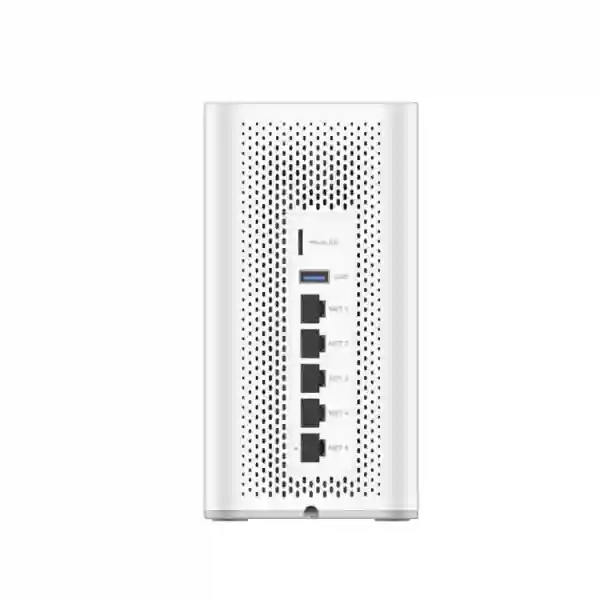
Five Gigabit Ethernet ports are configurable for WAN or LAN use, with support for up to three WAN connections. This makes the platform useful for offices that need primary internet, backup internet and flexible internal segmentation.
Built-in dual-band Wi‑Fi 6
The integrated wireless radio supports IEEE 802.11a/b/g/n/ac/ax and can serve as the local wireless layer for a compact office while the GCC platform can also manage wider Grandstream GWN deployments.
Grandstream GCC6010W overview
The GCC6010W belongs to Grandstream’s GCC6010 Series of UC and networking convergence products. Its role is not simply to replace a traditional router. It is designed as a central business edge appliance that can coordinate data networking, wireless access, security policies and IP telephony from one management environment. This approach can be valuable for organizations that want a cleaner branch architecture, particularly when they already use or plan to use Grandstream IP phones, access points, switches or other managed endpoints.
The platform is powered by a quad-core Cortex-A53 processor at 2.0 GHz, with 2 GB RAM and 32 GB eMMC flash. Grandstream rates the routing function at up to 3 Gbps, IPsec VPN throughput at up to 1 Gbps and IDS/IPS throughput at up to 900 Mbps. As with all network security appliances, real application throughput depends on traffic type, enabled inspection functions, encryption, packet size, network design and endpoint behavior. For that reason, a project quotation should be based on expected internet bandwidth, active users, VPN demand, call volume and the security controls that will actually be enabled.
The standard built-in PBX capacity listed in Grandstream’s current GCC6010W datasheet is 12 users and 4 concurrent calls, with upgrade options available separately. This makes it important to distinguish between the physical appliance and the required telephony capacity when planning a deployment. Buyers should define the number of extensions, expected simultaneous calls, SIP trunks, IVR flows, queues, voicemail requirements and remote users before finalizing the configuration.
Verified GCC6010W technical highlights
| Processor | Quad-core Cortex-A53, 2.0 GHz |
| Memory | 2 GB RAM, 32 GB eMMC flash |
| Ethernet | 5 × Gigabit Ethernet, WAN/LAN configurable, up to 3 WAN |
| Wi‑Fi | Dual-band 2.4 GHz / 5 GHz; IEEE 802.11a/b/g/n/ac/ax |
| Routing | Up to 3 Gbps |
| IPsec VPN | Up to 1 Gbps |
| IDS/IPS | Up to 900 Mbps |
| NAT sessions | 160,000 |
| PBX default capacity | 12 users and 4 concurrent calls; upgrade options available |
| Management | GDMS, local web interface, CLI and SNMP |
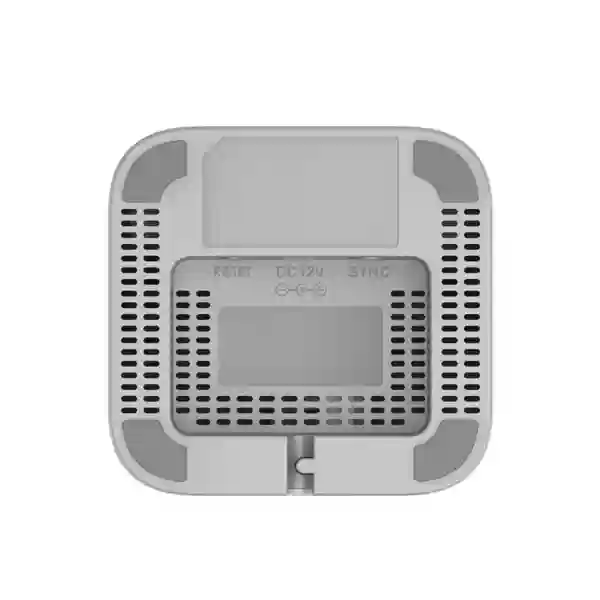
| Power | 12 VDC, 1.5 A power adapter |
Security, VPN and policy control
The GCC6010W is designed to act as the policy point between the business network and external connections. Grandstream lists firewall capabilities including denial-of-service and spoofing defenses, traffic rules, NAT, ALG, dynamic DNS, port forwarding, DMZ and UPnP. More advanced security functions include deep packet inspection, anti-virus, IDS/IPS, SSL inspection, DNS filtering, web filtering and application identification or control. These features can help small and medium organizations build stronger segmentation and visibility than a basic internet router can provide.
VPN support includes IPsec for site-to-site and client-to-site connectivity, PPTP/L2TP options and WireGuard. The practical choice of tunnel type should be based on endpoint support, security policy, interoperability and the organization’s remote access model. A business with several branches may use site-to-site tunnels between offices, while mobile administrators or selected users may need controlled client access. VPN design should also consider authentication, IP addressing, failover and the bandwidth available at each end of the connection.
For wider network-security planning, FourTeck Tanzania’s IT and infrastructure services page outlines how networking, security, configuration and support can be planned as a coordinated project rather than as isolated devices.
Wi‑Fi 6 and wireless deployment considerations
The GCC6010W includes a dual-band Wi‑Fi 6 access point. Grandstream specifies 2.4 GHz and 5 GHz operation, with channel widths up to 40 MHz on 2.4 GHz and up to 160 MHz on 5 GHz. It uses three internal antennas and supports modern WPA3 security in addition to WPA/WPA2 modes. The manufacturer states an open-area coverage range of up to 175 metres, while also noting that coverage depends on environmental conditions and recommending a usable area no greater than about 180 square metres. Real buildings often reduce usable coverage because of concrete walls, metal shelving, glass, doors, neighboring wireless networks and client-device capabilities.
For a single-floor office or compact branch, the built-in access point may be enough to provide the local wireless layer. Larger buildings, multi-floor sites or high-density environments usually require additional access points. The GCC platform can manage Grandstream GWN access points, which allows businesses to start with an integrated appliance and expand wireless coverage without changing the entire management approach. Site planning should therefore consider both current coverage and the likely future need for additional APs.
Customers can also review the broader FourTeck Tanzania business technology shop when planning wireless access points, switches, IP phones and related infrastructure around the GCC6010W.
IP PBX and unified communications planning
A major advantage of the GCC6010W is the inclusion of an IP PBX within the same appliance used for routing and security. This can simplify deployments where a business wants extension calling, SIP trunk integration, IVR, voicemail, ring groups, call routing and other unified communications features without installing a separate PBX server. The standard GCC6010W capacity is intended for smaller deployments, and Grandstream provides PBX upgrade options when a project needs more users or simultaneous calls.
Before ordering, procurement teams should identify the number of desk phones, cordless or Wi‑Fi handsets, reception positions, common-area phones and soft clients expected. They should also estimate simultaneous call demand rather than simply counting staff. A 20-person office may make only a few outside calls at one time, while a smaller sales or service team can require greater concurrent capacity. SIP trunk design, inbound numbers, call recording and remote-extension requirements can also influence the final solution.
The convergence architecture is especially useful when voice quality and network policy need to be coordinated. Quality of Service can prioritize VoIP traffic, VLANs can separate voice from general data, and the firewall can enforce access rules between segments. This helps the communication system operate as part of a structured network rather than as a collection of independent devices.
Who should consider the Grandstream GCC6010W?
The GCC6010W is a strong candidate for SMEs, branch offices, professional service firms, clinics, training centers, retail locations, hospitality operations and organizations that value simplified management. It is particularly attractive when the project needs all of the following in one location: secure internet routing, one or more WAN links, local Wi‑Fi, an IP PBX and central control of compatible Grandstream endpoints.
It may be less suitable when the site requires a very large number of concurrent calls, a large wired PoE switch inside the same chassis, enterprise-scale high-availability firewall clustering or wireless coverage across a large multi-floor building without additional access points. In those cases, the correct design may still use the GCC platform but pair it with dedicated switches, access points or a higher-capacity architecture. Selecting the GCC6010W should therefore be based on the whole site requirement rather than on the convenience of an all-in-one device alone.
Grandstream GCC6010W Tanzania
Businesses evaluating the Grandstream GCC6010W in Tanzania are often trying to reduce complexity at the branch or office edge. Instead of separately selecting a router, firewall, PBX and wireless access point, the GCC6010W brings these roles together in a platform designed for unified management. This can be valuable for Tanzanian offices where space, administrative simplicity and predictable expansion matter just as much as raw specifications. A finance office, consulting practice, private clinic, retail branch or regional service center may all benefit from a compact platform that can secure internet access, connect users, support VoIP extensions and provide Wi‑Fi from the same appliance.
The key buying question is whether the GCC6010W matches the site’s expected scale. Start with the internet connection and user count, then add the number of wired devices, wireless clients, IP phones and remote users. If the office has a primary fiber connection plus a secondary ISP, the configurable Ethernet ports and multi-WAN support can be used to design failover or load-sharing policies. If staff access internal systems remotely, the 1 Gbps rated IPsec VPN capability gives the platform headroom for many SME deployments, subject to encryption settings and real traffic conditions. For security, the 900 Mbps rated IDS/IPS performance should be considered against the actual broadband speed and the inspection services planned.
Telephony is another major planning area in Tanzania. The built-in PBX provides a convenient base for SIP-based business calling, but the final design depends on SIP trunk availability, extension count and call concurrency. Businesses should confirm their telecom provider requirements before implementation, particularly where public telephone numbers, number portability, emergency calling or remote extensions are involved. The standard GCC6010W PBX capacity is 12 users and 4 concurrent calls; larger requirements may need licensed expansion or another platform choice.
For procurement, it is useful to quote the GCC6010W together with the surrounding items needed for a complete installation: UPS backup, structured cabling, any additional managed switches, compatible Grandstream IP phones, extra GWN access points and configuration services. FourTeck Tanzania’s technology solutions overview helps customers frame these related requirements so the appliance is deployed as part of a complete office network rather than as a standalone purchase.
Grandstream GCC6010W Dar es Salaam
For organizations sourcing the Grandstream GCC6010W in Dar es Salaam, the strongest use case is often a busy office that needs reliable internet edge security, business Wi‑Fi and IP telephony without maintaining several separate appliances. Dar es Salaam has a wide range of commercial environments, from professional offices and logistics businesses to hospitality operations, clinics, retail networks and technology companies. These sites can differ significantly in internet availability, user density and building layout, so a successful GCC6010W deployment should begin with site requirements rather than a generic configuration template.
A branch using two internet providers can take advantage of the GCC6010W’s configurable Gigabit ports and support for up to three WAN links. The design can prioritize one ISP and retain another for failover, or distribute selected traffic according to policy. This is especially useful where cloud applications, VoIP and remote access must remain available if one connection becomes unstable. When planning failover, administrators should test DNS behavior, SIP registrations, VPN reconnection and application sessions rather than assuming that every service will transition identically.
Wireless planning deserves equal attention. The built-in Wi‑Fi 6 radio is practical for compact offices, but open-area coverage figures do not translate directly into multi-room commercial buildings. Reinforced concrete, dense partitions, elevators, neighboring access points and high client counts can reduce usable performance. A Dar es Salaam office with multiple departments or meeting rooms may need additional GWN access points connected through suitable switching. The GCC6010W can then remain the central management and security point while the wireless layer expands around the site.
For voice, define reception, departments, ring groups, IVR menus and after-hours handling before configuring extensions. A logistics or service business may have heavier calling than a small consulting office with the same number of employees. Buyers should therefore size concurrent calls and SIP channels independently from headcount. A good quotation should document the GCC6010W hardware, any PBX capacity upgrades, phone models, power protection, cabling, installation and post-deployment support. This creates a clearer basis for comparing project proposals and reduces overlooked dependencies.
Grandstream GCC6010W Mwanza
Organizations looking for the Grandstream GCC6010W in Mwanza can use the platform to build a compact but structured communications and network edge for offices, retail operations, education facilities, healthcare practices and regional branches. The appliance is most useful where several business requirements arrive together: employees need secure wired and wireless access, management needs VPN connectivity, the office requires IP telephony, and administrators want one interface for controlling Grandstream endpoints. Combining these functions can reduce hardware sprawl and make smaller IT environments easier to document.
For a Mwanza branch connected back to a main office, site-to-site VPN can be one of the most important functions. IPsec tunnels can protect traffic between locations and can support access to internal servers or applications without exposing those services directly to the public internet. The network should be designed with clear subnets for users, voice, guest Wi‑Fi and infrastructure. VLAN separation helps keep guest devices away from internal resources and can make troubleshooting easier when the site grows.
Power and connectivity planning are equally important. The GCC6010W uses an external 12 VDC adapter, so customers should consider suitable UPS protection if the device is part of the office’s critical communication path. The same applies to upstream modems, switches and any SIP phones that depend on PoE. Protecting only the gateway while leaving the switching or ISP equipment without backup may not preserve service during a power interruption. A practical project review should therefore map the complete chain from ISP handoff to firewall, switch, Wi‑Fi and telephony endpoints.
The GCC6010W’s integrated Wi‑Fi 6 can serve smaller office areas, but a site survey or at least a floor-plan review is recommended for wider premises. Additional APs may be required in training rooms, customer areas, warehouses or multi-floor buildings. Procurement should also account for future user growth. A system that is adequate today should have a clear expansion path for more phones, APs or branches, and the quotation should identify which additions require licenses or extra hardware rather than assuming unlimited capacity.
Grandstream GCC6010W Arusha
The Grandstream GCC6010W can fit Arusha businesses that need dependable branch connectivity and unified communications in a compact form factor. Typical environments may include tourism operators, hospitality administration offices, professional firms, training centers, NGOs, retail locations and regional operations. In these settings, the advantage is not simply that the GCC6010W contains several functions; it is that those functions can be coordinated. Wi‑Fi, firewall rules, VPN access and IP telephony can be designed around the same business workflows rather than configured independently.
For hospitality and travel-related offices, internet continuity and call handling can be especially important. Multi-WAN design allows administrators to connect more than one ISP and create policies for failover. The implementation should define which applications are most important during an outage, such as booking systems, cloud email, payment-related services or VoIP. Load balancing should also be planned carefully because some secure applications and VPN sessions perform best when source IP addresses remain stable. The GCC6010W provides the platform features, but policy design determines how effectively they support real operations.
The built-in Wi‑Fi 6 access point is convenient for a reception or office zone, yet hospitality compounds and larger premises normally need several access points. In that case, the GCC6010W can act as the central gateway while additional Grandstream GWN APs extend coverage. Guest networks should be isolated from administration, finance and internal systems, and access rules should reflect the organization’s risk profile. Where voice services are used, a dedicated voice VLAN and QoS policy can help preserve call quality during busy network periods.
For Arusha procurement, buyers should ask for a complete bill of materials and a clear scope. That may include the GCC6010W, phones, APs, switches, UPS units, cabling, rack or cabinet accessories and configuration work. The quotation should specify what is included, what requires licenses and which services depend on third-party telecom or internet providers. This helps decision makers compare solutions based on operational readiness instead of comparing only the price of the gateway itself.
Grandstream GCC6010W Dodoma
Businesses and institutions evaluating the Grandstream GCC6010W in Dodoma can use it as a consolidated edge platform for secure internet access, office Wi‑Fi, VPN connectivity and SIP-based communications. Government-adjacent offices, professional services, education facilities, NGOs and growing companies often need an IT design that is manageable by a small technical team. The GCC6010W can simplify that task by bringing several functions into one appliance while still allowing the network to expand with additional Grandstream endpoints.
A key advantage for branch architecture is the ability to segment traffic. Employee devices, IP phones, guest Wi‑Fi and infrastructure can be placed on separate VLANs with controlled communication between them. This improves both security and troubleshooting. If the office connects to another location, site-to-site VPN can provide encrypted access to internal systems. Remote administrators may use client VPN options, provided authentication and access policies are configured carefully. Security should be layered: firewall inspection, strong credentials, software updates and restricted management access are all part of a dependable deployment.
For telephony, the default 12-user and 4-concurrent-call PBX capacity should be checked against actual call patterns. A Dodoma office with reception, support and field coordination may need more simultaneous calls than a similarly sized administrative team. Project planning should therefore include expected inbound and outbound call traffic, IVR structure, extension numbering, voicemail, recording requirements and SIP trunk details. If growth is anticipated, identify the required PBX upgrade before deployment so the communications design is not constrained later.
Procurement teams should also check physical and environmental factors. The device is intended for indoor desktop deployment and operates within Grandstream’s specified temperature and humidity limits. It should be installed where ventilation is adequate and where power and internet handoffs can be protected. UPS backup, labeling, documented port assignments and configuration backups can make future support easier. These small operational details often determine whether an all-in-one platform remains simple after several years of changes.
Grandstream GCC6010W UAE
For organizations comparing the Grandstream GCC6010W for UAE branches or regional operations, the platform offers a compact approach to combining networking and unified communications. It can be attractive for satellite offices, project offices, professional services, retail sites and smaller operational locations where deploying separate firewall, router, PBX and Wi‑Fi appliances would create unnecessary management overhead. The GCC6010W’s five configurable Gigabit ports, multi-WAN capability and built-in Wi‑Fi 6 provide a flexible foundation for business connectivity.
UAE deployments should be designed around the selected telecom services and any provider-specific requirements. Internet handoff type, static IP needs, SIP services and voice regulations should be confirmed before final configuration. The GCC6010W supports DHCP, static IP and PPPoE connectivity options, but the correct WAN profile depends on the actual service. Where dual internet links are used, failover policies should be tested with VPN tunnels and cloud applications rather than assumed to behave identically.
For organizations that operate across Tanzania and the Gulf, the GCC platform can create a consistent branch architecture. Standardized VLANs, security policies, naming conventions and endpoint-management practices reduce the differences between locations. This is useful when IT support is centralized and branch staff are not expected to manage network equipment. Grandstream’s GDMS platform can provide remote management capabilities, while local web and CLI interfaces remain available for administrators who need direct access.
Regional buyers may also use FourTeck UAE when planning Gulf-based projects alongside Tanzania requirements. A multi-country quotation should keep each location’s telecom services, power, cabling and user capacity separate so that standardized equipment does not become a one-size-fits-all configuration. The same GCC6010W model can be used consistently while still adapting WAN, Wi‑Fi and voice policies to each site.
Grandstream GCC6010W Uganda
The Grandstream GCC6010W can suit Ugandan businesses that want a combined gateway for secure internet, business Wi‑Fi, VPN and IP telephony. Multi-site organizations can benefit from using the same branch platform across different locations because configuration standards, documentation and endpoint management can be repeated without forcing every branch to use identical internet providers or call flows. The GCC6010W provides the technical foundation, while site-specific policies determine how that foundation is used.
For Uganda deployments, connectivity resilience should be considered early. A branch that depends on cloud applications or VoIP may benefit from a secondary WAN link. The appliance supports multiple configurable WAN ports, giving network administrators the ability to create failover and load-balancing policies. Where a branch uses a site-to-site VPN to connect to another country or head office, failover should be tested to confirm how quickly the tunnel re-establishes and whether routing rules behave as intended on the backup circuit.
The integrated firewall provides a useful security layer for smaller organizations that would otherwise rely on a basic ISP router. Features such as IDS/IPS, application control, web filtering and VPN can be combined with network segmentation. Staff, guest users, phones and infrastructure should not automatically share one flat subnet. Separating these device groups improves control and creates a more manageable foundation for future growth.
FourTeck’s Uganda technology site can support regional procurement discussions where customers need consistent Grandstream or broader networking solutions across East Africa. The quotation should still identify exactly what belongs to each site: gateway hardware, APs, phones, switches, licenses, cabling and installation. This keeps cross-border projects organized and prevents assumptions about local service availability.
Grandstream GCC6010W Kampala
Kampala organizations considering the Grandstream GCC6010W may be looking for a branch platform that can support fast-changing office requirements without adding a stack of separate devices. A growing business may begin with one internet circuit, a small group of IP phones and the integrated Wi‑Fi access point, then add a secondary WAN connection, more phones or additional GWN access points as the site expands. This incremental approach is one of the strongest reasons to evaluate a convergence appliance rather than a fixed-purpose consumer router.
In dense commercial areas, wireless design deserves careful attention. The GCC6010W supports Wi‑Fi 6 and modern channel widths, but neighboring networks can create congestion. Administrators should avoid assuming that the widest channel always provides the best result. Channel planning, transmit power and AP placement should reflect the building and client density. In multi-room offices, additional APs connected by Ethernet often produce a more stable result than attempting to cover the entire floor from one gateway.
For voice, the platform can host the core PBX functions for a smaller office. Reception, sales and support users can be organized into ring groups or queues, while remote workers can connect through secure network and SIP configurations. The standard PBX capacity should be validated against real calling patterns, and SIP trunk compatibility should be confirmed with the selected provider. Businesses that expect rapid staff growth should include upgrade costs in the original procurement plan instead of treating licensing as an afterthought.
A complete Kampala deployment may also need UPS protection, structured cabling and a PoE switch for phones and additional APs. The GCC6010W itself does not replace every access switch requirement, especially if many wired devices or PoE endpoints are involved. A design review should therefore count ports and power budgets across the entire site. This creates a solution that remains organized as the branch expands and reduces the risk of unmanaged switches being added later simply because the original network ran out of capacity.
Grandstream GCC6010W Arua
For a business or institution in Arua, the Grandstream GCC6010W can provide an efficient way to consolidate the essential services needed at a smaller branch: internet routing, firewall security, wireless access, VPN connectivity and IP telephony. Branch offices often have fewer technical staff than head offices, so reducing the number of independent systems can simplify support. Centralized management through Grandstream tools can also help an IT team monitor compatible network and communications endpoints remotely.
Arua sites should begin planning with connectivity and power. Where the office depends on remote applications, cloud systems or VoIP, a second internet option may be worth considering. The GCC6010W supports up to three WAN connections through its configurable Gigabit ports, but a resilient design also needs correct routing, DNS and application failover policies. Administrators should decide which traffic should move to a backup connection and whether bandwidth-intensive services need to be restricted during degraded operation.
The same principle applies to power. If the GCC6010W is backed by a UPS but the ISP equipment, switch and phones are not, users may still lose connectivity. A quotation should therefore include the power chain and not just the gateway. For small sites, a properly sized UPS protecting the gateway, modem and core switch can improve continuity during short interruptions. Larger deployments may need broader power planning.
Wireless coverage should be validated against the physical site. The built-in Wi‑Fi 6 access point can be effective in a compact office, but thick walls or separated rooms can create weak zones. Additional GWN access points can extend coverage while the GCC platform remains the central management point. For procurement, it is useful to document the planned number of users, phones, wired endpoints, wireless devices and expected branch growth. This information helps determine whether the GCC6010W is the right long-term fit or whether a larger design would be more appropriate.
Grandstream GCC6010W Mbarara
Mbarara businesses can use the Grandstream GCC6010W as the central edge appliance for an office that needs both networking and communications. Instead of managing separate configurations for the router, firewall, PBX and local wireless access point, administrators can work within the Grandstream convergence architecture. This can simplify deployment for regional branches, private healthcare facilities, education centers, retailers and professional offices that need secure connectivity but do not require a large enterprise chassis.
A strong implementation starts with segmentation. Staff laptops, finance systems, phones, guest Wi‑Fi and infrastructure should be grouped according to trust and operational need. VLANs and firewall rules can limit unnecessary communication between those groups. Guest users, for example, may need internet access without visibility into internal services. Voice traffic may need priority over bulk downloads. Administrators should document these decisions so that later changes do not gradually turn the network into an unrestricted flat environment.
The GCC6010W’s security functions can add meaningful visibility, but performance sizing should include the services actually enabled. If the site has a high-speed internet circuit and intends to use IDS/IPS or other inspection features heavily, the rated security throughput should be compared with the expected traffic. Similarly, encrypted VPN performance should be evaluated independently from raw routing speed. This avoids choosing the appliance based only on the largest number in the specification sheet.
For voice deployments, buyers should define call flows before selecting phone quantities. Reception, departments, queues and after-hours behavior can all be mapped before configuration begins. The default PBX capacity is appropriate for smaller environments but may require upgrade planning if the office expects more users or concurrent calls. Bundling phones, APs, switches and UPS equipment into one project quotation can make compatibility checks easier and ensure the solution is ready to operate when installed rather than waiting for supporting accessories later.
Grandstream GCC6010W Gulu
The Grandstream GCC6010W offers Gulu organizations a practical convergence platform for offices that need a manageable combination of internet security, Wi‑Fi, VPN and IP telephony. It is particularly useful when an organization has several regional locations and wants each branch to follow the same network standard. A common appliance can simplify training and documentation while still allowing each site to use different WAN providers, local subnets and voice services.
For distributed organizations, the VPN function can become the foundation for secure inter-office connectivity. IPsec site-to-site tunnels can connect a Gulu branch to headquarters or other locations, while access rules determine which resources can cross the tunnel. A well-designed VPN should use clear route definitions and avoid overlapping IP ranges between branches. When several offices are planned, using a consistent private addressing strategy early can prevent difficult reconfiguration later.
The GCC6010W’s built-in Wi‑Fi 6 access point gives smaller branches immediate wireless capability, but the network should be sized for both coverage and capacity. A warehouse, training space or multi-room office may need additional APs even if the total user count is modest. Additional GWN access points can be managed within the broader Grandstream environment, making it easier to keep SSIDs, VLANs and security settings consistent across the site.
When requesting a quotation in Gulu, organizations should include the number of employees, expected wireless devices, phone extensions, internet circuits and remote-access users. They should also state whether the branch needs guest Wi‑Fi, call recording, SIP trunks, site-to-site VPN or web filtering. These inputs help turn a generic gateway purchase into a correctly sized solution. The quote should clearly separate hardware, licenses, configuration and third-party telecom services so that responsibilities remain easy to understand throughout deployment and support.
Grandstream GCC6010W Kenya
For Kenyan businesses evaluating the Grandstream GCC6010W, the product can be used to standardize compact branch connectivity across East Africa. It is suitable where a site needs business routing, security, Wi‑Fi and IP telephony but does not want to maintain separate platforms for each. Organizations with offices in Kenya and Tanzania can particularly benefit from a common design because support teams can reuse configuration standards, monitoring methods and documentation while adapting WAN and telecom settings to each country.
A Kenya deployment may use the GCC6010W as the internet edge for fiber, wireless or other business broadband services. Its multi-WAN capability supports resilience where a second ISP is available. Administrators should document the desired behavior during failover: whether all traffic moves to the backup link, whether only essential applications are permitted, and how VPN and SIP sessions recover. Testing these scenarios during implementation is more reliable than discovering their behavior during a real outage.
The integrated PBX can support smaller offices and branch users, while compatible Grandstream handsets provide the endpoint layer. If the branch has more users or call concurrency than the default license permits, PBX expansion should be priced upfront. For wireless, the built-in Wi‑Fi 6 radio can cover a compact area, while additional GWN APs can be added for larger offices. A managed switch may also be required when the site has many wired or PoE endpoints.
Customers coordinating East African projects can review FourTeck Kenya for regional requirements while keeping the Tanzania project aligned with the same architecture. Procurement teams should compare project quotations using the full system scope—gateway, phones, APs, switches, power backup, cabling, licenses and services—rather than comparing only unit price. This produces a more accurate view of what it will take to place the branch into operation.
Grandstream GCC6010W Kuwait
The Grandstream GCC6010W can serve Kuwait-based offices that want an integrated branch network and communications platform. Professional services, project offices, retail operations and SME sites can use the appliance to combine internet routing, firewall policy, VPN, local Wi‑Fi and IP PBX functions. The main benefit is operational simplicity: one platform can coordinate functions that might otherwise be split across several devices, reducing the number of interfaces administrators need to manage.
Before deployment, the local internet and telephony services should be confirmed. Static addressing, PPPoE or DHCP requirements depend on the service provider, and SIP connectivity may require provider-specific configuration. The GCC6010W supports the common WAN connection methods needed for business networks, but accurate implementation still depends on the information supplied by the telecom operator. Where two internet links are used, failover and load distribution should be tested with the applications that matter to the business.
For organizations that operate in both Kuwait and African markets, a standardized GCC6010W branch template can help central IT teams maintain consistent security policies. The template might define management access, VLAN IDs, guest Wi‑Fi rules, voice QoS and VPN conventions while leaving local ISP details unique to each branch. This balance between standardization and local adaptation is often more practical than trying to clone one configuration everywhere.
Wireless and voice capacity should still be sized per site. A small office can use the built-in Wi‑Fi 6 radio, but larger premises should use additional APs. The default PBX capacity is designed for smaller user counts and may need expansion for busy offices. Power protection, structured cabling and a suitable switch should also be included when necessary. A complete quotation makes these dependencies visible and helps stakeholders understand the real deployment cost rather than treating the convergence appliance as the entire solution by itself.
Grandstream GCC6010W Ghana
Businesses sourcing the Grandstream GCC6010W for Ghana can use it as a consolidated branch gateway that supports secure connectivity and unified communications. It is especially relevant for organizations opening new offices or upgrading older networks where multiple standalone devices have become difficult to manage. By integrating VPN routing, firewall features, Wi‑Fi 6 and an IP PBX, the GCC6010W can reduce hardware complexity and give administrators a more unified view of the branch environment.
A Ghana deployment should begin with service requirements. The internet connection speed, number of users, remote-access needs and cloud applications determine whether the platform’s routing and security performance fits the site. If a backup connection is available, multi-WAN configuration can improve continuity. The business should decide whether traffic should fail over automatically or whether certain non-essential services should be restricted on the secondary link. This can be useful when backup bandwidth or data allowance differs from the primary circuit.
For telephony, the built-in PBX can support a compact office and can be expanded through available upgrade options. Project planning should confirm the number of extensions, expected simultaneous calls, SIP trunks and any remote workers. Voice quality also depends on the LAN, so managed switching, VLANs and QoS should be planned where needed. The all-in-one gateway simplifies architecture, but it does not remove the need for sound network design.
Wireless coverage should be treated as a site-specific question. The integrated access point may serve a compact area, but larger facilities or buildings with heavy walls should use additional GWN access points. Organizations that plan multi-country rollouts can standardize SSIDs, security settings and management practices while keeping local internet and telephony details separate. This approach helps central IT teams support offices consistently without ignoring the practical differences between countries and buildings.
Grandstream GCC6010W Nigeria
The Grandstream GCC6010W can be a useful choice for Nigerian SMEs and branch offices that want to combine connectivity, security, Wi‑Fi and IP telephony in one manageable appliance. Organizations with several sites can use a common GCC platform to reduce variation across branches, which can simplify training, remote management and troubleshooting. The device’s multi-WAN features are also relevant where businesses want a primary and secondary internet connection for better service continuity.
A resilient Nigeria branch design should go beyond simply connecting two ISPs. Administrators should define routing priorities, health checks and how business-critical applications respond when the preferred link becomes unavailable. VPN tunnels, SIP registrations and cloud sessions can behave differently during a WAN change, so the configuration should be validated under realistic test conditions. Where the backup link is slower, QoS and traffic controls can help reserve capacity for voice, remote access and priority business systems.
Security is another important reason to choose the GCC6010W instead of a basic internet router. The platform supports IDS/IPS, deep inspection, web filtering and application controls along with traditional firewall functions. These tools can support a layered security policy, especially when the network is segmented into staff, voice, guest and infrastructure zones. Administrators should still follow operational practices such as secure management credentials, software updates and configuration backups.
The standard PBX capacity is intended for smaller deployments, so organizations with call-heavy sales or service teams should evaluate upgrades before purchase. Similarly, larger offices may need dedicated switches and additional access points. The best procurement approach is to quote the GCC6010W as the core of a solution and then add the exact phones, APs, cabling, power protection and services required by the site. This produces a more predictable deployment and avoids last-minute additions after the gateway has already been selected.
Grandstream GCC6010W Seychelles
Organizations evaluating the Grandstream GCC6010W in Seychelles may value the appliance for its ability to simplify smaller office and hospitality-related network environments. A compact property office, professional practice, branch location or service business can use the GCC6010W to handle internet routing, firewall policy, Wi‑Fi and IP telephony from a single platform. This can reduce the number of independent systems that require local administration, which is useful when specialist IT support is centralized or delivered remotely.
Connectivity planning should take into account the available service at the specific island and site. Where two internet connections are available, multi-WAN design can improve resilience, but policy needs to reflect the bandwidth and characteristics of each connection. The business may choose to prioritize communications and cloud productivity during failover while limiting large downloads or guest traffic. The GCC6010W provides the routing features needed to implement such policies, but the final behavior should be tested before handover.
For hospitality or guest-facing environments, network separation is especially important. Guest Wi‑Fi should be isolated from administration, finance, voice and infrastructure. The built-in Wi‑Fi 6 access point can serve a compact office area, while guest rooms, public spaces or larger facilities will usually require a dedicated multi-AP design. Additional GWN access points can be managed within the Grandstream ecosystem, allowing the GCC6010W to remain the gateway even when wireless coverage expands significantly.
Telephony planning should include front-desk call handling, internal extensions, outside lines and any remote management requirements. The default PBX capacity is suitable for smaller deployments but should be checked against expected simultaneous calls. A complete project quotation should also consider power backup, switches, cabling and maintenance. This is particularly important where replacing a missing accessory or reworking cabling later may be inconvenient. Clear documentation, spare configuration files and a defined support process can add as much practical value as the gateway hardware itself.
Selection and sizing checklist
Before requesting a Grandstream GCC6010W quotation, collect the information that determines fit. This avoids comparing proposals that are based on different assumptions and makes it easier to identify additional hardware or licenses that may be required.
- Number of office users and expected growth over the next two to three years.
- Primary and backup internet speeds, handoff type and static IP requirements.
- Number of wired devices, IP phones and additional access points.
- Expected number of simultaneous external calls and SIP trunk channels.
- Need for guest Wi‑Fi, staff Wi‑Fi, voice VLANs or isolated device networks.
- Site-to-site VPN, remote access and inter-branch routing requirements.
- Security services that will be enabled, including IDS/IPS, filtering or inspection.
- UPS, cabling, switching and rack or desktop placement requirements.
Related infrastructure and internal planning
The GCC6010W should be treated as the core of a solution, not the only component in every project. An office with many phones may require a PoE switch. A larger floor may need additional access points. A branch that depends on cloud systems should include suitable UPS capacity for the gateway, modem and switching. Structured cabling and labeling help ensure that the convergence platform remains manageable after future changes.
Customers can use FourTeck Tanzania’s business IT shop to frame related product requirements and the services overview for deployment and integration planning. These links are relevant because the GCC6010W often sits at the intersection of networking, security, voice and wireless rather than belonging to only one category.
Grandstream GCC6010W FAQs
What does the GCC6010W replace?
It combines the roles of a VPN router, next-generation firewall, IP PBX and Wi‑Fi 6 access point in one appliance. Depending on site size, you may still need additional managed switches, access points or PBX capacity upgrades.
How many Ethernet ports does the GCC6010W have?
The current Grandstream datasheet lists five Gigabit Ethernet ports. The ports can be configured for WAN or LAN use, with support for up to three WAN connections.
Does the GCC6010W include Wi‑Fi 6?
Yes. It includes dual-band 2.4 GHz and 5 GHz Wi‑Fi and supports IEEE 802.11ax along with earlier compatible standards.
What is the default PBX capacity?
Grandstream’s current GCC6010W datasheet lists 12 users and 4 concurrent calls by default, with PBX capacity upgrade options available for purchase.
Can GCC6010W use multiple internet connections?
Yes. Its configurable Ethernet ports support multiple WAN connections, including failover and load-balancing use cases. The exact policy should be designed around the available ISP services and business applications.
Can it manage additional Grandstream access points?
Yes. The GCC platform supports management of Grandstream networking endpoints. This allows the integrated Wi‑Fi 6 gateway to be expanded with additional GWN access points where one radio does not provide enough coverage or capacity.
Is GCC6010W suitable for a branch office?
It is designed for small and medium business and branch-style deployments where consolidated routing, security, Wi‑Fi and communications are valuable. Final suitability depends on user count, bandwidth, call capacity and site layout.
Quotation checklist for GCC6010W projects
For a useful quotation, provide the site location, number of users, number of IP phones, expected simultaneous calls, internet speed, whether a backup ISP is available, number of wireless clients, approximate floor layout, required VPN connections and any existing Grandstream devices. Also state whether you need supply only or a broader scope covering installation, configuration, testing and documentation.
A complete quote can then identify whether the project requires only the GCC6010W or also additional GWN access points, managed/PoE switches, IP phones, UPS equipment and cabling. It can also separate hardware from any PBX license upgrades or third-party SIP and internet services. This makes procurement clearer and helps avoid discovering missing components during installation.
Decision recap
Choose the Grandstream GCC6010W when you want an all-in-one business edge platform that combines Wi‑Fi 6, VPN routing, firewall capabilities and IP PBX functions in a compact device. It is strongest in small and medium environments where simplified management and convergence are more important than deploying separate enterprise appliances for each function.
Before purchase, validate three areas: security throughput against your real internet speed, PBX capacity against your expected concurrent calls, and wireless coverage against the actual building. If those factors are correctly sized, the GCC6010W can provide a clean foundation for a modern branch or SME network with room to add phones, access points and additional sites over time.
Plan your Grandstream GCC6010W deployment
Share your user count, internet bandwidth, required phone extensions, concurrent calls, wireless coverage area, VPN needs and existing network equipment. FourTeck can use these details to structure a quotation around the actual project rather than only the appliance model. For current enquiries, use the verified Tanzania contact page and include any preferred delivery, installation or configuration scope.



Reviews
There are no reviews yet.