
SMART ACCESS CONTROL • VIDEO INTERCOM • SIP INTEGRATION
Grandstream GDS3725 Tanzania
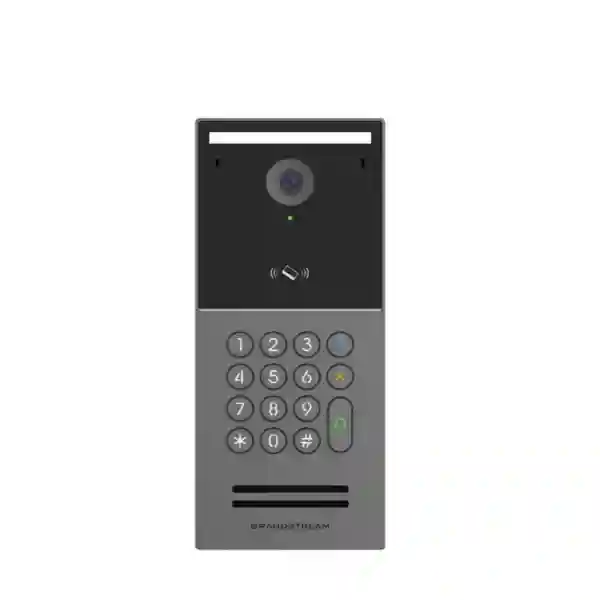
The Grandstream GDS3725 is a smart IP video door station built for controlled entrances where a business needs more than a simple doorbell. It combines a wide-angle video camera, full-duplex intercom, numeric keypad, RFID and NFC credential reading, Bluetooth-based access, SIP communication, PoE networking, alarm integration and door-control relays in a vandal-resistant outdoor enclosure. For offices, warehouses, financial premises, schools, campuses, residential facilities and restricted operational areas in Tanzania, the GDS3725 can become the front-end device that links people, doors, security teams and the IP network into one manageable access workflow.
FourTeck approaches the GDS3725 as part of a complete door system rather than as a standalone gadget. The correct design considers the electric lock or strike, exit method, door contact, emergency release, PoE switch, network segmentation, SIP destination, user credentials, event logging and any video-management requirement. That planning is particularly important when the unit will be integrated with a Grandstream UCM, Grandstream video endpoints, the SecureAccess application, GDS Manager, an ONVIF-compatible monitoring platform or an existing access-control environment.
Fast product answer
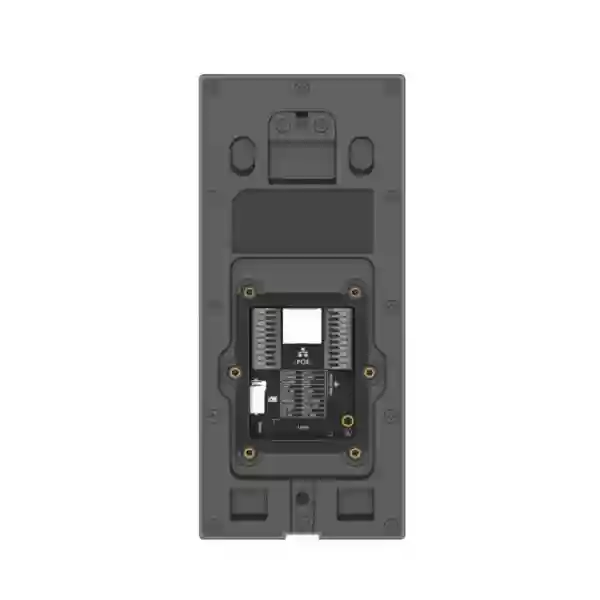
Choose the GDS3725 when you need a keypad-equipped Grandstream door station with wired Ethernet/PoE, SIP video intercom, multiple credential methods, two solid-state relay outputs, three alarm inputs, two alarm outputs, RS-485 and Wiegand interfaces. It is the model in the current GDS3720 family aimed at sites where PIN entry and deeper physical integration are priorities.
What is the Grandstream GDS3725?
The GDS3725 belongs to Grandstream’s GDS3720 family of smart IP video door stations. The device combines access control, IP video surveillance and SIP-based two-way communication. Grandstream positions the family for buildings of different sizes and provides several related models, but the GDS3725 is distinguished by its physical 15-key keypad and the interface set needed for more advanced door-control deployments. It can authenticate users through PIN codes, supported RFID credentials, NFC, Bluetooth Low Energy, mobile application methods, QR-code workflows and SIP-based unlocking, depending on configuration and system design.
From a security-system perspective, the value of the GDS3725 is that the entrance can participate in the same IP environment used by phones, PBX systems, video monitoring and management software. A visitor can initiate a call from the door station, an authorised person can see and speak with the visitor, and the system can activate an electric strike or other connected locking hardware after verification. The unit also provides alarm inputs and outputs, which gives installers options for connecting door contacts, sensors, sirens and other dry-contact devices. Those connections should always be engineered around the actual door hardware, power supply and safety requirements rather than assumed from the door station alone.
The unit has a 1/3-inch 4MP HDR image sensor, an F2.2 lens and a wide 127-degree horizontal field of view with 152-degree diagonal coverage. Video output is up to 1920 × 1080 at up to 30 frames per second, while wide dynamic range of up to 120 dB helps with entrances that include difficult lighting, such as a shaded reception door facing bright outdoor light. Six white LEDs provide illumination assistance, and Grandstream also lists AI ISP image processing and AI-based motion detection. These features make the device suitable for entry verification and monitoring, but camera placement, mounting height, background light and the distance between visitor and door still strongly affect the practical image.
Grandstream GDS3725 key features for business entrances
4MP HDR camera platform
A 4MP sensor, up to 1080p video, wide-angle optics, WDR and intelligent image processing support visitor identification and doorway monitoring in mixed lighting.
Physical 15-key keypad
The keypad enables PIN-oriented workflows and is one of the defining differences between the GDS3725 and other models in the same family.
Multiple credential methods
The platform supports RFID, NFC, BLE, QR code, mobile-app and SIP-based methods in addition to PIN entry, allowing administrators to design different access paths for staff and visitors.
PoE and wired Ethernet
A 10/100 Ethernet interface with IEEE 802.3af Class 3 PoE simplifies power and network deployment when a suitable PoE switch or injector is available.
SIP video intercom
SIP support allows the door station to participate in IP communications workflows and route calls to compatible Grandstream or third-party SIP systems according to the deployment design.
Two solid-state relays
Two SSR outputs give the GDS3725 flexibility for lock control and linked alarm functions, while solid-state design provides resistance to external magnetic interference.
RS-485 and Wiegand
RS-485 plus Wiegand input/output support helps the unit participate in broader access-control architectures where compatible readers, keypads or controllers are required.
IP66 and IK10 enclosure
The metal housing is IP66 weather protected and IK10 impact resistant, supporting deployment at exposed building entrances when installation details are handled correctly.
Why the GDS3725 is more than a door intercom
A conventional door intercom may only provide audio calling and a relay to unlock the door. The GDS3725 combines that function with video verification, network management, event information and multiple credential methods. This matters in business environments because the same entrance serves different user groups. Employees may use cards, NFC or PIN codes. Visitors may call reception. Contractors may be issued a temporary access method. Security staff may review events. An administrator may need to add or remove users without visiting every door individually. By bringing these workflows into an IP platform, the system can be managed more consistently than a standalone analogue doorbell.
The practical advantage is strongest when the wider architecture is deliberately designed. A PoE switch can power the door station, but that switch should have sufficient budget and the relevant VLAN configuration. A SIP PBX can receive door calls, but the call routing must match reception hours, departments and after-hours procedures. Video can be viewed or recorded, but storage and permissions must be planned. A lock can be released by relay, but the lock type, power supply, fail-safe or fail-secure requirement and emergency exit method are building-level decisions. FourTeck can help bring these dependencies into one bill of materials so procurement teams do not discover missing components after installation has started.
Verified Grandstream GDS3725 technical specifications
| Category | GDS3725 specification |
|---|---|
| Image sensor | 1/3-inch, 4MP, HDR |
| Lens / field of view | F2.2; 127° horizontal, 70° vertical, 152° diagonal |
| Video | Up to 1920 × 1080 at up to 30 fps; H.264 and Motion JPEG support |
| WDR / detection | WDR up to 120 dB; PIR detection approximately 3–5 m; AI-based motion detection |
| Audio | Two microphones, 3 W speaker; G.711, G.722, G.726-32 and G.729 codecs |
| RFID | 13.56 MHz and 125 kHz; support for listed MIFARE credential families; up to 5,000 users/cards |
| Bluetooth | BLE 5.0 |
| Wi-Fi | Not included on GDS3725; use wired Ethernet |
| Network | 1 × RJ45 10/100 Mbps Ethernet with integrated PoE |
| Power | 9–36 V DC, 12 W or IEEE 802.3af Class 3 PoE |
| Relays / alarm I/O | 2 relay outputs, 3 alarm inputs, 2 alarm outputs |
| Expansion | RS-485, Wiegand input/output, microSD/TF card slot up to 256 GB |
| Interoperability | SIP and ONVIF Profile S, with additional management and provisioning protocols documented by Grandstream |
| Environmental rating | IP66 weather protection and IK10 impact resistance |
| Dimensions / weight | 204 × 87 × 35.5 mm; approximately 1.56 kg |
Specification note: the figures above reflect current Grandstream documentation for the GDS3725. Final procurement should still confirm the exact hardware revision, firmware requirements, included accessories and deployment design before ordering.
SIP, ONVIF, access-control and management integration
The GDS3725 is especially attractive to IT teams because it speaks protocols familiar to IP communications and surveillance environments. SIP support allows the unit to function as an IP intercom endpoint. A door call can be sent through a compatible SIP platform to a reception phone, video endpoint, control station or other configured destination. This is useful for businesses that already operate a Grandstream UCM or another compatible SIP environment because access communication can become part of the existing extension and call-routing plan instead of requiring a completely separate intercom network.
ONVIF Profile S support provides a path for video interoperability with compatible surveillance platforms. That does not automatically guarantee that every feature will work with every VMS, so integration should be validated against the exact software and firmware versions in the project. The same principle applies to Wiegand, RS-485 and alarm I/O. These interfaces create useful options, but an integrator should map the signal direction, wiring, power and logic required by the connected device. In access control, physical compatibility is only the first step; operational behaviour during normal access, power loss, emergency egress and network failure also has to be documented.
Grandstream supports local web administration as well as GDS Manager and cloud-oriented SecureAccess management options. This can help administrators maintain user credentials, review events and manage multiple door stations from a more central workflow. Businesses should still apply role-based administration, strong credentials, firmware management and network segmentation. A door controller is part of the physical-security boundary, so it should not be treated like an unmanaged appliance on a flat office LAN.
For voice teams
Plan SIP registration, call destinations, codecs, time conditions, reception routing and remote unlock permissions. Align the door station with the broader FourTeck Tanzania services portfolio when deployment includes IP PBX, switching, cabling or security integration.
For security teams
Define credential policy, door schedules, lock behaviour, alarm events, retention expectations and the people authorised to review or export security data.
GDS3725 deployment checklist for Tanzania projects
A successful GDS3725 installation starts before the unit is mounted. First identify the door type and the locking method. An electric strike, magnetic lock, motorised gate or other device can require different power, relay logic and emergency-release arrangements. Determine whether the lock should fail safe or fail secure according to the building’s safety policy and applicable requirements. Decide where an exit button, request-to-exit sensor, door contact and emergency override should sit. Confirm whether the GDS3725 will control one function or participate in a larger controller-based system.
Next review the network. The GDS3725 uses wired Ethernet and does not include Wi-Fi, so Cat6-class structured cabling and a suitable switch port are normally required. If PoE is used, confirm the switch supports 802.3af and has enough total power budget. For security and troubleshooting, many organisations place access-control and camera devices on a dedicated VLAN with tightly controlled routing. If the door station needs to reach a SIP server, management platform, DNS, NTP or other service, create only the required rules rather than giving unrestricted internal access.
Finally, plan the operating workflow. Decide who creates users, who issues cards or PINs, who reviews door events, how visitor access is authorised, how lost credentials are revoked and how firmware changes are handled. Document device names, IP addresses, door labels, relay assignments and emergency procedures. This operational layer is what turns a feature-rich device into a dependable security control. Customers can also review the FourTeck Tanzania business technology shop when the project also needs PoE switching, IP PBX hardware, access-control components, surveillance products, racks, cabling or supporting infrastructure.
Where the GDS3725 fits best
The GDS3725 is well suited to entrances where identity verification, controlled entry and communication all need to happen at the same point. Examples include corporate reception doors, finance offices, server-room zones, warehouses, educational campuses, residential compounds, clinics, hotels, back-of-house service entrances and restricted industrial spaces. The keypad makes the model particularly useful where PIN access is part of the policy, while the built-in card/NFC capability supports regular employees and the SIP/video functions support visitors who need human approval.
It is not automatically the right choice for every door. A simple internal door may only need a reader and controller. A site that cannot provide Ethernet to the entrance may need a different architecture. A very large enterprise may prefer a dedicated access-control platform with door stations used mainly for intercom. The right decision comes from the use case, number of users, required credentials, monitoring workflow, integration targets and physical door design.
Regional buying and deployment guidance
FourTeck Tanzania serves as the primary context for this page, but many organisations procure technology across several African and Middle Eastern markets. The following sections explain how the GDS3725 can be evaluated for different locations without implying local stock, an office, guaranteed delivery or installation coverage in any city. Availability, commercial terms and project scope should always be confirmed through a quotation.
Grandstream GDS3725 Tanzania
For Tanzania, the GDS3725 is relevant to businesses moving from mechanical keys, standalone keypad locks or basic analogue intercoms toward a centrally manageable IP-based entry system. The strongest projects begin with the doorway and security policy rather than with the product alone. Procurement teams should identify how many entrances need controlled access, which doors are external, which areas are restricted, how many regular users require credentials and whether visitors must call a receptionist or security desk. That information determines whether one GDS3725 is sufficient or whether multiple door stations and supporting systems are required.
Tanzania deployments also benefit from careful infrastructure planning. Outdoor cable routes should be protected, the network switch should provide adequate PoE, and the equipment rack should have stable power and sensible backup where access continuity is important. If the entrance is exposed to direct weather, installation details such as sealing, cable entry, mounting surface and any suitable weather accessory matter even though the GDS3725 carries an IP66 rating. The device’s IK10 rating addresses impact resistance, but physical placement should still discourage tampering and make maintenance practical.
For multi-site organisations, standardisation can be valuable. A company with branches in Dar es Salaam, Mwanza, Arusha and Dodoma can define one credential policy, one naming convention, one VLAN pattern and one intercom call-flow template, then adapt it to each building. This reduces support confusion and makes user onboarding easier. FourTeck can help connect the door system with adjacent requirements such as PoE switches, structured cabling, IP PBX, CCTV and firewall policy. The FourTeck Tanzania technology solutions page provides a broader view of these related building blocks.
Grandstream GDS3725 Dar es Salaam
In Dar es Salaam, the GDS3725 can suit corporate offices, logistics operations, professional services, retail back offices, apartment developments and other sites where visitor handling and employee entry intersect. A busy reception entrance may need a workflow that lets staff use credentials while visitors press the call key and speak with reception. In a warehouse or logistics site, the emphasis may shift toward restricted doors, staff authentication, event records and integration with existing surveillance. Both scenarios use the same hardware differently, so the configuration should follow the business process.
When a Dar es Salaam site already has an IP phone system, the GDS3725 can be planned as another SIP endpoint. Reception or security phones can receive door calls, and call routing can be designed around work hours or departments. This requires the PBX, LAN and firewall to be configured coherently. If the building uses multiple network segments, the door station should normally be isolated from general user traffic while still being allowed to communicate with the exact SIP, management and monitoring services it needs.
Procurement should include more than the GDS3725 itself. Confirm the electric lock or strike, lock power supply, exit button, door contact, cabling, PoE source, mounting accessories and any server or PBX requirements. If the unit is expected to provide recorded video, define retention and storage. If several branches will share the same security policy, agree on user naming and credential revocation before deployment. That makes future additions easier and reduces the risk of each building becoming a separate, undocumented system.
Grandstream GDS3725 Mwanza
For Mwanza organisations, a GDS3725 project often makes sense where a growing office, healthcare facility, educational site, hotel, warehouse or commercial building wants a combined intercom and access device at a key entrance. The keypad and card-reading capability allow a site to maintain different access methods for permanent staff and temporary users. The video path adds visual verification when a visitor is unknown, while the SIP connection provides a practical way to involve reception or security without installing a dedicated analogue intercom network.
Before ordering, the site should verify Ethernet availability at the door. The GDS3725 is a wired device, so network cabling quality and route protection are important. If the run is long or passes between buildings, copper distance limits and surge/environmental conditions should be assessed; in larger campuses it may be better to place switching closer to the entrance or use fibre between distribution points. Power design matters as well. PoE can simplify the station connection, but the electric lock may still need a separate appropriately rated supply.
The operations team should also decide who owns user administration. A technically capable door station can become hard to manage if cards, PINs and schedules are added without a clear process. Use named users, defined expiry dates where appropriate and immediate revocation when staff or contractors leave. Keep a configuration backup and record how the relay, alarm inputs and door contact are wired. These practices are more valuable over time than relying only on the device’s feature list.
Grandstream GDS3725 Arusha
Arusha businesses in hospitality, tourism operations, professional offices, education and administration may use the GDS3725 to improve controlled entry without turning the doorway into a complex multi-device installation. At a hotel administration entrance, for example, staff can use assigned credentials while vendors or visitors call an authorised desk. At a back-office or stores entrance, the same unit can provide PIN or card access and an audit trail. The ability to integrate with SIP communications and compatible video systems can reduce the number of isolated platforms the IT team must maintain.
Environmental planning remains important. IP66 and IK10 ratings provide useful physical resilience, but the mounting wall, exposure to rain and sun, cable protection and water path still need professional attention. A correctly rated enclosure does not compensate for an open cable entry or poor bracket installation. The camera’s wide field of view is helpful at entrances, but installers should check the scene before fixing height and angle. Strong backlight from an open driveway, reflective glass or a very bright outdoor background can influence identification even with WDR.
For procurement, request a complete door bill of materials rather than only a unit price. Include the GDS3725, lock hardware, lock power, exit device, door contact, PoE switching, network patching, PBX or control destination and any mounting accessory needed by the site. If several doors are planned, identify whether each requires a GDS3725 or whether some doors only need a simpler reader/controller. This avoids over-specifying low-risk doors and under-specifying the main visitor entrance.
Grandstream GDS3725 Dodoma
In Dodoma, the GDS3725 can be considered for offices, institutional buildings, educational facilities, commercial premises and controlled internal zones where security teams want a clearer record of who enters and a better way to communicate with visitors. Its keypad is useful for organisations that prefer PIN-based access for selected users, while card, NFC and Bluetooth options can support other credential policies. Because the unit is networked, administrators can build the door into broader IT and security standards rather than leaving it as an isolated physical-security appliance.
For a new building, the best time to plan the device is during structured cabling and door-hardware design. Reserve the cable route, switch port, PoE capacity and rack termination before walls and finishes are complete. Coordinate the electric lock and emergency release with the door contractor. For an existing building, survey the door first and identify whether new cabling can be routed cleanly, whether the existing lock can be controlled safely and whether the local switch has the necessary network and power capacity.
For long-term maintenance, retain a simple handover record covering IP address, VLAN, SIP account, relay assignment, connected sensors, user-management method, administrator ownership and firmware version. Security systems often remain in place for years, so future technicians need this information. A well-documented GDS3725 deployment can be expanded more easily when a second door, a new reception desk or a new branch is added.
Grandstream GDS3725 UAE
For organisations with operations in the UAE as well as Tanzania, the GDS3725 can support a consistent cross-site access architecture. The main value is standardisation: the same device family, credential policy, SIP behaviour and management conventions can be repeated across offices even when the physical doors and local contractors differ. Procurement teams should avoid assuming that a bill of materials from one country can be copied unchanged, because lock hardware, cabling routes, building requirements and available infrastructure vary by site.
A UAE project may also involve larger multi-tenant offices, warehouses or branch networks where door events need to be coordinated with cameras, IP telephony and central management. In such cases, define what information is genuinely required at a central level and what remains site specific. Keep management access secure, use strong administrative credentials, update firmware according to change-control procedures and minimise unnecessary exposure of the door station to the public internet.
Businesses coordinating East Africa and Gulf technology projects can use the wider FourTeck network for regional discussions. For UAE infrastructure, security and communications planning, the main FourTeck UAE technology site can be used alongside the Tanzania project conversation. Availability, commercial terms and implementation scope should be confirmed for each location independently.
Grandstream GDS3725 Uganda
Uganda deployments can use the same core GDS3725 design principles: start with the door, the users and the network. A Kampala office may prioritise visitor calling to reception, while a warehouse or branch location may prioritise credential entry and event logging. The device supports both use cases, but the surrounding components will differ. Confirm the lock and power supply first, then the PoE switch, SIP destination, credential method and management platform.
Cross-border organisations should create common standards for naming, firmware, access schedules and staff onboarding. A user should not receive unrelated PIN policies in every branch. Likewise, IT staff should know which VLAN and switch ports are reserved for door systems and how support escalation works. This becomes increasingly valuable when the business operates several sites and central personnel must troubleshoot remotely.
For Uganda-focused infrastructure discussions, the FourTeck Uganda IT solutions site provides a regional entry point for IP PBX, CCTV, networking and related technology needs. The GDS3725 itself should be quoted with its required accessories and supporting components rather than evaluated on the door-station price alone.
Grandstream GDS3725 Kampala
In Kampala, a typical business entrance may combine reception, employee access and after-hours security. The GDS3725 can serve all three when configured carefully. Employees can authenticate with approved credentials, daytime visitors can call reception and the security team can use event information to investigate access incidents. If the office has an existing Grandstream UCM or other compatible SIP platform, the door station can be included in the extension plan so that visitor calls follow normal business routing.
High-traffic entrances require more than feature selection. Consider how quickly users can enter, how lost cards are cancelled, how visitors are authorised and what happens when the network or power is unavailable. If the door is critical to life safety or emergency exit, those requirements take precedence over convenience. Electrical locking and emergency release should therefore be designed with qualified door-security professionals rather than improvised from the relay output.
For a quotation, provide door photographs, a basic floor plan, the preferred credential method, user count, existing PBX details and the available switch model. That information allows a supplier or integrator to determine whether additional PoE capacity, lock power, cabling or controller hardware is required. A complete scope reduces the risk of delays caused by missing small accessories.
Grandstream GDS3725 Arua
Arua sites may have different infrastructure constraints from a large head office, making simplicity and documentation especially valuable. The GDS3725 can reduce the number of separate entrance devices because it combines intercom, camera and credential functions, but it still depends on a stable wired network. For sites where technical support is not always immediately available, use a clean installation with labelled cabling, a documented IP address, protected power and a configuration backup.
If remote administration is required, it should be implemented through a secure management design rather than by exposing the device directly to the internet. The administrator should know how users are enrolled, how privileges are removed and where event information is retained. When cellular or variable internet connectivity is part of the wider site, remember that local door operation should not rely unnecessarily on a remote connection. Design essential access behaviour to remain practical at the site.
Procurement should also consider spare credentials and clearly defined replacement procedures. A lost card should be disabled promptly rather than left active indefinitely. If PINs are used, avoid shared codes for large groups when individual accountability matters. These operational practices are central to the security value of the GDS3725 and should be included in user training.
Grandstream GDS3725 Mbarara
For Mbarara offices, education sites, healthcare facilities, hospitality operations or warehouses, the GDS3725 provides a flexible platform for a controlled entrance. The combination of keypad, card technologies, video and SIP calling helps organisations support staff and visitors through one device. A security-sensitive storeroom may emphasise credential access, while a public-facing entrance may use the intercom more heavily. Administrators can configure the surrounding workflow according to the door’s role.
The network should be designed with the same discipline used for IP cameras and phones. Give the door station a predictable address, place it in an appropriate VLAN, use NTP, secure administrator access and document firewall rules. Because the unit can interact with a PBX and video systems, troubleshooting becomes easier when each dependency is recorded. If the station stops calling but door credentials still work, the issue may be SIP routing rather than access control; documentation helps teams isolate that difference quickly.
For buyers, compare total installed cost rather than just device price. Cabling, lock hardware, power, switching, mounting, configuration and testing can be as important as the door station itself. A quotation that lists each dependency gives decision makers a more accurate picture and reduces unplanned variation during installation.
Grandstream GDS3725 Gulu
In Gulu, the GDS3725 can be valuable for organisations that need a durable entrance station with both intercom and controlled access. The IP66/IK10 enclosure supports demanding placements, but the installation should still protect cable routes and ensure the mounting surface is secure. Where the entrance is far from the equipment room, check Ethernet distance and decide whether an intermediate distribution point is required instead of stretching copper beyond recommended limits.
Operational resilience should be discussed during design. Determine how the door behaves if the PBX is offline, whether authorised credentials continue to work, and what local manual or emergency procedures exist. If power interruption is a concern, include the PoE switch and relevant lock power equipment in the UPS discussion rather than backing up only the door station. Access control is a chain; continuity depends on the weakest component.
For multi-door sites, consider whether every entrance needs video intercom. Use the GDS3725 where its camera, keypad and communication features create value, then use simpler components where appropriate. This keeps the system manageable and directs budget to the doors with the highest visitor or security requirements.
Grandstream GDS3725 Kenya
Kenya-based branches can use the GDS3725 as part of a standardised East African access-control blueprint. For companies operating both Kenya and Tanzania, common device families simplify administration and training. The same installation document can define VLAN naming, SIP extension patterns, credential categories, firmware control and event-review responsibilities while still allowing each building to use the correct lock, cable route and reception workflow.
Nairobi-style office environments may prioritise reception and PBX integration, while industrial or logistics sites may focus on access to warehouses, server rooms and staff-only zones. The two-relay design and alarm inputs provide useful flexibility, but a site engineer should confirm exactly what will be connected and how each condition will behave. Avoid designing the system from a diagram without surveying the physical door and available services.
For regional procurement, the FourTeck Kenya IT solutions site offers a related channel for communications, security and networking requirements. Quotations should confirm model, quantity, accessories and implementation scope for the specific Kenyan site rather than assuming terms from Tanzania.
Grandstream GDS3725 Kuwait
Kuwait deployments may place strong emphasis on controlled entry at offices, compounds, service areas and commercial facilities. The GDS3725’s metal enclosure, keypad, video intercom and multiple credential methods make it a candidate for these use cases, but environmental exposure should be reviewed carefully. Very high temperatures, direct solar load and dust conditions at the exact mounting point can affect any electronic device, so installers should assess shading, mounting position and cable protection even when the manufacturer’s operating range and IP rating appear suitable.
When the door station is integrated with a PBX, use a defined call flow rather than routing every visitor to a single person. Reception, security and after-hours destinations can be configured according to the communications platform. If video is recorded, decide who may access footage and how long it is retained. If mobile unlocking is enabled, establish clear user permissions and revocation procedures.
For a regional group with East African and Gulf sites, a shared design standard can reduce support complexity. The standard should define the product family and management principles while allowing local adaptation for doors, cabling and building safety. This balance is more practical than forcing every location into an identical hardware bill.
Grandstream GDS3725 Ghana
In Ghana, the GDS3725 can support business entrances that need staff authentication and visitor communication from one IP device. A typical solution may connect the station to a PoE switch, SIP call destination, electric strike or magnetic lock, door contact and exit device. The exact arrangement should be surveyed because different doors and egress requirements lead to different components. The station’s interface flexibility is useful, but the engineering around it determines whether the final system is secure and serviceable.
IT teams should treat the unit as a managed network endpoint. Use segmented networks where possible, strong credentials, controlled administration and change records. If ONVIF integration is required, test with the chosen VMS. If the site uses card technology already, verify credential compatibility rather than assuming every existing card will work. The GDS3725 supports documented RFID and MIFARE families, but existing access systems may use formats or encryption choices that need specific validation.
For distributed organisations, keep user administration consistent. Identify who can issue credentials, whether temporary contractors require expiry dates and how access reviews are performed. These governance decisions are essential for obtaining real security value from the hardware.
Grandstream GDS3725 Nigeria
Nigeria has a wide range of commercial, industrial and residential-security environments, so GDS3725 suitability should be determined site by site. For an office, the device can combine visitor calling with staff card or PIN entry. For a warehouse or restricted operational site, it can provide credential access plus a video view of the doorway. Larger estates may use multiple stations tied to central management, but the network and power architecture should be designed for scale from the beginning.
Power resilience deserves particular planning wherever interruptions are possible. If access must remain available during short outages, protect the relevant PoE switch, network path and lock supply according to the site’s continuity requirements. A UPS supporting only the network while the lock supply fails may not produce the intended behaviour, and vice versa. Document whether locks are fail safe or fail secure and ensure emergency egress works independently of the IP application layer.
For procurement, ask for the complete integration scope, not just the door station. A well-defined proposal should list the GDS3725, mounting accessories, credentials, network equipment, door hardware, power, configuration, testing and any PBX/VMS work. This makes competing quotations easier to compare and gives project managers a clearer basis for acceptance testing.
Grandstream GDS3725 Seychelles
In Seychelles, coastal exposure can make installation quality particularly important for outdoor electronics. The GDS3725 carries IP66 weather protection and an IK10 impact rating, but installers should still avoid poor cable entry, standing water and unnecessarily exposed mounting positions. Where salt-laden air or direct weather is a concern, inspect the complete door assembly and maintenance plan rather than relying on the door station rating alone.
Hospitality, administration, education and commercial properties may value the unit’s combination of intercom and access control. Staff can use credentials while visitors communicate with reception or security. For villas or smaller properties, verify whether the GDS3725’s advanced interfaces and keypad are necessary or whether another model would provide a simpler fit. Selecting the correct model avoids paying for unused features and reduces configuration complexity.
If remote support is required from another country, clear documentation becomes especially important. Keep records of network settings, firmware, user-management platform, relay wiring and connected sensors. Use secure remote-access methods rather than open inbound exposure. With those controls in place, the GDS3725 can be managed as part of a broader, repeatable security architecture.
GDS3725 versus GDS3726 and GDS3727
The current Grandstream family includes related models, and buyers should select by entrance workflow rather than choosing the highest model number. The GDS3725 includes the 15-key keypad and provides two relay outputs, three alarm inputs, Wiegand connectivity and wired Ethernet with PoE. The GDS3726 is closer in physical platform and durability but uses a simpler doorbell-button interaction rather than the GDS3725 keypad. The GDS3727 uses a different physical design and adds dual-band Wi-Fi 6, while providing fewer relay/alarm interfaces and an IK07 rating rather than the IK10 rating of the GDS3725 and GDS3726.
Choose the GDS3725 when PIN entry is a meaningful requirement and the project benefits from the richer wired integration options. Choose another family member when the entrance workflow prioritises a simple call button or when Wi-Fi capability is important. This comparison should be made after reviewing the cabling and lock design because connectivity decisions affect installation cost and reliability.
Security and network design recommendations
A smart door station should be secured like any other network-connected control device. Change default credentials, use individual administrator accounts where the platform allows, restrict management access to trusted networks and keep firmware under change control. Avoid placing the GDS3725 directly on an unrestricted public network. Use VLANs and firewall policy to limit communication to the SIP server, management services, DNS/NTP and other resources that are actually required.
Credential policy also matters. Use named user records, remove former staff promptly and avoid shared PINs where accountability is important. If temporary visitors or contractors are given credentials, set clear expiry processes. When RFID or NFC credentials are used, confirm the supported card technology and security mode. Grandstream documentation includes multiple supported card types, but a card that physically operates at the same frequency is not automatically guaranteed to match every credential implementation.
Video and event data should be handled according to the organisation’s privacy and retention policies. Decide who can view live video, who can export records and how long information remains available. If the unit is integrated into an NVR or VMS, include it in the surveillance retention plan. If it sends snapshots or alerts to email, FTP or cloud destinations, secure those accounts and review whether the data path is appropriate for the organisation.
What to include in a GDS3725 quotation request
Door information
Door type, opening direction, frame material, existing lock, required lock behaviour, exit method and whether the entrance is indoor or exposed.
User and visitor flow
Approximate user count, credential preference, visitor procedure, access schedules, departments and whether temporary users require expiry.
Network details
Switch model, available PoE, VLAN plan, IP addressing, cable route, rack location and any firewall restrictions between security and voice systems.
Integration targets
PBX model, reception endpoints, VMS/NVR, existing access controller, Wiegand/RS-485 devices and management platform.
Providing these details makes the quotation more meaningful because it allows the GDS3725 to be priced with the components required for actual operation. If the project is still at concept stage, start with photographs, a floor plan and a description of the visitor and staff workflow. FourTeck can then help identify the decisions that need to be resolved before hardware is finalised.
Grandstream GDS3725 FAQ
Does the GDS3725 support Wi-Fi?
No. The GDS3725 uses wired 10/100 Ethernet and supports PoE. In the current GDS3720 family, Wi-Fi is associated with the GDS3727, so plan a network cable to the GDS3725 location.
Can the GDS3725 open a door using a PIN?
Yes. The GDS3725 includes a physical 15-key numeric keypad and supports PIN-oriented access workflows. PIN policy should be designed around user accountability, expiry and revocation rather than relying on one shared code.
How many users or cards can the GDS3725 support?
Grandstream currently specifies capacity for up to 5,000 users and 5,000 cards for the GDS3720 platform. Actual administration should still follow a sensible naming and access-policy structure so the database remains manageable.
Can it work with an IP PBX?
Yes. SIP support allows the GDS3725 to operate as an IP intercom endpoint in a compatible SIP environment. Grandstream UCM systems are a common fit, while third-party interoperability should be validated for the exact platform and desired features.
Is the GDS3725 suitable for outdoor installation?
Grandstream rates the GDS3725 to IP66 for weather protection and IK10 for impact resistance. Outdoor installation still requires correct mounting, protected cable entry and consideration of exposure, drainage and maintenance access.
Does it support ONVIF?
Yes, Grandstream lists ONVIF Profile S support. If a specific VMS or NVR is planned, test interoperability and confirm which video, event and discovery functions are supported by that platform.
Can it control more than one lock?
The GDS3725 provides two relay outputs, which gives designers options for multiple lock/alarm functions. Whether two doors can be supported in the desired workflow depends on the complete wiring, access logic, power supplies and safety design.
Which card technologies are supported?
The unit includes 13.56 MHz and 125 kHz credential support and Grandstream lists MIFARE Classic 1K/4K, MIFARE Ultralight, MIFARE PLUS and MIFARE DESFire among supported families. Existing cards should be tested before a large migration because encoding and security formats can vary.
What management options are available?
Grandstream documents local web management, GDS Manager and cloud/SecureAccess management options. The most appropriate method depends on the number of devices, administrator workflow, remote access requirements and security policy.
What should I send FourTeck for a quotation?
Send the required quantity, door photographs or drawings, lock type if known, user count, preferred access method, PBX/VMS details, site location and available network/PoE information. This helps determine the full bill of materials instead of quoting only the door station.
Decision recap: is GDS3725 the right model?
The Grandstream GDS3725 is a strong choice when the entrance requires a physical keypad, wired Ethernet/PoE, SIP video intercom, multiple credential methods and flexible physical-security interfaces in one rugged unit. Its 4MP HDR sensor, wide-angle video, dual microphones, 3 W speaker, two solid-state relays, alarm inputs/outputs, RS-485 and Wiegand interfaces make it particularly suitable for business entrances where access control and communications must work together.
Before choosing it, confirm three things. First, the building can provide a suitable wired network and power design. Second, the lock and emergency-egress arrangement have been professionally defined. Third, the organisation has a plan for user credentials, event review, firmware and administrator access. When those fundamentals are in place, the GDS3725 can become a practical component in a wider IP security architecture rather than an isolated door device.
Plan the complete Grandstream GDS3725 door solution
A useful quotation should cover the door station, credential method, PoE/network connection, electric lock or strike, lock power, exit device, door contact, mounting, SIP routing, management method and testing. Share the site and door requirements with FourTeck Tanzania so the product can be evaluated as part of the real access-control workflow.
No stock, price, delivery time or local installation promise is assumed on this page. Those details depend on the requested quantity, project scope and current commercial availability.


Reviews
There are no reviews yet.