
Hospitality IP Telephony · Tanzania
Grandstream GHP610W Tanzania
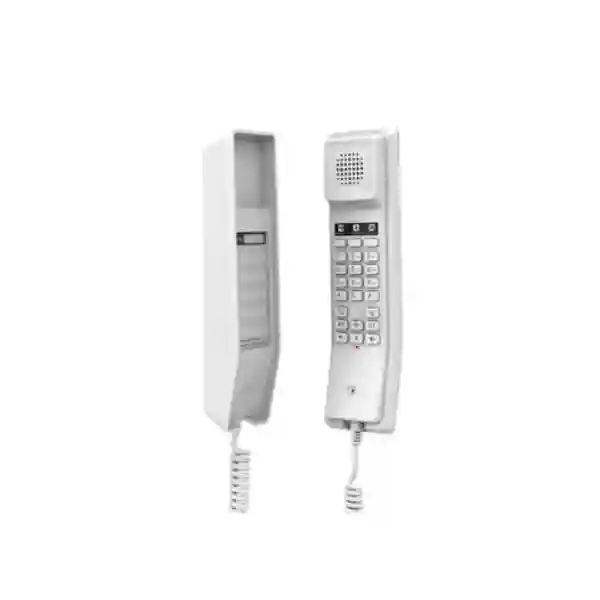
The Grandstream GHP610W is a compact Wi-Fi enabled SIP phone built for hotel rooms and other environments that need a simple, manageable telephone endpoint rather than a feature-heavy desk phone. It combines two SIP accounts and lines, ten speed-dial keys, three programmable keys, three-way audio conferencing, an HD handset speaker, GDMS cloud-based device management and integrated dual-band wireless connectivity. For hardware version 5.0 and above, Grandstream specifies dual-band 2.4 GHz and 5 GHz 802.11 a/b/g/n/ac/ax Wi-Fi 6 support. The phone can be used on a desk or wall-mounted, making it practical for guest rooms, serviced apartments, healthcare rooms, student accommodation and common-area calling points.
Fast buying answer
Choose the GHP610W when you need a compact Grandstream hotel phone with integrated Wi-Fi. Before ordering, confirm the hardware revision, PBX or SIP platform, room count, preferred wired or wireless design, power method and provisioning plan.
2 SIP accounts
Two SIP accounts and two lines provide a straightforward fit for room extensions and common hospitality calling requirements.
Integrated Wi-Fi
The GHP610W is the wireless variant. Hardware version 5.0 and above adds 802.11ax support alongside earlier Wi-Fi standards on 2.4 GHz and 5 GHz.
GDMS management
Grandstream Device Management System supports centralized provisioning, configuration, monitoring and administration of compatible Grandstream endpoints.
Hospitality layout
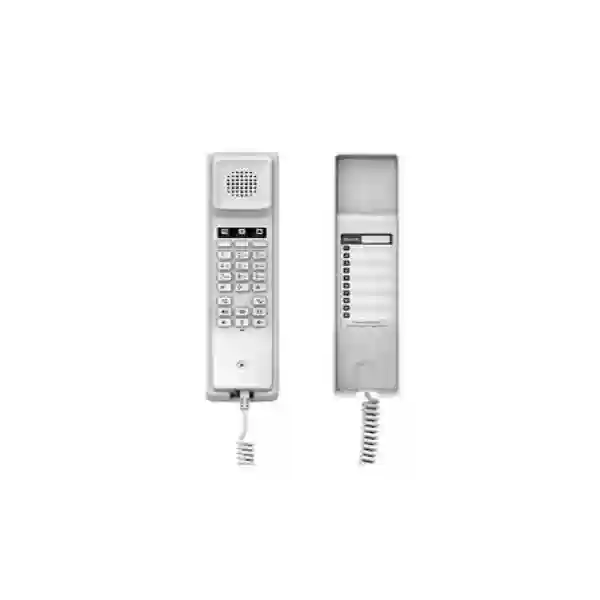
Ten speed-dial keys, three programmable keys, wall or desk placement and customizable faceplate options suit guest-room workflows.
What the Grandstream GHP610W is designed to solve
Guest-room telephony has different priorities from executive office telephony. A hotel room phone should be easy for a guest to understand immediately, compact enough to fit bedside or writing-desk furniture, simple for housekeeping and technical teams to recognize, and practical to configure across many rooms. The GHP610W addresses that requirement with a restrained keypad layout, programmable and speed-dial buttons, SIP-based operation and centralized management. The wireless capability can be useful where an Ethernet outlet is not available at the exact phone location, although wireless voice still depends on deliberate radio design, roaming expectations, RF coverage and secure WLAN configuration.
For hospitality deployments, the most important design question is not only whether the phone supports SIP. Buyers should map the phone into the complete communication workflow. That includes the PBX or hosted SIP service, front-desk routing, emergency and service numbers, wake-up or hospitality applications where relevant, VLAN design, voice quality, wireless coverage, extension numbering, device naming, firmware management and the process for replacing a failed unit. A repeatable template reduces configuration differences between rooms and simplifies support after handover.
The same design logic also applies outside hotels. Hospitals may use compact phones at patient beds or common areas; apartments and managed residences can use them for reception or building-service contact; dormitories can standardize simple room extensions; retail or staff accommodation can use them where a full desktop business phone is unnecessary. Grandstream positions the wider GHP series for these adjacent environments as well as hotels.
Verified feature overview
| SIP | 2 SIP accounts and 2 lines. |
| Keys | 10 speed-dial keys and 3 programmable keys, plus standard dialing and function controls. |
| Wireless | Integrated dual-band Wi-Fi on the GHP610W. Hardware version 5.0 and above supports 802.11 a/b/g/n/ac/ax on 2.4 GHz and 5 GHz; earlier hardware uses a/b/g/n/ac. |
| Voice | HD handset speaker, full-band Opus codec support and 3-way audio conferencing. |
| Network | One auto-negotiating 10/100 Mbps Ethernet port. Grandstream documentation indicates PoE behavior varies by hardware revision on W models, so the exact hardware version should be checked before deployment. |
| Management | GDMS centralized provisioning, configuration, monitoring and device management. |
| Installation | Desktop or wall-mounted installation. |
| Accessibility and security | Hearing Aid Compatibility and enterprise-oriented security features including secure boot are identified by Grandstream for the series. |
Deployment planning for hotels, apartments and healthcare
A successful room-phone rollout starts with an endpoint schedule. List the number of rooms, floors, public areas and service locations, then define which telephone features each location needs. A standard guest room may need reception, housekeeping, room service and emergency speed-dial labels. A front-of-house service point may need a different profile. Instead of configuring phones individually, use a consistent template and controlled exceptions. This makes replacement easier because a new phone can inherit a known configuration rather than being rebuilt from memory.
Wireless deployment requires a voice-ready Wi-Fi design. Verify coverage at the actual telephone position, not only in the hallway. Check 2.4 GHz and 5 GHz behavior, channel use, signal quality, client capacity and interference from neighboring access points. If guest Wi-Fi and operational devices share the same wireless infrastructure, separation by SSID, VLAN and policy can help maintain predictable access. The phone should not simply join an open guest network. Authentication, segmentation and secure management should be part of the design.
For wired deployments or mixed wired/wireless projects, confirm the hardware revision and power plan before purchase because Grandstream documentation distinguishes power behavior by hardware version for GHP610W units. Where PoE is used, confirm switch standards and PoE budgets. Where an adapter is required, include suitable outlet placement and power resilience. In either case, consider UPS protection for the switching, PBX, router and other central infrastructure so that a short utility interruption does not immediately remove internal calling capability.
Related FourTeck resources
Grandstream GHP610 AfricaCompare the closely related wired GHP610 model for projects that prefer Ethernet connectivity rather than a Wi-Fi room phone.
FourTeck Grandstream UAEUseful for Grandstream-focused regional enquiries, hospitality voice projects and cross-border procurement discussions linked to UAE supply routes.
IP phone specialist resourcesExplore IP phone considerations, SIP endpoints and broader business telephony options where the room-phone requirement is part of a larger voice system.
Grandstream GHP610W Tanzania
For Tanzania hospitality projects, the Grandstream GHP610W is most relevant where the buyer wants a compact room phone that can connect over Wi-Fi while still fitting into a centrally managed SIP architecture. Hotels in Tanzania can use the model for guest rooms, suites, staff accommodation and service points, while healthcare facilities, apartments and dormitories can use the same compact form factor for simple internal and external calling. The model should be selected as part of the complete voice environment rather than as a standalone handset purchase. A project team should identify the existing or planned IP PBX, available SIP accounts, number of extensions, room numbering scheme, speed-dial services, wireless infrastructure and the intended process for centralized provisioning.
Tanzania deployments often need practical procurement planning around phased openings, renovations and mixed infrastructure. A new property may have structured cabling in some areas and Wi-Fi-first design in others. An existing hotel may want to replace legacy analog room telephones without immediately recabling every bedside location. The GHP610W can be considered in these scenarios because integrated dual-band Wi-Fi gives the network designer another connection option, but it does not remove the need to assess radio coverage. Each room should be checked for reliable signal at the intended phone location, especially in buildings with concrete walls, dense furniture, decorative cladding or multiple access points operating on overlapping channels.
For quotation planning in Tanzania, provide the total room count, quantity of spare phones, required faceplate or speed-dial labeling, PBX brand or SIP service, preferred wired or wireless operation, access-point platform and deployment schedule. Also confirm whether the project requires wall mounting, which hardware revision is being offered and how the phones will be powered. Grandstream documentation notes hardware-version differences affecting Wi-Fi standards and power behavior, so a project quotation should identify the exact revision rather than assuming every unit is identical. This is particularly important when adding phones to an older installation because replacement stock may differ from the original devices.
FourTeck Tanzania can be approached for model selection, compatibility review and broader project coordination. The value of that discussion is highest when telephony is considered together with switching, WLAN design, VLANs, PBX configuration and power resilience. Buyers should request a quotation that clearly lists model, quantity, revision where available, accessories, configuration scope and any installation or integration requirements. That produces a more useful commercial comparison than evaluating handset unit price alone.
Grandstream GHP610W Dar es Salaam
Dar es Salaam has a broad mix of hotels, serviced apartments, hospitals, educational residences and commercial accommodation where room telephony can still play a useful operational role even as guests increasingly use mobile devices. The important distinction is that a room phone is not intended to compete with a guest’s smartphone. It provides an always-available extension for reception, emergency calling, housekeeping, room service and internal hotel workflows. The Grandstream GHP610W fits this task with a compact layout and programmable speed-dial functions that can be standardized across many rooms.
For a Dar es Salaam property, start by mapping voice traffic and operational calls. Identify whether the phone will register to an on-premises Grandstream UCM, another SIP PBX or a hosted platform. Confirm the number of extensions and whether each room has one account or whether additional line behavior is required. If the property has multiple buildings or wings, decide whether one central PBX serves all endpoints and how VLANs, routing and wireless coverage are extended. This planning matters because a phone that is technically compatible can still deliver a poor guest experience if the network has congestion, weak Wi-Fi or inconsistent DHCP and DNS behavior.
Dar es Salaam projects should also account for renovation constraints. Properties frequently upgrade networks while remaining operational, and guest rooms may be refurbished floor by floor. A Wi-Fi-capable hotel phone allows greater flexibility where the Ethernet outlet is not conveniently positioned, but voice endpoints need stable wireless service. The network team should validate the SSID, security method, signal level and channel plan in occupied-room conditions. If the hotel has separate guest and operational WLANs, the telephone should use the controlled business network rather than a captive-portal guest SSID. Centralized GDMS administration can support standardized configuration and monitoring across a larger room count.
A good Dar es Salaam quotation request should therefore include room quantity, floor count, PBX type, access-point platform, internet and LAN architecture, required service keys, mounting preference and commissioning scope. If the buyer is comparing the GHP610W with a wired GHP610 or another GHP-series phone, the comparison should be based on infrastructure fit, not just price. A project with reliable Ethernet and PoE at each room may favor a wired design, while a project with well-engineered wireless coverage may benefit from the GHP610W’s integrated Wi-Fi. FourTeck can review those constraints before supply.
Grandstream GHP610W Mwanza
Mwanza buyers considering the Grandstream GHP610W may include hotels near business and tourism routes, healthcare properties, apartment operators and institutions that need compact SIP phones in multiple rooms. The main procurement question is whether the phone will be deployed as part of a new IP voice system or integrated into an existing environment. A new project has the advantage of designing Wi-Fi, switching and PBX settings around the expected endpoint count. An existing property may need a staged migration from analog extensions, mixed phone models or legacy cabling, which makes inventory and extension planning especially important.
If wireless connectivity is the reason for selecting the GHP610W, the hotel should survey rooms before placing the full order. Test representative room types including corner rooms, rooms behind lift shafts, areas separated by concrete walls and rooms furthest from access points. Voice uses relatively little bandwidth compared with video, but call quality depends on latency, jitter, packet loss and stable radio connectivity. Grandstream highlights a jitter-resilience algorithm for the GHP series, but network quality should still be treated as a design responsibility rather than relying on endpoint tolerance to compensate for poor coverage.
Mwanza procurement teams should also plan labeling and user simplicity. The GHP610W supports speed-dial labels and a swappable faceplate, so service numbers can be presented consistently. Decide which keys are assigned to reception, housekeeping, emergency, restaurant, concierge or other functions before bulk configuration. Use a documented extension naming convention that links the physical room to the PBX extension and device identity. For larger properties, this makes troubleshooting faster because technical staff can identify the exact phone, room and configuration profile from centralized records.
For a structured quote, provide the planned quantity, desired spare percentage, PBX platform, wireless environment, hardware revision requirement and any need for preconfiguration. Ask how devices will be provisioned and whether GDMS or another supported mechanism will be used. If the project includes access points, switches, firewall policies or PBX upgrades, quote these as a coordinated solution rather than isolated line items. FourTeck Tanzania can help frame that broader scope so the GHP610W becomes a supported endpoint within a maintainable voice architecture.
Grandstream GHP610W Arusha
Arusha’s hospitality market includes hotels, lodges, safari-linked accommodation, conference properties and serviced residences where guest-room communication can be integrated with front-desk and operations workflows. The Grandstream GHP610W is suited to properties that want a simple SIP endpoint with built-in wireless capability. Its compact footprint helps where bedside tables or room desks have limited space, while programmable and speed-dial keys can place hotel services one button away from the guest. For operational consistency, every room should use the same key map unless there is a deliberate reason to create different profiles.
In Arusha projects, network topology deserves careful review because hospitality properties can have detached blocks, landscaped grounds and varying building materials. A wireless phone cannot be planned solely from an access-point count. RF coverage at the exact room location should be verified, particularly in chalets, cottages, villas or multi-building compounds. Where the property already has Wi-Fi for guests, the phone service should still be placed on a controlled operational network or VLAN with appropriate security and quality settings. This protects the PBX environment from unnecessary exposure and allows technical teams to manage voice separately from transient guest devices.
The GHP610W also supports centralized management through GDMS, which can be valuable for properties with a significant room count or multiple sites. Use centralized provisioning to define SIP credentials, firmware policy, button assignments, time settings and other common parameters. Keep a device register that maps serial number, MAC address, room number and deployment date. This becomes useful when a phone is swapped between rooms or replaced during maintenance. A standardized configuration process is especially beneficial when technical support is shared across more than one property.
Arusha buyers preparing a quotation should include room count, building layout, PBX type, intended services, WLAN platform, target opening or renovation date and any faceplate customization. Hardware version should be confirmed because current Grandstream documentation notes differences in Wi-Fi and power behavior between revisions. If wired Ethernet is readily available in every room, compare the GHP610W with the non-W model before finalizing. If Wi-Fi placement flexibility is important, ensure the wireless network is designed and tested for voice. FourTeck can help assess the full requirement instead of treating the handset as an isolated purchase.
Grandstream GHP610W Dodoma
Dodoma organizations considering the Grandstream GHP610W may include hotels, government-related accommodation, institutional housing, private healthcare, training centers and managed residences. In these settings, a compact IP phone can provide a dependable internal extension and defined service buttons without requiring every room to have a full-featured enterprise desk phone. The GHP610W supports two SIP accounts and two lines, which is typically more than sufficient for straightforward room calling while retaining flexibility for special call routing or secondary registrations where the PBX design requires them.
A Dodoma deployment should begin with a requirements table rather than a model list. Record how many rooms need phones, whether public areas also require endpoints, which PBX is in use, how incoming calls are routed and which hotel or institutional services need dedicated keys. If existing analog cabling is present, decide whether it will be retired, retained for other services or reused through gateways. If the project is moving directly to IP, verify switching, wireless coverage, DHCP, DNS, NTP and VLAN design before commissioning. These foundation services influence the reliability of every SIP endpoint.
Where the GHP610W connects via Wi-Fi, avoid assuming that strong smartphone coverage automatically means a production voice endpoint will behave perfectly. Phones may be positioned near beds, low furniture or walls where RF conditions differ from the center of the room. Use survey tools and test calls during busy network periods. Confirm the security profile that will be used by the phone and isolate voice traffic from guest devices where practical. The centralized GDMS platform can then be used to manage endpoint configuration and firmware policies without visiting every room for routine changes.
For purchasing, ask for a clear bill of materials that separates phones, any power accessories, PBX licenses or SIP services if applicable, configuration work, network changes and installation. Confirm hardware revision and power method before deployment. Include a sensible number of spare units for operational continuity, especially in larger properties, but base the spare strategy on the customer’s maintenance approach rather than an arbitrary percentage. FourTeck Tanzania can discuss the GHP610W alongside IP PBX, switching and wireless requirements so the delivered design remains supportable after the initial installation.
Grandstream GHP610W UAE
The UAE hospitality market includes large hotels, serviced apartments, staff accommodation, healthcare, student residences and mixed-use developments where room telephony is commonly integrated with structured IP networks. The Grandstream GHP610W can fit projects that value a compact hotel handset with integrated Wi-Fi and centralized management. For UAE procurement, project teams should identify whether the phone is intended for new construction, fit-out, renovation or replacement of an existing room-phone estate. Each scenario changes the importance of cabling, PoE, wireless coverage, mounting and preconfiguration.
In new-build UAE properties, the preferred approach may still be wired Ethernet with PoE because structured cabling can be planned from the start. In renovation projects, however, the GHP610W’s Wi-Fi capability can reduce dependence on the exact position of existing data outlets. That advantage should be balanced against wireless design requirements. Dense hotel floors can contain many access points and guest devices, so voice endpoints should use controlled SSIDs, predictable security and sufficient 5 GHz coverage where possible. Hardware version 5.0 and above supports Wi-Fi 6, which can align with modern wireless infrastructure, but buyers should confirm the actual hardware revision supplied.
UAE projects often have formal submittal, approval and handover processes. The phone schedule should record model, revision, room number, extension, MAC address, firmware and programmed service keys. If faceplate customization is part of the hotel brand standard, finalize artwork and service labels early enough to align with the fit-out program. Central provisioning through GDMS can support large batches and help maintain configuration consistency across rooms, floors or multiple properties, while PBX templates should also be version-controlled and documented.
For cross-border buyers or regional projects using a UAE procurement route, request clear information about quantity, destination, accessories, warranty process and configuration scope. Do not assume that stock, delivery dates or local service coverage are identical across countries; these should be confirmed at quotation stage. FourTeck’s Grandstream-focused UAE resources can support discussions where the GHP610W forms part of a wider IP telephony or hospitality infrastructure package.
Grandstream GHP610W Uganda
Uganda hospitality and institutional buyers can consider the Grandstream GHP610W when they need a compact Wi-Fi SIP phone for guest rooms, apartments, hospitals or accommodation facilities. The device’s strength lies in providing a controlled, repeatable endpoint rather than an elaborate personal desk phone. Two SIP accounts, speed-dial keys, programmable keys and GDMS support make it practical to standardize room communication while keeping the user interface simple. A project should define which services appear on the speed-dial label and ensure those services route correctly through the PBX.
Before a Uganda rollout, assess the LAN and WLAN environment. Hotels may have guest wireless access throughout the property but still need a separate operational SSID for managed devices such as room phones, staff tablets, cameras or building systems. The GHP610W should be placed on a network segment appropriate for voice and device management rather than a public captive-portal WLAN. Verify DNS, DHCP, NTP and access to the SIP server, then test calls between rooms, reception, outside numbers and emergency destinations as applicable.
The hardware version matters. Grandstream’s current documentation differentiates earlier GHP610W hardware from version 5.0 and above for Wi-Fi and power characteristics. For procurement, this means the quotation should identify the offered revision where possible and the implementation team should verify how each batch will be powered. This avoids a situation where an installation plan assumes PoE or a specific Wi-Fi capability that does not apply to the delivered units. The same discipline is useful when expanding an older installation with newer phones.
Uganda buyers should prepare a quotation request with quantity, project location, PBX type, Wi-Fi platform, room schedule, faceplate requirements and expected installation date. If multiple hotels or branches are involved, identify quantities per site and whether configurations are shared or unique. FourTeck’s regional network can support procurement discussions, but each project should confirm delivery, support and commercial terms specifically rather than relying on assumptions from another country or prior purchase.
Grandstream GHP610W Kampala
Kampala hotels, serviced apartments, hospitals and institutional facilities often operate multi-floor buildings where telephony shares network infrastructure with business data, Wi-Fi and other IP services. The Grandstream GHP610W can be deployed as a room endpoint in this environment, but voice quality depends on how well the shared network is engineered. If phones use Wi-Fi, the access-point plan should provide reliable room coverage and capacity. If Ethernet is available and the project prefers a wired design, the buyer should compare whether the non-W GHP610 is a better fit.
In Kampala, larger properties can benefit from treating phones as managed IT assets. Assign each device to a room record, use standardized extension naming and document the Wi-Fi profile, firmware and button template. GDMS can help administrators provision and monitor compatible Grandstream endpoints centrally, reducing the amount of manual setup required when dozens or hundreds of phones are deployed. Central management is especially useful when the hotel changes a service number, modifies a dial plan or rolls out a firmware update across many rooms.
Network security should be included in the implementation. SIP signaling and media should be configured according to the capabilities of the PBX and network policy. Voice devices should not have unrestricted access to unrelated internal systems. If a firewall sits between the phone network and SIP service, confirm the required ports and NAT behavior rather than enabling broad rules. For wireless, use appropriate authentication and keep phone credentials protected. The GHP series includes enterprise-oriented security features, but endpoint security works best when combined with sound network segmentation and credential management.
A Kampala quotation should state the exact model GHP610W, target quantity, preferred color or faceplate treatment where applicable, required accessories, project dates and whether configuration is included. Add PBX, switch and WLAN details so compatibility can be checked before shipment. For properties replacing analog phones, include the existing extension plan and any special hospitality functions that must be preserved. FourTeck can then evaluate the phone as part of the complete IP voice migration instead of only quoting hardware.
Grandstream GHP610W Arua
Arua buyers looking at the Grandstream GHP610W may be planning smaller hotels, healthcare rooms, training facilities, residences or branch accommodation where simplicity and manageable deployment matter more than advanced desktop-phone features. The GHP610W can provide a standardized SIP endpoint with a compact footprint and Wi-Fi connectivity. For smaller properties, that can reduce the complexity of placing a large enterprise phone in every room while still giving guests or residents direct access to reception and service numbers.
The key technical planning issue is the reliability of the network. In a property with only a few access points, confirm that every intended phone location has stable coverage. Building structure can create dead zones even when general guest browsing seems acceptable. A room phone may remain in one fixed location, so survey that exact location and test long-duration calls. If the network is unstable, improving coverage or using a wired alternative may be more effective than attempting to compensate with endpoint settings.
Operational simplicity should also guide the configuration. Use clear speed-dial labels for reception, emergency contacts and core services, and avoid assigning buttons that staff cannot maintain consistently. Keep extension numbers aligned with room numbers where the PBX design allows, but also document exceptions such as conference rooms or staff offices. Store device details in a central inventory so a replacement unit can be configured quickly. Even a relatively small hotel benefits from this discipline because technical support may not be onsite every day.
When requesting pricing in Arua, specify whether the requirement is supply only or a complete voice solution. Include the number of rooms, PBX availability, internet and LAN status, wireless access points, desired installation method and power availability. If the phone is being added to an existing Grandstream system, provide the PBX model and current firmware where possible. This information helps identify compatibility questions early and enables FourTeck to prepare a quotation based on the real deployment rather than a generic unit-price request.
Grandstream GHP610W Mbarara
Mbarara hotels, clinics, apartments and educational accommodation can use the Grandstream GHP610W where a compact SIP endpoint is preferable to a large desk phone. The phone can support room-to-reception calls, internal extensions and external calling based on PBX permissions. Ten speed-dial keys allow common services to be presented directly to the user, while three programmable keys provide additional flexibility. The final feature behavior depends on the PBX and configuration, so service keys should be tested as part of commissioning rather than assumed from labeling alone.
For Mbarara deployments, decide early whether Wi-Fi is a convenience or a core infrastructure choice. If a property already has structured Ethernet beside every room phone location, a wired model can be easier to troubleshoot. If cabling is limited but business-grade Wi-Fi is strong and centrally managed, the GHP610W can provide flexibility. Mixed deployments are also possible, but the support team should document which rooms use which connection method and ensure consistent SIP settings across the estate.
Voice traffic should have predictable access through the network. Where possible, use segmentation and quality policies that prevent guest downloads or other high-volume traffic from degrading internal calls. Monitor wireless utilization, especially during peak occupancy. The phone’s support for Opus and Grandstream’s jitter-resilience technology can help voice performance, but they are not substitutes for stable infrastructure. PBX logs, access-point monitoring and GDMS information can provide different views when troubleshooting a call-quality complaint.
Mbarara procurement teams can improve quotation accuracy by supplying room count, site layout, access-point model, PBX platform, required quantities, spare expectations and implementation scope. If faceplate customization is wanted, provide the final service names and branding requirements before production planning. Confirm the exact hardware version of quoted phones because wireless standards and power options differ by revision. FourTeck can also review related switching or WLAN requirements if the existing network needs improvement before the phones are installed.
Grandstream GHP610W Gulu
Gulu hospitality and institutional projects can evaluate the Grandstream GHP610W for guest rooms, residences, clinics and facilities that need basic SIP calling in a compact format. The model is especially attractive where wireless placement flexibility is useful, but the decision should still be based on complete infrastructure readiness. A phone may be simple for the end user while relying on several underlying services including Wi-Fi, DHCP, DNS, NTP, the SIP server, routing and power. Planning those dependencies is essential for a reliable deployment.
For a new Gulu property, include room phones in the network design before access points and switches are finalized. Fixed voice endpoints provide a clear set of test locations, and the wireless survey can verify that each phone position meets the required signal and performance targets. For an existing property, test representative rooms and identify weak areas before ordering the complete quantity. If additional access points are required, include their cabling, switching and controller or cloud-management requirements in the same project scope.
Operational teams should decide who owns phone administration after installation. The front desk may report faults, but a technical administrator should maintain the SIP accounts, firmware, device inventory and configuration templates. GDMS can centralize Grandstream endpoint management, which reduces dependence on entering every room for routine changes. Keep a simple replacement procedure: record the failed phone, assign a spare, apply the correct profile, test internal and external calls, and update the inventory.
For quotations in Gulu, include exact model, quantity, site type, PBX details, Wi-Fi infrastructure and desired rollout date. Explain whether the project needs configuration, installation or only supply. Ask for the offered hardware revision and confirm the power method. If the property expects later expansion, include the anticipated final room count so the PBX, WLAN and switch capacity can be sized beyond the initial phase. FourTeck can then align the endpoint purchase with the longer-term voice and network plan.
Grandstream GHP610W Kenya
Kenya’s hotel and serviced-apartment market includes large urban properties, resorts, lodges, hospitals and institutional accommodation where SIP room phones can integrate with modern IP networks. The Grandstream GHP610W is suitable for projects that need an uncomplicated guest-facing handset with integrated dual-band Wi-Fi. Buyers should compare it with other GHP variants based on network design, required keys, display needs and cabling rather than treating every hotel phone as interchangeable. The GHP610W does not have the visual complexity of a business desktop phone, which can be an advantage in rooms where immediate usability is the priority.
For Kenyan projects, the phone can be deployed with on-premises or hosted SIP platforms provided compatibility and network requirements are met. Define extension numbering, dial permissions, reception routing and service shortcuts before the rollout. If the property has a property-management system or hospitality application that needs telephony integration, confirm the integration at the PBX layer because the room handset alone does not define the entire hospitality workflow. Test the complete call flow from guest room to front desk and external destinations.
Wireless operation should use a managed business WLAN with proper segmentation. Hotels commonly support a high number of guest devices, especially during events or peak occupancy, so voice endpoints need predictable airtime and security. Hardware version 5.0 and above supports Wi-Fi 6 on the GHP610W. Verify the supplied revision and access-point capabilities, and use real-room testing to confirm performance. If the network already provides Ethernet and PoE to every bedside location, include the wired GHP610 in the comparison before deciding.
A Kenya quotation request should specify the destination, number of rooms, PBX or SIP provider, faceplate requirements, preferred mounting and any staging or preconfiguration. Larger projects can ask for delivery batches aligned with floors or construction phases, but timelines and availability must be confirmed commercially. FourTeck’s Kenya and Africa network can support regional discussions, while buyers should ensure the final quotation clearly identifies the exact GHP610W configuration and related implementation services.
Grandstream GHP610W Kuwait
Kuwait hospitality, residential and healthcare projects can consider the Grandstream GHP610W where a compact Wi-Fi SIP handset is required for rooms or common areas. In properties with modern WLAN coverage, the W model can provide greater placement flexibility than a phone that depends entirely on a nearby Ethernet outlet. The selection should still be driven by infrastructure design, because fixed voice endpoints must remain reachable and manageable even during periods of high wireless usage.
Hotels in Kuwait often have centrally managed wireless networks, which creates an opportunity to separate operational devices from guest access. Place the GHP610W on a secured staff or device SSID, use network segmentation and define firewall access only to required services. Avoid captive portals or authentication processes intended for transient guest devices. Confirm whether the PBX is hosted locally, in a data center or in the cloud, as this affects routing, firewall configuration and resilience planning.
When preparing a room-phone standard, define service keys, faceplate labels, extension format and maintenance process. Centralized GDMS management can simplify configuration across large room counts. For properties with more than one building, separate device groups by site or floor and document templates so changes can be controlled. Hardware revision should be confirmed during procurement because Grandstream documentation notes different wireless and power behavior between older GHP610W hardware and version 5.0 or newer.
Kuwait buyers should request commercial information that covers exact model, quantity, accessories, shipment destination and support scope. If the project will export from a regional hub or combine several Grandstream products, include the complete bill of materials so compatibility and logistics can be considered together. FourTeck’s regional network can support cross-border and local procurement discussions, but stock, delivery and warranty details should always be confirmed in the specific quotation.
Grandstream GHP610W Ghana
Ghana hotels, serviced residences, clinics and institutional accommodation can deploy the Grandstream GHP610W as a simple room extension within an IP PBX environment. The phone’s integrated Wi-Fi can be useful where room cabling is limited or where the telephone needs to be placed away from an Ethernet outlet. For new installations, however, buyers should compare wired and wireless designs objectively. Ethernet can provide predictable connectivity when cabling is already planned, while Wi-Fi can reduce location constraints when wireless coverage is strong.
A Ghana project should define the guest communication workflow before programming phones. Which calls are allowed? Which service numbers should be on speed dial? Is reception available around the clock? Are external calls enabled directly or routed through an operator? These decisions affect PBX configuration and user instructions. Ten speed-dial keys give the GHP610W room for common services, but fewer clearly labeled options are often easier for guests than using every available button.
Wireless readiness should be verified throughout the property. Use a dedicated or logically separated network for managed voice endpoints, secure the credentials and test from every room type. If the phone uses the same infrastructure as guest Wi-Fi, bandwidth may not be the main issue; airtime contention, interference and poor roaming design can still affect calls. Central GDMS administration provides a way to monitor and manage compatible Grandstream endpoints, while PBX monitoring remains important for registration and call-flow troubleshooting.
For Ghana quotations, include room count, PBX platform, WLAN vendor, building layout, preferred mounting, hardware revision requirement and any need for programming or installation. Buyers should ask whether units will be supplied with the power method suitable for the quoted hardware revision. If the project includes switches, access points or PBX equipment, quote them together to reduce compatibility gaps. FourTeck can help scope the complete requirement and distinguish confirmed product features from site-specific services that depend on the final project arrangement.
Grandstream GHP610W Nigeria
Nigeria has a wide range of hospitality properties, apartments, hospitals, campuses and managed facilities where SIP room telephony can provide a controlled communication channel independent of personal mobile devices. The Grandstream GHP610W is designed for this type of compact endpoint role. It supports two SIP accounts, a simple hotel-oriented keypad, programmable and speed-dial keys, HD audio capabilities and centralized management through GDMS. The wireless model is particularly relevant where building layouts make Ethernet placement difficult.
Power resilience should be included in Nigerian deployment planning. The phone itself is only one part of the chain; PBX servers, routers, switches, access points and internet links may all influence calling. Where the property uses backup power, identify which central network systems are protected and how long they are expected to remain available. If the GHP610W is powered differently depending on hardware revision, confirm the offered revision and include the correct power arrangement. A phone that remains powered but loses the access point or PBX is still unavailable, so resilience should be designed end to end.
Wireless voice also benefits from deliberate capacity planning in large Nigerian hotels. Conference events can place sudden demand on guest Wi-Fi, and operational devices should not be forced to compete without policy. Use segmented SSIDs or VLANs, secure authentication and access rules that permit only necessary services. Test call quality during high utilization periods. Grandstream’s endpoint technology can help handle network variation, but stable access-point coverage and routing remain the foundation.
When requesting a Nigeria quotation, state project quantity, destination, hotel or facility type, PBX environment, WLAN platform, required service keys and deployment date. Include whether devices should be preconfigured, whether faceplates need customization and whether spares are part of the order. For multi-site chains, provide quantities per location and identify whether the same template applies everywhere. FourTeck’s Nigeria and Africa network can support commercial and technical discussions, but delivery, warranty and support terms should be validated for the exact project.
Grandstream GHP610W Seychelles
Seychelles hospitality projects often involve resorts, boutique hotels, villas and multi-building properties where guest-room communication must operate across dispersed accommodation areas. The Grandstream GHP610W can be considered when a compact SIP phone with integrated Wi-Fi is useful. Wireless connectivity may reduce dependence on a bedside Ethernet outlet, but resort environments can include detached villas, thick walls, outdoor paths and variable distances between buildings. Each room or villa therefore needs confirmed WLAN coverage rather than assumptions based on a general property heat map.
For resort deployment, design the voice network alongside the broader operational WLAN. Keep guest phones on a secured device network with access to the SIP infrastructure and management services. If the property uses wireless backhaul between buildings, evaluate latency and resilience because those links can affect every voice endpoint beyond them. Where fiber or Ethernet exists between buildings, use it as the stable backbone and reserve Wi-Fi for the local handset connection if appropriate. The GHP610W’s support for modern Wi-Fi on current hardware revisions can integrate with contemporary WLAN designs, but radio planning remains site-specific.
Seychelles properties may also value standardized service buttons for reception, housekeeping, dining, spa, transport or emergency assistance. Create one approved faceplate and speed-dial profile for each property type, then apply it consistently. GDMS centralized management can reduce room visits for configuration updates, which is helpful when accommodation is spread across a large site. Maintain an inventory of devices and spare units so a failed phone can be replaced quickly without waiting for a new international shipment.
For a Seychelles quotation, provide room and villa count, site topology, PBX platform, access-point system, power design, preferred mounting and any branding requirements. Identify whether supply will be one shipment or phased with construction. Confirm exact hardware revision, accessories, logistics and warranty handling in the commercial proposal. FourTeck can help coordinate the endpoint requirement with network and IP telephony planning while avoiding unsupported assumptions about local stock or immediate delivery.
Buying and quotation checklist
Provide total rooms, public areas, staff locations and required spares.
State the PBX model, hosted provider or planned voice platform.
Confirm the revision because Wi-Fi and power behavior differ between earlier and version 5.0+ units.
List access-point models, SSIDs, security method and coverage status at room locations.
Define reception, emergency and service numbers before programming or faceplate design.
Clarify whether you need supply only, preconfiguration, installation, PBX work, Wi-Fi changes or complete commissioning.
Frequently asked questions
Does the Grandstream GHP610W support Wi-Fi 6?
Yes, Grandstream specifies integrated dual-band 802.11 a/b/g/n/ac/ax Wi-Fi 6 for GHP610W hardware version 5.0 and above. Earlier hardware revisions use dual-band 802.11 a/b/g/n/ac. Confirm the hardware version of the units offered in your quotation.
How many SIP accounts does the GHP610W support?
The GHP610W supports two SIP accounts and two lines. The final calling behavior depends on the PBX configuration, permissions and dial plan.
Can the GHP610W be wall mounted?
Yes. Grandstream positions the GHP610 and GHP610W for desktop or wall-mounted use, making them suitable for different room furniture layouts.
Does the GHP610W support PoE?
Current Grandstream administration documentation notes hardware-version differences. Hardware version 5.0 and above supports PoE across GHP61x/W models, while earlier GHP610W and GHP611W hardware is powered by an adapter. Confirm the exact revision before designing the power method.
What is GDMS and why does it matter for hotels?
GDMS is Grandstream’s centralized device-management platform. It can support provisioning, configuration, firmware management, monitoring and administration across compatible Grandstream devices, which is valuable when many room phones need consistent settings.
Is the GHP610W only for hotels?
No. Grandstream also identifies hospitals, apartments, dormitories, retail and similar environments as suitable use cases for the GHP series. The compact layout works anywhere a simple SIP endpoint is preferred.
What information should I send for a quotation?
Include the exact model, required quantity, country and project location, PBX or SIP platform, room count, access-point system, preferred wall or desk placement, faceplate or speed-dial requirements, target deployment date and whether configuration or installation is required.
Decision recap
The Grandstream GHP610W is a strong fit when the requirement is a compact hotel-style SIP phone with integrated wireless connectivity, centralized Grandstream management and simple guest-facing controls. It is not automatically the best choice for every room. If every room already has reliable Ethernet and PoE, a wired variant may reduce wireless dependencies. If the property needs a screen or more interactive user functions, another GHP model may be more appropriate. If Wi-Fi placement flexibility is important and the WLAN is engineered for managed voice endpoints, the GHP610W can be a practical standard.
The most important procurement step is to verify the hardware revision, because current Grandstream documentation distinguishes Wi-Fi and power capabilities by revision. Combine that verification with PBX compatibility, room count, service-button requirements, wireless survey results and a clear provisioning plan. This turns a handset purchase into a controlled hospitality communication deployment.
Consult FourTeck about your GHP610W project
Send FourTeck the number of rooms or endpoints, destination, PBX platform, wireless environment, desired service keys and target deployment schedule. For multi-site or regional projects, include quantities by country or site. The discussion can then focus on model fit, compatibility, network readiness, configuration scope and a quotation aligned with the actual project.



Reviews
There are no reviews yet.