
Grandstream GRP2601P Tanzania
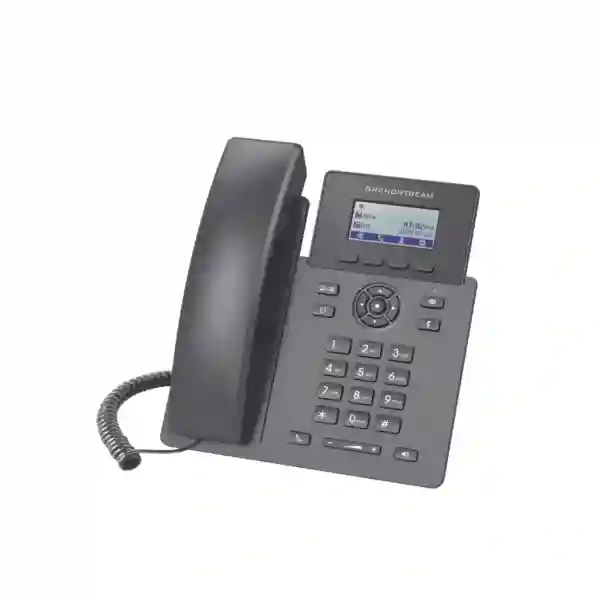
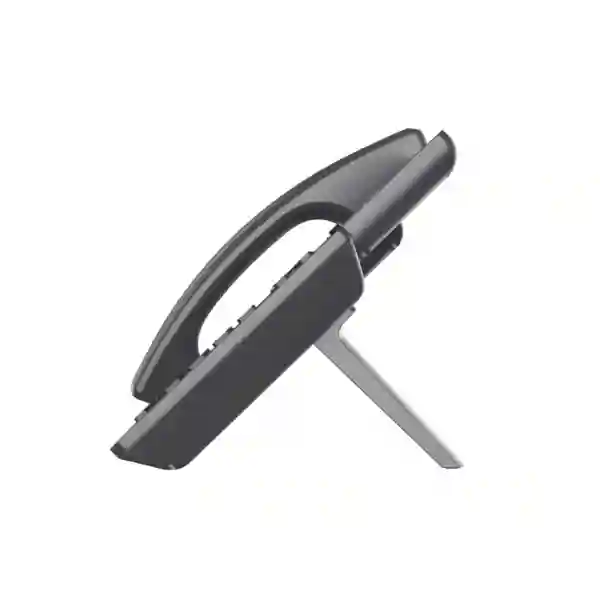
The Grandstream GRP2601P is a compact, business-focused 2-line SIP phone designed for organizations that need dependable desk calling, Power over Ethernet and centralized endpoint management. Grandstream positions the GRP2601 family for mass deployment and easy administration, and the GRP2601P variant adds integrated PoE so network connectivity and power can be delivered through compatible Ethernet infrastructure. For Tanzanian businesses moving from analogue handsets, expanding an IP PBX, standardizing branch phones or preparing a new office, the model provides the essential calling functions required at general-purpose desks while remaining straightforward for IT teams to provision and support.
Suitable for standard desk extensions and everyday business calling where users do not need a large number of simultaneous line appearances.
IEEE 802.3af Class 1 PoE can simplify desk installation when the network switch provides compatible power.
Grandstream Device Management System support helps administrators provision, configure, monitor and manage supported Grandstream endpoints centrally.
5-way audio conferencing, Noise Shield technology, full-duplex speakerphone capability, headset support and widely used voice codecs support practical office calling.
What is the Grandstream GRP2601P?
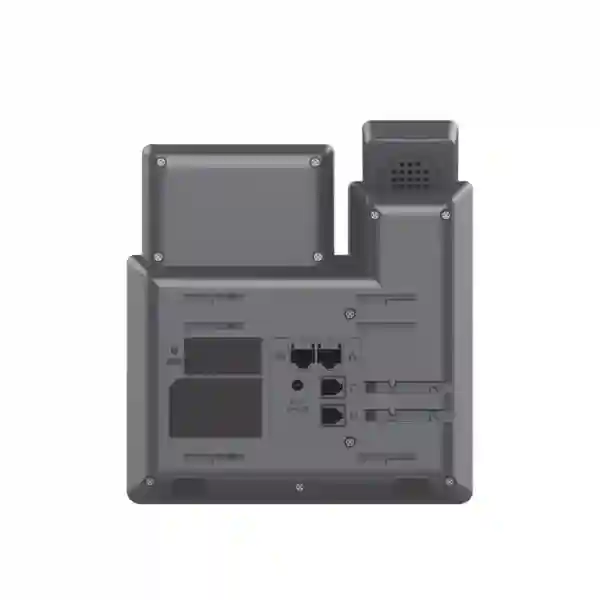
The GRP2601P is the PoE-equipped member of Grandstream’s entry-level GRP2601 family. It is intended for basic on-site or remote desktop users and for larger deployments where consistency, manageability and security matter. The phone supports two SIP accounts and two lines, a 132 × 48 LCD, dual switched 10/100 Mbps Ethernet ports and integrated PoE. Grandstream also includes secure boot, dual firmware images and encrypted data storage as part of the platform’s enterprise security approach. The phone can be provisioned through GDMS, TR-069 or encrypted XML configuration methods, which makes it relevant when an organization wants repeatable configuration across many desks rather than manually building every extension independently.
The model is not intended to replace higher-end executive or receptionist phones with large color displays, many programmable line keys or Gigabit Ethernet. Its strength is a controlled feature set for standard users. That distinction matters during procurement: an organization can use the GRP2601P for general employees, common-area desks and branch users, then select more advanced endpoints for reception, supervisors or executives who need additional line appearances, Bluetooth, larger screens or expanded key capacity.
Verified GRP2601P specifications and capabilities
| Lines and SIP accounts | 2 lines, 2 SIP accounts |
| Display | 132 × 48 LCD |
| Ethernet | Dual switched auto-negotiation 10/100 Mbps Ethernet ports |
| Power over Ethernet | Integrated PoE on GRP2601P, IEEE 802.3af Class 1 |
| Conferencing | 5-way audio conferencing |
| Management | GDMS, TR-069 and encrypted XML configuration support |
| Audio codecs | G.729A/B, G.711µ/a-law, G.726, G.722, G.723.1, iLBC and Opus among supported codecs |
| Headset | RJ9 headset jack with EHS support for compatible Plantronics, Jabra and Sennheiser headsets |
| Security | Secure boot, dual firmware images, encrypted data storage, TLS, SRTP, 802.1X and encrypted configuration support |
| Operating environment | 0°C to 40°C operating temperature; 10% to 90% non-condensing humidity |
Because the GRP2601P uses Fast Ethernet rather than Gigabit Ethernet, network design should consider any computer that may be daisy-chained through the phone. For normal office applications this may be entirely suitable, but users with large local file transfers or higher wired throughput requirements may be better served by a Gigabit-capable handset or a separate switch port. The correct choice should be based on the workstation’s real traffic profile rather than solely on phone features.
PoE, voice VLANs and deployment planning
The integrated PoE feature is one of the main reasons to select the GRP2601P instead of the non-PoE GRP2601. With a correctly sized PoE switch, one Ethernet cable can provide the phone’s network connection and power. This reduces desktop adapters and can simplify cable organization, but the network still needs deliberate planning. Administrators should confirm the available PoE budget across the switch, the number of phones, any access points or cameras sharing the same switch, and whether the switch and upstream network are protected by UPS capacity that matches business continuity expectations.
Voice VLANs and Quality of Service can also improve manageability. Separating voice endpoints into a dedicated VLAN can create clearer security boundaries, simplify addressing and allow traffic policies to distinguish real-time voice from bulk data. The phone supports LLDP-MED and Layer 2/Layer 3 QoS capabilities, but successful voice quality also depends on the PBX, switch configuration, WAN latency, jitter, packet loss and SIP provider path. A handset cannot correct an unstable network by itself.
For related infrastructure planning, review the FourTeck Tanzania technology shop for compatibility-led buying guidance, the FourTeck Tanzania services page for deployment and support context, and the FourTeck IP phone specialist site when comparing business desk-phone families and voice endpoints.
Where the GRP2601P fits best
The GRP2601P is well suited to staff who mainly need extension calling, transfer, hold, speakerphone, voicemail access, conferencing and headset use. Typical placements include administrative desks, finance teams, customer-service desks with moderate call volume, classrooms, clinic offices, branch counters, hotel back offices, warehouse administration and general office users. Its centralized management capabilities become especially useful when a company needs dozens or hundreds of phones prepared with consistent firmware, naming, SIP registration and configuration policies.
It is important to match the endpoint to the user role. A receptionist handling many concurrent calls may need more programmable keys and a larger visual interface. A senior manager may prefer Bluetooth or Wi-Fi. A contact-center user may prioritize a certified headset and call-control workflow. A user whose workstation depends on Gigabit Ethernet should not have performance constrained by an unsuitable phone passthrough path. The GRP2601P therefore works best as part of a tiered endpoint strategy rather than as a universal answer for every employee.
Grandstream GRP2601P Tanzania
For organizations in Tanzania, the GRP2601P can form the standard desktop layer of an IP telephony rollout where predictable features and centralized administration are more important than executive-phone extras. A sensible Tanzania deployment starts by confirming the existing or planned PBX, SIP trunking arrangement, extension count, PoE switching, IP addressing and internet resilience. The phone supports standards-based SIP, but actual interoperability and feature behavior should be validated with the selected PBX and service provider before a large order is committed. This is particularly important for call transfer methods, voicemail access, BLF expectations, emergency dialing rules and any automated provisioning workflow.
Power planning deserves attention because the practical benefit of PoE depends on the switching environment. If phones, wireless access points and cameras all draw from the same PoE switches, the aggregate power budget should be calculated rather than assumed. Organizations that want phones to remain usable during short power interruptions should also review UPS coverage for the access switch, PBX, router and internet equipment. Protecting only the handset is not enough if the upstream voice path loses power.
For businesses with branches in Dar es Salaam, Mwanza, Arusha or Dodoma, standardized phone templates can simplify support between locations. GDMS can help administrators manage supported Grandstream devices centrally, while consistent VLAN IDs, extension naming and firmware policies make fault isolation easier. A quotation request should therefore include the number of users, current PBX or desired PBX platform, headset needs, PoE-switch status and whether computers will connect through phone Ethernet ports. That information allows the handset decision to be assessed as part of the complete communications design rather than as an isolated hardware purchase.
Grandstream GRP2601P Dar es Salaam
Dar es Salaam offices often combine dense staff areas, multiple departments, internet-based business applications and customer-facing call flows. In this environment, the GRP2601P is most useful as a standard extension phone for desks that need reliable SIP calling without a large key field. Procurement teams should map user profiles first: general staff can use an essential handset, while reception desks, switchboard operators and executives may need models with more line keys or richer displays. This avoids over-specifying every desk while still giving heavy call users the controls they need.
Network readiness is equally important. A multi-floor Dar es Salaam office may place IP phones on access switches in several wiring closets. Voice VLANs, DHCP, LLDP-MED, QoS and PoE capacity should be configured consistently so moves and additions do not become manual exceptions. If a desktop PC is connected through the phone, remember that the GRP2601P provides 10/100 Mbps Ethernet. Teams transferring large design files, video or data sets may require a different network arrangement. For ordinary web, email and office workflows, Fast Ethernet may still be appropriate, but the decision belongs in the network design.
Business continuity planning should also cover the PBX, SIP trunk and internet path. An office can have perfectly configured phones yet still lose external calling if the WAN or PBX becomes unavailable. For critical operations, discuss primary and backup connectivity, UPS-backed switches and a documented recovery procedure. When requesting a GRP2601P quotation for Dar es Salaam, provide handset quantity, site count, PBX details, SIP provider, PoE availability, headset requirements and desired deployment schedule. This creates a clearer bill of materials and makes it easier to identify whether accessories, network upgrades or higher-tier phones are needed for specific roles.
Grandstream GRP2601P Mwanza
In Mwanza, the GRP2601P can suit branch offices, education administration, hospitality back offices, clinics, professional services and operational teams that need a consistent desk phone across multiple departments. The practical advantage is not only the handset itself but the ability to define a repeatable voice endpoint standard. Two SIP accounts and two lines cover many general-user scenarios, while the phone’s 5-way audio conferencing can support quick internal coordination without requiring every discussion to move to a separate meeting platform.
A Mwanza rollout should begin with a site inventory. Count user desks, shared phones, meeting areas, analogue devices that may still require gateways, network ports and available PoE. Confirm whether the PBX is on-premises, cloud-hosted or located at another branch. If voice traffic crosses a WAN between sites, assess latency, jitter, packet loss and failover. The phone supports a range of common codecs including G.722 and Opus, but codec availability alone does not guarantee good calls when network conditions are poor.
IT teams planning gradual replacement can stage phones by department. A pilot group can confirm provisioning, dialing rules, transfer behavior, voicemail access and headset operation before larger deployment. This also creates an opportunity to document labels, extension numbers and user instructions. Where centralized management is desired, GDMS support can reduce repetitive configuration tasks. For quotation preparation, include the number of phones, any wall-mount requirements, preferred headsets, switch models, PBX platform and whether remote extensions are expected. These details help determine the complete solution around the GRP2601P and reduce surprises during installation.
Grandstream GRP2601P Arusha
Arusha organizations in tourism, hospitality, education, logistics, NGOs and professional services may need desk telephony that can be standardized across reception support, reservations, finance, administration and branch offices. The GRP2601P can cover general-purpose desks, but departments with heavy inbound-call handling should be evaluated separately. A reservations team, for example, may benefit from a headset and clear call-transfer workflow, while a central reception position could justify a more advanced phone with additional keys.
For hospitality or multi-building environments, cabling and switching often determine how smoothly phones can be deployed. The integrated PoE capability reduces the need for separate power adapters at desks, provided the switch supports IEEE 802.3af and has enough total budget. In properties where voice, cameras and Wi-Fi share access switches, PoE consumption and uplink capacity should be reviewed together. VLAN separation can help organize these services and limit unnecessary broadcast traffic, while QoS policies can prioritize real-time voice during busy network periods.
Organizations with seasonal staffing or frequently changing room assignments can also benefit from documented provisioning templates. Rather than treating each handset as a one-off configuration, define standard profiles for departments and locations. This approach can shorten moves, adds and changes and makes replacement devices easier to prepare. When evaluating the GRP2601P for Arusha, specify whether the system must connect to a Grandstream UCM, another SIP PBX or a hosted service; identify call-flow requirements; confirm internet resilience; and include accessory needs. The endpoint should be purchased only after those dependencies are understood, because a well-selected phone still relies on correct PBX and network configuration.
Grandstream GRP2601P Dodoma
Dodoma deployments may involve government-related offices, professional organizations, education, healthcare, associations and growing private-sector branches that want a manageable transition to IP telephony. The GRP2601P’s straightforward interface can be useful where users need familiar call controls rather than complex touchscreen functions. Dedicated buttons for functions such as transfer, headset, mute, redial and speakerphone keep common tasks visible, which can simplify user adoption when moving from older desk phones.
Before procurement, confirm how extensions will be registered and managed. A centralized PBX can simplify numbering and inter-office dialing, while cloud-hosted services can reduce equipment at each branch but place more dependence on internet connectivity. For either approach, security should be treated as part of the system. The GRP2601P supports TLS, SRTP, 802.1X, secure boot and encrypted configuration mechanisms, but administrators must still use appropriate credentials, controlled network access and current firmware policies.
For a multi-department Dodoma office, consider a phased deployment with a documented phone standard. Define which users receive GRP2601P units, which roles require higher-tier devices and how headsets will be supported. Test call quality during real business hours rather than only during an empty-office installation window, since congestion can expose WAN or QoS problems. A useful quotation request includes desk count, switch inventory, PBX model, SIP trunk arrangement, phone-number migration needs, extension plan and target implementation sequence. This information helps align handset quantity with network and voice-system readiness while avoiding unsupported assumptions about service availability or delivery times.
Grandstream GRP2601P UAE
For UAE offices, the GRP2601P can be considered for standardized desk deployments in trading companies, professional services, retail back offices, hospitality administration and branch environments. The key procurement question is whether an essential two-line endpoint matches the user profile. General employees who mainly place and receive calls may not need an executive handset, while receptionists or supervisors may need a larger key capacity. Separating these profiles can control project cost without compromising usability for heavier call roles.
UAE deployments often include structured cabling and PoE switching, making the GRP2601P’s integrated PoE relevant for cleaner desks and centralized power. However, switch capacity, VLAN design and PBX compatibility should still be checked. External calling may depend on a licensed telecom service, SIP trunk or hosted platform, so the endpoint should be validated against the chosen service architecture. Organizations with offices in both the UAE and East Africa can also use common provisioning standards where technically appropriate, making support procedures more consistent across regions.
For broader UAE voice-system planning, the FourTeck Grandstream UAE specialist site provides related Grandstream context, while FourTeck IP PBX Dubai resources can help frame PBX-side requirements. When requesting a quote, include device quantities, site addresses, PBX or hosted platform, PoE readiness, user roles and any headset requirement. That scope gives the sales and engineering conversation enough detail to distinguish handset supply from the configuration, licensing, telecom and installation work that may surround a complete voice deployment.
Grandstream GRP2601P Uganda
Ugandan businesses can use the GRP2601P as a repeatable standard for ordinary office extensions where PoE and centralized provisioning are valuable. The model can fit distributed organizations with headquarters, branches and remote administration points, but the network path between locations should be reviewed if the PBX is centralized. A branch with unstable WAN connectivity may need local survivability planning or an alternative call-routing strategy depending on the PBX platform.
A practical Uganda rollout maps phones to user categories before quantities are finalized. Standard users may receive GRP2601P units, while reception and high-call-volume roles receive more capable endpoints. This prevents a common procurement error: buying one model for everyone and then discovering that a small number of users need more keys, Gigabit Ethernet or other features. Where PCs share phone network ports, Fast Ethernet throughput should be considered alongside workstation requirements.
For organizations managing multiple sites, GDMS can support centralized Grandstream endpoint administration and firmware workflows. Pair that with consistent voice VLANs, DHCP options, extension naming and documentation. PoE should be calculated across each access switch, particularly when cameras and access points share the same infrastructure. FourTeck’s Uganda regional site can be used for related regional technology requirements. A strong quotation request should include handset count, branch count, PBX details, SIP service, WAN topology, PoE switch models and headset needs so the phone choice is evaluated in the real deployment context.
Grandstream GRP2601P Kampala
Kampala offices with higher staff density can benefit from treating desk-phone deployment as a structured network project rather than a collection of individual handsets. The GRP2601P can serve general administration, finance, support and operations desks, but user groups that handle queues or many transfers should be tested carefully. EHS headset support is helpful for compatible headsets, yet the call-control needs of a busy contact-center position may still justify a different endpoint.
Because many Kampala businesses depend heavily on cloud services and internet connectivity, voice traffic should be considered alongside normal application use. QoS policies can prioritize SIP and media traffic, but they must be implemented end to end where possible. Packet loss and jitter can damage call quality even when bandwidth appears sufficient. A pilot deployment during busy hours can reveal problems that basic speed tests miss. Administrators should also confirm DNS, NTP, firewall and NAT behavior, all of which can affect SIP registration and service reliability.
For new offices, integrate phone planning with structured cabling and PoE switching so each desk has the correct data path. For existing offices, audit port availability and switch age before ordering phones in bulk. Standardized provisioning through GDMS or PBX-side templates can speed onboarding and replacement. A Kampala quotation should state how many users are general staff, reception, supervisors and meeting-room users; include PBX and switch information; and identify whether external calling is already active. This makes the final equipment list more accurate and creates a clearer distinction between endpoint hardware, voice-service configuration and network remediation.
Grandstream GRP2601P Arua
For Arua branch offices and operational sites, the GRP2601P can provide a simple standardized extension phone when the surrounding network and voice service are engineered appropriately. Smaller branches often benefit from equipment that does not require a large amount of local administration. Central provisioning, documented settings and consistent extension plans can allow a head-office IT team or service partner to manage phones without rebuilding each device from scratch.
Connectivity should receive special attention when a branch depends on a PBX hosted elsewhere. Voice packets are sensitive to latency, jitter and intermittent loss, so internet quality and backup options may be more important than headline bandwidth. If the branch uses PoE, verify switch capacity and UPS runtime so the phones and upstream router remain powered together. A phone with PoE cannot maintain service if the switch, router or WAN device goes offline.
The GRP2601P’s two SIP accounts can support standard extension requirements, and its security features help administrators maintain a stronger baseline when combined with good operational practices. Secure credentials, controlled management access, firmware maintenance and network segmentation should form part of deployment. For Arua purchasing, provide the number of desks, existing switch and router models, PBX location, internet connection type, preferred calling features and any plans to expand. This allows the project to consider whether the GRP2601P remains appropriate as the branch grows and whether higher-tier phones, local gateways or additional network equipment should be included for specific users.
Grandstream GRP2601P Mbarara
Mbarara organizations in education, healthcare, hospitality, retail administration and professional services can deploy the GRP2601P where staff need essential desk calling plus PoE and manageable provisioning. The model is especially relevant when a business wants a common endpoint for many similar users. Standardization can reduce the number of spare models, simplify user training and create consistent configuration templates across departments.
Planning should distinguish phone requirements from PBX requirements. The handset provides the endpoint interface, but features such as IVR, queues, voicemail policies, recording and branch routing depend largely on the PBX or hosted service. Buyers should therefore define call flows before selecting the final device mix. For example, a reception position that monitors many extensions may need a more advanced phone even when the majority of users can use the GRP2601P.
Network checks include PoE budget, Ethernet speed, VLAN configuration, DHCP, QoS and WAN stability. If desktop computers are connected through the phone, confirm that 10/100 Mbps passthrough meets each user’s requirements. For sites where voice is operationally critical, protect switches, PBX equipment and routers with an appropriate UPS strategy and test recovery after outages. A useful Mbarara quotation request includes handset quantity, PBX platform, switch models, user-role breakdown, headset needs and any branch-to-branch dialing requirement. This scope enables an informed decision about endpoint suitability and prevents accessory or infrastructure gaps from being discovered after phones arrive.
Grandstream GRP2601P Gulu
The GRP2601P can support Gulu offices that want to move from basic analogue extensions to a more manageable SIP environment or expand an existing IP PBX. The phone’s essential feature set keeps the user experience straightforward, while centralized provisioning provides administrators with a more scalable method for configuration. This combination can be practical for branch operations, education, service organizations and administrative teams where most users share similar calling needs.
A migration project should start with extension inventory and call-flow mapping. Document which analogue devices remain, which numbers are public, how incoming calls are distributed and which users require direct inward dialing, voicemail or queue membership. The handset itself does not define these PBX behaviors, so a clear system design should precede bulk purchasing. Pilot phones can then be used to verify registration, audio quality, transfer behavior, caller ID and failover procedures.
Gulu deployments with centralized PBX services should also test internet quality at realistic business loads. Voice traffic may represent modest bandwidth, but it is sensitive to delay variation. VLAN and QoS policies can help on the LAN, while redundant connectivity may be considered for sites where external calling is critical. If PoE is used, switch power budgets should include growth. For quotation preparation, include user count, current cabling, PBX location, SIP service, switch capacity and desired accessories. This gives the project team enough information to determine whether GRP2601P units can be deployed directly or whether network, power or PBX changes should be completed first.
Grandstream GRP2601P Kenya
Kenyan organizations can use the GRP2601P for standard desk extensions in offices, branch networks and service operations where integrated PoE and centralized management are useful. A national or multi-city business may standardize general users on one essential model while reserving advanced phones for reception, managers and high-volume call roles. That approach can simplify procurement, spares and user support without forcing every employee onto the same feature tier.
The technical evaluation should include PBX interoperability, SIP trunking, LAN design and workstation bandwidth. The GRP2601P has dual 10/100 Mbps Ethernet ports, so organizations with Gigabit desktop requirements may choose a separate data port or a different handset for those users. Voice VLANs and QoS can help organize traffic, while GDMS can support centralized management of Grandstream endpoints. Security should include current firmware, strong credentials and controlled administration rather than relying only on factory features.
For regional sourcing and related solution discussions, the FourTeck Kenya site provides local-market context. Companies operating in both Kenya and Tanzania may benefit from consistent extension numbering, templates and support processes across branches, while still adapting PBX connectivity to each country’s telecom environment. A quotation should identify phone quantity, sites, PBX platform, existing switches, headset needs and any requirement for remote extensions. This enables the endpoint choice to be checked against the complete voice architecture rather than being evaluated solely by unit price.
Grandstream GRP2601P Kuwait
Kuwait businesses evaluating the GRP2601P should treat it as an essential SIP desk endpoint for standard users rather than an executive handset. It can support office administration, retail back offices, branch employees and service teams whose calling needs are centered on everyday extension functions. Built-in PoE can reduce local power adapters when the LAN is designed around PoE switches, and centralized provisioning can make multi-floor or multi-site deployments easier to administer.
Before purchase, confirm the voice platform and telecom arrangement. SIP registration, external calling and advanced features depend on the PBX or service environment, and organizations should verify compatibility before committing to large quantities. For users who connect PCs through the phone, Fast Ethernet speed should be compared with workstation requirements. Where Gigabit access is necessary, the network design may separate phone and PC cabling or select a different endpoint model.
Kuwait deployments can also benefit from documented device profiles covering firmware, language, time settings, VLAN parameters and security. Central templates reduce manual variation and support easier replacement when a handset is moved or changed. The FourTeck Kuwait site can support broader regional technology inquiries. For a detailed quotation, provide the number of phones, PBX model or hosted-service name, switch types, PoE capacity, required headsets and any multi-branch dialing plan. This clarifies which elements are endpoint hardware and which belong to the wider voice and network implementation.
Grandstream GRP2601P Ghana
Ghanaian companies can consider the GRP2601P for desk standardization in administrative, education, healthcare, hospitality and commercial environments. Its two SIP accounts, two lines, PoE and centralized management capabilities are aligned with everyday users who need clear, manageable business calling. Larger sites should avoid assuming one phone profile fits every role; reception desks and supervisors may require more programmable controls, while general employees can remain on the essential model.
The LAN should be reviewed before rollout. Confirm each desk has suitable cabling, the switches provide enough PoE budget, voice VLANs are planned and the WAN can support the intended call volume. Call quality depends on latency, jitter and packet loss as well as bandwidth, so performance testing should reflect normal office load. If a cloud PBX is used, internet resiliency becomes part of the telephony design. For on-premises systems, local power protection and backup planning become especially important.
Organizations operating multiple branches can establish a common configuration baseline using GDMS and PBX-side provisioning tools. Maintain documented extension ranges, device names, firmware policies and user instructions. The FourTeck Ghana site can provide regional context for related technology requirements. When requesting pricing, include site count, user-role mix, PBX details, internet topology and headset requirements. A complete scope makes it easier to determine whether the GRP2601P should be the standard endpoint and which users require different models or network accommodations.
Grandstream GRP2601P Nigeria
For Nigerian organizations with many office extensions, the GRP2601P can be attractive as a standardized essential endpoint because it combines PoE, SIP support and central management without adding advanced features every user may not need. This is useful for phased deployments where hundreds of desks must follow a consistent configuration. IT teams can define templates for departments and branches, then reserve higher-tier handsets for users who need additional keys, Gigabit Ethernet or more sophisticated interfaces.
Power and connectivity planning are central to successful IP telephony. PoE simplifies desk power, but switches, routers and PBX appliances should be protected according to continuity needs. Where external calling depends on internet-based SIP services, redundant connectivity may be worth evaluating. Voice VLANs and QoS can help keep real-time traffic organized on busy office networks, but configuration should be tested rather than assumed. The phone’s support for codecs such as G.722 and Opus can enable good audio quality when the complete network path is healthy.
For related regional technology sourcing, visit FourTeck Nigeria. Multi-country companies can use a shared deployment methodology across Nigeria, Ghana, Kenya, Uganda and Tanzania while adapting each site’s SIP and carrier arrangements. A useful project brief should list handset quantity, PBX platform, number of locations, WAN architecture, switch inventory, headset requirements and any migration from analogue lines. This ensures the GRP2601P is evaluated as part of a resilient voice environment rather than as a standalone desk device.
Grandstream GRP2601P Seychelles
Seychelles deployments can include hospitality properties, professional offices, public-facing service organizations and distributed administration sites where a manageable SIP desk phone is required. The GRP2601P can fit staff desks that need essential calling, conferencing and headset support while allowing administrators to use centralized provisioning. In hospitality, the distinction between front-office, back-office and room-phone requirements should be made carefully, because each role may need different keys, durability, labeling or integration.
Island and multi-property networks can make WAN architecture especially important. If a PBX or hosted voice service is reached over the internet, latency and resiliency should be reviewed for every site. A phone may remain powered but lose service if the WAN fails, so continuity planning should cover the entire path. PoE switching can simplify installation, and UPS-backed switches can support short power interruptions, but runtime should be calculated against the real equipment load.
A structured rollout should document extension numbering, VLANs, DHCP, firewall rules, firmware and user instructions. The GRP2601P’s security capabilities provide useful building blocks, but good administration remains necessary. For quotation preparation, identify how many phones are needed at each property or office, which roles require advanced handsets, whether existing switches support PoE, and how external calls will be delivered. This creates a more accurate scope for equipment, configuration and any network upgrades, while avoiding assumptions about stock, delivery or local service coverage that must be confirmed separately at the time of purchase.
Compatibility and buying checklist
Confirm registration, call transfer, voicemail, caller ID, codecs, NAT behavior and provisioning with the chosen platform.
Verify IEEE 802.3af support, total switch PoE budget, available ports, VLAN capability, QoS and UPS coverage.
The phone uses 10/100 Mbps Ethernet; assess whether a connected PC requires Gigabit performance.
Separate standard users from reception, supervisors and executives who may need additional programmable controls or connectivity features.
Frequently asked questions
Does the GRP2601P support PoE?
Yes. The GRP2601P variant includes integrated IEEE 802.3af Class 1 PoE. The non-PoE GRP2601 is a different variant.
How many SIP accounts does it support?
Grandstream specifies two SIP accounts and two lines for the GRP2601 family.
Can it be centrally managed?
Yes. It is supported by Grandstream Device Management System (GDMS), and Grandstream also documents TR-069 and encrypted XML provisioning methods.
Is it a Gigabit phone?
No. Grandstream specifies dual switched 10/100 Mbps Ethernet ports. Buyers who need Gigabit desktop passthrough should consider network layout or another handset model.
Does it support headsets?
Yes. It includes an RJ9 headset port and supports EHS with compatible Plantronics, Jabra and Sennheiser headsets as documented by Grandstream.
Quotation checklist
For the most useful Grandstream GRP2601P quotation, provide the required handset quantity, number of sites, PBX platform or desired PBX, SIP trunk or service-provider details, PoE switch models, voice VLAN requirements, headset requirements, wall-mount needs, desktop bandwidth expectations and target user groups. Include whether the project is a new installation, expansion or migration from analogue telephony. These details help identify supporting switches, PBX hardware, gateways or higher-tier phones that may be necessary.
Decision recap
Choose the Grandstream GRP2601P when you need an essential 2-line SIP phone with built-in PoE, centralized Grandstream management, business voice features and a simple desk-user interface. Check carefully whether Fast Ethernet, two-line capacity and the compact display fit the role. For reception, executive or high-throughput desktop users, compare higher-tier models before standardizing. The most successful deployment combines the correct handset with a compatible PBX, well-planned PoE switching, voice VLANs, QoS, internet reliability and documented provisioning.
Discuss your GRP2601P requirement with FourTeck Tanzania
FourTeck can help frame the GRP2601P requirement within the broader IP telephony environment, including PBX selection, SIP endpoint planning, PoE switching, network segmentation, structured cabling and deployment considerations. Product availability, commercial terms, lead time and final compatibility should be confirmed during quotation rather than assumed from web content.


Reviews
There are no reviews yet.