
Business VoIP • Wi‑Fi 6 • Centralized Management
Grandstream GRP2601W Tanzania
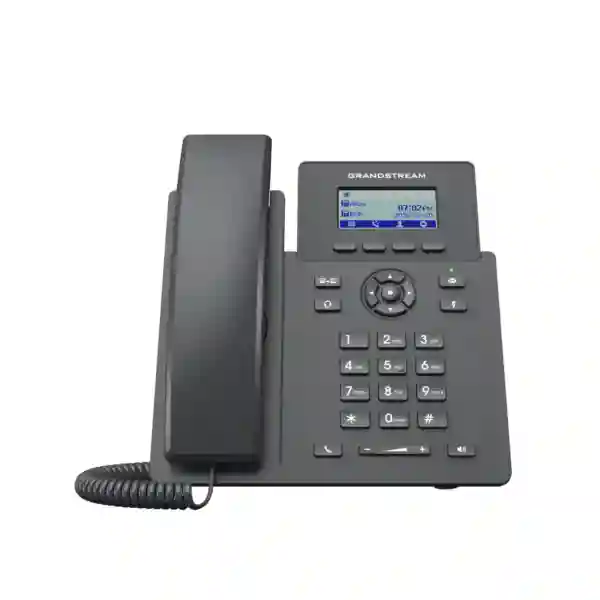
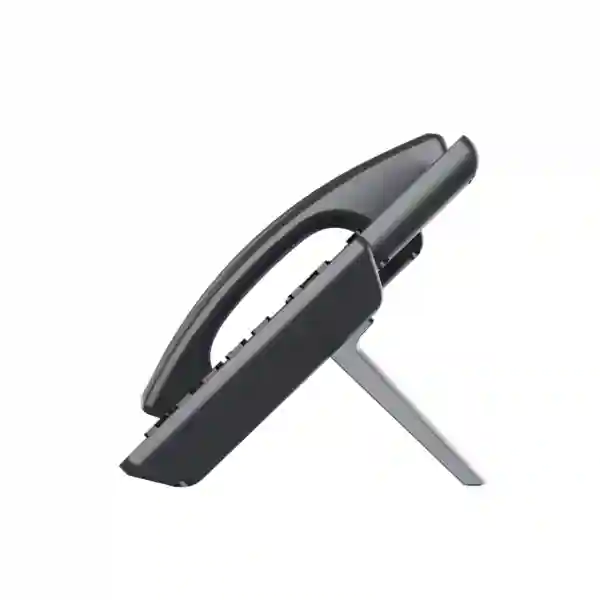
The Grandstream GRP2601W is an essential carrier-grade IP phone built for organizations that want a simple, centrally manageable SIP endpoint with integrated 2.4 GHz single-band Wi‑Fi 6. It supports two SIP accounts and two lines, five-way audio conferencing, Grandstream Device Management System provisioning, headset integration through Electronic Hook Switch support, and security functions that include secure boot, dual firmware images and encrypted data storage. For Tanzania businesses, the practical advantage is flexible placement: a desk phone can join an appropriate 2.4 GHz wireless network where running a dedicated Ethernet drop is inconvenient, while still operating as part of a structured IP PBX or hosted SIP deployment.
SIP accounts and two lines for everyday business calling.
Integrated 2.4 GHz single-band wireless networking for flexible desk placement.
Audio conferencing for quick multi-party collaboration.
Cloud-based provisioning, configuration, monitoring and management.
What the Grandstream GRP2601W solves
Many organizations need a reliable desk phone without the complexity or cost of an executive endpoint. The GRP2601W targets that requirement directly. It provides the essential functions expected from a modern SIP phone while adding wireless network access and centralized management. This makes it suitable for general staff desks, shared work areas, temporary project offices, remote users, hotel back offices, clinics, schools, retail administration, warehouses and branch offices where physical cabling may be limited or where IT teams want faster endpoint rollout.
The model is particularly useful when administrators want consistent configuration across many devices. Grandstream Device Management System gives IT teams a central place to provision, configure, manage and monitor Grandstream endpoints. That is important in multi-branch deployments because a standardized template can reduce repetitive local setup. The phone also supports zero-touch provisioning concepts used by service providers and larger organizations, helping teams prepare devices for repeatable deployment rather than configuring every handset independently at the desk.
Wireless connectivity does not remove the need for network planning. The GRP2601W uses 2.4 GHz single-band Wi‑Fi 6, so the selected wireless network must provide suitable 2.4 GHz coverage, appropriate security, DHCP or other addressing as designed, and sufficient voice-friendly capacity. In offices where the 2.4 GHz band is congested, access-point placement and channel planning matter. Voice traffic should also be considered alongside data traffic, guest access and other wireless services. The result is best when phone selection, PBX configuration, Wi‑Fi design and user requirements are handled as one communication project rather than as separate purchases.
Verified GRP2601W features and technical highlights
| Area | Verified capability | Business relevance |
|---|---|---|
| Lines / SIP | 2 SIP accounts, 2 lines | Suitable for essential desk calling with separate account or line needs. |
| Wireless | 2.4 GHz single-band Wi‑Fi 6 | Supports wireless LAN attachment where Ethernet is inconvenient. |
| Display | 132 × 48 LCD display | Provides essential call and menu visibility without a large color interface. |
| Conferencing | 5-way audio conference | Useful for quick team, supplier and customer discussions. |
| Management | GDMS online management and provisioning | Helps standardize and administer distributed phone estates. |
| Audio | Noise Shield and AI noise reduction support | Helps reduce disruptive background noise in normal office use. |
| Headsets | EHS support for compatible Plantronics, Jabra and Sennheiser headsets | Useful for users who spend extended periods on calls. |
| Security | Secure boot, dual firmware images, encrypted data storage | Supports stronger endpoint security practices. |
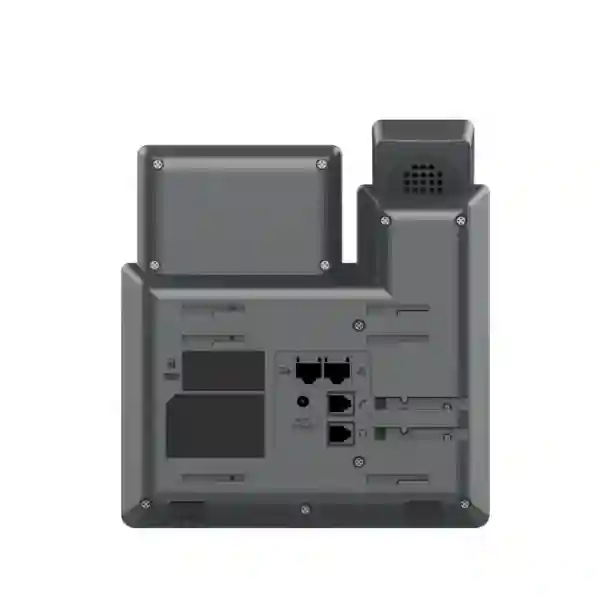
| Ethernet | Dual switched auto-sensing 10/100 Mbps Ethernet ports | Allows a wired alternative and desktop pass-through planning where suitable. |
Important model note: integrated PoE belongs to the GRP2601P variant, not the GRP2601W. Buyers should not assume that every GRP2601 family model has the same powering and connectivity features. Confirm the exact suffix on quotations and purchase orders.
PBX compatibility, SIP planning and deployment
The GRP2601W is designed around SIP standards and is appropriate for deployments with a compatible IP PBX or SIP service. Before ordering, buyers should confirm the intended PBX platform, number of extensions, credential provisioning method, outbound route requirements, extension numbering, voicemail behavior, transfer workflows and any department-specific calling features. A phone can register successfully but still deliver a poor user experience if ring groups, call queues, permissions and call forwarding have not been planned.
For Grandstream environments, centralized provisioning can be combined with Grandstream PBX workflows and GDMS administration. For other standards-based PBX environments, confirm the required SIP features with the PBX administrator or service provider. Typical network planning should include VLAN strategy, DNS, NTP, DHCP, firewall rules, QoS priorities and secure signaling or media settings where required by organizational policy. The phone supports a broad standards set that includes SIP, HTTP/HTTPS, DHCP, DNS, NTP, LDAP, TR-069, SNMP, 802.1X, TLS, SRTP and IPv6, giving administrators multiple options for integration into managed business networks.
Wi‑Fi planning deserves separate attention. Because the GRP2601W is a 2.4 GHz model, an organization should check radio coverage exactly where phones will be placed, not only whether employees can see a wireless SSID on laptops. Voice requires consistency: packet loss, interference and unstable roaming can be more noticeable on a call than during ordinary web browsing. In dense offices, an IT team may decide that fixed Ethernet remains preferable for permanent desks while Wi‑Fi is reserved for locations where cabling is difficult. The model gives buyers that choice without forcing a one-size-fits-all deployment approach.
Best-fit users
General office staff, branch users, administrative desks, classrooms, clinics, hospitality back offices, reception support positions, retail offices, warehouse administration and remote workers who need dependable essential SIP calling rather than a premium feature-phone interface.
When to compare another model
Choose a higher GRP model when users require more SIP accounts, more programmable keys, a larger display, Gigabit Ethernet, dual-band Wi‑Fi, Bluetooth or other advanced endpoint capabilities. Match the phone to the user role instead of selecting by model name alone.
Grandstream GRP2601W Tanzania
In Tanzania, the GRP2601W fits organizations that are modernizing business voice without making every desk dependent on new cable runs. Corporate offices, professional firms, schools, clinics, hotels, retailers, NGOs, logistics operators and project teams can use the phone as an essential SIP endpoint within a managed IP telephony environment. The integrated 2.4 GHz Wi‑Fi capability is especially relevant where the physical office layout changes frequently, where leased premises make cabling work inconvenient, or where specific desks are not close to an available Ethernet point. That flexibility should be combined with disciplined wireless planning so the convenience of Wi‑Fi does not create unpredictable call quality.
A Tanzania procurement plan should start with the number of users and the role of each user. Two SIP accounts and two lines are enough for many standard desk positions, but receptionists, executives or call-heavy teams may need more keys, more accounts or a different user interface. Buyers should also confirm whether the proposed PBX is on-premises, cloud-hosted or service-provider managed. That decision affects provisioning, firewall policy, remote access, SIP trunking and the support workflow. When the phones are part of a new office setup, include switching, Wi‑Fi coverage, internet reliability, UPS protection and extension planning in the same conversation.
For structured projects, the value of GDMS is operational consistency. Devices can be configured and monitored through a centralized platform, which is helpful for organizations with multiple locations or a small IT team supporting many endpoints. Security settings, firmware policy, device naming and account templates should be documented before a large rollout. Buyers seeking a broader project view can review FourTeck Tanzania business IT and telecom solutions, which places IP phones alongside PBX, networking, Wi‑Fi, security and infrastructure planning. The goal should be a phone deployment that works reliably with the rest of the network, not merely a shipment of handsets.
Grandstream GRP2601W Dar es Salaam
Dar es Salaam organizations often operate in busy commercial environments where office moves, shared buildings, mixed wired and wireless networks and multi-department call flows are common. The GRP2601W gives these businesses a practical SIP endpoint for standard users who need two accounts, two lines and wireless flexibility. In a professional office, the phone can serve accounts, administration, sales, operations or support desks. In hospitality, it can support back-office teams. In logistics and distribution, it can be used by supervisors or administrative staff where voice connectivity is required but the nearest network point is not conveniently positioned.
For Dar es Salaam deployments, Wi‑Fi assessment should be completed at the actual desk positions. Dense 2.4 GHz radio usage from neighboring networks can increase interference, so access-point placement, channel selection and signal quality matter. If a building already has a managed wireless network, create a voice-ready configuration that follows the organization’s authentication and segmentation policies. If the site is being built from the beginning, compare the long-term merits of structured Ethernet against wireless phone placement rather than assuming Wi‑Fi is always easier. Power availability also needs attention because the W variant does not provide the same integrated PoE capability as the GRP2601P.
Procurement teams should provide phone quantity, intended PBX, preferred SIP provider if already selected, user roles, headset requirements and required deployment date when asking for a quotation. That information helps avoid mismatched devices and incomplete accessories. A well-prepared Dar es Salaam project also documents extension numbers, department names, ring groups and responsibilities for ongoing administration. This turns the GRP2601W from a simple desk phone into a controlled component of a maintainable business voice platform.
Grandstream GRP2601W Mwanza
Mwanza businesses evaluating the GRP2601W can use it in branch offices, education facilities, healthcare administration, tourism-related operations, retail management, professional services and warehouse offices where a straightforward SIP phone is more appropriate than a high-end executive model. The two-account design suits standard users, and centralized management can help organizations keep configuration consistent when the local branch is supported by an IT team based elsewhere. Wireless connectivity can also be helpful in offices where a desk must be moved without immediate recabling.
For a Mwanza branch, the most important planning question is the quality of the complete communications path. A phone may have strong local Wi‑Fi while still experiencing poor calls if the WAN connection, router policies or SIP path are unstable. Include internet service quality, firewall behavior, DNS, NTP and QoS in the deployment review. Where a branch communicates frequently with a headquarters or another office, determine whether calls will travel through a central PBX, a hosted system or a direct SIP service. Each architecture has different requirements for resilience and troubleshooting.
If the deployment is part of regional standardization, document a repeatable configuration for Mwanza and other sites. GDMS can simplify endpoint administration, but good operational practice still requires naming conventions, firmware policy, access control, extension records and clear escalation procedures. Buyers should also decide whether users need compatible wired or EHS-capable headsets. The result is a branch phone environment that is easier to support, expand and replace without rebuilding settings from memory each time a device changes.
Grandstream GRP2601W Arusha
Arusha has a diverse business mix that includes hospitality, tourism services, international organizations, education, professional firms and growing local enterprises. The GRP2601W can serve standard desk users in these environments when the requirement is dependable SIP calling with the option of 2.4 GHz Wi‑Fi 6 connectivity. Hotels and tour operators, for example, may need phones for reservations, administration, procurement or back-office coordination rather than high-density call-center functions. Offices may use the device for staff extensions connected to a central PBX or hosted voice platform.
A useful Arusha buying assessment should separate guest Wi‑Fi from business voice requirements. Even when a property already has wireless coverage, the phone network should be planned with access control, consistent addressing and sufficient capacity. Business voice devices should not simply be added to an open or overloaded guest SSID. Where network segmentation is available, phones can be placed into an appropriate voice or business network according to the organization’s design. Administrators should also keep firmware and configuration management controlled so device behavior is consistent across departments.
For multi-property hospitality or travel operations, centralized management can reduce support effort. Instead of treating each phone as an independent appliance, standardize account templates, device labels and support procedures. Confirm the PBX capacity, number of extensions and expected concurrent calls before purchasing phones in bulk. The GRP2601W is most suitable where user needs are essential and predictable; more advanced reception roles may justify models with larger displays or additional programmable keys. That role-based approach keeps the project practical and avoids paying for features that ordinary desks do not need.
Grandstream GRP2601W Dodoma
In Dodoma, the GRP2601W can support administrative offices, educational institutions, professional services, branch operations, project teams and organizations that need standardized IP telephony for general staff. Its combination of two SIP accounts, five-way conferencing and centralized management gives IT teams a controlled baseline for users whose calling needs are important but uncomplicated. The Wi‑Fi model can also simplify placement in meeting support areas or desks where installing another network cable would slow a project.
Before deployment, buyers should check whether the selected location has stable 2.4 GHz wireless coverage during peak business hours. A survey taken when an office is empty may not reflect real congestion after staff and visitors arrive. For critical desks, compare wired and wireless connectivity and choose the more predictable option. If a site requires network authentication such as 802.1X, confirm the planned configuration, credentials and device enrollment process. Security should be treated as part of the telephony design because phones are network endpoints that hold configuration and account information.
Dodoma procurement teams can make quotation preparation faster by supplying exact quantity, PBX platform, desired extension plan, accessories, delivery location and any installation requirements. If the project includes several buildings or departments, list the number of phones by area and user role. That information helps determine whether every desk should use the GRP2601W or whether a mixed model strategy is better. General users may use the essential model while reception, supervisors or executives receive phones with additional features. This keeps the deployment consistent without making it unnecessarily expensive or complex.
Grandstream GRP2601W UAE
For organizations coordinating Tanzania and UAE operations, the GRP2601W can be standardized as an essential SIP endpoint where wireless connectivity and centralized management are priorities. Regional groups frequently benefit from using a smaller approved device catalogue rather than allowing each branch to purchase unrelated phones. A standard endpoint simplifies user training, spares planning, provisioning templates and remote troubleshooting. The two-line design is appropriate for ordinary staff, while higher-feature models can be reserved for reception or management roles.
UAE deployments should still be designed according to the local PBX and telecom environment. Confirm SIP service requirements, network security rules, wireless policies and organization-specific compliance before rollout. In large offices with dense wireless usage, the 2.4 GHz-only characteristic of the GRP2601W is an important design consideration. A dual-band phone may be preferable in some high-density sites, while the GRP2601W can remain practical in controlled 2.4 GHz environments or locations where Wi‑Fi is mainly used to avoid a new cable drop.
Cross-border buyers should avoid assuming that stock, warranty terms, accessories or service arrangements are identical in every country. Request a region-specific quotation and confirm exactly what is included. When users need coordinated procurement across East Africa and the Gulf, consistent technical specifications and documentation are more valuable than relying on model names alone. The phone should be purchased as part of a defined SIP architecture with clear ownership for configuration, firmware and ongoing support.
Grandstream GRP2601W Uganda
Uganda businesses can use the GRP2601W for standard office extensions, branch deployments, schools, clinics, hospitality operations, service desks and general administrative users. The integrated Wi‑Fi feature is useful when physical Ethernet availability is inconsistent between desks, while two SIP accounts cover many everyday calling needs. For regional organizations with Tanzania and Uganda operations, using the same endpoint family can simplify configuration templates and support documentation across sites.
A successful Uganda rollout should define how each phone reaches the PBX and which team is responsible for voice-network administration. If the PBX is hosted, check internet stability and firewall rules. If it is on-premises, confirm local switching, wireless coverage, DNS and power protection. Because voice is sensitive to delay and packet loss, basic connectivity is not enough; the network should be tested under real office load. The 2.4 GHz wireless band should be planned carefully in shared or dense buildings.
FourTeck maintains a regional presence through FourTeck Uganda IT and communication solutions, which can be relevant for organizations coordinating requirements across East Africa. Buyers should still confirm the exact model, quantity, commercial terms and support expectations for each country. Standardization works best when technical policy is centralized but procurement details are validated locally.
Grandstream GRP2601W Kampala
Kampala offices often have mixed network environments ranging from modern managed LANs to leased spaces where cabling options are limited. The GRP2601W addresses the latter challenge by adding integrated 2.4 GHz Wi‑Fi 6 while retaining standard Ethernet interfaces. For professional firms, retail administration, education, healthcare support, NGOs and branch offices, it can provide a simple desk endpoint connected to a compatible SIP PBX.
In dense commercial buildings, the first technical check should be 2.4 GHz interference. Multiple neighboring access points can create congestion, so phone placement should be tested before a large quantity is committed to Wi‑Fi-only operation. Where a desk already has stable wired Ethernet, that may remain the preferred connection. Wireless should be treated as a deployment option, not an excuse to ignore network quality. Confirm DHCP, DNS, SIP reachability and security policies during pilot testing.
Kampala projects with many extensions should use a staged rollout. Configure a small group, validate registration, inbound and outbound calls, transfers, voicemail, conferencing and headset behavior, then replicate the approved template through centralized management. This reduces the risk of repeating an incorrect setting across dozens of devices. Document device labels and extension ownership so the support team can identify the exact endpoint when a user reports a problem.
Grandstream GRP2601W Arua
Arua organizations seeking a straightforward business VoIP phone can consider the GRP2601W where essential calling and manageable deployment are more important than advanced screen or key layouts. Branch offices, NGOs, healthcare administration, schools, logistics points and service organizations may use it as a consistent desk endpoint. The five-way conference function can support short operational calls, while headset support is useful for staff who work hands-free.
For sites outside major metropolitan centers, resilience planning deserves extra attention. If the phone depends on a hosted PBX, internet availability becomes part of the voice system. Buyers should therefore discuss WAN stability, backup connectivity where justified, router configuration and local power protection. A Wi‑Fi-capable handset does not compensate for an unreliable upstream connection. Likewise, the PBX, access points and switches may need UPS support if call continuity during brief power disturbances is important.
Arua procurement should begin with a realistic extension count and user-role map. Standard staff may fit the GRP2601W well, while supervisors or reception positions may need a different endpoint. When a regional IT team manages several locations, GDMS can help maintain consistent settings and visibility. Clear documentation remains essential: record extension numbers, device identities, Wi‑Fi or network assignments and escalation contacts so a local issue can be diagnosed without guesswork.
Grandstream GRP2601W Mbarara
Mbarara businesses, clinics, institutions, hospitality operators and branch offices can deploy the GRP2601W where users need a compact essential SIP phone and the site benefits from wireless flexibility. The model is well suited to general administrative roles because its two SIP accounts, two lines and five-party conferencing cover common daily communication without introducing unnecessary interface complexity. Central management also supports repeatable configuration when many phones must follow the same organizational standards.
For Wi‑Fi deployment, test coverage in offices with doors closed and normal equipment operating. The 2.4 GHz band can travel well through many indoor spaces but is also widely shared by other devices. Channel planning and access-point placement should be reviewed if voice quality is inconsistent. Where critical departments such as reception or emergency coordination rely heavily on the phone, a wired design may still be preferred. The GRP2601W provides Ethernet interfaces for environments that use cable instead of wireless.
When requesting a quotation for Mbarara, specify whether power adapters, headsets or other accessories are required and confirm compatibility before purchase. Do not assume the W model includes PoE merely because another GRP2601 variant does. Clear model-suffix verification prevents deployment delays. A short pilot with the intended PBX and wireless environment is a sensible step before rolling out a large estate across departments or multiple sites.
Grandstream GRP2601W Gulu
Gulu organizations can use the GRP2601W for offices where simple SIP calling, manageable security and centralized administration are the main requirements. The device can fit education administration, healthcare offices, NGOs, professional services, hospitality support, warehouses and branch locations. For teams that need occasional conference calls, the five-way audio function adds useful collaboration without requiring a separate conference service for every short discussion.
Network design should begin with the available infrastructure. If the office has managed Wi‑Fi, validate a dedicated or appropriately secured business network for the phones. If wireless is basic or congested, use Ethernet where possible. The phone’s wireless capability is valuable, but predictable voice depends on signal quality, low packet loss and stable upstream connectivity. Administrators should also keep firmware current according to an approved policy and maintain configuration backups or templates for repeatability.
Gulu buyers planning more than a few devices should identify which users genuinely need headsets, multiple lines or advanced keys. The GRP2601W covers essential users, but not every job role has the same requirements. A mixed deployment can be more effective than forcing one model everywhere. Document the chosen phone by role and then standardize each group. This approach simplifies future expansion because new users can be assigned to an established endpoint profile instead of selecting equipment from scratch.
Grandstream GRP2601W Kenya
Kenya organizations purchasing the GRP2601W can use it as an essential desk phone in offices, education, hospitality, healthcare, retail administration, logistics, professional services and branch networks. For regional enterprises, using the same Grandstream endpoint family in Kenya and Tanzania can simplify provisioning, training and spare-device planning. The Wi‑Fi capability is useful in locations where physical desk layouts change regularly or where adding an Ethernet outlet is not practical.
The buying decision should still be based on user role and network design. Two SIP accounts are appropriate for many staff positions, but receptionists, executives and call-center users may need additional line appearances or programmable keys. Dense offices in Nairobi or other commercial centers should pay close attention to 2.4 GHz congestion when using the wireless connection. A wired deployment may be preferable for fixed high-importance desks, while Wi‑Fi remains an option for selected locations.
Regional buyers can also review FourTeck Kenya business IT procurement guidance when coordinating broader network, PBX and endpoint projects. A complete quotation request should include quantity, exact GRP2601W model, PBX platform, accessories, delivery requirements and whether configuration assistance is needed. Avoid basing decisions on online prices from other countries because taxes, availability, warranty conditions and logistics can differ significantly by market.
Grandstream GRP2601W Kuwait
Kuwait deployments can use the GRP2601W when organizations need a compact, centrally managed desk phone with wireless connectivity for general office users. The product’s two-line design and GDMS support make it practical for standardized employee desks, shared facilities, project offices and branches that do not require advanced executive-phone functions. Regional companies operating across GCC and Africa may benefit from a common endpoint model and consistent configuration templates.
Wireless suitability depends on the site. Modern offices frequently run dense 2.4 and 5 GHz networks, and the GRP2601W uses the 2.4 GHz band. IT teams should therefore test the intended SSID and radio environment under normal occupancy before choosing Wi‑Fi as the primary connection for every phone. Where the business already has well-structured Ethernet, a wired connection can remain the simpler and more predictable option. The phone’s value is flexibility rather than a requirement to use wireless everywhere.
For multi-country procurement, keep commercial and technical validation separate. Technical standards may be consistent, but delivery, accessories, warranty and service conditions can vary. Confirm the exact unit and power arrangement for Kuwait, document the PBX and SIP requirements, and decide how firmware and credentials will be managed. A controlled device policy helps regional IT teams avoid configuration drift and makes replacement easier when staff or locations change.
Grandstream GRP2601W Ghana
Ghana businesses considering the GRP2601W can deploy it for standard office users who need a reliable SIP extension, five-way conferencing and optional wireless LAN connectivity. The phone can fit financial administration, education, clinics, hospitality, logistics, retail offices, customer-support coordination and branch operations. When a company manages many phones, GDMS can reduce repetitive setup and give administrators a central management point for compatible Grandstream endpoints.
Connectivity design should reflect the location. In a branch using hosted telephony, internet stability and router policy have a direct impact on voice. In an on-premises PBX design, local switching and wireless performance become more important. When using the GRP2601W over Wi‑Fi, verify 2.4 GHz capacity and security. Avoid placing business phones on an uncontrolled guest network. Where possible, maintain documented segmentation, addressing and access policies so troubleshooting remains systematic.
Procurement teams should compare the phone’s essential feature set against the real role of each user. If users need more SIP accounts, color displays, Bluetooth or extensive programmable keys, another model may be a better fit. If they only need dependable desk calling and centralized management, the GRP2601W can be efficient. A clear bill of quantities, PBX details, headset requirements and site information will help suppliers prepare a more accurate quotation and reduce changes after purchase.
Grandstream GRP2601W Nigeria
Nigeria organizations can use the GRP2601W in offices and branches where essential SIP calling must be scalable and easy to administer. The two-line phone is a practical fit for general staff, while the Wi‑Fi capability can reduce cabling dependency for selected desks. Enterprises, schools, clinics, hospitality operations, retail offices, logistics businesses and service organizations can standardize the model for users whose requirements do not justify a more advanced endpoint.
Large multi-site deployments should begin with a configuration pilot. Confirm registration, inbound and outbound calls, transfers, conference behavior, voicemail indicators, time settings, corporate phonebook access where used and security controls. Once the template is validated, centralized provisioning can help reproduce the approved configuration. This is safer than manually typing settings on each handset because manual deployment increases the chance of inconsistent credentials or dial-plan behavior.
Nigeria’s commercial environments can include highly congested wireless spaces, so the GRP2601W’s 2.4 GHz band should be assessed realistically. If voice desks are permanent and wired ports are available, Ethernet may be the more stable choice. Wi‑Fi can be reserved for locations where flexibility brings a clear operational advantage. Power continuity for routers, access points, switches and the phone itself should also be considered where uninterrupted communication is important. The complete voice path is only as dependable as its weakest infrastructure component.
Grandstream GRP2601W Seychelles
Seychelles businesses in hospitality, travel, professional services, administration and branch operations can use the GRP2601W where essential SIP calling and flexible wireless placement are valuable. Hotel and resort environments can have dispersed offices and back-of-house work areas, making a Wi‑Fi-capable desk phone useful in specific locations. The device should still connect through an appropriately secured business network rather than being placed casually onto the same wireless service intended for guests.
For hospitality sites, evaluate radio coverage across the exact buildings where phones will operate. Thick walls, service areas and multi-level layouts can produce dead zones even when guest areas have good coverage. Voice quality should be tested during busy periods. If a desk handles important reservations, operations or security coordination, consider whether Ethernet provides a more predictable path. The GRP2601W offers both network methods, letting the deployment use the connection that best fits each location.
Procurement planning should include replacement strategy because island logistics can affect lead times. Keep an accurate inventory of models and configurations so a replacement device can be provisioned efficiently. Centralized management and standardized templates can simplify this process, especially for groups managing more than one property. Confirm exact commercial terms, warranty route and availability at quotation stage rather than assuming information from another country applies automatically to Seychelles.
Buying guidance: GRP2601W versus nearby GRP options
Choose the GRP2601W when the user needs an essential two-line endpoint, two SIP accounts, centralized GDMS management and 2.4 GHz Wi‑Fi 6. Compare the GRP2601P when integrated PoE on the wired network is more important than wireless connectivity. Compare the GRP2602 family when users require additional SIP accounts or, depending on the exact W hardware version, dual-band wireless capability. Higher GRP models can provide more programmable keys, larger displays and additional executive features. The correct model is determined by role, network, PBX and budget rather than by assuming a higher number is always necessary.
For a new office, classify users into groups. General users may need only basic transfer, hold, voicemail and conferencing. Reception teams may need more line keys and visibility. Managers may prefer larger displays or richer connectivity. Call-center agents may prioritize headset workflows. Once these profiles are defined, the phone quantity by model becomes much easier to justify. This also prevents organizations from buying premium endpoints for every desk while still under-serving the handful of roles that actually need advanced features.
Security and lifecycle management
Grandstream lists secure boot, dual firmware images and encrypted data storage among the GRP2601 family’s security features. Those capabilities are useful, but endpoint security also depends on configuration. Administrators should change credentials according to policy, use secure provisioning methods, limit management access, protect SIP credentials, review TLS and SRTP requirements, avoid exposing administration interfaces unnecessarily and keep firmware on a controlled maintenance schedule. The current vendor firmware channel should be checked before deployment and upgrades should be tested according to change-management practice.
Central management does not replace documentation. Maintain records of device identity, assigned user, extension, site, firmware baseline and any exceptions from the standard template. This becomes valuable during troubleshooting, security review and replacement. For organizations with staff turnover, revoke or reassign accounts systematically rather than leaving old extensions active. If the phone is moved to another department, update its asset record and provisioning profile so support teams know its current function.
Quotation checklist
Send the exact model GRP2601W, quantity, city/country, PBX or SIP platform, number of extensions, headset needs, current network type, whether Wi‑Fi or Ethernet will be used, power requirements, desired configuration assistance and target deployment schedule. If the project spans branches, include the quantity per site and whether the same template should be used everywhere.
Decision recap
The GRP2601W is a strong fit for essential users who need two SIP accounts, two lines, Wi‑Fi flexibility, centralized management, conferencing and secure business-phone fundamentals. It is not the right choice for every desk: users needing more line keys, dual-band wireless, Bluetooth or advanced displays should be matched with a more suitable model.
Related business communication and network planning
A complete deployment may include the IP PBX, SIP trunk, managed switches, wireless access points, VLAN design, firewall rules, UPS power protection, headsets and user training. FourTeck Tanzania’s broader technology portfolio connects these dependencies so an IP phone purchase can be evaluated in the context of the network it will use. For organizations with cross-border requirements, regional FourTeck resources can support coordination while each market’s commercial details are verified separately.
The most reliable project starts with a call-flow plan rather than a shopping list. Define how external calls enter the business, which departments answer them, what happens when nobody responds, how after-hours calls are treated, which users need voicemail and who requires conferencing or headsets. Then map those needs to PBX features and phone roles. This prevents a common failure where hardware is installed successfully but the actual customer calling experience remains confusing.
Grandstream GRP2601W frequently asked questions
Does the GRP2601W support Wi‑Fi 6?
Yes. Grandstream specifies 2.4 GHz single-band Wi‑Fi 6 for the GRP2601W. It is not a dual-band 5 GHz phone, so the wireless environment should provide suitable 2.4 GHz coverage.
How many SIP accounts does it support?
The GRP2601W supports two SIP accounts and two lines. This is suitable for essential users but may be limiting for users who need multiple identities or many line appearances.
Does the GRP2601W have PoE?
No. Grandstream identifies integrated PoE with the GRP2601P variant. The W model is the Wi‑Fi variant, so buyers should confirm power arrangements during quotation and deployment.
Can it be centrally managed?
Yes. The GRP2601W is supported by Grandstream Device Management System, which provides centralized provisioning, configuration, management and monitoring for supported Grandstream endpoints.
Can I use a headset?
The phone includes headset support and Grandstream specifies EHS support for compatible Plantronics, Jabra and Sennheiser headsets. Confirm the exact headset and EHS compatibility before purchasing accessories.
Is it suitable for a remote worker?
It can be, provided the remote network, PBX reachability, SIP security and support process are correctly designed. Wi‑Fi connectivity can simplify placement, while GDMS can assist with centralized administration.
What should I provide for a quote?
Provide the exact GRP2601W model, quantity, delivery location, PBX or SIP platform, accessory requirements, intended connection method and any configuration or rollout assistance you need. This allows the commercial and technical scope to be checked together.
Consultation for a practical GRP2601W rollout
If you are planning a few phones for one office or a standardized rollout across several branches, begin with the network and call-flow requirements. FourTeck can review the number of users, PBX platform, SIP accounts, desk locations, Wi‑Fi conditions, headset use and expansion plans before a quotation is finalized. This helps confirm whether the GRP2601W is the right endpoint for every user or one part of a mixed Grandstream phone deployment.
Use the verified FourTeck Tanzania contact page to share your quantity, project location and technical requirements. For general solution context, the FourTeck Tanzania technology solutions overview explains how IP telephony fits with networking, Wi‑Fi, security and infrastructure planning.




Reviews
There are no reviews yet.