
Grandstream GRP2610P Tanzania
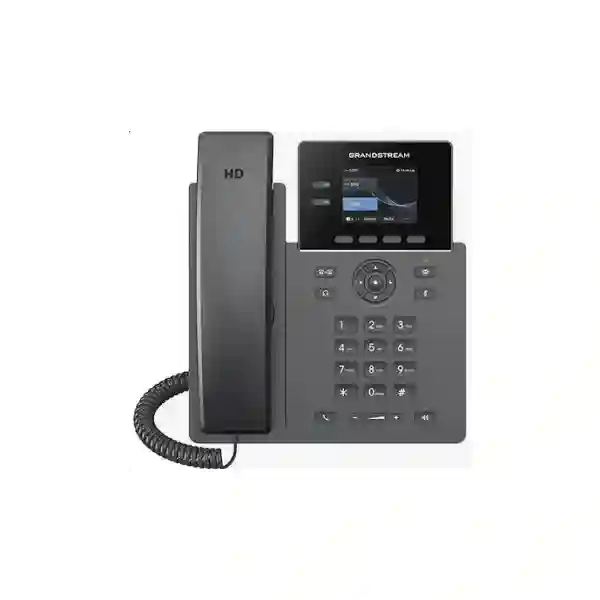
The Grandstream GRP2610P is a compact carrier-grade business IP phone designed for organizations that want dependable SIP calling, centralized provisioning and Power over Ethernet without moving to a larger multi-line executive endpoint. It supports two SIP accounts and two multi-purpose line keys, uses a 2.4-inch 320 × 240 color LCD, provides HD audio with wideband codecs including G.722 and Opus, supports 5-way audio conferencing, and can be managed through Grandstream Device Management System (GDMS). The GRP2610P variant includes integrated IEEE 802.3af PoE, which allows compatible network switching to provide both data connectivity and power through Ethernet.
For Tanzanian businesses, the strongest fit is a structured VoIP deployment in which phones, PBX services, PoE switching, VLANs, Quality of Service and internet connectivity are planned together. The GRP2610P is particularly useful for standard office desks, branch teams, support counters, sales users and other roles that need a professional color-screen SIP phone with manageable deployment rather than a large number of physical line keys. FourTeck can help customers evaluate the endpoint alongside FourTeck Tanzania business technology solutions, ensuring the phone is considered as part of the wider voice and network environment.
What makes the GRP2610P useful for business telephony?
The GRP2610P is aimed at desktop users who need a controlled, repeatable VoIP experience. Grandstream positions the model as a two-line professional IP phone built for high-volume deployments and centralized management. Two SIP accounts cover many everyday desk roles, while the phone’s programmable keys, color display and standard call-control functions give users direct access to common actions such as transfer, mute, speakerphone, redial and headset use. Up to eight digital BLF or fast-dial functions can be provisioned, which can be practical for monitoring key extensions or quickly reaching frequently contacted colleagues.
Integrated PoE is an important differentiator between the GRP2610P and the non-PoE GRP2610. With a compatible PoE switch, a single Ethernet run can provide both power and network connectivity, reducing the need for a separate power adapter at every desk. This is especially useful when phones are deployed in quantity, where power adapters, wall sockets and cable clutter can complicate installation. PoE also creates the option to place the switching layer behind UPS protection, helping the phone remain powered during short utility interruptions when the network and PBX infrastructure remain available.
The phone also supports provisioning and remote management through GDMS as well as industry-standard provisioning methods. For administrators, this matters more as the number of endpoints grows. Instead of configuring every unit independently, a deployment can use controlled templates, firmware policies and configuration standards. The result can be easier onboarding, replacement and troubleshooting, provided the network, SIP platform and provisioning design are prepared correctly.
Verified Grandstream GRP2610P specifications
| Item | GRP2610P specification |
|---|---|
| SIP accounts | 2 SIP accounts with 2 multi-purpose line keys |
| Display | 2.4-inch 320 × 240 TFT color LCD |
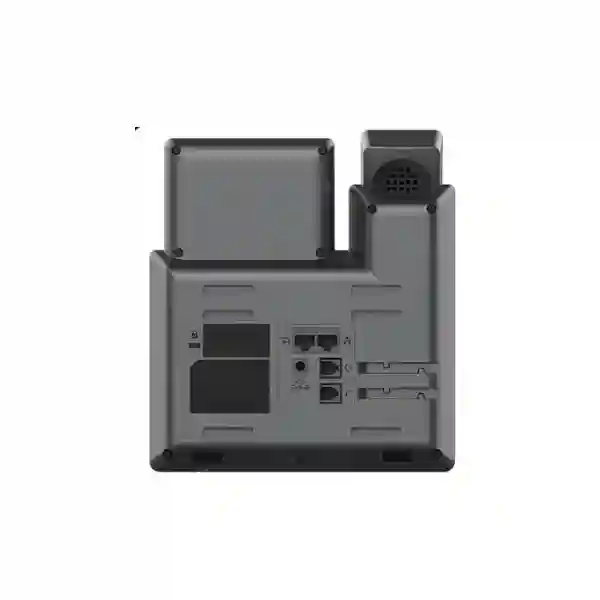
| Networking | Dual switched auto-sensing 10/100 Mbps Ethernet ports |
| Power | Integrated IEEE 802.3af PoE; Grandstream specifies maximum PoE consumption of 3.8 W |
| Audio | HD handset and speakerphone; wideband support including G.722 and Opus plus other standard codecs |
| Conferencing | 5-way audio conferencing |
| Programmability | Up to 8 digital BLF / fast-dial functions and 4 programmable context-sensitive soft keys |
| Headset | RJ9 headset port with EHS support for compatible headsets |
| Security | Secure boot, encrypted configuration/data protections, TLS, SRTP, 802.1X and administrator/user controls |
| Management | GDMS centralized management plus provisioning using TR-069 and encrypted XML configuration methods |
PoE-ready desks
Use compatible PoE switching to reduce local power adapters and simplify desk cabling. Confirm switch PoE budget, VLAN settings and UPS strategy before a large rollout.
HD voice
Wideband codec support, including G.722 and Opus, helps deliver clear voice when the PBX, SIP trunk and network path are configured to support high-quality audio.
Centralized management
GDMS support can reduce endpoint-by-endpoint administration by giving IT teams a centralized way to provision, monitor and maintain compatible Grandstream endpoints.
Compatibility, PBX and network planning
GRP2610P is a SIP endpoint, so procurement should include compatibility checks with the intended IP PBX, hosted SIP service or unified communications environment. Grandstream states broad interoperability with SIP platforms, but production features such as BLF, call pickup, voicemail indicators, directory integration, secure signaling and automatic provisioning still depend on the chosen platform and configuration. A basic registration test is therefore not the same as validating the complete user experience.
The phone supports 802.1Q and 802.1P at Layer 2 and traffic-prioritization capabilities at Layer 3. In a business LAN, voice VLANs and Quality of Service can help separate and prioritize real-time media, but they should be implemented across the whole path rather than configured only on the phone. The access switch, router, firewall and WAN link can all affect call quality. For larger office deployments, customers can review FourTeck Tanzania services for network, voice and infrastructure planning alongside endpoint procurement.
The dual Ethernet ports allow a workstation to be connected through the phone in suitable topologies, but the GRP2610P uses 10/100 Mbps Ethernet. Organizations with desktop users who require Gigabit connectivity through the phone should assess whether a different model or direct switch connection is more appropriate. This is an important buying detail because the phone is designed as a cost-conscious professional voice endpoint rather than as a Gigabit desktop network bridge.
Grandstream GRP2610P Tanzania
For buyers searching for the Grandstream GRP2610P in Tanzania, the most useful purchasing approach is to treat the phone as one part of a complete business voice environment. A successful deployment requires compatible SIP services, reliable LAN connectivity, sufficient PoE capacity, correct VLAN and Quality of Service policies, and a clear extension plan. The GRP2610P can fit well where employees need two SIP accounts, a color-screen desk phone, programmable BLF functions and professional call handling without the complexity or cost of a larger executive model. This makes it relevant to general office users, finance teams, customer-service desks, branch staff, supervisors and administrative users.
Tanzania deployments can range from a handful of phones in a small office to standardized endpoint rollouts across multiple departments or branches. In either case, buyers should document the PBX platform, SIP trunk or hosted-provider details, number of required extensions, expected concurrent calls, PoE switch capacity, headsets, cabling and any receptionist or call-queue requirements before ordering. Where a site already has a managed LAN, voice can often be introduced through a dedicated VLAN with suitable QoS and security controls. Where the network is unmanaged, replacing or reorganizing switching may be part of the telephony project.
The GRP2610P’s GDMS support is valuable for Tanzanian organizations that want standardized configuration across many phones. Centralized management can simplify firmware governance, configuration templates and device monitoring. The security design also includes secure boot, encrypted data protection, TLS and SRTP capabilities, which are useful building blocks when the wider SIP environment is configured securely. Buyers should still confirm how their PBX or provider handles certificates, secure transport, remote provisioning and credential management.
FourTeck Tanzania’s broader portfolio includes IP PBX, IP phones and network infrastructure, so the procurement conversation can cover the phone together with switching, connectivity and deployment requirements rather than treating it as an isolated handset. Customers can also browse the FourTeck Tanzania shop for wider business technology categories while preparing a project bill of materials.
Grandstream GRP2610P Dar es Salaam
Businesses in Dar es Salaam often operate in environments where reception, sales, administration and customer support depend on consistent voice communication throughout the working day. The GRP2610P is suited to desks that need a straightforward two-account SIP phone with PoE and centralized management. For a new office, planning should begin with the network cabinet and access switching: confirm that each desk run terminates correctly, that the PoE switch has sufficient budget for all phones, and that any data pass-through arrangement matches workstation bandwidth requirements.
In multi-floor offices, shared buildings and busy commercial sites, endpoint consistency matters. Using one standardized configuration for extension naming, phonebook access, time settings, firmware and key behavior can reduce support effort. The GRP2610P’s GDMS support is useful in this context because administrators can manage compatible Grandstream endpoints centrally rather than relying on manual configuration at every desk. Organizations should still maintain deployment records covering extension ownership, switch port, VLAN, device identity and PBX registration so troubleshooting remains structured.
Dar es Salaam companies should also evaluate WAN and SIP-provider resilience. PoE keeps the phone powered only while the supporting switch is powered, and SIP calling still relies on the PBX or provider path. UPS protection for switching, firewall and internet edge equipment can therefore matter just as much as the handset itself. If the telephony platform is hosted, the reliability of the primary internet connection and any backup link should be considered when voice is business critical.
When requesting a quotation, provide the number of users, expected phone quantity, PBX or SIP service, current switch model, PoE availability, headset requirements and any special call-flow needs. This helps distinguish a simple endpoint purchase from a complete installation requirement and allows the GRP2610P to be assessed against the actual communications environment.
Grandstream GRP2610P Mwanza
For offices and branch operations in Mwanza, the GRP2610P can be considered where the priority is a standardized, centrally manageable SIP desk phone with integrated PoE. Branch environments often benefit from consistent endpoint models because configuration, user training and replacement procedures become easier to document. Two SIP accounts are sufficient for many general users, while programmable BLF or fast-dial functions can help teams reach reception, supervisors, warehouse desks or other frequently contacted extensions quickly.
Branch connectivity should be reviewed before a VoIP rollout. If voice traffic traverses a VPN or relies on a hosted PBX, jitter, latency, packet loss and internet stability can affect user experience. The phone supports QoS mechanisms, but those controls are most useful when the switch, router and firewall are configured consistently. A voice VLAN can help segment telephony from ordinary workstation traffic, while secure SIP signaling and media can be considered when supported by the selected PBX or provider.
Power planning is another practical consideration. Integrated 802.3af PoE reduces the need for local adapters, but the PoE switch and upstream equipment should be protected appropriately if continuity is important. In sites where the communications rack already has UPS protection, PoE phones can benefit from that centralized power strategy. For distributed businesses, standardized configuration through GDMS can also help administrators maintain similar settings across Mwanza and other locations without sending staff to every desk for routine changes.
A procurement request should specify whether phones are for a new office, an extension of an existing PBX, a replacement project or a branch integration. Include current network details, extension count, cabling status and any requirement for headsets, wall mounting or branded faceplates so the final bill of materials matches how the phones will actually be used.
Grandstream GRP2610P Arusha
Organizations in Arusha looking for a professional IP desk phone may use the GRP2610P for general office, reservations, administration, support and back-office roles where two SIP accounts and straightforward call controls are enough. Hospitality, tour operations, professional services and branch offices often need stable internal extension calling and predictable handling of external calls. The GRP2610P provides HD audio, a color display, 5-way conferencing and programmable digital BLF functions while retaining a compact form factor.
For hospitality and customer-facing environments, call-flow design is especially important. The phone may be only one endpoint in a wider system containing reception groups, IVR menus, hunt groups, voicemail and after-hours routing. Buyers should confirm that the PBX or hosted platform supports the desired SIP features and that the intended configuration has been tested with the endpoint. Directory synchronization, BLF behavior and call pickup should be validated rather than assumed from basic SIP registration alone.
From a network perspective, the GRP2610P’s integrated PoE can make desk installation cleaner when compatible switching is available. Because the Ethernet ports are 10/100 Mbps, organizations that plan to connect a high-bandwidth workstation through the phone should consider whether this topology is appropriate. Some offices may prefer a separate data port to the workstation or a higher-end phone model with Gigabit Ethernet, while using the GRP2610P primarily as a voice endpoint.
A good quotation request for Arusha should include the number of desks, whether the site already uses Grandstream or another PBX platform, network-switch specifications, internet topology and any multi-branch requirements. This enables the solution to be sized around actual infrastructure and helps avoid purchasing phones before confirming the network path that will support them.
Grandstream GRP2610P Dodoma
The GRP2610P can suit offices in Dodoma that need standardized SIP desk phones for administrative, service and departmental users. A two-account endpoint is often enough for ordinary extension use while still providing professional functions such as transfer, call forwarding, conferencing, speakerphone and headset operation. The 2.4-inch color LCD gives users a clear interface without moving to a larger executive-class device, while programmable functions can be adapted to common internal contacts.
For organizations with formal IT governance, the model’s centralized management options can be as significant as its physical features. Device templates, controlled firmware and repeatable provisioning help maintain consistency across departments. When phones are commissioned, administrators should document the assigned extension, user, network port, VLAN and configuration profile. That record makes future changes easier when employees move desks or a handset is replaced.
Security should be reviewed at the system level. The GRP2610P includes secure-boot and encrypted-data protections and supports protocols such as TLS, SRTP and 802.1X, but secure voice requires compatible configuration on the PBX, certificates, network access controls and user credentials. Exposing a phone or PBX management interface directly to the public internet should be avoided unless there is a deliberate, secured architecture. Remote administration should use controlled access methods appropriate to the organization.
Before ordering for Dodoma, confirm whether the requirement is endpoint-only or includes PBX, SIP trunk, switching, VLAN configuration, structured cabling and user commissioning. Matching these elements in one project plan usually provides a clearer path to a stable production deployment than selecting phones first and solving the infrastructure later.
Grandstream GRP2610P UAE
For organizations with offices, partners or procurement activity in the UAE, the GRP2610P can be assessed as a standardized SIP endpoint within a broader regional voice architecture. Multi-country businesses often benefit from selecting common phone models and configuration standards because user training, provisioning templates and support documentation remain consistent. Two SIP accounts suit general staff, while central management through GDMS can help teams administer compatible endpoints across more than one site.
The technical design still needs to reflect local service arrangements. SIP trunks, hosted PBX services, firewall policies and internet circuits differ by deployment, so organizations should confirm provider compatibility and any local telecom requirements rather than assuming one branch configuration can simply be copied to another. If branches connect through a central PBX or VPN, the WAN design should account for latency, failover and voice prioritization.
PoE can simplify large office rollouts when compatible access switches are used, and centralized UPS protection can support the voice network during short power interruptions. However, the GRP2610P’s 10/100 Ethernet design should be considered when the PC is expected to connect through the phone. High-bandwidth desktop users may need a separate network path or a Gigabit-capable endpoint. The correct decision depends on the workstation profile and cabling design.
Regional customers comparing sourcing and project support can also review FourTeck Kenya and other FourTeck regional resources when coordinating multi-market technology requirements. The objective is not merely to match model numbers across countries, but to align PBX features, network standards, security settings and support processes.
Grandstream GRP2610P Uganda
Ugandan businesses evaluating the GRP2610P can use the same core selection criteria as Tanzanian buyers: number of SIP accounts, PoE availability, network speed, PBX compatibility, provisioning method and user role. The model is strongest for ordinary professional desks where two SIP accounts and digital BLF functions are sufficient. It is not intended to replace a high-line-count receptionist console or a Gigabit executive phone, so user segmentation remains important.
For organizations with multiple branches, common configuration templates can help make the endpoint environment predictable. GDMS can centralize management of compatible devices, while network documentation should define VLANs, QoS treatment, switch ports and IP addressing. If the phone is deployed behind a site-to-site VPN or reaches a hosted PBX over the internet, branch bandwidth and link quality should be measured before full deployment.
Power and resilience planning are also relevant. Integrated PoE simplifies desk wiring but shifts power dependency to the access switch. Where business continuity is important, the switch, firewall, PBX appliance and internet equipment may need UPS-backed power and an appropriate backup strategy. The phone alone cannot preserve service if upstream systems fail, so voice continuity should be designed from endpoint to carrier.
Organizations coordinating East African deployments can consult FourTeck Uganda technology solutions for regional context. A useful procurement brief should state phone quantity, PBX platform, SIP-provider arrangement, switch models, PoE status and any deployment or configuration services needed.
Grandstream GRP2610P Kampala
In Kampala office environments, the GRP2610P can be a practical endpoint for businesses standardizing desk telephony across administration, accounts, support and branch operations. The combination of two SIP accounts, integrated PoE and centralized management supports repeatable deployments, while the color LCD and programmable controls give employees a familiar professional interface. Buyers should map user roles first so that users requiring many line appearances, Wi-Fi, Bluetooth or Gigabit pass-through are assigned a more suitable model where needed.
Voice quality depends heavily on the LAN and WAN. Managed switches, correct duplex and cabling, sensible VLAN design, Quality of Service and stable internet connectivity can all influence performance. Call problems are often blamed on the handset even when packet loss, oversubscribed links or poorly configured firewalls are the real cause. For that reason, a pilot deployment with representative users can be valuable before a large rollout.
The GRP2610P supports secure signaling and media protocols, but those capabilities need compatible configuration on the PBX. For hosted deployments, businesses should ask providers about TLS, SRTP, provisioning security, credential rotation and failover. For on-premises PBX deployments, administrators should also consider firewall policy, remote-extension design and regular firmware management.
A Kampala quotation request is more actionable when it includes extension count, concurrent-call expectations, network readiness, PoE switching, headset needs and whether installation is at one office or several locations. This information lets the endpoint quantity and supporting network components be evaluated together.
Grandstream GRP2610P Arua
For branch offices and growing organizations in Arua, a manageable IP phone such as the GRP2610P can support standardized communications without requiring a complex endpoint at every desk. Two SIP accounts cover many everyday calling roles, while digital BLF and fast-dial functions can be used for important extensions. The integrated PoE interface also helps reduce local power adapters when the branch has suitable PoE switching.
Remote branches should pay particular attention to connectivity. If calls terminate through a central PBX elsewhere, the branch internet or private WAN carries real-time voice traffic and should be stable enough for the required call volume. QoS can prioritize voice, but it cannot compensate for severe packet loss or inadequate bandwidth. A backup connectivity plan may be appropriate where voice service is operationally important.
Centralized provisioning through GDMS can reduce the need for manual intervention at distant locations. IT staff can maintain common configuration profiles and monitor compatible endpoints from a central point. That benefit is strongest when device naming, extension assignment and change procedures are documented. A clear process for replacing failed devices also helps branches recover quickly without ad-hoc reconfiguration.
Before sourcing the GRP2610P for Arua, confirm the switch PoE budget, Ethernet cabling, PBX registration method, remote-management policy and expected headset use. If the workstation must use the phone’s downstream Ethernet port, verify that 10/100 Mbps performance is acceptable for the user’s data requirements.
Grandstream GRP2610P Mbarara
Mbarara businesses can consider the GRP2610P for professional desk users who need a compact SIP phone with PoE, a color screen and managed provisioning. Retail administration, healthcare offices, education, professional services and multi-branch companies may all have roles where two SIP accounts are sufficient. Selecting the phone by user role helps avoid overbuying advanced endpoints where basic professional features are all that is required.
Deployment should begin with a simple network readiness check: validate cabling, confirm switch ports, check PoE capacity, define the voice VLAN and ensure the router or firewall treats SIP and RTP correctly for the chosen platform. Where calls use the public internet, bandwidth utilization should be monitored during busy periods. A voice problem that occurs only at peak times may indicate WAN congestion rather than a handset issue.
For administrators, GDMS compatibility offers a way to manage settings across multiple Grandstream endpoints. Firmware should be controlled rather than changed randomly, and configuration backups or templates should be maintained. Security features such as secure boot and encrypted data storage strengthen the endpoint, while TLS and SRTP can be used when supported end to end by the telephony system.
When preparing a procurement request for Mbarara, specify whether existing phones will be replaced in phases or all at once. A phased rollout can help validate call quality, provisioning and user workflows before expansion. Include any need for call queues, receptionist functions, wall mounting or headset integration so the phone choice and accessories match the operational requirement.
Grandstream GRP2610P Gulu
For Gulu deployments, the GRP2610P can serve as a consistent business endpoint where organizations want to replace analog desk phones or standardize an existing SIP environment. The phone provides common call controls, two accounts, programmable keys and a color screen while retaining a relatively simple hardware profile. It is most appropriate for general users rather than high-volume operators who need many dedicated line keys or an expansion module.
Network design should account for the fact that telephony is real-time. Packet loss and jitter are more noticeable during a voice call than during ordinary web browsing. Managed switching, voice VLANs, QoS and a stable WAN can therefore make a larger difference to perceived quality than changing handsets. Where the GRP2610P connects a PC through its second Ethernet port, buyers should remember that the interface is 10/100 Mbps and check whether that is adequate.
PoE deployment can simplify branches by centralizing power at the switch. If the branch uses a UPS, keeping the switch, router, firewall and PBX-related equipment on protected power can improve continuity during brief outages. Centralized configuration through GDMS also reduces the need for technicians to touch every phone when standard settings change.
A strong request for quotation will include endpoint quantity, PBX details, network topology, PoE status and support expectations. It should also identify whether the deployment needs only phone supply or includes installation, registration, VLAN setup, firmware alignment, user labeling and acceptance testing. Separating these tasks avoids ambiguity during purchasing.
Grandstream GRP2610P Kenya
Kenyan organizations assessing the GRP2610P will find the model aligned with standard office VoIP requirements: two SIP accounts, PoE, HD audio, a color LCD, digital BLF functions and centralized management. Public reseller listings in Kenya also show active market interest in this model, but price and stock vary by seller and should be confirmed at the time of quotation rather than treated as fixed specifications. The manufacturer’s technical data should remain the reference for features.
For multi-site East African companies, standardizing the same endpoint across Kenya and Tanzania can simplify configuration templates and user training. The practical challenge is ensuring that each site’s PBX, SIP trunk and network design are compatible with the common standard. A phone profile should define extension registration, button behavior, time settings, directory access, codec policy and security options so deployments do not diverge over time.
PoE can be particularly helpful in dense offices because it reduces the number of local power adapters. Buyers should calculate total switch power demand for all phones and other PoE devices such as access points and cameras. The network should also be checked for VLAN capacity, uplink utilization and any firewall rules that may interfere with SIP registration or RTP media.
For regional projects, the Kenyan deployment can be coordinated with the Tanzania environment through consistent naming, firmware and management practices. This approach reduces operational variation while allowing local connectivity and telecom requirements to be handled separately.
Grandstream GRP2610P Kuwait
In Kuwait, the GRP2610P can be evaluated as a professional two-account SIP endpoint for offices that prioritize centralized management and PoE deployment. It is suitable for general users who need clear desk calling, programmable functions and standardized provisioning. Organizations with regional operations can use a common endpoint policy while adapting PBX registration, carrier connectivity and security controls to the local telephony environment.
The model’s support for secure boot, encrypted data protections, TLS and SRTP makes it suitable for security-conscious architectures, but these features must be enabled and supported end to end. A phone configured for TLS still depends on certificate handling and server-side support. Likewise, strong endpoint security does not replace network segmentation, access control, firmware maintenance or secure administration.
PoE simplifies physical installation when the access layer supports IEEE 802.3af. In large deployments, switch power budgeting should be performed alongside port-count planning because phones may share the same PoE switch with wireless access points, cameras and other devices. If a PC is connected through the handset, the 100 Mbps interface should be checked against the user’s data-performance requirements.
A quotation should identify the number of phones, PBX or hosted provider, SIP-account design, preferred management method, PoE availability and any requirement for configuration or rollout assistance. This creates a clearer comparison than evaluating the handset price alone.
Grandstream GRP2610P Ghana
Ghanaian businesses looking for the GRP2610P can consider it for offices that need a manageable SIP desk phone without wireless features or Gigabit networking. The value proposition is strongest when users need reliable wired voice, PoE, two SIP accounts and standardized configuration. Where Wi-Fi, Bluetooth or higher line density is required, another model in the Grandstream GRP range may be more appropriate.
For growing organizations, centralized management helps preserve consistency as new phones are added. GDMS can provide a common interface for compatible Grandstream devices, while provisioning profiles can reduce repetitive manual work. A disciplined rollout should still include inventory records, extension mapping and firmware policy so the configuration remains understandable to future support teams.
The LAN needs to support voice correctly. Managed PoE switching, a voice VLAN and Quality of Service are common design elements, but their exact configuration depends on the network. Where internet quality varies, businesses can monitor latency, jitter and packet loss before moving critical call handling to a hosted platform. Backup connectivity may be justified for operations where inbound or outbound calling is essential.
Procurement should include compatibility checks with the selected PBX and carrier service, as well as a review of headset, wall-mounting and desk-cabling needs. The GRP2610P is a strong standard endpoint when its features match the user role and the network has been prepared to support real-time voice.
Grandstream GRP2610P Nigeria
For Nigerian offices, the GRP2610P can be deployed where teams require a wired SIP phone with PoE, HD audio and centralized administration. Two SIP accounts are appropriate for many back-office and professional roles, while digital BLF functions can provide convenient visibility of key extensions. In larger contact-handling environments, users with high call volumes may need a phone with more line keys or a dedicated operator solution, so endpoint segmentation should form part of the design.
Power resilience deserves attention in any IP telephony design because phones, switches, routers and PBX services are interconnected. PoE removes local adapters but makes the access switch a central power dependency. Organizations can protect network equipment with UPS systems and design internet or WAN failover according to operational importance. A properly protected handset is still unusable if the router or PBX path is unavailable.
The GRP2610P supports common SIP, security and provisioning standards and can be managed through GDMS. Businesses should decide who owns configuration changes and firmware updates, especially if phones are distributed across many departments or branches. Central policy reduces inconsistent settings and helps support staff diagnose problems using known baselines.
When obtaining a quote, provide the required quantity, site count, PBX information, PoE-switch details, call-flow requirements and any accessories. If the project is part of a wider regional standard, also define the configuration template and rollout method so devices supplied at different times remain aligned.
Grandstream GRP2610P Seychelles
Businesses and hospitality organizations in Seychelles can evaluate the GRP2610P as a wired SIP endpoint for administrative offices, reservations, back-office teams and other professional users. It offers two SIP accounts, integrated PoE, HD audio and centralized management in a compact design. For hospitality front desks that require extensive line monitoring, larger key capacity may be needed, but general staff can benefit from the simpler layout and programmable digital functions.
Island and multi-property environments can make centralized management attractive because IT resources may be distributed. GDMS support can help maintain common configuration across compatible Grandstream endpoints, while branch documentation should record extensions, switch ports and device ownership. Remote management should be secured and governed by clear access policies.
Connectivity planning is critical where VoIP relies on internet-based services. The design should assess the primary circuit, backup options, latency to the PBX or provider and the number of simultaneous calls. Local LAN quality, PoE capacity and QoS settings should also be verified. The GRP2610P supports voice-quality and security capabilities, but the whole network path determines the final service experience.
For quotations, list each site, number of phones, PBX or cloud-voice platform, internet topology, PoE switching and deployment tasks. A site-by-site bill of materials helps distinguish endpoint quantity from the supporting switches, UPS protection, headsets and configuration services needed to make the telephony system operational.
How to select the GRP2610P for your users
Choose it when
You need two SIP accounts, wired 10/100 Ethernet, PoE, a color display, HD voice, basic BLF functions, 5-way conferencing and centralized Grandstream management for standard office users.
Consider another model when
A user needs Gigabit pass-through, built-in Wi-Fi or Bluetooth, many physical line keys, more SIP accounts or larger display features. Matching phone capability to each role keeps the deployment efficient.
Quotation checklist for Grandstream GRP2610P
For a useful quote, provide more than a phone quantity. The following information allows the endpoint and supporting environment to be reviewed together:
- Number of GRP2610P phones and number of office locations.
- Existing or planned PBX / hosted SIP platform.
- SIP trunk or telecom-provider arrangement.
- Current switch models and available PoE ports/budget.
- Voice VLAN and QoS status.
- Need for headsets, wall mounts, labels or customized faceplates.
- Requirement for installation, provisioning, testing or user handover.
- Branch connectivity, VPN or multi-site considerations.
Frequently asked questions
Does the Grandstream GRP2610P support PoE?
Yes. The GRP2610P variant includes integrated IEEE 802.3af Power over Ethernet. The non-P GRP2610 does not have the same integrated PoE specification.
How many SIP accounts does the GRP2610P support?
It supports two SIP accounts and two multi-purpose line keys. This makes it well suited to standard professional desk users rather than high-line-count operator roles.
Is the GRP2610P a Gigabit phone?
No. Grandstream specifies dual switched auto-sensing 10/100 Mbps Ethernet ports for the GRP2610P. If Gigabit pass-through is important for the attached workstation, evaluate another model or separate PC cabling.
Can the GRP2610P be centrally managed?
Yes. It is supported by Grandstream Device Management System (GDMS) for centralized configuration, provisioning, management and monitoring of compatible Grandstream endpoints.
Does it support HD voice?
Yes. Grandstream specifies HD audio and support for wideband codecs including G.722 and Opus. End-to-end audio quality still depends on the PBX, codec negotiation and network conditions.
What is the difference between GRP2610 and GRP2610P?
The key deployment difference is integrated PoE on the GRP2610P. Buyers should verify the exact model on quotations and packaging when PoE is required.
Does it work with third-party SIP PBX systems?
Grandstream describes broad SIP interoperability, but feature-level compatibility should be tested with the intended PBX or hosted provider. Registration alone does not prove that BLF, directories, secure media or provisioning will behave exactly as required.
Decision recap
The Grandstream GRP2610P is a strong fit when the requirement is a wired two-account SIP phone with PoE, a 2.4-inch color screen, HD audio, 5-way conferencing, digital BLF functions and centralized Grandstream management. Its 10/100 Ethernet design and two-account profile are important selection boundaries: users requiring Gigabit data pass-through, wireless connectivity or many line appearances should be reviewed separately.
For best results, purchase the endpoint as part of a planned voice architecture. Validate PBX interoperability, PoE capacity, VLAN and QoS design, WAN quality, security settings and deployment management before mass rollout. FourTeck Tanzania can help align IP phones with the wider network and communications environment so procurement decisions are based on the full solution rather than on handset specifications alone.
Consultation panel
Share your required quantity, PBX platform, office locations and current network details. FourTeck can review whether the GRP2610P is the correct endpoint for each user profile, identify any PoE or switching considerations, and prepare the scope for supply, configuration and deployment. For organizations planning larger voice projects, combining endpoint selection with network-readiness checks reduces surprises during commissioning.



Reviews
There are no reviews yet.