
Grandstream GRP2611G Tanzania
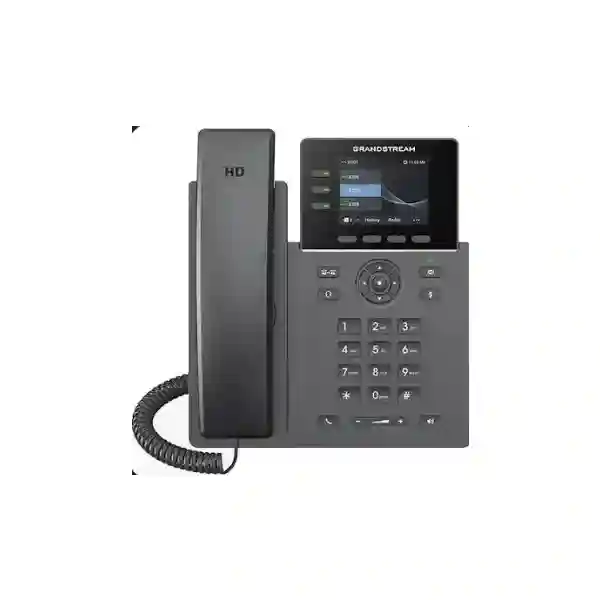
The Grandstream GRP2611G is a 3-line carrier-grade IP phone created for organisations that want a business desk phone with Gigabit Ethernet, integrated Power over Ethernet, HD audio and centralized device administration. Grandstream positions the model for mass deployment, and its support for three SIP accounts, three multipurpose line keys and up to twelve digital BLF keys makes it suitable for standard office users, team coordinators, service desks and multi-site environments that need consistent endpoint configuration.
For Tanzania buyers, the useful question is not only whether the handset supports SIP. A successful deployment also depends on the IP PBX or hosted voice platform, network switch capability, voice VLAN design, internet or trunk connectivity, extension plan, provisioning method and user roles. FourTeck can help review these dependencies before quotation so the phone is assessed as part of the complete voice environment rather than as an isolated device.
What the GRP2611G is designed to solve
The GRP2611G is designed for organisations that need a repeatable, manageable desk-phone platform rather than a collection of manually configured endpoints. Grandstream’s Device Management System, or GDMS, provides a centralized way to provision, configure, manage and monitor supported endpoints. That matters when a business has tens or hundreds of users because standard configuration templates, coordinated firmware practices and controlled device settings can reduce the administrative effort associated with individual phone setup.
At the user level, three SIP accounts allow the phone to register multiple identities or services where the PBX design requires them. Three multipurpose line keys can be combined with digitally provisioned virtual keys, creating up to twelve BLF or fast-dial functions. This can help users monitor colleagues, reach frequently called destinations or access call-handling functions without moving to a much larger console-class handset.
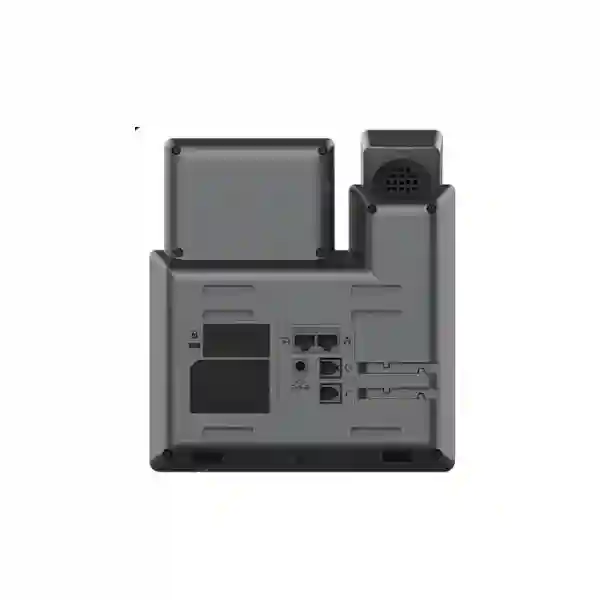
The dual Gigabit network ports are also relevant in offices where the phone is connected inline between a wall network outlet and a workstation. The phone can join a Gigabit Ethernet environment while the integrated PoE capability allows compatible switches to provide power over the network cable. Whether this is the preferred deployment method depends on the switch PoE budget, UPS strategy, cabling condition and network design. Where PoE is not used, the manufacturer package specification includes a 5V power adapter.
HD Voice
HD handset and speakerphone audio support, with wideband codecs including G.722 and Opus, helps preserve speech clarity when the voice platform and network path support those codecs.
Secure Endpoint
Grandstream lists secure boot, encrypted data storage, dual firmware images, TLS, SRTP and 802.1X among the security capabilities relevant to managed enterprise deployments.
5-Way Conferencing
The phone supports five-way audio conferencing, useful for ad-hoc voice collaboration without requiring every discussion to move to a separate meeting-room device.
Headset Ready
An RJ9 headset interface supports headset use, including electronic hook switch support for compatible Plantronics environments as documented by Grandstream.
Grandstream GRP2611G technical specifications
| Specification | Verified detail |
|---|---|
| Lines / SIP accounts | 3 lines, 3 SIP accounts, 3 multipurpose line keys |
| Virtual keys | Up to 12 digital BLF / fast-dial keys |
| Display | 2.8-inch 320×240 TFT colour LCD |
| Network | Dual switched auto-sensing 10/100/1000 Mbps Gigabit Ethernet |
| Power | Integrated 802.3af PoE; 5V adapter included according to manufacturer datasheet |
| Audio | HD handset and speakerphone; G.729A/B, G.711 μ/a-law, G.726, G.722, G.723, iLBC and Opus among supported codecs |
| Conferencing | 5-way audio conferencing |
| Management | GDMS, TR-069 and encrypted XML mass provisioning options |
| Security | Secure boot, encrypted configuration/data storage, TLS, SRTP, 802.1X and administrator/user password controls |
| Mounting | Two-angle desk stand; wall mounting supported with wall mount sold separately |
Compatibility and deployment planning
The GRP2611G uses SIP and is designed for broad interoperability with third-party SIP devices and SIP/NGN/IMS platforms, but practical compatibility should still be confirmed against the specific PBX, hosted provider, SIP trunk design and features required by the customer. Registration alone does not guarantee that every feature, BLF behavior, transfer method, directory function or provisioning template will operate identically across platforms.
A business deployment should review DHCP, DNS, NTP, VLAN, QoS, switch PoE, voice routing and firewall requirements before phones are rolled out. Grandstream lists LLDP, 802.1Q/802.1P, Layer 3 QoS, LDAP, TLS, SRTP, IPv6 and 802.1X among supported networking and security functions. These features can be useful in managed networks, but they still need to be configured as part of an overall network policy.
For centralized rollout, GDMS can provide a practical management layer. For an existing Grandstream environment, it can help standardize provisioning and monitoring. For an environment built around another PBX vendor, the procurement team should confirm required SIP features, firmware support and the intended device-management approach before a large order is approved.
Related FourTeck resources
Review business product categories and buying considerations around compatibility, capacity and infrastructure.
FourTeck Tanzania services
Explore IP PBX, IP phone, switching and wider technology integration guidance for business deployments.
FourTeck Tanzania home
See the broader portfolio covering telecom, networking, cybersecurity and business infrastructure.
Grandstream solutions across Africa
Review broader Grandstream convergence planning for African business networks and communications.
FourTeck regional technology portfolio
Explore integrated IT, telecom, networking and security capabilities for multi-site projects.
Grandstream GRP2611G Tanzania
Businesses searching for the Grandstream GRP2611G in Tanzania are often planning a wider move to managed IP telephony rather than buying a single handset in isolation. The GRP2611G fits organisations that need a professional desk phone with three SIP accounts, Gigabit network connectivity, integrated PoE and centrally manageable configuration. For Tanzanian offices, these capabilities can be useful in new VoIP deployments, PBX replacements, branch standardisation projects and extension rollouts where the goal is to give users a consistent calling experience without moving every desk to a high-end executive model.
The most important procurement step is to define the environment that the phone will join. A GRP2611G can connect to a SIP-based PBX or hosted platform, but the buyer should confirm the extension count, call flow, receptionist requirements, queues, hunt groups, direct inward dialing, remote-worker needs and any branch interconnection. Network readiness matters equally. A PoE switch can simplify desk power, but the total switch PoE budget must cover every attached phone and other powered device. Voice VLANs and QoS can help keep voice traffic organised, while UPS-backed switching can preserve phone power during short utility interruptions where the rest of the voice path also remains operational.
For distributed Tanzanian organisations, GDMS management can reduce the effort of configuring phones one at a time. Standard templates, controlled firmware practices and remote monitoring are especially valuable when branches use the same model and extension policy. The GRP2611G also provides twelve virtual BLF or speed-dial positions, giving supervisors and team users more programmable access than the three physical line keys alone suggest. Before ordering, confirm whether users need exactly three SIP accounts, whether a larger key field is required, whether Wi-Fi or Bluetooth is necessary, and whether a wired Gigabit handset is appropriate for each workstation.
FourTeck Tanzania can support a quotation discussion around quantities, PBX compatibility, switching, PoE, cabling and deployment scope. Availability, lead time, delivery arrangements and installation services should be confirmed for the specific order rather than assumed. A useful request should include the number of phones, existing or planned PBX, switch model, branch locations, headset requirements, preferred provisioning method and whether the project is a new installation or a migration from an existing phone platform.
Grandstream GRP2611G Dar es Salaam
In Dar es Salaam, the GRP2611G can suit corporate offices, logistics businesses, professional firms, hospitality administration teams, retail head offices and other organisations that depend on reliable desk calling throughout the working day. The city contains a wide mix of small offices, multi-floor commercial premises and branch networks, so handset selection should be tied to user roles. A standard office employee may need extension calling, transfer, voicemail and a few monitored colleagues, while reception or service teams may need many more dedicated keys and could require a higher model or an attendant-console approach.
The dual Gigabit Ethernet interface is useful where the desk phone shares the network outlet with a computer. In this layout, good cabling and switch configuration are important because the endpoint becomes part of the workstation data path. Managed switching can separate voice and user data logically using VLANs where the design requires it. PoE can also reduce the number of individual adapters at desks, but the switch must be sized for the combined power draw of phones, access points, cameras or other PoE equipment sharing the same infrastructure.
Dar es Salaam projects frequently involve a combination of connectivity, PBX and user-support decisions. If the phone system depends on SIP trunks or cloud services, the quality and resilience of the internet path becomes relevant to call quality and business continuity. Where an on-premises PBX is used, external calling still depends on the chosen trunk or gateway arrangement. Administrators should also plan DNS, NTP, DHCP, device credentials and firmware management. The GRP2611G’s GDMS support can assist with centralized endpoint management, especially when the same phone is repeated across departments or branches.
When requesting a Dar es Salaam quotation, provide quantity, deployment address, extension count, PBX platform, existing switch models and whether PoE is available. If the project includes structured cabling, network upgrades or user migration, include that in the scope rather than treating the handset order separately. That information helps determine whether the GRP2611G is the correct endpoint and whether any supporting infrastructure should be included in the same proposal.
Grandstream GRP2611G Mwanza
For organisations in Mwanza, the GRP2611G can form part of a practical IP telephony standard for offices that want predictable endpoint management and room for common call-control features without deploying oversized desk phones. Typical scenarios may include administration teams, regional branches, customer-service desks, education offices, healthcare administration, trading businesses and multi-site companies connecting Mwanza users to a central communications platform.
A Mwanza deployment should begin by checking network and power conditions at the site. The phone supports integrated PoE, which can simplify power distribution when compatible managed switches are available. If phones must remain available during brief power interruptions, the design should consider UPS support for switches, routers, PBX equipment and upstream connectivity, because powering the handset alone does not preserve a call path if the rest of the network is offline. Cabling quality should also be verified before a Gigabit endpoint rollout, especially in older office infrastructure where patching or terminations may have been added over time.
The GRP2611G’s three SIP accounts can support multiple identities where the PBX design needs them, while its up to twelve virtual BLF keys can assist staff who frequently reach colleagues or shared functions. For branch environments, centrally defined provisioning is usually preferable to manual keypad configuration because it produces more consistent settings and simplifies future changes. Grandstream GDMS can provide a centralized management layer for supported devices, while TR-069 and encrypted XML provisioning are also listed by the manufacturer for mass deployment scenarios.
Procurement teams in Mwanza should confirm the required quantity, whether handsets will be desk-mounted or wall-mounted, headset needs, PBX compatibility, voice VLAN policy and whether network switches have enough PoE capacity. A quotation can also account for patch leads, switching, UPS requirements and deployment services if those are part of the project. FourTeck should verify commercial availability and final scope for each order rather than relying on generic stock assumptions.
Grandstream GRP2611G Arusha
The Grandstream GRP2611G in Arusha can be considered for tourism administration offices, professional services, educational organisations, NGOs, branch operations and businesses that need dependable SIP desk phones with centralized management. Arusha organisations may have a mixture of local staff, travelling managers and remote stakeholders, so the telephony design should define how internal extensions, external numbers, hunt groups, voicemail and forwarding are handled before handset quantities are finalized.
The model is a wired professional phone, not a Wi-Fi-first device. That makes structured Ethernet readiness a central part of the decision. Each desk should have an appropriate network connection, and the access switch should provide the required port and PoE capacity if PoE will be used. Where a computer shares the phone’s second Gigabit port, the network team should plan the workstation path and VLAN behaviour carefully. The phone supports Layer 2 and Layer 3 QoS capabilities, but network-wide call quality depends on how switches, routers, firewalls, WAN links and SIP services are configured.
For hotels, tour operators and customer-facing businesses, user roles can vary significantly. Front-office or reservation functions may need more monitored extensions and faster access to transfer destinations than back-office users. The GRP2611G provides up to twelve digital BLF keys, which may be sufficient for many ordinary supervisory roles, but high-volume reception positions should be reviewed separately. HD audio, noise-shield technology and a full-duplex speakerphone can support everyday calls where the surrounding environment and network are suitable.
An Arusha quote request should therefore include user count by role, existing PBX or intended hosted platform, SIP trunk details if known, switch capability, headset requirements and desired provisioning method. If the project is being deployed across more than one branch, define a common numbering and configuration standard before the rollout. That makes later support, onboarding and device replacement more predictable and helps determine whether the GRP2611G should be the standard handset or one of several role-based models.
Grandstream GRP2611G Dodoma
In Dodoma, the GRP2611G can serve government-adjacent offices, professional firms, institutions, administrative teams and expanding businesses that want a structured IP telephony endpoint. Its value is strongest when deployed as part of a planned voice architecture: extensions are documented, call routing is defined, switches are voice-ready and endpoint configuration is centrally controlled. This is more reliable than treating each phone as a standalone appliance with manually entered settings.
Three SIP accounts provide flexibility for users who need more than one registered identity, while the three physical line keys and virtual programmable keys help organize call functions. The 2.8-inch colour screen is intended for clear everyday menu and call-state interaction rather than multimedia use. The phone’s dual Gigabit interfaces allow it to fit into modern wired LANs without limiting an attached workstation to Fast Ethernet, which is important in offices where a single wall outlet is shared between the phone and computer.
Dodoma deployments should pay close attention to power and network continuity. Integrated 802.3af PoE can centralize phone power at the switch, making it possible to back multiple phones through properly sized UPS infrastructure. However, continuity planning should include the router, firewall, PBX or hosted-service link and any upstream internet equipment. Device security should also be part of the deployment. Grandstream lists secure boot, encrypted data storage, SRTP, TLS and administrator controls, but these features need to be incorporated into the chosen configuration and identity policies.
For procurement, prepare an endpoint schedule rather than only a total quantity. Identify normal users, managers, reception positions, conference rooms and any users who need headsets. Confirm which desks have structured cabling and which switches provide PoE. If phones are replacing an older analog or digital system, document the migration plan and whether any gateways are required. FourTeck can then review whether the GRP2611G matches the standard-user profile and which supporting components belong in the same scope.
Grandstream GRP2611G UAE
For UAE organisations, the GRP2611G can be evaluated as a standard desk endpoint for offices that require Gigabit Ethernet, PoE, three SIP accounts and centralized provisioning. The UAE market includes many multi-branch businesses that standardize telephony across headquarters, warehouses, retail locations and regional offices. In that context, a repeatable configuration model can be as important as the handset feature list because IT teams need consistent extension settings, firmware practices and replacement procedures across sites.
The GRP2611G works best when the phone role is defined. It can suit general users and supervisors who need a modest number of monitored contacts, but high-volume operators may need more physical keys, a larger display or a dedicated attendant solution. Its twelve virtual BLF keys extend the usefulness of the three line keys, yet they should not be mistaken for a full reception console. For contact-center or switchboard positions, the daily call workflow should determine the endpoint class.
UAE deployments often integrate the voice network with managed switching, VLANs, site-to-site connectivity and centralized security policies. The GRP2611G supports QoS, 802.1X, TLS and SRTP capabilities, allowing it to participate in a managed network architecture. The actual design should be validated against the PBX, SIP trunk, firewall and identity requirements. PoE switching can simplify desk power and help centralize backup power at the rack, provided the switch budget is sized for the endpoint count.
A UAE quotation should include quantity, emirate or site location, PBX platform, required SIP accounts, network switch environment, headset needs and any centralized provisioning requirements. For regional companies using the same handset in Tanzania and the UAE, common templates can simplify support, but country-specific trunk, numbering and regulatory arrangements should remain separate. Availability, warranty handling and delivery timing should be confirmed for the actual order and should not be inferred from another market.
Grandstream GRP2611G Uganda
Ugandan organisations considering the GRP2611G may be planning branch telephony, office VoIP modernization or a standardized endpoint fleet. The model offers a practical combination of three SIP accounts, Gigabit networking, PoE and cloud-based device management for businesses that want a professional wired desk phone without unnecessary wireless features. The same handset can be deployed across departments while configuration profiles reflect different extension numbers, BLF assignments and call permissions.
Before procurement, the PBX architecture should be clear. A Grandstream UCM, third-party SIP PBX or hosted voice service may each use different provisioning and feature mappings. Confirm transfers, call park, pickup, voicemail indication, directories, BLF and failover behaviour with the selected platform. The GRP2611G supports a broad SIP and network protocol set, but feature interoperability is always strongest when tested against the exact service in use.
Network quality is especially important when branches use internet-based calling. Voice packets are sensitive to delay, jitter and loss, so WAN design, QoS and link reliability matter alongside the handset. For local office traffic, managed switches can place phones in a voice VLAN and supply power through 802.3af PoE. If sites experience power instability, a UPS-backed switch can help, but the complete voice path must be considered. A powered phone is not useful if the router, PBX or connectivity fails.
Uganda buyers should provide site count, city, extension quantity, PBX platform, current switch models and expected growth when requesting pricing. If the deployment spans several locations, standardize numbering, firmware policy and configuration templates before rollout. This makes future replacement and user moves easier. FourTeck can also help review whether higher or lower GRP models are better suited to specific roles, so the GRP2611G is used where its three-account and twelve-virtual-key capability matches the real workflow.
Grandstream GRP2611G Kampala
In Kampala, the GRP2611G can support professional offices, NGOs, financial-service administration, retail head offices, technology companies and other organisations moving to SIP-based business communications. Dense office environments often benefit from centralized endpoint control because user moves, extension changes and firmware updates occur frequently. GDMS gives Grandstream administrators a centralized interface to provision and monitor supported phones, which can reduce manual work when many identical devices are deployed.
The phone’s 2.8-inch colour display, three line keys and virtual BLF capability provide a balanced interface for everyday users. Users who mainly answer, transfer and place calls do not necessarily need a large touchscreen or an expansion module. However, front desks and busy reception roles should be assessed separately because they may need more visible monitored extensions. A role-based handset plan often produces better usability and cost control than buying one model for every employee regardless of workload.
Kampala deployments should also account for switching and internet design. The GRP2611G has two Gigabit ports, so a computer can be connected through the phone without forcing the desk down to 100 Mbps. Integrated PoE reduces adapter clutter, but buyers need to confirm 802.3af support and total PoE budget on the access switch. Voice VLANs, QoS, DHCP and secure provisioning can be standardized as part of the network configuration. Where SIP services cross the internet, firewall and NAT behaviour should be reviewed with the service provider.
When seeking a Kampala quote, share whether the phones are for a new office, PBX refresh or branch expansion. Include user quantity, required extensions, existing network hardware, internet connectivity, PBX brand and preferred headset models if any. If multiple Kampala sites are involved, identify how they connect and whether calls between sites should remain on the internal voice platform. This information helps convert a handset request into a deployable telephony plan.
Grandstream GRP2611G Arua
For businesses and institutions in Arua, the GRP2611G can be a suitable wired SIP endpoint where network and PBX infrastructure are already available or being planned. Smaller regional sites often need the same calling features as headquarters but have fewer local IT resources. That makes predictable configuration and straightforward support important. A centrally managed endpoint platform can help standardize settings across the organisation while local users focus on normal calling tasks.
The handset provides three SIP accounts and three line keys, which is normally sufficient for standard users who need one primary extension plus additional identity or service options. Up to twelve virtual BLF or fast-dial keys can help team leaders monitor important colleagues or reach frequent destinations. The phone also supports call hold, transfer, forwarding, pickup, park, shared call appearance and downloadable phonebooks, subject to PBX compatibility and configuration.
Arua deployments should place particular emphasis on infrastructure readiness. The phone requires wired Ethernet, so cabling must reach every intended desk. If PoE is used, switch power capacity and UPS backup should be reviewed. If the branch connects to a central PBX over a WAN or VPN, bandwidth and link stability should be assessed for the expected number of simultaneous calls. Codec choice can affect bandwidth use and audio characteristics, while firewall policies must allow the required SIP and media traffic securely.
A complete purchase request should therefore include the number of phones, branch connection type, PBX location, switch model, available PoE, current extension plan and expected simultaneous call load. Where local installation resources are limited, preplanned provisioning templates and clear labeling become even more valuable. FourTeck can use these details to confirm the commercial scope, recommend supporting accessories and determine whether the GRP2611G is the correct standard endpoint for the branch.
Grandstream GRP2611G Mbarara
Mbarara businesses looking for a Grandstream GRP2611G are likely to benefit most when the phone is introduced through a structured extension and network plan. The handset’s role is straightforward: provide a professional three-account SIP endpoint with Gigabit connectivity, PoE, HD voice and centralized management capabilities. The wider system determines how useful those features become. Call routing, trunks, voicemail, queues and branch dialing are controlled by the PBX or service platform, while network design influences voice quality and availability.
For growing organisations, it is sensible to classify users before ordering. General office staff may be well matched to the GRP2611G, while reception teams may need more keys and executives may want larger screens or additional connectivity options. The ability to create up to twelve virtual BLF keys gives the GRP2611G more flexibility than its compact appearance suggests, but the best model is the one that fits the daily call pattern rather than simply the cheapest or most feature-rich option.
Mbarara sites should confirm whether existing switches can provide 802.3af PoE and whether the total power budget covers every intended handset. If the switch is already supporting wireless access points or IP cameras, remaining PoE capacity must be calculated rather than assumed. Cabling should also be tested where possible, especially if the phone will pass a Gigabit workstation connection through its second Ethernet port. Managed VLAN and QoS policies can keep voice traffic organized and prioritized where the network design supports them.
For a quotation, provide quantity, site details, PBX type, current switches, headset requirements and whether centralized provisioning is expected. Multi-site businesses should also define how Mbarara extensions interact with headquarters or other branches. A clear numbering plan and standard provisioning template reduce support complexity later. Commercial availability, shipment, installation and warranty handling should be confirmed for the exact order rather than assumed from online listings in other countries.
Grandstream GRP2611G Gulu
In Gulu, the GRP2611G can support organisations that need a reliable SIP desk phone for administrative users, branch staff, project teams and service operations. Its professional feature set is most relevant where the organisation wants a consistent wired endpoint that can be provisioned centrally. The three SIP accounts allow multiple registrations when required, while programmable keys and standard telephony functions help users handle everyday calling without a complex interface.
A branch project should consider what happens when connectivity is disrupted. If the PBX or hosted service is remote, calls may depend on the WAN link. Server redundancy and failover functions are supported at the phone level, but the overall continuity design depends on the PBX architecture and available alternate paths. Organisations that consider telephony critical should document how internal and external calling behave during an internet, power or server interruption and determine whether backup connectivity or local survivability is needed.
The GRP2611G supports secure boot, encrypted data storage, TLS, SRTP and 802.1X, giving network administrators useful security building blocks. These controls should be paired with strong administrator credentials, limited management access and sensible firmware practices. Centralized provisioning can also reduce configuration drift by keeping phones aligned with approved settings. Where remote support is important, consistent device names and documented extension assignments make troubleshooting more efficient.
Gulu buyers should include the branch size, number of users, internet or WAN arrangement, existing PBX, required extension features and switching environment in a quote request. If the site needs network upgrades or UPS support, include those items in the project scope. This avoids a situation where phones arrive before the infrastructure required to power, connect and provision them is ready. The final product choice should be based on complete operational requirements, not model recognition alone.
Grandstream GRP2611G Kenya
Kenyan organisations can evaluate the GRP2611G as a standardized business endpoint for offices, branches and service teams that use SIP telephony. Three SIP accounts and Gigabit Ethernet make the phone suitable for modern network environments, while integrated PoE can simplify installation when switches are designed to power phones centrally. The model is especially relevant where IT teams want Grandstream’s GDMS for zero-touch provisioning and centralized endpoint management.
For Nairobi headquarters and distributed regional branches alike, the handset should be mapped to user roles. Standard staff usually need a dependable extension, transfer controls, voicemail access and a small number of monitored contacts. Team supervisors may make greater use of the twelve virtual BLF keys. Receptionists with a large number of monitored extensions may require a different endpoint strategy. This role-based method avoids over-specifying ordinary desks while under-specifying busy call-handling positions.
Kenya projects often connect voice across multiple offices, so WAN design can be important. Site-to-site VPN, SD-WAN or private connectivity may carry voice alongside business data, while hosted PBX services rely on stable internet access. Network engineers should review latency, jitter, loss and QoS rather than assuming that high bandwidth alone guarantees good call quality. Within each office, voice VLANs and managed PoE switching can provide a cleaner endpoint architecture.
When requesting pricing for Kenya, include the exact phone quantity, deployment cities, PBX platform, SIP service arrangement, switch capability and expected rollout schedule. If Tanzania and Kenya branches will use the same GRP2611G model, centralized standards can simplify support, but numbering, trunks and local services still need country-specific configuration. Procurement should also confirm final availability, delivery terms and warranty handling for the Kenyan order rather than relying on assumptions based on another market.
Grandstream GRP2611G Kuwait
The Grandstream GRP2611G can fit Kuwait business offices that require a compact professional IP phone with three SIP accounts, Gigabit ports, PoE and centralized provisioning. It is particularly practical for organizations standardizing many desks because the same model can be deployed repeatedly while extension credentials, BLF assignments and user settings are applied through managed templates.
Kuwait environments may include corporate offices, retail administration, logistics facilities and multi-branch operations. In these projects, the voice endpoint should be planned together with network switching and the PBX. The phone’s dual Gigabit ports can simplify desks with one structured cable outlet, but the Ethernet path, VLAN design and switch configuration need to be deliberate. Integrated PoE allows the phone to receive power from compatible switches, and centralized UPS protection at the rack can support multiple handsets when properly sized.
Security configuration should reflect corporate policy. The GRP2611G supports encrypted configuration, secure boot, TLS, SRTP and 802.1X, but these capabilities only provide value when enabled appropriately and supported by the surrounding systems. Administrator access should be restricted, firmware should be managed and default deployment practices should be replaced with organization-specific credentials and templates. Where SIP services cross external networks, firewall and NAT behavior should be verified with the PBX or service provider.
A Kuwait quotation request should include quantity, site location, user roles, PBX platform, required SIP identities, headset usage and the switch environment. If the project is a replacement of an older phone system, note whether the existing cabling, switches and trunks will remain. FourTeck can then assess the handset alongside any required network or telephony components. Stock, delivery and commercial terms should always be confirmed for the specific order.
Grandstream GRP2611G Ghana
Ghanaian businesses considering the GRP2611G can use it as a standard wired IP phone for employees who need professional call handling without the complexity of a large executive console. The handset supports three SIP accounts, three line keys and twelve virtual BLF or fast-dial positions. That combination is useful for office users who frequently transfer calls, monitor selected colleagues or access common service codes while keeping a compact desk footprint.
For Accra and regional sites, procurement should consider endpoint management as part of the total cost of ownership. Configuring dozens of phones manually consumes time and can create inconsistent settings. GDMS offers centralized provisioning and monitoring for supported Grandstream endpoints, while other provisioning methods are also available. A consistent device policy should cover firmware, administrator access, extension naming, BLF assignments, time settings and directory configuration.
Network readiness remains essential. Two Gigabit ports allow the phone to participate in a modern LAN and share a desk outlet with a workstation. PoE can simplify cabling and power, but the switch should be checked for both PoE standard and available budget. If branch calls depend on internet connectivity, bandwidth, latency, jitter and link redundancy should be assessed. The phone supports wideband codecs, but audio quality ultimately depends on the complete end-to-end voice path.
A Ghana quote request should specify user count, branch count, PBX platform, trunk arrangement, switch model and any headset or wall-mount requirements. If the organisation expects rapid expansion, include projected extension growth so switching, PBX capacity and numbering can be sized with headroom. Commercial availability and support scope should be verified for the destination. This prevents assumptions about stock or delivery from being confused with confirmed order terms.
Grandstream GRP2611G Nigeria
Nigerian organisations can consider the Grandstream GRP2611G for office voice deployments that require reliable wired SIP endpoints, Gigabit throughput and centralized device management. The model is well suited to standardized desk fleets where most users need one to three SIP identities and a moderate number of programmable functions. It can be deployed in head offices, branches, professional-services firms, retail administration, education, healthcare administration and other business environments.
Power planning deserves particular attention. Using PoE can remove individual power adapters from desks and make central UPS protection more practical, but the switch must provide enough PoE capacity for the full device count. Where business continuity is important, backup power should include switches, routers, PBX appliances and internet equipment as appropriate. A phone remaining powered is only one part of keeping the voice service usable during a wider power event.
The GRP2611G includes enterprise-oriented security functions such as secure boot, encrypted storage, TLS and SRTP. In a managed Nigerian corporate network, those features can align with stronger endpoint policies, but they need coordinated certificates, credentials and access rules. Central provisioning also helps administrators apply consistent settings across sites. Voice VLANs and QoS can separate and prioritize phone traffic where the network design supports them, while the two Gigabit ports maintain workstation connectivity at the desk.
For Nigeria procurement, provide deployment cities, phone quantities, PBX or hosted voice platform, extension plan, switch inventory and expected rollout sequence. If offices are connected across Lagos, Abuja, Port Harcourt or other locations, explain how inter-site calling is expected to work and whether the same PBX will serve all sites. This allows the endpoint order to be aligned with WAN design, numbering and centralized management. Final availability, lead time and service coverage should be confirmed against the specific project scope.
Grandstream GRP2611G Seychelles
For businesses in Seychelles, the GRP2611G can support hotels, professional offices, tourism operators, administration teams and multi-site businesses that want a centrally managed SIP desk phone. Island environments can make equipment standardization particularly useful because keeping too many unrelated handset models increases the range of spares, configuration knowledge and replacement procedures an IT team must maintain.
The GRP2611G offers a compact professional feature set: three SIP accounts, Gigabit network interfaces, PoE, HD audio, a 2.8-inch colour display and twelve virtual BLF keys. For hotel or service administration, these functions can support back-office users and supervisors, but high-volume reception or operator positions should be evaluated according to the number of extensions they must monitor. A different phone or attendant interface may be more appropriate where dozens of destinations need to remain visible at once.
Connectivity and resilience are important design questions. If the PBX is cloud-hosted or located off-island, external connectivity becomes part of voice availability. Businesses should consider how calls behave during internet disruption and whether alternate connectivity is justified. Within the site, managed PoE switching, UPS support and structured cabling can create a cleaner endpoint environment. Central provisioning through GDMS can help remote IT teams maintain consistent settings without visiting every handset individually.
A Seychelles quotation should include the island or site, quantity, intended user roles, PBX platform, switch specifications, trunk arrangement and any logistics requirements. Because shipping and project coordination can vary by destination, availability and delivery terms should be confirmed at quotation stage. Buyers should also verify whether wall mounts, headsets or other accessories are required so these items are included before shipment rather than discovered during installation.
How to decide whether the GRP2611G is the right model
Choose the GRP2611G when a wired business user needs up to three SIP accounts, Gigabit Ethernet, PoE, HD audio, centralized management and a moderate number of programmable BLF or speed-dial functions. Consider another model if the user needs integrated Wi-Fi or Bluetooth, a much larger key field, a larger screen, expansion-module support or a different number of SIP identities. A role-based endpoint matrix is the most dependable way to standardize a fleet.
For larger projects, test the intended firmware and PBX combination before mass rollout. Confirm feature behavior such as BLF, transfers, pickup, directories, voicemail indication, call park and failover. Then create an approved provisioning template and document the network assumptions. This small amount of preparation can prevent repeated manual correction across dozens of endpoints.
Quotation checklist
Grandstream GRP2611G FAQs
How many SIP accounts does the GRP2611G support?
The manufacturer lists three SIP accounts and three multipurpose line keys for the GRP2611G.
Does the GRP2611G have Gigabit Ethernet?
Yes. It has dual switched auto-sensing 10/100/1000 Mbps Gigabit Ethernet ports.
Does the GRP2611G support PoE?
Yes. Grandstream specifies integrated IEEE 802.3af Power over Ethernet. The PoE switch must still have sufficient available power budget for the deployment.
Can the GRP2611G be centrally managed?
Yes. It is supported by Grandstream Device Management System, which provides centralized provisioning, configuration, management and monitoring for supported Grandstream endpoints.
Does the GRP2611G have Wi-Fi or Bluetooth?
Grandstream’s current model comparison lists the GRP2611G as a wired model and does not list integrated Wi-Fi or Bluetooth. Buyers who require wireless connectivity should compare other GRP models designed with those features.
How many BLF keys are available?
The phone supports up to twelve digital BLF or fast-dial keys through its programmable key system.
Can it work with third-party SIP PBX systems?
Grandstream describes broad interoperability with third-party SIP devices and platforms. For a business deployment, verify the exact PBX, firmware and required features before mass purchase because advanced feature behavior can vary across platforms.
What should I confirm before requesting a quote?
Provide quantity, user roles, deployment city, PBX platform, switch and PoE details, headset requirements and whether configuration or installation is required. These details help determine the complete commercial and technical scope.
Decision recap
The GRP2611G is best understood as a centrally manageable professional SIP endpoint for users who need three accounts, Gigabit networking, PoE and a compact programmable interface. It is not automatically the right phone for every desk. Reception, executive, wireless and high-key-count roles may require different models.
For Tanzania and regional projects, focus first on PBX compatibility, user roles, voice-network readiness, PoE capacity and deployment management. Once those factors are clear, the GRP2611G can be evaluated accurately against the alternatives and quoted with the required accessories and infrastructure.
Consultation panel
To prepare a useful GRP2611G quotation, send the number of phones, office locations, PBX or hosted voice platform, current switching environment and expected user roles. FourTeck can then review the endpoint requirement together with PoE, cabling, provisioning and related IP telephony needs.



Reviews
There are no reviews yet.