
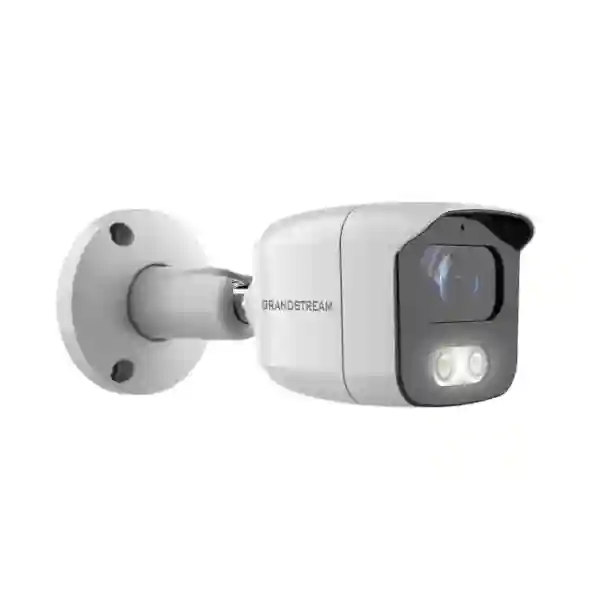
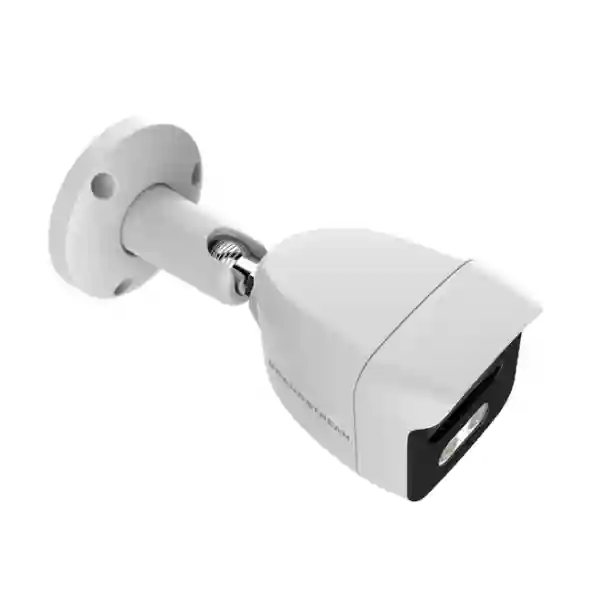
Grandstream GSC3615 Tanzania
The Grandstream GSC3615 is a wall-mounted Full HD infrared IP bullet camera built for businesses that need practical wide-angle monitoring, network-based video, PoE installation and interoperability with compatible surveillance and SIP environments. Its fixed 3.6 mm lens, 1920 × 1080 image sensor, motion detection, infrared illumination, ONVIF Profile S support and SIP/VoIP capabilities make it relevant to entrances, retail areas, offices, warehouses, hospitality properties, banks and other sites where security teams want a camera that can participate in both video-management and communications workflows.
Lifecycle note: Grandstream currently lists the GSC3615 in its Product Archive. That means procurement teams should verify current availability, firmware support requirements and whether a newer Grandstream camera is more appropriate before ordering. FourTeck can help compare the GSC3615 requirement with current alternatives without assuming stock or availability.
✓ Fixed 3.6 mm lens
✓ IR illumination up to 20 m
✓ IEEE 802.3af PoE
✓ ONVIF Profile S
✓ SIP/VoIP video and audio
✓ Motion detection
✓ 3.5 mm audio line-in / line-out
What is the Grandstream GSC3615?
The GSC3615 is Grandstream’s fixed-lens bullet-style IP surveillance camera designed for wall mounting and wide-angle monitoring of nearby subjects. Grandstream specifies a 1/2.9-inch CMOS image sensor with 1920 × 1080 resolution, progressive scanning and a fixed 3.6 mm lens. The camera provides network video output and supports H.264, H.265, JPEG and MJPEG compression in published Grandstream documentation. This combination makes the model suitable for organisations that want Full HD video without the mechanical complexity of a pan-tilt-zoom camera or the variable optical setup of a varifocal model.
The camera includes two infrared LEDs with a published reach of up to 20 metres and automatic control, helping it monitor darker areas. Day/night switching uses an IR-cut mechanism, while image configuration options include controls for brightness, contrast, saturation, sharpness and white balance. Motion detection is supported, and Grandstream documentation also describes privacy masking and alert functions. For a business security project, these capabilities are useful when the camera is assigned a clearly defined scene such as an entrance, doorway, corridor approach, reception perimeter, loading-zone edge or nearby outdoor area.
A major difference between the GSC3615 and many basic IP cameras is its communications orientation. It supports SIP/VoIP, allowing video and audio streams to interact with compatible SIP endpoints. Grandstream describes use with products such as its GSC3570 facility control station, GXV video phones, GRP/GXP phones, portable WP Wi-Fi phones and the Wave mobile application. Audio requires appropriate external devices because the camera provides 3.5 mm line-in and line-out interfaces rather than relying on an integrated microphone and speaker for every deployment. This makes planning important: the camera can be part of a larger monitoring and communication workflow, but the correct endpoint, microphone, speaker, VMS and network design must be confirmed for the intended use.
Full HD capture
A 1920 × 1080 sensor supports clear Full HD monitoring for defined business scenes where overview detail and practical network bandwidth must be balanced.
PoE deployment
An RJ-45 10/100 Ethernet interface with IEEE 802.3af PoE can carry network data and power over one cable from a suitable PoE switch.
Night monitoring
Two infrared LEDs, automatic IR control and day/night switching support monitoring in dark or low-light areas, with an official quoted IR reach of up to 20 m.
Open integration
ONVIF Profile S and SIP/VoIP capabilities help the GSC3615 participate in broader video-management and communication systems when compatibility is verified.
Verified Grandstream GSC3615 specifications
| Specification | Published information | Planning relevance |
|---|---|---|
| Image sensor | 1/2.9-inch CMOS, 1920 × 1080 | Full HD scene capture |
| Lens | Fixed 3.6 mm | Best where the required field of view is known before installation |
| Primary resolution | Up to 1920 × 1080 | Storage and network sizing should reflect selected stream settings |
| Compression | H.264 / H.265 / JPEG / MJPEG in Grandstream published material | Confirm recorder and VMS codec compatibility |
| Infrared | 2 IR LEDs, up to 20 m, automatic control | Useful for defined nearby scenes rather than long-distance identification |
| Ethernet | 1 × RJ-45 10/100Base-T | Standard IP network integration |
| PoE | IEEE 802.3af | Simplifies cabling when a suitable PoE switch is available |
| Audio | 3.5 mm line-in and 3.5 mm line-out | External microphone/speaker planning may be required |
| ONVIF | Profile S | Supports standards-based VMS integration subject to feature-level testing |
| Operating range | -20 °C to 50 °C; up to 95% RH | Site exposure still needs assessment for direct heat, enclosure and mounting conditions |
| Dimensions / weight | 171 × 73 × 73 mm; approximately 430 g | Mounting surface and cable entry should be prepared before installation |
Note: Grandstream historical materials have shown different weatherproof ratings in different documents or revisions. Current official documentation should be checked for the exact hardware revision being procured rather than assuming a rating from one legacy brochure.
How to decide whether the GSC3615 fits your project
Start with the scene rather than the model number. The GSC3615 has a fixed 3.6 mm lens, so the installer cannot optically zoom or adjust focal length after mounting. That is an advantage where the required view is predictable and simplicity matters, but it can be the wrong choice where a camera must identify subjects at variable distances or cover an unusually narrow or wide target area. A short site survey should confirm mounting height, viewing direction, target distance, backlighting, night conditions and possible obstructions before purchase.
Next, confirm how video will be recorded and reviewed. The GSC3615 can work with Grandstream’s GSURF Pro and with ONVIF-compliant video-management systems, but ONVIF interoperability does not automatically guarantee that every advanced feature is exposed identically on every platform. Confirm live view, recording, motion events, audio, user permissions and any notification workflow with the selected recorder or VMS. For larger sites, camera count, retention period, bitrate, recording schedule and redundancy requirements should be calculated before storage is purchased.
Finally, review lifecycle. The GSC3615 is in Grandstream’s Product Archive. An archived camera can still exist in an installed base or procurement specification, but buyers should not assume ongoing production, current availability or future firmware cadence. If the requirement is for a new long-life project, ask for a comparison with a current Grandstream surveillance model. If the requirement is a replacement inside an existing GSC3615 environment, provide the current firmware, VMS details, quantity, mounting arrangement and reason for replacement so compatibility can be assessed more accurately.
GSC3615 deployment and integration guidance
PoE and switching
The camera supports IEEE 802.3af PoE. For multi-camera projects, calculate the total PoE budget rather than checking only that the switch has enough ports. Reserve capacity for future cameras, access points or phones sharing the same switch and document which ports feed surveillance devices.
VLAN and security
Cameras should be treated as managed network endpoints. Use strong credentials, restrict management access, apply appropriate VLAN or firewall policies, maintain firmware where supported and avoid exposing camera management interfaces directly to the public internet.
SIP integration
SIP/VoIP support can connect video and audio monitoring with compatible Grandstream endpoints. Define the desired workflow first: live monitor, event call, intercom-style interaction or guard-station viewing. Then confirm endpoint firmware and feature compatibility before rollout.
Audio design
The 3.5 mm line-in and line-out connections support external audio integration. Select microphone and speaker equipment appropriate to the site and verify environmental, privacy and acoustic considerations before enabling audio.
Related FourTeck technology resources
A camera project is rarely only about the camera. For Tanzania deployments, the FourTeck Tanzania technology solutions overview explains how CCTV, switching, structured cabling, firewalls, servers and access control fit together in a business environment. Buyers comparing several models can also use the FourTeck Tanzania business technology shop to frame the wider bill of materials and procurement questions around cameras, PoE switching, storage and related infrastructure.
For organisations standardising voice and video workflows across regions, the FourTeck Grandstream specialist site provides a broader Grandstream solution context, while the FourTeck IP phone solutions site is relevant when SIP endpoints and camera event workflows need to be considered together. These links are useful because the GSC3615 can be integrated into communications-oriented security designs rather than operating only as an isolated camera.
Grandstream GSC3615 Tanzania
For organisations searching for the Grandstream GSC3615 in Tanzania, the most important procurement question is whether the camera is being specified for a new installation or to maintain an existing system. In a new surveillance project, the GSC3615’s archived status should trigger a comparison with current alternatives before purchase. In an installed environment, however, a like-for-like requirement may arise because a business wants consistent mounting, VMS behaviour, user procedures or SIP integration across an existing camera estate. The buying process should therefore begin with the installed base, intended use and required compatibility rather than with a price-only request.
Tanzania deployments can span offices, banks, hotels, schools, warehouses, shops, compounds and mixed-use facilities. The camera’s fixed 3.6 mm lens is most appropriate where the scene can be planned in advance. A site with a gate 35 metres from the proposed mounting point has a very different requirement from a reception entrance or nearby loading-bay approach. The published infrared distance of up to 20 metres is useful guidance for darkness, but real usable identification depends on subject distance, mounting angle, ambient light, reflection, clothing, movement and the detail that security staff must actually obtain. A practical survey should therefore establish what the operator must see both during the day and at night.
Network design matters equally. The GSC3615 uses Ethernet and supports PoE, allowing one cable to carry power and data from a suitable switch. This can simplify installation, particularly where a UPS-backed PoE switch is already available. The switch should be sized for total power draw, port count and uplink traffic across all cameras. For security and manageability, cameras can be placed on an appropriate VLAN, with administration restricted to authorised systems. Recording traffic should be mapped so that large camera deployments do not create avoidable bottlenecks between access switches, recorders and operator stations.
When requesting a quotation in Tanzania, include camera quantity, site type, indoor or outdoor location, approximate target distance, night-lighting conditions, current VMS or recorder, PoE switch availability, required retention period and whether SIP endpoints are part of the solution. This information makes it easier to determine whether the GSC3615 remains appropriate or whether a current model should be proposed. It also helps identify supporting items such as switches, rack space, structured cabling, UPS capacity, audio accessories or recording storage that may otherwise be discovered only after the cameras arrive.
Grandstream GSC3615 Dar es Salaam
Businesses in Dar es Salaam often need surveillance across busy commercial environments where entrances, parking access, loading areas, reception points and public-facing spaces can experience significant movement. The GSC3615 can suit defined monitoring positions when its 3.6 mm fixed field of view matches the scene. Because it is not a zoom camera, installers should confirm the intended viewing distance before mounting. For a retail doorway or office entrance, a fixed wide-angle view may be exactly what is needed; for a distant perimeter target or vehicle identification point, a different lens or camera family may be more appropriate.
Dar es Salaam projects also benefit from careful environmental planning. Outdoor installations should account for direct sun, rain exposure, cable-entry protection, salt-laden coastal air in some areas, mounting-surface quality and the possibility of heat accumulation around enclosed equipment. The camera’s published operating temperature range is broad, but the complete system includes switches, recorders, UPS units and network cabinets that may have different environmental limits. Equipment rooms should be ventilated appropriately, and outdoor cable routes should be secured and protected rather than left exposed to physical damage or water ingress.
For multi-floor offices, hospitality properties and warehouses, centralised PoE switching can simplify power distribution, but long cable runs must remain within Ethernet design limits and be installed using suitable structured cabling. Where buildings are separated, fibre uplinks may be better than long copper runs between structures. The camera traffic should be considered alongside normal business data, Wi-Fi and voice. A VLAN design can keep surveillance logically organised, while controlled firewall policies can limit unnecessary access to camera interfaces.
Procurement teams in Dar es Salaam should also account for lifecycle. Grandstream’s archive listing makes it important to check whether the GSC3615 is being requested because of an existing standard or simply because an old specification was reused. If the latter, a current-model review can protect the organisation from buying equipment with a shorter remaining support horizon. If the camera is needed to match an installed Grandstream environment, share existing model quantities, firmware, management software and SIP endpoints so the replacement or expansion can be assessed in context rather than as an isolated purchase.
Grandstream GSC3615 Mwanza
For Mwanza organisations evaluating the Grandstream GSC3615, useful applications can include office entrances, warehouses, retail facilities, education sites, hospitality environments and operational compounds where a fixed bullet camera provides a clear view of a nearby scene. The 1080p image sensor and 3.6 mm lens are suitable for general Full HD monitoring, but camera placement should be based on the security objective. A broad overview of a loading zone requires different framing from confirming identity at a controlled doorway, and the correct camera position often matters more than adding resolution after the fact.
Night performance deserves specific attention. Grandstream publishes an infrared reach of up to 20 metres using two IR LEDs. That figure should not be interpreted as a guarantee of forensic identification at 20 metres under every condition. Reflective walls, dust, rain, nearby surfaces, subject movement and mounting angle can all influence the image. The installer should test the actual night scene and, where critical identification is required, consider additional lighting or a different camera type. This is especially relevant at gates, parking areas and industrial sites where target distances may exceed what a nearby wide-angle camera was designed to handle.
Mwanza projects that combine cameras with branch connectivity should plan recording locally when practical rather than assuming every stream must cross a WAN link. Local recording can reduce dependence on internet performance, while authorised remote viewing can still be provided through a properly secured architecture. The GSC3615’s ONVIF Profile S support gives flexibility for compatible video-management systems, but the exact functions required by the operator should be tested with the selected platform. Motion events, audio, user permissions and playback workflows are particularly important when integrating older and newer camera models.
Before quotation, provide the camera count, mounting positions, expected recording period, switch and recorder details, available UPS protection and whether the project is a replacement or new build. If existing GSC3615 units are already deployed, include their firmware and current VMS. This helps determine whether matching the archived model has operational value or whether moving to a newer camera family would create a more sustainable standard for future expansion in Mwanza and other Tanzanian branches.
Grandstream GSC3615 Arusha
Arusha businesses in hospitality, tourism, offices, education, retail and logistics can use IP surveillance to monitor guest entrances, reception points, corridors, stores, back-of-house areas and operational access routes. The GSC3615 is particularly relevant when a wall-mounted bullet camera with a fixed 3.6 mm lens provides the required scene. Its Full HD video, motion detection, infrared illumination and PoE support can simplify a compact security design, while ONVIF and SIP capabilities allow integration with broader systems when compatibility has been verified.
Hospitality deployments illustrate why planning matters. A hotel may need different camera behaviour at the reception, vehicle entrance, service corridor and external compound. One model may not be optimal everywhere. The GSC3615 can give a useful general view, but face detail, field of view and night performance depend on position. Privacy also matters; cameras should be placed and configured according to the organisation’s policy and applicable legal requirements. Where audio is considered, the external microphone and speaker interfaces require additional attention to consent, policy and site acoustics.
For Arusha sites with intermittent power concerns, the PoE design can be coordinated with UPS protection. Rather than fitting individual adapters at each camera, a central PoE switch can make backup power easier to manage, provided its PoE budget and UPS runtime are sized correctly. The recorder, firewall and monitoring workstation may also need backup power if security operations must continue during short interruptions. Network documentation should record camera names, switch ports, IP addresses, VLAN membership and recorder channels so maintenance remains straightforward.
Because the GSC3615 is archived by Grandstream, buyers should use the model as a specification reference rather than assuming it is the best current choice. An organisation replacing one failed unit in an established system may value consistency; a new property opening may be better served by a current surveillance series. A quotation request should therefore include the project stage, existing equipment, expected system lifetime and any integration requirement with Grandstream phones, facility control stations or management software.
Grandstream GSC3615 Dodoma
In Dodoma, the Grandstream GSC3615 may be considered for government-related offices, commercial premises, education environments, branch offices, warehouses and controlled entrances that need a fixed Full HD IP camera. Its strongest fit is a clearly defined nearby scene where the fixed 3.6 mm lens can be positioned once and left in place. Procurement teams should describe the target rather than simply requesting “one outdoor camera”: the distance to the subject, required detail, lighting, mounting height and expected viewing direction determine whether the GSC3615 is technically suitable.
The camera’s PoE support can be valuable in organised office networks because it reduces the need for a local electrical outlet at every camera position. A properly planned PoE switch can power multiple cameras and, when backed by a suitable UPS, can keep the surveillance edge operating through short power disturbances. However, total system resilience also depends on the recorder, storage, core switch and monitoring station. A camera that remains powered but cannot reach its recorder is not a complete security solution.
For sites that use standardised IT policies, the GSC3615 should be managed like other network infrastructure. Change default credentials, use strong access controls, restrict administrative interfaces, maintain device inventories and document firmware. Where the camera communicates with a VMS, recorder or SIP platform, firewall rules should permit only the required flows. Secure remote access should be implemented through controlled methods rather than exposing camera interfaces directly to the internet.
Dodoma buyers should also confirm lifecycle before authorising purchase. Grandstream’s archive status indicates that the GSC3615 belongs to an earlier product generation. If the organisation has a formal equipment standard, it may need an exception process or an updated approved model. For an expansion of an existing system, FourTeck can review compatibility and help identify whether a current alternative can coexist with the installed cameras. Provide VMS details, camera quantities, recording retention and the procurement objective so the recommendation reflects operational reality rather than just matching a legacy model number.
Grandstream GSC3615 UAE
For UAE organisations, the GSC3615 may appear in existing Grandstream surveillance deployments, old bills of materials or multi-country corporate standards. The camera’s Full HD resolution, fixed 3.6 mm lens, infrared support, PoE and SIP orientation can still explain why it was selected for offices, retail, hospitality and entrance monitoring. For a new project, however, the archived status should lead to a lifecycle review. Procurement should compare the desired function against current Grandstream models and confirm local project requirements before treating the GSC3615 as a default selection.
UAE outdoor deployments can involve high ambient temperatures, strong sunlight, dust and demanding enclosure conditions. Even when published camera temperature limits appear adequate, installers should assess direct solar loading, sheltered versus exposed mounting, cable glands, junction boxes and network-cabinet ventilation. Cameras mounted beneath shaded building features may operate in a very different thermal environment from units exposed to direct afternoon sun. The entire system, including PoE switches and recording appliances, should be designed for the actual installation environment.
Corporate groups with branches in Tanzania and the UAE may also value platform consistency. If Grandstream endpoints are used for communications, the GSC3615’s SIP capability can support integrated monitoring workflows, but feature expectations must be explicit. Decide whether security staff need event calls, live views on compatible phones, intercom-style audio, central VMS monitoring or simply conventional recording. A design that defines the workflow can then select the correct camera, phone, station and management platform rather than assuming all SIP devices behave identically.
For quotation preparation, include current installed cameras, firmware, VMS or recorder, PoE infrastructure, desired replacement quantity and any corporate standard that must be maintained. Where the request originates from a legacy tender document, ask whether the model can be substituted with a current equivalent. This protects project continuity and makes future maintenance easier while preserving the functional intent of the original specification.
Grandstream GSC3615 Uganda
Uganda organisations considering the Grandstream GSC3615 should evaluate it as part of the full camera system: lens coverage, network, PoE, recording, storage, operator workflow and lifecycle. The camera can deliver Full HD video and infrared-assisted night monitoring for nearby scenes, while ONVIF support allows integration with compatible video-management systems. For organisations already using Grandstream communications products, SIP/VoIP support can add another integration path, but this should be designed around a specific operational requirement rather than enabled simply because the protocol is available.
Branch networks are a common use case. A company with multiple Ugandan sites may deploy cameras locally at each branch while central security or IT teams receive controlled remote access. Local recording can reduce WAN bandwidth dependence, and standardised camera naming, VLANs, credentials and retention settings can make support more consistent. If the GSC3615 exists in some branches and current cameras in others, confirm that the chosen VMS supports both generations and that staff can use a common playback and export process.
Power planning should include the PoE switch, NVR or recording server and connectivity equipment. The GSC3615’s IEEE 802.3af support is useful because cameras can be centrally powered from a PoE switch. A UPS can then protect several endpoints at once, although actual runtime depends on total load. For outdoor positions, proper cable protection, mounting hardware and water-resistant termination are as important as the camera specification itself.
Grandstream lists the GSC3615 in its Product Archive, so Uganda buyers should verify availability and replacement strategy before making it part of a new standard. Where the camera is needed for maintenance, provide the installed system details and reason for the request. Where a new security system is being planned, specify the required scenes, retention, analytics expectations, night conditions and integration objectives so a current camera can be compared fairly against the historical GSC3615 requirement.
Grandstream GSC3615 Kampala
Kampala offices, retailers, financial organisations, hospitality properties and warehouses may encounter the GSC3615 in existing Grandstream environments or older procurement specifications. For busy urban sites, camera selection should focus on the actual security task. The fixed 3.6 mm lens is suitable for general monitoring when the target is relatively close and the desired field of view can be established before installation. A doorway, corridor approach or reception perimeter may be a better fit than a distant gate requiring narrow-field identification.
Network congestion can affect surveillance reliability in mixed-use buildings. Camera streams should be considered alongside office data, cloud applications, Wi-Fi and voice. Managed switching allows VLAN separation and clearer troubleshooting, while sufficient uplink capacity helps recording traffic move reliably to the recorder or VMS. Where many cameras share an access switch, storage and recording paths should be mapped so that a single overloaded uplink does not undermine the entire security system.
Kampala sites may also make use of the GSC3615’s SIP capabilities. For example, a compatible endpoint can be part of an alert or viewing workflow. The feature becomes most useful when roles are defined: reception may need a live view of an entrance, a security desk may need event notification, or facilities staff may need integrated visual confirmation. External audio accessories can be added through the line-in and line-out interfaces where appropriate, but privacy and operational policies should be agreed first.
Since the GSC3615 is archived, procurement should confirm whether the desired outcome is continuity or modernisation. If continuity is the goal, compatibility with the existing platform can justify seeking the older model. If the site is being upgraded, use the GSC3615’s core requirements—1080p-class monitoring, PoE, IR, ONVIF and communications integration—as a baseline for comparing current cameras rather than automatically repeating an ageing model in the new bill of materials.
Grandstream GSC3615 Arua
For Arua businesses and institutions, a practical surveillance system should remain manageable even when a site is smaller or further from central technical teams. The GSC3615’s PoE capability can reduce installation complexity by carrying data and power over the same Ethernet cable, while Full HD network video can be recorded locally to a compatible platform. The key is to design the complete path from camera to switch, recorder, storage and authorised remote viewer rather than treating the camera as an independent appliance.
Where remote support is important, standardisation helps. Use consistent camera names, IP addressing, VLANs and administrator procedures across branches. Keep records of firmware and configuration, and avoid placing cameras directly on unrestricted public networks. If remote viewing is required, use secure network access designed for the organisation. These practices reduce the difficulty of troubleshooting when on-site support is not immediately available.
The GSC3615 can monitor nearby entrances, store areas, office perimeters and other defined scenes, but the fixed 3.6 mm lens means installers should validate framing before permanent mounting. For night use, the up-to-20-metre infrared specification provides a planning reference, not a guarantee that every object will be identifiable at that distance. A test view should be performed after dark, especially where shiny surfaces, dust, rain or nearby walls could reflect IR light back toward the camera.
Arua procurement requests should state whether the camera is replacing a failed GSC3615 or forming part of a new design. Because Grandstream has archived the model, a new installation should normally include a current-alternative review. If the older model is required for compatibility, provide the VMS, firmware, quantity and mounting details. This information helps create a quotation that addresses continuity, spares and future support rather than focusing only on the unit price.
Grandstream GSC3615 Mbarara
Mbarara organisations can consider the GSC3615 for general-purpose fixed surveillance where Full HD resolution, PoE and infrared support match the operational requirement. Typical scenes may include office entrances, retail areas, stock rooms, hospitality service zones and warehouse approaches. A successful installation begins by identifying what the operator needs to recognise in each scene. If the requirement is broad awareness, the fixed lens may work well. If the requirement is detailed identification at a greater distance, another lens or camera type should be evaluated.
Storage planning is often overlooked. Resolution alone does not determine storage consumption; bitrate, codec, frame rate, number of cameras, continuous versus event recording and retention period all contribute. The GSC3615 supports multiple compression formats in Grandstream documentation, but the selected recorder must support the chosen stream. A storage estimate should be produced before deployment so the business does not discover after installation that retention is far shorter than expected.
The physical installation should also be maintainable. Cameras need secure mounting, protected cable entry and a path that technicians can inspect later. PoE switching can centralise power, and rack-mounted infrastructure can make UPS protection, patching and troubleshooting more organised. If cameras are installed in different buildings, fibre may be preferable for backbone links depending on distance and electrical conditions. Network segmentation can help keep camera traffic controlled and reduce unnecessary exposure.
For a Mbarara quotation, include the required quantity, site layout, target distance, night-lighting conditions, existing recorder or VMS and current network infrastructure. Grandstream’s archive listing should be discussed at the procurement stage. Businesses maintaining an older system may still have a valid reason to request the GSC3615, while new deployments should compare a current model that can deliver the same core outcomes with a longer support horizon.
Grandstream GSC3615 Gulu
In Gulu, the GSC3615 can be evaluated for offices, compounds, warehouses, education facilities, retail environments and other sites needing a wall-mounted network camera. The camera’s published design is best suited to wide-angle monitoring of nearby subjects. That wording is important: a fixed 3.6 mm lens is not intended to solve every surveillance distance. Security planners should mark the proposed camera location on a site drawing, estimate the target distance and decide the required level of detail before confirming the model.
For distributed sites, operational simplicity is valuable. The GSC3615 supports browser-based configuration and can be managed with Grandstream tools and compatible VMS platforms. Standardised deployment templates can reduce configuration errors when multiple cameras are installed, but credentials must remain secure and unique where policy requires. Firmware versions should be documented, especially in older archived equipment, because feature availability and interoperability can vary between revisions.
PoE is useful for maintaining remote camera positions because a central switch can provide both network connectivity and power. If the switch is connected to a UPS, several cameras may remain operational through brief power events. The recording device and uplink must also remain available for this to provide meaningful continuity. For outdoor runs, cable quality, surge considerations, termination and weather protection should be reviewed by the installer.
Gulu buyers should treat the GSC3615 as either a legacy compatibility requirement or a reference specification. For a legacy requirement, share the installed system details so like-for-like integration can be checked. For a new project, define the security outcome and allow a current model comparison. This approach avoids locking a new installation to an archived product solely because the model number appears in an older document.
Grandstream GSC3615 Kenya
Kenya buyers may encounter the GSC3615 when supporting an existing Grandstream surveillance platform or standardising equipment across East African branches. Its combination of 1080p imaging, fixed 3.6 mm lens, IR, PoE, ONVIF and SIP can make it relevant to general entrance and facility monitoring. However, the archive status means a new project should not assume it is currently manufactured or the best long-term choice. The functional requirement should be documented and compared against current products.
For corporate groups operating in Kenya and Tanzania, a common surveillance architecture can reduce support complexity. Standardise VLAN design, camera naming, recording policies, user permissions and secure remote access while allowing camera models to evolve over time. An ONVIF-based VMS may help support multiple camera generations, but testing is still required for advanced functions. The goal should be consistent operator experience rather than forcing every branch to use an identical discontinued model.
If a Kenyan site uses SIP endpoints for reception or security, the GSC3615’s communications capabilities can be included in workflow design. Define who receives alerts, where video is viewed and how two-way audio is handled. Because external microphone and speaker interfaces may be involved, accessory selection and privacy considerations need to be included in the bill of materials. For conventional surveillance-only use, those interfaces can remain unused while the camera operates as a standard network video endpoint.
A strong quotation request includes existing cameras, VMS or recorder, number of new positions, required retention, PoE switch details, site environment and target distances. If the requirement is an exact GSC3615 replacement, explain why substitution is not acceptable. If substitution is allowed, request a current alternative with comparable or better scene coverage, network compatibility and management features so procurement can compare lifecycle as well as initial cost.
Grandstream GSC3615 Kuwait
Kuwait projects can place demanding environmental expectations on outdoor surveillance hardware. The GSC3615’s published specifications include weather-resistant construction and an operating range suitable for many environments, but actual deployment should account for strong heat, direct sunlight, dust and the thermal conditions of any enclosure or nearby cabinet. A camera installed in shade beneath a building canopy can experience a very different temperature from one exposed directly to midday sun, so site conditions must be assessed rather than inferred from the model name alone.
The fixed 3.6 mm lens makes the GSC3615 most useful where the required view is established before installation. For office entrances, service corridors, near-field perimeter positions or warehouse doors, this may be sufficient. For long outdoor approaches or vehicle identification, a varifocal or purpose-selected camera may provide better results. Infrared up to 20 metres can assist low-light scenes, but white surfaces, dust and reflective objects can affect IR performance and should be tested at night.
Network design should include PoE budget, switch location, cable protection and recording bandwidth. Where cameras are deployed across large facilities, access switches and fibre backbones may be used to aggregate traffic. Camera networks can be segmented for security, and remote management should be restricted to authorised systems. If the GSC3615 is integrated with SIP endpoints, ensure the security policy also covers those communication paths and the management accounts used by the devices.
Because the GSC3615 is archived, Kuwait procurement teams should distinguish between maintenance and new-build requirements. An exact replacement may be appropriate when compatibility is the priority. A new build should compare current Grandstream models or suitable alternatives using the GSC3615’s functional requirements as a baseline. Provide the desired field of view, site environment, VMS, recording retention and audio requirements so the comparison is technically meaningful.
Grandstream GSC3615 Ghana
Ghana organisations considering the Grandstream GSC3615 can use it as a reference for a straightforward Full HD PoE bullet camera with infrared and standards-based video integration. Offices, retail facilities, hospitality properties, warehouses and building entrances are among the environments Grandstream historically identified for this model. The practical fit depends on scene distance and mounting position because the camera uses a fixed lens. A site survey should confirm the expected view before purchase.
Outdoor deployments should consider humidity, rain exposure, cable entry and physical protection. The camera’s metal weather-resistant construction supports outdoor use, but connectors, junction boxes and cable routes are part of the weatherproofing outcome too. In coastal or harsh environments, the installer should assess mounting hardware and ongoing maintenance. Lens cleaning schedules can also matter where dust, insects or moisture affect image quality over time.
The GSC3615 can be powered by IEEE 802.3af PoE, allowing centralised switch-based power. This supports cleaner installations and can simplify UPS backup. Organisations with multiple branches can standardise PoE switch sizing, VLAN structures and recorder configurations to make support easier. ONVIF Profile S provides a standards-based route into compatible VMS platforms, though feature-level interoperability should be verified before large purchases.
For Ghana procurement, Grandstream’s Product Archive listing is an important decision factor. Buyers maintaining existing GSC3615 sites should provide current firmware, VMS and quantity so replacements can be assessed. New projects should compare current camera models based on field of view, low-light requirements, recording platform, lifecycle and support. This avoids making an archived model the default simply because it remains familiar to the technical team.
Grandstream GSC3615 Nigeria
Nigeria deployments can range from small offices and retail outlets to multi-site organisations, warehouses and hospitality operations. The GSC3615 can support general fixed monitoring where the 3.6 mm field of view, 1080p resolution and infrared capability match the scene. For larger sites, the camera should be selected as part of a tiered design rather than used universally. Entrances, perimeter lines, cash-handling areas and distant gates may each need different lenses, resolutions or camera forms.
Power resilience can be especially important for surveillance systems. The GSC3615’s PoE capability allows the camera to receive power from a central switch, so power protection can be concentrated around network and recording infrastructure. The design should identify how long critical cameras and the recorder need to operate through interruptions and size UPS or backup power accordingly. Maintaining only camera power without the network path or recorder does not provide complete recording continuity.
Security teams may also use remote viewing across multiple sites. The safest architecture avoids exposing individual camera interfaces directly to the internet. Centralised VMS access, VPN or another controlled method can provide remote visibility while keeping management ports restricted. Strong credentials, documented user roles and firmware management remain important, especially for an older product generation.
Nigeria buyers should confirm whether the GSC3615 is requested for legacy replacement or a new specification. Since the model is archived, availability should be checked and no stock assumption should be made. Where a newer model is proposed, compare not only resolution but also lens coverage, PoE requirements, VMS interoperability, night performance and management. A technically equivalent replacement should preserve the operational outcome rather than matching only one headline specification.
Grandstream GSC3615 Seychelles
Seychelles surveillance deployments often require careful attention to outdoor exposure, humidity, salt air and site access for maintenance. The GSC3615’s weather-resistant bullet-camera design can fit protected outdoor and indoor monitoring positions, but the complete installation should be assessed for environmental suitability. Mounting hardware, junction boxes, cable glands and connectors can be just as important as the camera body when installations are exposed to moisture or corrosive coastal conditions.
For hospitality properties, offices, retail or service environments, the fixed 3.6 mm lens can provide a practical general view of nearby subjects. Camera placement should protect guest and employee privacy while giving security teams the detail they need. A reception entrance, service corridor and exterior access point will each have different lighting and viewing requirements. Night tests should be included in commissioning so IR reflections and dark areas can be corrected before handover.
PoE can simplify distributed camera installations because network and power share the same cable. At island properties or sites where maintenance visits are costly, organised racks, labelled cabling, remote monitoring and documented configurations can reduce future troubleshooting time. The VMS should provide a clear health view so failed cameras or storage issues are noticed quickly rather than discovered only after an incident.
Grandstream’s archived status for the GSC3615 means Seychelles buyers should plan for lifecycle from the start. If the camera is already installed, determine whether a limited quantity of compatible replacement units is required. If a new property or renovation is being designed, compare current alternatives that meet the same core requirements with a stronger forward support horizon. Include target distances, quantity, VMS, PoE infrastructure and environmental conditions in the quotation request.
Buying checklist for a GSC3615 quotation
Grandstream GSC3615 FAQ
Is the Grandstream GSC3615 a 1080p camera?
Yes. Grandstream documentation specifies a 1/2.9-inch CMOS sensor with 1920 × 1080 resolution and Full HD primary-stream capability.
Does the GSC3615 support PoE?
Yes. It has a 10/100 Ethernet interface and supports IEEE 802.3af Power over Ethernet. A suitable PoE switch can provide both power and network connectivity over the Ethernet cable.
How far does the infrared illumination reach?
Grandstream publishes an IR range of up to 20 metres using two infrared LEDs. Actual usable detail depends on the scene, reflections, subject movement, ambient light and mounting position.
Can the GSC3615 work with an ONVIF VMS?
Grandstream specifies ONVIF Profile S support. Basic integration with compatible systems is therefore possible, but buyers should verify the exact features they require, such as motion events, audio and advanced configuration, with the chosen VMS.
Does the camera support audio?
The GSC3615 provides 3.5 mm line-in and line-out interfaces and supports SIP/VoIP audio-video integration. External microphone or speaker hardware may be required depending on the workflow.
Is the GSC3615 still a current Grandstream product?
Grandstream currently lists the GSC3615 in its Product Archive. Buyers should therefore verify availability and compare current replacement models before using it in a new project.
Can the GSC3615 call a Grandstream phone?
The camera supports SIP/VoIP and Grandstream documents integration with compatible video phones, facility-control stations and other SIP endpoints. The exact call and video workflow depends on firmware, endpoint capability and configuration.
What should I provide for a Tanzania quotation?
Provide quantity, target locations, viewing distance, night conditions, existing VMS or NVR, PoE switch details, required retention, SIP integration needs and whether you will accept a current replacement model. This allows the quotation to address compatibility and lifecycle instead of only the camera price.
Decision recap
Choose the GSC3615 only when its fixed 3.6 mm field of view, Full HD resolution, infrared range, PoE interface, ONVIF compatibility and SIP capabilities match the project and its archived lifecycle is acceptable. For an existing Grandstream system, exact-model continuity may simplify replacement. For a new deployment, compare current cameras before standardising on an archived unit.
The best procurement decision considers the whole surveillance path: camera position, lens, lighting, switching, PoE power, network security, recording, storage, remote access, user workflow and future support. FourTeck can review these dependencies and help prepare a bill of materials based on the actual site requirement.
Consultation panel
To discuss the Grandstream GSC3615 for Tanzania, send the camera quantity, deployment city, site type, required viewing distance, existing recorder or VMS, PoE infrastructure and whether this is a replacement or new installation. If the GSC3615 is not the best lifecycle fit, the requirement can be compared with a current model while preserving the essential functions.
For broader project planning, FourTeck can also review related switching, structured cabling, UPS, recording storage, network segmentation and SIP endpoint requirements so the surveillance system is installed as a maintainable business solution rather than a collection of disconnected devices.



Reviews
There are no reviews yet.