
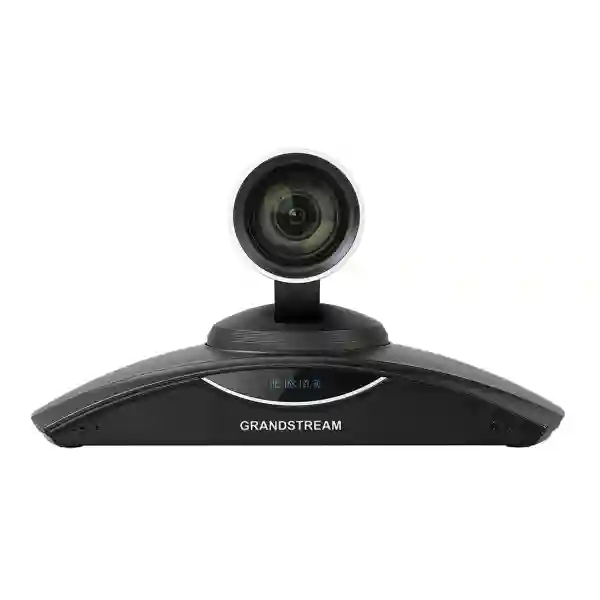
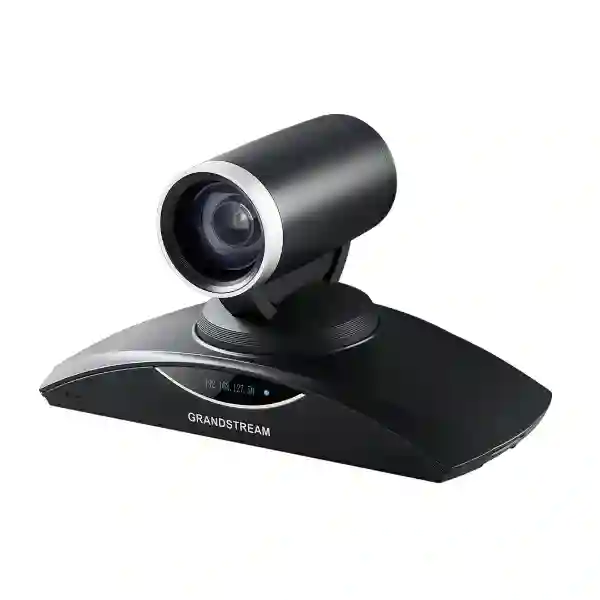
Grandstream GVC3202 Video Conferencing System
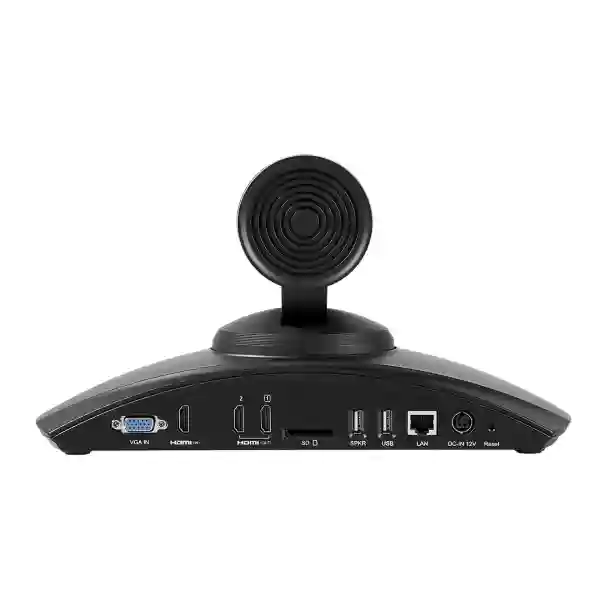
The Grandstream GVC3202 is a dedicated SIP/Android room video conferencing platform for organizations that want standards-based collaboration without making every meeting dependent on a laptop. Grandstream specifies support for video up to 1080p, an embedded MCU for up to three video participants, two HDMI monitor outputs, an HDMI/VGA content input, a remotely controllable PTZ camera with 9x optical zoom, Gigabit Ethernet, integrated Bluetooth and local recording capabilities. Its interoperability focus makes it relevant for companies that already operate SIP or H.323 conferencing environments and need a fixed meeting-room endpoint with clear camera control and display flexibility.
What the GVC3202 is designed to do
A meeting-room system has to solve more than the basic need to place a video call. It must frame participants properly, carry intelligible audio, display remote participants clearly, present shared content, fit the room’s network design and remain simple enough for non-technical staff to use. The GVC3202 addresses those needs as a fixed endpoint rather than a USB peripheral. Its built-in MCU can mix up to three video participants, while the two HDMI outputs allow a dual-display room layout. In practice, one display can be used for remote participants and another for shared material or an alternate conference view, depending on configuration and platform behavior.
Grandstream’s documentation identifies a 1/3-inch 2-megapixel CMOS camera capable of 1920 × 1080 at up to 30 frames per second, with 9x optical zoom, approximately ±90° pan and ±23° tilt. That optical zoom is useful in boardrooms and medium meeting spaces where the camera may need to move from a wide group composition to a tighter view without relying entirely on digital enlargement. The endpoint also includes a 10/100/1000 Mbps Ethernet interface and supports Bluetooth for compatible peripherals. Unlike the GVC3200, the GVC3202 specification does not list integrated Wi-Fi, so network planning should assume a dependable wired Ethernet connection unless an approved external network method is separately designed.
For organizations evaluating the GVC3202 today, lifecycle and platform compatibility should be checked as part of procurement because the model is from an earlier generation of room systems. The right buying question is not simply whether the unit can make a video call; it is whether its protocols, firmware, conferencing service requirements, display interfaces, microphone arrangement and network conditions match the environment where it will be deployed. FourTeck can help translate those checks into a practical quotation and room-readiness plan.
Camera control
A PTZ camera with 9x optical zoom enables room framing, presenter focus and far-end control where supported, giving fixed meeting rooms more compositional flexibility than a static webcam.
Dual display
Two HDMI outputs support up to two Full HD monitors, useful for rooms where participants and shared content should remain visible at the same time.
Content sharing
An HDMI/VGA input allows a presentation source to be connected to the conferencing system so documents, slides or another video source can be shared during meetings.
Standards-based calling
SIP and H.323 interoperability can help organizations connect the room endpoint into existing standards-based conferencing or unified communications environments.
Verified GVC3202 technical highlights
| Area | GVC3202 specification / capability | Deployment relevance |
|---|---|---|
| Video | Up to 1080p, up to 30 fps | Suitable for Full HD room conferencing when bandwidth and remote platform support are appropriate. |
| Camera | 2 MP CMOS PTZ, 9x optical zoom | Supports wide room framing and closer presenter views. |
| Conferencing | Embedded MCU, up to 3 video attendees | Can host smaller multipoint meetings without a separate external MCU for the supported local conference scenario. |
| Display outputs | 2 × HDMI up to 1080p with CEC | Enables dual-screen meeting-room layouts. |
| Content input | 1 × HDMI / VGA input, up to 1080p | Provides a wired source for presentation sharing. |
| Network | 1 × RJ45 10/100/1000 Mbps | A wired Gigabit connection is the normal foundation for predictable room performance. |
| Protocols | SIP, H.323 and related conferencing/network protocols | Supports integration with standards-based conferencing systems, subject to configuration and platform interoperability. |
| Bluetooth | Integrated Bluetooth | Can be useful with supported peripherals such as input or audio accessories. |
Bandwidth should be engineered for the real call profile. Grandstream’s guidance identifies roughly 1 Mbps for an HD point-to-point call and 2 Mbps with content sharing, while Full HD can require around 2 Mbps point-to-point and 4 Mbps with content sharing. Actual requirements can vary with codec, platform, packet loss, overhead and meeting topology, so these figures are planning references rather than guaranteed internet-service thresholds.
Room, network and integration planning
A successful GVC3202 deployment begins with the room rather than the device carton. Measure the distance from the camera to the closest and farthest seats, identify where the displays will be mounted, check sight lines and decide whether the camera should sit above, below or between screens. The 9x optical zoom provides useful framing range, but the camera should still be positioned at a natural eye line. Very high mounting or placement far to one side can make remote conversations feel disconnected even when the image is technically sharp.
Audio deserves the same attention. Grandstream documents a built-in microphone and support for external microphone/speaker options, but room acoustics determine whether those choices work well. Hard glass walls, tiled floors, exposed ceilings and long boardroom tables can produce reverberation. Before purchasing accessories, define the number of participants, where they sit, whether presenters move around, and how much ambient noise comes from air-conditioning, corridors or nearby work areas. The objective is not simply louder sound; it is consistent speech intelligibility for both local and remote participants.
On the network side, the wired Gigabit Ethernet port should connect to a stable switching environment with predictable internet routing. If the organization separates voice, video and data with VLANs, confirm addressing, DHCP or static IP policy, DNS, NTP, firewall behavior and QoS before installation day. Standards such as TLS and SRTP appear in Grandstream’s protocol set, but secure operation depends on how accounts, certificates, firewall policies and the conferencing platform are configured. For multi-site meetings, test both incoming and outgoing calls, content sharing, far-end camera control where required and recovery after a dropped connection.
FourTeck’s broader Tanzania business technology portfolio is relevant because a room system depends on displays, structured cabling, switching, internet security and audio. Buyers can also review FourTeck’s regional IT and telecom capabilities when coordinating standards across multiple countries. These links provide context for projects where video conferencing is one part of a wider office infrastructure requirement.
Buying guidance: what to confirm before requesting a quote
Provide the room size, seating capacity, number and size of displays, primary meeting platform, existing SIP/H.323 environment, internet bandwidth, switching details, preferred microphone arrangement and whether presentation content must remain visible alongside remote participants. If you are replacing an older room system, include the existing camera, microphone, display and cabling details so reusable components can be identified carefully rather than assumed compatible.
Because the GVC3202 belongs to an earlier product generation, also ask for confirmation of product availability, firmware status and suitability for your intended conferencing service before purchase. This is particularly important when the room must join a modern cloud platform whose client, security or operating-system requirements may have changed since the endpoint was introduced.
Grandstream GVC3202 Tanzania
Organizations evaluating the Grandstream GVC3202 in Tanzania often need a meeting-room endpoint for management meetings, branch coordination, supplier discussions, training sessions and customer presentations. The product is most relevant where a fixed room setup is preferable to repeatedly connecting a personal laptop and where standards-based SIP or H.323 interoperability matters. For a Tanzania deployment, the first planning task is to establish whether the room will mainly host point-to-point calls, small three-way conferences or sessions that depend on an external conferencing service. That decision affects account configuration, bandwidth planning and user workflow. The two HDMI outputs can support a dual-display arrangement, while the HDMI/VGA input can accept a presentation source; however, the final experience depends on how the selected conferencing platform handles layouts and shared content.
Connectivity conditions vary between sites, so bandwidth should be verified at the actual meeting room rather than inferred from an ISP package headline. Grandstream’s planning guidance indicates at least 1 Mbps up and down for HD participant video under its stated assumptions, with more required for Full HD and content sharing. A business should also consider latency, jitter, packet loss and contention from other users. If the office runs large backups, CCTV uploads or cloud synchronization during meetings, QoS and traffic planning may matter as much as nominal internet speed. The GVC3202’s wired Gigabit Ethernet connection makes structured LAN design especially important.
For procurement, Tanzania buyers should request a quotation that clearly identifies the GVC3202 unit, required power components, microphone/speaker arrangement, display cabling and any implementation services. Do not assume that stock, warranty or cloud subscriptions are bundled unless the quotation states them. FourTeck can help customers compare the endpoint with current conferencing options and plan the surrounding network, display and room infrastructure. For project enquiries, the verified FourTeck Tanzania contact page is the appropriate route to provide room and deployment details.
Grandstream GVC3202 Dar es Salaam
In Dar es Salaam, the GVC3202 can fit offices that coordinate frequently with regional headquarters, international suppliers, branches or remote professional teams. The city’s concentration of corporate offices, logistics companies, financial services, hospitality operations and project organizations creates varied conferencing needs, so room design should reflect actual meeting behavior. A boardroom that regularly hosts eight or twelve people needs different camera placement and microphone coverage from a four-seat management room, even when the same endpoint is used. The 9x optical zoom can help frame presenters and participants, but optical capability should complement sensible camera positioning rather than compensate for an unsuitable room layout.
Dar es Salaam buyers should also look at network resilience. If meetings are business critical, consider how the office behaves when the primary internet link is congested or unavailable. A secondary WAN, correctly configured firewall failover and UPS-backed switching can improve continuity, although those are separate infrastructure decisions rather than built-in features of the GVC3202. The endpoint itself uses wired Gigabit Ethernet, so the cable run, switch port and VLAN policy should be known before installation. Where the office uses SIP telephony, involving the network or voice administrator early can simplify addressing, firewall and account planning.
A practical Dar es Salaam quotation should state whether the requirement is product supply only or a complete room deployment. Complete deployment can involve display mounting, HDMI routing, microphone placement, network configuration, test calls and user handover. The GVC3202 supports a wide protocol set, but successful interoperability must be tested against the specific systems your partners or branches use. If modern cloud-meeting compatibility is the primary objective, include the exact service name and sign-in method in the request so the endpoint’s current suitability can be assessed rather than assumed.
Grandstream GVC3202 Mwanza
For Mwanza organizations, the GVC3202 can support structured meetings between local operations and teams located elsewhere in Tanzania or abroad. Businesses in trade, services, education, healthcare administration, manufacturing support and regional distribution may use a dedicated room endpoint to reduce travel for routine coordination. The system’s ability to output to two HDMI displays is particularly useful where users want remote faces on one screen and shared documents on another. Before selecting screen sizes, calculate the viewing distance and seating layout; larger is not always better if text becomes difficult to read because the shared-content display is placed too far away.
Network quality should be assessed during the hours when meetings normally occur. A speed test taken early in the morning may not reflect afternoon contention or shared office traffic. The GVC3202 supports video up to 1080p, but stable HD at a lower negotiated rate can be more useful than attempting Full HD on an inconsistent connection. Organizations should monitor latency and packet loss, apply QoS where appropriate and ensure the conference VLAN or switch port is not restricted by old duplex or bandwidth settings. If branch-to-branch calls traverse a VPN, encryption overhead and firewall processing must also be included in capacity planning.
Mwanza procurement teams should document the existing room equipment before ordering. Note display input types, cable distances, table size, acoustic conditions, available rack or cabinet space and where the Ethernet termination is located. If an external microphone/speaker will be used, compatibility should be checked against Grandstream documentation or tested before standardizing it across several rooms. This preparation allows a quotation to distinguish mandatory equipment from optional enhancements and reduces the risk of discovering on installation day that an adapter, cable route or audio accessory is missing.
Grandstream GVC3202 Arusha
Arusha organizations often coordinate with distributed stakeholders, tourism and hospitality partners, NGOs, project teams, government-facing programs and international offices. A fixed conference room can make those recurring conversations more predictable than ad-hoc laptop setups. The GVC3202 offers PTZ camera control and 9x optical zoom, which can be helpful in rooms where a presenter stands near a display or where the camera must alternate between a group view and a specific participant. For a professional result, lighting should fall on faces rather than from a bright window behind the table, and the camera should be mounted close to the display that remote participants naturally look toward.
Audio design should be tested in the actual Arusha room. Meeting spaces with stone, glass or hard plaster surfaces can create reflections that make speech tiring for remote participants. An external speaker/microphone option may be appropriate depending on seating distance, but the room itself may also need simple acoustic improvements such as curtains, soft furnishings or strategically placed treatment. When evaluating the endpoint, ask participants at the far end to assess intelligibility, not only volume. A clear image cannot compensate for speech that sounds distant or echo-heavy.
If the room will connect to partner organizations using different conferencing systems, list those platforms before configuration. GVC3202 supports standards-based SIP and H.323, but interoperability features can depend on the remote system and call method. Test presentation sharing, camera control and multipoint behavior as part of acceptance. For an Arusha quotation, specify whether the need is a single room, a repeatable template for several sites or integration with an existing PBX. That context helps determine whether the GVC3202 is the most suitable choice or whether a newer room platform should be compared.
Grandstream GVC3202 Dodoma
In Dodoma, a Grandstream GVC3202 deployment can serve administrative, consulting, education and business teams that need recurring meetings with offices in other cities. Dedicated room systems are especially useful when the same space is used frequently because the camera, network and displays can remain permanently configured. The GVC3202’s embedded MCU supports up to three video attendees for supported local multipoint scenarios, allowing smaller meetings without a separate external MCU. Organizations planning larger meetings should treat that three-way limit as a design boundary and determine whether an external conferencing platform will handle the participant count instead.
A Dodoma meeting room should be surveyed for power and network continuity. The endpoint, displays, switch and any external audio equipment all depend on stable power. UPS sizing should be based on the total load and desired runtime rather than the conferencing endpoint alone. On the network, confirm that DNS and time synchronization work correctly, because modern authenticated communication systems often depend on accurate name resolution and clock settings. Firewall policies should be documented so troubleshooting does not become guesswork when signaling succeeds but media behaves differently.
For procurement teams, the most efficient request includes a short room brief: dimensions, seat count, existing displays, preferred platform, internet connection, number of remote sites and any requirement to record meetings. Grandstream lists local recording capability, but storage media, policy, privacy and retention should be planned separately. If recordings contain sensitive business discussions, define who can access them and where they are transferred after the meeting. A complete quotation can then focus on the endpoint and the practical supporting components rather than presenting a generic device price without installation context.
Grandstream GVC3202 UAE
For UAE projects, the GVC3202 may appear in existing Grandstream estates, regional standardization plans or replacement discussions where SIP/H.323 interoperability remains important. Buyers should distinguish between maintaining an installed system and selecting a platform for a new room. Existing deployments may value configuration continuity, dual HDMI display support and the 9x optical PTZ camera, while new projects should also compare current-generation room systems against today’s cloud collaboration requirements. The GVC3202’s earlier Android base and product age make that lifecycle review particularly important before committing to a new standard.
UAE businesses often operate multi-office environments across Dubai, Abu Dhabi, Sharjah and other emirates, making standardized room design useful. If multiple GVC3202 rooms must interoperate, define common network settings, naming conventions, firmware policy, SIP account structure, display layout and support documentation. A repeatable template reduces troubleshooting time and helps users encounter the same controls in each branch. Regional businesses with Tanzania operations can also use the project to align room experiences across countries while allowing internet and telecom differences to be handled locally.
FourTeck’s UAE and MEA technology project information can help teams frame broader infrastructure requirements around the room endpoint. When requesting a quotation, identify whether the need is for an exact GVC3202 replacement, expansion of an existing deployment or a functionally equivalent current solution. This prevents procurement from treating a model number as the only requirement when what the business actually needs may be interoperability, camera control, dual displays, content sharing and manageable room operation.
Grandstream GVC3202 Uganda
Uganda organizations considering the GVC3202 should begin with the communication pattern between headquarters, branches and external partners. A three-way embedded MCU can be useful for small internal coordination calls, while larger meetings may depend on a separate conferencing platform. The endpoint’s standards-based SIP/H.323 support can be valuable where the organization already owns compatible infrastructure, but the exact call path should be tested rather than inferred from protocol labels. This is especially important when a corporate firewall, NAT device or VPN sits between offices.
The physical room should support the technology. A medium meeting room benefits from the 9x optical zoom when participants are spread along a table, but microphone pickup must be engineered separately. Where a room is long or acoustically reflective, verify an approved external audio solution and test both near-end and far-end speech. Dual HDMI outputs can make shared spreadsheets, plans or presentations easier to view without replacing the remote-participant image. If only one display is available initially, the room can still be planned with cable routes and wall space for later expansion.
Uganda buyers who manage several locations should standardize documentation: IP addressing, device names, admin access, SIP account references, display assignments and test procedures. That operational discipline is more valuable over time than a one-off installation note. Regional FourTeck projects can be coordinated with broader East African requirements, but stock, warranty and service scope must always be confirmed in the actual quotation. The goal is a deployment that is supportable after handover, not merely a room that works on installation day.
Grandstream GVC3202 Kampala
Kampala businesses frequently need conferencing for branch management, professional services, procurement meetings, training and coordination with regional offices. For a dedicated room, the GVC3202 can provide a predictable fixed endpoint with Full HD capability, PTZ framing and two display outputs. A buyer should decide whether staff will operate it primarily through scheduled meetings, direct SIP dialing or calls initiated by another platform. That workflow choice affects user training and determines which functions should be placed into a simple meeting-room guide.
Network readiness is particularly important for offices where video shares bandwidth with cloud applications, IP phones and surveillance. A conferencing call may be sensitive to congestion even when general web browsing seems normal. Switch QoS, firewall processing, WAN utilization and ISP performance during business hours should be measured. If a separate VLAN is used for meeting-room equipment, make sure it still has the required DNS, NTP and conferencing access. A clean design makes troubleshooting faster because signaling, media and internet issues can be isolated more easily.
For Kampala deployment planning, include cable distances between the camera, displays and presentation source. HDMI reliability can become an issue on long runs, so the physical cable path should be designed before ceilings and furniture are finalized. Confirm the desired display arrangement and test content sharing from the laptops that staff actually use. If USB-C laptops require adapters, standardize a known working adapter rather than asking users to bring their own. These small operational details often determine whether a conference room is trusted and used regularly.
Grandstream GVC3202 Arua
In Arua, a fixed video meeting endpoint can reduce the need for routine travel when local teams coordinate with national offices, suppliers, NGOs or project stakeholders elsewhere. The GVC3202 is best assessed as part of a complete communication chain: camera and display inside the room, microphone and speakers for usable audio, LAN switching, internet access and the remote conferencing platform. If any one of those layers is weak, the user experience can suffer even though the endpoint itself is functioning correctly.
Bandwidth planning should reflect real conditions. Grandstream’s published guidance provides useful minimum reference figures for HD and Full HD calls, but organizations should allow headroom for other traffic and for changing network conditions. If internet capacity is limited, a stable lower-resolution conference can deliver better business value than an unstable call that constantly renegotiates. Wired Ethernet is a strength for a permanent room because it avoids dependence on local Wi-Fi congestion, but the cable route and switch must still be reliable and protected from accidental disconnection.
Arua procurement requests should state whether remote technical support will be needed after deployment. Device credentials, configuration backup, firmware information and a simple fault-isolation checklist can make future maintenance much easier. If the room is important for project reporting or executive meetings, consider spare HDMI cables and clearly labeled connections. These practical measures are inexpensive compared with the cost of a failed meeting. Before purchase, also confirm current availability and product lifecycle status so the organization knows whether it is extending a legacy standard or selecting an endpoint for a new long-term deployment.
Grandstream GVC3202 Mbarara
Mbarara companies and institutions can use a room conferencing system to connect management, training, healthcare administration, education or commercial teams with remote colleagues. When the GVC3202 is selected, the 9x optical zoom allows the camera to cover both general seating and closer views, but the seating layout should remain within a sensible viewing angle. Participants should not need to turn sharply away from the display to face the camera. Aligning camera and screen direction produces more natural eye contact and improves the perceived quality of the meeting.
For content-heavy meetings, the dual HDMI outputs are useful because one screen can remain dedicated to people while the other carries shared material. However, source connectivity must be convenient. If users need to crawl under a table to locate a cable, they will bypass the room system. Provide an accessible presentation input, label it clearly and test common laptop resolutions. The HDMI/VGA input reflects the model’s generation and can be helpful in mixed equipment environments, but modern USB-C laptops may require an external video adapter that should be validated separately.
The quotation process should include operational support questions: who will administer SIP accounts, who can change settings, how configuration is backed up, and what happens if the conferencing service changes. If the GVC3202 is installed in more than one room, create a standard setup sheet and consistent naming scheme. Those practices reduce dependence on individual technicians. A well-documented room is easier to maintain, upgrade and eventually replace when the organization adopts a newer collaboration standard.
Grandstream GVC3202 Gulu
For Gulu deployments, organizations should define the expected meeting type before choosing the room architecture. A small leadership room may need one display and straightforward point-to-point calling; a training space may need two displays, a larger audio footprint and frequent content sharing. The GVC3202 can support both kinds of workflow within its technical limits, but external room components determine the final result. The camera’s optical zoom is valuable when presenters move between a table and a front-of-room display, provided camera presets or controls are configured in a way users understand.
Network reliability should be planned with the same care as the camera. Video calls are continuous real-time streams, so brief packet loss can be more noticeable than in email or web browsing. If the Gulu site uses shared connectivity, monitor utilization and consider whether business-critical calls require traffic prioritization. Ensure that firmware updates and large cloud backups are scheduled sensibly. Where branches connect through secure tunnels, test the actual route used by the conferencing traffic rather than only testing general internet access.
For buyers, lifecycle transparency is important. The GVC3202 remains documented by Grandstream, but it is an earlier-generation platform. A purchase decision should therefore include current firmware and service compatibility checks. This does not automatically make the model unsuitable; it simply means procurement should be based on a verified use case. If the organization already owns compatible Grandstream equipment and wants a consistent spare or expansion endpoint, the decision can differ from a greenfield project whose priority is native integration with a current cloud meeting ecosystem.
Grandstream GVC3202 Kenya
Kenya organizations evaluating the GVC3202 may be coordinating offices across Nairobi, Mombasa or other locations and linking those teams with East African regional operations. A standards-based conferencing endpoint can be useful when the organization has existing SIP or H.323 infrastructure and wants a room appliance that can remain permanently installed. The built-in three-way MCU is suited to smaller multipoint scenarios, while organizations expecting many participants should plan around an external service or bridge. Understanding that topology prevents disappointment after purchase.
The dual-monitor design can improve executive and project meetings where remote participants and shared dashboards need to remain visible simultaneously. Before installation, decide which display receives primary video and how content is routed. In large rooms, screen size should be based on text legibility from the farthest seat rather than only diagonal inches. The 9x optical zoom can frame the room effectively, but camera position and lighting remain essential. A strong window behind participants can make even a capable camera struggle to expose faces naturally.
Regional companies should consider standardizing configuration and support documentation across Kenya and Tanzania so users have a similar experience. That can include naming, display layout, meeting initiation steps, network VLANs and escalation procedures. Cross-border procurement should still confirm local pricing, warranty and delivery terms in writing rather than assuming they are identical between countries. The business requirement is the anchor: if the need is reliable SIP conferencing and fixed room control, the GVC3202 can be assessed directly; if the need is native integration with a current cloud ecosystem, compare modern alternatives alongside it.
Grandstream GVC3202 Kuwait
Kuwait buyers may encounter the GVC3202 in established SIP video environments, meeting-room refresh projects or regional standardization discussions. The key is to separate the product’s verified capabilities from assumptions about contemporary cloud services. Its strengths include Full HD video support, 9x optical PTZ, dual HDMI outputs, wired Gigabit Ethernet, integrated Bluetooth, presentation input and standards-based interoperability. Those features remain understandable and useful, but application and service compatibility should be checked against the specific platform the organization uses today.
In a boardroom, room geometry strongly influences performance. Long tables require careful microphone coverage and may benefit from external audio components. Glass-heavy meeting rooms should be assessed for echo, while bright daylight needs thoughtful camera orientation. The GVC3202 camera can pan, tilt and zoom, but good lighting and a sensible field of view reduce the amount of operator adjustment needed. If senior users expect one-touch simplicity, the deployment team should configure a clear starting view and provide a concise control guide.
Kuwait procurement teams should request explicit confirmation of model status, included accessories, warranty terms and implementation scope. If the system is being sourced as a replacement for a failed unit, provide the existing configuration and connected peripherals so compatibility can be checked. If it is for a new room, describe the required outcome rather than only the model number. This allows the supplier to identify whether the GVC3202 remains an appropriate fit or whether a current-generation endpoint offers a safer long-term path.
Grandstream GVC3202 Ghana
In Ghana, organizations considering the GVC3202 should focus on how the room will connect staff in Accra or other business locations with partners and branches. A dedicated endpoint can reduce setup time for recurring meetings because the camera, display outputs and network connection remain fixed. The embedded MCU supports up to three video attendees, making it appropriate for smaller multipoint sessions when used within the supported conferencing design. Larger sessions may still use the GVC3202 as a room endpoint while participant mixing is handled by another platform.
The network should be tested for sustained upstream as well as downstream capacity. Video conferencing is bidirectional, so an internet service with strong download speed but constrained upload can still produce poor outgoing video. Grandstream’s published bandwidth guidance provides a useful planning baseline, but businesses should leave headroom for other users and real-world overhead. Wired Gigabit Ethernet helps keep the local connection predictable, and a managed switch can provide visibility into errors, speed negotiation and traffic levels if troubleshooting is required.
For Ghana procurement, record the intended room size, display count, presentation sources and existing conferencing platform. Ask whether the room needs recording and, if so, define storage and privacy requirements. A meeting system should not become an unmanaged repository for sensitive discussions. Also confirm whether the project needs installation, testing and user orientation or only equipment supply. A precise scope makes quotations easier to compare and reduces the chance that one proposal includes important services while another appears cheaper because those services are omitted.
Grandstream GVC3202 Nigeria
Nigeria deployments may involve headquarters, branch offices, project locations and external partners across substantial distances, so video conferencing can deliver strong operational value when the room is reliable. The GVC3202 provides a fixed PTZ camera endpoint with up to 1080p video and 9x optical zoom, suitable for small and medium room designs within its capacity. For organizations with multiple branches, the three-way embedded MCU should be considered carefully; meetings involving many locations will usually need a conferencing service or bridge that handles the larger participant count.
Power and internet resilience should be part of room planning. The endpoint alone cannot protect a meeting from a failed ISP link or power interruption. If conferencing is essential for management or customer operations, consider UPS-backed network equipment, appropriate WAN redundancy and tested firewall failover. These infrastructure elements should be designed by qualified teams and quoted separately where needed. At the endpoint level, keep Ethernet, HDMI and audio connections labeled so the room can be restored quickly after maintenance or furniture changes.
Nigeria buyers should also verify current platform compatibility. The GVC3202’s standards support can be valuable in interoperable environments, but modern cloud services evolve. Before standardizing the model, run a proof-of-concept using the exact accounts, call flows and content-sharing workflow users will need. Test incoming calls, outgoing calls, participant views, presentation sharing and any recording requirements. A short real-world acceptance test is more informative than comparing specification sheets alone and can expose issues with firewalls, cabling, displays or user workflow before a wider rollout.
Grandstream GVC3202 Seychelles
Seychelles organizations may use a dedicated room system to coordinate hospitality operations, professional services, government-related administration, suppliers and regional management without unnecessary travel. The GVC3202 can provide a fixed conferencing experience with dual HDMI displays and optical PTZ control, but project planning should reflect the room’s specific purpose. A hotel management office may value frequent supplier and regional calls, while a training or boardroom environment may place greater emphasis on presentation sharing and clear visibility from every seat.
Because island connectivity conditions and business requirements can differ by site, test the actual WAN path that will carry meetings. Sustained upload, packet loss and latency matter. If the organization uses centralized security or tunnels traffic to another country before reaching the conferencing service, the apparent local internet speed may not describe the real media path. The GVC3202’s wired network interface gives the room a stable LAN connection, but end-to-end quality still depends on routing, firewall and service conditions.
A Seychelles quotation should include the logistical details needed for deployment, such as room access, display mounting, cable availability and whether remote configuration assistance is sufficient or on-site work is required. Do not assume delivery times, local stock or service coverage without written confirmation. For organizations that already use Grandstream SIP infrastructure, include those model details so integration can be reviewed. If the project is greenfield, compare the GVC3202’s verified features and lifecycle position against current room systems before making a long-term standardization decision.
Use cases and decision fit
Small boardroom
A good fit where the organization wants a permanent camera, dual-display potential and standards-based calling for a room with a relatively small number of sites in each meeting.
Branch coordination
Useful for recurring communication between offices when SIP/H.323 interoperability and predictable room controls matter more than a portable USB setup.
Legacy-standard extension
Potentially suitable when an organization already has GVC3202 or related standards-based infrastructure and needs continuity, subject to lifecycle and firmware checks.
Not automatically ideal
A greenfield project centered on native modern cloud-room experiences should compare current products rather than selecting the GVC3202 solely because its basic video specification remains adequate.
Related FourTeck technology planning
Video conferencing works best when treated as part of the wider office technology environment. The FourTeck Tanzania services area can be used to frame installation, configuration and support needs around the room. Buyers who are still comparing equipment can also review the FourTeck Tanzania shop as a starting point for related hardware categories. For organizations running regional standards, the FourTeck MEA technology portfolio provides wider context for IT, telecom and infrastructure coordination.
These links are relevant because a GVC3202 installation may require displays, managed switching, structured cabling, firewall policy, UPS protection and room audio in addition to the endpoint itself. Each component should be selected from the actual room and network requirements rather than added automatically. A well-scoped project makes it clear which items are essential, which are optional and which existing components can be reused safely.
GVC3202 quotation checklist
Providing these details reduces quotation ambiguity. It also helps separate the verified GVC3202 hardware requirement from room-specific accessories and services that cannot be determined from the model number alone.
Frequently asked questions
Does the Grandstream GVC3202 support 1080p video?
Yes. Grandstream specifies video resolution up to 1080p and up to 30 frames per second. The actual negotiated resolution depends on the remote platform, codec, call topology, bandwidth and network conditions.
How many participants can the GVC3202 conference locally?
Grandstream documents an embedded MCU supporting up to three video attendees. If a meeting needs more participants, a separate conferencing service or bridge may handle the larger meeting while the GVC3202 acts as the room endpoint.
Does the GVC3202 have optical zoom?
Yes. Its PTZ camera provides 9x optical zoom. Grandstream also documents approximately ±90° pan and ±23° tilt, allowing flexible room framing.
Can the GVC3202 use two monitors?
Yes. It has two HDMI outputs supporting up to 1080p. A dual-display room can improve visibility when remote participants and shared content need to remain on screen together.
Does the GVC3202 support Wi-Fi?
Grandstream’s current administration specification lists integrated Wi-Fi for the GVC3200 only, not the GVC3202. GVC3202 network planning should therefore center on its wired 10/100/1000 Mbps Ethernet interface unless a separately validated external solution is used.
What bandwidth does a GVC3202 video call need?
Grandstream guidance states a minimum around 1 Mbps for an HD point-to-point call and around 2 Mbps with content sharing. For Full HD, it lists about 2 Mbps point-to-point and 4 Mbps with content sharing. Real networks should include headroom and account for other traffic, loss, latency and overhead.
Can the GVC3202 connect to SIP or H.323 systems?
Yes. Grandstream documents SIP and H.323 support. Interoperability should still be validated with the exact remote platform and call workflow because standards support does not guarantee every vendor-specific feature behaves identically.
Can users share a laptop presentation through the GVC3202?
The GVC3202 includes an HDMI/VGA video input that can be used for content sharing. Modern USB-C laptops may require a compatible external adapter, which should be tested as part of the room setup.
Should a new project still consider the GVC3202?
It can be appropriate for some standards-based or existing Grandstream environments, but it is an earlier-generation system. New projects should verify current availability, firmware status and compatibility with the intended conferencing service and compare current room endpoints before standardizing.
Decision recap
Choose the GVC3202 when its specific combination of SIP/H.323 interoperability, up to 1080p video, three-way embedded conferencing, PTZ camera control, 9x optical zoom, two HDMI outputs and wired room deployment aligns with your environment. Do not select it solely on resolution: meeting-platform compatibility, audio coverage, network quality, product lifecycle and supportability are equally important.
For Tanzania procurement, FourTeck can review the model requirement together with the room, network and display context. A concise requirement brief usually produces a more useful quotation than a model-only request because it reveals accessories, installation tasks and potential compatibility issues before purchase.
Talk to FourTeck about your GVC3202 requirement
Send the room size, number of participants, existing displays, conferencing platform, network details and whether you need supply only or deployment assistance. FourTeck can use that information to check product suitability and prepare a clearer project scope. No stock, delivery time, warranty term or service coverage should be assumed until confirmed in the quotation.




Reviews
There are no reviews yet.