
Grandstream GWN7661E Tanzania
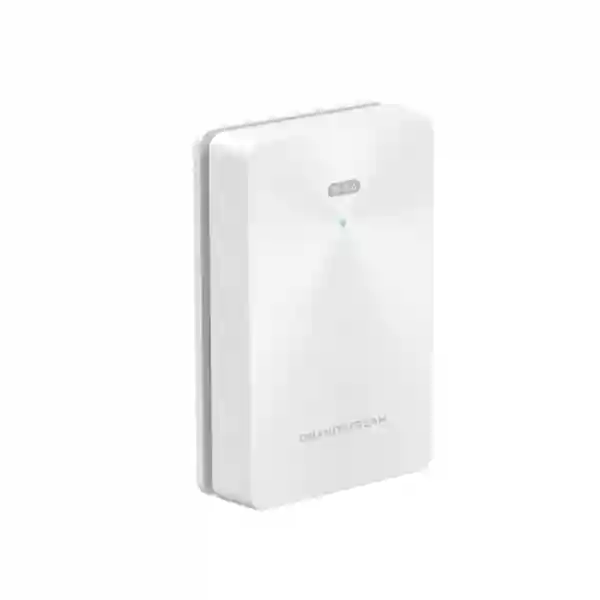
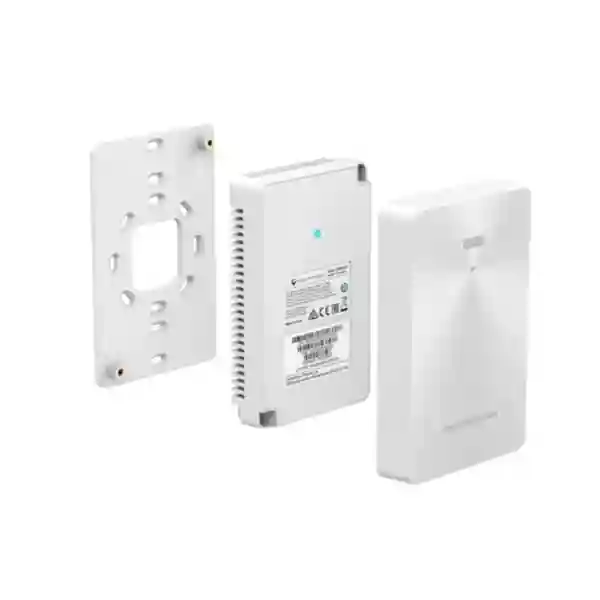
The Grandstream GWN7661E is an in-wall AX3000 Wi-Fi 6 access point designed for indoor business and hospitality environments that need a clean wall-mounted installation, strong dual-band wireless connectivity and useful wired ports at the same location. Grandstream specifies up to 3 Gbps aggregate wireless throughput, support for up to 256 concurrent Wi-Fi clients, 2×2:2 operation on 2.4 GHz, 3×3:2 operation on 5 GHz, OFDMA, MU-MIMO, WPA3, advanced QoS and an embedded management controller. For Tanzania buyers, the model is particularly relevant where a room, office, hotel guest area, apartment, reception point or branch workspace needs Wi-Fi plus local Ethernet connections without adding a separate desktop switch at every location.
What the GWN7661E is designed to solve
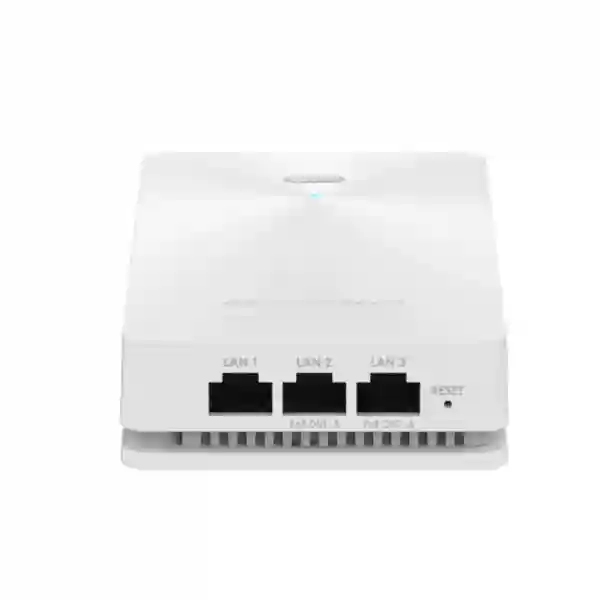
A conventional ceiling access point is often ideal for open offices and broad floor coverage, but many buildings also need room-level connectivity. Hotel rooms, serviced apartments, executive offices, clinics, classrooms, villas, dormitory rooms and compact branch spaces frequently need a wireless access point close to users while also providing wired ports for an IP phone, television, workstation or other Ethernet device. The GWN7661E combines these roles in one in-wall form factor. It has one Gigabit uplink interface with PoE/PoE+ input and three additional Gigabit Ethernet ports, including two ports that can provide PSE output when the unit is powered appropriately with PoE+.
This design can simplify room-level connectivity, but proper planning remains important. Wireless capacity depends on client mix, radio conditions, building materials, interference and channel use. Wired PSE output depends on the available power budget and the way the access point is powered. Network segmentation, DHCP, VLANs, internet capacity and switch uplinks also affect the final experience. FourTeck Tanzania can help align the access point with the broader LAN, switching, firewall and voice environment rather than treating the AP as an isolated purchase.
Wireless performance
Dual-band Wi-Fi 6 with up to 3 Gbps aggregate wireless throughput, 20/40 MHz operation on 2.4 GHz and up to 160 MHz channel width on 5 GHz, subject to regional regulation and radio conditions.
Room-level wired access
One Gigabit PoE/PoE+ uplink plus three Gigabit LAN interfaces can support local wired devices such as computers, phones or displays while the AP provides Wi-Fi.
Central management
The embedded controller can manage up to 50 local GWN APs, while Grandstream also provides centralized cloud and on-premise networking management options for larger operational requirements.
Verified Grandstream GWN7661E technical highlights
| Wireless standard | IEEE 802.11 a/b/g/n/ac/ax; dual-band 2.4 GHz and 5 GHz Wi-Fi 6 |
| Wireless throughput | Up to 3 Gbps aggregate; actual throughput varies with environment, distance, interference and client mix |
| MIMO | 2×2:2 on 2.4 GHz and 3×3:2 on 5 GHz |
| Clients | Up to 256 concurrent Wi-Fi clients |
| Coverage | Grandstream specifies up to 100 metres; real coverage depends on the environment |
| Ethernet | 1× Gigabit uplink with PoE/PoE+, 2× Gigabit Ethernet with PSE, 1× additional Gigabit Ethernet |
| Power | IEEE 802.3af/802.3at PoE/PoE+; maximum device power consumption 25 W |
| Security | WPA/WPA2, WPA3, enterprise authentication support, secure boot, digital-signature protections and unique device certificates |
| Management | Embedded controller, GDMS Networking cloud management and GWN Manager on-premise management |
| Mounting | In-wall indoor deployment |
Compatibility, switching and network design
The GWN7661E should be planned as part of the wired network. The upstream switch must provide the correct PoE class and enough total power for every connected access point. Where the two PSE-capable downstream ports are intended to power compatible endpoints, PoE+ input and total power planning are especially important. VLANs can separate staff, guest, voice and device traffic, while firewall policy can restrict communication between segments. The access point also supports IPv4, IPv6, 802.1Q, 802.1p, 802.1x and 802.11e/WMM, which makes it suitable for structured enterprise-style networks when configured correctly.
For procurement teams, access-point quantity should not be based only on the theoretical 100-metre coverage figure. Walls, furniture, reinforced concrete, metal surfaces, floor layout and nearby radios can reduce usable signal. Capacity is also different from coverage: a user may see a strong signal but experience poor performance if too many devices compete for airtime or if the wired uplink and internet connection are undersized. A practical deployment normally considers floor plans, expected users, device types, applications and the required roaming behaviour.
For related planning, review FourTeck Tanzania’s business technology shop for procurement context, the technology services page for integration scope, and the FourTeck Uganda site for regional requirements in Uganda. Customers sourcing across East Africa can also review FourTeck Kenya, while broader MEA sourcing can be coordinated through FourTeck UAE.
Grandstream GWN7661E Tanzania
For organizations in Tanzania, the GWN7661E fits best where the design calls for room-level or office-level wireless service combined with nearby Ethernet connectivity. A hotel can place an in-wall AP in guest rooms or selected corridors where wired television, phone or workstation connectivity is useful. An office can use it in executive rooms, enclosed meeting areas, consultation rooms or compact branch spaces where a ceiling AP may be inconvenient. Residential developments, serviced apartments and managed accommodation can also benefit from a consistent in-wall form factor when structured cabling is already planned. The key is to treat every unit as part of one managed WLAN rather than as a collection of unrelated access points.
Tanzania deployments should begin with a clear map of the building, cable routes, switch locations and likely user concentrations. Reinforced concrete and thick masonry can alter coverage substantially, so the manufacturer’s maximum range should not be used as a guaranteed planning radius. A room-by-room plan is often more useful. Identify which areas need strong 5 GHz service for laptops and modern phones, which areas still depend heavily on 2.4 GHz devices, and whether guest, staff, voice and IoT traffic require separate VLANs. The PoE budget should be calculated before ordering switches, especially when downstream PSE ports will be used.
For a quotation, Tanzanian buyers should provide access-point quantity, floor plans where available, user estimates, expected wired endpoints, existing switch models, internet bandwidth, VLAN requirements and management preference. This gives the supplier enough context to determine whether the GWN7661E should be used alone, mixed with other GWN access-point models or supported by switching and firewall upgrades. It also prevents a common procurement mistake: buying wireless hardware first and discovering later that cabling, PoE capacity or network segmentation does not support the intended design.
Grandstream GWN7661E Dar es Salaam
In Dar es Salaam, the GWN7661E is a practical option for business offices, hotels, clinics, apartments, co-working spaces and customer-facing facilities that need a discreet in-wall Wi-Fi 6 access point. Dense urban environments can contain many neighboring wireless networks, so channel planning and transmit-power decisions matter as much as the headline speed. A deployment in a multi-tenant office building may encounter interference from nearby APs on the same floor or adjacent floors. Using a managed WLAN with deliberate 2.4 GHz and 5 GHz channel allocation can provide a more predictable result than allowing every device to operate independently.
Commercial sites in Dar es Salaam may also combine data, voice and guest services on the same cabling infrastructure. The GWN7661E’s local Gigabit ports can be useful when a room contains an IP phone, desktop computer or television alongside Wi-Fi users. Network administrators should still check how those wired devices will be segmented. For example, an IP phone may need a voice VLAN and QoS policy, while a guest device should not have access to internal servers. The upstream managed switch and firewall therefore remain central to the design.
When requesting pricing in Dar es Salaam, include the number of rooms or work areas, the likely number of users per area and whether the project is a new build or retrofit. New projects can plan cable pathways and wall boxes around the AP location. Retrofit projects may need to work with existing Ethernet positions, which can influence radio placement. Confirm whether existing switches provide 802.3af or 802.3at, calculate the aggregate PoE requirement, and identify any endpoints that are expected to draw PSE output from the access point. This information produces a more accurate bill of materials than ordering APs solely from user count.
Grandstream GWN7661E Mwanza
Mwanza organizations evaluating the GWN7661E can focus on branches, hospitality rooms, administrative offices, healthcare spaces and education environments where consistent indoor Wi-Fi is needed in separated rooms. The in-wall form factor is useful when the network design should keep equipment visually unobtrusive while placing radio service near users. The model supports Wi-Fi 6 efficiency features such as OFDMA and MU-MIMO, but those capabilities work best when client devices also support modern standards and the wired network has enough capacity to carry the resulting traffic.
A common design question is whether one access point can cover several neighboring rooms. The correct answer depends on wall construction, door positions, furniture, interference and the performance level expected at the edge of coverage. For voice-over-Wi-Fi, video meetings or cloud applications, merely seeing the SSID is not enough. Signal strength, airtime utilization, roaming and latency all matter. For this reason, a site plan should identify the applications that are most sensitive to wireless conditions and place APs accordingly.
Mwanza procurement teams should also check power reliability and network resilience as part of the project. PoE switching centralizes power for access points, which can make it easier to protect network equipment with a suitable UPS, but switch power budgets must remain within specification. If the organization has multiple branches, centralized cloud management may be preferable to configuring each AP locally. If policy requires on-premise control, Grandstream also provides GWN Manager. The chosen management model should be documented before rollout so firmware, configuration templates, SSIDs and administrator access remain consistent.
Grandstream GWN7661E Arusha
Arusha has a wide range of hospitality, tourism-support, professional-services and institutional environments where room-focused Wi-Fi can be important. The GWN7661E is especially relevant for hotels, lodges, offices and apartment-style accommodation that want a clean wall-mounted AP and local Ethernet connectivity from the same device. Guest experience depends on more than AP speed, however. Internet capacity, DNS performance, captive-portal design, VLAN separation and roaming between coverage areas can all influence whether users perceive the network as reliable.
Hospitality deployments should estimate both occupancy and device count. One guest may carry a phone, laptop, tablet and wearable, so room count is not the same as Wi-Fi client count. The GWN7661E supports up to 256 concurrent wireless clients per AP, but practical design should distribute users sensibly and avoid using a theoretical client ceiling as a target operating load. For voice applications, the advanced QoS capabilities can support low-latency traffic when the rest of the network is configured consistently.
For Arusha installations, request a quotation that includes mounting requirements, Ethernet cabling, PoE switch capacity, controller or cloud-management preference and any local wired devices connected through the AP. If a hotel television or IP phone will use the downstream ports, document the required VLAN and power arrangement. If the deployment spans several buildings, confirm whether all APs share one LAN or connect across routed links. These details help ensure the wireless design integrates cleanly with the site instead of producing separate islands of connectivity.
Grandstream GWN7661E Dodoma
In Dodoma, the GWN7661E can serve administrative offices, professional firms, education facilities, accommodation projects and branch networks that want Wi-Fi 6 with an in-wall installation. Public-facing environments often need both staff and guest access, which makes segmentation important. A secure design can map separate SSIDs to different VLANs, isolate guest users from internal resources and apply firewall policies based on business requirements. The access point supports the networking standards needed for this type of structured deployment, but the VLANs and policies must also be configured on the switches, router or firewall.
Organizations with multiple departments should also decide who will administer the WLAN after deployment. The GWN7661E includes an embedded controller capable of managing a local group of Grandstream APs, while centralized cloud and on-premise options support broader operational models. A small office may prefer local management, while a multi-site organization may value centralized monitoring and configuration templates. The choice should reflect operational responsibility, internet availability and security policy rather than simply the number of access points.
For procurement in Dodoma, provide a clear list of rooms, anticipated devices, expected applications and existing infrastructure. Confirm switch port availability, PoE capability, cable category and firewall design. If voice over Wi-Fi or Grandstream Wi-Fi phones are part of the plan, mention this early so roaming, QoS and signal expectations can be considered. A well-prepared scope allows the quotation to include the supporting network elements and avoids focusing only on the AP unit price.
Grandstream GWN7661E UAE
For UAE projects, the GWN7661E is suited to hotel rooms, serviced apartments, offices and residential developments where a discreet in-wall access point can combine wireless service with local Gigabit Ethernet ports. Large property deployments should standardize mounting position, cabling, switch profiles and VLAN configuration so every room follows the same design. This consistency simplifies commissioning, troubleshooting and later replacement. Building materials and dense neighboring Wi-Fi networks can affect 5 GHz performance, so professional radio planning remains important even when each room receives its own AP.
UAE hospitality and property projects often include IPTV, IP telephony, guest internet and staff networks. The GWN7661E’s three downstream Gigabit interfaces make it useful at a room endpoint, but network design should ensure each connected service is placed in the correct logical segment. The PSE-capable ports can supply power only when the input and power budget allow it, so project engineers should verify PoE+ availability and endpoint power requirements rather than assuming every downstream device can be powered automatically.
Procurement teams should compare the GWN7661E with ceiling or higher-density AP models according to room layout and intended coverage. An in-wall AP may be ideal for individual rooms but less efficient for open ballrooms, large halls or high-ceiling spaces. Mixed deployments can use different AP types under a unified management platform. For regional sourcing and integration, FourTeck UAE can coordinate broader network requirements while Tanzania projects can be handled through the Tanzania contact workflow.
Grandstream GWN7661E Uganda
Uganda businesses can use the GWN7661E for offices, hospitality sites, schools, clinics and residential projects that need centrally managed Wi-Fi 6 in individual rooms or defined work areas. The in-wall format can reduce visible equipment and provides useful Ethernet handoff ports, but cabling standards and PoE availability need to be confirmed before procurement. Projects that rely on existing cabling should verify cable condition and termination quality because a wireless access point cannot compensate for an unstable wired uplink.
If the deployment spans several branches, centralized management can reduce configuration inconsistency. SSID names, encryption, VLAN mapping and radio policies can be standardized rather than set independently at every location. The GWN7661E supports WPA3 and enterprise authentication features, making it appropriate for organizations that want more than a shared password. The authentication design should match the available directory, RADIUS or policy infrastructure.
Uganda quotation requests should specify whether the access points are for new construction, refurbishment or replacement of an older WLAN. Include the number of floors, rooms, wired endpoints and expected users. Where internet links differ between sites, note those bandwidth limits because wireless capacity can exceed the available WAN service. A balanced design aligns AP capability, switch uplinks, firewall performance and internet access so the end user experiences the benefit of the Wi-Fi 6 platform.
Grandstream GWN7661E Kampala
Kampala deployments often face the combination of dense office environments, neighboring WLANs and growing numbers of mobile devices. The GWN7661E provides Wi-Fi 6 features designed to improve airtime efficiency, but channel planning is still essential. The 2.4 GHz band has limited non-overlapping spectrum, so high-density designs should avoid unnecessary channel overlap and encourage capable clients to use 5 GHz where appropriate. The AP supports up to 160 MHz channel width on 5 GHz, but wider channels consume more spectrum and are not always the best choice in crowded radio environments.
For hotels and serviced apartments in Kampala, the in-wall design can support a repeatable room template. A single AP location can deliver wireless service and wired connectivity for room devices, helping reduce separate switching hardware at the endpoint. However, VLANs for guest internet, IPTV or voice must be planned end to end. The switch port feeding each AP should carry the necessary tagged or untagged networks according to the design, and the firewall or gateway must enforce separation between services.
Businesses requesting a Kampala quote should include existing switch and firewall details so compatibility can be checked. If the building uses older 100 Mbps switches, upgrading the AP alone will not deliver the expected performance. If the network has Gigabit switching but limited uplinks, aggregation may still become a bottleneck. A review of the entire traffic path—from client to AP, switch, firewall and internet connection—gives a more realistic basis for selecting equipment and planning future growth.
Grandstream GWN7661E Arua
In Arua, the GWN7661E can be used for branch offices, accommodation facilities, clinics and institutional spaces that need compact room-level networking. For sites where centralized IT staff are not always present, remote management can be particularly valuable. Administrators can maintain consistent configuration, review device status and standardize firmware processes without depending on local users to adjust settings manually. A managed platform also makes it easier to document which AP serves which area.
Power design deserves attention in branch environments. Because the AP is powered by PoE or PoE+, the network switch becomes the central power source. This can simplify endpoint power management, especially if the switch and internet gateway are protected by a suitable UPS. At the same time, the switch must have enough PoE budget for all APs and any other devices such as IP phones or cameras. Where the GWN7661E’s downstream PSE capability is used, that demand must be included in the calculation.
Arua buyers should define the critical applications before selecting AP quantity. General web access may tolerate lower edge-of-cell performance than real-time voice or video. If the organization uses cloud applications continuously, internet resilience may matter as much as local Wi-Fi. If several buildings are connected, the backhaul between them should be reviewed for capacity and reliability. The objective is to avoid overspending on radios while overlooking the wired or WAN constraints that ultimately determine user experience.
Grandstream GWN7661E Mbarara
Mbarara businesses and institutions can consider the GWN7661E when they want a tidy in-wall Wi-Fi 6 installation for offices, guest rooms, classrooms or consultation areas. The access point’s combination of wireless and three local LAN ports is useful where several endpoint types share the same room. Rather than deploying an AP plus a small unmanaged switch, the network can use the GWN7661E as a managed room endpoint when the design and power budget support it.
For education or training environments, client density can vary sharply by timetable. A room that is lightly used in the morning may become busy during a class or event. Capacity planning should therefore consider peak simultaneous usage rather than average occupancy. Wi-Fi 6 technologies improve efficiency, but airtime remains shared. Large software downloads, cloud backup, video streaming and conferencing can quickly consume available bandwidth if user demand is concentrated in one area.
Procurement teams in Mbarara should also plan for ongoing operations. Decide who owns administrator credentials, how configuration backups are kept, how firmware is approved and how faults are escalated. Record AP names and physical locations so remote monitoring maps to real rooms. These operational details are easy to omit from a hardware quotation but become important when the network has been running for months and staff need to troubleshoot quickly.
Grandstream GWN7661E Gulu
Gulu organizations can deploy the GWN7661E in offices, hospitality properties, NGO facilities, schools, healthcare spaces and accommodation environments where wall-mounted connectivity is preferred. The model is designed for indoor operation, so projects should not treat it as an outdoor or weatherproof AP. Areas exposed to rain, dust or harsh external conditions may require a different Grandstream outdoor model. Correctly matching the AP type to the environment avoids reliability issues and preserves a cleaner support model.
Inside the building, placement should follow user needs rather than cable convenience alone. Installing the AP behind large furniture, close to dense metal objects or in a location heavily shielded by concrete can reduce effective coverage. A small adjustment to mounting position can sometimes improve results significantly. Where possible, validate representative rooms before rolling out a large number of units, particularly in buildings with repeated room layouts.
For Gulu quotations, include whether guest access, captive portal, voice-over-Wi-Fi or enterprise authentication is required. These features influence configuration and may affect how the firewall, DNS, DHCP and authentication infrastructure are designed. If only simple internet access is required, the configuration can be more straightforward. If the WLAN carries business applications and voice, the policy and monitoring requirements are more demanding. Defining those expectations early makes it easier to choose the correct management method and deployment scope.
Grandstream GWN7661E Kenya
Kenya customers evaluating the GWN7661E can use it in hotel rooms, office suites, apartments, healthcare sites and education facilities where an in-wall access point provides both Wi-Fi and nearby wired ports. In Nairobi and other dense commercial areas, neighboring Wi-Fi networks can increase interference, so an enterprise deployment should use coordinated channel and power settings rather than independent consumer-style configuration. In less dense environments, the design can focus more on wall attenuation, room layout and user distribution.
Organizations with several Kenyan sites may benefit from centralized management, particularly when IT standards must be consistent across branches. A standard template can define SSIDs, VLANs, security modes and administrative access. Changes can then be documented and applied systematically. This reduces the risk that one branch uses a weak shared password or different network names simply because it was configured separately.
A Kenya procurement request should state whether the access point is being integrated into an existing Grandstream GWN environment or a mixed-vendor network. Interoperability at the Ethernet and IP level is straightforward, but roaming behavior, centralized visibility and feature consistency can vary when several wireless vendors share the same site. If a unified management experience is important, the WLAN should be designed around that objective from the beginning. FourTeck Kenya can support regional requirements while the Tanzania team handles Tanzania-specific procurement and deployment discussions.
Grandstream GWN7661E Kuwait
Kuwait projects can use the GWN7661E in hospitality, office and residential applications where an in-wall AP supports both wireless and room-level Ethernet connectivity. Large properties should define a standard installation pattern that includes wall-box position, cable termination, AP naming and switch-port configuration. This approach makes commissioning easier and helps facilities teams identify devices quickly when maintenance is required.
High client expectations in hotels and premium residential sites can expose weaknesses outside the AP itself. Internet contention, gateway limitations or poor DNS response can make Wi-Fi feel slow even when the local radio link is strong. A complete design therefore measures the path from client to WAN and ensures that uplinks, firewall capacity and internet service are appropriate for expected usage. For IPTV or IP telephony, multicast, QoS and VLAN policy may also need attention.
Before ordering for Kuwait, confirm the exact regional radio regulations and approved channel configuration, because not every frequency is available in every country. The Grandstream platform supports region-aware radio settings, but deployment should follow local requirements. Procurement should also clarify warranty and delivery scope with the supplier rather than assuming terms from another country. Model capability is global, while commercial terms and regulatory settings can be regional.
Grandstream GWN7661E Ghana
Ghana organizations can consider the GWN7661E for offices, hotels, clinics, education facilities and apartment projects that need managed in-wall Wi-Fi 6. The product’s local Ethernet ports can be valuable where each room has several networked devices, but network architects should plan those ports as part of the switching topology. VLAN design, IP addressing and security rules should be documented so wired and wireless endpoints receive the correct level of access.
In multi-site Ghana deployments, configuration consistency becomes a major operational advantage. Standardized SSIDs and security policies can make support easier, while centralized monitoring helps administrators identify offline devices or configuration drift. The GWN7661E can participate in Grandstream’s broader networking management ecosystem, so the deployment can grow beyond a single AP without requiring a separate hardware controller for small installations.
A Ghana quotation should include the desired number of APs, room or floor count, switch type, PoE budget, internet bandwidth and any need for guest portals or voice support. If the organization has existing Wi-Fi, identify pain points such as dead zones, congestion, roaming failures or difficult management. Replacement should address those specific problems rather than simply upgrading the wireless standard. A measured migration can retain useful infrastructure while correcting the parts that limit performance.
Grandstream GWN7661E Nigeria
Nigeria’s large offices, hotels, schools, clinics and residential developments can use the GWN7661E as a room-focused Wi-Fi 6 endpoint with integrated Gigabit LAN ports. In high-density commercial environments, radio planning should account for large numbers of nearby access points and client devices. The 5 GHz band generally offers more channel options than 2.4 GHz, but channel width must be selected carefully so the network balances speed with frequency reuse. Maximum-width channels are not always optimal in busy buildings.
Power and uptime planning are also important. Centralized PoE switching allows APs to be powered from network rooms where UPS systems can be deployed, but the available runtime depends on switch load and UPS capacity. If downstream devices draw PSE power through the GWN7661E, they add to the overall power requirement. Network engineers should calculate worst-case consumption rather than relying only on nominal values.
Nigeria buyers should request a detailed scope that separates hardware, cabling, switching, configuration and support responsibilities. For larger rollouts, define acceptance tests such as SSID availability, VLAN isolation, internet access, wired-port operation, roaming behavior and management visibility. Testing a sample floor or room type before a full deployment can reveal structural or interference issues early and reduce rework across the rest of the project.
Grandstream GWN7661E Seychelles
Seychelles hospitality and office environments can benefit from the GWN7661E where indoor rooms need managed Wi-Fi 6 together with Ethernet connectivity. Hotels, villas and serviced accommodation can use an in-wall access point to keep equipment unobtrusive, while local LAN ports can connect room technology. Because the GWN7661E is an indoor model, areas exposed to outdoor weather, salt-laden air or direct moisture require appropriate outdoor-rated equipment instead of assuming the same unit can serve every location.
Hospitality networks should separate guest access from operational systems such as management terminals, voice endpoints or building devices. VLANs, firewall policies and secure administration reduce the risk that a guest network can reach sensitive resources. Captive portals may be used where appropriate, but the login process should remain simple for guests and compatible with common mobile devices. Network operations teams should also plan how they will monitor APs across multiple buildings or properties.
For Seychelles procurement, the quotation should distinguish indoor and outdoor coverage areas, identify the number of rooms and define wired endpoints in each room. Internet links may be a significant part of user experience, so expected guest demand should be matched to available WAN capacity. If the property includes several structures, inter-building backhaul and surge or power protection may require separate planning. The GWN7661E is one component of that complete network, most effective when the supporting infrastructure is designed with equal care.
Buying and quotation checklist
Before requesting a GWN7661E quotation, prepare the information below. It allows a supplier or integrator to determine whether the model fits the environment and what supporting equipment is required.
- Number of rooms, floors or work areas requiring coverage.
- Estimated wireless devices per area and peak simultaneous users.
- Applications such as general internet, cloud systems, video meetings or voice over Wi-Fi.
- Existing switch model, available Gigabit ports and PoE/PoE+ power budget.
- Local wired endpoints expected on the AP’s LAN ports.
- VLAN, guest-network, captive-portal or enterprise-authentication requirements.
- Internet bandwidth, firewall model and any branch connectivity requirements.
- Preferred management method: embedded, cloud or on-premise.
- Floor plans and cable routes for larger deployments.
Frequently asked questions
Is the GWN7661E Wi-Fi 6E?
No. Grandstream identifies the GWN7661E as an AX3000 Wi-Fi 6 access point operating on 2.4 GHz and 5 GHz. It does not use the 6 GHz band associated with Wi-Fi 6E.
How many Wi-Fi clients does it support?
Grandstream specifies support for up to 256 concurrent Wi-Fi client devices. Real-world capacity depends on application demand, client capability, airtime use, interference and the rest of the network.
Does the GWN7661E have Ethernet ports?
Yes. It has one Gigabit uplink Ethernet port with PoE/PoE+ input plus three Gigabit downstream Ethernet ports. Two downstream ports support PSE output when the AP is powered appropriately.
Can it be managed without a separate controller?
Yes. The embedded controller can manage up to 50 local GWN access points. Grandstream also offers centralized cloud and on-premise management options for larger or multi-site environments.
Is it suitable for hotels?
Yes, its in-wall form factor and local Ethernet ports are well suited to many hotel-room designs. The final design should still consider wall construction, guest density, internet capacity, VLANs, roaming and room devices such as TVs or IP phones.
Can it power an IP phone from a downstream port?
Potentially, if the endpoint power requirement and the GWN7661E PSE budget are compatible and the AP itself is powered with the required PoE+ input. The power design should be checked before deployment.
What information is needed to size a deployment?
Provide floor plans, room count, wall materials where known, expected users, device mix, applications, wired endpoint requirements, switch and PoE information, internet bandwidth and security or VLAN requirements.
Decision recap
Choose the Grandstream GWN7661E when the project needs an indoor in-wall Wi-Fi 6 access point with room-level Ethernet connectivity, PoE/PoE+ input, advanced wireless security and centralized management options. It is especially useful in hotels, offices, apartments and other environments where a ceiling AP is not the preferred form factor. Do not select it solely from the maximum wireless speed or coverage figure; check layout, client density, switch capacity, PoE budget, VLANs and internet bandwidth.
For Tanzania projects, FourTeck can help convert those requirements into a bill of materials and deployment plan. Share the site type, quantity, existing network and intended services so the access points can be evaluated together with the supporting switching, firewall and cabling environment.
Consult FourTeck Tanzania
For GWN7661E pricing, quantity planning, PoE switching, Wi-Fi design, VLAN configuration or deployment guidance, provide your room count, user estimates, site layout and existing network information. A requirement-led quotation is more useful than a standalone unit price because it identifies the cabling, switch power and management dependencies that determine whether the access point performs as expected.



Reviews
There are no reviews yet.