

Grandstream GWN7664 Tanzania
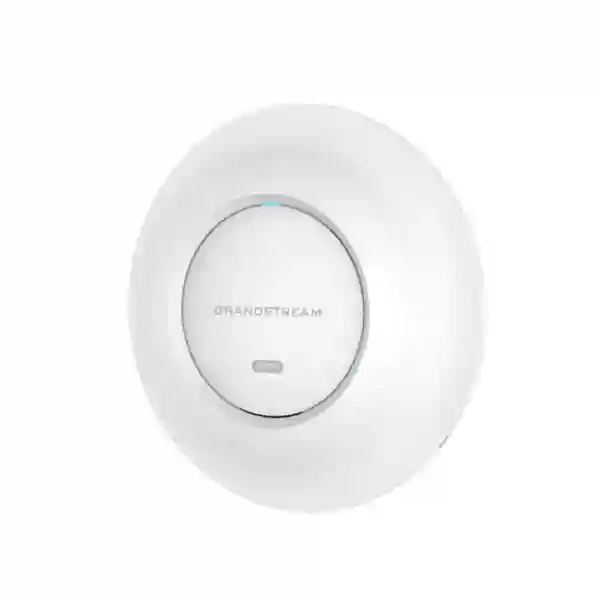
The Grandstream GWN7664 is an indoor 802.11ax Wi‑Fi 6 access point designed for small-to-medium businesses, multi-floor buildings, commercial environments and other sites that need dependable capacity for many connected devices. Grandstream specifies dual-band 4×4:4 MU‑MIMO with DL/UL OFDMA, up to 3.55Gbps aggregate wireless throughput, up to 175 metres of stated coverage under suitable conditions, support for 750+ concurrent Wi‑Fi clients, 32 SSIDs, one 1GbE port, one 2.5GbE port and PoE/PoE+ power. Actual coverage and throughput depend on walls, interference, client capability, radio planning, cabling, switch capacity and deployment conditions.
High-density indoor Wi‑Fi, 2.5GbE uplink capability, Wi‑Fi 6 efficiency, guest and corporate SSIDs, advanced QoS, WPA3, PoE deployment and centralized management across one or many access points.
Why the GWN7664 is relevant for business Wi‑Fi
Business wireless networks increasingly carry voice, video meetings, cloud applications, ERP traffic, mobile devices, laptops, scanners and guest access at the same time. The GWN7664 is positioned for environments where a basic consumer router is not the right design approach. Its 4×4:4 radio architecture and OFDMA capabilities are intended to make more efficient use of airtime when many compatible clients share the network. The 2.5GbE port also gives designers a faster wired path than a single-gigabit uplink when the switch, cabling and traffic profile justify it.
The access point can be managed locally through its embedded controller for up to 50 local GWN access points, through Grandstream’s cloud-based GDMS Networking platform for larger or distributed environments, or through GWN Manager for on-premises controller deployments. That flexibility is useful when procurement teams want a product that can begin in a single site and later become part of a centrally managed wireless estate. For Tanzania projects, Fourteck can help align the access point with switching, PoE budgets, VLAN design, firewall rules, structured cabling and the physical layout. See the Fourteck Tanzania technology shop for broader product sourcing guidance, the Fourteck Tanzania services page for integration scope, and the Fourteck Tanzania solution portfolio for connected networking, security and communications planning.
Wireless capacity
Up to 3.55Gbps aggregate wireless throughput with dual-band 4×4:4 MU‑MIMO and DL/UL OFDMA.
Client density
Grandstream specifies support for 750+ concurrent Wi‑Fi client devices, subject to traffic mix and deployment design.
Wired interfaces
One 1GbE port plus one 2.5GbE port with up to 3.5Gbps aggregate wired throughput.
Power and security
802.3af/802.3at PoE support, WPA3, secure boot, device certificates and randomized default passwords.
Verified technical specification highlights
| Wi‑Fi standards | IEEE 802.11 a/b/g/n/ac/ax |
| MIMO | 4×4:4 on 2.4GHz and 5GHz |
| Antennas | 8 internal antennas, four per band |
| SSIDs | 32 total, 16 per radio |
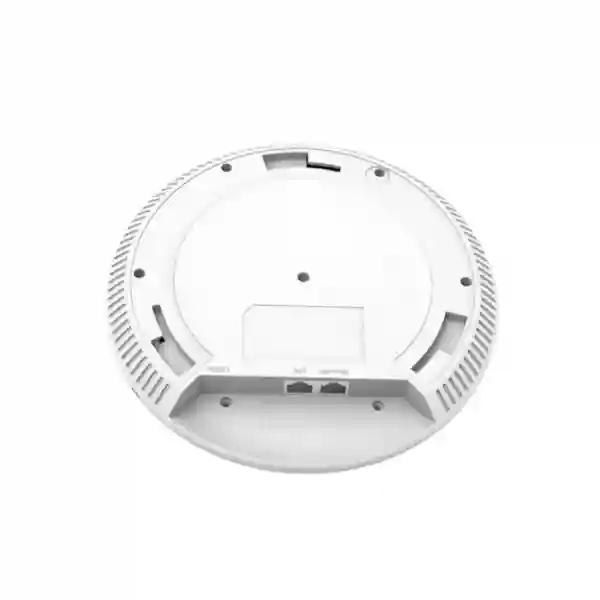
| Interfaces | 1x 1GbE and 1x 2.5GbE |
| PoE | 802.3af / 802.3at, maximum published consumption 17W |
| Mounting | Indoor wall or ceiling mounting, kits included |
| Management | Embedded controller, GDMS Networking cloud management and GWN Manager on-premises management |
Grandstream GWN7664 Tanzania
For organisations evaluating the Grandstream GWN7664 in Tanzania, the strongest use case is an indoor business network where coverage and capacity both matter. Offices, schools, clinics, hotels, retail environments, professional service firms, multi-tenant commercial buildings and distributed branches can all need dependable Wi‑Fi for many simultaneous endpoints. The GWN7664 should be selected after considering room layout, wall materials, ceiling height, the quantity and type of users, application traffic, roaming expectations and the wired infrastructure. Its 4×4:4 Wi‑Fi 6 design can provide a strong technical foundation, but access-point placement and channel planning remain central to real-world performance. A useful Tanzania quotation should therefore include more than the access-point quantity. It should identify PoE switch capacity, whether the 2.5GbE interface will be used, cable category and distance, VLAN requirements, guest network policy, firewall rules, SSID design, authentication method and management preference.
A Tanzania deployment may also involve mixed client populations. Newer laptops and smartphones can make better use of Wi‑Fi 6 capabilities while older clients continue to connect using supported legacy standards. Rather than promising uniform speed to every endpoint, the network should be designed around the slowest critical applications, the busiest periods and the locations where users congregate. Meeting rooms, reception areas, training rooms and open-plan workspaces often create different capacity patterns from corridors or private offices. The GWN7664’s support for many SSIDs makes it possible to create separate corporate, guest, voice or device networks, but administrators should avoid unnecessary SSID proliferation because each broadcast network consumes airtime. VLAN design on the switching and firewall layers should mirror the intended security policy.
For procurement teams, the important question is not simply whether the GWN7664 is available, but whether it is the right model for the site. Fourteck’s networking and integration services can be considered alongside the hardware requirement so PoE, cabling, firewalling and wireless management are addressed together. Customers planning regional expansion can also review Fourteck Uganda networking solutions and Fourteck Kenya business networking as part of a broader East African technology strategy.
Grandstream GWN7664 Dar es Salaam
In Dar es Salaam, the GWN7664 is well suited to organisations that need structured indoor wireless coverage across offices, commercial premises, hotels, education spaces, clinics or multi-floor buildings. Dense work areas can produce many simultaneous connections from laptops, smartphones, Wi‑Fi phones, meeting-room systems and IoT devices. In those environments, procurement should focus on capacity per area rather than only total floor size. A single access point can have a strong published range, yet walls, reinforced concrete, reflective surfaces, neighbouring networks and user distribution can change the radio environment significantly. A practical design therefore maps expected users and applications to physical zones, then decides the access-point count and positions.
Dar es Salaam businesses may also have fast fibre internet or multiple WAN links while internal Wi‑Fi remains the bottleneck. The GWN7664’s 2.5GbE interface can be useful where the upstream switch supports multi-gigabit connectivity and Cat5e/Cat6 cabling is in good condition, but network architects should verify the complete path instead of assuming the AP alone increases application speed. PoE budget is another important check: the model supports 802.3af/802.3at, and the published maximum consumption is 17W. When several APs share a PoE switch, the total power budget should cover all connected devices with reasonable headroom. UPS protection for network switches can also help maintain wireless connectivity during short power interruptions, subject to the wider power design.
For multi-floor offices in Dar es Salaam, central management can reduce administrative effort. The embedded controller is suitable for local GWN deployments up to its supported limit, while GDMS Networking or GWN Manager may be more appropriate when there are multiple branches or larger estates. Administrators can create staff and guest networks, apply VLAN mapping, monitor AP status and standardise configuration. Before requesting a quotation, provide floor plans where possible, estimated active users per area, existing switch models, uplink speeds, PoE availability, internet bandwidth and whether voice over Wi‑Fi or guest captive portal functions are required. This gives the supplier enough context to recommend an AP count and supporting hardware rather than quoting isolated units.
Grandstream GWN7664 Mwanza
Mwanza organisations considering the GWN7664 can use it as part of a structured wireless refresh for offices, hospitality environments, education facilities, healthcare locations, retail operations and growing branch networks. The key planning question is whether the network must serve many low-bandwidth clients, a smaller number of demanding users, or a mixture of both. Wi‑Fi 6 features such as OFDMA are designed to improve efficiency when compatible clients share the radio, while 4×4:4 MU‑MIMO can help the AP handle multiple spatial streams. These capabilities are valuable, but client radios, application behaviour and spectrum conditions determine how much of the theoretical capacity is realized.
A Mwanza deployment should also consider the physical building. Thick walls, partitions, shelving, glass, machinery and floor separation can reduce or redirect signals. For that reason, buying fewer high-specification access points is not always better than designing the right quantity at appropriate power levels. Where users move between work areas, roaming behaviour and consistent SSID configuration matter. Grandstream’s centralized management options can help maintain common settings across APs, while mesh may be useful in selected situations; however, wired Ethernet backhaul is generally preferred when practical because it provides predictable capacity and avoids consuming wireless airtime for backhaul traffic.
For procurement, confirm whether existing switches can provide the required PoE and whether they support a 2.5GbE port if multi-gig uplink performance is desired. If the switch only offers 1GbE, the GWN7664 can still operate, but the wired path may limit maximum aggregate traffic. Security design should include WPA3 where client compatibility permits, strong administrative credentials, firmware management, VLAN separation and guest isolation. A quotation request should state the number of floors, approximate dimensions, user count, expected peak devices, critical applications and existing network equipment. That information makes it easier to decide whether the GWN7664 should be deployed uniformly or mixed with other AP models for lower-density areas.
Grandstream GWN7664 Arusha
The Grandstream GWN7664 can fit Arusha business environments where indoor Wi‑Fi needs to support hospitality, tourism operations, offices, conference spaces, educational institutions, clinics and other commercial facilities. Guest Wi‑Fi is often as important as internal connectivity in customer-facing environments, but the two services should not be treated as the same network. The GWN7664 supports multiple SSIDs and VLAN-aware deployments, allowing a design that separates guest traffic from internal systems. The firewall must then enforce the intended access rules, and guest bandwidth controls or captive portal functions can be considered based on the customer experience required.
Hotels and conference venues in Arusha can have highly variable usage. Quiet periods may involve modest traffic, while events can create sudden concentrations of connected phones and laptops in meeting spaces. This makes capacity planning per room or zone more useful than a simple coverage-radius estimate. The published 175-metre range should not be treated as a guaranteed indoor design distance because walls and interference can reduce practical coverage dramatically. A site survey or at least a floor-plan review helps determine where access points should be placed, how channels should be reused and whether areas such as lobbies, restaurants, corridors or conference halls need dedicated capacity.
The GWN7664’s management choices are useful for properties with several APs or multiple locations. A local embedded controller can simplify smaller deployments, while GDMS Networking or GWN Manager can centralize administration across broader estates. Before procurement, confirm ceiling or wall mounting positions, Ethernet routes, PoE switch capacity, internet bandwidth and whether network segmentation already exists. Organisations with IP phones, video conferencing or cloud applications should also discuss QoS and latency requirements. The AP supports advanced QoS, but end-to-end quality depends on the switch, router, firewall and WAN path as well. Fourteck Tanzania can help evaluate these dependencies rather than treating the access point as a standalone purchase.
Grandstream GWN7664 Dodoma
In Dodoma, the GWN7664 can support government-related offices, professional services, education, healthcare, corporate branches and other indoor environments that need secure, scalable Wi‑Fi. Organisations replacing older 802.11n or 802.11ac access points should first define what the upgrade is intended to solve. If the problem is poor coverage, placement or building materials may be the main issue. If the problem is congestion, a higher-capacity Wi‑Fi 6 platform and better channel planning may help. If the problem is slow internet, the WAN link or firewall may be the real constraint. Separating these causes before purchasing avoids expecting a new AP to fix unrelated bottlenecks.
The GWN7664 provides two wired ports, including a 2.5GbE interface, and can aggregate substantial wireless capacity. That makes the upstream LAN important. A deployment with many high-performance access points may need multi-gigabit switching or faster aggregation links so traffic does not converge onto an undersized uplink. PoE budgets should account for the 17W maximum published consumption per AP, plus any IP phones, cameras or other powered devices on the same switch. Structured cabling quality and termination should be checked before relying on multi-gigabit Ethernet over existing runs.
Security and administration should be built into the design from the start. WPA3 support, unique device certificates, secure boot and randomized default passwords are valuable device-level features, while real network security also depends on identity, VLANs, firewall policy and administrator practices. Dodoma organisations with several branches can use centralized management to maintain consistent SSIDs and settings. When requesting a quote, provide user counts, floor plans, current SSIDs, network diagrams if available, switch specifications, cabling information and any special requirements such as guest portals, voice over Wi‑Fi or isolated device networks. That makes it possible to prepare a solution-oriented proposal rather than an arbitrary quantity of access points.
Grandstream GWN7664 UAE
For UAE organisations evaluating the Grandstream GWN7664, the same enterprise Wi‑Fi 6 strengths apply: high client density, dual-band 4×4:4 radios, multi-gigabit wired connectivity, PoE/PoE+ and centralized management. Offices, retail sites, clinics, hospitality properties and commercial facilities often need several SSIDs for staff, guests, devices and voice endpoints. The access point can support that structure, but SSIDs should map to a clear segmentation policy and not simply be created because the platform allows many of them. VLANs and firewall rules should control which networks can communicate and which should be internet-only.
UAE projects frequently involve multi-site operations, making cloud or centralized management valuable for consistent configuration and visibility. GDMS Networking can be considered when administrators want cloud management across distributed locations, while GWN Manager can be selected when an on-premises control model is preferred. The embedded controller remains useful for smaller local deployments. Network designers should compare these approaches based on IT ownership, security policy, internet dependency, backup procedures and the number of APs expected over the lifecycle. For related UAE infrastructure planning, customers can review Fourteck UAE IT and networking solutions.
A UAE quotation should include more than unit price. Check whether mounting kits are included, what PoE switch ports are available, whether 2.5GbE is required, the cable standard, controller strategy and the exact installation scope. If the site uses Wi‑Fi phones or real-time collaboration tools, QoS and roaming design should be included. Dense offices may require more APs at lower transmit power rather than a smaller number at maximum power. In large or mixed-use buildings, a survey can identify channel reuse and interference issues before installation. These planning steps help the GWN7664 deliver predictable business value rather than relying on laboratory performance figures.
Grandstream GWN7664 Uganda
Uganda businesses can consider the GWN7664 for indoor Wi‑Fi 6 upgrades in offices, schools, hotels, healthcare settings, financial service branches and other commercial sites. The product’s support for 750+ concurrent client devices is a manufacturer specification, not a recommendation to place that many active high-throughput users on one AP. Real capacity depends on how much traffic clients generate, which bands they use, the signal quality, channel width, interference and application sensitivity. A sensible design estimates active users per zone and the amount of airtime they are likely to consume.
For branch networks, centralized configuration can reduce the cost of maintaining many individual APs. Standard SSID names, security settings, VLAN assignments and firmware policies can be applied consistently across locations. The GWN7664’s embedded controller can serve smaller local groups, while centralized platforms support broader estates. Organisations should also define how network administrators will regain access after staff changes, how configuration backups are handled and who is responsible for firmware reviews. These operational details are as important as initial installation.
When buying in Uganda, confirm compatibility with the existing switching layer. The AP can use PoE or PoE+, and a 2.5GbE switch port may be desirable where traffic demand justifies it. Guest Wi‑Fi should be isolated from internal business systems, while sensitive departments may require their own VLANs. Buyers can consult Fourteck Uganda for regional IT and networking context. For a quotation, provide the number of sites, expected AP count, internet links, switch models, user density and whether cloud management is acceptable. This helps align hardware, management and support expectations from the beginning.
Grandstream GWN7664 Kampala
Kampala offices and commercial facilities often combine dense user areas with meeting rooms, reception spaces, corridors and enclosed rooms. That makes wireless design a capacity-and-coverage exercise rather than a simple radius calculation. The GWN7664’s 4×4:4 Wi‑Fi 6 radios provide a strong platform for busy indoor networks, yet positioning should still be based on where users work and what walls or obstacles separate them from the AP. Ceiling mounting can often provide better propagation than placing equipment inside cabinets or above metal structures, but every site has its own constraints.
For businesses running voice over Wi‑Fi or frequent video meetings, signal quality and roaming matter more than headline throughput. Advanced QoS can prioritize low-latency traffic at the WLAN layer, while the rest of the network should also preserve appropriate QoS markings and avoid congestion. A Wi‑Fi phone moving between access points should have adequate overlapping coverage and consistent security settings. If the business uses Grandstream Wi‑Fi phones, the GWN7664 is explicitly positioned by the manufacturer for voice-over-Wi‑Fi deployments, but deployment testing remains important.
Procurement teams in Kampala should request an itemized proposal covering APs, PoE switches if required, installation, cabling, configuration and management. Ask whether existing Cat5e/Cat6 runs are tested and whether 2.5GbE switch ports are available. If multiple locations will be managed from one dashboard, decide between cloud and on-premises control according to the organisation’s policy. Expansion should also be considered: a controller strategy, VLAN plan and naming standard chosen today should be capable of supporting additional APs later. Regional support and networking options can be explored through Fourteck Uganda as part of the broader design process.
Grandstream GWN7664 Arua
For organisations in Arua, the GWN7664 can serve as a high-capacity indoor AP where business applications, guest connectivity and mobile devices must share the same physical wireless infrastructure without sharing the same security policy. The ability to create multiple SSIDs and map them to different VLANs is useful for separating staff, visitors and operational devices. The supporting switch and firewall must be configured to carry those VLANs correctly; otherwise, the segmentation defined on the AP will not achieve the intended isolation.
Arua deployments may include sites where IT staff are not permanently present. In that case, remote visibility and standardized configuration can be particularly useful. Cloud management can reduce the need to visit a site for routine monitoring, while on-premises management may suit customers with different governance requirements. Regardless of platform, administrators should define secure access, user roles, configuration backups and an escalation process for internet or power failures. The AP itself can be powered by PoE, which simplifies ceiling installations by carrying data and power on the same Ethernet cable.
Before ordering, buyers should avoid estimating AP quantity only from published range. Indoor propagation changes with construction materials, shelves, people and neighbouring networks. A lower-density branch may need fewer units, while classrooms, halls or public-service areas can require dedicated capacity. Ask for a design based on expected simultaneous users and critical applications. Include switch model and PoE budget in the request, because a network with inadequate upstream power or bandwidth can prevent a high-performance AP from reaching its potential. A well-documented Arua deployment should record AP names, cable destinations, switch ports, VLAN assignments and management credentials for easier future support.
Grandstream GWN7664 Mbarara
Mbarara businesses, educational organisations, hospitality operators and healthcare facilities can use the GWN7664 where there is a need to move from ad-hoc routers to centrally managed business Wi‑Fi. A professional WLAN separates the radio layer from the internet gateway: access points deliver wireless connectivity, switches provide Ethernet and power, and the firewall controls routing and security. This structure makes it easier to add APs, apply consistent policies and troubleshoot problems without replacing the entire network each time user demand grows.
The GWN7664’s Wi‑Fi 6 support is most valuable when paired with compatible clients, but mixed environments are expected. Legacy devices can still connect using supported older Wi‑Fi standards, while newer endpoints gain access to 802.11ax features. Network administrators should monitor whether older clients remain essential because slow or distant devices can consume disproportionate airtime. Band steering, minimum signal policies and radio tuning may be considered carefully, but changes should be tested against business-critical devices before broad deployment.
For Mbarara procurement, define the intended service levels. A guest browsing network has different requirements from a warehouse scanning system, Wi‑Fi voice network or busy training room. Each use case affects density, redundancy and acceptable downtime. Where availability is important, switch power, UPS capacity, firewall resilience and internet redundancy may matter as much as the AP. The quotation should therefore identify dependencies rather than listing access points alone. If the organisation expects to add branches later, choosing a centralized management method and a repeatable site template can reduce future deployment effort.
Grandstream GWN7664 Gulu
In Gulu, the Grandstream GWN7664 can support offices, institutions, accommodation facilities, education environments and commercial sites that need scalable indoor Wi‑Fi. The model’s 4×4:4 architecture and 750+ published client capacity make it appropriate to evaluate for medium-to-high-density zones, but an AP should never be sized by maximum client count alone. A room full of people on video calls produces a very different load from the same number of devices sitting mostly idle. Traffic profile, signal quality and channel availability are therefore core design inputs.
The 2.5GbE interface is useful when the LAN is designed to support more than one gigabit of traffic from an AP. If the existing switch has only gigabit ports, the AP can still be deployed, but aggregate wired throughput will be constrained by the active uplink path. Multi-gigabit switching can be introduced where justified by user demand. Cabling should be checked for distance and quality, and PoE should be sized across the whole switch. These infrastructure checks prevent the common situation where a high-capacity AP is installed on an underpowered or congested access layer.
Security configuration should be documented from the start. Staff and guest SSIDs can be separated; WPA3 can be used where supported by the client fleet; and management access should be limited to authorized administrators. Remote management should follow the organisation’s security policy. Gulu buyers should request a quote that includes mounting, configuration and testing assumptions, especially if the site is outside a permanent IT team’s daily reach. A simple handover document with AP names, IP addresses, switch ports, SSIDs and VLANs can significantly improve support later.
Grandstream GWN7664 Kenya
Kenya organisations looking for the GWN7664 can consider it for enterprise and SMB indoor Wi‑Fi deployments where high client density, Wi‑Fi 6 efficiency and centralized administration are required. The access point is suitable for offices, retail, education, hospitality and similar commercial environments. A design should start by identifying user concentrations, wall materials, floor boundaries and the applications that require consistent performance. Coverage maps or on-site surveys can be especially useful in larger spaces because the manufacturer’s range figure represents idealized conditions rather than a universal indoor radius.
The switching layer should be designed to match the access point. A 2.5GbE port allows faster uplink capacity, but the switch must support multi-gigabit Ethernet and sufficient PoE. When APs are installed across multiple floors, uplinks from access switches to the network core should also be sized for aggregate traffic. VLANs can separate corporate, guest and device networks, while the firewall provides inter-VLAN policy and internet access controls. The result is a layered architecture in which each component has a clear job.
For multi-site Kenya deployments, central management can standardize firmware, SSIDs and security policies. Procurement teams should decide whether cloud or on-premises control better fits governance and operational requirements. Buyers can review Fourteck Kenya enterprise networking for regional solution context. A good quote should include the GWN7664 quantity, switches, cabling work, mounting, configuration, management setup and testing. It should also state assumptions about existing infrastructure so the buyer knows which dependencies are included and which remain their responsibility.
Grandstream GWN7664 Kuwait
Kuwait businesses can evaluate the Grandstream GWN7664 as an indoor Wi‑Fi 6 platform for offices, commercial environments, hospitality spaces and other sites with medium-to-high user density. The product’s dual-band 4×4:4 MU‑MIMO, OFDMA and multi-gigabit Ethernet capability make it more suitable for managed business WLANs than consumer-class routing devices. The design should nevertheless account for channel planning, access-point overlap and the fact that client devices vary widely in radio capability.
Air-conditioned indoor commercial environments can still contain difficult radio conditions. Glass partitions, metal structures, dense furnishings and neighbouring WLANs influence propagation and interference. Access points should be located where users need service, not simply where cabling is easiest. For high-density meeting or training spaces, capacity may require additional APs with carefully planned channels and transmit power. For lower-density corridors and offices, excessive AP density can create unnecessary interference. The goal is balance.
Kuwait customers should also plan management and lifecycle. The GWN7664 can be managed through embedded, cloud and on-premises options, so IT teams can select an operational model that matches their site count and governance. Firmware should be reviewed periodically and changes documented. Buyers can consult Fourteck Kuwait IT solutions for regional infrastructure context. A quotation should specify PoE, mounting, cabling, switch uplink speed, configuration scope and whether post-installation optimization is included. This makes the commercial comparison more meaningful than comparing access-point unit prices alone.
Grandstream GWN7664 Ghana
For Ghana businesses, the GWN7664 can support indoor networks where a large number of employee, guest and operational devices need secure connectivity. Examples include offices, schools, hotels, retail environments, healthcare facilities and branch networks. Wi‑Fi 6 provides efficiency improvements, but the surrounding LAN must also be capable. A fast wireless connection can still feel slow if every AP feeds into an overloaded switch uplink, the firewall is saturated or the internet circuit is under-provisioned.
The GWN7664 supports 1GbE and 2.5GbE interfaces, giving network designers options for standard or multi-gigabit uplinks. Where the 2.5GbE port is used, the switch and cabling must support the desired link rate. PoE capacity should be checked across the entire switch, especially when cameras and IP phones also draw power. The AP’s 32-SSID capability can support several logical networks, but best practice is to keep SSID count aligned with genuine business needs to reduce management complexity and radio overhead.
For Ghana deployments, centralized management can be valuable for companies with branches or several floors. Configuration templates can standardize SSIDs, security and VLAN mapping. Buyers can explore Fourteck Ghana wireless and networking solutions for complementary infrastructure planning. When asking for a quote, include location type, square footage or floor plans, user counts, peak device estimates, critical applications, existing switch models, internet speed and any guest-access requirements. With those inputs, the GWN7664 can be evaluated as part of a complete wireless design rather than as an isolated hardware purchase.
Grandstream GWN7664 Nigeria
Nigeria organisations evaluating the GWN7664 can use it in structured business WLANs for offices, campuses, retail facilities, hospitality, education and other indoor commercial spaces. The access point’s published capacity and throughput make it suitable for demanding environments, but the most effective deployment starts with the applications that users actually run. Cloud collaboration, voice, video, file transfers and guest browsing have different sensitivity to latency and congestion. Capacity planning should therefore be based on expected peak usage, not only registered device count.
Power resilience can also be part of the wireless design. Because the GWN7664 is PoE powered, centralizing AP power on switches allows the wireless layer to benefit from whatever UPS or backup strategy protects the network rack. This can simplify resilience compared with individual power adapters, although actual continuity depends on the full power system. Cabling routes and switch port capacity should be checked before installation, and multi-gigabit uplinks should be used only where supported throughout the path.
Security should combine device features with network architecture. WPA3, secure boot and unique certificates strengthen the platform, while VLANs, firewall rules, identity controls and administrator discipline protect the broader network. Organisations with several branches can use centralized GWN management to improve consistency. For regional context, review Fourteck Nigeria IT services. A quote request should include AP quantity estimates, site diagrams, current switch infrastructure, expected management model and installation scope. This enables a supplier to identify dependencies early and reduces the risk of discovering missing PoE capacity or cabling only after equipment arrives.
Grandstream GWN7664 Seychelles
Seychelles businesses in hospitality, professional services, retail and administration can evaluate the GWN7664 for indoor Wi‑Fi 6 coverage where guest experience and business connectivity are both important. Hotels and resorts may have concentrated demand in lobbies, restaurants, meeting rooms and back-office areas, while guest rooms and corridors create different propagation conditions. The best AP layout therefore follows the building and user profile rather than a uniform distance rule.
Guest networks should be isolated from property-management, finance and internal staff systems. The GWN7664 can broadcast separate SSIDs and integrate with VLAN-based segmentation, while the network firewall controls access between zones. Captive portal or guest onboarding can be considered based on the experience the property wants to deliver. In staff areas, stable coverage may support laptops, tablets, Wi‑Fi phones and operational devices. Where voice over Wi‑Fi is important, roaming and signal thresholds should be validated through testing.
Island environments can make maintenance planning especially important because replacement visits and logistics may require more coordination. Standardizing AP models, switch configurations and spares can simplify support. Central management can also reduce unnecessary site visits for routine configuration checks. A Seychelles quotation should define not only AP hardware but also switches, PoE, cabling, mounting, management setup and documentation. Ask for a clear statement of assumptions and exclusions, particularly around existing network equipment. By approaching the GWN7664 as one component of the complete WLAN, buyers can create a more supportable and scalable system.
Compatibility, deployment and buying guidance
The GWN7664 can coexist with clients using 802.11a/b/g/n/ac/ax standards, but the maximum performance available to any client depends on that client’s radio capabilities. A Wi‑Fi 5 laptop does not become Wi‑Fi 6 simply because the access point supports 802.11ax. Similarly, a 1GbE upstream switch can connect the AP but may constrain aggregate traffic compared with a 2.5GbE path. Buyers should therefore assess endpoints, switching and cabling as a complete system.
For voice-over-Wi‑Fi, Grandstream positions the model for low-latency applications and integration with its Wi‑Fi-capable phones. Successful voice deployments still depend on sufficient signal overlap, controlled roaming, QoS across the LAN and WAN, low packet loss and stable internet or telephony services. For guest networks, captive portal features can support onboarding, but the security policy should ensure visitors cannot reach internal systems. For IoT or operational devices, separate VLANs and conservative firmware-change practices may be appropriate.
Mounting should use the supplied indoor wall or ceiling kits and account for the antenna radiation pattern. Avoid hiding access points above metal structures or inside enclosures unless the effect has been assessed. Ethernet cable routes should comply with normal distance and installation requirements, and PoE switches should provide enough total power budget for all connected devices. Fourteck Tanzania’s shop and buying guidance explains why compatibility, infrastructure and lifecycle should be checked before ordering. For project assistance, use the verified Tanzania contact page.
GWN7664 quotation checklist
Share floor plans, room types, wall materials, mounting heights and expected expansion areas.
Estimate peak simultaneous clients, typical applications, voice/video usage and guest demand.
Provide switch models, PoE budget, uplink speeds, VLANs, firewall model and cabling category.
Choose embedded, cloud or on-premises management and define administrator roles and monitoring needs.
Frequently asked questions
Is the Grandstream GWN7664 a Wi‑Fi 6 access point?
Yes. It supports IEEE 802.11ax along with earlier a/b/g/n/ac standards and is designed as an indoor enterprise-grade Wi‑Fi 6 access point.
How many clients can the GWN7664 support?
Grandstream publishes support for 750+ concurrent Wi‑Fi client devices. Practical capacity depends on application traffic, signal quality, spectrum conditions and the overall network design.
Does the GWN7664 support PoE?
Yes. It supports IEEE 802.3af and 802.3at PoE, with a published maximum consumption of 17W.
Does it have a 2.5GbE port?
Yes. The GWN7664 includes one 1GbE interface and one 2.5GbE interface. The surrounding switch and cabling must support the desired link speed.
How is the GWN7664 managed?
It supports an embedded controller for local deployments, Grandstream’s cloud-based GDMS Networking platform and GWN Manager for on-premises software management.
Can the GWN7664 be used for guest Wi‑Fi?
Yes. Multiple SSIDs, VLAN integration and captive portal capabilities support guest-network designs. Guest traffic should be isolated by appropriate VLAN and firewall policy.
Decision recap
Choose the Grandstream GWN7664 when you need an indoor Wi‑Fi 6 AP with 4×4:4 radios, high client capacity, 2.5GbE uplink capability, PoE power, WPA3 and flexible management. Do not choose it only because its specifications are high. Confirm that your site, switch capacity, cabling, user density and management model can take advantage of those capabilities. In lower-density locations, a smaller AP may be sufficient; in very large or specialized environments, multiple AP types may be more appropriate. The correct answer comes from the network design.
Plan your GWN7664 deployment with Fourteck
Share your floor plan, expected users, current switches, internet bandwidth and preferred management method. Fourteck Tanzania can help turn those inputs into a practical bill of materials covering access points, PoE switching, cabling, VLANs, firewall integration and deployment. Regional customers can also reference Fourteck’s verified UAE, Uganda, Kenya, Kuwait, Ghana and Nigeria sites for country-specific IT infrastructure context.




Reviews
There are no reviews yet.