
Grandstream GXP1760 Tanzania
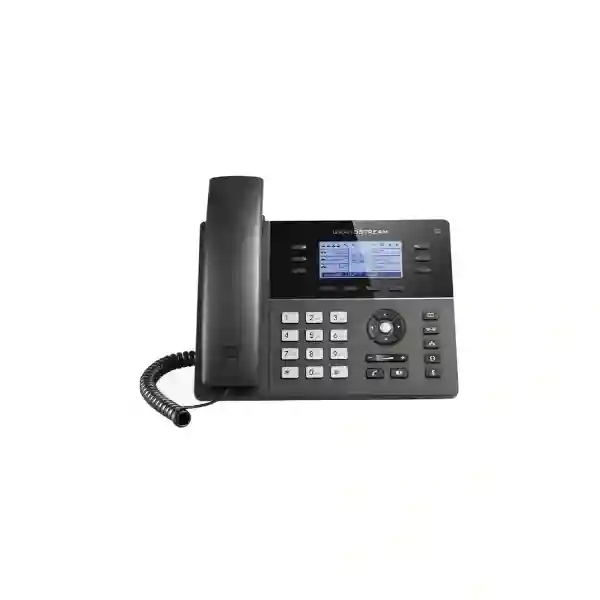
Grandstream GXP1760 Tanzania searches usually come from businesses that want a dependable SIP desk phone for reception areas, managers, shared offices, support teams, branch users and everyday extension calling. The GXP1760 belongs to Grandstream’s GXP17xx mid-range family and was designed around moderate call-volume users who need more programmable controls than an entry-level handset without moving into a larger executive-class endpoint. It supports six line keys, up to three SIP accounts, four context-sensitive soft keys, a 200×80-pixel backlit display, integrated Power over Ethernet, HD voice, five-way local conferencing and 24 digitally programmable BLF or speed-dial positions. Grandstream now places the GXP1760 in its product archive, so new buyers should treat model availability as something to confirm rather than assume and should also compare current Grandstream alternatives when planning a new rollout.
Best considered for SIP-based office telephony where six line keys, three SIP accounts, PoE, BLF monitoring and HD audio match the user role. Confirm PBX compatibility, network design, current stock status and lifecycle expectations before standardizing on the model.
Designed for users who need visible call handling and line access without an oversized console.
Supports up to three SIP identities for role-based calling, multiple extensions or service separation.
802.3af PoE simplifies desk deployment when connected to a suitable PoE switch and cabling plant.
Useful for quick internal or external voice collaboration without requiring a separate conference room system.
Grandstream GXP1760 Overview
The GXP1760 is positioned as a mid-range IP phone for offices that need a practical balance of call handling, programmable keys, audio quality and network simplicity. Its six dual-color line keys work with up to three SIP accounts, while four XML programmable context-sensitive soft keys and 24 on-screen programmable BLF or speed-dial positions provide useful control for people who regularly transfer, park, monitor or rapidly place calls. The phone’s 3.3-inch 200×80 backlit display is intentionally straightforward rather than graphical-heavy, which suits environments where reliability and quick access to telephony functions matter more than a large color interface.
For voice performance, the GXP1760 supports HD audio on the handset and speakerphone and includes wideband codecs such as G.722 alongside common SIP voice codecs. It supports a full-duplex speakerphone, an RJ9 headset interface, security options including TLS and SRTP, and Layer 2 and Layer 3 Quality of Service controls. Two auto-sensing 10/100 Mbps Ethernet ports allow the phone to sit between the network and a workstation, while integrated 802.3af PoE can reduce the need for a separate power adapter at each desk when the access switch is correctly sized.
The most important buying point today is lifecycle. Grandstream lists the GXP1760 in its product archive. That does not make every existing deployment unsuitable, but it does mean businesses planning a new standard should confirm supply, firmware support expectations, replacement strategy and whether a current GRP-series or other actively marketed Grandstream model would be a better long-term standard. FourTeck can help review that decision alongside the wider FourTeck Tanzania IT and telecom portfolio, so the endpoint choice aligns with PBX, switching, cabling, security and support requirements.
Verified GXP1760 Technical Highlights
| Lines and accounts | 6 line keys with up to 3 SIP accounts |
| Display | 200×80-pixel 3.3-inch backlit LCD |
| Programmable controls | 4 context-sensitive soft keys and 24 digitally programmable BLF/speed-dial positions |
| Ethernet | Dual switched auto-sensing 10/100 Mbps ports |
| Power | Integrated 802.3af PoE; universal power adapter is also documented for the product |
| Conferencing | 5-way local audio conferencing |
| Audio | HD handset and speakerphone with wideband audio support |
| Security | TLS, SRTP, 802.1X, encrypted configuration support and user/admin credential controls |
| Provisioning | TFTP, HTTP, HTTPS, TR-069 and AES-encrypted XML configuration workflows |
Who Should Consider the GXP1760?
Reception and front office
Six line keys and programmable BLF positions can help reception users monitor commonly used extensions, transfer calls, reach managers quickly and handle moderate daily call flow. For very busy switchboard roles, however, buyers should compare larger current endpoints or attendant solutions rather than assume the GXP1760 has enough key capacity.
Managers and supervisors
The model fits users who want more direct calling controls than a basic phone while keeping a familiar desk-phone form. Multiple SIP accounts can separate duties or identities where the PBX design supports it, and five-way conferencing can help with rapid voice collaboration.
General office teams
Teams in sales, administration, logistics, customer care and branch offices may value PoE, headset connectivity, call transfer and directory features. The decision should still consider current availability and whether a newer supported model will simplify long-term standardization.
Deployment planning matters as much as the phone
A SIP phone is only one part of a working business voice environment. Before ordering, verify the IP PBX or hosted SIP platform, extension count, codec policies, VLAN design, DHCP options if used, switch PoE budget, network cabling, internet path for hosted calling, firewall rules, QoS strategy, time synchronization, firmware version and provisioning method. FourTeck’s Tanzania technology services cover integrated planning across telephony, networking and infrastructure, while the FourTeck Tanzania shop provides a broader view of business technology products that may be needed around the endpoint deployment.
Grandstream GXP1760 Tanzania
For Tanzania buyers, the GXP1760 is most relevant where an organization already operates SIP telephony or is extending an existing IP PBX environment. Common requirements include adding desk extensions for administrative staff, standardizing phones across departments, replacing failed endpoints, creating reception visibility through BLF keys, and supporting branch users on the same dialing plan. The six line keys and three SIP accounts provide enough flexibility for many office roles without the complexity of a large executive terminal. Integrated PoE also helps organizations reduce desk power clutter when the LAN already uses managed PoE switching. A Tanzania deployment should be assessed as a complete voice-network project: phone choice, PBX compatibility, switch capacity, VLAN configuration, UPS protection, structured cabling quality and internet reliability all influence the end result.
Procurement teams should also account for lifecycle status. Since Grandstream lists the GXP1760 in its product archive, a buyer sourcing units for a new standard should ask whether the objective is replacement of existing GXP1760 handsets, expansion of a known deployment, or creation of an entirely new endpoint standard. Replacing like-for-like can sometimes simplify user training and provisioning templates, while a new rollout may benefit from comparing current-generation Grandstream models that offer a longer forward lifecycle. FourTeck can help structure that comparison without forcing an unnecessary platform change. Share the current PBX model, number of extensions, user roles, PoE switch information, existing phone models and expected growth so the quotation conversation is based on technical fit rather than only unit price.
In Tanzania, business telephony projects often span more than the desk phone itself. Headquarters may need a main number and IVR, branches may need extension dialing, reception staff may need monitored lines, managers may need headsets, and remote users may need a separate softphone or secure remote-access workflow. The GXP1760 supports standard SIP protocols and enterprise provisioning methods, but its suitability depends on the overall architecture. FourTeck Tanzania can discuss endpoints together with IP PBX, PoE switching, network segmentation, cabling and power continuity. This integrated approach is useful for companies that want predictable call quality and easier support rather than a collection of independently purchased phones.
Grandstream GXP1760 Dar es Salaam
Dar es Salaam organizations commonly evaluate business phones in offices where call flow is tied closely to customer service, sales, logistics, hospitality, administration or supplier coordination. In these environments, the useful question is whether each user needs a basic extension, a moderate number of visible call controls, or a higher-capacity console. The GXP1760 sits in the middle: six line keys, up to three SIP accounts and 24 programmable BLF or speed-dial positions can support a receptionist, office administrator, supervisor or busy desk user who needs faster access to frequent extensions. The backlit display keeps core information visible without introducing the cost or complexity of a large graphical endpoint.
A Dar es Salaam deployment should pay particular attention to network topology. If phones and computers share the same desk outlet, the dual Ethernet ports can reduce the need for a second data cable to the workstation, but the 10/100 Mbps interface should be considered in relation to the connected computer’s network needs. For offices that expect Gigabit throughput at every desktop, a different endpoint or cabling approach may be preferable. Where PoE is used, the access switch must provide sufficient power budget for all connected phones, and UPS coverage for the switch and PBX helps maintain calling during short power interruptions. Voice VLANs and QoS can also help separate and prioritize signaling and media where the LAN carries heavy data traffic.
Buyers in Dar es Salaam should request a quotation with practical details: quantity, PBX or SIP service, whether phones are replacements or new extensions, PoE availability, headset requirements, reception BLF needs and rollout location. This makes it easier to determine whether the GXP1760 is still the right fit or whether a newer Grandstream model is more appropriate. FourTeck can also align the endpoint purchase with network switches, cabling and PBX planning rather than treating each telephone as an isolated device.
Grandstream GXP1760 Mwanza
Mwanza businesses considering the GXP1760 may include professional offices, distributors, schools, clinics, hospitality operations, service companies and branch facilities that need dependable extension calling between departments. The model can be useful when users need more than a minimal two-line handset but do not require a premium touchscreen or a large expansion module. Six line keys and multiple programmable controls provide quick access to routine call functions, while HD audio and five-way conferencing support normal office collaboration. For administrators who frequently call the same departments, BLF and speed-dial programming can reduce repetitive dialing and make internal reachability easier to understand at a glance.
For Mwanza projects, network readiness should be checked before confirming quantities. The phones can be powered using 802.3af PoE, which is convenient for centralized power management, but only when the PoE switch has enough available wattage. Cabling quality matters because voice endpoints are sensitive to intermittent links, poor terminations and unstable switching. If the PBX is hosted outside the office, internet reliability, firewall policy and failover design should be part of the planning conversation. If the PBX is on-premise, its capacity, extension licensing or configuration model, backup strategy and maintenance process should be confirmed. The GXP1760 itself does not solve these dependencies; it performs best as one correctly provisioned endpoint within a managed voice environment.
Because the GXP1760 is archived by Grandstream, Mwanza buyers should distinguish between continuity purchases and new standardization. Existing deployments may still justify compatible replacement units where available, especially when templates, user habits and spare parts are already built around the model. New projects, by contrast, should compare current models before locking in a multi-year purchasing standard. FourTeck can support that comparison based on role, budget, display preference, key count, PoE, network speed and expected support lifecycle.
Grandstream GXP1760 Arusha
Arusha organizations often need business communication that connects reception desks, reservation teams, administration, finance, operations, security desks and branch locations. For these users, the GXP1760 can provide a structured desk-phone experience with six line keys, three SIP accounts, programmable soft keys and BLF positions that can be assigned to frequently used extensions. Hotels, tour operators, professional services, educational organizations and offices can use SIP endpoints to create internal extension dialing, transfer calls more efficiently and reduce dependence on separate analog lines at every desk. The value comes from integrating the phone into a properly designed PBX call flow rather than simply installing the handset.
A well-planned Arusha deployment should document the incoming number strategy, IVR or receptionist flow, extension ranges, department ring groups, voicemail policy, after-hours routing and emergency calling rules where applicable. On the network side, confirm whether the voice traffic will use a dedicated VLAN, whether switches support PoE and QoS, and whether internet connectivity is sufficiently stable for any hosted SIP trunks or remote extensions. Headset users should verify compatibility with the phone’s RJ9 interface and any electronic hookswitch requirements. Managers who need extensive monitored extensions may require more keys than the GXP1760 offers on its main interface, so role-based endpoint selection remains important.
For procurement, include user count and department roles in the request rather than asking only for a unit price. That helps separate basic-user phones, reception requirements and manager endpoints. Since the GXP1760 is an archived model, confirm present availability and evaluate whether a current-generation Grandstream phone will provide better long-term consistency for a new Arusha site. FourTeck can discuss the endpoint together with PBX, switching and cabling needs so the system is designed as one communication environment.
Grandstream GXP1760 Dodoma
Dodoma buyers may consider the GXP1760 for administrative offices, NGOs, educational environments, service organizations, project offices and multi-department workplaces that rely on consistent extension calling. Its mid-range key layout can be practical for staff who transfer calls, monitor colleagues, use conference calling and need multiple SIP identities without the complexity of a high-end console. The 200×80 backlit LCD provides a functional interface for daily telephony, while integrated PoE supports cleaner deployment where managed PoE switches are already part of the network infrastructure.
When planning an office in Dodoma, consider resilience. A phone may be powered by PoE, but calling still depends on the switch, router, PBX and, for hosted or trunked services, internet connectivity. UPS protection for the network cabinet can therefore be more valuable than individual desk power adapters. Voice VLAN design, QoS, secure management credentials and controlled firmware processes should be included in the deployment plan. Grandstream supports secure provisioning methods on the GXP1760, including HTTPS, TR-069 and encrypted XML configuration workflows, which can help administrators maintain multiple units more consistently than configuring every handset manually.
For a new Dodoma rollout, lifecycle should be discussed at procurement stage. The GXP1760 appears in Grandstream’s archived product portfolio, so a large purchase should not be based only on familiarity or a historical specification sheet. Compare current options, support expectations, replacement availability and required features. If the requirement is to match an existing installed base, explain that clearly in the quotation request. FourTeck can help determine whether continuity or migration is the more practical path for the organization.
Grandstream GXP1760 UAE
UAE businesses evaluating the GXP1760 generally fall into two groups: organizations maintaining an existing Grandstream deployment and buyers comparing older mid-range SIP endpoints with current-generation alternatives. The phone’s core capabilities remain straightforward: six line keys, three SIP accounts, PoE, HD audio, five-way conferencing, programmable BLF or speed-dial keys and secure SIP-related features. These functions can still match many office roles, but lifecycle and availability should be confirmed before treating the model as a new corporate standard. In a market where offices frequently deploy managed PoE switching, SIP trunks and integrated call management, endpoint selection should be tied to the complete design.
UAE deployments often include head offices, branch sites, reception teams and meeting environments with differing endpoint needs. A standard desk user may need only a few line appearances, while reception staff may require more monitored extensions, and executives may prefer color displays, Bluetooth or newer connectivity options that are not central to the GXP1760. A role matrix helps avoid buying one phone model for every employee. The PBX platform, extension provisioning, SIP trunk, VLAN scheme, firewall policy, PoE budget and call-recording requirements should all be reviewed before final selection.
For regional projects that include both UAE and East African locations, consistent configuration templates can simplify extension numbering and support, but hardware standardization should account for lifecycle and local sourcing conditions. Buyers can also review FourTeck Kenya and FourTeck Uganda when coordinating cross-border IT and telephony requirements within the wider regional network.
Grandstream GXP1760 Uganda
Uganda organizations may use Grandstream desk phones to support business extension calling in offices, schools, clinics, hotels, NGOs, branch operations and service companies. The GXP1760 provides a mid-range feature set suited to users who need several visible call controls without moving to a large executive endpoint. Its six line keys, three SIP accounts, BLF or speed-dial programming and five-way conferencing are especially relevant for reception, administration, accounts and team supervisors who handle more active calling than a basic extension user.
A Uganda deployment should start with PBX compatibility and network readiness. Confirm whether the system uses an on-premise IP PBX, a cloud PBX or a third-party SIP service. If PoE is planned, calculate the total switch power budget and ensure the switch and PBX are protected by suitable UPS capacity. Where branch offices are connected through VPN or internet-based SIP trunks, latency, packet loss and firewall configuration can have more effect on call experience than the phone model itself. A properly segmented voice network with QoS can improve predictability where data, Wi-Fi, cameras and phones share the same infrastructure.
Because the GXP1760 is archived, Uganda buyers should confirm whether they are replacing existing units or planning a fresh standard. Replacements may prioritize consistency, while new projects should compare current endpoints before committing. FourTeck’s regional presence can help buyers coordinate endpoint selection with broader PBX and network planning instead of purchasing phones in isolation.
Grandstream GXP1760 Kampala
Kampala is a major business hub where office telephony often needs to serve reception, customer care, finance, sales, operations and management from one shared communication platform. The GXP1760 can be useful for moderate call-volume users who need more programmable access than an entry-level phone. Six line keys allow visible line or account handling, while 24 programmable BLF or speed-dial positions help users reach frequent contacts and monitor selected extensions where the PBX supports presence signaling. HD audio and five-way conferencing add practical value for daily coordination.
Before deploying in Kampala, map how calls should move. A receptionist may need ring groups and monitored extensions, a sales team may need queues or direct inward dialing, and managers may need personal lines plus shared departmental identities. These workflows are controlled primarily by the PBX, but the endpoint must expose them in a usable way. Network design should include PoE capacity, switch uplinks, voice VLANs, QoS and secure administration. If phones pass computer traffic through their secondary Ethernet port, remember that the GXP1760 uses 10/100 Mbps networking, which may not suit desks that require Gigabit throughput.
For quotations, buyers should specify whether the requirement is replacement, expansion or a new site. Current model availability should be checked because the GXP1760 is archived. Where a longer lifecycle is more important than exact model continuity, compare newer Grandstream devices before standardization. This reduces the risk of building a new deployment around hardware that becomes difficult to source later.
Grandstream GXP1760 Arua
Arua businesses and institutions that need structured internal calling can consider SIP telephony as a way to connect departments without maintaining separate analog lines at every desk. The GXP1760 offers three SIP accounts, six line keys and programmable controls that can make routine call transfer and extension access more efficient. For administrative users, clinics, education offices, NGOs, hospitality sites and branch facilities, a properly configured IP phone can reduce dependence on mobile calling for internal communication and create a more consistent business number and extension structure.
The endpoint should be matched to the site’s network conditions. PoE can simplify installation, but only if switching and power backup are planned centrally. Voice quality depends on stable Ethernet links, correct duplex negotiation, sufficient bandwidth, sensible firewall rules and low packet loss. When internet connectivity is part of the voice path, redundancy options may be worth discussing for critical sites. The phone’s built-in QoS support can participate in a managed network policy, but end-to-end prioritization requires compatible switches and routers rather than a setting on the handset alone.
For Arua procurement, determine whether the GXP1760 is required because identical units are already in use or simply because the model was found in an older specification. Since Grandstream lists it in the archive, new deployments should compare currently marketed devices. A clear bill of requirements should include extension quantity, PBX type, PoE availability, headset needs, expected call volume, network speed requirements and desired support horizon.
Grandstream GXP1760 Mbarara
Mbarara organizations may need IP phones for growing offices, education, healthcare, hospitality, retail administration and branch communication. The GXP1760 can fit users who need a traditional desk handset with moderate programmable capacity. It supports common SIP standards, three accounts, six line keys, HD audio, conferencing and secure signaling options. These capabilities can support daily extension calling, transfers, hold, call pickup, directory access and simple department workflows when the PBX is configured correctly.
For successful deployment, avoid selecting the phone before understanding the PBX and LAN. Check whether the existing switch supports 802.3af PoE, whether there is enough power headroom for every planned endpoint and whether UPS protection covers the communication cabinet. Confirm cabling certification where possible, particularly if outlets are shared with PCs. If the workstation needs sustained Gigabit performance, the GXP1760’s 10/100 Mbps pass-through may become a limiting factor. In that case, separate cabling or a newer Gigabit phone may be more appropriate.
Mbarara buyers should also review lifecycle. Archived products can remain functional for years in installed environments, but new purchasing decisions should weigh replacement availability and firmware support alongside price. If matching an existing fleet is the priority, state that in the request. If building a fresh system, compare current models with similar SIP, PoE and key requirements before finalizing the bill of materials.
Grandstream GXP1760 Gulu
Gulu buyers seeking a business SIP phone may be upgrading from analog extensions, extending an existing IP PBX or replacing aging handsets. The GXP1760 provides a familiar office-phone design with enough direct controls for moderate call activity. Its six line keys can support multiple appearances or functions, while the programmable BLF and speed-dial positions can help staff reach key departments faster. The phone also includes HD audio and five-way conferencing, which can be useful for management discussions and team coordination without a separate conference bridge for every small call.
In a Gulu site, reliability depends on the complete communication chain. If power interruptions are a concern, centralized PoE with UPS-backed switches can keep endpoints running as long as the PBX and network path remain available. A documented extension plan, switch port mapping and configuration backup will simplify future troubleshooting. Secure administrator passwords and encrypted provisioning should be used rather than leaving factory defaults or unmanaged manual settings on a growing fleet.
The GXP1760’s archived status is particularly relevant for organizations planning phased growth. If more phones will be added over several years, it may be safer to standardize on a current family unless exact compatibility with an installed GXP1760 base is the primary objective. FourTeck can help review user roles, desired keys, network speed, PoE, PBX integration and lifecycle so the endpoint decision supports future expansion rather than only today’s quantity.
Grandstream GXP1760 Kenya
Kenya businesses may encounter the GXP1760 through existing Grandstream installations, reseller inventory or project specifications written when the model was more current. Functionally, the phone remains a capable mid-range SIP endpoint with six line keys, three SIP accounts, programmable BLF or speed-dial positions, PoE and five-way conferencing. It can support reception, administration, sales and branch users who need more call handling than a basic phone. The strongest reason to choose it today is usually compatibility with an existing environment rather than simple model familiarity.
For Kenyan deployments, determine whether users need Gigabit desktop pass-through, wireless connectivity, Bluetooth, color screens or cloud-managed lifecycle features. Those requirements can point toward newer models. If the GXP1760 already exists in the organization, however, adding a limited number of matching units can reduce training and template changes when stock is available. PBX compatibility, firmware level and provisioning method should be checked before bulk purchase.
A quotation should include quantity, location, intended role, PBX model, PoE availability and whether the units are for replacement or new deployment. FourTeck Kenya also presents broader Grandstream and business IT offerings, which can help regional buyers compare the phone requirement with PBX, switches and other infrastructure rather than treating the endpoint as a standalone purchase.
Grandstream GXP1760 Kuwait
Kuwait buyers may use the GXP1760 in office environments where SIP desk phones support reception, internal extension calling, departmental transfers and branch coordination. The model provides a practical balance of line keys and programmable controls, but its archived lifecycle means organizations should first identify whether they are maintaining an existing fleet or selecting a standard for a new system. Continuity projects and fresh deployments have different priorities, and the cheapest unit price does not always create the lowest long-term support cost.
For network planning, the GXP1760 includes dual 10/100 Mbps Ethernet ports and integrated PoE. That is adequate for many voice-first desks, but it should be evaluated carefully where a workstation connects through the phone and depends on Gigabit access. PoE switching, voice VLAN configuration, QoS and secure provisioning can improve manageability when many phones are deployed. PBX-side features such as IVR, queues, ring groups and call recording remain controlled by the communication platform, so endpoint purchasing should be coordinated with the PBX design.
Kuwait procurement teams should ask for availability confirmation, lifecycle guidance and comparable current Grandstream options. For regional organizations with East African branches, maintaining one extension architecture can be valuable, but hardware generations do not need to be identical at every site if interoperability and provisioning standards are maintained.
Grandstream GXP1760 Ghana
Ghana organizations evaluating business IP telephony may use the GXP1760 for offices where a moderate number of programmable keys and multiple SIP accounts are useful. The phone can support routine desk roles such as administration, customer service, sales support and management. HD audio, five-way conferencing and BLF programming can improve daily calling when the endpoint is integrated with a capable SIP PBX. The device is not itself a PBX; call queues, trunks, IVR and extension policies depend on the wider telephony platform.
Network preparation is essential. Confirm stable Ethernet cabling, switch capacity, PoE budget and router behavior before deployment. If hosted SIP or inter-branch calling relies on internet connectivity, quality monitoring and backup connectivity may be more important than adding endpoint features. Security should include strong credentials, controlled management access and encrypted signaling or media where supported by the PBX and service provider.
Because Grandstream archives the GXP1760, Ghana buyers should confirm whether the objective is maintenance of an existing installed base or a new standard. A replacement project may justify matching devices, while a new deployment should compare current phone families that offer similar or improved features with a longer market lifecycle. The quotation process should capture user count, roles, PBX, network design, headsets and desired support horizon.
Grandstream GXP1760 Nigeria
Nigeria business environments can range from small offices to multi-floor headquarters, call-handling teams and distributed branch networks. The GXP1760 is best considered for moderate desk users rather than high-density contact-center agents or executive users who need large color displays and extensive expansion options. Its six line keys, three SIP accounts, programmable BLF positions, PoE and HD voice can cover many general business roles. Proper endpoint segmentation by role is more effective than buying the same phone for reception, management and basic users regardless of workflow.
For Nigeria deployments, power and connectivity continuity are important design considerations. PoE can centralize phone power at the switch, making UPS design easier, but the PBX, router and upstream connection must also remain available for calling to continue. If multiple internet links are used, voice failover behavior should be tested. QoS can help prioritize real-time traffic, though it must be implemented across the network path to be effective. Secure remote provisioning reduces configuration drift as the number of phones grows.
The GXP1760’s archive status means current supply should be confirmed and large greenfield projects should compare newer Grandstream models. If an organization already has GXP1760 handsets, expansion may still be practical where compatible inventory exists. Share the installed PBX, firmware environment, quantity, user roles and PoE details before requesting a final recommendation.
Grandstream GXP1760 Seychelles
Seychelles businesses, hospitality properties and service organizations may use SIP telephony to connect reception, reservations, administration, back office and management under one extension plan. The GXP1760 offers a practical mid-range interface for users who need multiple line keys and programmable shortcuts. Five-way conferencing can help with short coordination calls, while PoE allows network and power delivery through a single cable when supported by the switch. These functions can be useful, but they should be evaluated within the complete PBX and network design.
Hospitality and multi-building environments should consider switch placement, cabling runs, VLANs, UPS backup and branch connectivity when deploying phones. Reception or reservation desks may need more monitored extensions than ordinary users, while housekeeping or roaming staff may be better served by cordless or mobile endpoints rather than fixed desk phones. A mixed endpoint strategy can therefore deliver better usability than standardizing on the GXP1760 everywhere.
For Seychelles procurement, confirm availability before including the archived GXP1760 in a new bill of materials. Existing systems may still benefit from matched replacement units, but fresh sites should compare current devices. A good quotation request should include room or extension count, user types, PBX platform, PoE switch details, headset needs, calling patterns and future expansion expectations so the recommended endpoint mix supports the actual operating environment.
Compatibility and Integration Guidance
The GXP1760 is a standards-based SIP endpoint, but standards compliance does not mean every PBX feature will automatically map perfectly. Basic registration, calling, transfer and hold are generally part of normal SIP operation, while advanced functions such as BLF, shared line appearance, directory synchronization, zero-touch provisioning or special soft-key behavior may depend on the PBX vendor, firmware and provisioning templates. Before purchasing a large quantity, test a representative phone with the intended PBX and SIP service.
When used with Grandstream UCM systems, administrators can take advantage of the broader Grandstream ecosystem and provisioning workflows. In mixed-vendor environments, confirm the supported SIP registration method, transport, codec set, DTMF mode, VLAN behavior, time server, directory method and firmware version. If TLS and SRTP are required, ensure both endpoint and server configuration align. Headset users should test the specific headset and EHS behavior required for their workflow rather than assuming every accessory operates identically.
For deployment at scale, document a configuration baseline. This should include naming conventions, extension assignment, BLF layout, admin password policy, firmware policy, provisioning server, network VLAN, QoS tagging, emergency dialing rules, time settings and factory-reset procedure. Consistency reduces troubleshooting effort and makes replacement faster.
Buying Guidance: Replacement or New Standard?
Replacing existing GXP1760 phones
Matching replacements can reduce training and preserve provisioning templates. Confirm firmware compatibility, hardware condition, source authenticity and present availability. If only a small number of units are needed, continuity may be more practical than a broader migration.
Building a new phone standard
Because the GXP1760 is archived, compare current Grandstream models before committing to a new multi-year standard. Consider display type, network speed, key count, provisioning, headset options, lifecycle and support. A newer endpoint may reduce future sourcing friction even if its initial cost differs.
Quotation Checklist
For a useful Grandstream GXP1760 quotation, provide the information below. This helps the sales and technical team identify whether the requested model is suitable, whether a current alternative should be proposed and what supporting infrastructure may be required.
Frequently Asked Questions
How many SIP accounts does the Grandstream GXP1760 support?
The GXP1760 supports up to three SIP accounts and provides six line keys. This can suit users who need multiple identities, line appearances or programmable call functions, depending on the PBX configuration.
Does the GXP1760 support PoE?
Yes. Grandstream documents integrated IEEE 802.3af Power over Ethernet. The connected switch must support PoE and have enough available power budget for the planned number of phones.
Does the GXP1760 have Gigabit Ethernet?
No. The documented network interface is dual switched auto-sensing 10/100 Mbps Ethernet. If a workstation will connect through the phone and requires Gigabit speed, consider a different endpoint or separate network connection.
Is the Grandstream GXP1760 discontinued?
Grandstream currently lists the GXP1760 in its product archive. Buyers should therefore confirm current supply and support expectations and compare active Grandstream models when planning a new rollout.
Can it be used with a Grandstream UCM IP PBX?
The phone is designed as a SIP endpoint and is commonly associated with Grandstream’s SIP ecosystem. Exact provisioning, firmware and feature mapping should still be validated against the target UCM model and software version before bulk deployment.
How many BLF or speed-dial positions are available?
Grandstream documents 24 digitally programmable and customizable BLF or fast-dial positions. Actual behavior depends on the provisioning and PBX feature support.
Decision Recap
Choose the GXP1760 when its exact feature set matches an existing SIP environment, especially where six line keys, three SIP accounts, PoE, HD audio and programmable BLF positions are already part of the user workflow. For new standardization projects, compare current Grandstream models because the GXP1760 is archived. The best decision should consider lifecycle, network speed, PBX compatibility, provisioning, user role and support horizon rather than unit price alone.
For broader planning, FourTeck can help connect the phone requirement with switching, cabling, PBX and business IT architecture. A desk phone works best when the surrounding network is deliberately designed for voice rather than treated as an afterthought.
Consultation Panel
Share your extension count, current PBX, office locations, user roles, PoE switch model and whether the GXP1760 is for replacement or a fresh rollout. FourTeck can use these details to prepare a more accurate product recommendation and quotation conversation.
Regional organizations planning multiple offices can coordinate Tanzania requirements with the verified FourTeck regional sites for Kenya and Uganda, while Tanzania-specific enquiries can use the dedicated contact route below.



Reviews
There are no reviews yet.