
Grandstream GXW4224 V2 Tanzania
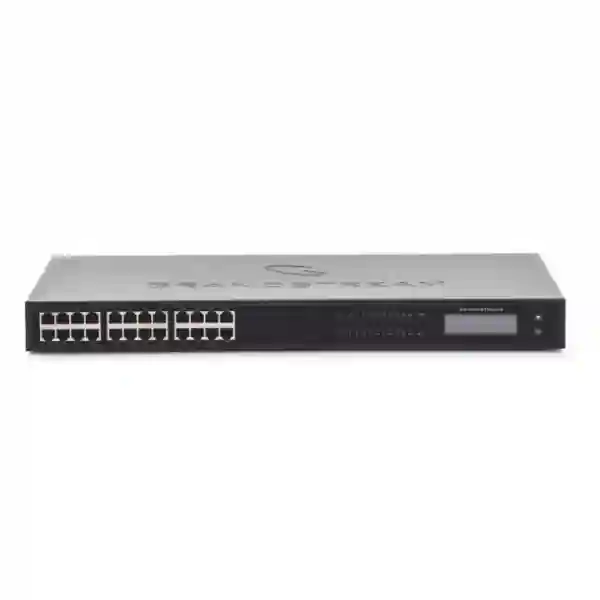
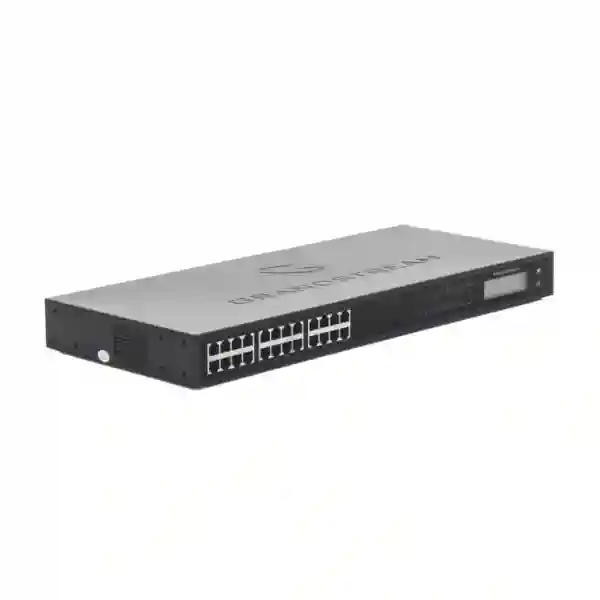
The Grandstream GXW4224 V2 is built for organizations that need to preserve analog telephones, fax machines or legacy voice interfaces while moving call control onto a modern SIP network. With 24 FXS ports, 24 SIP accounts, four configurable SIP profiles and a Gigabit Ethernet interface, the gateway provides a practical bridge between analog endpoints and IP PBX, softswitch or SIP-service environments.
For a Tanzania deployment, the key buying question is not simply whether a gateway has enough ports. It is whether the existing analog devices, line characteristics, SIP platform, dial plan, network quality, fax requirements, security policy and future growth have been considered together. FourTeck can help procurement and IT teams define those requirements before quotation and deployment.
GXW4224 V2 is suited to hotels, offices, institutions, compounds, branch environments and legacy PBX migrations where multiple analog endpoints need SIP connectivity without replacing every device at once.
Connect analog phones, fax machines or compatible analog PBX interfaces through individual FXS ports.
Provision independent SIP accounts across the available analog lines for structured extension mapping.
Use configurable SIP profiles to support deployment models involving different servers, tenants or routing requirements.
A 10/100/1000 Mbps RJ-45 interface connects the gateway to the IP network.
What the Grandstream GXW4224 V2 solves
Many organizations have a mixed communications environment. The call-control platform may already be SIP-based, yet the site can still contain analog room phones, lobby phones, lift or service-area phones, fax machines, cordless analog sets, legacy wiring or PBX interfaces that remain operationally useful. Replacing every endpoint can add cost and disruption without necessarily improving the workflow. The GXW4224 V2 addresses that gap by translating between analog FXS interfaces and SIP-based VoIP services.
This approach is particularly useful during staged migration. A business can modernize its IP PBX, routing, voicemail and branch connectivity while retaining selected analog endpoints. The gateway also creates a more manageable boundary: analog lines are terminated centrally, SIP registration is handled at the gateway, and the organization can document extensions, ports and dial-plan rules in a structured way.
Grandstream positions the GXW42xx V2 family for broad interoperability with SIP-based environments. The GXW4224 V2 specifically provides 24 FXS interfaces. It supports common voice codecs, T.38 fax, G.168 echo cancellation, dynamic jitter handling, provisioning functions and security features associated with current V2 firmware. Because firmware handling differs between V1 and V2, administrators should confirm the physical product label and use the correct V2 firmware path rather than treating the earlier hardware generation as interchangeable.
Verified capabilities and technical planning points
| Area | GXW4224 V2 detail | Why it matters |
|---|---|---|
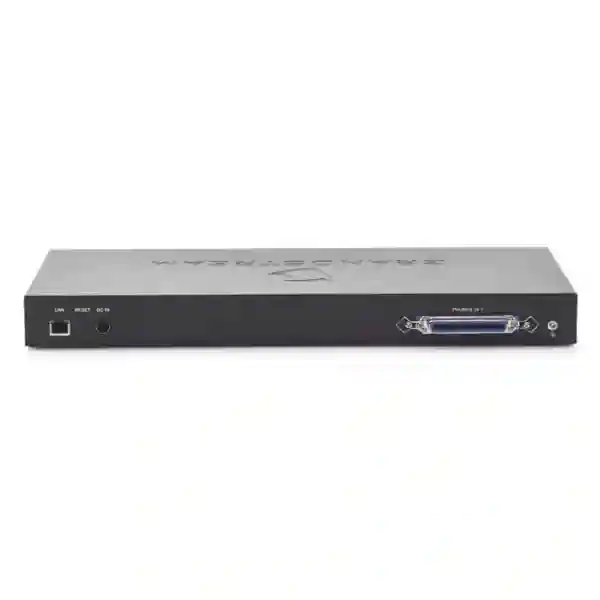
| Analog interfaces | 24 FXS ports; RJ11 plus 50-pin telco connectivity is documented for the GXW4224 family | Supports dense analog endpoint connection and structured cabling options. |
| SIP provisioning | 24 SIP accounts and 4 configurable profiles | Allows extension-level registration and flexible server/profile planning. |
| Network | 10/100/1000 Mbps RJ-45 | Fits modern switched LAN infrastructure and avoids a low-speed gateway edge. |
| Voice | G.711, G.722, G.723.1A, G.726, G.729 and iLBC are documented across the series | Codec choice can be matched to PBX support, bandwidth and voice-quality goals. |
| Fax | T.38 fax support and modem detection functions | Important when analog fax equipment must remain part of a SIP deployment. |
| Concurrent calls | Up to 24 concurrent calls except where SRTP processing changes capacity | Concurrency should be assessed against real call patterns and security settings. |
| Mounting and display | Desktop/rack-mount format and 128×32 LCD documented for the series | Useful for rack planning, local status checks and organized telecommunications rooms. |
Compatibility first
Before ordering, confirm the target IP PBX or SIP service, authentication method, codecs, DTMF method, fax requirement, NAT conditions, dial plan and any security controls. Broad SIP interoperability is useful, but a production migration should still be validated against the exact platform and service-provider settings.
Plan the analog side
Document every analog endpoint, port number, extension, physical cable route and special requirement. Fax machines, alarm interfaces, lift phones or other specialized analog devices can behave differently from standard telephones, so they deserve separate testing rather than being assumed to work identically.
Deployment, security and lifecycle guidance
A successful GXW4224 V2 deployment starts with a port map. Assign each analog port a clear name, extension number, destination room or device, SIP account and expected calling permissions. This simple inventory helps installers connect the right cable, allows administrators to trace incidents quickly and gives procurement a clear view of how much spare capacity remains. In hotels or large offices, the port map can be aligned with room or floor numbering. In branch environments, it can be aligned with department and site codes.
The LAN should be voice-ready. Even though the gateway has Gigabit Ethernet, call quality still depends on stable switching, low packet loss, correct duplex negotiation, suitable Quality of Service and predictable routing to the SIP server. Where the PBX is remote or cloud-hosted, internet quality, firewall policies, NAT behavior and failover should be reviewed. A UPS can be considered for the gateway, switches, router and PBX infrastructure if short power interruptions would otherwise drop all analog extensions simultaneously.
Security should also be treated as an operational process. Use strong administrative credentials, restrict management access, keep firmware within an approved lifecycle, back up configuration and use supported secure signaling/media options where the PBX and service architecture permit. Grandstream distinguishes V2 hardware from V1 both by labeling and firmware handling. Administrators should therefore verify the device label before any upgrade and follow the release notes for the installed firmware branch.
For organizations buying voice infrastructure alongside switching, firewalls or IP phones, FourTeck Tanzania’s business technology shop provides a broader procurement context, while the technology services page explains integrated planning, configuration and support considerations. These resources are relevant because an FXS gateway sits between telephony, cabling, power, LAN and security layers rather than operating as an isolated appliance.
Who should consider the GXW4224 V2?
The model makes the most sense when a site has a meaningful number of analog endpoints and wants to connect them to SIP without purchasing a separate single-port adapter for every device. Typical scenarios include hospitality room phones, institutional campuses, offices with legacy handsets, multi-floor buildings, warehouses, residential compounds, healthcare environments with existing analog extensions and organizations transitioning from a traditional PBX to an IP platform in phases.
It is not automatically the correct choice for every deployment. A site with only a few analog devices may be better served by a lower-port gateway, while a site needing more than 24 lines should compare higher-density models such as the 32-port or 48-port family members. The right decision balances current ports, growth, rack space, cabling style, redundancy expectations and the operational impact of concentrating many endpoints behind one gateway.
Grandstream GXW4224 V2 Tanzania
For businesses in Tanzania, the Grandstream GXW4224 V2 is particularly relevant where analog telephony still has operational value but the organization wants the control, routing flexibility and branch integration of SIP. A common migration path is to replace or modernize the central PBX while keeping selected analog endpoints in rooms, reception areas, stores, workshops or service locations. With 24 FXS ports in one gateway, an IT team can consolidate many of those endpoints into a managed IP-connected platform instead of maintaining multiple small adapters or parallel telephone systems.
Procurement should begin with an endpoint census. Count the devices that must remain analog, identify which are normal telephones and which are fax or specialized equipment, record cable destinations and confirm whether the current wiring terminates near the proposed gateway. Then map the expected SIP extensions, calling rights and numbering plan. This avoids a common mistake: ordering a gateway by port count alone and discovering later that cabling, PBX licenses, SIP trunk capacity or special analog behavior was not included in the project plan.
Network readiness is equally important. Tanzania deployments may range from a single headquarters LAN to branch networks connected over VPN or public internet. The GXW4224 V2 can sit on a voice VLAN where appropriate, and its management access should be limited according to the organization’s security policy. If the SIP platform is centralized, WAN stability and firewall configuration become part of call reliability. If the PBX is local, power protection and rack organization can have greater importance. In both cases, a clear configuration backup and port map simplify support.
Businesses comparing quotations should ask what is included beyond the gateway itself: configuration, rack mounting, patching, analog cable termination, SIP registration, dial-plan programming, fax testing, firmware alignment, documentation and user acceptance testing. A lower hardware-only price can be misleading if essential migration work is excluded. For multi-country organizations, the same architecture can also be standardized across branches. FourTeck’s regional network includes FourTeck Kenya and FourTeck Uganda, which can be useful reference points for groups developing repeatable voice designs across East Africa.
When requesting a Tanzania quotation, provide the number of analog lines, PBX or SIP platform, fax requirements, installation location, existing rack or wall space, cabling details and any branch connectivity. That information makes it easier to confirm whether GXW4224 V2 is the correct density and whether supporting network or installation work should be included.
Grandstream GXW4224 V2 Dar es Salaam
In Dar es Salaam, the GXW4224 V2 can fit projects where established businesses are modernizing communications without discarding large analog endpoint estates. Corporate offices, hotels, clinics, education sites, logistics facilities and multi-tenant properties may already have copper cabling and analog handsets distributed across floors or rooms. A 24-port FXS gateway creates a structured point where those endpoints can join a SIP environment, allowing the organization to introduce modern call routing while avoiding a full handset replacement project at the same time.
Dense urban sites also benefit from careful rack and cabling planning. If the analog pairs terminate in a telecommunications room, the gateway can be installed near patching and network infrastructure, reducing the need for ad-hoc adapters throughout the building. The GXW4224 family supports RJ11 interfaces and a telco connector, so installers can choose a termination method that matches the project design. The existing cable condition, pair labeling and endpoint behavior should be checked before cutover, especially in older buildings where documentation may be incomplete.
For organizations using hosted or remote SIP services, internet path quality should be reviewed under real business load. Voice traffic is relatively modest in bandwidth, but packet loss, jitter and poorly designed firewall/NAT policies can affect quality. If voice is business-critical, consider how the branch will behave during an internet outage and whether local calling, alternate routing or secondary connectivity is required. Those decisions belong in the architecture, not in the gateway specification alone.
Dar es Salaam buyers should also distinguish between hardware supply and a working migration. A complete implementation can involve SIP account creation, profile configuration, codec policy, DTMF testing, caller ID behavior, fax validation, extension mapping and call-flow verification. For hotel or apartment deployments, room-by-room testing is valuable because a central gateway can be perfectly registered while an individual analog cable pair remains faulty. For offices, test internal, inbound, outbound and transferred calls against the agreed call flow.
A useful quotation request therefore includes site type, number of active analog devices, required spare ports, PBX platform, expected concurrent calls, fax count, rack availability, power/UPS situation and installation scope. FourTeck can use those details to position the GXW4224 V2 within a complete voice and network plan rather than treating it as a standalone box.
Grandstream GXW4224 V2 Mwanza
For Mwanza organizations, an analog-to-SIP gateway can be valuable when a site is expanding its IP network while keeping practical telephony assets already installed in offices, guest rooms, service desks or operational areas. The GXW4224 V2 provides enough density for medium-sized analog estates and can centralize 24 lines in a single managed gateway. This can simplify administration compared with many individual ATAs, particularly when extension numbering and configuration need to remain consistent.
A Mwanza deployment should consider the physical route between the gateway and analog endpoints. Long or undocumented copper runs, mixed-quality joints and older patching can cause troubleshooting problems that are incorrectly attributed to VoIP. Before migration, identify where pairs terminate, label them and test basic line continuity. If multiple buildings are involved, confirm whether analog cabling should continue between buildings or whether it would be better to place SIP gateways closer to endpoint clusters and carry traffic over the IP network instead.
Power planning also matters. Concentrating 24 extensions behind one device means that the gateway becomes an important shared component. Where continuity is important, the gateway, switch, router and local PBX should be included in the UPS design rather than protecting only one device. Ventilation and rack organization should be considered as well, especially where telecommunications equipment shares space with switching, security or server hardware.
The SIP design should reflect business operations. A lodge, healthcare site or office may need different call permissions by extension, while a customer-service environment may depend on ring groups and transfers controlled by the PBX. The gateway provides the analog connection, but features such as IVR, queues and voicemail usually belong to the SIP platform. Clarifying that separation helps buyers avoid expecting the gateway to replace a full PBX.
When comparing options in Mwanza, include spare capacity in the decision. If the current requirement is close to 24 lines and growth is expected, a higher-density model or distributed design may reduce future rework. If the requirement is substantially below 24, a smaller model may be more economical. The goal is not to maximize port count; it is to match density, cabling, resilience and expansion to the site.
Grandstream GXW4224 V2 Arusha
Arusha has many hospitality, tourism, professional-service and institutional environments where analog endpoints can remain widespread even after core networks have moved to IP. The GXW4224 V2 is well suited to this transition because it allows 24 analog lines to register into a SIP architecture. A hotel, for example, may want to preserve room handsets while modernizing reception call handling, voicemail, inter-site dialing and trunk connectivity at the PBX layer.
Hospitality deployments should pay close attention to extension mapping and room turnover operations. The gateway can present individual analog lines to the SIP system, but room status, billing integrations or property-management functions depend on the PBX and application ecosystem. Buyers should therefore identify integration requirements early rather than assuming every hotel workflow is a native gateway feature. Fax lines, emergency/service phones and common-area extensions should be listed separately because their usage patterns may differ from guest-room phones.
For business and education sites, the GXW4224 V2 can support staged migration from a legacy PBX. Instead of changing every endpoint in one maintenance window, teams can migrate call control first, validate analog users through the gateway and replace selected handsets over time as budgets and workflows permit. This phased strategy is most effective when the numbering plan is documented and when the new PBX is configured with clear route patterns for local, national, mobile and international calls.
Arusha network planning should include voice VLANs where appropriate, firewall rules, DNS/NTP availability, management access and reliable upstream connectivity. The V2 platform supports current security-related firmware features, but operational security still depends on administrators maintaining credentials, firmware, backups and access restrictions. Remote management should not be exposed casually to the public internet.
A quotation for Arusha should state whether installation and configuration are required, whether analog cabling already exists, how many endpoints need immediate cutover and what PBX or SIP provider will terminate the accounts. That information helps determine whether the project needs only a gateway or also switching, rack, patching, UPS, firewall or telephony engineering services.
Grandstream GXW4224 V2 Dodoma
In Dodoma, the GXW4224 V2 can support organizations that need a controlled path from analog telephony into modern SIP communications. Government-related offices, institutions, schools, professional firms and expanding commercial facilities may have analog endpoints embedded in existing buildings. Reusing suitable handsets and copper infrastructure can reduce disruption while allowing the central voice platform to adopt IP-based routing, extension management and inter-branch connectivity.
The 24-port density is useful when a single telecommunications room serves multiple offices or departments. Rather than distributing many small converters, the gateway can consolidate analog termination and present a cleaner management point. This also makes documentation important: each port should have a destination, extension, user or room, SIP account and physical cable reference. A printed and digital port schedule can save significant time during support incidents.
For sites with branch connectivity, planners should decide whether the SIP server will be local or centralized. A centralized PBX can simplify administration across several locations, but it makes WAN resilience more important. A local PBX can preserve some on-site behavior during upstream outages but requires local maintenance and backup. The GXW4224 V2 can fit either model; the architecture around it determines the resilience outcome.
Security and change control are important in structured organizations. Treat gateway configuration as managed infrastructure: approve firmware changes, store backups, restrict administrator access, document SIP credentials securely and test after changes. Since V2 hardware uses its own firmware branch, technicians should confirm the V2 label before applying updates. A maintenance record should show firmware version, configuration backup date and any changes to SIP profiles or dial plans.
Procurement teams in Dodoma should ask bidders to separate equipment, accessories, installation, cabling, configuration, testing and support scope. This makes quotations easier to compare and reduces ambiguity. If the system is replacing a legacy PBX, include a cutover and rollback plan so users know when extensions move and how service will be restored if an unexpected issue occurs.
Grandstream GXW4224 V2 UAE
For UAE businesses, the GXW4224 V2 is relevant to hotels, commercial properties, warehouses and multi-site organizations that are moving legacy analog devices onto SIP-based communications. The same 24-port FXS density can reduce the number of individual analog adapters required and gives administrators a single platform for mapping multiple analog endpoints to SIP accounts. This is useful during modernization projects where the PBX changes before every room phone, fax machine or service handset is replaced.
The UAE market often includes structured enterprise networks and multi-branch operations, so integration planning should cover VLANs, firewall policies, central provisioning, PBX interoperability and rack standards. Where voice traffic crosses site-to-site VPNs or SD-WAN links, Quality of Service and failover behavior should be tested. The gateway’s Gigabit interface removes a basic edge-speed constraint, but stable voice still depends on low packet loss and appropriate network design.
Organizations operating both Tanzania and UAE offices may benefit from standardizing documentation and configuration conventions. Extension ranges can indicate country or branch, SIP profiles can follow a controlled template, and gateway port maps can use the same format across sites. This reduces dependence on local knowledge and makes support easier for a regional IT team. Standardization should not mean copying configuration blindly; service-provider, regulatory and network settings can differ by location.
For UAE-specific projects, FourTeck’s wider regional presence can provide an additional reference point through FourTeck UAE technology solutions. When coordinating a cross-border rollout, provide the exact GXW4224 V2 requirement, PBX platform, number of sites, analog device types and desired configuration standard. This allows the project to distinguish global design decisions from site-specific parameters.
Before purchase, confirm the exact model generation, included power accessories, deployment environment and support expectations. Where legacy devices perform specialized functions, validate them during a pilot. The most successful migration is one that keeps users’ calling behavior predictable while modernizing the infrastructure behind it.
Grandstream GXW4224 V2 Uganda
Uganda organizations considering the GXW4224 V2 are often dealing with the same modernization challenge seen across East Africa: existing analog devices are still functional, but the business wants SIP call control, easier branch integration and more structured administration. A 24-port FXS gateway lets the organization retain those endpoints while connecting them to an IP PBX or other compatible SIP environment.
The first design decision is density. Count active analog devices and realistic growth rather than purchasing by habit. If a site has roughly twenty extensions and expects modest expansion, 24 ports can offer a sensible margin. If it already uses 24 ports fully, future additions could force another gateway or redesign. Conversely, a very small branch may be better served by lower-density equipment. Capacity should be tied to the building and lifecycle plan.
The second decision is where call control lives. A local PBX may suit sites that need on-premises autonomy, while a centralized PBX can simplify multi-site management. In either case, document SIP profiles, extension credentials, codec policy and dial plan. If calls traverse WAN links, test during busy periods and confirm firewall/NAT behavior. For fax, use supported T.38 configurations when the upstream environment supports them and validate with real sending and receiving tests.
Regional groups operating in both Tanzania and Uganda can use common naming and documentation standards so that support teams recognize equipment quickly. The FourTeck Uganda site can support related regional procurement context, while the Tanzania site remains the appropriate destination for Tanzania-specific requests.
A complete Uganda quotation should identify gateway quantity, endpoint count, installation address, rack/cabling status, PBX details, SIP trunk or provider information and whether configuration/testing is included. Avoid assuming availability, delivery time or warranty terms until these are confirmed in the actual quotation.
Grandstream GXW4224 V2 Kampala
Kampala businesses with established telephone cabling can use the GXW4224 V2 as a bridge between older analog endpoints and a current SIP communications platform. This is often relevant to offices, hospitality sites, clinics, schools and multi-floor commercial buildings where replacing every handset would create unnecessary cost or downtime. By concentrating 24 FXS lines in one chassis, the gateway supports a cleaner migration than a scattered collection of small adapters.
A key implementation task is identifying where analog pairs terminate. In older buildings, extension cables may pass through intermediate frames or unlabeled junctions. Before changing the PBX, technicians should trace and label lines so each gateway port can be matched to the correct room or department. This preparation also reveals faulty cabling that could otherwise be blamed on the new SIP system after cutover.
Kampala projects should decide how the gateway will be managed. Restrict the management interface to trusted networks, create strong administrative credentials, store a configuration backup and maintain approved firmware. If remote support is necessary, provide it through secure network access rather than exposing the device unnecessarily. V2 hardware must use its correct firmware family; technicians should verify the label before any upgrade.
For call quality, consider the full path: analog handset, gateway, Ethernet switch, router/firewall, WAN and SIP server. A problem at any stage can affect the user. Quality of Service can help prioritize voice, but it cannot repair a severely congested or unstable internet service. Monitoring packet loss, latency and jitter during troubleshooting helps separate analog-side issues from IP-side problems.
When seeking a Kampala quote, specify how many ports are required now, whether spare capacity is desired, what devices will connect, whether fax is needed and whether the PBX is local or hosted. Add rack, UPS and cabling requirements if they are part of the project. This produces a more meaningful commercial comparison than requesting only a unit price.
Grandstream GXW4224 V2 Arua
In Arua, the GXW4224 V2 can provide a practical modernization path for institutions, offices, hospitality properties and organizations that want to preserve analog telephones while introducing SIP. A centralized 24-port gateway is especially useful when many analog lines terminate in one equipment room and can be mapped cleanly to IP extensions. This keeps the endpoint side familiar to users while allowing the network and PBX layers to evolve.
Sites where connectivity can vary should think carefully about PBX placement and outage behavior. If the SIP server is remote, the gateway depends on the WAN path for registration and external calling. Organizations should decide what level of redundancy is justified: a secondary link, local fallback, dual-site PBX architecture or simply an agreed business-continuity procedure. The correct design depends on how critical telephone service is to the site.
Power continuity can be equally important. Because one gateway may serve many users, it should be included in the site’s UPS plan along with the network switch, router and PBX where applicable. Check runtime expectations rather than assuming any UPS will provide meaningful continuity. If the building uses generator backup, consider transfer behavior and whether network devices reboot during the transition.
For installation, create a commissioning checklist that tests every analog port. Verify dial tone, outgoing call, incoming call, caller ID where required, DTMF, transfer behavior and fax on designated lines. Record any port intentionally unused. This port-by-port acceptance process is particularly valuable at remote or regional sites because it reduces the chance of discovering an untested extension after the installation team has left.
Arua buyers should request documentation as part of the project: gateway IP settings, port-extension map, PBX registration references, firmware version and configuration backup procedure. Those materials turn the installation into maintainable infrastructure rather than a one-time hardware delivery.
Grandstream GXW4224 V2 Mbarara
Mbarara organizations can use the GXW4224 V2 when they need to migrate a moderate-to-large group of analog endpoints onto SIP. The 24-port format is a useful middle density: large enough to consolidate many lines, but still straightforward to document as a single gateway. Typical applications can include guest rooms, administrative offices, service desks, warehouses and institutional facilities with existing copper extension wiring.
Before ordering, inspect the analog environment rather than relying only on extension lists. Some extensions may have been abandoned, rerouted or doubled through undocumented wiring changes. A physical audit can reduce the port requirement and identify cable faults before the new platform goes live. It is also the right time to decide whether any analog endpoints should be replaced with native SIP phones instead of being carried forward.
The gateway should be treated as part of the voice network. Place it where power, ventilation, Ethernet and cable termination are organized. Use managed switching and appropriate VLAN design when the network architecture supports it. Secure management access and preserve configuration backups. If the PBX is hosted elsewhere, review the firewall and internet path so SIP and media flows behave consistently.
For fax or modem-like devices, test the exact workflow rather than relying on general VoIP success. Fax can be sensitive to network conditions and upstream configuration. The GXW42xx family supports T.38, but successful operation still depends on end-to-end support and correct negotiation. If a specialized analog device is business-critical, validate it during a pilot before migrating all lines.
A Mbarara request for quotation should specify the endpoint inventory, PBX or SIP service, installation scope and expected completion criteria. Ask whether configuration, testing and documentation are included. This turns the procurement exercise from a simple hardware comparison into a deployment plan that can be accepted by both IT and business users.
Grandstream GXW4224 V2 Gulu
For Gulu sites, the GXW4224 V2 can reduce the complexity of maintaining analog extensions while enabling centralized SIP communications. Instead of retaining an older PBX solely because many handsets remain analog, an organization can use the gateway to connect those endpoints to a current IP PBX. This can be a practical strategy for phased modernization where budgets, training or building infrastructure make a full endpoint replacement undesirable.
The design should account for geography within the site. If analog endpoints are concentrated in one building, a centralized gateway may be ideal. If they are spread across several distant buildings, compare the cost and maintainability of long analog runs against placing gateways nearer each cluster and using Ethernet or fiber between buildings. Network-based distribution can simplify future changes, but it requires suitable switching, power and environmental protection at each location.
Operational support is easier when configuration is standardized. Use consistent extension naming, SIP profile structure and password-management practices. Record the MAC address, serial number, firmware version and rack location of each gateway. Because V2 firmware differs from V1, device identity should be explicit in the asset register. This prevents a technician from applying the wrong firmware package during maintenance.
Consider the effect of one gateway failure on business operations. Twenty-four ports in one chassis provide efficiency, but they also create a shared dependency. If every analog extension is critical, the organization may need spares, rapid replacement procedures or a distributed architecture. If only some endpoints are critical, prioritize resilience for those lines rather than assuming every port needs identical treatment.
For Gulu procurement, include environmental conditions, rack or shelf placement, endpoint count, spare capacity and support expectations. A well-prepared bill of materials should cover the gateway and any needed patching, cables, UPS capacity and network changes, while avoiding claims about stock or delivery until the supplier confirms them for the actual order.
Grandstream GXW4224 V2 Kenya
Kenya deployments can use the GXW4224 V2 as part of a structured analog-to-IP telephony migration in offices, hotels, campuses and distributed businesses. With 24 FXS ports, the gateway provides enough density for many medium-sized sites and can connect existing analog phones or compatible fax equipment to a SIP-based PBX. This supports a gradual transition where the organization modernizes call control before replacing every endpoint.
For regional companies with Kenya and Tanzania branches, consistency can be a major operational benefit. Use a common template for gateway configuration, port naming, extension ranges, VLANs and support documentation. A common architecture enables central IT staff to understand both sites more quickly. However, SIP trunk providers, numbering rules and WAN environments can differ by country, so those site-specific elements should remain configurable rather than copied blindly.
High-density analog gateways are especially useful when an organization wants to preserve structured cabling. If 24 copper pairs already terminate at a main distribution frame, the gateway can be installed nearby and patched in systematically. If analog lines are scattered across a large campus, a distributed approach may be more maintainable. The cabling survey should therefore happen before finalizing gateway quantity.
The Kenya procurement process should compare lifecycle and support as well as hardware cost. Ask about exact model generation, configuration scope, firmware policy, test procedures and replacement process. The V2 model has a separate firmware track from V1 and should be documented accordingly. For cross-border teams, the FourTeck Kenya website provides a regional point of reference for related technology requirements.
A useful buying specification includes the number of analog endpoints, expected concurrent calls, fax requirements, PBX platform, SIP trunk design, deployment sites and resilience target. Those details allow the gateway to be sized as part of a communications system instead of being selected only from a port-count table.
Grandstream GXW4224 V2 Kuwait
In Kuwait, the GXW4224 V2 can support commercial properties, hospitality sites, offices and institutions that retain analog endpoints while moving to SIP communications. The gateway’s 24 FXS ports allow many analog devices to be aggregated into one IP-connected platform, which can reduce equipment sprawl and simplify extension management compared with deploying numerous small adapters.
A Kuwait installation should pay close attention to equipment-room conditions. Place the gateway in a properly ventilated rack or protected telecom area, maintain cable labeling and provide stable power. Where a large number of extensions depend on one gateway, include the device in the site’s UPS and maintenance strategy. Environmental planning is particularly important in locations where heat or dust can affect inadequately protected communications equipment.
SIP design should be validated against the selected PBX and carrier environment. Confirm registration, authentication, codec support, DTMF, fax, caller ID and dial-plan behavior. If voice traverses a firewall or VPN, test media flow and failover before production cutover. The GXW4224 V2 provides the gateway function, but stable calling depends on the complete path from analog handset through the network to the destination.
For multi-country organizations, configuration templates can reduce operational variability. A Kuwait site can use the same documentation structure as Tanzania, UAE or East African branches while retaining country-specific numbering and carrier settings. The goal is to make support procedures recognizable across sites without ignoring local technical differences.
Before ordering in Kuwait, define the analog endpoint inventory, preferred rack location, PBX platform, SIP service, support model and installation scope. If the project involves legacy devices other than standard phones, schedule compatibility testing. Do not assume stock, delivery or warranty conditions until they are confirmed in the current commercial quotation.
Grandstream GXW4224 V2 Ghana
Ghana businesses evaluating the GXW4224 V2 can use it to preserve analog telephony investments while adopting IP-based call control. Twenty-four FXS ports make it suitable for sites where analog phones or fax machines are still deployed in meaningful numbers. This can include hotels, schools, clinics, administrative buildings and commercial operations that want SIP features without immediate wholesale replacement of endpoints.
The business case is strongest when existing analog devices are reliable and the copper cabling is in good condition. In that situation, the gateway can extend the life of the endpoint layer while allowing the organization to standardize on SIP for trunks, branch connectivity and PBX management. If cabling is deteriorated or handset replacement is already planned, native SIP endpoints may be a better long-term choice for some users. A mixed strategy is often appropriate.
For larger sites, document which analog extensions are critical. Reception, security, emergency or service lines may need higher resilience than low-priority room extensions. Since one 24-port gateway represents a shared dependency, organizations should decide whether they need an on-site spare, a second gateway for critical lines or an agreed replacement process. Resilience requirements should be driven by business impact rather than by device count alone.
On the IP side, configure the gateway within the organization’s voice network standards. Apply access controls, preserve configuration backups and keep firmware under change management. V2 hardware should be clearly identified in asset records because its firmware branch differs from earlier GXW42xx V1 units. During commissioning, test every port and record the result.
A Ghana quotation request should include site type, endpoint quantity, fax usage, PBX platform, installation requirements and future growth. Suppliers can then determine whether one GXW4224 V2, multiple units or a different density is the most suitable design.
Grandstream GXW4224 V2 Nigeria
Nigeria organizations with substantial analog endpoint estates can use the GXW4224 V2 to consolidate 24 lines into a SIP-based communications architecture. This is relevant to hotels, enterprise offices, schools, healthcare facilities, residential compounds and branch networks where analog devices remain operationally useful. The gateway allows the PBX layer to modernize without forcing an immediate endpoint replacement program.
Power quality and continuity deserve explicit planning. A gateway serving many extensions should be protected along with its Ethernet switch, router and PBX. UPS capacity should be sized for the desired runtime and actual load. If generator backup is available, test whether switching events interrupt network equipment. Concentrating voice services improves manageability, but it also means a single power event can affect multiple users if the infrastructure around the gateway is not resilient.
The WAN architecture matters for centralized PBX deployments. If branches register to a remote system, assess latency, jitter, packet loss and failover. Voice VLANs and QoS can protect traffic within the LAN, while WAN quality determines the external path. A backup internet circuit can improve resilience only when routing and SIP behavior are designed to use it correctly. Testing should cover both normal and failover operation.
Nigeria projects should also distinguish between normal analog phones and specialized devices. Fax, security lines, entry systems and other analog equipment may require specific behavior. The GXW42xx family supports features such as T.38 fax and modem detection, but compatibility still depends on the complete system. Validate critical specialized devices before broad rollout.
When preparing a Nigeria request for quotation, list analog devices by type, current PBX, target SIP platform, line count, expected growth, rack requirements and support expectations. This information supports a design discussion rather than a simple unit-price comparison and helps prevent overlooked items during cutover.
Grandstream GXW4224 V2 Seychelles
In Seychelles, hospitality and distributed property environments can make analog-to-SIP migration especially relevant. Hotels, resorts, administrative sites and multi-building properties may have analog handsets connected through long-established wiring. The GXW4224 V2 can bring 24 such endpoints into a SIP architecture while allowing the endpoint layer to remain familiar to staff or guests.
The physical topology should guide gateway placement. If analog lines terminate centrally, one gateway may be efficient. If rooms or buildings are spread across a wide property, technicians should compare long copper routes with distributed gateways connected over the data network. Fiber between buildings can provide a clean backbone for IP transport, while local gateways serve nearby analog endpoints. This approach can simplify fault isolation but requires protected network and power infrastructure at each gateway location.
For hospitality, test operational workflows as well as basic calls. Reception transfers, wake-up or hospitality features, room-status integration and billing functions usually depend on the PBX or property-management integration rather than the FXS gateway itself. Buyers should identify those workflows before selecting the overall telephony platform. The gateway’s role is to preserve analog endpoint connectivity while the SIP system delivers higher-level call functions.
Remote support and spare strategy can be important on island deployments. Maintain configuration backups, document firmware, keep installation records and define how replacement hardware would be handled if a gateway fails. If telephone continuity is critical, consider whether an on-site spare is justified by the site’s logistics and business impact. Such planning should be based on actual operational requirements rather than generic assumptions.
A Seychelles quotation request should include property layout, endpoint count, cabling topology, PBX platform, fax or special-device requirements and desired support scope. This helps determine not only whether GXW4224 V2 is suitable, but also how many gateways and where they should be placed.
Buying and sizing checklist
List every phone, fax or specialized analog device and identify which must remain in service.
Decide whether 24 ports leaves enough practical spare capacity for the expected lifecycle.
Provide PBX, softswitch or hosted-service details and confirm interoperability requirements.
Trace analog pairs, label ports and decide whether RJ11 or structured telco termination best fits the site.
Consider UPS, WAN failover, spares and the business effect if one gateway becomes unavailable.
Specify per-port call tests, fax tests, documentation and configuration backup as commissioning deliverables.
Frequently asked questions
How many analog devices can the GXW4224 V2 connect?
The GXW4224 V2 provides 24 FXS ports, so it can connect up to 24 analog endpoint lines when each port serves one endpoint circuit. Actual deployment should consider device type, cabling and PBX configuration.
Does the GXW4224 V2 work with SIP IP PBX systems?
Grandstream designs the GXW42xx series for SIP interoperability with IP PBXs, softswitches and service-provider environments. For production use, compatibility should still be confirmed with the exact PBX version, authentication settings, codecs, DTMF and security requirements.
Can I connect fax machines?
The series supports T.38 fax and related modem/fax handling. Successful fax operation depends on end-to-end PBX, carrier and network support, so real fax testing should be included during commissioning.
What is the difference between GXW4224 V1 and V2?
V2 is identified on the product label and uses a different firmware branch from V1. Grandstream also documents V2-specific security and firmware behavior. Administrators should never assume V1 and V2 firmware files are interchangeable.
How many SIP accounts does the GXW4224 support?
The GXW4224 provides 24 SIP accounts with four configurable SIP profiles, allowing structured assignment of SIP registrations across the analog ports.
Should I choose GXW4224 V2 or a different port density?
Choose based on current analog lines, future growth, resilience and cabling layout. Grandstream’s GXW42xx family includes 16-, 24-, 32- and 48-port models. A design with some spare capacity is usually easier to expand, but excessive unused density may not be economical.
Can the GXW4224 V2 be rack mounted?
Grandstream documents desktop and rack-mount deployment for the GXW42xx series. Confirm the included mounting accessories and rack requirements in the quotation for the exact unit being supplied.
What information should I provide for a quote?
Provide quantity, site location, number and type of analog endpoints, PBX/SIP platform, fax requirements, rack and cabling status, expected spare capacity, installation scope and support expectations. This helps determine whether the GXW4224 V2 is the correct model and what supporting work may be required.
Decision recap
Choose the Grandstream GXW4224 V2 when you need to connect a substantial group of analog endpoints to SIP, want 24 FXS ports in one managed gateway and have a clear plan for PBX interoperability, analog cabling, network quality, power and lifecycle support. It is especially useful for staged migrations where the organization wants modern IP call control without replacing every analog device immediately.
Before purchase, validate the exact V2 model, port requirement, specialized analog devices, firmware policy and commissioning scope. Do not base the project solely on hardware price. A successful gateway deployment depends on correct configuration, line mapping, testing and documentation.
Consultation and quotation preparation
For a more accurate quotation, prepare a simple inventory showing each analog device, its current extension, physical location and whether it must support fax or another special function. Add the target PBX or SIP service, expected number of concurrent calls, rack/cabling situation and whether the project requires supply only or full configuration and migration.
If your organization is standardizing voice infrastructure across several countries, also provide the branch list and desired common architecture. FourTeck can then discuss how the gateway, IP PBX, switching, firewall and support model fit together without making unsupported assumptions about local stock, delivery or authorization.



Reviews
There are no reviews yet.