
Digital Voice Gateway • E1/T1/J1 • SIP Integration
Grandstream GXW4501 Tanzania
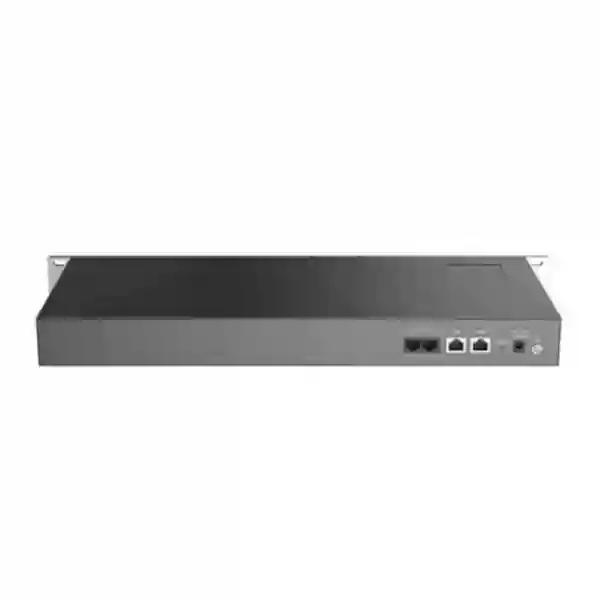
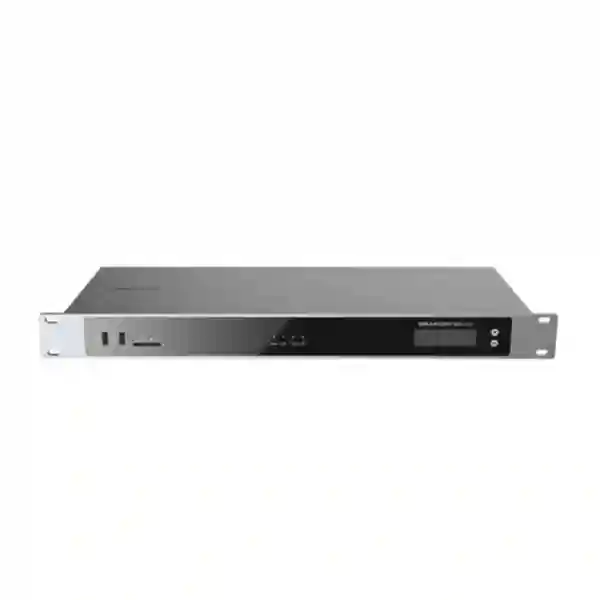
The Grandstream GXW4501 is a digital VoIP gateway built to bridge one E1/T1/J1 span with SIP-based voice infrastructure. It is suited to organisations that still rely on digital PSTN or ISDN connectivity, legacy PBX trunks, carrier PRI services, or transitional telephony architectures while introducing IP PBX, SIP trunks and modern VoIP routing. The GXW4501 supports up to 30 simultaneous calls on its single digital interface and combines digital signaling, codec conversion, routing, security and management functions in a 1U rack-mountable platform.
Software-configurable digital trunk interface for PRI and other supported digital signaling environments.
The GXW4501 model supports up to 30 simultaneous VoIP calls, matching one E1-span use case.
Dual self-adaptive Gigabit Ethernet ports can operate in switched or routed network modes.
TLS, SRTP, HTTPS, SSH and access-control features support a more secure voice deployment.
What the Grandstream GXW4501 Does
The GXW4501 sits between a digital telephony circuit and an IP voice environment. On one side, it can connect to an E1, T1 or J1 digital interface. On the other side, it communicates with SIP infrastructure over Ethernet. This allows a company to preserve an existing digital carrier service or legacy PBX interface while moving call routing, extensions, branch connectivity, applications and administration toward VoIP. The gateway is useful when a complete cutover is not practical, when a provider still delivers PRI, or when an existing telephone system has digital interfaces that must interoperate with a SIP platform.
Grandstream specifies support for PRI, SS7 and MFC R2 digital signaling within the GXW4500 family, together with SIP over UDP, TCP and TLS. The model also provides a broad codec set, fax-over-IP through T.38, echo cancellation, jitter buffering, Quality of Service and diagnostic tools. These functions matter because digital-to-IP conversion is not simply a physical cable conversion. Signaling type, clocking, framing, channel assignment, codec selection, DTMF handling, fax behavior, SIP authentication and network policy all need to align with the carrier and PBX on either side.
For Tanzania projects, the most important pre-purchase step is to document the exact telecom interface already in use. Procurement teams should confirm whether the circuit is E1 PRI, another E1 signaling method, a T1/J1 requirement, or an internal PBX digital trunk. The number of active channels, incoming number ranges, caller-ID expectations, fax use, failover plan and SIP destination should also be captured. This information helps determine whether the GXW4501 is technically suitable and whether a current-generation alternative should be considered because the GXW4500 family is listed in Grandstream’s product archive.
Verified GXW4501 Technical Highlights
| Area | GXW4501 capability |
|---|---|
| Digital interface | 1 software-configurable E1/T1/J1 RJ45 interface; up to 30 simultaneous VoIP calls |
| Network | Dual self-adaptive Gigabit Ethernet ports, switched or routed |
| Digital signaling | PRI, SS7, MFC R2; PRI switch types include Euro ISDN, National and Q.SIG |
| SIP transport | SIP over UDP, TCP or TLS |
| Voice codecs | G.711 A-law/U-law, G.722, G.723.1, G.726, G.729A/B, iLBC and related supported formats |
| Fax | T.38 Group 3 fax relay up to 14.4 kbps and G.711 fax pass-through |
| Security | SRTP, TLS, HTTPS, SSH, 802.1X, Fail2ban, whitelist/blacklist and password-based access control |
| Management | Web management, syslog, backup/restore, packet capture, port capture, firmware upgrade via TFTP/HTTP/HTTPS or local upload |
| Peripheral ports | 2 × USB 3.0 and 1 × SD card interface |
| Mounting | Rack mount or desktop; unit dimensions 485 × 191 × 46.2 mm |
| Power | 100–240 VAC input via 12 VDC, 2 A adapter; Grandstream bulletin lists 11.71 W idle and 19.44 W power not to exceed for GXW4501 |
Compatibility, Integration and Deployment Planning
A digital gateway project succeeds when both sides of the connection are defined in advance. On the telecom side, identify the carrier, circuit type, framing, line coding, clock source, signaling variant, channel allocation and inbound number behavior. On the VoIP side, identify the IP PBX or SIP platform, SIP transport, authentication model, codecs, DTMF method, dial plan, caller-ID format, NAT behavior and firewall policy. If any of these details are unknown, they should be confirmed before installation rather than discovered during a cutover window.
The GXW4501 offers configurable routing and trunk functions through its web interface. Administrators can create digital and VoIP trunks, define inbound and outbound routes, monitor active calls and inspect ISDN status. Grandstream documentation also includes packet capture and port capture, which can be useful when diagnosing interoperability problems. For a production deployment, configuration backups should be taken after commissioning, administrator credentials should be changed from defaults, management access should be restricted, and the device should be kept on an approved firmware release consistent with Grandstream guidance.
Network readiness also matters. Voice traffic benefits from stable latency, low packet loss and appropriate QoS. If the gateway and PBX are separated by routed networks or VPN links, the routing path should be tested under realistic load. SIP ALG behavior on intervening firewalls should be understood rather than assumed helpful. Where calls cross an untrusted network, supported encrypted signaling and media methods can be used if the peer system is compatible. For business continuity, confirm what happens if the SIP server, WAN link, carrier circuit or gateway loses service, and document an alternate calling path where required.
Lifecycle and Procurement Note
Grandstream currently lists the GXW4500 family in its product archive. Buyers should therefore avoid treating GXW4501 procurement as a routine current-generation purchase. Before issuing a purchase order, confirm availability, exact hardware model, firmware status, warranty terms from the seller, spare strategy, vendor support expectations, and whether a supported alternative would better fit the planned service life. For an existing installed GXW4501, the same lifecycle review can help decide whether to maintain, hold a spare, migrate gradually, or redesign the digital-to-SIP interconnection.
Related FourTeck Tanzania Resources
See the broader IT, telecom, networking and infrastructure portfolio that can support a gateway deployment.
Business technology shop
Review FourTeck Tanzania product categories, including IP phones, IP PBX and supporting infrastructure.
IT and telecom services
Explore planning, installation, configuration and support services relevant to voice and network projects.
Request a Tanzania quotation
Share the digital circuit, PBX platform, call capacity and site requirements for a compatibility-led quotation.
Grandstream GXW4501 Tanzania
For organisations in Tanzania, the Grandstream GXW4501 is most relevant where a digital E1-class telephony interface must remain part of the communication architecture while SIP-based services are introduced or expanded. Typical scenarios include connecting an existing PRI service to an IP PBX, extending the useful life of a legacy telephone system during a staged migration, linking a traditional digital trunk to a modern voice platform, or retaining a known carrier service while endpoints and call control move to IP. The single-span capacity of the GXW4501 is a practical fit when the requirement is up to 30 simultaneous calls rather than the larger 60- or 120-call capacities associated with higher GXW4500 models.
Tanzania buyers should begin with the telecom circuit rather than the gateway model. Ask the service provider to confirm whether the delivered interface is E1 PRI, what signaling and framing are used, how many bearer channels are active, how caller ID is presented, and whether any number translation is performed upstream. Then document the target SIP platform: IP PBX make and version, SIP registration or peer method, codec preferences, DTMF, fax requirements, and the network path between the gateway and call server. A gateway can support the protocol family yet still need precise configuration before two systems interoperate reliably.
Procurement planning should also consider lifecycle. Grandstream places the GXW4500 family in its product archive, which means a Tanzania quotation should explicitly identify whether the requested unit is new old stock, existing inventory, refurbished stock or a replacement recommendation. FourTeck should not promise stock or warranty status until these are confirmed for the actual transaction. If the requirement is for a long-term new deployment, it can be sensible to compare the GXW4501 against currently supported alternatives before standardising the design.
Operationally, the site should provide rack or shelf space, reliable power, protected Ethernet connectivity and controlled administrator access. Voice VLANs, QoS, firewall rules, NTP, DNS and backup procedures should be part of commissioning. Organisations with multiple offices can also standardise dial plans, trunk naming and configuration documentation so a gateway is not treated as an isolated appliance. For related Tanzania telecom planning, the FourTeck Tanzania shop and FourTeck Tanzania services provide context for IP PBX, phones, switching, cabling and implementation support around the gateway itself.
Grandstream GXW4501 Dar es Salaam
In Dar es Salaam, GXW4501 requirements are likely to arise in offices, financial operations, logistics companies, hospitality groups, contact centres, service organisations and established businesses that already have structured telephone services. A common trigger is an IP PBX upgrade in a site where a carrier-delivered PRI or a legacy PBX digital connection must continue operating. Rather than replacing every element at once, a digital gateway can create an interconnection point so extensions, applications and routing can move to SIP while the existing digital side remains available during the migration.
A good Dar es Salaam deployment plan should include a cutover worksheet. Record the current trunk channels, main numbers, DDI ranges, inbound destinations, outbound CLI rules, reception routing, emergency or priority numbers, fax lines and after-hours behavior. Build the equivalent routing on the SIP side before disconnecting the existing path. Test inbound and outbound calls across several destination types, check number presentation, confirm DTMF with IVRs, and verify fax behavior if fax is still required. This method is more reliable than assuming that a successful test call proves the entire trunk configuration is correct.
The gateway’s dual Gigabit interfaces, routing functions, TLS/SRTP support and packet capture tools can support a professionally managed deployment, but the network must still be prepared. Place the appliance in a controlled rack area, connect it through suitable switching, protect power with an appropriately sized UPS where business continuity requires it, and restrict management access. If the SIP server is hosted elsewhere, confirm WAN stability and firewall policy. If the SIP platform is local, confirm switching, VLAN and IP addressing before commissioning.
For procurement teams in Dar es Salaam, lifecycle confirmation is especially important if the device is being specified for a new project. Because the GXW4500 line is archived by Grandstream, request written confirmation of unit condition, warranty terms, firmware level and return policy. If the gateway is intended as a replacement for an existing GXW4501, matching the configuration and holding an exported backup can reduce migration effort. If it is a greenfield purchase, evaluating a currently supported digital gateway alongside the GXW4501 can protect the project from avoidable lifecycle risk.
Grandstream GXW4501 Mwanza
For Mwanza businesses, a GXW4501 can be considered when an established telephone environment has a digital trunk that still provides operational value but the organisation wants the flexibility of SIP-based communications. The gateway can be used as a transition component rather than forcing an immediate replacement of carrier circuits, PBX equipment or internal call workflows. This is useful for organisations that need a controlled migration, particularly where continuity of published business numbers and reception workflows matters more than changing every telephony component at once.
The technical discovery process should begin with capacity. The GXW4501 supports one E1/T1/J1 interface and up to 30 simultaneous calls. If peak calling is comfortably below that level, the model may fit the channel requirement; if the organisation expects higher concurrent usage, multiple digital spans or significant growth, capacity should be reassessed before purchase. Collect busy-hour data where possible rather than sizing only from the number of employees. A company with 150 staff may use fewer than 30 simultaneous external calls, while a smaller contact operation could exceed that threshold.
Mwanza sites should also plan for maintainability. Label the E1 cable, Ethernet links and power feed; document the gateway IP address, trunk names and dial-plan logic; store a configuration backup; and keep a record of firmware and admin access procedures. This is particularly valuable when support may involve staff working from another location. Remote troubleshooting is easier when the system has clear addressing, controlled access and a known baseline configuration. Packet capture and call status tools can then be used with purpose instead of as a last-minute diagnostic measure.
If the GXW4501 is replacing another digital gateway, verify electrical and logical compatibility rather than focusing only on the connector. E1/T1/J1 interfaces can differ in signaling, framing and clocking configuration. If the project is instead part of a new IP PBX deployment, map all inbound and outbound routes before installation and define an acceptance test with the business. Given the product’s archived status, availability should be confirmed case by case and compared with the expected lifespan of the phone system.
Grandstream GXW4501 Arusha
In Arusha, the GXW4501 may be relevant to hotels, tour operators, institutions, offices and multi-building businesses that depend on stable external calling but are modernising their internal communications. Hospitality and service environments often have long-lived PBX investments, extension numbering schemes and published telephone numbers. A digital-to-SIP gateway can help retain the existing digital trunk while allowing an IP PBX or SIP-based platform to take over features such as call groups, voicemail, remote extensions, reporting and more flexible routing.
The design should account for how calls are actually handled. A hotel may have a reception console, reservations lines, administrative extensions and guest-facing call requirements. An office may need hunt groups, after-hours routing and direct inward numbers. A tour company may have teams working between office and mobile environments. These workflows should be mapped before programming routes in the gateway and PBX. The GXW4501 can pass calls between digital and SIP domains, but business logic should remain clearly owned and documented so troubleshooting does not become a debate over whether routing resides in the carrier, gateway or PBX.
Arusha procurement teams should also verify the condition of the supporting network. The gateway itself uses wired Gigabit Ethernet, but the performance of SIP calls depends on the path to the call server. Check switching, VLANs, uplinks, firewalls and WAN links when the PBX is not local. Voice should not be placed on a congested or poorly monitored network without QoS planning. NTP and DNS settings should be reliable, and administrative web access should be limited to trusted management networks.
Because Grandstream archives the GXW4500 series, project owners should treat lifecycle as a design variable. Existing GXW4501 installations can still be maintained where appropriate, but a new purchase should include an availability and support review. If the objective is to preserve an E1 trunk for only a short migration period, an archived model may be evaluated differently than if the gateway is expected to remain a standard component for many years. That distinction should be visible in the quotation and project plan.
Grandstream GXW4501 Dodoma
For Dodoma organisations, the Grandstream GXW4501 can serve as an interworking device where existing digital telephone services need to connect with SIP infrastructure. Government-related offices, professional organisations, education environments and established companies may have legacy telephony investments that cannot be replaced in one step. A gateway approach can separate the migration into manageable phases: first interconnect the digital trunk and SIP platform, then move extensions or departments, then review whether the digital service remains necessary after the new environment is stable.
A controlled project starts with an inventory. Identify the PBX model, carrier handoff, active channels, extension ranges, direct numbers, fax use, call recording requirements and any analog devices indirectly dependent on the old phone system. This matters because changing the trunk path can affect functions that are not obvious from the E1 cable alone. If compliance, recording or billing applications monitor calls, confirm how they will behave after routing changes. The GXW4501 offers call status, history and CDR-related functions, but these should not be assumed to replace specialised applications without validation.
For network security, use the gateway’s supported HTTPS, SSH, TLS and SRTP capabilities where they align with the surrounding systems, and avoid exposing the management interface directly to the public internet. Restrict administration by network policy, use strong credentials and maintain configuration backups. If remote support is required, route that access through the organisation’s approved secure management method. The gateway also supports diagnostic packet capture, which can be useful when working with carrier and PBX support teams.
When preparing a Dodoma quotation, include more than the appliance itself. Confirm rack space, patching, E1 cable type, network ports, UPS power, installation scope, configuration responsibilities, cutover testing and post-change documentation. Because the model family is archived, clarify source, condition, warranty and lifecycle before ordering. A transparent quotation should distinguish verified product capabilities from assumptions about the carrier circuit or installed PBX.
Grandstream GXW4501 UAE
For UAE deployments, the GXW4501 remains most relevant in environments where a digital E1/T1/J1 interface must connect to SIP, including migration from legacy PBX systems, interconnection with existing PRI services, lab or replacement scenarios and transitional telecom projects. The UAE market has extensive VoIP, SIP trunk, PBX and contact-centre adoption, so the practical question is often not whether IP telephony is available, but whether an older digital service or system still needs to coexist with it for a defined period.
Before selecting the gateway, confirm the exact telecom handoff and any service-provider requirements. PRI configuration, number presentation, clocking and signaling parameters should be documented. If the gateway will connect to an IP PBX, confirm whether the SIP relationship uses registration or static peering, which codecs are preferred, how DTMF is transported, and whether TLS/SRTP are supported end to end. In multi-site businesses, also decide whether the gateway terminates calls locally or sends SIP traffic across a private WAN or VPN to a central call platform.
For organisations operating between Tanzania and the UAE, consistent telephony documentation can simplify support. Use common naming for trunks, route groups and sites; keep configuration exports; standardise monitoring and escalation procedures; and record carrier contacts and circuit IDs separately from device configuration. The verified FourTeck UAE site covers IP PBX and telecom solutions and can provide regional context for UAE voice projects, while the Tanzania site can remain the reference point for the Tanzania location.
As with every new GXW4501 request, lifecycle should be reviewed. The family appears in Grandstream’s archive, and some resellers identify the product as discontinued. A buyer should therefore confirm whether the business case justifies sourcing this exact model or whether a currently supported alternative is more appropriate. For an existing installed base, the decision may instead focus on spare availability, firmware, migration timing and interoperability with the future PBX platform.
Grandstream GXW4501 Uganda
In Uganda, the GXW4501 can support businesses transitioning from digital trunks or traditional PBX systems toward SIP-based communications. The model is appropriate only when one digital span and up to 30 simultaneous calls match the requirement. The gateway should be viewed as part of a telephony architecture that includes the service-provider circuit, IP PBX, LAN, firewall, cabling, power protection and operational call routing. Buying the gateway without confirming those dependencies risks turning a straightforward migration into a prolonged interoperability exercise.
A Uganda requirement should document whether the digital side is carrier-facing or PBX-facing. Carrier-facing deployments need clear circuit parameters and an agreed demarcation point. PBX-facing deployments need the existing PBX trunk card settings and dial plan. On the SIP side, define IP addressing, ports, codecs, authentication, number format and failover behavior. The GXW4501 supports common SIP transports, multiple codecs, PRI/SS7/MFC R2 signaling, T.38 fax and diagnostic tools, but the exact supported configuration still needs to be matched to the peer system.
Businesses operating across Uganda and Tanzania can benefit from a repeatable gateway commissioning checklist. That checklist can include cabling verification, firmware review, password changes, NTP/DNS, trunk status, inbound tests, outbound tests, DTMF tests, fax tests where required, caller-ID confirmation, failover tests and configuration backup. Consistent documentation also helps when a central IT team supports more than one country. The verified FourTeck Uganda site covers IP PBX, VoIP and structured network solutions that can be relevant around the gateway deployment.
Because the GXW4500 family is archived, new Uganda procurement should include a lifecycle decision. If the gateway is needed to replace a failed identical unit, sourcing the same model can reduce reconfiguration. If the project is new and expected to operate for many years, a current model comparison may be the safer standardisation path. Availability, warranty and delivery should be confirmed for the specific quotation rather than assumed from online listings.
Grandstream GXW4501 Kampala
Kampala organisations with established telecom infrastructure may encounter the GXW4501 when modernising a PBX, retaining a PRI service during migration, or replacing an existing digital gateway. The city’s concentration of offices, service businesses, financial organisations, hospitality operations and multi-branch companies makes controlled telephony migration important: external numbers and reception routes often cannot simply be taken offline while a new system is tested. A gateway can provide a bridge between the old and new environments so cutover can be staged and tested.
The first design question is call capacity. The GXW4501 supports up to 30 simultaneous calls through one digital span. Procurement teams should compare this with actual busy-hour concurrency rather than extension count. The second question is signaling. Confirm whether the digital interface uses PRI or another supported signaling method and record framing, clocking and channel parameters. The third question is routing: decide which device owns the inbound DID mapping and outbound dial plan. Clear ownership reduces troubleshooting complexity when a call fails at one boundary.
Kampala deployments that send SIP traffic across a WAN should test the network path as seriously as the telephone circuit. Packet loss, latency and firewall behavior can cause voice problems that appear to be gateway faults. Use QoS where appropriate, avoid unmanaged internet exposure, and keep the management interface behind controlled network access. TLS and SRTP can improve signaling and media protection when supported by the peer. The gateway’s packet capture function is useful for confirming whether SIP messages and RTP streams are flowing as expected.
For purchasing, document whether the requirement is replacement, migration or new standardisation. Replacement projects may prioritise configuration compatibility with an installed GXW4501. Migration projects may only need the device for a defined transition period. New standardisation projects should consider the archived lifecycle status and compare alternatives. This context is more important than a simple product-price comparison because it affects spare strategy, supportability and the expected life of the overall phone system.
Grandstream GXW4501 Arua
For Arua, a GXW4501 project should put extra emphasis on simplicity, documentation and remote support readiness. Where a site has a digital trunk or legacy PBX but specialist telephony staff are not permanently present, a well-documented gateway configuration can make support more predictable. The device can bridge a single E1/T1/J1 interface to SIP, but it should be installed as a managed infrastructure component with clear labels, network addressing, configuration backups and a defined escalation path.
Before deployment, verify the carrier handoff and identify who is responsible for the circuit up to the demarcation point. Test the digital span before changing the PBX so an existing line issue is not mistaken for a gateway problem. On the SIP side, establish whether the call server is local or remote. A remote PBX makes WAN reliability and secure access more important. If the site depends heavily on voice, consider how calls will be handled during internet or WAN outages and whether any fallback route is available.
The GXW4501 offers useful monitoring and troubleshooting tools, including status views and packet capture. These become more valuable when there is a written baseline showing expected trunk status, IP settings and call routes. Store a configuration export after commissioning and after major changes. Keep administrator credentials controlled and ensure any remote management method follows the organisation’s security policy. A UPS can help protect the gateway and adjacent network devices from short power interruptions, but UPS capacity should be calculated from the full rack load rather than the gateway alone.
Arua buyers should also review product lifecycle carefully. Since the GXW4500 series is archived, exact stock and warranty conditions can vary by supplier. For an existing deployment, an identical replacement may be operationally convenient. For a new deployment, compare the cost and support horizon of the GXW4501 against current alternatives. The final quotation should clearly state what is confirmed and what still depends on carrier or PBX information.
Grandstream GXW4501 Mbarara
In Mbarara, the Grandstream GXW4501 may be considered by businesses and institutions that need to integrate an E1-class digital telephone service with SIP. The most efficient approach is to treat the gateway as an interconnection project rather than a standalone hardware purchase. That means gathering technical details from the carrier, existing PBX and target SIP platform before confirming the bill of materials. A single mismatch in clocking, signaling or number format can prevent otherwise compatible hardware from working as expected.
Capacity planning should be based on concurrent external calls. The GXW4501 supports up to 30 simultaneous calls. If the organisation is consolidating several branches or high-volume call teams onto one trunk, check busy-hour demand and growth before selecting the one-port model. If the gateway is only preserving one PRI during a staged migration, 30-call capacity may align naturally with the existing circuit. The decision should be based on the real trunk service, not marketing assumptions.
For deployment, place the gateway in a secure communications area with suitable ventilation and power protection. Use managed switching where practical so voice traffic can be identified, monitored and prioritised. Confirm NTP, DNS and default gateway settings. Restrict web administration to trusted management networks and use encrypted management where supported. If the SIP peer supports TLS and SRTP, encrypted call signaling and media can be considered as part of the design. Back up the working configuration and record the physical cable paths so future support staff can quickly identify which interface goes to the carrier and which to the LAN.
Given the product’s archived status, a Mbarara quotation should include lifecycle context. Ask whether the requirement is for exact-model replacement or functional replacement. Exact-model replacement can be appropriate when minimising change is the priority, while functional replacement allows a current platform to be evaluated. Warranty, condition, firmware and delivery should be confirmed with the seller at the time of order rather than inferred from older listings.
Grandstream GXW4501 Gulu
For Gulu deployments, the GXW4501 can provide a bridge between traditional digital telephony and SIP when an organisation needs to modernise without abandoning an existing E1-class interface immediately. Schools, NGOs, service organisations, hospitality environments and branch offices may value a staged approach because telecom changes affect published numbers, reception service and business continuity. A digital gateway can keep the carrier or PBX side intact while the IP side is introduced, tested and documented.
The commissioning plan should be practical. Confirm the digital span is healthy, export any existing PBX configuration that may be relevant, document phone numbers and call routes, then configure the gateway and SIP peer in a controlled test window. Test calls in both directions, test several number patterns, verify DTMF against IVRs, confirm caller-ID presentation, and test fax if it remains a business requirement. If only basic calls are tested, hidden routing problems may appear after users return to normal workloads.
Gulu sites that rely on remote technical assistance should make troubleshooting information accessible to authorised support staff. Keep an up-to-date network diagram, gateway IP address, firmware version, trunk status screenshot or baseline, and configuration backup. The GXW4501 supports syslog and packet capture, which can provide useful evidence when diagnosing SIP or media issues. Remote access should never be opened broadly to the internet just for convenience; use the organisation’s secure support method and apply strong access control.
Because the GXW4500 family is archived, procurement should be tied to the project horizon. A gateway needed as a temporary bridge may have a different risk profile from one intended as a long-term standard across many sites. Confirm source, warranty and unit condition, then decide whether exact GXW4501 hardware or a current alternative provides the better operational outcome. This lifecycle decision should be made before the project depends on a specific discontinued model.
Grandstream GXW4501 Kenya
In Kenya, the GXW4501 is relevant to organisations that need one digital E1/T1/J1 span connected to a SIP network. Commercial listings in Kenya continue to describe the model for 30 concurrent calls, which reflects the original Grandstream positioning, but listing presence should not be confused with current manufacturer lifecycle status. Grandstream places the GXW4500 family in its archive, so a Kenya buyer should verify whether the requirement is best met by this exact model or a newer equivalent.
For companies with Nairobi or other Kenya operations linked to Tanzania branches, standardised dial plans and SIP architecture can simplify cross-border IT management. A gateway may terminate a local digital circuit while the IP PBX remains local or centralised. If calls traverse an MPLS network, SD-WAN, VPN or internet path, test latency, jitter, packet loss and firewall policy. Voice quality should not depend on an unverified WAN assumption. Define which site owns call routing and how failover works if the central platform becomes unreachable.
Before order, capture carrier parameters and PBX compatibility. The GXW4501 supports PRI, SS7 and MFC R2 digital signaling and SIP over UDP/TCP/TLS, but specific implementations vary. Confirm the exact signaling profile and interoperability with the target PBX. If fax remains in use, test T.38 or G.711 pass-through in the real path rather than assuming that nominal standards support guarantees reliable operation across every carrier and PBX combination.
The verified FourTeck Kenya website covers IP PBX, VoIP business phones, networking and unified communications, which are directly relevant to the system around a digital gateway. For regional businesses, procurement documentation can use a shared template covering circuit type, gateway model, PBX, firmware, IP addressing, routes, failover, warranty and support ownership across Tanzania and Kenya.
Grandstream GXW4501 Kuwait
For Kuwait requirements, the GXW4501 can be considered where a business needs to interconnect a legacy digital telephony interface with SIP. Established offices, hospitality properties, industrial sites and enterprises may retain digital PBX or carrier connections for operational reasons even while new voice services move to IP. In such cases, a gateway can reduce migration risk by allowing both environments to coexist while call routing and user endpoints are transitioned in phases.
The technical assessment should confirm whether the digital side is E1, T1 or J1 and which signaling profile is in use. In Kuwait and many E1-oriented telecom environments, PRI requirements are common, but assumptions should still be avoided. Obtain the carrier or PBX settings, including framing, clocking, channel configuration, number presentation and inbound routing. On the SIP side, identify codec, DTMF and transport expectations. The GXW4501 supports a wide codec range, T.38 fax and secure SIP/media options, but these capabilities only help when the peer system is configured compatibly.
Environmental and rack planning are straightforward but important. The gateway is a 1U-class device with rack and desktop mounting support and uses an external 12 V power adapter. Confirm rack depth, cable management, UPS protection and airflow. Keep the management interface on a controlled network and document the unit’s role so network teams understand that changes to firewall rules, VLANs or WAN routing may affect external calling.
Kuwait buyers should pay particular attention to lifecycle. An archived gateway may still be appropriate for replacement or transitional use, but a new long-term design should compare supported alternatives. The quotation should avoid unsupported claims about stock or warranty and instead state confirmed commercial conditions. For multi-country FourTeck customers, the same technical worksheet used in Tanzania can be applied to Kuwait so the voice architecture remains understandable across regions.
Grandstream GXW4501 Ghana
In Ghana, GXW4501 demand is most likely to come from businesses retaining E1/PRI connectivity or replacing a gateway in an installed system. The model’s one-span, 30-call design makes it a specific fit rather than a general-purpose VoIP appliance. If the requirement involves analog lines, many more than 30 concurrent calls, or no digital trunk at all, a different gateway category may be more suitable. The first procurement step is therefore to verify the interface and call-capacity requirement.
A Ghana deployment should document the relationship between the carrier, gateway and IP PBX. If the carrier delivers PRI to the GXW4501, the gateway converts and routes calls toward SIP. If the gateway connects to a legacy PBX digital port, the direction of clocking and signaling must be configured correctly. Number formatting can also matter; inbound or outbound numbers may need manipulation so the SIP platform receives and sends digits in the expected pattern. These rules should be documented to avoid future confusion when staff change or the carrier modifies services.
On the IP network, use stable switching, appropriate QoS and restricted management access. The gateway supports TLS, SRTP, HTTPS and SSH, giving administrators options for secure signaling, media and management. If the PBX is hosted, test the WAN path and firewall policy before cutover. If it is on-premises, ensure the voice VLAN and routing are configured consistently. Keep a post-commissioning configuration backup and note the firmware version.
The verified FourTeck Ghana site provides a regional FourTeck reference for customers operating there. Because GXW4500 is archived by Grandstream, Ghana buyers should confirm whether an exact-model purchase is needed for installed-base compatibility or whether a current alternative offers a better support horizon. Stock, warranty and delivery should be confirmed on the actual quotation.
Grandstream GXW4501 Nigeria
For Nigeria, the GXW4501 can support digital-to-SIP migration where one E1/T1/J1 span is sufficient. Enterprises, contact operations, hospitality organisations and multi-site businesses may have existing PRI services or PBX equipment that remain operationally important even as new UC and IP PBX platforms are introduced. The gateway can provide a controlled boundary between the two systems, but the design should be based on documented telecom parameters and actual call concurrency.
Busy-hour call volume is particularly important in call-intensive environments. The GXW4501 supports up to 30 simultaneous VoIP calls. If the organisation expects sustained peaks close to or above that level, evaluate whether additional capacity or a different model is required rather than relying on average daily usage. Also document whether all channels are provisioned by the carrier and whether inbound and outbound traffic share the same span. Capacity planning should include growth and failover scenarios, not just today’s normal traffic.
Nigeria deployments should also account for power and network continuity. The gateway itself has modest power demand, but telephone availability depends on the entire chain: carrier equipment, gateway, switch, router/firewall, PBX and any WAN service used to reach the SIP platform. Where uptime is important, UPS planning and alternate connectivity should be considered at system level. Configuration backups, clear labeling and remote diagnostic access through approved secure methods make support more efficient.
The verified FourTeck Nigeria website provides regional context for FourTeck customers with Nigerian requirements. For new GXW4501 procurement, note that Grandstream lists the product family in its archive. Confirm condition, firmware, warranty and availability, and compare a current alternative if the project expects a long operational life. This is especially important when standardising a gateway across several Nigerian sites.
Grandstream GXW4501 Seychelles
In Seychelles, a digital gateway can be useful where hospitality, corporate, government-related or service organisations maintain a traditional PBX or E1-class telecom connection while upgrading to SIP. Island environments often place a premium on careful procurement and maintainability because replacement logistics can affect recovery time. If a GXW4501 is already installed, keeping an accurate configuration backup and understanding replacement options can therefore be as important as the device’s technical features.
For a new deployment, verify the telecom handoff first. Determine whether the service uses E1 PRI or another supported digital configuration, confirm active channels and number ranges, and identify the target IP PBX. If the system supports guest-room telephony, reception consoles or other specialised workflows, map those dependencies before changing the trunk path. A gateway can pass calls between digital and SIP networks, but it does not automatically reproduce all PBX features unless the surrounding call-control platform is configured to do so.
Network design should minimise unnecessary complexity. Use wired connectivity, stable switching, clear IP addressing and managed firewall rules. Keep voice and management traffic organised so troubleshooting can distinguish carrier problems from LAN or SIP issues. Where the call server is remote, test WAN performance and define what users should expect during connectivity loss. For hospitality environments, plan cutovers during low-call periods and maintain a rollback procedure in case routing does not behave as expected.
The GXW4500 family’s archived lifecycle status is particularly relevant when shipping and spares are less immediate. If the requirement is an identical replacement for a failed unit, the operational benefits may justify sourcing GXW4501. If it is a new long-term design, compare current digital gateways with active vendor support. A quotation should clearly separate the confirmed hardware offer from assumptions about telecom service compatibility, shipping, warranty and on-site scope.
Selection Guide: When GXW4501 Makes Sense
Good fit to evaluate
You have one E1/T1/J1 digital span, need up to 30 simultaneous calls, require SIP integration, and are replacing or supporting an existing GXW4501 or planning a defined migration where lifecycle is understood.
Compare alternatives first
You need a new long-term standard, more than 30 concurrent calls, multiple digital spans, only analog connectivity, or active current-generation manufacturer lifecycle and support are core procurement requirements.
Quotation Checklist for Grandstream GXW4501
Regional FourTeck Network
Organisations managing communications across multiple countries can use the verified FourTeck regional network for related planning. FourTeck UAE covers IP PBX and telecom solutions in the UAE, FourTeck MEA technology services provides wider IT and telecom context, FourTeck Kenya covers IP PBX and VoIP in Kenya, FourTeck Uganda covers IP PBX and voice solutions in Uganda, and FourTeck Ghana plus FourTeck Nigeria can support regional procurement conversations in West Africa. These links are useful when a company wants consistent telephony standards across branches rather than separate, undocumented configurations in each country.
Grandstream GXW4501 FAQs
How many simultaneous calls does the GXW4501 support?
Grandstream specifies one E1/T1/J1 interface for GXW4501 and up to 30 simultaneous VoIP calls. If the project requires more concurrent calls or multiple digital spans, capacity should be reassessed before purchase.
Can GXW4501 connect PRI to an IP PBX?
Yes, PRI-to-SIP integration is a core use case, provided the digital signaling parameters and SIP configuration are compatible with the carrier and PBX. Exact settings should be confirmed before deployment.
Does GXW4501 support T.38 fax?
Yes. Grandstream lists T.38 Group 3 fax relay and G.711 fax pass-through. Real-world fax reliability still depends on the complete carrier, gateway, SIP and PBX path, so testing is recommended.
Does GXW4501 support TLS and SRTP?
Yes. Grandstream lists TLS and SRTP among the security capabilities, together with HTTPS, SSH and 802.1X. Both endpoints must support and be configured for compatible security methods.
Is the Grandstream GXW4501 discontinued?
Grandstream currently lists the GXW4500 series in its product archive, and some resellers explicitly mark GXW4501 discontinued. Buyers should confirm current commercial availability and consider a current alternative for new long-life projects.
What information is needed for a GXW4501 quote?
Provide the country and site, exact digital circuit type, signaling details if known, channel count, IP PBX or SIP platform, whether this is replacement or new deployment, quantity, installation scope and expected project timeline.
Can GXW4501 be rack mounted?
Yes. Grandstream lists rack-mount and desktop installation support. Confirm the rack layout, cable path, power adapter access and UPS design as part of the installation.
Can the gateway work with a hosted PBX?
Potentially, yes, if SIP interoperability, security, NAT/firewall policy and WAN quality are suitable. A hosted design should be tested for latency, packet loss, failover and remote-management security before production cutover.
Decision Recap
Choose the GXW4501 only after confirming that one E1/T1/J1 span, up to 30 simultaneous calls, and the available digital signaling options match the real telecom requirement. Validate the target SIP platform, network path, fax and DTMF needs, security settings, physical installation and cutover plan. For an installed base, the model can remain relevant as a like-for-like replacement or migration component. For a new long-term deployment, compare current alternatives because Grandstream lists the GXW4500 family in its archive.
Consult FourTeck Tanzania About Your Digital Voice Gateway Requirement
A useful quotation should be based on the circuit, PBX and migration goal—not only the model number. Send the E1/T1/J1 details, carrier or PBX interface information, required call capacity, SIP platform, site location and whether GXW4501 is an exact replacement. FourTeck can then frame the discussion around compatibility, lifecycle, supporting network requirements and available procurement options without making unsupported assumptions about stock, warranty or carrier interoperability.



Reviews
There are no reviews yet.