
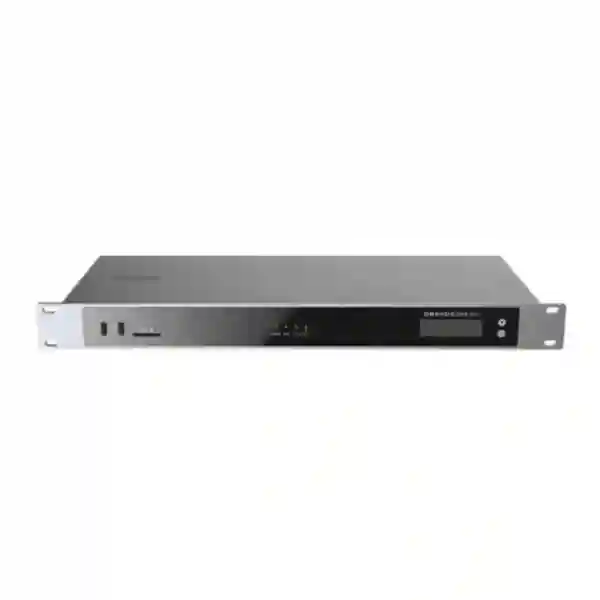
Grandstream GXW4502 Tanzania
The Grandstream GXW4502 is a digital VoIP gateway for organizations that need to bridge traditional E1, T1 or J1 telephony trunks into a modern SIP-based voice environment. The GXW4502 provides two software-configurable E1/T1/J1 interfaces and supports up to 60 simultaneous VoIP calls. It is suited to medium and larger businesses, hotels, institutions, contact environments and branch networks that need a controlled migration path between legacy digital telephony and IP communications without replacing every element of the existing voice estate at once.
Two digital trunk interfaces for connecting compatible PSTN, ISDN or PBX environments to VoIP.
Capacity for up to sixty concurrent VoIP calls on the GXW4502 model, subject to correct configuration and trunk resources.
Supports multiple digital signaling methods, making pre-deployment carrier and PBX compatibility checks essential.
Supports encrypted SIP signaling and media protection options as part of a properly designed voice network.
What the GXW4502 is designed to solve
Many organizations still depend on digital carrier trunks, legacy PBX systems or established ISDN infrastructure even as new applications, remote extensions and branch communications move toward SIP. The GXW4502 acts as a controlled protocol and media bridge between those worlds. Instead of forcing an immediate replacement of a functioning digital trunk environment, the gateway can present E1/T1/J1 resources to an IP-based voice system and allow voice traffic to be routed through SIP according to the deployment design.
This is especially useful in migration projects. A business can preserve an existing carrier connection while introducing an IP PBX, connect a legacy PBX to a SIP-based platform, consolidate branch telephony, or create a transitional architecture while a larger voice modernization project is underway. The right design depends on signaling, clocking, numbering, call routing, codec selection, network quality and security policy. For this reason, buying the gateway should be treated as one part of a telephony project rather than as a plug-and-play replacement for every digital trunk scenario.
Verified GXW4502 capabilities
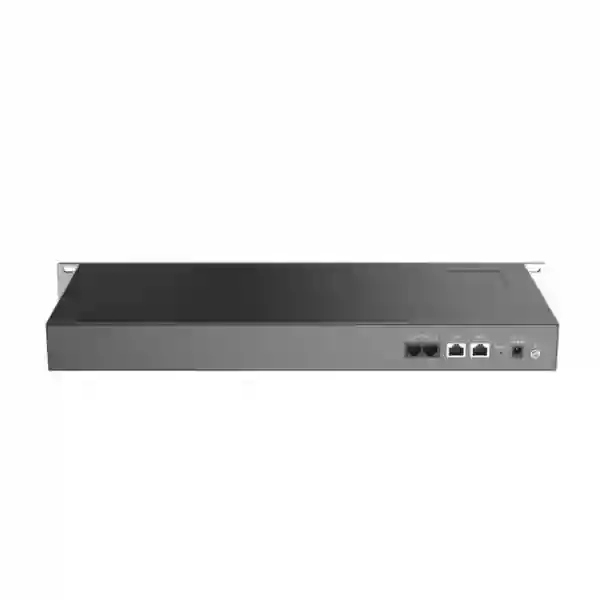
| Digital interfaces | 2 software-configurable E1/T1/J1 RJ45 ports |
| Concurrent calls | Up to 60 simultaneous VoIP calls |
| Network | Dual self-adaptive Gigabit Ethernet ports with switched or routed operation |
| Signaling | SIP over UDP/TCP/TLS, PRI, SS7 and MFC R2 support |
| Voice codecs | Includes G.711, G.722, G.723.1, G.726, G.729A/B and iLBC support |
| Fax | T.38 Group 3 fax relay and G.711 fax pass-through options |
| Security | SRTP, TLS, HTTPS, SSH, 802.1X, fail2ban, whitelist and blacklist functions |
| Management | Web management, syslog, backup/restore, packet capture and firmware upgrade methods |
| Installation | Rack or desktop mounting; 485 × 191 × 46.2 mm chassis |
Integration planning
Before ordering, confirm whether the connected service is E1, T1 or J1; identify the signaling method; document channel allocation and numbering; verify whether the gateway will connect toward a carrier, legacy PBX or IP PBX; and define SIP addressing, codec policy, DTMF method, security and failover behavior. This preparation reduces commissioning delays.
Voice-network readiness
The gateway supports Layer 2 and Layer 3 QoS methods, but end-to-end call quality still depends on LAN design, WAN stability, routing, firewall policy, latency, jitter and packet loss. A voice VLAN, clear addressing, managed switching and documented firewall rules are often more valuable than simply increasing bandwidth without identifying the actual bottleneck.
Related FourTeck resources
For a broader view of business telephony and infrastructure planning, review the FourTeck Tanzania technology portfolio, which covers integrated IT, telecom, security and network projects. Buyers comparing compatible equipment can browse the FourTeck Tanzania shop for available technology categories and related products.
Deployment projects frequently involve configuration, cabling, switching and voice-network preparation, so the FourTeck Tanzania services page is useful when the gateway forms part of a larger migration. For broader endpoint research, the regional FourTeck IP phone resource can help buyers evaluate SIP endpoints that may connect to the wider VoIP environment. For project questions, use the Tanzania contact page to send trunk, PBX and capacity details for quotation review.
Grandstream GXW4502 Tanzania
For organizations in Tanzania, the GXW4502 is relevant when existing digital telephony must connect to a SIP-based environment without creating unnecessary disruption to working trunk services. A typical buyer may have an established E1 service at a head office, an older PBX that still supports important extensions, or a new IP PBX that needs to receive and place calls through a digital carrier interface. The two E1/T1/J1 spans and up-to-60-call capacity place the model in a useful middle position: larger than a single-span gateway but without the four-span capacity of the GXW4504. The first design question should therefore be practical call demand. Count the maximum expected simultaneous external calls, not only the number of employees, then add realistic growth and busy-period headroom.
Tanzanian projects should also document the exact signaling supplied by the telecom provider or existing PBX. E1 does not automatically mean every deployment uses the same signaling profile, numbering format or clocking arrangement. PRI and MFC R2 environments can require different configuration work, and an installation can be delayed if these details are discovered only after the gateway arrives. Network preparation matters equally. SIP signaling and RTP media should have a predictable path through switching, routing and firewall policies, while voice traffic should be protected from avoidable congestion. Where the gateway connects an IP PBX to an existing trunk, the migration plan should include inbound and outbound call tests, DTMF, caller ID, fax where required, emergency and special-number behavior, and recovery procedures.
For procurement in Tanzania, request a project quotation using the precise model GXW4502 and include the number of E1/T1/J1 spans, expected concurrent calls, connected PBX or SIP platform, signaling type, site city and preferred installation timetable. Because product lifecycle and stock position can change, confirm current commercial availability before relying on the model for a deadline-sensitive rollout. FourTeck can help evaluate the gateway within the wider voice architecture rather than treating it as an isolated appliance.
Grandstream GXW4502 Dar es Salaam
Dar es Salaam businesses often operate the kinds of mixed communication environments where a digital VoIP gateway can be valuable: corporate headquarters, logistics operations, hotels, financial offices, service companies, educational institutions and multi-department organizations that have accumulated telephony systems over several technology generations. The GXW4502 can provide a bridge where an organization is moving toward SIP but still depends on digital E1 connectivity or a legacy PBX. In a busy head-office environment, sizing should be based on call concurrency across reception, departments, outbound teams and inbound customer traffic. Sixty supported simultaneous calls can be substantial, but the real capacity requirement should be established from call records or a realistic busy-hour estimate.
A Dar es Salaam deployment should be planned with the building network in mind. Many voice problems blamed on gateways originate elsewhere: an overloaded uplink, poorly defined VLANs, firewall timeouts, asymmetric routing, incorrect NAT behavior or unstable internet paths used by SIP services. The GXW4502 provides dual Gigabit Ethernet and QoS support, but those functions are most useful when the surrounding network is designed coherently. If the unit sits in a central rack, confirm UPS capacity, ventilation, rack space, cable labeling and access control. Its 1U-style dimensions suit organized telecom or server-room installation, yet environmental conditions and power quality still deserve attention.
For a quotation in Dar es Salaam, provide the carrier or PBX handoff information, signaling method, number range, whether fax must be preserved, expected SIP peer details and the number of active channels. If the project involves migration from a legacy PBX, ask for a phased test plan rather than a single cutover assumption. A controlled migration can validate inbound routing, outbound CLI, transfer behavior, DTMF and failback before the old path is retired. This approach is especially useful for customer-facing businesses that cannot afford avoidable downtime during telephony changes.
Grandstream GXW4502 Mwanza
In Mwanza, the GXW4502 can support organizations that need to modernize voice connectivity while preserving existing digital telephony investments. Regional offices, hotels, healthcare administration, trading companies, educational campuses and larger commercial sites may have a mixture of older PBX equipment and newer IP endpoints. Rather than replacing every component at once, a two-span digital gateway can create a migration boundary between the established E1/T1/J1 side and a SIP-based IP PBX or softswitch. This is useful when budgets, operational continuity or carrier arrangements make a staged transition more practical than a complete replacement.
Planning in Mwanza should include resilience. Voice availability can depend on more than the gateway itself, so the bill of materials should consider network switching, UPS protection, surge protection, rack organization and reliable upstream connectivity. If the SIP side relies on an internet service, document what happens during an outage and whether a local PBX, alternative route or other continuity method is required. If the gateway connects directly between an on-premises IP PBX and a digital trunk, ensure the LAN paths remain available during short power events. Configuration backups and a written record of span, SIP trunk and routing settings can simplify recovery after maintenance.
The GXW4502 should also be evaluated against actual call traffic. Two digital spans offer up to sixty concurrent VoIP calls on this model, but some organizations may need only one span while others may quickly outgrow two. The right choice depends on present channels, future growth, branch consolidation and whether both spans are active, redundant or assigned to different connections. When requesting pricing for Mwanza, share the exact trunk type, PBX platform, channel count, rack requirements and whether remote configuration or on-site commissioning is expected. These details make the quotation more useful than a simple request for a box price.
Grandstream GXW4502 Arusha
Arusha has a strong mix of hospitality, tourism, institutional, professional and regional-office environments where dependable call handling remains important even as unified communications and SIP adoption grows. The GXW4502 can be relevant to hotels and organizations that need to preserve existing digital trunk connectivity while moving internal communications toward IP. A hotel, for example, may have a mature PBX workflow tied to reception and guest services while management wants newer SIP endpoints or a modern call platform. A gateway can help separate the timing of those changes, provided the existing signaling and call flows are understood before migration.
For Arusha projects, start by mapping the current voice environment. Identify how many digital spans are in service, which numbers terminate on them, how incoming calls are routed, whether there are hunt groups or direct inward dialing ranges, and whether fax or modem-style services remain in use. The GXW4502 supports T.38 fax and G.711 pass-through methods, but real-world fax reliability depends on the end-to-end path and should be tested if fax is operationally important. Likewise, codec and DTMF choices should match the connected SIP platform and service requirements rather than being selected arbitrarily.
A procurement request from Arusha should distinguish between equipment supply and a complete integration project. A complete scope may include configuration, digital trunk testing, SIP peer setup, firewall adjustments, VLAN checks, rack installation, documentation and handover. Organizations with seasonal demand should consider their busiest periods when estimating concurrency. The GXW4502 supports up to sixty simultaneous VoIP calls, but a realistic design also accounts for growth and operational peaks. Confirm current model availability before scheduling a cutover, and build the migration timetable around service continuity rather than the delivery of hardware alone.
Grandstream GXW4502 Dodoma
Organizations in Dodoma evaluating the Grandstream GXW4502 are typically dealing with a specific integration problem rather than simply buying another network appliance. The gateway makes sense when digital telephony interfaces must communicate with SIP infrastructure, such as an established E1 service feeding a new IP PBX or a legacy PBX that needs connectivity into a modern VoIP network. Government-related offices, professional institutions, education environments and growing enterprises may prefer a staged voice migration because it reduces the operational risk of replacing trunks, PBX functions and user endpoints in one step.
A well-prepared Dodoma deployment should begin with a written interconnection plan. On the digital side, confirm E1/T1/J1 mode, signaling, channel usage and number presentation. On the IP side, document SIP peer addresses, authentication where applicable, codec preference, DTMF handling and expected routing behavior. The GXW4502 supports SIP over UDP, TCP and TLS as well as SRTP media security, but encryption choices must be supported by the other system in the call path. Firewall policy and certificates may need attention when TLS is used. Testing should cover normal calls and edge cases such as busy destinations, unavailable routes, call transfer, caller ID and after-hours routing.
Power and maintenance planning are also important. Place the gateway on protected power where feasible, preserve configuration backups, and record firmware and administrative settings. Grandstream publishes firmware for the GXW4501/GXW4502/GXW4504 family, including security-related guidance, so ongoing device administration should be part of ownership rather than a one-time installation task. For quotation purposes in Dodoma, supply the expected call volume, connected systems, signaling details and target commissioning window so the hardware and service scope can be assessed together.
Grandstream GXW4502 UAE
For UAE-based projects, the GXW4502 is commonly considered where PRI or other digital telephony remains part of the communications architecture but organizations are introducing SIP trunks, IP PBX platforms or centralized VoIP services. Commercial towers, hotels, large offices, call-handling environments and multi-site businesses can have legacy telephony systems that are expensive or risky to replace in a single project. A two-span gateway offers a transition point that can preserve digital interfaces while allowing the SIP side to evolve independently.
The key buying issue in the UAE is not only whether the gateway has two ports; it is whether the exact digital and SIP interworking requirements are compatible. Confirm the service-provider handoff, signaling mode, number presentation, channel plan and any PBX-specific requirements. If the project serves multiple sites, decide whether the GXW4502 will sit at each branch or whether digital trunks are centralized. Centralization can simplify management but may make WAN resilience more critical. Localized gateways can preserve site independence but add devices to manage. The correct topology depends on failure domains, routing policy and business continuity targets.
UAE procurement teams should also check current commercial availability before finalizing a bill of materials, because specialist gateways can have changing stock and lifecycle positions across distributors. Avoid basing a rollout on a web-listed quantity without formal confirmation. A useful RFQ should state model GXW4502, quantity, required signaling, connected PBX, intended country of installation and whether configuration support is needed. Where the gateway is part of a broader IP telephony refresh, evaluate switches, VLANs, QoS, firewall rules, UPS protection and SIP endpoints in the same project so the digital-to-IP bridge is supported by a stable network.
Grandstream GXW4502 Uganda
The Grandstream GXW4502 can serve Ugandan organizations that need to connect established digital telephony with newer SIP systems. A company may have a reliable E1 trunk and conventional PBX at its primary office but want to introduce IP phones, remote extensions, branch connectivity or an IP PBX. The gateway supports two E1/T1/J1 spans and up to sixty concurrent calls, allowing a structured migration without forcing the business to abandon every existing telephony asset at the same time.
For deployments across Uganda, it is useful to separate trunk capacity from network quality. The GXW4502 can terminate and translate digital call traffic, but SIP media still depends on the LAN and any WAN path involved. Branch networks should be reviewed for packet loss, jitter, latency and firewall behavior. Voice VLANs and QoS can help maintain predictable service when data traffic is busy, though QoS must be configured throughout the relevant network path to be effective. Where sites have variable connectivity, local call survivability and routing options should be discussed before centralizing critical voice services.
Ugandan buyers should include carrier details in the procurement process. Ask the provider or existing PBX maintainer to document the digital handoff, signaling and active channels. If the migration includes DID ranges, caller ID or special routing, capture those requirements before commissioning. For organizations operating in Kampala, Arua, Mbarara, Gulu or additional regional locations, standardizing gateway naming, IP addressing, firmware practices and backup procedures can simplify long-term support. Request a project quote that separates equipment, configuration and installation so the scope is clear and can be matched to local site needs.
Grandstream GXW4502 Kampala
Kampala is the most likely Ugandan market for complex office and enterprise voice integration, and the GXW4502 fits situations where businesses have outgrown a simple analog gateway but still need to retain digital trunks. Banks, service organizations, hotels, NGOs, educational institutions and corporate offices may operate established PBX environments with call flows that cannot be disrupted casually. The two-span architecture enables up to sixty simultaneous VoIP calls, making capacity planning suitable for organizations with significant inbound and outbound traffic.
Before deploying in Kampala, create a call-flow inventory. List main numbers, direct numbers, hunt groups, after-hours destinations, outbound prefixes, emergency routes and any departments that must preserve caller ID. Then map those flows between the digital span and SIP peer. The GXW4502 provides protocol support, but the intended behavior still has to be configured. This is also the right stage to confirm DTMF methods for IVR systems and test fax requirements. If a contact centre, reception or reservations team relies heavily on telephony, schedule migration testing outside peak activity and maintain a rollback path until production calls have been validated.
Network security should be planned as part of the installation. Use strong administrative credentials, restrict management access, keep firmware aligned with vendor guidance and avoid exposing management interfaces unnecessarily. SIP signaling can use TLS and media can use SRTP where the connected platform supports compatible settings. A Kampala RFQ should therefore contain both commercial and technical information: quantity, required spans, signaling, IP PBX or softswitch model, concurrent-call target, desired installation method and whether network remediation is included. This produces a far more accurate project scope than requesting price alone.
Grandstream GXW4502 Arua
For organizations in Arua, the GXW4502 may be considered when a regional office or institution has digital telephony that must interoperate with an IP-based communications platform. The business case is often continuity and manageability rather than sheer scale. A company may want to connect a local digital trunk into a standardized SIP architecture used by headquarters, or retain an existing PBX while adding IP services. In these situations, the gateway can become the translation point between local telephony and the wider voice network.
Remote-site operations make documentation especially important. If support staff are not continuously present at the site, capture the device IP addresses, span configuration, SIP peer details, routing rules, firmware version and backup files at commissioning. Label E1/T1/J1 cabling clearly and record which provider or PBX circuit each port serves. Place the gateway, switch and related voice equipment on suitable power protection where feasible. These steps reduce the time required to diagnose a future fault and help distinguish a carrier issue from a LAN, gateway or SIP-platform issue.
Arua buyers should also decide whether sixty-call capacity is appropriate for the site. If only a small number of channels are active, another architecture may be more economical; if the branch is growing or serving as a regional hub, two spans can provide useful headroom. Confirm whether both digital ports are required from day one and whether they will carry separate trunks, increased channel capacity or a specific resilience design. For a FourTeck quotation, include the local site purpose, current PBX, trunk type, active channels, expected SIP destination and whether remote commissioning must be supported.
Grandstream GXW4502 Mbarara
Businesses and institutions in Mbarara may use the GXW4502 as part of a transition from conventional digital telephony toward IP communications. A typical scenario is a well-established PBX connected to an E1 service where the organization wants to add a SIP-based platform, centralize branch calling or replace endpoints gradually. Because the GXW4502 provides two digital spans, it can handle a greater volume than a single-span model while remaining more focused than a four-span gateway intended for heavier aggregation.
The deployment should be engineered around the actual call route. If the digital trunk is the primary public telephone connection, test inbound and outbound calls across all important number ranges before production cutover. Verify caller ID, transfer, hold, DTMF and any IVR interaction. Where an organization uses call recording or contact-centre software on the SIP side, make sure the chosen codec and routing design align with those systems. The GXW4502 includes a wide set of voice codecs, but consistency and interoperability matter more than enabling every available codec.
For Mbarara sites, network and power resilience should also be assessed. An IP telephony migration may increase dependence on switches, routing and UPS-backed network infrastructure. If the legacy PBX previously operated independently of the data LAN, teams should understand that the new architecture may move more voice functions onto shared infrastructure. That can improve flexibility while also making network discipline more important. A quotation request should therefore include not only the gateway but any switching, rack, UPS or configuration requirements needed to make the final voice path dependable and supportable.
Grandstream GXW4502 Gulu
In Gulu, a GXW4502 project may be driven by the need to preserve a functioning digital trunk while introducing modern SIP communications at a regional site. NGOs, institutions, hospitality properties and commercial organizations can have long-lived PBX systems that still perform useful tasks but are increasingly difficult to integrate with remote users and centralized IP telephony. A digital gateway provides a practical interconnection layer so modernization can happen in stages rather than as an all-or-nothing replacement.
The most important pre-installation task is collecting accurate information from the existing system. Ask the current telephony provider for the E1/T1/J1 settings, signaling method, active channel count and number plan. If this information is unavailable, allow time for discovery and testing instead of assuming default settings. On the SIP side, define the peer address, routing policy, codecs and authentication method. Where remote management is required, secure access should be planned explicitly rather than opening the gateway management interface broadly to the internet.
Gulu deployments can benefit from simple operational standards: configuration backups, labeled cables, an IP-address register, firmware records and a short troubleshooting guide showing who owns the digital trunk, LAN and SIP platform. This is valuable because a voice failure can cross several domains. A caller may report that ‘the phone system is down’ even when the root cause is a carrier circuit, switch, firewall route or SIP service. Clear documentation makes fault isolation faster. When requesting a quote, include the current architecture and desired future state so the GXW4502 can be assessed as part of the migration plan rather than as an isolated purchase.
Grandstream GXW4502 Kenya
Kenyan enterprises evaluating the Grandstream GXW4502 are often managing a blend of digital carrier services and rapidly modernizing IP communications. The gateway can connect two E1/T1/J1 spans to a SIP environment and support up to sixty concurrent calls, which makes it relevant to head offices, hotels, service centres, educational institutions and other sites with significant call volume. It is especially useful when the organization wants to preserve a current PRI or legacy PBX relationship while moving internal users to IP phones or a new IP PBX.
For Kenya projects, compare the cost and operational risk of gateway integration with a full trunk migration. If the carrier can provide SIP natively and the organization is ready to change, a direct SIP design may sometimes reduce hardware. If the digital service must remain, or if a legacy PBX still needs to participate, the GXW4502 can provide the necessary interworking. This decision should be based on contract terms, resilience, migration timing and platform compatibility rather than on technology fashion alone. A temporary gateway deployment can also be useful during phased transitions between systems.
Procurement teams should request proof of the exact model and confirm current availability before scheduling installation. Technical teams should verify signaling, number ranges, clock source, codec and DTMF settings, then prepare network policies for SIP and RTP. Where branches connect over WAN links, measure and monitor voice quality rather than assuming bandwidth alone guarantees success. A Kenya quotation should identify the destination site, required quantity, current trunk and PBX, new SIP platform, installation scope and desired support arrangement. Clear input at the RFQ stage reduces the risk of buying the right gateway for the wrong interconnection design.
Grandstream GXW4502 Kuwait
For Kuwait offices, hotels and enterprise sites, the GXW4502 can be a useful integration gateway where existing PRI or other E1/T1/J1 services need to connect into a SIP-based communications system. Businesses often modernize voice infrastructure in stages because telephony is operationally sensitive: a reception number, reservation line, contact centre or corporate switchboard cannot be casually interrupted. The two-span model gives teams a way to bridge established digital services into an IP PBX while endpoints and internal call workflows are modernized separately.
A Kuwait deployment should be specified from the trunk inward. Confirm carrier signaling, channel allocation, numbering and any requirements related to CLI presentation. Then map those requirements to the IP PBX or softswitch. SIP trunks on the LAN side should have clear routing and security controls, with TLS/SRTP used where compatible with the peer and operational policy. Because voice gateways often sit at the boundary between carrier and corporate systems, administrative access should be restricted and configuration backups should be maintained after every major change.
When preparing a commercial request, define whether the project is supply-only or includes integration. Installation may require rack mounting, digital cabling, Ethernet patching, firewall changes, SIP trunk creation, dial-plan work and testing. If the gateway will replace another digital media gateway, export or document the old routing logic before decommissioning it. This reduces the chance that hidden behavior such as number manipulation or special route selection is lost during migration. Confirm current product availability and delivery position before promising a cutover date to business stakeholders.
Grandstream GXW4502 Ghana
Organizations in Ghana can use the GXW4502 where traditional digital telephony must remain operational while the business introduces SIP-based calling. Corporate offices, hospitality properties, universities, service providers and institutions may have E1 infrastructure or older PBX platforms that still support important numbers and workflows. The gateway provides two software-configurable E1/T1/J1 ports and up to sixty concurrent VoIP calls, creating a practical bridge between the digital side and the IP voice network.
Ghana deployments should pay particular attention to the dependency chain. A working call may cross the carrier circuit, gateway, Ethernet switch, firewall, IP PBX and endpoint. A failure anywhere on that path can appear to users as the same symptom. Documenting ownership and test points helps support teams diagnose issues more quickly. Use the gateway’s management and packet-capture capabilities carefully during commissioning to verify signaling, and maintain configuration backups. Firmware should be reviewed against Grandstream guidance as part of ongoing maintenance.
Before requesting a quote, determine whether two spans are actually required and whether the sixty-call ceiling meets expected busy-hour traffic. If the project is part of a larger migration, state what will remain after the first phase and what will change later. This lets the design accommodate future SIP trunks, branch connections or PBX replacement without unnecessary rework. Procurement requests should include site city, current carrier interface, PBX type, signaling, active channels, expected call concurrency and required professional services. These details help turn a product request into a deployment-ready scope.
Grandstream GXW4502 Nigeria
Nigeria has many large and multi-site organizations where traditional digital trunks coexist with new IP communications, making the GXW4502 relevant for controlled migration projects. The model supports two E1/T1/J1 digital spans and up to sixty concurrent VoIP calls. This can suit a head office that needs to connect PRI services to an IP PBX, a hotel moving internal extensions to SIP, or a business consolidating branch telephony while retaining established public numbers and carrier arrangements.
For Nigerian deployments, traffic engineering is important because user count can be much larger than simultaneous external-call demand. Rather than sizing from the number of employees alone, examine call records or estimate peak concurrent external sessions across reception, sales, support and management. If traffic approaches sixty calls during busy periods, include growth margin or consider whether a higher-capacity architecture is more appropriate. If the site has two independent trunks, define whether both will carry traffic simultaneously or whether routing policies reserve one for particular call types or resilience.
Network resilience and power design should be treated as part of voice continuity. Protect the gateway and the switching/PBX infrastructure with suitable power systems and keep rack conditions controlled. On the IP side, use documented VLAN, QoS and firewall policies. Avoid exposing SIP or management services more broadly than necessary. A Nigeria RFQ should include the digital service details, number plan, desired SIP peer, call capacity, quantity and project location. If installation is required, specify whether the existing PBX must remain live during migration so the implementation plan can include parallel testing and rollback.
Grandstream GXW4502 Seychelles
In Seychelles, the GXW4502 can be useful for hospitality, corporate and institutional sites that need to retain digital telephony while introducing newer IP-based communications. Hotels and resorts in particular may have established PBX workflows linked to front desk, reservations, administration and guest services. Replacing the complete telephony stack can be disruptive, so a digital-to-SIP gateway can provide a migration boundary that allows the internal voice platform to evolve while the digital trunk side remains stable.
Island and remote-site logistics make pre-project accuracy especially valuable. Confirm the exact model, digital interface requirements, signaling and quantity before shipment, and verify current availability rather than relying on historical listings. Include spare or contingency planning when a replacement cannot be obtained quickly. Configuration backups should be stored securely off the device, and local staff should have a clear escalation path for carrier, network and PBX issues. Rack mounting, UPS protection and environmental conditions should also be checked because a gateway is only as dependable as the infrastructure supporting it.
For a Seychelles deployment, commissioning should validate incoming and outgoing number presentation, DTMF, transfer, fax if used, after-hours routes and failure behavior. If the SIP platform is centralized outside the island, WAN quality and redundancy become important design factors. If the IP PBX is local, local calling may be more resilient during an internet outage depending on the architecture. A quotation request should explain the desired topology, not merely the required product. That information helps determine whether the GXW4502 is the right two-span gateway and what additional services or network components should accompany it.
Buying and deployment checklist
Frequently asked questions
How many calls does the GXW4502 support?
The GXW4502 supports up to 60 simultaneous VoIP calls and provides two E1/T1/J1 digital ports. Actual service capacity also depends on the connected trunk channels and system design.
Can GXW4502 connect a legacy PBX to an IP PBX?
It can be used to bridge compatible E1/T1/J1 digital telephony and SIP environments. The exact design depends on signaling, numbering, routing and interoperability with both connected systems.
Does the GXW4502 support PRI?
Yes. Grandstream lists PRI among the supported digital signaling options, alongside SS7 and MFC R2. The carrier or PBX signaling profile should be verified before deployment.
Does it support secure SIP?
The GXW4502 supports SIP over TLS and SRTP media encryption. Both sides of the connection must be configured compatibly, and certificate/firewall requirements should be included in the design.
Can it carry fax traffic?
The gateway supports T.38 fax relay and G.711 fax pass-through methods. If fax is business-critical, test it across the complete carrier-to-endpoint path during commissioning.
What information should I send for a quotation?
Provide the model GXW4502, quantity, installation country and city, digital trunk type, signaling, active channels, connected PBX or SIP platform, expected concurrent calls and whether configuration or installation support is required.
Decision recap
Choose the GXW4502 when two digital E1/T1/J1 spans and up to sixty concurrent VoIP calls match the project, and when a digital-to-SIP bridge is preferable to replacing the entire telephony environment immediately. Confirm signaling, numbering, call capacity, SIP interoperability and current availability before final purchase.
Consultation panel
FourTeck can review the gateway requirement together with the IP PBX, digital trunk, switching, firewall, QoS and site infrastructure. A brief architecture review before ordering can identify compatibility questions early and produce a more accurate scope for supply, configuration and migration.



Reviews
There are no reviews yet.