
Grandstream HT818 v2 Tanzania
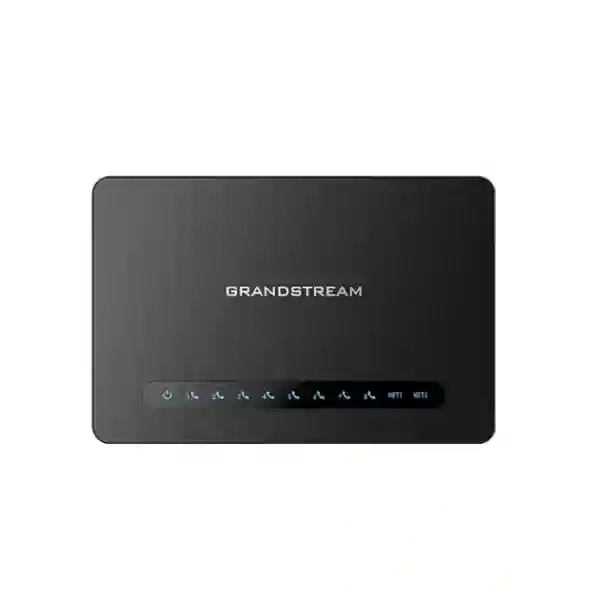
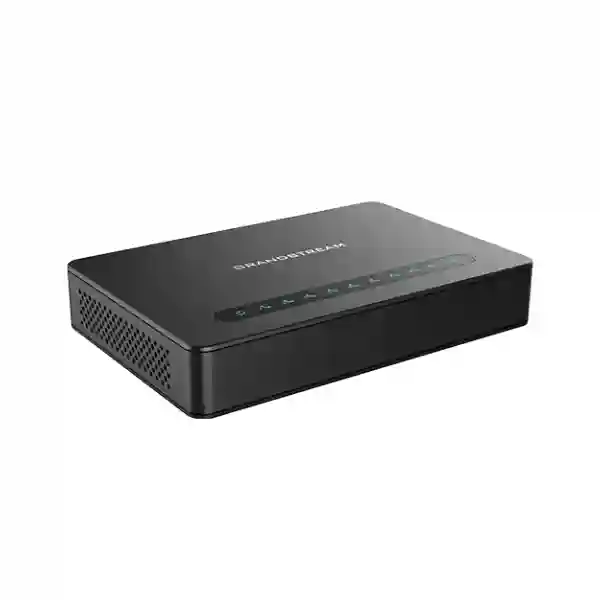
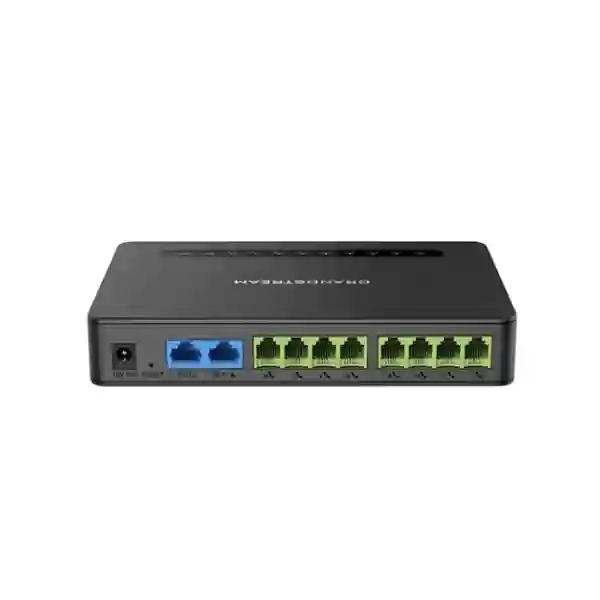
The Grandstream HT818 v2 is an eight-port FXS analog telephone adapter and VoIP gateway designed to bring existing analog phones and fax devices onto a SIP-based voice network. It combines eight RJ11 FXS ports, two 10/100/1000 Mbps Ethernet interfaces, an integrated NAT router, two SIP profiles, secure provisioning and business-focused telephony functions in a compact platform.
For organizations in Tanzania evaluating an analog-to-IP migration, the important decision is not simply whether an ATA has enough ports. The deployment should also match the PBX or SIP service, dial plan, network design, fax requirements, power continuity, security policy and management model. FourTeck can help translate those requirements into a practical quotation and deployment plan.

What is the Grandstream HT818 v2?
The HT818 v2 is a Grandstream HT-series analog telephone adapter built for environments that need to connect several traditional analog endpoints to modern SIP telephony. Each of its eight FXS ports can connect an analog telephone or compatible fax device through RJ11 cabling. On the network side, the gateway provides two Gigabit Ethernet ports and integrated NAT routing. Grandstream documents support for two SIP profiles, automated provisioning using TR-069, strong AES encryption with a unique device certificate, three-way voice conferencing per port, T.38 fax relay, wideband HD voice codecs, centralized device management through GDMS and common telephony features such as call waiting, transfer, forward, hold and do-not-disturb.
This product is most useful where the business case favors retaining analog endpoints while changing the call-control or trunking platform. Examples include offices with several analog desk phones, hospitality back-office lines, apartment or campus service points, fax-dependent workflows, legacy analog instruments, reception areas, branch sites and controlled migrations from PSTN-style devices to SIP. The HT818 v2 does not turn every legacy device into a modern IP endpoint automatically; compatibility, signaling expectations, fax behavior, caller-ID format, ring requirements and the SIP provider or PBX configuration should be checked before deployment.
Verified HT818 v2 technical highlights
| Telephone interfaces | Eight RJ11 FXS ports for analog telephones or fax devices. |
| SIP profiles | Two SIP profiles, serving the eight FXS ports according to configuration. |
| Network interfaces | Two 10/100/1000 Mbps RJ45 Ethernet ports. NET1 is WAN and NET2 is LAN by default; roles can be changed in the web interface. |
| Routing | Integrated high-performance NAT router. |
| Voice | Wideband voice support including G.722 and OPUS in the HT8xx V2 family, plus standard telephony functions and three-way conferencing per port. |
| Fax | T.38 Group 3 Fax Relay, with support for G.711 fax pass-through behavior. |
| Security | Strong AES encryption with a unique security certificate per unit; Grandstream documentation also identifies TLS and SRTP protection in the HT81x V2 platform. |
| Provisioning and management | TR-069 and configuration-file provisioning, web administration, IVR access and Grandstream Device Management System support. |
| Operating environment | Grandstream’s installation guide specifies -10°C to +55°C operating temperature and 10-90% relative humidity, non-condensing. |
Where the HT818 v2 fits in a business voice design
An eight-port ATA is valuable when an organization has a meaningful number of analog endpoints but wants to use SIP call control, an IP PBX or a managed VoIP service. Instead of replacing every handset immediately, the HT818 v2 can act as a migration bridge. That approach can preserve investment in usable analog phones while allowing the network and call platform to modernize. It can also simplify specialized analog requirements where a direct IP replacement is difficult, provided the connected device’s electrical and signaling characteristics are compatible.
A successful implementation starts with extension mapping. Procurement teams should list each analog endpoint, its location, expected call behavior, caller-ID needs, whether it sends or receives fax, whether it needs voicemail indication, and whether it depends on special analog signaling. The next step is to decide how those ports register: one SIP account pattern may suit a small office, while another organization may need separate extensions, hunt behavior, failover server settings or routing through an IP PBX. Network planners should also identify the VLAN, addressing mode, firewall policy and quality-of-service strategy for voice traffic.
The HT818 v2 can work well alongside an IP PBX, but the ATA is only one part of the system. Call quality still depends on the LAN, WAN, SIP trunk, PBX resources and endpoint conditions. Buyers can review FourTeck Tanzania’s integrated IT and telecom solution overview, the business technology shop guidance, and technology services planning information when the ATA is part of a wider voice, switching, security or infrastructure project.
Deployment and configuration considerations
Grandstream’s quick installation guidance shows that the HT818 v2 can be connected using either of its two network ports, with NET1 acting as WAN and NET2 as LAN by default. A standard analog phone connects to an FXS port using RJ11 cabling. In managed business deployments, the next stages normally include network addressing, SIP account registration, dial plan, codec priorities, caller-ID presentation, DTMF behavior, time settings, firmware policy, administrative credentials and security controls. Where fax is required, T.38 support must also exist across the call path or the deployment should be tested using the intended fallback method.
Power quality deserves attention. The vendor requires the approved power adapter and warns against interrupting power during boot or firmware upgrades. In offices where voice continuity matters, the ATA, network switch, router/firewall, PBX and internet termination equipment should be considered together for UPS protection. Backup power for only the ATA will not preserve calling if the upstream switch, modem or PBX loses power. Similarly, a redundant SIP server cannot help if the WAN path is unavailable. Business continuity planning should therefore cover the complete voice chain.
For larger rollouts, centralized provisioning can reduce manual configuration effort and improve consistency. Grandstream documents TR-069, configuration-file provisioning and GDMS management capabilities for the HT8xx V2 range. Administrators should standardize firmware versions, naming, credentials, port labels and backup procedures. Grandstream’s August 2026 administration guide also notes a firmware downgrade restriction after upgrading HT81x V2 devices to firmware 1.0.9.3 or later, so change control and release review are important before bulk upgrades.
Grandstream HT818 v2 Tanzania
For organizations searching for Grandstream HT818 v2 in Tanzania, the strongest use case is usually a structured migration from analog endpoints to SIP without replacing every connected device at once. Eight FXS interfaces let one gateway concentrate several analog lines into an IP voice environment, which can be practical for offices, education sites, hospitality operations, service desks, distributed branches and facilities that still depend on analog phones or fax devices. The purchase decision should start with the exact number of analog endpoints and their functions. If there are eight or fewer conventional endpoints at one location, the HT818 v2 may be a clean fit. If the site has fewer lines, a smaller HT-series model may be more economical; if it has substantially more, multiple gateways or a higher-density architecture may be more manageable.
Tanzania deployments also benefit from network-first planning. SIP calls depend on stable LAN and internet behavior, so voice quality should not be evaluated independently from switching, routing and the WAN connection. Confirm whether voice will be placed on a dedicated VLAN, whether the upstream router or firewall handles SIP predictably, and whether Quality of Service is needed to prioritize real-time traffic. Branch locations should document IP addressing and remote management access before installation. If the ATA is behind a firewall or NAT device, SIP registration intervals, RTP port handling and security policy should be coordinated with the PBX or service provider rather than opened broadly.
Procurement teams in Tanzania should request a quotation that clearly identifies the model as HT818 v2, quantity, required power accessories, intended PBX or SIP service, number of analog extensions, fax requirements and any installation or configuration scope. Pricing and availability can change, so they should be confirmed at quotation time rather than assumed from overseas retail listings. FourTeck Tanzania can help buyers align the gateway with the wider voice system and related infrastructure. For wider regional references, FourTeck’s Uganda business communication solutions and Kenya VoIP and IP PBX solutions illustrate the broader regional context for SIP telephony planning.
Grandstream HT818 v2 Dar es Salaam
Businesses evaluating the Grandstream HT818 v2 in Dar es Salaam often have a practical mix of modern IP infrastructure and analog devices that are still useful. A corporate office may have an IP PBX but retain analog lobby phones, fax devices or low-usage extensions. A hotel, logistics operation or multi-department facility may want to convert groups of analog extensions while keeping a central SIP platform. The HT818 v2 can provide eight FXS ports in one compact device, reducing the need for eight separate single-port adapters and giving administrators one configuration point for a cluster of analog endpoints.
In a dense commercial environment, connectivity design matters as much as the ATA itself. Dar es Salaam organizations may have several internet services, firewalls, managed switches and VLANs already in place. Before deployment, the voice path should be traced from each analog handset through the HT818 v2, LAN, firewall and SIP platform. The team should verify local IP addressing, DNS, time synchronization, SIP registration, RTP flows and call-quality priorities. If the business uses an on-premises IP PBX, placing the ATA and PBX on appropriate trusted segments can simplify traffic control. If the PBX or trunk is hosted, WAN resilience and firewall rules become more prominent in the design.
For procurement in Dar es Salaam, it is useful to distinguish product supply from solution scope. A hardware-only quotation answers the model and quantity question, while a deployment quotation may need extension mapping, configuration, test calls, fax validation, labeling, documentation and user handover. Existing analog cabling should also be checked for condition and topology; long, undocumented or cross-connected cabling can create troubleshooting difficulty. Businesses planning a wider communication upgrade can use FourTeck Tanzania’s contact and quotation channel to share the PBX platform, service provider, analog device count and desired call flow before pricing is finalized.
Grandstream HT818 v2 Mwanza
For a Mwanza organization, the Grandstream HT818 v2 can be considered when a branch, healthcare administration office, educational facility, hotel, retail back office or operations site needs to keep analog phones while moving call control to SIP. Eight FXS ports make the device particularly relevant when several analog extensions are located in the same building or wiring area. Rather than treating each port as an isolated line, the deployment should be planned as an extension group with clear labels, user assignments, outbound routing and failover expectations.
Mwanza buyers should pay close attention to WAN dependency when the SIP server is outside the site. A hosted PBX can simplify centralized administration, but the branch then relies on local connectivity for voice. The HT818 v2 supports a failover SIP server function documented by Grandstream, yet that feature protects against a particular server becoming unavailable; it does not replace a resilient network design. If business continuity is important, ask how the site will behave during internet failure, power interruption or upstream router maintenance. Some organizations may keep alternative mobile communication for emergencies, while others may use multiple WAN links or a local PBX strategy.
The analog side also deserves an audit. Confirm which endpoints are standard touch-tone phones, which are fax machines, and whether any specialized equipment is expected to behave like a normal analog telephone. T.38 fax is useful only when the broader SIP path supports it correctly, so real fax send-and-receive testing should be part of acceptance where fax remains operationally important. Document each FXS port, assigned number and cable destination to simplify future support. For Mwanza procurement, include exact quantities, the SIP or PBX platform, network topology, required configuration scope and whether the project should include switching, UPS protection or structured cabling support in the quotation.
Grandstream HT818 v2 Arusha
Arusha businesses in hospitality, tourism administration, professional services, education and multi-building operations may encounter a common voice modernization problem: the organization wants centralized SIP telephony, but replacing every analog endpoint is unnecessary or disruptive. The Grandstream HT818 v2 provides a practical bridge by placing eight analog interfaces behind a SIP gateway. For hotels and guest-facing environments, this can be relevant for back-office or fixed-location analog handsets, but the final architecture should be based on the hotel’s PBX, room-phone strategy and service requirements rather than assuming that every analog hotel phone is automatically compatible.
A good Arusha deployment plan separates three questions. First, what must the analog phone do: basic calling, caller ID, voicemail indication, transfer or another feature? Second, what does the SIP platform support for that extension? Third, how reliable is the network path between the HT818 v2 and the call server? Grandstream documents common telephony functions, multiple caller-ID formats, three-way conference behavior and wideband codecs, but the feature experienced by the user can still depend on the connected analog device and PBX configuration. Configuration testing is therefore more useful than relying only on feature lists.
For organizations that manage more than one property or office, centralized management becomes valuable. GDMS and automated provisioning options can support consistent settings, firmware and monitoring across multiple Grandstream endpoints. Administrators should establish a standard template while preserving per-site values such as SIP credentials, VLAN details and emergency routing. When requesting an HT818 v2 quotation for Arusha, provide the number of gateways, analog endpoints per site, PBX or SIP provider, network environment and any support expectations. This helps distinguish a simple hardware purchase from a managed voice migration and reduces the risk of missing required cabling, power or configuration work.
Grandstream HT818 v2 Dodoma
Organizations in Dodoma that need an eight-port analog-to-VoIP gateway may be modernizing an existing office telephone system, adding SIP extensions to a new facility or connecting legacy analog devices to a centralized PBX. The Grandstream HT818 v2 is appropriate to evaluate when the requirement is specifically for up to eight FXS endpoints and the business wants Gigabit Ethernet connectivity, routing capability, secure provisioning and support for common SIP telephony functions. It can help consolidate several analog endpoints into one managed gateway instead of deploying many small adapters.
For administrative and institutional environments, documentation is particularly important. Each FXS port should have an extension number, physical destination and business owner recorded. If a phone is assigned to reception, records, security or a shared workspace, note the expected call behavior and after-hours route. The SIP configuration should use protected credentials, and remote administration should be limited according to security policy. Grandstream supports encryption and secure provisioning mechanisms, but those capabilities should be configured deliberately; purchasing a security-capable device does not by itself secure the surrounding network or PBX.
Dodoma deployments should also consider change management. If the HT818 v2 is replacing analog lines from an older PBX, test inbound and outbound calls, DTMF interaction with IVR systems, transfer behavior, caller ID and any fax workflows before retiring the old path. If the device is part of a new installation, create a commissioning checklist that covers network link status, SIP registration, call quality, power backup, configuration backup and administrator access. Procurement should state whether it needs supply only, remote configuration, on-site integration or a broader IP telephony project so the quotation reflects the real work rather than only the hardware model.
Grandstream HT818 v2 UAE
In the UAE, the Grandstream HT818 v2 is relevant to organizations that need a compact eight-port gateway for analog phones, fax devices or selected legacy voice endpoints while using SIP-based communications. Commercial buyers in Dubai, Abu Dhabi and other emirates frequently compare ATAs not only by port count but also by provisioning, management and interoperability. The HT818 v2’s two SIP profiles, eight FXS ports, dual Gigabit Ethernet interfaces, NAT routing, T.38 capability and secure device provisioning make it suitable for structured business deployments where a smaller ATA would require too many individual units.
The UAE market also highlights the difference between marketplace pricing and project procurement. Online listings may show a retail price at a specific date, but business quotations can vary with quantity, channel, warranty terms, accessories, installation scope and delivery conditions. Buyers should therefore avoid treating a marketplace snapshot as a guaranteed project price. A stronger request includes exact model, quantity, number of analog extensions, PBX or hosted SIP platform, fax requirements, delivery destination and whether configuration is required. That gives the supplier enough context to confirm a commercial and technical fit.
For regional voice projects spanning Tanzania and the UAE, standardizing on a manageable ATA family can simplify templates and support, but each country may use different SIP providers and network policies. The same hardware can therefore require different provisioning and routing. FourTeck’s UAE IT and IP telephony solutions site provides regional context for communication projects. Cross-border buyers should document firmware policy, SIP credentials, numbering plans and support ownership per site, while using centralized management only where access and organizational policy permit it.
Grandstream HT818 v2 Uganda
For Uganda deployments, the Grandstream HT818 v2 can support organizations moving analog extensions toward SIP while retaining devices that remain serviceable. The eight-port design is especially useful where analog endpoints are concentrated at a branch, lodge, school, clinic administration area or office. Instead of purchasing eight separate adapters, one gateway can centralize configuration and network connectivity. The value is not only hardware consolidation; standardized provisioning and management can also make a multi-site environment easier to document and maintain.
Before procurement, Uganda buyers should decide whether the SIP system is local to the site, centralized at headquarters or hosted by a service provider. A local PBX changes the traffic path and resilience profile compared with a hosted platform. For hosted voice, the WAN becomes part of the telephone system, so internet stability, firewall behavior and quality-of-service controls should be evaluated. For centralized enterprise voice, site-to-site connectivity and security policies may influence how SIP and RTP are transported. The HT818 v2 supports the endpoint-side features, but the surrounding network determines whether those features are delivered consistently.
Organizations should also confirm analog line length and endpoint type. Grandstream’s HT81x V2 documentation provides electrical guidance for the FXS interfaces, but field conditions vary and long or poorly terminated analog wiring can introduce faults. Labeling and testing every extension is a simple way to reduce deployment uncertainty. For businesses planning voice infrastructure in Uganda, FourTeck’s Uganda IP PBX and VoIP solutions offer regional context. A quotation request should include the number of sites, gateway quantity, PBX platform, analog endpoints, fax use and desired installation or support scope.
Grandstream HT818 v2 Kampala
Kampala businesses often have mixed telephony environments: an IP PBX or SIP service may coexist with older analog phones, fax machines and legacy extensions. The Grandstream HT818 v2 is designed precisely for this bridging role. Its eight FXS ports allow a business to group several analog endpoints behind one SIP gateway while the dual Gigabit network interfaces connect the gateway to the data network. For corporate offices and branch hubs, this can reduce device count and simplify standardization compared with deploying multiple one- or two-port ATAs.
The main design task is to map business call flows to the eight ports. Reception, accounts, stores, security and shared areas may need different extension numbers and permissions. If the business uses two SIP profiles, decide which ports belong to each profile and how outgoing calls should be routed. Where a failover SIP server is configured, test the transition during a controlled maintenance window rather than assuming the failover behavior will meet business expectations. Also test DTMF for IVR menus, because banks, service desks and conferencing systems often depend on reliable keypad signaling.
For Kampala IT teams, central management can be particularly useful when the same device is deployed across several branches. A configuration standard should include administrator credentials, firmware version, NTP, syslog or monitoring approach, provisioning URL, SIP server settings, dial plan and backup policy. Sensitive credentials should not be copied into general documentation. When requesting pricing, include whether the device will be supplied preconfigured or configured after installation, and whether the project includes PBX integration. This creates a clearer commercial scope and reduces the chance that an apparently simple ATA purchase turns into unplanned troubleshooting during go-live.
Grandstream HT818 v2 Arua
For organizations in Arua, an eight-port gateway such as the Grandstream HT818 v2 can help modernize voice services without forcing an immediate replacement of every analog handset. A branch office, NGO facility, education site or hospitality property may have existing analog cabling and devices that remain useful. By terminating those endpoints on the HT818 v2 and registering them to a SIP system, the organization can centralize call control while using familiar endpoints where that remains practical.
Remote-site planning should focus strongly on resilience and supportability. If the PBX is hosted elsewhere, the local internet connection becomes critical for calling. The ATA itself supports secure provisioning and management options, but remote troubleshooting still requires a working network path. Site teams should keep a simple physical port map showing which phone is connected to FXS 1 through 8, and administrators should maintain a secure record of which extension is assigned to each port. If the site uses UPS backup, include the router or modem and any network equipment in the protected power plan, not only the ATA.
Arua buyers should also decide how much configuration support is required. Supply-only procurement can work for an experienced internal IT team that already controls the SIP platform. Smaller organizations may benefit from a quotation that includes extension registration, dial-plan configuration, test calls, firmware verification and documentation. Fax-dependent departments should explicitly request T.38 or G.711 pass-through testing with the intended provider. Sharing these details before purchase helps verify that the HT818 v2 is the correct migration tool rather than simply choosing it because eight ports appear to match the phone count.
Grandstream HT818 v2 Mbarara
Mbarara organizations considering the Grandstream HT818 v2 should view it as a bridge between analog endpoints and an IP-based voice platform. The device is not an IP PBX by itself; rather, it provides eight FXS interfaces that register to SIP services or call-control systems. This distinction matters during planning. A buyer still needs an appropriate PBX, hosted SIP account or service provider, numbering plan and network connection. When those components are already available, the HT818 v2 can be an efficient way to preserve selected analog devices while extending modern telephony features to them.
For a branch or multi-department office in Mbarara, use a pre-installation worksheet. Record each analog handset, room, extension number and user role. Identify whether any port is dedicated to fax, because fax should be tested separately from voice. Then record the SIP server, DNS, VLAN, default gateway and management method. This simple preparation can prevent common commissioning problems such as a phone being connected to the wrong port, a duplicate extension being registered, or a firewall rule blocking RTP even though SIP registration appears successful.
Operational support should also be defined. If the ATA is centrally managed, decide who is allowed to push configuration changes and firmware. If local staff may reset the device, document the support process because a factory reset can remove configured settings. Grandstream provides IVR and web-based administration, but credentials should be protected and defaults should not be left unmanaged. For procurement, ask for the exact HT818 v2 revision, included power components, quantity and deployment scope. If the environment is still being designed, include the PBX and network details so the gateway can be evaluated as part of the complete communications system.
Grandstream HT818 v2 Gulu
In Gulu, the Grandstream HT818 v2 can be useful for offices, education facilities, accommodation businesses and distributed organizations that want SIP telephony but still have analog devices at specific points. Because one unit can serve eight FXS endpoints, it may reduce the amount of power, patching and administration compared with using many smaller adapters. The integrated NAT router and dual Gigabit Ethernet ports add flexibility, although enterprise networks may prefer to place the gateway behind an existing router or firewall rather than use the ATA as the primary site router.
The best architecture depends on the site’s network. If a managed firewall already handles DHCP, VLANs and internet routing, the HT818 v2 can be configured as an endpoint within that design. If the ATA’s routing function is used, administrators should understand address translation, LAN addressing and management access so they do not unintentionally create overlapping networks or double-NAT problems. Voice traffic should be monitored during busy periods, and the WAN connection should have enough headroom to prevent large downloads from affecting calls.
For Gulu procurement, avoid selecting the gateway solely from a product photo or price. Confirm the exact need for eight FXS ports, whether the analog phones are standard devices, the SIP platform being used, and who will configure it. If the project includes remote branches, create a common template and a site-specific worksheet. Grandstream’s centralized management tools can support scale, but changes should still be controlled. A clear quotation should include hardware quantity, expected configuration, test scope, power requirements and any network or cabling work. That gives buyers a more reliable total project view than comparing hardware prices alone.
Grandstream HT818 v2 Kenya
Kenya businesses evaluating the Grandstream HT818 v2 are often looking for a way to integrate analog phones or fax devices with a SIP PBX while maintaining centralized management. The eight FXS ports give the gateway a useful density for branch offices, hospitality locations, schools and multi-department sites. Two Gigabit Ethernet interfaces and the integrated NAT capability can support flexible network placement, while secure provisioning options make the device relevant for organizations rolling out a standard voice design across several locations.
When comparing the HT818 v2 with smaller ATA models, the key question is density. A site with one or two analog endpoints may not benefit from an eight-port unit. A location with six to eight endpoints can gain from consolidation, provided the physical cabling terminates conveniently near the gateway. For larger analog estates, multiple units can be used, but the organization should also compare whether a higher-density gateway architecture or direct migration to IP handsets offers better lifecycle value. The right answer depends on endpoint age, cabling, user features and migration plans.
Kenya procurement should include compatibility and implementation details in the RFQ. Specify the PBX or SIP service, extension count, fax ports, location count, expected management method and whether configuration is required. FourTeck’s Kenya IT, VoIP and IP PBX solutions provide a regional route for wider communication requirements. If the project spans Kenya and Tanzania, a common Grandstream configuration standard can simplify operations, but country-specific telecom services, SIP credentials and network conditions should remain separately documented and tested.
Grandstream HT818 v2 Kuwait
For organizations in Kuwait, the Grandstream HT818 v2 is suitable to evaluate where a SIP platform must serve several existing analog phones or fax interfaces. Eight FXS ports can consolidate a modest analog estate into one device, while dual Gigabit network ports provide modern Ethernet connectivity. In corporate environments, the gateway can be deployed alongside an existing IP PBX and managed network rather than acting as the main router. This allows the network team to maintain centralized firewall, VLAN and Quality of Service policies while the HT818 v2 focuses on analog-to-SIP conversion.
Kuwait buyers should also consider environmental placement and rack-room practices. Grandstream specifies operating temperature and humidity ranges, but equipment should still be located in a clean, ventilated and secure area away from unnecessary heat sources. The analog cables should be labeled, and the network and power connections should be protected from accidental disconnection. If the gateway supports critical service points, include it in the site’s UPS plan and ensure the PBX and WAN infrastructure are similarly protected.
A business quotation should define whether the requirement is hardware supply, PBX integration or a complete voice migration. Supply-only pricing is not directly comparable with a project that includes provisioning templates, SIP registration, testing, documentation and support. Kuwait organizations with multiple branches can benefit from automated provisioning, but credentials and configuration files must be handled securely. At acceptance, test calls between analog and IP extensions, external inbound and outbound calls, transfer, hold, DTMF and any fax service. This operational test provides more confidence than checking only whether all eight ports show registered status.
Grandstream HT818 v2 Ghana
Ghana businesses looking for the Grandstream HT818 v2 may be upgrading branch telephony, consolidating analog extensions or connecting fax workflows to a SIP environment. The eight-port FXS configuration makes the device a practical middle ground between small ATAs and larger gateway platforms. Its network and security capabilities support managed deployments, but selection should still be driven by the site’s endpoint count and migration plan. If most users need richer features such as presence, directory search or programmable keys, direct IP phones may be more appropriate for those desks while the HT818 v2 serves only the analog devices that need to remain.
For Ghana projects, network readiness should be reviewed before installation. SIP registration and RTP media can be affected by firewall policies, address translation and unstable connectivity. The deployment team should decide whether the voice network will have a dedicated VLAN and how remote administration will be secured. If multiple offices use the same configuration, automated provisioning can reduce setup time, but each location still needs unique credentials and documented extension assignments. The PBX or SIP provider should also be checked for codec and fax compatibility.
FourTeck’s Ghana IT solutions site can provide regional context for wider infrastructure requirements. For procurement, request a quote with model, quantity, analog endpoint count, PBX or provider, fax requirements, configuration scope and delivery destination. If the gateway replaces an older analog PBX interface, schedule a staged cutover so users can validate key call flows before the legacy path is removed. A short post-installation support window is also useful for resolving dialing or caller-ID behavior discovered during normal business use.
Grandstream HT818 v2 Nigeria
Nigeria organizations deploying SIP telephony across offices and branches may use the Grandstream HT818 v2 where analog endpoints still have a valid operational role. Eight FXS ports can support a reception cluster, shared-area phones, administrative lines or fax devices while the rest of the organization moves to native IP phones. This selective migration model can control disruption and keep useful equipment in service. The gateway’s two SIP profiles, dual Gigabit Ethernet, NAT routing, secure provisioning and centralized management capabilities are particularly relevant when the organization wants repeatable configuration across sites.
Large or distributed Nigerian deployments should pay careful attention to standardization. Create one approved firmware baseline, one configuration template, consistent naming and a clear process for site-specific credentials. Grandstream’s management options can assist, but bulk configuration should still be tested on a pilot unit before a large rollout. The 2026 Grandstream administration guidance notes firmware downgrade limitations after certain HT81x V2 upgrades, which reinforces the need for release control rather than automatic changes without review.
For procurement and integration, FourTeck’s Nigeria IT services and infrastructure site offers regional context. A useful RFQ should state the number of sites, gateways per site, analog endpoints, SIP platform, internet connectivity pattern, fax requirements and whether centralized management is planned. If power interruptions are a concern, assess UPS support for the complete call path. Protecting only the gateway will not maintain voice if the router, PBX, switch or internet device is offline. Resilience should therefore be designed at system level.
Grandstream HT818 v2 Seychelles
In Seychelles, the Grandstream HT818 v2 can be relevant to hotels, resorts, offices and service businesses that want to connect several analog endpoints to a SIP-based phone system. Hospitality environments in particular may retain analog handsets in selected locations because they are simple, durable and familiar. An eight-port ATA can bridge these endpoints to centralized IP call control without forcing the entire voice estate to change at once. However, room-phone and emergency-call requirements should be defined carefully before selecting any gateway architecture.
Island and multi-property operations also benefit from careful remote-management planning. If the PBX is hosted or located at another site, the network path between the HT818 v2 and the server becomes part of the telephone service. Monitor packet loss, latency and WAN availability, and document how calls should behave if the primary server is unavailable. Grandstream supports failover server settings and automated provisioning, but those functions should be tested under realistic conditions. For hospitality, test wake-up or property-specific functions only if they are delivered by the chosen PBX and confirmed compatible; they should not be assumed from the ATA specification alone.
Seychelles procurement should also account for logistics and spares. Where replacement lead time matters, organizations may choose to hold a tested spare unit or maintain a recovery configuration, but stock and delivery timing should be confirmed with the supplier rather than assumed. A complete quotation request should include gateway quantity, analog phone count, PBX model or hosted service, fax needs, network details and the expected support scope. Clear documentation of every FXS port and extension is especially useful for remote troubleshooting, because a support engineer can identify the affected line without relying on users to trace cabling during an outage.
Choosing between HT818 v2 and other ATA sizes
Grandstream’s HT8xx V2 family spans smaller and larger analog port counts. The HT801 V2 provides one FXS port, the HT802 V2 provides two, the HT812 V2 provides two FXS ports with dual Gigabit networking and routing, the HT814 V2 provides four FXS ports, and the HT818 V2 provides eight FXS ports. The best choice is therefore driven first by how many analog endpoints are physically concentrated in one place. Eight ports are attractive when six to eight lines are required, but buying an eight-port gateway for one phone may not be efficient unless growth is expected.
Port count is not the only consideration. The organization should evaluate analog cable paths, PBX capacity, SIP account design, power and rack location, failure domain and management policy. One eight-port unit creates a single device to manage, but a fault in that device can affect several endpoints. Multiple smaller units distribute that risk but increase device count and administration. Where voice is business-critical, keep a backed-up configuration and consider recovery planning. Where the migration plan is to replace analog phones soon, avoid over-investing in analog gateway capacity that may become unused.
Quotation checklist for Grandstream HT818 v2
Request Grandstream HT818 v2 explicitly and state how many units are needed per site. Avoid relying on the older HT818 name alone where revision matters.
List phones, fax devices and other analog endpoints, with their physical locations and expected call features.
State the PBX, hosted SIP service or provider and whether credentials, extension numbers and server addresses are already available.
Include VLAN, firewall, WAN, DHCP/static IP and remote-management requirements so integration effort can be estimated.
Identify ports that must support fax and any special analog behavior that requires validation before cutover.
Clarify whether you need supply only, preconfiguration, installation, PBX integration, testing, documentation, training or support.
Frequently asked questions
How many analog phones can the HT818 v2 connect?
The HT818 v2 has eight RJ11 FXS ports. Each port is intended to connect an analog telephone or compatible fax device. The usable design still depends on wiring and the connected endpoint.
Does the HT818 v2 include an IP PBX?
No. It is an analog telephone adapter and SIP gateway. It registers to an IP PBX, SIP server or compatible VoIP service; the call-control platform is a separate component.
Can the HT818 v2 connect a fax machine?
Grandstream specifies T.38 fax relay support and G.711 fax pass-through behavior. End-to-end fax reliability depends on the SIP provider, PBX, codec and network path, so real fax testing is recommended.
Does the HT818 v2 have Gigabit Ethernet?
Yes. It has two 10/100/1000 Mbps RJ45 network ports. By default NET1 operates as WAN and NET2 as LAN, and Grandstream documents configurable port roles.
How is the device provisioned for many sites?
Grandstream supports automated provisioning including TR-069 and configuration-file methods, while GDMS provides centralized management capabilities. Organizations should still pilot templates and secure provisioning credentials.
What should I provide to request a Tanzania quotation?
Provide the exact model, quantity, site location, analog endpoint count, PBX or SIP service, fax requirements, network environment and required deployment scope. This helps produce a technically meaningful quote.
Decision recap
Choose the Grandstream HT818 v2 when you need a managed eight-port analog-to-SIP gateway, your analog endpoints are compatible, and your PBX or VoIP provider supports the required SIP features. Its eight FXS ports, two Gigabit Ethernet interfaces, integrated NAT router, two SIP profiles, secure provisioning, HD voice capabilities and T.38 support make it a strong candidate for phased voice migration.
Do not choose it only because eight ports appear on a specification sheet. Validate the actual analog devices, call flows, SIP platform, network, fax needs, power resilience and management method. That systems view is what turns an ATA purchase into a stable business voice deployment.
Plan your HT818 v2 deployment with FourTeck
Share your analog extension count, PBX or SIP provider, site locations, fax requirements and whether you need supply only or a configured deployment. FourTeck can use those details to structure a quotation around the real requirement. For broader regional projects, the FourTeck network includes business technology resources for Tanzania, UAE, Kenya, Uganda, Ghana and Nigeria.
For company background and project context, review FourTeck Tanzania company information before submitting the technical scope. Exact price, stock, warranty terms, delivery timing and service coverage should be confirmed in the final quotation rather than assumed from public listings.


Reviews
There are no reviews yet.