
GRANDSTREAM AUDIO IP PBX • BUSINESS VOICE • TANZANIA
Grandstream UCM6302A Tanzania
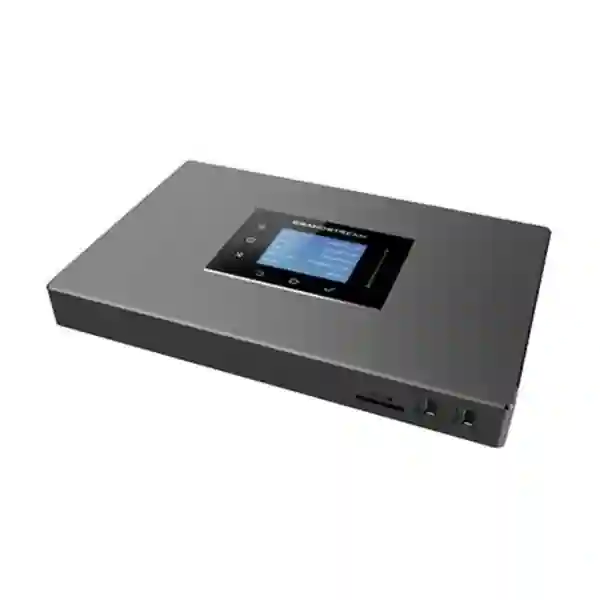
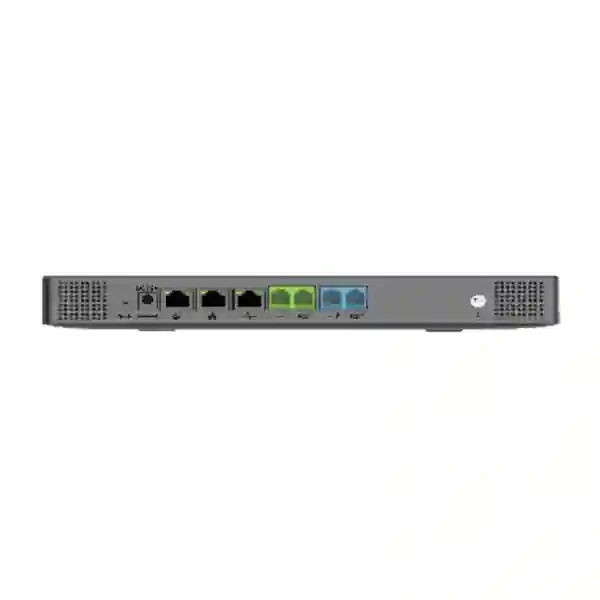
The Grandstream UCM6302A is an audio-focused unified communications appliance designed for organizations that want an on-premises IP PBX with modern SIP calling, analog line integration, mobile and desktop communications, conferencing, call handling and centralized management. Grandstream specifies support for up to 500 users, 75 concurrent G.711 calls and 75 concurrent SRTP calls. The platform includes 2 FXS ports for analog endpoints, 2 FXO ports for PSTN lines, three self-adaptive Gigabit network interfaces with PoE+, USB and SD interfaces, a color touch display, Grandstream Wave support and compatibility with Grandstream Device Management System. For buyers in Tanzania, the practical value is not simply the headline capacity: the right deployment depends on user count, busiest-hour call traffic, SIP trunk design, reception workflow, branch connectivity, LAN readiness, power protection and the mix of IP and analog devices already in service.
Grandstream’s published maximum user capacity for the UCM6302A.
Up to 75 concurrent G.711 calls and up to 75 concurrent SRTP calls.
Analog endpoint and PSTN-line interfaces for mixed telephony environments.
Grandstream lists five meeting rooms with up to 75 parties for this model.
What the Grandstream UCM6302A is designed to solve
Businesses frequently reach a point where individual phone lines, disconnected mobile numbers and ad-hoc forwarding rules become difficult to manage. A properly designed IP PBX creates a common numbering plan and a consistent way to handle incoming calls, internal extensions, departments, reception, voicemail, schedules and remote users. The UCM6302A is intended for this voice-centric requirement. It can support SIP endpoints and SIP trunks while also preserving selected analog devices or PSTN circuits through its built-in FXS and FXO ports. That makes it useful for organizations that are modernizing in stages rather than replacing every existing telephony component at once.
The platform includes features such as call park, transfer, forward, waiting, caller ID, recording, IVR, ring groups, queues, paging, voicemail-to-email, fax-to-email, time schedules and detailed routing options. It is based on Asterisk 16 and supports standards-based SIP communication. Grandstream also provides the Wave application so authorized users can communicate through desktop, web and mobile clients using SIP accounts hosted on the UCM. For administration, GDMS adds centralized provisioning and management capabilities across supported Grandstream devices.
The key buying question is therefore not simply whether 500 users fits the organization. A design should examine active extensions, call concurrency, number of departments, number of inbound lines, remote-worker requirements, expected recording volume, branch-to-branch calling, internet resilience, VLAN design and available PoE switching. FourTeck Tanzania can help structure these requirements before hardware is selected. Buyers can also review the broader FourTeck Tanzania technology portfolio, the Tanzania product shop and technology services when the PBX project also requires switching, Wi-Fi, firewall, UPS, cabling or endpoint work.
Verified UCM6302A technical highlights
| Area | Grandstream-published capability |
|---|---|
| Capacity | Up to 500 users; 75 concurrent G.711 calls; 75 concurrent SRTP calls |
| Analog interfaces | 2 RJ11 FXS ports and 2 RJ11 FXO ports, with lifeline capability |
| Networking | Three self-adaptive Gigabit ports, switched/routed/dual mode, with PoE+ |
| Storage interfaces | 1 USB 2.0, 1 USB 3.0 and 1 SD card interface |
| Display | 320 × 240 color LCD with touch screen |
| Meetings | 5 meeting rooms with up to 75 parties |
| Management | GDMS support; web administration; Grandstream endpoint provisioning |
| Dimensions | 270 mm × 175 mm × 36 mm |
| Operating environment | 0–45°C; 10–90% RH, non-condensing |
Capacity figures are platform limits, not a substitute for project sizing. Actual design should account for call patterns, codecs, trunks, security policies, recording, network quality and required headroom.
Compatibility, integration and deployment planning
The UCM6302A is useful where a business wants to combine SIP telephony with selected analog services. The two FXS ports can serve compatible analog phones or fax devices, while the two FXO ports can connect PSTN lines where the local telecom design requires them. IP phones communicate over the LAN, so voice VLANs, DHCP, DNS, NTP, routing and Quality of Service should be planned rather than treated as afterthoughts. PoE switches can simplify endpoint power, and UPS-backed switching helps keep local communications available during short mains interruptions. For a broader infrastructure view, FourTeck’s Tanzania site explains how network, security and support services can be coordinated around a communication deployment.
SIP trunk compatibility is another procurement checkpoint. Before implementation, confirm the service provider’s authentication method, number presentation, inbound DID structure, codecs, registration model, failover behavior and emergency-call requirements. For branch connectivity, decide whether sites will use public internet with secure traversal, site-to-site VPN, dedicated WAN links or another approved topology. Remote users can be supported through Grandstream’s Wave and RemoteConnect ecosystem where the chosen service plan and configuration fit the project.
Endpoint selection should follow job role. Reception may need more programmable keys and visibility; managers may prioritize headsets, Bluetooth or Wi-Fi; call-handling teams may need ergonomic headsets and queue visibility; common areas may need simpler phones. The PBX should also be documented with extension ranges, dial plans, admin roles, backup procedures, trunk details and change control. These disciplines are especially valuable in environments where several branches or service providers are involved.
Buying guidance: when UCM6302A is a sensible fit
The UCM6302A is most compelling for organizations that are primarily focused on professional voice communications and want a substantial amount of extension and concurrent-call headroom without moving to the higher-capacity models in the UCM6300 Audio family. It can suit offices, schools, clinics, hospitality environments, professional services, distributors, retail operations, warehouses and multi-department businesses where an administrator needs centralized call routing, extension management, IVR, queues, voicemail, recording and remote-user options.
It may be oversized for a very small office with only a handful of extensions and almost no simultaneous traffic. Conversely, a business expecting more than 75 simultaneous calls, more than 500 users, or much larger meeting requirements should evaluate a higher model rather than designing at the published limit. The quotation process should therefore include current users, three-year growth, simultaneous-call estimates, number of PSTN lines, SIP trunk channels, endpoint types, branches, remote users and any requirement for call recording or integrations.
Grandstream UCM6302A Tanzania
Organizations looking for Grandstream UCM6302A in Tanzania are often trying to modernize business telephony without losing control of their internal call flows. The UCM6302A gives a Tanzania buyer an on-premises PBX platform that can bring SIP extensions, PSTN connectivity, remote users, IVR, queues, voicemail and recording into one managed system. Its verified capacity of 500 users and 75 concurrent calls gives meaningful headroom for many small and medium organizations, but a purchase should start with a real call-traffic assessment. A company with 300 extensions may still have modest concurrency, while a service desk with far fewer extensions may generate heavy simultaneous traffic. Correct sizing prevents both unnecessary spending and future bottlenecks.
Tanzania deployments also benefit from treating the LAN and power environment as part of the phone system. IP phones depend on switching, DHCP, VLANs and stable power. PoE switches can reduce desktop adapters, while UPS protection for the PBX, switches, router and internet edge can improve resilience during brief power events. Where the organization uses SIP trunks, the internet path and firewall policy should be reviewed for voice quality, NAT behavior and security. Where analog PSTN lines remain important, the two FXO interfaces can help bridge legacy connectivity into the new PBX. The two FXS interfaces can accommodate selected analog endpoints or fax workflows where appropriate.
For procurement teams, a good Tanzania request for quotation should state user count, expected concurrent calls, phone quantities, receptionist requirements, branch sites, existing analog lines, SIP provider, recording needs, remote users and network-switch availability. This allows the PBX, endpoints, PoE budget, cabling, UPS and implementation scope to be costed together. Buyers can review FourTeck Tanzania’s product shop for related technology and use the Tanzania contact page to submit a project requirement.
A Tanzania deployment should finish with documentation rather than only a working dial tone. Extension plans, trunk credentials, administrator roles, IVR recordings, queue membership, backup routines, firmware procedures and network settings should be captured for support. This is particularly important as staff change and the system grows. The objective is a manageable communications platform that can be expanded predictably instead of a PBX that depends on one person’s memory.
Grandstream UCM6302A Dar es Salaam
In Dar es Salaam, UCM6302A projects commonly align with dense office environments, trading businesses, logistics operations, professional services, hospitality, healthcare and organizations with several departments handling inbound and outbound calls. The first design decision should be the call-flow map: which number reaches reception, which calls go directly to departments, how unanswered calls overflow, what happens after business hours, and which teams require queues rather than simple ring groups. The UCM6302A provides the building blocks for these workflows, including IVR, time schedules, ring groups, queues, voicemail and call routing. Designing these features around actual business processes is more valuable than enabling every feature by default.
Dar es Salaam offices may also have mixed telecom infrastructure. Some sites are ready for SIP trunking; others still depend on traditional PSTN circuits for particular numbers or backup routes. With 2 FXO and 2 FXS ports, the UCM6302A can support a staged migration while the organization moves more calling onto IP. The network should be audited before deployment. Voice VLANs, managed PoE switching, QoS, reliable DNS and NTP, firewall behavior and adequate uplink capacity all influence call stability. Where an office spans multiple floors, switch uplinks and cabling quality should be included in the PBX project rather than assumed to be suitable.
A Dar es Salaam quotation should separate appliance capacity from endpoint requirements. Reception desks, executives, general office users, call agents and common areas can require different phone types. Standardizing a small set of endpoint profiles simplifies provisioning and support. Wave can extend communications to approved desktop, web and mobile users, which is useful for staff who divide their time between office, customer sites and home working. Remote access should still be implemented through supported and secured methods rather than exposing the PBX directly to the internet.
For growth planning, businesses should estimate both extension growth and peak concurrency over several years. The UCM6302A supports up to 500 users and 75 concurrent calls, so a company comfortably below those ceilings may gain useful expansion room. Organizations approaching the limit should compare higher-capacity UCM models before purchase. FourTeck can help translate the Dar es Salaam requirement into a bill of materials covering PBX, phones, PoE switching, UPS, cabling and implementation rather than quoting the appliance in isolation.
Grandstream UCM6302A Mwanza
For a Mwanza business, a new IP PBX can be an opportunity to standardize communications between administration, sales, warehouse, service, security and remote staff. The UCM6302A provides a central extension plan so internal calls can be routed consistently even when users sit in different departments or work away from their desks. Before procurement, identify the number of permanent desk users, shared phones, cordless or mobile users, fax requirements and public numbers. This creates a better design than simply matching the total headcount to the maximum 500-user capacity.
Connectivity planning is especially important for any Mwanza organization connecting branches or remote staff. Voice is sensitive to latency, jitter and packet loss, so the path between endpoint, switch, router and SIP provider should be understood. Managed switches allow voice VLANs and traffic prioritization. The PBX and core network equipment should be placed on suitable power protection. If an organization depends on more than one internet connection, failover behavior should be tested to understand what happens to active SIP sessions when the WAN changes. A business continuity design should distinguish between keeping internal extensions operational and maintaining external carrier connectivity.
The UCM6302A’s analog interfaces are helpful when a Mwanza site still has PSTN services or specific analog endpoints. Two FXO ports can connect compatible public telephone lines, while two FXS ports can support selected analog telephones or fax devices. Those interfaces should be mapped into the dial plan deliberately, for example as primary, secondary or emergency outbound routes according to the customer’s policies and provider capabilities. Call recording, voicemail-to-email and queue features should likewise be enabled according to business need and data-handling policy.
A strong procurement brief should include expected growth and support expectations. It should state who will administer the PBX, whether configuration backups are required off the appliance, how firmware changes will be controlled, and which staff need training. GDMS can help with centralized management of supported Grandstream equipment, while local documentation remains essential. For Mwanza organizations expanding gradually, this combination of structured IP telephony, analog transition support and centralized administration can make the UCM6302A a practical core for business voice.
Grandstream UCM6302A Arusha
Arusha businesses in tourism, hospitality, professional services, education, NGOs, distribution and administration often need telephone systems that serve both customer-facing and internal workflows. The UCM6302A can support reception, reservations, departments, management and remote staff from one platform. A good design starts by identifying caller journeys. For example, an incoming caller may need language or department choices through IVR, priority routing to a reservations team, voicemail after hours and escalation when a queue is busy. These workflows can be created with UCM call routing, IVR, queue, schedule and voicemail functions.
Hospitality and service organizations should pay particular attention to integrations and operational continuity. If the PBX must connect with a property-management, CRM or other business platform, verify the integration method and supported API workflow before purchase. Grandstream makes an API available for integration, but the actual project still depends on what the third-party application supports. Likewise, if call recording is required, estimate retention needs and define who is authorized to access recordings. USB, SD and supported storage workflows should be planned with backup and privacy requirements in mind.
Arusha sites should also evaluate their network topology. A PBX may perform exactly to specification while users still experience poor audio if the LAN is congested or the internet route is unstable. Voice VLANs, PoE switching, QoS and documented switch ports can reduce troubleshooting complexity. Remote extensions should use supported secure access methods. Staff working from lodges, field offices or home environments may use Wave where the network and security design support it, but the user experience will depend on the quality of each access connection.
For quotation, list the number of front-desk phones, back-office phones, shared devices, cordless requirements, analog lines, SIP channels and branches. Include headsets and expansion modules where roles require them. The UCM6302A supports up to 500 users and 75 concurrent calls, which provides room for many medium-sized Arusha operations, but peak call demand should be measured rather than assumed. FourTeck can help build an Arusha IP PBX proposal that connects the appliance decision to endpoints, networking, power and implementation.
Grandstream UCM6302A Dodoma
In Dodoma, organizations evaluating the Grandstream UCM6302A may include government-related offices, professional services, institutions, NGOs, education, healthcare and growing commercial operations. These environments often benefit from a clearly governed extension plan. Instead of adding phone numbers one department at a time, the PBX can use structured ranges for departments, meeting rooms, reception points and shared services. This makes onboarding, moves and troubleshooting easier, especially when the organization grows or relocates teams.
Call governance should also be defined before implementation. Decide which extensions can make international or premium calls, how emergency numbers are handled, which departments can record calls, who can change IVR prompts, and how after-hours routing works. The UCM6302A has extensive call-control functionality, but governance determines whether those tools remain manageable. Administrator access should follow least-privilege principles, default credentials should be changed, configuration backups should be scheduled, and firmware should be maintained according to a controlled process.
A Dodoma site may use SIP trunks, analog PSTN lines or a hybrid of both. The UCM6302A provides two FXO ports and two FXS ports alongside SIP capability, making it possible to maintain selected legacy circuits during transition. The design should validate how caller ID, inbound numbers, outbound number presentation and failover behave with the selected provider. Network readiness is equally important: switches, router, firewall, internet link, VLANs and QoS should be assessed together. If the site has a generator or UPS strategy, the PBX and PoE switches should be included in the protected load.
For procurement teams, a written acceptance checklist helps. It can include successful inbound and outbound calling, IVR routing, queue behavior, voicemail delivery, failover routes, remote users, call recording, backup, endpoint provisioning and documentation. By defining these items before deployment, a Dodoma organization can measure whether the communication system meets operational needs rather than judging the project only by whether phones can place basic calls.
Grandstream UCM6302A UAE
UAE buyers considering the UCM6302A often operate in environments with structured IT teams, multiple branches, SIP trunk services and high expectations for mobility. The platform’s 500-user and 75-concurrent-call capacity can fit many mid-sized voice deployments, but project sizing should account for busy-hour call volume rather than employee count alone. Retail groups, logistics companies, professional firms, clinics, hospitality businesses and branch offices can all have very different concurrency patterns even when their headcount is similar.
For UAE deployments, carrier and numbering requirements should be confirmed before the PBX is ordered. Document SIP trunk credentials, DID ranges, outbound presentation, permitted codecs, NAT requirements and failover behavior. The UCM6302A’s two FXO ports can also be useful where analog lines form part of a fallback or legacy requirement. Remote staff can use Wave and Grandstream’s RemoteConnect ecosystem where appropriate, but access should be designed around secure supported methods and organizational policy.
The physical environment is straightforward but should still be planned: Grandstream lists the UCM6302A at 270 × 175 × 36 mm with wall-mount and desktop options and an operating temperature range of 0–45°C. In equipment rooms, the PBX should share the same discipline as switches and firewalls: clean power, controlled temperature, documented patching and restricted administration. Voice endpoints can be powered through PoE switches, which simplifies desk deployments when the switches themselves are protected by UPS.
FourTeck’s wider regional network includes FourTeck UAE IT and telecom solutions, which is relevant for organizations coordinating communication projects between Tanzania and the UAE. A multi-country design should standardize extension conventions, device profiles and support documentation while still accommodating each country’s carrier conditions. That approach reduces configuration drift and makes future moves, adds and changes easier to support.
Grandstream UCM6302A Uganda
For businesses in Uganda, the UCM6302A can act as the central voice platform for one office or a collection of branches, provided the network and carrier design are planned around the organization. The 500-user capacity provides room for a substantial extension estate, while 75 concurrent calls is the more important figure for busy contact points. A distributor may have many warehouse and office extensions with modest call concurrency; a service center may have fewer users but far more simultaneous external calls. Correct sizing therefore begins with call patterns.
Ugandan organizations that still use analog public lines can integrate two lines through the FXO interfaces and selected analog endpoints through the FXS interfaces. SIP trunks can be used alongside this where supported by the service provider. The dial plan should define which route is preferred, what happens if a trunk is unavailable and which caller ID is presented. Failover should be tested, because a route that appears correct in a configuration screen may behave differently under real carrier conditions.
Branch connectivity deserves particular attention. If sites communicate over the public internet, bandwidth and security must be evaluated. If VPN is used, voice packets should not be starved by bulk traffic. If remote workers use Wave, endpoint security, password policy and access configuration must be included in the support model. The UCM6302A can be managed through GDMS, which helps centralize supported Grandstream equipment, but local network visibility and good documentation are still required for troubleshooting.
Organizations coordinating Tanzania and Uganda projects can use the FourTeck Uganda IP PBX and VoIP resources as a regional reference. Standardizing phone models, extension formats and deployment templates across countries can simplify administration, while carrier-specific settings remain local. Procurement should include endpoints, PoE switches, UPS capacity, cabling, headsets and implementation rather than treating the PBX appliance as the whole solution.
Grandstream UCM6302A Kampala
Kampala organizations often need a PBX to organize high volumes of customer, supplier and internal calls across reception, sales, support and operations. The UCM6302A supports queueing, IVR, ring groups, time schedules and reporting functions that can transform a basic extension system into a structured call-handling platform. Before implementation, map the customer journey from the published number to the final destination. Include what happens when an agent is busy, when a queue exceeds acceptable wait time, when the office closes and when a caller needs voicemail.
A Kampala deployment should also validate the local area network. Desktop IP phones may share an Ethernet path with PCs, while Wi-Fi handsets or Wave clients depend on wireless quality. Voice VLANs and QoS can help separate and prioritize traffic. PoE budgets should be calculated from the number and type of phones rather than from port count alone. Core switches and the PBX should be connected to suitable UPS capacity if the organization expects communications to remain available through short power interruptions.
Where call recording is enabled, capacity and retention policy matter. Recording every conversation indefinitely is rarely a sensible default. Define which users require recording, how long data is retained, who can access it and how backups are handled. The UCM6302A offers local interfaces such as USB and SD as part of its storage options, and Grandstream’s wider ecosystem provides additional supported storage and management workflows. The chosen method should be documented and tested.
For an accurate Kampala quotation, provide the number of users, simultaneous calls, analog lines, SIP channels, remote users, branch sites and endpoint classes. State whether implementation includes cabling, network configuration, phone provisioning, IVR recording, user training and post-deployment support. This allows suppliers to compare equivalent scopes rather than presenting appliance-only prices that hide the work needed to deliver a functional business phone system.
Grandstream UCM6302A Arua
Arua businesses and institutions considering the UCM6302A should focus on resilience and maintainability as much as feature count. A modern IP PBX can centralize office voice, but it also depends on the network infrastructure around it. Identify which communications must continue if the primary internet circuit fails, which calls can use analog fallback, and whether internal calling must remain available during an external outage. The UCM6302A’s built-in analog ports can form part of a hybrid design, while SIP provides the flexibility for modern IP calling.
The deployment can be kept manageable by standardizing extension ranges and phone profiles. For example, administration, finance, stores and service teams can each have reserved extension blocks. Shared areas can use dedicated device profiles, and reception can have a profile designed around transfer and visibility. Grandstream endpoint provisioning can reduce manual configuration when several compatible phones are installed. Consistent device naming and switch-port documentation make later troubleshooting easier.
Remote administration should be approached carefully. The PBX should not be exposed unnecessarily to the public internet. Use supported secure management methods, strong credentials and controlled administrator roles. Firmware changes should be scheduled and backed by a configuration backup. If Wave or remote endpoints are required, test them on the actual networks users will use, because mobile and home connectivity can vary significantly. Call quality should be measured under realistic conditions rather than only from the office LAN.
For procurement in Arua, the strongest RFQ describes both today and the expected three-year state. Include potential branches, planned staff growth, added departments and new service numbers. The UCM6302A offers 500-user and 75-concurrent-call capacity, so it can provide considerable growth room when the present environment is smaller. If anticipated concurrency approaches that ceiling, selecting a larger UCM model at the start may be more economical than replacing the core platform soon after rollout.
Grandstream UCM6302A Mbarara
Mbarara organizations can use the UCM6302A to replace fragmented phone arrangements with one extension and call-routing platform. The appliance supports the core business features that make a PBX useful in daily operations: IVR, queues, ring groups, transfers, schedules, voicemail, paging and recording. The business should decide which of these features solve actual problems. A simple organization may need only reception, departments and voicemail, while a customer service operation may need queue announcements, agent groups, overflow rules and detailed reporting.
The two FXS and two FXO interfaces are useful where analog equipment still exists. Rather than replacing a compatible fax device or PSTN line immediately, the PBX can incorporate selected legacy services while most users move to IP phones. This staged approach can reduce disruption, but the analog and SIP routes should be tested together. Caller ID, fax behavior, line polarity and local provider characteristics can affect configuration.
Mbarara deployments should also include a network-readiness review. Confirm that switches are managed where voice VLANs are required, that PoE capacity is adequate, and that internet bandwidth has enough headroom for SIP traffic alongside normal business use. If the site relies on Wi-Fi for Wave clients, assess coverage and roaming in the areas where users will actually take calls. A strong PBX cannot compensate for weak wireless coverage or an overloaded access point.
Support planning is part of the purchase. Determine who receives alerts, who can add extensions, where backups are stored and how new phones are provisioned. GDMS can provide centralized tools for supported Grandstream equipment, while local documentation should capture the final dial plan, trunks, VLANs, administrator roles and recovery steps. This operational discipline helps a Mbarara business keep the system understandable as staff and network conditions change.
Grandstream UCM6302A Gulu
For Gulu offices, institutions and commercial operations, the UCM6302A can provide a scalable core for voice communication when the existing telephone environment has become difficult to administer. Up to 500 users allows a structured extension plan across departments and locations, while the 75-call concurrency figure provides the capacity reference for external and internal simultaneous calling. A sizing exercise should compare this limit with the busiest hour of the business, not the average day.
The system’s five meeting rooms and support for up to 75 parties can also be useful for internal voice collaboration. Organizations should distinguish PBX conferencing from their separate video-meeting requirements, because the UCM6302A belongs to Grandstream’s audio-focused UCM6300A family. If the project requires heavy video conferencing, that need should be scoped separately rather than assuming the audio PBX is a full room-video platform. This distinction helps procurement teams compare the right products.
A resilient Gulu design can use SIP services for normal calling and preserve selected PSTN lines through the FXO interfaces if the business needs them. The PBX, switches and router should be protected by suitable power equipment. Network segmentation can keep voice endpoints logically separated from guest traffic or other device classes, and QoS can protect real-time traffic during busy periods. Remote users should connect through supported secure methods, with clear password and device policies.
When asking for a quote, Gulu buyers should include phone quantities by user type, not only a total. A receptionist may need different capabilities from a warehouse phone, manager or general office user. Headsets, cordless devices and conference endpoints should also be listed. A role-based bill of materials reduces overspending on simple positions while ensuring heavy call users receive suitable devices. It also makes training and support easier because the organization has a small number of standardized endpoint profiles.
Grandstream UCM6302A Kenya
Kenyan buyers searching for the Grandstream UCM6302A are typically comparing appliance price, user capacity, concurrent calls, analog ports and whether the platform can support remote staff. The verified Grandstream figures are up to 500 users, 75 concurrent G.711 calls, 75 concurrent SRTP calls, 2 FXS ports and 2 FXO ports. Buyers should be cautious with reseller listings that accidentally copy capacities from other UCM models. Model-specific datasheets and current Grandstream documentation should remain the source for technical limits.
For a Kenya deployment, start with the carrier architecture. Determine whether the organization will use SIP trunks, analog PSTN circuits or both. Document channel quantities, DID ranges, failover routes and outbound caller ID. If branches are connected, decide whether each branch has its own carrier service or centralizes external calls through the main PBX. Each approach has implications for WAN dependency and business continuity.
Network readiness should cover PoE capacity, voice VLANs, uplinks, QoS, firewall rules and UPS. If multiple offices use Wave, RemoteConnect or remote SIP endpoints, measure connectivity from those sites and establish a support process for users outside the primary LAN. A single voice problem may originate from an endpoint, access point, ISP path, firewall, SIP provider or PBX configuration, so monitoring and documentation matter.
FourTeck’s Kenya IT, VoIP and IP PBX solutions site is relevant for organizations coordinating projects between Tanzania and Kenya. Cross-border businesses can benefit from standardizing Grandstream endpoint profiles and numbering conventions while adapting trunk settings to each local provider. A regional standard reduces training and support complexity without pretending that carrier conditions are identical in every country.
Grandstream UCM6302A Kuwait
Kuwait organizations evaluating the UCM6302A may be replacing older PBX systems or expanding IP telephony to support hybrid and mobile work. The appliance is suitable where voice is the central requirement and the business values an on-premises platform with Grandstream’s collaboration and management ecosystem. Up to 500 users and 75 concurrent calls creates substantial room for many offices, but call centers or very busy service operations should calculate peak concurrency carefully before committing to the model.
The UCM6302A’s support for SIP, analog interfaces, Wave and GDMS makes it flexible, but local telecom requirements still determine the final design. Confirm SIP trunk specifications with the selected service provider and test inbound numbering, outbound presentation, codecs and emergency calling. If analog lines are retained, document their purpose and routing priority. The presence of two FXO ports is useful, but it is not a substitute for a wider continuity plan if the organization requires many fallback channels.
Kuwait deployments can also benefit from centralized endpoint provisioning. When dozens or hundreds of phones are installed, manual configuration creates inconsistency. Standard templates for general users, managers, reception and call agents can speed rollout and reduce future support time. Network teams should prepare VLANs and PoE switching in advance, and any firewall inspection or NAT behavior that affects SIP should be tested before cutover.
Organizations sourcing regionally can refer to FourTeck Kuwait VoIP and IP PBX solutions for local project coordination. For multi-country customers, a shared architecture document should define common elements such as extension conventions, security baselines and endpoint models while maintaining separate carrier details for each country. This makes the PBX environment easier to govern as the organization adds sites.
Grandstream UCM6302A Ghana
Ghanaian organizations considering UCM6302A should evaluate the platform as part of a complete voice solution rather than an isolated appliance. The PBX provides user accounts, call routing, IVR, queues, voicemail and collaboration functions, but the complete experience also depends on endpoints, carrier service, LAN quality and power. A bill of materials should therefore include the required IP phones, PoE switches, network upgrades, UPS, headsets and any analog interfaces needed around the site.
The verified UCM6302A limits of 500 users and 75 concurrent calls can suit offices that expect growth. However, the design should reserve headroom. Running any communication platform continuously at its stated maximum leaves little flexibility for temporary spikes or expansion. Procurement teams should estimate current busy-hour demand and future growth, then select a model that remains comfortable through the expected lifecycle.
Where Ghana businesses have branches, the WAN topology affects user experience. Centralizing all calls through one PBX can simplify management, but remote sites become more dependent on connectivity to the core. A distributed approach can improve local independence but increases the number of systems to manage. The correct choice depends on branch size, internet reliability, carrier arrangements and support capability. The UCM6302A’s RemoteConnect and Wave ecosystem can assist remote communication where used within supported configurations.
Regional organizations can use FourTeck Ghana business technology resources when coordinating a Ghana requirement alongside Tanzania. A standard procurement template should request user numbers, concurrency, trunk channels, analog services, branch links and support scope. This makes quotes easier to compare because suppliers are pricing the same operational requirement rather than interpreting a vague request for “one PBX system.”
Grandstream UCM6302A Nigeria
Nigeria buyers frequently evaluate IP PBX solutions for corporate offices, professional services, hotels, schools, hospitals, retail groups and customer service environments. The Grandstream UCM6302A is relevant where the requirement is audio-centric and the business needs up to 500 users and 75 concurrent calls. Because marketplace listings sometimes show conflicting specifications, buyers should verify the exact model rather than relying on a page title or copied feature table. The UCM6302A is part of the UCM6300 Audio family and should be compared with the capacities published specifically for that series.
A Nigeria deployment should model call flows and carrier design first. List inbound numbers, departments, reception logic, queue groups, after-hours rules and escalation paths. Define whether the organization uses SIP trunks, analog lines or both, and confirm channel quantities. If remote branches depend on the main PBX, WAN resilience and security become key. If each branch keeps local external calling, dial-plan consistency and inter-branch routing need careful documentation.
Power planning can be just as important as the PBX configuration. Phones powered by PoE stop when their switches stop, so the backup strategy must include the PBX, PoE switches, router, firewall and carrier handoff devices required for external calling. This system-level view avoids a common situation where the PBX has UPS power but the network path around it is unavailable. Recording storage and configuration backups should also be included in operational planning.
Businesses managing Nigeria and Tanzania locations can use FourTeck Nigeria IT services and communication solutions as a regional reference. A common Grandstream deployment standard can simplify phone templates, administrator practices and user training across countries. Local carrier and regulatory requirements should still be validated separately for each site before implementation.
Grandstream UCM6302A Seychelles
Seychelles organizations evaluating a Grandstream UCM6302A may value the ability to centralize voice, preserve selected analog connectivity and support remote users through one managed platform. Hospitality, services, government-related organizations and multi-site businesses can use the PBX to create standardized extension plans and customer-facing call flows. The appliance’s 500-user capacity leaves room for substantial extension estates, while 75 concurrent calls is the critical benchmark for real-time capacity planning.
A Seychelles project should consider physical separation between offices, hotels, service locations or islands where applicable. Centralizing on one PBX may simplify administration but increases dependence on the connectivity between remote sites and the core. Before choosing that design, test latency, packet loss and failover behavior across the actual network paths. If continuity is critical, document what happens when a remote site’s WAN connection fails and whether local fallback calling is needed.
The UCM6302A can integrate two analog PSTN lines through FXO and two analog endpoints through FXS, which is useful for transitional environments. SIP trunks and IP phones can handle the broader modern deployment. Wave adds mobility for approved users, and GDMS can assist management of supported Grandstream devices. Security should include unique strong credentials, limited administrative access, regular backups and a managed firmware process.
For procurement, Seychelles buyers should provide a site-by-site schedule of extensions, phones, trunks and network equipment. Include remote-user numbers, recording requirements, meeting use, headsets, cordless phones and any endpoint that must survive a primary-path outage. A detailed schedule allows the supplier to decide whether one UCM6302A is appropriate, whether additional networking or power equipment is required, and whether a different UCM capacity level would provide a safer growth margin.
Related Tanzania infrastructure for an IP PBX project
IP phones and endpoints
Choose phones by job role and confirm SIP compatibility, PoE requirements, headset needs and provisioning workflow. The FourTeck Tanzania shop can be used to review related product categories.
Switching and network design
Managed PoE switches, voice VLANs, QoS and resilient uplinks are core dependencies for a scalable phone deployment. Review FourTeck Tanzania services when the PBX requires network preparation.
Security and remote access
Remote telephony should be coordinated with firewall policy, secure access methods and account controls. The FourTeck Tanzania solutions overview covers networking and security dependencies alongside telecom systems.
Project consultation
For a bill of materials, provide current extensions, growth, concurrency, trunks, analog lines, branches and endpoint types through the FourTeck Tanzania contact page.
Quotation checklist for Grandstream UCM6302A
Decision recap
Choose the Grandstream UCM6302A when an audio-focused business PBX needs up to 500 users, up to 75 concurrent calls, built-in analog interfaces, Grandstream Wave, GDMS support and a rich set of call-routing and collaboration features. Do not choose it from user count alone. Validate peak calls, trunks, branch architecture, LAN readiness, endpoint quantities and growth.
For Tanzania procurement, the most useful next step is a requirement-based quotation. Supply the extension count, concurrency estimate, SIP or PSTN details, phone roles, remote users and network information so the PBX can be quoted with the infrastructure needed to make it operate reliably.
Grandstream UCM6302A FAQs
How many users does the UCM6302A support?
Grandstream specifies up to 500 users for the UCM6302A. Capacity planning should also consider the separate limit of up to 75 concurrent calls.
How many concurrent calls can UCM6302A handle?
Grandstream publishes up to 75 concurrent G.711 calls and up to 75 concurrent SRTP calls for this model.
Does UCM6302A support analog lines?
Yes. The appliance includes two FXO RJ11 ports for PSTN lines and two FXS RJ11 ports for compatible analog endpoints.
Can remote staff use the UCM6302A?
Yes. Grandstream’s Wave and RemoteConnect ecosystem can support remote communication scenarios. The implementation should use supported secure access methods and be tested against the user’s real connectivity.
Does the UCM6302A have call queues and IVR?
Yes. Grandstream documents configurable queues, automatic call distribution, IVR, ring groups, schedules, voicemail, recording and many other business call features.
What network should be prepared before installation?
Plan managed switching, PoE capacity for phones, voice VLANs where appropriate, QoS, firewall rules, DNS, NTP and reliable internet for SIP or remote access. UPS protection for PBX and switching is also worth considering.
Is UCM6302A suitable for a call center?
It includes call queues and ACD capabilities, but suitability depends on expected agents, simultaneous calls, reporting, integrations and growth. A heavily loaded operation should compare its peak concurrency with the 75-call platform limit.
What information should I provide for a Tanzania quote?
Provide user count, concurrent-call estimate, SIP trunk or PSTN details, phone quantities by role, branch sites, remote users, recording requirements, network-switch details, UPS requirements and the required installation or support scope.
Consultation panel
A productive UCM6302A discussion should answer three questions: how many people need extensions, how many calls must happen at the same time, and how the organization connects to the public telephone network. From there, endpoint types, network design, remote access, recording and support can be scoped accurately.
FourTeck Tanzania can use this information to prepare a requirement-based recommendation. For regional projects, the wider FourTeck network includes Tanzania, UAE, Uganda, Kenya, Ghana, Nigeria and Kuwait resources, allowing procurement teams to keep a common technology framework while validating local telecom conditions.

Reviews
There are no reviews yet.